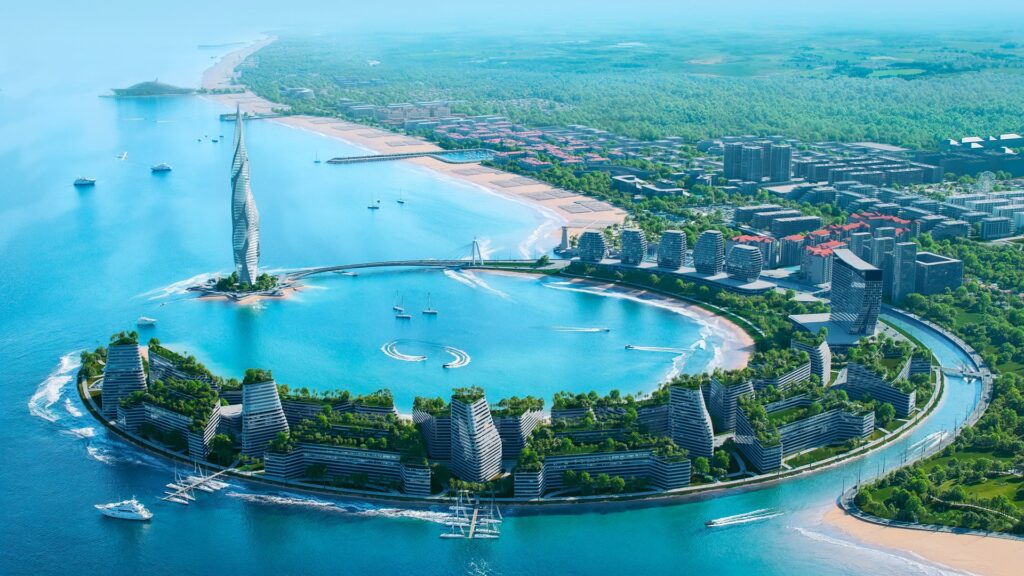
The Uzbek government has approved the construction of the Sea Breeze Uzbekistan resort complex along the Charvak Reservoir, granting the investor 577 hectares of land on a 25-year lease at a sharply reduced rate. According to a Cabinet resolution, construction may begin even before the completion of project documentation. Tree relocation is expected as part of the development process.
The project, led by Russian-Azerbaijani developer Emin Agalarov, envisions a new lakeside tourist destination complete with hotels, villas, swimming pools, sports facilities, restaurants, shops, and a bridge linking both sides of the reservoir.
Financial Concerns Raised by Local Economist
Uzbek economist and blogger Otabek Bakirov has voiced strong concerns over the project, arguing that while public debate has focused on environmental issues, the financial aspects have not been adequately examined. After reviewing the Cabinet resolution, he raised several questions about investor selection, project financing, lease terms, and the shifting of infrastructure costs onto the state.
Questions About Investor Selection
The government resolution names Sea Breeze Uzbekistan, a joint venture involving Agalarov’s development firm, as the winner of the site through what it describes as the “best proposal.” Bakirov questioned whether other bids were solicited or evaluated and whether any Uzbek partners hold ownership in the project. He noted that the resolution lacks information about the local share.
Skepticism Over Project Financing
Bakirov expressed doubt about the reported $5 billion investment figure, suggesting the Agalarov family likely lacks the capital to fund the project independently. “The Agalarovs don’t have their own $5 billion, which means the money will be borrowed,” he wrote. He questioned the source of financing, the terms of any loans, and what guarantees would be provided. He also pointed to a provision allowing the land to be subdivided and released without restrictions, warning that this could lead to speculation rather than real development.
Concerns About Lease Pricing
The land was leased for 17 billion soms (approximately $1.4 million), to be paid in installments over five years. This price reflects a 0.01 coefficient discount granted as an incentive. Bakirov argued that such a deeply discounted lease is inappropriate for a large-scale commercial venture. “Why has such a drastically reduced price been set for a commercial project, when this is a major business venture and not a social initiative?” he asked. He called for comparisons with other tourism projects to determine whether similar incentives were offered. “Mr. Agalarov is not building a hospital; he is building a commercial enterprise,” he added.
Public Funding for Private Infrastructure
According to Bakirov, the resolution assigns responsibility for essential infrastructure—such as access roads, utilities, and the reservoir bridge—to the Uzbek government. He argued that these should be covered by the investor. “Weren’t sewage treatment and bridge construction supposed to be the investor’s responsibility? Or were the public presentations misleading?” he asked. He emphasized the contradiction between promoting Sea Breeze as a $5 billion private investment and then shifting core expenses to the public sector.
Fast-Tracked Construction Raises Red Flags
Bakirov also criticized the decision to allow construction to begin before full project documentation is finalized. This practice had previously been banned due to its association with cost overruns and inefficiencies. “We have already seen what such exceptions have led to in recent years: construction costs multiplying and problematic projects,” he warned.
Call for a Transparent Review
In conclusion, Bakirov stated that the entire deal appears weighted in favor of the investor. “It creates the impression that the economic and financial risks of the project fall more on Uzbekistan than on the investor,” he said. He called for a transparent and comprehensive economic review before any binding investment agreements are finalized.