• KGS/USD = 0.01144 0%
  • KZT/USD = 0.00206 0%
  • TJS/USD = 0.10813 0%
  • UZS/USD = 0.00008 0%
  • TMT/USD = 0.28571 0%
  • KGS/USD = 0.01144 0%
  • KZT/USD = 0.00206 0%
  • TJS/USD = 0.10813 0%
  • UZS/USD = 0.00008 0%
  • TMT/USD = 0.28571 0%
  • KGS/USD = 0.01144 0%
  • KZT/USD = 0.00206 0%
  • TJS/USD = 0.10813 0%
  • UZS/USD = 0.00008 0%
  • TMT/USD = 0.28571 0%
  • KGS/USD = 0.01144 0%
  • KZT/USD = 0.00206 0%
  • TJS/USD = 0.10813 0%
  • UZS/USD = 0.00008 0%
  • TMT/USD = 0.28571 0%
  • KGS/USD = 0.01144 0%
  • KZT/USD = 0.00206 0%
  • TJS/USD = 0.10813 0%
  • UZS/USD = 0.00008 0%
  • TMT/USD = 0.28571 0%
  • KGS/USD = 0.01144 0%
  • KZT/USD = 0.00206 0%
  • TJS/USD = 0.10813 0%
  • UZS/USD = 0.00008 0%
  • TMT/USD = 0.28571 0%
  • KGS/USD = 0.01144 0%
  • KZT/USD = 0.00206 0%
  • TJS/USD = 0.10813 0%
  • UZS/USD = 0.00008 0%
  • TMT/USD = 0.28571 0%
  • KGS/USD = 0.01144 0%
  • KZT/USD = 0.00206 0%
  • TJS/USD = 0.10813 0%
  • UZS/USD = 0.00008 0%
  • TMT/USD = 0.28571 0%

Our People > Andrei Matveev

Andrei Matveev's Avatar

Journalist

Andrei Matveev is a journalist from Kazakhstan.

Articles

Kazakhstan vs. Eni: Who Is the Key Figure in the Swiss Lawsuit?

Kazakhstan’s $166 billion legal campaign against the oil majors, Shell, ExxonMobil, TotalEnergies, and Eni has expanded to Switzerland. According to Bloomberg, PSA LLP, representing Kazakhstan’s Ministry of Energy, has launched proceedings aimed at strengthening the country’s position in ongoing international arbitration. Astana is seeking roughly $15 million plus interest from several companies and individuals accused of corruption in projects managed by subsidiaries of Italy’s Eni. The Swiss case centers on evidence already presented in courts in the U.S. and Italy, which Kazakhstan aims to use to prove allegations of bribery in arbitration hearings. Documents submitted by Kazakhstan to a U.S. court claim that contractors providing services to Eni implemented an “illegal scheme” to secure inflated contracts. One such contract was allegedly amended eleven times, with its value rising from $88 million to more than $490 million. While several contractors were convicted by an Italian court in 2017, no Eni employees were found guilty. Kazakh journalist Oleg Chervinsky, known for his coverage of the oil and gas sector, has highlighted that Kazakhstan is requesting the Swiss court to look into Maksat Idenov, a former first vice president of KazMunayGas, who led negotiations with Kashagan project partners between 2007 and 2008. Chervinsky recalls a dramatic episode in 2010, when Idenov resigned from KazMunayGas via a letter sent from abroad using DHL. He subsequently took a senior role at Eni. A U.S. court has approved his questioning for use in the Swiss proceedings, and his representative says he has already testified. “New revelations await us!” Chervinsky asserted. That confidence may be justified. A glance at Idenov’s career reveals his central role in Kazakhstan’s energy sector since 1992, when he began as chief legal counsel at the state holding MunaiGas. In 1993, he became assistant to the Minister of Oil and Gas Industry, and by 1995, he was serving as deputy head of the Energy Department for Europe and Central Asia at the International Bank for Reconstruction in Washington, D.C. He returned to Kazakhstan in 1999 as an advisor to then-President Nursultan Nazarbayev on Caspian energy and oil and gas export pipelines. In that role, he worked on the legal status of the Caspian Sea and other strategic projects. Idenov joined Shell in 2004 as regional vice president for strategic and commercial development in the Middle East, South Asia, and the Caspian region. In 2007, he became the first vice president of KazMunayGas. Three years later, in July 2010, he was appointed senior vice president for strategic planning at Eni. During his time at KazMunayGas, Idenov appeared in U.S. embassy cables later released by WikiLeaks. In one, he reportedly told the U.S. ambassador during a private dinner that the four most influential figures around President Nazarbayev were the Presidential Chief of Staff, Sarybay Kalmurzaev, Head of the Presidential Administration, Aslan Musin, State Secretary and Foreign Minister, Kanat Saudabayev, and the tandem of Prime Minister Karim Massimov and Nazarbayev’s son-in-law, billionaire Timur Kulibayev. Another cable described the rationale for Idenov’s appointment as lead negotiator on...

7 months ago

Between Trump and Putin: Tokayev Emerges as a Regional Diplomatic Powerbroker

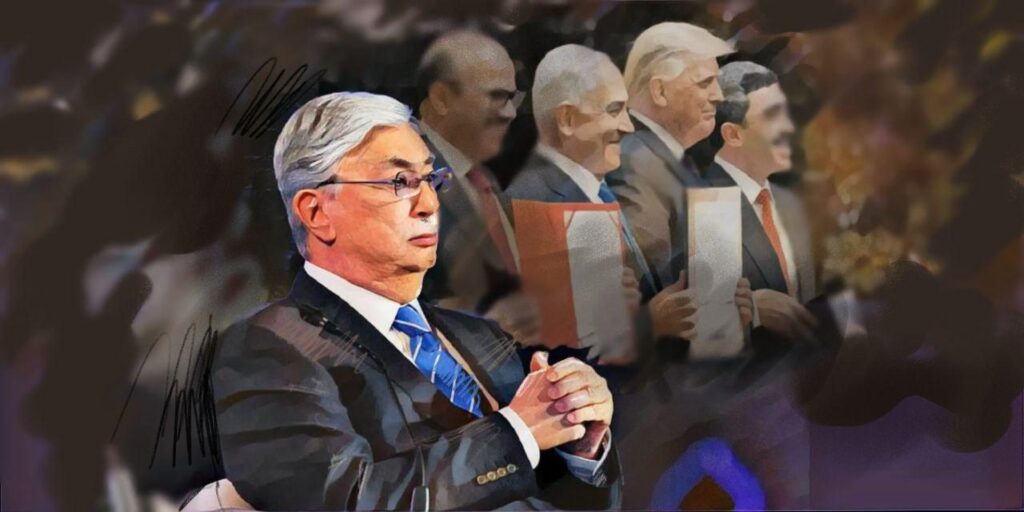
In a striking display of diplomatic balancing, Kazakhstan’s President Kassym-Jomart Tokayev ended 2025 with a high-profile state visit to Moscow, where he and Russian President Vladimir Putin signed a declaration elevating bilateral relations to a comprehensive strategic partnership and alliance. The visit came just days after Tokayev returned from Washington, where he participated in a summit with U.S. President Donald Trump, and the September meeting with Xi Jinping in Tianjin. Back-to-back high-level diplomatic engagements have underscored Tokayev’s rising stature as a regional statesman navigating the complex geopolitical landscape between Russia and the West, representing a somewhat diplomatic ‘hat trick’ for the Kazakh leader. Kazakhstan’s multi-vector foreign policy has long sought to maintain balanced relations with Russia, China, the United States, and Europe. This approach allows Astana to position itself as a neutral and pragmatic actor even during periods of geopolitical tension, and explains why Tokayev is one of the few leaders trusted by both Washington and Moscow. Amid speculation in global media about Kazakhstan’s accession to the Abraham Accords, Tokayev’s stop in Moscow has drawn attention not only for its symbolism but also for its possible behind-the-scenes diplomacy. Kazakhstan’s agreement to sign the Abraham Accords has generated considerable discussion within diplomatic circles. For Washington, Astana’s endorsement signals alignment with U.S. regional objectives in the Middle East, while for Russia, it raised questions about Kazakhstan’s strategic leanings, making Tokayev’s immediate trip to Moscow particularly important. No Central Asian state had previously moved to formally support a U.S.-brokered Middle Eastern diplomatic framework, making Kazakhstan’s position especially noteworthy. A Private Conversation at the Kremlin Russian political analyst Arkady Dubnov highlighted the significance of an informal, private meeting between Tokayev and Putin ahead of their official talks. “The presidents exchanged brief greetings, and then Putin invited his guest to his Kremlin apartment for a private conversation,” Dubnov noted. Tokayev later confirmed that the tête-à-tête lasted over two-and-a-half hours. Dubnov suggested that such discretion may point to confidential messages being relayed. He cited recent remarks by Finnish President Alexander Stubb, who visited Astana shortly before Tokayev’s Washington trip. Stubb reportedly said that Tokayev could serve as a conduit for communication between Trump and the Kremlin. Before this, only Chinese President Xi Jinping had been granted such extended privacy with Putin, Dubnov emphasized. Tokayev is one of the few leaders who has maintained uninterrupted working relationships with both Western capitals and Moscow throughout recent years. His neutral stance on the Ukraine conflict, refusal to recognize breakaway territories, and active participation in U.S.-backed initiatives - combined with Kazakhstan’s deep economic and security links with Russia - place Tokayev in a uniquely credible position. Neither side views him as fully aligned with the other, which increases his utility as a channel for sensitive political messaging. Kazakhstan as a Strategic Messenger? Kazakh political analyst Andrei Chebotarev also underscored the potential geopolitical significance of the Tokayev-Putin meeting. “Most likely, the Russian president was interested in the details of his Kazakh counterpart's recent visit to the U.S. and his talks with...

7 months ago

Tokayev in Moscow: Balancing Friendship and Strategy

Kazakh President Kassym-Jomart Tokayev begins a state visit to Russia in Moscow today, accompanied by a carefully calibrated message of diplomatic continuity. Ahead of his arrival, Tokayev published an article in Rossiyskaya Gazeta affirming Kazakhstan’s “eternal friendship” with Russia, a phrase that has become standard in bilateral rhetoric. While much of the piece reiterates familiar themes of cooperation in energy, trade, and culture, a few notable elements suggest deeper strategic positioning. From the outset, Tokayev appeared intent on striking a personal chord with Vladimir Putin. Mirroring the Russian president’s preference for historical framing, he wrote: “Our peoples have lived side by side for centuries, sharing joys and trials, and together creating a single cultural space in Eurasia. We are united by a common perception of traditional values, similar views on current issues of modern life, and joint work to ensure the well-being of our brotherly peoples.” The Kazakh leader also offered high praise for Putin’s leadership, describing bilateral ties as “mature and stable” and built on “deep trust, respect, and equality.” “All achievements in bilateral cooperation are inextricably linked to the energetic and productive efforts of President Vladimir Vladimirovich Putin,” Tokayev wrote. “In Kazakhstan, he enjoys unwavering respect as a statesman of global stature, and his name is on the lips of politicians and ordinary people in virtually every country in the world.” The visit’s key moment will be the signing of a Declaration elevating Kazakhstan-Russia ties to a “comprehensive strategic partnership and alliance”, a step Tokayev described as ushering in “a new era in bilateral relations.” More intriguing, however, was Tokayev’s commentary on Russia’s global standing, wherein Tokayev referenced recent high-level talks with Chinese President Xi Jinping, U.S. President Donald Trump, and leaders across Europe, Asia, and Africa. “Although many of them are at opposite ends of the geopolitical spectrum, they all recognize the exceptional role of Russia and its leader in resolving key issues in international relations. In other words, it is impossible to overcome the contradictions of the modern world without Moscow's participation,” he stated. While Tokayev has previously dismissed the idea of Kazakhstan acting as a mediator in the Russia-Ukraine conflict, his recent statements suggest Astana may be prepared to play a supporting role in future dialogue. “Kazakhstan is not a mediator in the military conflict between Russia and Ukraine and does not see itself as such,” he said last month. “In my opinion, both sides are capable of conducting dialogue on all contentious issues on a bilateral basis and at different levels. I have always believed and publicly stated that the ‘Ukrainian crisis’ is extremely complex and cannot be simplified.” Nonetheless, Tokayev offered practical insights into what a negotiation process would require, stressing the importance of expert-level preparation and dismissing the idea of hastily organized summits without a ceasefire or clear agenda as “unrealistic.” “If the leaders of Russia and Ukraine are willing to come to Kazakhstan, we will provide all the necessary services to ensure the success of the negotiations,” Tokayev added. He reaffirmed...

7 months ago

The Illusion of Chinese Investment in Kazakhstan

Concerns about how Chinese businesses operate abroad — and the challenges already confronting Kazakhstani entrepreneurs — have resurfaced following a recent letter to the prime minister from an association of oil service companies reporting price dumping. Despite these developments, Kazakhstani experts remain hesitant to discuss the negative effects of China’s growing influence in the country’s real economy. Technological Dependence The reluctance is unsurprising. Astana’s official policy seeks broad rapprochement with Beijing, spanning economic, political, and cultural spheres. Given the power imbalance, Kazakhstan avoids public statements that might offend its wealthier partner, particularly in the media, which China monitors closely. As a result, the recent complaint by the PetroCouncil — an oil and gas association representing more than 150 domestic service companies — about dumping by foreign, mainly Chinese, firms has been met with silence from local experts. In a letter addressed to Prime Minister Olzhas Bektenov, the PetroCouncil warned that foreign firms, particularly from China, have been offering services to major Kazakhstani enterprises at prices 60–70% below market value. This, they argue, is forcing out local businesses, reducing Kazakhstani content, eroding tax revenue and employment, diminishing engineering expertise, and threatening industrial safety. We asked PetroCouncil Managing Director Daniel Zholdybaev why foreign companies have come to dominate Kazakhstan’s oil and gas sector and whether the competence of local personnel or service providers is a factor. According to Zholdybaev, the dominance is rooted in how foreign operators first entered Kazakhstan’s market: by bringing their own technologies. This created long-term dependency not only on their expertise but also on foreign suppliers. “Chevron, for instance, maintains a vetted list of approved suppliers, and wherever the company operates, it only works with those on that list,” Zholdybaev explained. While Kazakhstan continues to develop domestic manufacturing capabilities, local firms are still barred from participating in high-risk operations such as work on wells with extreme pressure or temperature conditions. Zholdybaev noted that Kazakhstan’s three major fields — Tengiz, Karachaganak, and Kashagan — account for 90 percent of oil and gas imports. The operators of these projects are mainly Western companies. Russia, due to international sanctions, plays only a marginal role in procurement despite maintaining a presence in Kazakhstan. However, it is Chinese companies, actively welcomed by the state, that have introduced the issue of price dumping. Chinese firms operating in Kazakhstan’s oil and gas industry maintain closed procurement systems, sourcing goods and services almost exclusively from Chinese suppliers. As a result, Chinese investment brings minimal benefit to Kazakhstan’s economy. Even construction contracts often return to China. Russian observers, typically sensitive to Central Asia’s dealings with China and the United States, have also remained largely silent on this issue. A rare exception was political analyst Yuri Baranchik, who posted a sharply critical comment on his Telegram channel: “This is a clear example of what happens when Chinese companies are allowed full access to the domestic market,” he wrote. “They dump prices to bankrupt local businesses, monopolize the sector, and then dictate terms. Now the Kazakh government must figure...

7 months ago

Tokayev Secures $17B in U.S. Deals, Trump Hints at Kazakhstan Visit

The summit between the leaders of the United States and the five countries of Central Asia was the primary focus of Kazakh President Kassym-Jomart Tokayev’s visit to Washington. But even before the summit began, the Kazakh delegation secured a series of high-level meetings with U.S. political leaders and business executives, culminating in the signing of 29 bilateral agreements, valued at approximately $17 billion. Tokayev’s program in Washington began with meetings with Secretary of State Marco Rubio, Secretary of Commerce Howard Lutnick, and U.S. Special Representative for South and Central Asia Sergio Gor. Kazakhstan, Tokayev noted, maintains active political ties with the United States at multiple levels, and remains committed to a constructive dialogue to deepen its multifaceted cooperation with Washington. During the meeting, Kazakhstan and the United States signed a memorandum of understanding on cooperation in the field of critical minerals. The document was signed by Kazakhstan’s Minister of Industry and Construction, Yersayin Nagaspayev, and U.S. Secretary of Commerce Howard Lutnick. The agreement took immediate shape: Tau-Ken Samruk, a subsidiary of the sovereign wealth fund Samruk-Kazyna, and U.S. based Cove Capital agreed to jointly develop tungsten deposits in Kazakhstan’s Karaganda region. The investment is expected to total around $1.1 billion. Preparatory work on a final feasibility study for one of the projects is already underway. Kazakhstan’s tungsten reserves, estimated at 410,000 tons, are among the largest in the world. Tokayev later met with U.S. Representatives Jimmy Panetta, Carol Miller, Bill Huizenga, and Sydney Kamlager-Dove. Tokayev highlighted the role of the U.S. - Kazakhstan Friendship Group, chaired by Panetta, in deepening political dialogue, boosting economic ties, and strengthening bilateral relations. During the meeting, it was noted that the U.S. is one of Kazakhstan’s largest economic partners, accounting for $100 billion in cumulative investment, roughly 80% of all investment in Central Asia. Tokayev invited U.S. lawmakers to visit Kazakhstan to foster further cooperation. A similar invitation was extended to Senator Steve Daines, whom Tokayev described as “a true friend of Kazakhstan.” The senator is set to receive the Order of Dostyk (Friendship), First Class, for his contributions to bilateral relations. The Kazakh president also met with Chevron Chair and CEO Michael Wirth and Chaboy Leiko, President for the CIS and Central Asia at John Deere. Tokayev praised Chevron’s long-standing role in Kazakhstan’s oil and gas sector, including its projects at the Tengiz and Karachaganak fields. He confirmed Kazakhstan’s commitment to ongoing cooperation. John Deere was also lauded for its decision to localize production of agricultural machinery through a partnership with AgromashHolding KZ. Since production began in May, over 290 units have been assembled, with another 100 expected by year’s end. John Deere has signed a $2.5 billion strategic partnership agreement with Kazakhstan to produce at least 3,000 agricultural machines over five years. The agreement includes plans to establish at least three service centers and develop a workforce training system. Separately, Kazakhstan’s national carrier, Air Astana, signed a contract with Boeing for the purchase of up to 15 Boeing 787-9 Dreamliner aircraft. According...

7 months ago

U.S. Envoys Hail Stronger Kazakhstan Partnership Ahead of C5+1 Summit

On October 29, Unites States Special Envoy for South and Central Asia Sergio Gor and Deputy Secretary of State Christopher Landau concluded their visit to Kazakhstan ahead of the upcoming C5+1 summit in Washington. During their trip, the U.S. envoys met with President Kassym-Jomart Tokayev and held discussions with representatives of Kazakhstan’s government and business community, which they described as highly productive. “We are concluding a memorable trip to Kazakhstan in the beautiful capital, Astana, which did not even exist 30 years ago and now boasts a population of more than 1.5 million,” Landau posted on social media. He also stated that bilateral relations between the U.S. and Kazakhstan “have never been so strong” and expressed gratitude for the hospitality.  Gor and Landau held talks with Prime Minister Olzhas Bektenov and key cabinet members, including Minister of Trade and Integration Arman Shakkaliev, Minister of Energy Yerlan Akkenzhenov, Minister of Transport Nurlan Sauranbayev, and Deputy Prime Minister and Minister of National Economy Serik Zhumangarin, to discuss Kazakhstan’s economic priorities and areas for expanding bilateral cooperation. According to the Kazakh government, the talks focused on expanding trade and investment cooperation between the two countries. Priority areas included transport and logistics, energy, agriculture, the digital economy, and artificial intelligence. During their visit, the U.S. envoys also met with Deputy Prime Minister Murat Nurtleu, who reaffirmed Kazakhstan’s readiness to cooperate on sustainable development and energy security. The meetings demonstrated Kazakhstan’s active engagement with the United States in the lead-up to the upcoming Central Asia–U.S. summit. Deputy Prime Minister and Minister of National Economy Serik Zhumangarin, who highlighted Kazakhstan’s economic strengths during talks with Gor and Landau, had recently returned from a high-level visit to the United States. His delegation, which included Deputy Head of the Presidential Administration Erbolat Dossaev and Chairperson of the Agency for Regulation and Development of the Financial Market Madina Abylkasymova, held meetings in New York and Washington with American business leaders and members of Congress. During the visit, the Kazakh delegation presented the country’s economic growth strategy, highlighted ongoing GDP expansion, and discussed the potential listing of government securities on the New York Stock Exchange. They also raised the possible repeal of the Jackson–Vanik Amendment, a long-standing priority for Kazakhstan’s diplomatic agenda. Against this backdrop, the White House’s decision to convene a summit between President Donald Trump and the leaders of the Central Asian republics may partly reflect Kazakhstan’s sustained diplomatic outreach. In that context, Gor and Landau’s remarks of appreciation as they departed Astana underscored recognition of Kazakhstan’s role in shaping this evolving partnership.

7 months ago

Rare Earth Diplomacy: Critical Minerals Set to Top Agenda at C5+1 Summit

The announcement of an upcoming C5+1 summit in Washington between the United States and the Central Asian republics has taken much of the regional and U.S. political establishment by surprise. A swift visit by U.S. Special Envoy for South and Central Asia Sergio Gor and Deputy Secretary of State Christopher Landau to Uzbekistan and Kazakhstan was seemingly necessary to coordinate the summit’s agenda. Notably, Kazakhstan appears prepared to play a leading role on one of the summit’s most pressing issues. The summit, scheduled for November 6 in Washington, was first revealed through media channels before being confirmed through official correspondence between Kazakh President Kassym-Jomart Tokayev and U.S. President Donald Trump. Uzbek media later confirmed the meeting, citing sources within the administration of President Shavkat Mirziyoyev, and this was followed by Kyrgyzstan's President Sadyr Japarov. It is notable that shortly after Tokayev’s correspondence with Trump became public, the Kazakh president held a phone call with Russian President Vladimir Putin. Officially, the two discussed Tokayev’s upcoming visit to Moscow. This was their second such call in less than two weeks, the previous taking place on October 14. There is speculation that the Washington summit may have been a key topic of discussion. During meetings in Tashkent with Gor and Landau - Uzbekistan being the first stop on their tour - Mirziyoyev reportedly discussed a broad set of topics. However, the issue of “critical materials,” particularly rare earth metals, stood out. It is increasingly clear that rare earths will be a central focus of Trump’s engagement with Central Asian leaders. [caption id="attachment_38242" align="aligncenter" width="1600"] Sergio Gor and Christopher Landau at the Shymbulak ski resort in Almaty; image: Akorda[/caption] Trump has previously drawn attention for high-stakes diplomacy involving rare earth metals, including a controversial deal with Ukrainian President Volodymyr Zelensky and later discussions with Russian President Vladimir Putin in Anchorage. Most recently, during the first leg of his Asia tour, Trump met with Japanese Prime Minister Sanae Takaichi and concluded a rare earth metals agreement, despite the challenges associated with extracting these materials, which are often found underwater. Against this backdrop, Kazakhstan appears well-positioned to take the lead in terms of rare earth elements. President Tokayev first proposed developing rare earth metal deposits in his September 2023 address, “The Economic Course of Fair Kazakhstan.” In 2024, Kazakh geologists identified 38 promising solid mineral deposits, including the Kuyrektykol site in the Karaganda region, which contains substantial reserves. Tokayev returned to the issue in January 2025, during an extended government meeting, criticizing the cabinet for delays and emphasizing Kazakhstan’s untapped potential in rare earth extraction and processing. In April, during the Central Asia-European Union summit, Tokayev met with European Commission President Ursula von der Leyen, who congratulated him on the discovery of a major deposit in Kazakhstan. The topic also featured at the Central Asia-Italy summit in May, where Tokayev proposed creating a regional research center to consolidate data on rare earth deposits across Central Asia. “The creation of joint ventures, technology transfer, and the localization...

7 months ago

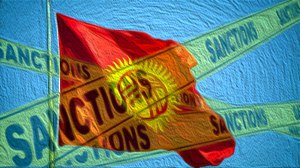
How U.S. and EU Sanctions Are Rippling Through Central Asia

Russia’s economy has faced renewed pressure following a fresh round of sanctions imposed this past week by both the European Union and the United States. After abruptly canceling a planned meeting with Vladimir Putin in Budapest, President Donald Trump shifted to a more hardline stance, announcing new sanctions. While these sanctions may not cripple Moscow, they are already having secondary effects on Central Asia, particularly on Kazakhstan’s banking and energy sectors. The EU's 19th sanctions package, adopted on October 22, introduces a phased ban on Russian liquefied natural gas (LNG). According to Reuters, short-term contracts will be terminated within six months, while long-term contracts are to expire by January 1, 2027. The package also includes a total ban on transactions with Russian oil giants Rosneft and Gazprom Neft, an expanded blacklist of so-called "shadow fleet" vessels, and sanctions against 45 companies in Russia and third countries supplying military-related technologies. Of growing concern in Central Asia is the inclusion of several regional financial institutions in the EU's sanctions list. These include the Kazakh branch of Russia’s VTB Bank, Kyrgyz banks Tolubai and Eurasian Savings Bank, and Tajik banks Dushanbe City Bank, Kommertsbank of Tajikistan, and Spitamen. These restrictions are scheduled to take effect between November and December 2025. Both Kyrgyzstan’s President Sadyr Japarov and the nation's Foreign Ministry have publicly expressed dismay over the sanctions, with Japarov urging Western leaders to stop “politicizing the economy.” In his speech at the UN General Assembly in New York in September, Japarov criticized the impact of unilateral sanctions, while the Foreign Ministry has stated that the country adheres to its international obligations and maintains an open dialogue with the EU to prevent risks associated with possible sanctions circumvention. The ministry has proposed launching an independent, internationally recognized audit and forming a joint “Kyrgyzstan-European Union” technical working group to facilitate data exchange, transaction monitoring, and risk assessments. In Kazakhstan, the National Bank downplayed the impact of sanctions against VTB. Deputy Chairman Yerulan Zhamaubayev noted that the bank had already been under nominal restrictions, and handles few transactions. “VTB does not affect the country’s financial stability, and we do not expect serious risks for the economy,” Zhamaubayev stated. However, the latest U.S. sanctions may prove more consequential for Kazakhstan, particularly amid efforts to strengthen bilateral trade with the United States, including through the repeal of the Jackson-Vanik amendment. The U.S. Treasury Department has sanctioned Russian oil majors Rosneft and Lukoil. The latter has deep economic ties with Kazakhstan. Just days before the announcement, on October 14, President Kassym-Jomart Tokayev personally attended the 30th anniversary of Lukoil’s operations in Kazakhstan, awarding CEO Vagit Alekperov the Order of Barys, first class. Oil and gas journalist Oleg Chervinsky reported that the joint venture Kalamkas-Khazar Operating LLP, co-owned by Lukoil and KazMunayGas, is directly affected. “Only the Tengiz and CPC projects, which Lukoil operates with American partners, have been exempted from the sanctions,” Chervinsky noted. A final investment decision for Kalamkas-Khazar was expected in December 2025. Yerkanat Abeni, a member of...

7 months ago

Pipelines Under Pressure: Ukraine War Hits Kazakhstan Energy Arteries

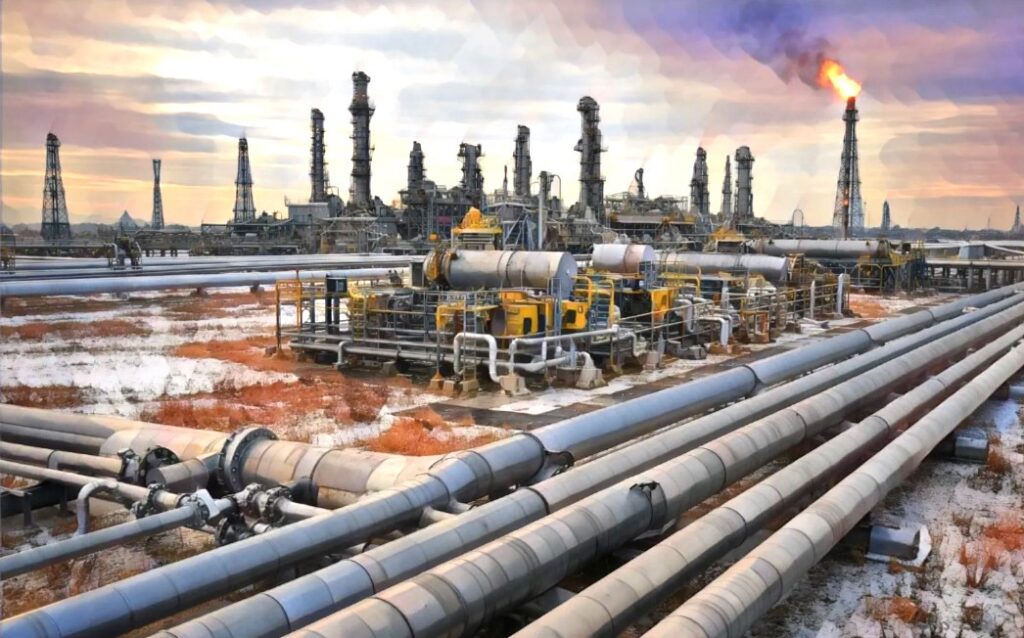
The ongoing war between Ukraine and Russia continues to have indirect but notable implications for Kazakhstan’s energy sector. Following the September drone attack in Russia’s Novorossiysk that damaged the offices of the Caspian Pipeline Consortium (CPC) - which exports the majority of Kazakhstan’s oil - another incident has raised concern: the October 19 strike on Russia’s Orenburg Gas Processing Plant, which handles gas from Kazakhstan’s Karachaganak field. The CPC confirmed that its export terminal continued operating after the September 24 incident, though two employees were injured and part of its office complex was damaged. The consortium remains the backbone of Kazakhstan’s oil exports, handling over 80% of national crude shipments to world markets. This concentration has long been viewed as a vulnerability because nearly all flows depend on infrastructure inside Russian territory. The war has underscored that risk, prompting Astana to accelerate plans for alternative routes across the Caspian Sea toward Azerbaijan and Georgia. Astana has been working with Baku and Tbilisi to expand capacity along the Trans-Caspian International Transport Route (Middle Corridor), supported by EU and World Bank funding commitments. Kazakhstan’s Ministry of Energy confirmed that the plant, located about 150 kilometers northwest of Kazakhstan’s Karachaganak field across the Russian border, was temporarily shut down following the UAV strike. “According to information from PJSC Gazprom, on October 19, 2025, an emergency situation occurred at the Orenburg gas processing plant as a result of a UAV attack, in connection with which the plant temporarily stopped receiving raw gas from the Karachaganak field.” The Ministry added that gas supplies to domestic consumers remain unaffected and that consultations are underway with field operators to assess potential disruptions and losses. No details on the extent of the damage or repair timelines have been released by the Russian side. Ukraine’s military confirmed responsibility for the attack as part of its campaign against Russian energy infrastructure, according to statements reported by Interfax-Ukraine and Ukrainska Pravda. Industry analysts, however, remain cautious. Journalist Oleg Chervinsky noted that the Orenburg plant processes up to nine billion cubic meters of Karachaganak gas annually, a portion of which is returned to Kazakhstan’s northern regions. He warned that a prolonged shutdown could lead to supply shortages, particularly during the winter months. The timing of the Orenburg attack - just before the start of the heating season - adds a seasonal risk dimension. Olzhas Baidildinov, an expert in the energy sector, criticized delays in constructing a domestic gas processing facility at Karachaganak, arguing that reliance on foreign infrastructure heightens Kazakhstan’s vulnerability to regional conflict and economic disruptions. The replacement of damaged equipment, including components from France’s Technip, could also be complicated by sanctions and supply chain issues, ultimately impacting tariffs and consumer costs. The cumulative effect of reduced gas processing capacity and potential production slowdowns at Karachaganak could weigh on Kazakhstan’s already strained budget. While some observers note that reduced output may help the country align with its OPEC+ production commitments, previously exceeded at major fields including Kashagan, Tengiz, and Karachaganak, such...

8 months ago

Automotive Shift in Central Asia: China Edges Out Russia

In the 2020s, Central Asia has emerged as an increasingly attractive market for the automotive industry. A combination of investment inflows, technological development, and improved logistics, much of it initiated by China, has fueled this transformation. Since the onset of the COVID-19 pandemic, China has rapidly expanded its influence in the region’s automotive sector and is becoming the dominant external supplier in import-reliant markets, even in countries with domestic manufacturing capabilities. Manufacturing Hubs and Import Markets The Central Asian automotive landscape reflects the region’s economic diversity. Uzbekistan and Kazakhstan serve as the main manufacturing hubs, while Kyrgyzstan, Tajikistan, and Turkmenistan rely heavily on imports. By the end of 2024, while the global automotive sector faced a slowdown, Uzbekistan recorded modest growth in car production, up 0.8% year-on-year. In contrast, Kazakhstan saw a 1.6% decrease. During the first seven months of 2025, Uzbekistan produced 212,200 passenger vehicles, a 3.5% increase compared to the same period in 2024. Truck production rose sharply by 28%, from 1,800 to 2,300 units. With a population of approximately 37 million, Uzbekistan remains the region’s industrial center. The state-owned UzAuto Motors, formerly GM Uzbekistan, dominates more than 90% of the domestic passenger car market. Models such as the Chevrolet Cobalt, Nexia, and Tracker are built on General Motors platforms and produced at the main plant in Asaka, which has a capacity of 280,000 vehicles per year. Some of this output is exported to Russia, Azerbaijan, and Georgia. In a bid to stay competitive with Chinese brands, Uzbekistan launched a joint venture with BYD in 2023 and announced the construction of a $1.5 billion electric vehicle (EV) plant in the Ferghana region with Chinese support. Kazakhstan’s key market players include Allur and Hyundai Trans Kazakhstan. Allur’s Kostanay plant produces up to 125,000 Kia, Chevrolet, Skoda, JAC, Jetour, and Hongqi vehicles annually, and accounts for 61% of the national output. Hyundai Trans Kazakhstan in Almaty has a capacity of 50,000 units, covering 31% of production. Two new car plants are expected to open in 2025. The first, a $200 million investment by Kia, will be located in the Kostanay region and marks the company’s first Central Asian plant. With a planned capacity of 70,000 vehicles per year, the move underscores Kia’s long-term commitment to Kazakhstan. “We are excited about the promising opportunities opening up in the Kazakh market. Kazakhstan's economy is developing dynamically and on a large scale. We see great potential for our business in this market,” said Kia President and CEO Ho Sung Song. The second plant, in Almaty, will assemble Chinese brands with a target of 90,000 vehicles annually. Rather than compete with Chinese imports, Kazakhstan has opted to localize production in partnership with Chinese manufacturers. Import-Dependent Markets and China’s Tailored Approach While Kyrgyzstan and Tajikistan host minor assembly operations, primarily with Chinese partners, their automotive fleets, along with Turkmenistan’s, are largely replenished through imports. Since 2020, shifts in global logistics have transformed China from an alternative supplier into the dominant source of vehicles in these...

8 months ago