• KGS/USD = 0.01144 0%
  • KZT/USD = 0.00205 0%
  • TJS/USD = 0.10771 0%
  • UZS/USD = 0.00008 0%
  • TMT/USD = 0.28490 0%
  • KGS/USD = 0.01144 0%
  • KZT/USD = 0.00205 0%
  • TJS/USD = 0.10771 0%
  • UZS/USD = 0.00008 0%
  • TMT/USD = 0.28490 0%
  • KGS/USD = 0.01144 0%
  • KZT/USD = 0.00205 0%
  • TJS/USD = 0.10771 0%
  • UZS/USD = 0.00008 0%
  • TMT/USD = 0.28490 0%
  • KGS/USD = 0.01144 0%
  • KZT/USD = 0.00205 0%
  • TJS/USD = 0.10771 0%
  • UZS/USD = 0.00008 0%
  • TMT/USD = 0.28490 0%
  • KGS/USD = 0.01144 0%
  • KZT/USD = 0.00205 0%
  • TJS/USD = 0.10771 0%
  • UZS/USD = 0.00008 0%
  • TMT/USD = 0.28490 0%
  • KGS/USD = 0.01144 0%
  • KZT/USD = 0.00205 0%
  • TJS/USD = 0.10771 0%
  • UZS/USD = 0.00008 0%
  • TMT/USD = 0.28490 0%
  • KGS/USD = 0.01144 0%
  • KZT/USD = 0.00205 0%
  • TJS/USD = 0.10771 0%
  • UZS/USD = 0.00008 0%
  • TMT/USD = 0.28490 0%
  • KGS/USD = 0.01144 0%
  • KZT/USD = 0.00205 0%
  • TJS/USD = 0.10771 0%
  • UZS/USD = 0.00008 0%
  • TMT/USD = 0.28490 0%

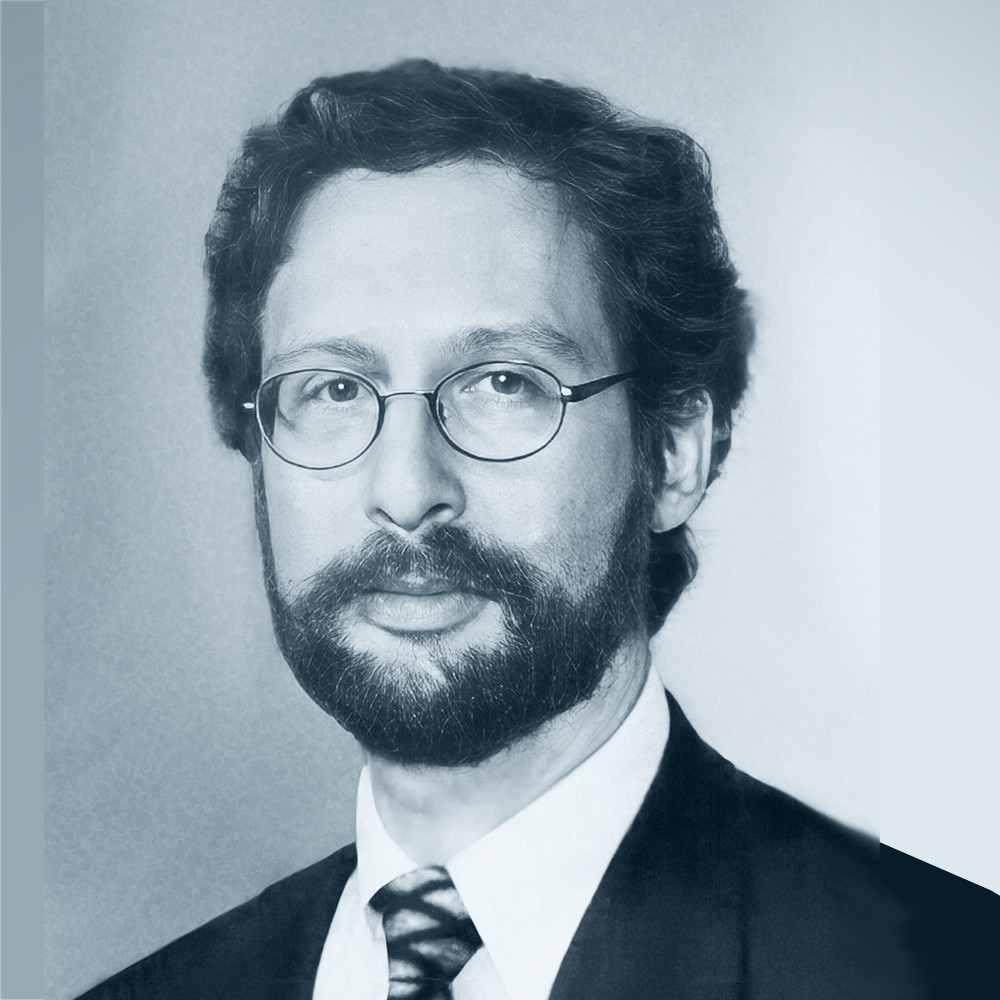
Our People > Dr. Robert M. Cutler

Dr. Robert M. Cutler's Avatar

Dr. Robert M. Cutler

Senior Editor and Contributor

Robert M. Cutler has written and consulted on Central Asian affairs for over 30 years at all levels. He was a founding member of the Central Eurasian Studies Society’s executive board and founding editor of its Perspectives publication. He has written for Asia Times, Foreign Policy Magazine, The National Interest, Euractiv, Radio Free Europe, National Post (Toronto), FSU Oil & Gas Monitor, and many other outlets.

He directs the NATO Association of Canada’s Energy Security Program, where he is also senior fellow, and is a practitioner member at the University of Waterloo’s Institute for Complexity and Innovation. Educated at MIT, the Graduate Institute of International Studies (Geneva), and the University of Michigan, he was for many years a senior researcher at Carleton University’s Institute of European, Russian, and Eurasian Studies, and is past chairman of the Montreal Press Club’s Board of Directors.

Articles

Japarov Breaks the Kyrgyz Tandem

When Kamchybek Tashiyev returned to Bishkek from medical travel abroad after losing his post as Chairman of the State Committee for National Security (GKNB), as well as the deputy chairmanship of the Cabinet of Ministers, he returned to a system already being disassembled. Kyrgyzstan’s President Sadyr Japarov dismissed him on February 10, ending a five-year arrangement in which the presidency and the security apparatus were closely fused. The decision deliberately dismantled the governing tandem that had defined Kyrgyzstan’s power structure since 2020. The immediate question was whether this was a closing of an episode or the opening of a new one. The first wave of moves suggests the latter: a transition toward a more personalized presidency, with the internal-security bloc fractured and its succession logic unsettled. Japarov publicly framed the decision as preempting an institutional split. He explicitly pointed to parliamentary groupings that began sorting deputies into “pro-president” versus “pro-general” camps. Russian-language coverage has tended to present the episode as an effort to end a dual-power configuration, not merely to remove one official. This narrative implies that the state’s operative center of gravity had already begun drifting away from predictable office-holding and toward informal allegiance tests. Once such a dynamic becomes evident, according to such a telling, the preservation of regime coherence often requires rapid, coercive re-centering. Domestic Political Configurations The first domestic signal was indeed speed. Along with Tashiyev, senior security officials were removed, and an acting head was installed pending parliamentary procedures. The point here was not just about personnel but about the timing: the presidency moved first, then moved again, so that no alternative pole could consolidate inside the security institutions. If the system had been built around a Japarov–Tashiyev tandem, then the immediate dismantling of Tashiyev’s proximate layers was also a message to the broader stakeholder society that the presidency would decide who inherits the southern security networks and clan linkages. Japarov was clearly conveying a signal of dominance that ruled out negotiation. A second signal came through parliament. Speaker Nurlanbek Turgunbek uulu resigned shortly after the dismissal, amid reporting that he was politically close to Tashiyev and vulnerable once the security bloc shifted. Russian reporting treated the speaker’s resignation as part of the same chain reaction set off by the February 10 decree. This was part of a pattern whereby institutional actors in Kyrgyzstan’s domestic politics reorient quickly toward whoever appears to be winning in the short term. Loyalty is anticipatory because the penalty for backing the wrong camp can arrive through law enforcement, prosecutorial pressure, or reputational destruction. A third signal emerged through the revived early-election debate. The open-letter campaign and talk about a “snap election” did not arise in a vacuum; it built on a preexisting argument about constitutional timing and mandate renewal. That development provided a political vocabulary for testing whether the tandem’s first stage had ended. The credible possibility of early elections has destabilized patronage, compelling every member of the political class at every level to recalculate expectations. Every political actor...

4 months ago

Germany Builds a Z5+1 in Central Asia

Germany’s meeting on February 11 with the five Central Asian foreign ministers in Berlin formalized the Z5+1 (“Z” for “Zentralasien”) format as a standing work channel. It joins other “plus-one” formats now crowding Central Asia that function as instruments of influence. The United States is using C5+1 to push a more deliverables-oriented agenda, including critical raw materials, and China has institutionalized leader-level summitry with accompanying treaties, grants, and transport-centered integration. The EU has elevated its relationship to a strategic partnership and is putting Global Gateway branding behind connectivity and investment. Germany’s Z5+1 is best understood as Europe’s effort to add a practical, tool-driven channel that can move faster than EU consensus in some domains while still feeding EU programming rather than competing with it. The concluding Berlin Declaration reads like a program sheet with named instruments, sector priorities, and established a direct link to the EU’s broader “Team Europe” posture through the participation of EU Special Representative Eduards Stiprais. Germany’s Z5+1 fits this competitive field as a European execution lane that can move projects forward with German instruments while staying aligned with EU programs. Berlin Defines the Tools The Z5+1 meeting in Berlin drew on a sequence that Germany has been building since its 2023 “Strategic Regional Partnership” and subsequent summits in Berlin (2023) and Astana (2024), with an explicit emphasis on Central Asian regional cooperation as a counterpart to bilateral ties. The Berlin meeting, therefore, did not attempt to invent a new regional architecture but rather added a stable ministerial format for pushing forward project lists, regulatory expectations, and finance conditions between higher-level meetings. In Berlin, Germany committed €2.7 million to a cooperation platform for the Trans-Caspian Transport Corridor: a small sum by infrastructure standards, but targeted at unglamorous coordination like data-sharing, planning discipline, and institutional continuity, i.e., standards and transborder management regimes where corridor initiatives often stall. This profile complements the EU-backed Trans-Caspian Coordination Platform track, which is explicitly tied to a wider €10 billion commitment announced at the January 2024 Global Gateway investors forum for EU–Central Asia transport connectivity. and which has addressed the corridor less as a construction problem than as a finance-and-sequencing problem. Berlin also explicitly supported the commercial participation of German rail and logistics firms in transport and consulting projects, aligning with the intent to keep firm-level engagement attached to ministerial diplomacy. The declaration references export credits and investment guarantees, and links them to business-environment expectations. On the same day, the German Eastern Business Association convened a “Wirtschaftsgespräch” (economics talk) in the Foreign Office with the Central Asian delegations. There, the region was framed as strategically significant for Germany’s diversification agenda, and it was signaled that an autumn leaders’ summit is already in view. Germany’s public accounting of its regional engagement in Central Asia stresses its already-deep base of activity in Kazakhstan and Uzbekistan in particular, including dozens of projects and multi-billion-euro volumes. The energy transition was mentioned, as the Berlin Declaration points to renewables, hydrogen, and climate programming that Germany is already funding...

4 months ago

TRIPP and the Middle Corridor After Vance

U.S. Vice President J.D. Vance’s Armenia and Azerbaijan tour is being sold as a “peace dividend” for the South Caucasus, but for Central Asia, the significance is the infrastructure potential of the Trump Route for International Peace and Prosperity (TRIPP). Vance’s trip is another move in positioning the new Caucasus transit route for the Middle Corridor. His visit necessarily focuses on the Armenia–Azerbaijan fix, but recent diplomatic context makes clear that it is at least equally a Central Asia to Europe proposition. Current constraints on Trans-Caspian connectivity have been the shortage of dependable shipping capacity across the Caspian, port access, and border processing times. As the European Commission pointed out last week, traffic has surged since 2022, but the next jump depends on targeted investment and practical fixes along the route. The Middle Corridor’s Central Asian Axis through Kazakhstan and Uzbekistan Kazakhstan’s recent moves treat the bottlenecks as practical engineering and scheduling problems. The dredging project at Kuryk aims to deepen the port approach channel to five meters to support year-round navigation. Work is scheduled for early 2026 and backed by ERSAI Caspian Contractor LLC, a joint venture between Saipem and the Kazakhstan-based business group ERC Holdings. ERSAI is a major industrial port and fabrication yard operator specializing in offshore construction, logistics, and port services in the Caspian Sea. The dredging project is tied to broader terminal and shipyard expansion designed to create a key industrial hub. Shipping capacity is the other half of that story. A plan reported late last year envisages six ferries on the Kuryk–Alat line, with the first two entering service in the first half of 2026 and additional vessels added through 2028. Even if timelines slip, the point is to create a predictable schedule. Uzbekistan’s connectivity push has been running on two tracks at once: east to west via the Caspian, and southward toward ports beyond Central Asia. In Washington, a delegation from Tashkent, led by Foreign Minister Bakhtiyor Saidov, a week ago signed a memorandum with the United States on critical minerals and rare earths. This move treats extraction and processing as a supply-chain partnership rather than a one-off investment pitch. At the same time, Uzbekistan has been pushing rule-making with corridor partners, not waiting for outsiders to do it. On February 10, Azerbaijan, Turkmenistan, Uzbekistan, and Georgia signed a protocol covering digitalization and freight development along the Middle Corridor, including shared methods for tracking delays and pinch points. This is in line with the necessary streamlining of paperwork. TRIPP as the South Caucasus Link for Central Asia TRIPP is meant to make the Caucasus segment less fragile by adding a second path, other than the recently renovated and expanded Baku–Tbilisi–Kars railway route. The U.S-backing and institutional presence are meant to create confidence and reliability. Armenia’s own published implementation framework describes a TRIPP Development Company with an initial 49-year development term and a proposed 74% U.S. share, while stating that Armenian sovereignty, law enforcement, customs, and taxation authority remain intact. This satisfies domestic Armenian...

4 months ago

Kazakhstan’s Draft Constitution and the Reordering of State Authority

Kazakhstan’s current constitutional reform is no longer limited to parliamentary redesign. A draft updated basic law has been released for public discussion, and it presents the effort as a review of the state’s political architecture culminating in a nationwide referendum. The draft is described as the product of months of work initiated by President Kassym-Jomart Tokayev, with large-scale changes proposed for the country’s political system. A replacement-style text, an explicit state-architecture rationale, and a referendum endpoint together signal a reform agenda that reaches beyond legislative mechanics to the overall distribution of authority, the protection of fundamental rights, and strengthening of the rule of law. Kazakhstan’s current constitution was adopted by referendum in August 1995, replacing the January 1993 basic law. It has been amended repeatedly, including significant revisions in 1998, 2007, 2011, and 2022. The 2022 referendum package was a particularly extensive set of amendments. It presented a model of a presidential republic with a strong parliament, redistributed selected powers from the presidency to parliament, and created new parliamentary mechanisms. It also strengthened the ombudsman, enabled direct citizen appeals to the Constitutional Court, established a commissioner framework for socially vulnerable categories, established a ban on the death penalty, and set a single seven-year presidential term without the possibility of reelection. From Proposal to Draft Basic Law The current draft emerged from a process launched under Tokayev in late 2025. In September 2025, he proposed moving to a unicameral parliament, which set the reform’s initial direction. A working group was established in October 2025 to develop proposals, and in January 2026, a commission was formed to carry the work forward. The commission was chaired by Elvira Azimova, head of the Constitutional Court of Kazakhstan, linking the drafting process to the institution that reviews the basic law. The commission’s work moved beyond incremental amendments. It reviewed proposals affecting seventy-seven constitutional articles, about 84% of the current text, and that breadth drove the decision to prepare a fundamentally new basic law rather than another package of revisions. Rewriting most of the operative text shifts the reform from a parliamentary adjustment to a redesign of the state’s governing framework. The resulting draft is structured as a replacement-style document, with an updated preamble and a reorganization into eleven sections and ninety-five articles. The institutional centerpiece of the draft is a shift from a two-chamber parliament to a single chamber and to proportional representation for electing deputies. The proposed supreme legislative body, the Kurultai, would have 145 deputies, slightly fewer than the combined 148 members of the current Mazhilis and Senate of Kazakhstan. The draft also grants the Kurultai expanded powers, pairing structural consolidation with a change in how legislative authority is organized, including oversight, political accountability, and approval of key state appointments and conciliation procedures. Alongside the proposed legislature, the draft creates a national dialogue platform, the People's Council of Kazakhstan, described as the highest advisory body representing citizens’ interests and granted the right of legislative initiative. This adds a second channel for agenda-setting with...

4 months ago

Kazakhstan and Israel Deepen Cooperation in Astana

Israeli Foreign Minister Gideon Sa’ar’s official visit to Astana on January 27, 2026, was the first by an Israeli foreign minister to Kazakhstan in 16 years, and it yielded a package of institutional and economic steps. President Kassym-Jomart Tokayev received Sa’ar and Foreign Minister Yermek Kosherbayev, holding talks that both sides framed as elevating cooperation to a new level. The two foreign ministries signed documents on diplomatic training and public diplomacy, and agreed to pursue visa-free travel for holders of ordinary passports. A Kazakhstan–Israel business forum convened in parallel, with January–November 2025 trade of about US$162.4 million cited as the baseline for expansion. The visit’s value lay in its forward-looking measures to deepen cooperation. The sides agreed to convene the Kazakhstan–Israel Joint Economic Commission at a ministerial level. This move creates a regular venue where sector priorities can be translated into specific workstreams. The Kazakhstan–Israel business forum was framed as the practical feeder for that process, as both sides publicly identified a project map running from high-tech agriculture and water-resource management through digital technologies (including artificial intelligence) to infrastructure and logistics, energy efficiency and renewables, and healthcare and pharmaceuticals. In parallel, the two foreign ministries’ political consultations, in their twelfth round, covered wider international and regional agendas, including Middle East confidence-building and peaceful-settlement initiatives. Regularizing Cooperation Channels The documents signed in Astana were narrow-gauge instruments designed to regularize contacts. The memorandum on diplomatic training provides for structured interaction in the preparation of diplomatic personnel. What this means in practice is that exchanges between the two foreign-policy services will be routinized through their training institutions rather than on an ad hoc basis. The memorandum on public diplomacy set a framework for coordinated outreach, providing an agreed approach to presenting their cooperation. Taken together, these instruments are the administrative layer that will operationalize joint political intent. The visa initiative was narrowly framed as a statement of intent to conclude a visa-exemption agreement for holders of ordinary passports, not as an agreement already in force. In practice, such a regime would lead to higher tourism flows and denser business travel. The latter development would widen the base of commercial contacts, which could in turn be carried into ministerial-level economic follow-up. The visa track is thus an enabling measure for the economic agenda. At the leadership level, Sa’ar publicly invited President Tokayev to visit Israel. This move signals an intent to sustain momentum beyond merely ministerial channels. The visit coincided with International Holocaust Remembrance Day in Kazakhstan, and Sa’ar participated in a state ceremony in Astana connected to the commemoration. The ceremony included senior officials and diplomatic representatives, with official messaging from Tokayev to Israel’s president on the occasion. The civic and humanitarian nature of this event complemented a visit that otherwise concentrated on governance mechanisms, economic priorities, and institutionalizing diplomatic follow-through. First Steps Toward Joint Projects Beyond merely listing priority sectors, the business forum also surfaced first-step commercial and quasi-commercial documents providing a basis for follow-through. Kazakhstan’s investment agency reported three signed items:...

5 months ago

Astana and Tashkent Engage Washington’s Central Asia Vector

On January 22 at the World Economic Forum in Davos, Kazakhstan’s President Kassym-Jomart Tokayev and Uzbekistan’s President Shavkat Mirziyoyev signed President Donald Trump’s new Board of Peace charter. The document matters less than what their participation signifies: recognized access to the White House and a willingness to be publicly associated with a U.S.-led initiative. This is all the more significant as Washington’s relations with several long-standing partners have recently become more fraught and publicly contested. The Central Asian response is part of that story. Their participation indicates that the Trump White House regards them as interlocutors of consequence, and that both Central Asian capitals are embracing that status. On December 1, Washington assumed the G20 presidency for 2026 and set three priorities: limiting regulatory burdens, strengthening affordable and secure energy supply chains, and advancing technology and innovation. It has also scheduled the leaders’ summit for December 14–15, 2026, in the Miami area. On December 23, Trump said that he was inviting Tokayev and Mirziyoyev to attend as guests. That invitation places Kazakhstan and Uzbekistan inside a host-defined agenda whose working tracks overlap with their strongest external bargaining assets, including energy, critical minerals potential, and transport connectivity. Trump publicly tied the invitations to discussions of peace, trade, and cooperation, which is in line with his subsequent Board of Peace invitations. Diplomatic Logic and Multi-Vectorism It is worthwhile situating these developments in the context of Central Asian cooperation, which Kazakhstan and Uzbekistan have driven as the regional core. At the August 2024 Consultative Meeting in Astana, all five leaders signed a Roadmap for the development of regional cooperation for 2025–2027, and adopted a “Central Asia 2040” conceptual framework. Tokayev and Mirziyoyev referenced their 2022 allied-relations agreement and announced plans to adopt a strategic partnership program through 2034, including large-scale joint economic and energy projects. Moscow’s preoccupation with the war in Ukraine has widened the room for maneuver by other external actors, and Central Asian capitals have pursued these opportunities selectively. For example, the EU’s then foreign-policy chief Josep Borrell visited Kazakhstan and Kyrgyzstan in early August 2024, Japan has pursued its “Central Asia plus Japan” line as a counterweight to China’s influence, and Azerbaijan has been building an energy bridge between Central Asia and Europe via the South Caucasus with Kazakhstan and Uzbekistan. Washington’s main channel into this complex is the C5+1, and the current U.S. emphasis is to create routines that survive individual summits. The U.S. Special Envoy for South and Central Asian Affairs Sergio Gor and Deputy Secretary of State Christopher Landau travelled to Kazakhstan and Uzbekistan in October 2025 ahead of the Washington summit that Trump hosted the following month for the five leaders. Such formats can concentrate attention on the implementation of standardized procurement procedures and regularized dispute resolution that new supply-chain corridors require for interoperable paperwork and predictable customs treatment. Kyrgyzstan is scheduled to host the second B5+1 forum (the business counterpart to C5+1) on February 4–5, 2026. This has already been prepared by a joint briefing...

5 months ago

Tokayev Proposes a New Constitutional Architecture

In mid-January 2026, President Kassym-Jomart Tokayev moved Kazakhstan’s parliamentary reform agenda onto a deeper constitutional track. He framed the emerging package as comparable, in substance, to adopting a new constitution rather than making a bounded set of amendments. He also presented it as a further move away from the institutional logic of the 1995 framework and as the logical next step after the 2022 referendum changes, with the legislative branch identified as the main site of redesign. Tokayev laid out a two-stage pathway. First, a Constitutional Commission of more than 100 members is to consolidate proposals and draft a coherent text. The work is organized through the Constitutional Court leadership, and the participant pool is expected to include representatives of the National Kurultai, legal experts, media figures, maslikhat chairs, and regional public councils. The commission was established by decree shortly after Tokayev’s public rollout of the initiative, with early reporting identifying its chair and senior officers as part of the process’ initial institutionalization. Second, the resulting draft is to be submitted to a nationwide referendum, with timing to be set once the commission produces an implementable package. This is an architecture exercise before it is a policy program. The direction is clear enough to describe, but the operative meaning will depend on still-undetermined details, including how headline concepts are translated into constitutional language and how the referendum track shapes that drafting process. The Kurultai Plan and the Lawmaking Design Tokayev’s central institutional move is to abolish the current bicameral parliament and replace it with a single chamber, the Kurultai, combining functions now divided between the Mazhilis and the Senate. The change is publicly presented as consolidation, with unicameralism framed as a simplification of legislative structure that still keeps parliament as the focal representative institution within a presidential system. The package also sketches a streamlined internal design. Tokayev stated that the new chamber should comprise 145 deputies, with up to three deputy speakers and no more than eight committees. Public reports on the working-group discussions remark that earlier concepts ranged more widely before converging on 145; the current Mazhilis and Senate total 148 members. Tokayev indicated that deputies would be elected by proportional representation at the national level, while majoritarian rules would be retained at the regional level. He also signaled the removal of quota and appointment mechanisms associated with the existing system, including the elimination of a small number of presidentially appointed seats. A unicameral legislature raises a predictable design problem. Consolidation can increase legislative throughput unless procedures are structured to preserve deliberation. Allies of the reform have therefore emphasized a shift to a three-reading format, presented as a way to make lawmaking more deliberative. In practice, the decisive criteria here are implementation choices that are not yet public. These include final electoral rules, the internal allocation of committee jurisdiction, and procedural requirements governing readings, hearings, and amendments. Those choices will determine whether the Kurultai becomes a stronger site of relatively autonomous bargaining and scrutiny or a more efficient transmission...

5 months ago

Trump’s G20 Invitations: Why Kazakhstan and Uzbekistan Matter

On December 23, President Donald Trump said he would invite Kazakhstan and Uzbekistan to attend the United States–hosted 2026 G20 summit in Miami. The meeting is planned at Trump National Doral. The announcement followed separate telephone calls with Kazakhstan’s President Kassym-Jomart Tokayev and Uzbekistan’s President Shavkat Mirziyoyev, which Trump described as focused on peace and expanded trade, and cooperation. The G20 is a group of major economies, with membership based mainly on large nominal GDP and global economic importance, collectively representing about 85% of global GDP. Kazakhstan is ranked roughly 50th in the world by nominal GDP, at approximately $300 billion, while Uzbekistan is ranked around 62nd, with a nominal GDP of about $137–140 billion. According to Polish radio, the president of Poland stated that his country would also be on the guest list. Poland is the world’s 21st-largest economy. The G20 is a forum, not a treaty body. Leaders’ summits include member governments and a limited number of host-selected guest countries. Invitations to Kazakhstan and Uzbekistan would place their leaders physically at the table with G20 heads of state, allowing them to be seen, heard, and recognized by other leaders, without conferring membership or a formal role in shaping the summit agenda. On average, the host invites six to seven guests. One official host-country explainer notes that guest invitations allow non-members to bring their own perspectives. For them, the significance of attending is access, not membership. What Washington Wants and What Can Be Transacted The host typically uses the guest invitations to signal which countries and regions they regard as priorities. U.S. interest in Kazakhstan and Uzbekistan rests on an immediate material basis. The United States is rebuilding its nuclear-fuel supply chain away from Russian-origin material. Federal law now bans imports of certain Russian uranium products, with waivers terminating no later than January 1, 2028. U.S. agencies have been explicit that supply diversification is a policy objective. In 2024, Kazakhstan-origin material accounted for 24% of uranium delivered to U.S. owners and operators, while Uzbekistan-origin material accounted for about 9%. Kazakhstan’s structural advantage is scale and reliability. It remains the world’s leading uranium producer, with 2024 output around 23,270 metric tons of uranium and the largest share of global mine production. Astana has also signaled an interest in moving beyond extraction toward higher value-added fuel-cycle activity. Uzbekistan’s advantage is growth potential and its fit with Western joint-venture structures. Its uranium sector has attracted major external entrants, including Orano’s South Djengeldi joint venture Nurlikum Mining with the state partner Navoiyuran to develop a new mine alongside an Itochu (Japan) minority stake. The second instrument is the resource-focused diplomacy under the C5+1 umbrella. The State Department frames the C5+1 as organized around economy, energy, and security, within which framework it has elevated critical minerals to a dedicated track. The United States launched a C5+1 Critical Minerals Dialogue in early 2024, and subsequent U.S. statements have described it as a vehicle for geological exploration, mining, processing, and investment opportunities across the region. This...

6 months ago

Kazakhstan Turns from Pipelines to Processors

Kazakhstan’s strategic plan for advanced computing represents a diversification of its traditional oil, gas, and transit profile and of the wider national economy. A $2 billion Nvidia-linked initiative now turns on three main elements. First is a national supercomputer using Nvidia H200 chips, with headline AI performance around 2 exaflops. Second is a planned 100 MW data-center campus, designed to expand capacity for commercial users over several years. Third is a “sovereign AI hub” concept that promises long-term chip access for sensitive public-sector workloads. Prior to this package, Kazakhstan had already moved unusually quickly to build high-end AI and computing infrastructure, treating digital capacity as central to its development policy. The national supercomputer is now the most powerful system in Central Asia and is housed in a Tier III state data center intended for use by universities, startups, and corporate tenants. The hardware push accompanies a wider digital policy agenda, including new training programs with Nvidia to expand the country’s AI talent base. Parallel initiatives with the United States seek to anchor Kazakhstan more firmly within Western regulatory and connectivity frameworks, as part of a broader attempt to move beyond hydrocarbons and build domestic capability in computation-heavy activities. Kazakhstan’s New AI Statecraft Astana is presenting the Nvidia package as an economic instrument, not just a hardware upgrade. Senior officials now describe advanced computing as a new pillar of national development, on a par with hydrocarbons and transit. Recent policy statements frame AI and digital infrastructure as central, not a side theme of “innovation” policy. In parallel, the long-running “Digital Kazakhstan” agenda has moved from e-government and broadband roll-out into a second phase where data centers, national platforms, and specialized training come to the foreground. Within that shift, “sovereign AI” is becoming a core organizing idea. Officials and local specialists talk about national language models that can handle Kazakh, Russian, and other regional languages, and about keeping sensitive public-sector data on infrastructure under national jurisdiction. The new supercomputer and the sovereign AI hub are presented as the place where that work will happen at scale: training and serving models for government services, regulatory tasks, and domestic firms, rather than relying entirely on foreign platforms. The Nvidia partnership is therefore framed as a way to secure long-term access to leading chips for these “sovereign” workloads, even as global export rules tighten. The same initiative also underwrites a shift in Kazakhstan’s self-presentation from a “pipeline corridor” to Kazakhstan as a corridor for data and high-end digital services. The government has begun to link the sovereign AI hub and supercomputer to a set of fiber-optic projects across the Caspian that aim to tie Central Asia more tightly into Eurasian data routes. The same geography that once made Kazakhstan a crucial link for oil, gas, and rail freight can now make it a regional conduit for digital traffic and AI-enabled services. Kazakhstan is also using the package to deepen a specific diplomatic track with the United States. Joint announcements and working groups on digital transformation,...

6 months ago

Kazakhstan Deepens Its Critical Minerals Push

Kazakhstan is pushing a new phase of geological exploration, and the early results suggest that the country’s critical minerals profile is deepening. The Ministry of Industry and Construction says the area of mapped and studied subsoil will rise from about 2.1 to 2.2 million square kilometers by 2026. Exploration work completed in 2024 across eleven sites has produced new resource forecasts in Abai, East Kazakhstan, Karaganda, and Kostanay. The distribution matters as much as the tonnages: rare earths and other strategic metals appear across multiple regions, while gold prospects stand out in Kostanay. Five deposits have been added to the national register, alongside newly booked reserves of gold, copper, manganese, and phosphorites. Kazakhstan’s mineral importance was already widely recognized; this round of findings measurably strengthens that judgment. Four Regions Drive a Wider Metal Mix The most recent round of results from the national survey program is notable for the geographic spread and metals mix. The 2024 work across eleven sites also produced new forecasts of precious, rare, and strategic metals in Abai, East Kazakhstan, Karaganda, and Kostanay, according to the Ministry of Industry and Construction. In the Abai Region, geologists have outlined forecast resources of about 3,200 tonnes of beryllium, 1,100 tonnes of yttrium, and 200 tonnes of niobium. The mix points to advanced-manufacturing relevance, not a single-commodity profile. East Kazakhstan adds a second, larger beryllium signal, with newly identified deposits estimated at roughly 20,600 tonnes of beryllium and 600 tonnes of tungsten. That pairing reinforces an emerging pattern in which the northeast and east of the country are presenting not just rare-earth potential but a broader suite of strategic inputs. The largest rare-earth figures in this announcement sit in the Karaganda Region. Early estimates there indicate roughly 935,400 tonnes of lanthanoids, alongside prospective resources of copper, yttrium, gallium, and molybdenum. This is consistent with the earlier 2025 reporting that has repeatedly placed central Kazakhstan at the center of the country’s renewed rare-earth narrative. Kostanay Region stands out on the precious metals side. Forecast gold resources there are reported at about 17,500 tonnes, with prospective copper resources also identified. The December update also marks formal follow-through: five new deposits have been added to the national register, with newly booked reserves that include 98 tonnes of gold, 36,000 tonnes of copper, 11 million tons of manganese, and more than 1.3 million tonnes of phosphorites. Taken together, these regionally distributed findings give added empirical weight to a view already present in earlier coverage: Kazakhstan’s mineral importance was established; the survey now suggests a widening and deepening strategic profile rather than a single episodic discovery. Kazakhstan Treats Geological Knowledge as Policy The December 8 update also fits a pattern visible through 2025: the state is treating geological knowledge as a policy tool. Earlier this year, the Geology Committee described plans to expand subsurface study coverage by early 2026, while late-2025 government reporting reiterated the 2.2 million square kilometer objective as a presidential instruction tied to industrial priorities. What separates the current cycle from...

6 months ago