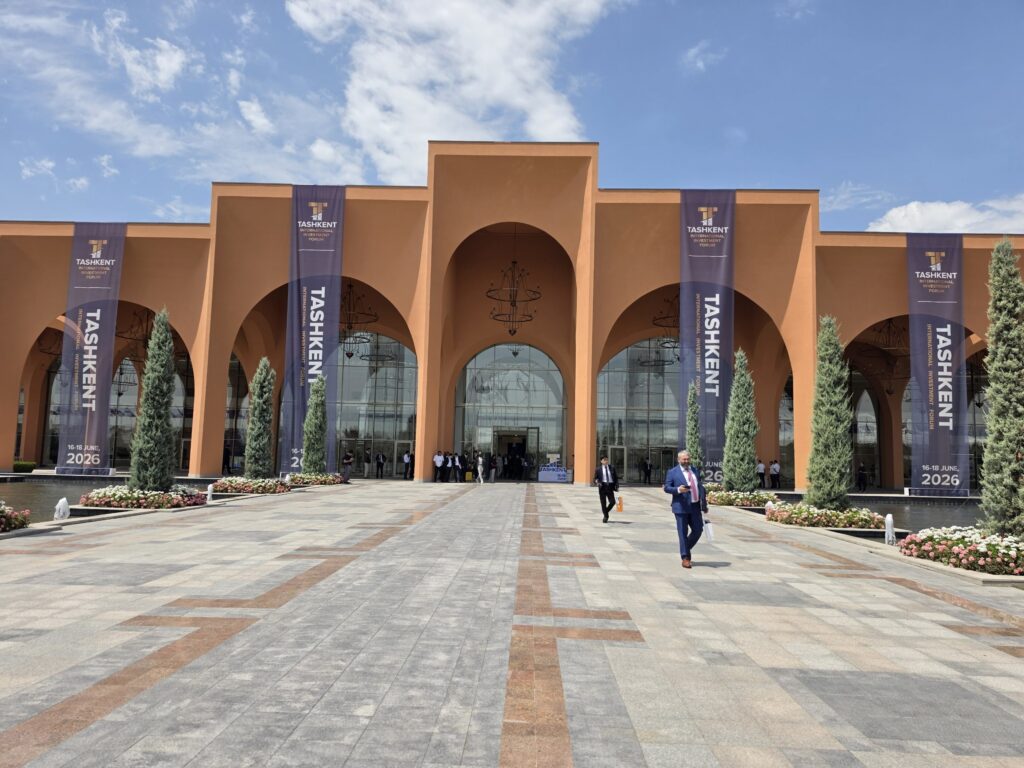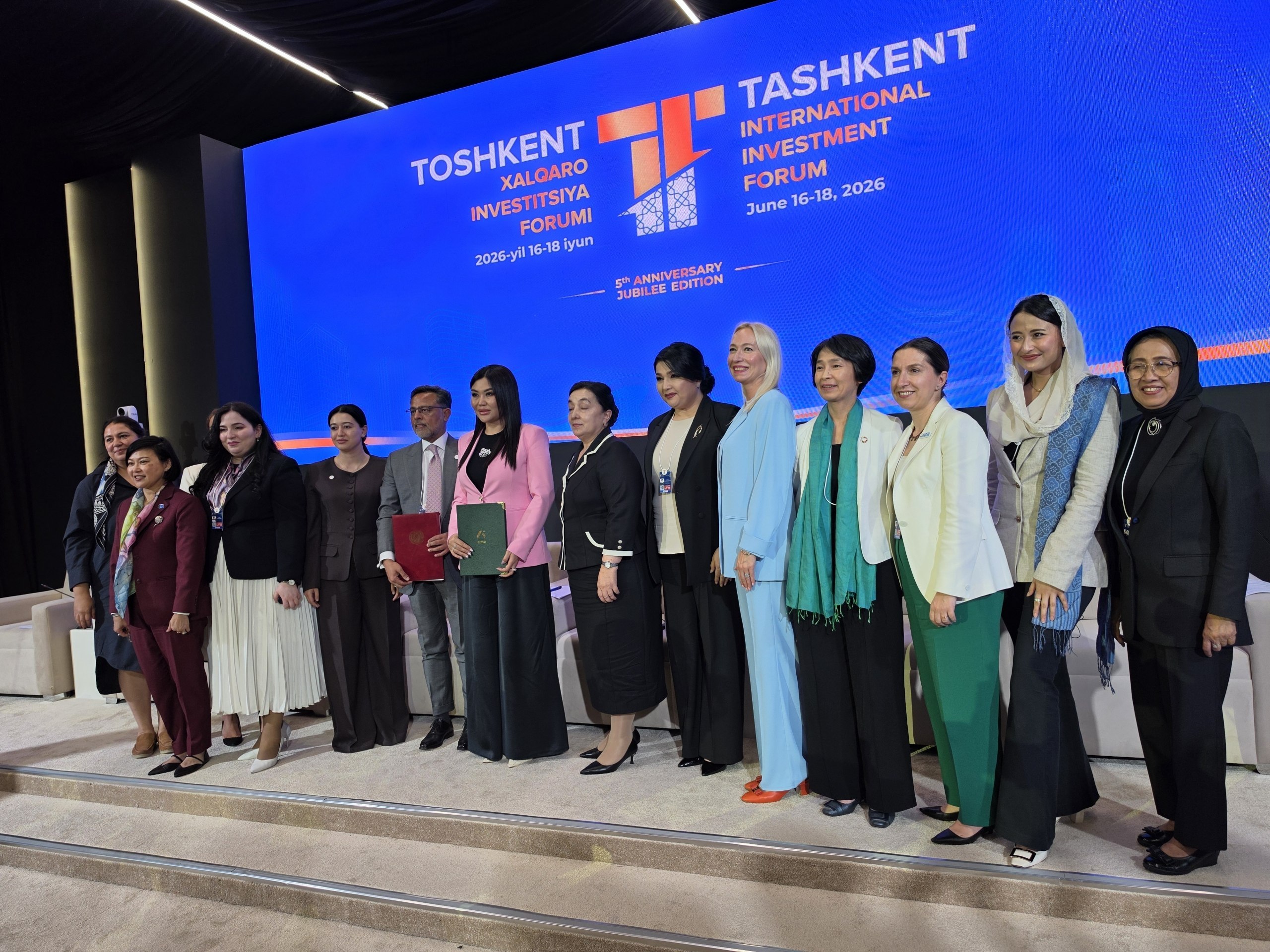
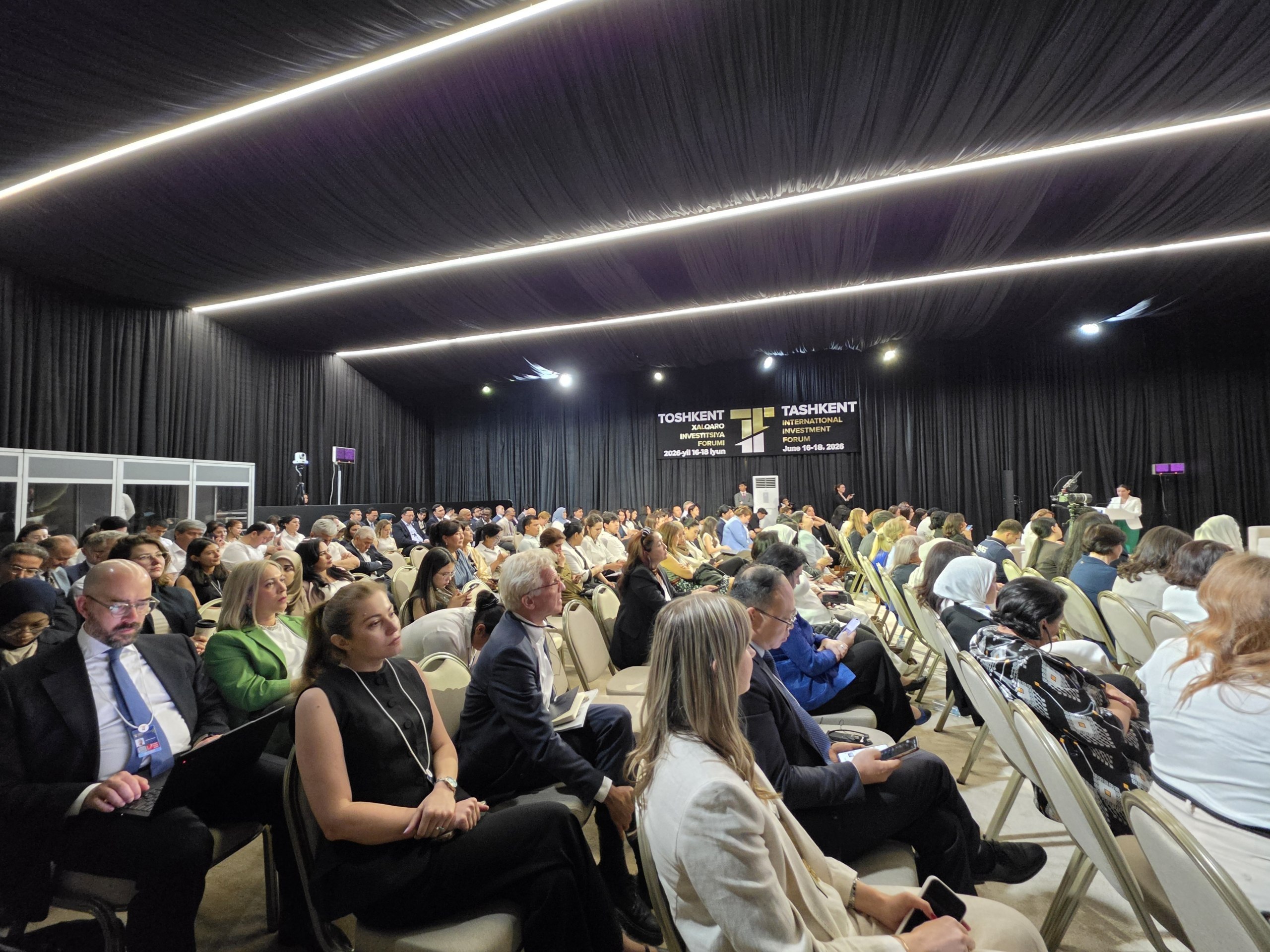
The “Women in Enterprise” panel at the fifth Tashkent International Investment Forum (TIIF) 2026 put female entrepreneurship and gender-inclusive growth at the center of Uzbekistan’s investment agenda.
Held on June 16, the session, formally titled Women in Enterprise: The Economic Case for Gender-Inclusive Growth, examined how greater female participation in business could support Uzbekistan’s wider economic reforms.
The panel took place as Uzbekistan has improved its position in the World Bank’s Women, Business and the Law index by 43 places, ranking it 48th out of 190 economies.
Speaking on the panel, Deputy Prime Minister Zulaykho Makhkamova, who also chairs Uzbekistan’s Committee on Family and Women, highlighted how rapidly women’s participation has expanded beyond traditionally female-dominated professions.
“Women’s participation in the digital economy is approaching 40%,” Makhkamova said. “Thousands of women are participating in new programs related to artificial intelligence and the One Million Coders initiative.”
Despite these advances, access to capital, market opportunities, training, and leadership positions continues to lag behind.
According to Kanokpan Lao-Araya, country director of the Asian Development Bank (ADB) in Uzbekistan, women account for roughly 40% of entrepreneurs in the country – about 2.1 million people in 2024, according to UNDP figures. However, their access to financing remains disproportionately low.
“Credit going to women is only 14%,” Lao-Araya said. “Access to finance is the end goal. In order to reach that, we have to focus on the ecosystem.”
The ADB has been working with the Uzbek government on SME development strategies that include gender components, while also supporting local banks through dedicated credit lines aimed at increasing lending to women entrepreneurs. The institution has established targets requiring participating banks to allocate at least 30% of borrowers to women-led businesses.
“Instead of only focusing on participation, we need to look at the next stage of growth and scale,” Lao-Araya said.
That argument was echoed by Momina Aijazuddin, regional industry director at the International Finance Corporation (IFC), who presented figures illustrating the scale of the challenge globally. According to IFC data, only $19 out of every $100 invested in emerging-market portfolios reaches women. Women-owned MSMEs in emerging and developing markets face an estimated $1.9 trillion financing gap.
“If women started and scaled businesses at the same rate as men, it would increase the global economy by almost $6 trillion,” Aijazuddin said. “I come from Pakistan, where a man is five times more likely to have a bank account than a woman.”
Aijazuddin argued that international financial institutions are increasingly treating women’s entrepreneurship as an investment opportunity rather than a charitable cause. IFC’s Banking on Women program has already mobilized nearly $13 billion aimed at women entrepreneurs and women-led small and medium-sized enterprises.
The organization is also experimenting with innovative financial instruments designed to attract larger pools of capital. Among the examples she cited was IFC’s $100 million investment in Akbank’s digitally issued gender bond, with proceeds directed toward women-owned SMEs and mortgage loans for women in Turkey.
“What we’re trying to do is mobilize private capital from around the world into a space that investors would not otherwise go into,” she said.
One of the most detailed discussions of local challenges came from Dilfuza Nurmatova, general director of Hamroh, a state-supported organization created to support women entrepreneurs.
According to her, access to financing remains one of the most common challenges facing aspiring entrepreneurs. Women often encounter difficulties because they lack collateral or have limited credit histories. A second obstacle involves business skills and experience. A third is market access.
“Many women offer quality goods, products, and services,” Nurmatova said. “But they face difficulties finding customers, developing partnerships, using sales tools, and entering new markets … the best approach is comprehensive support.”
Hamroh was established at the beginning of 2025 and has quickly become one of the country’s most ambitious programs aimed at supporting female entrepreneurship.
Working with 13 commercial banks, the organization helps women access loans on preferential terms. Loans can reach up to approximately $1 million, with repayment periods of up to seven years and grace periods lasting three years.
Most significantly, Hamroh provides guarantees covering up to 70% of loan amounts, addressing one of the biggest obstacles women face when seeking financing. Applications are submitted through an online platform, eliminating direct human involvement and reducing opportunities for bureaucratic interference. The organization also provides grants for green projects, technology initiatives, and businesses that create jobs for other women.
According to Nurmatova, Hamroh has already attracted nearly 10 billion Uzbekistani sum in grant funding. Its educational programs, developed in cooperation with the UNDP, provide training, acceleration services, and mentorship.
In a relatively short period, Hamroh has reached more than 18,000 women entrepreneurs. More than 6,000 projects have received financing. More than 12,000 women have completed online or in-person training programs. Hundreds have received individualized mentoring and consulting support.
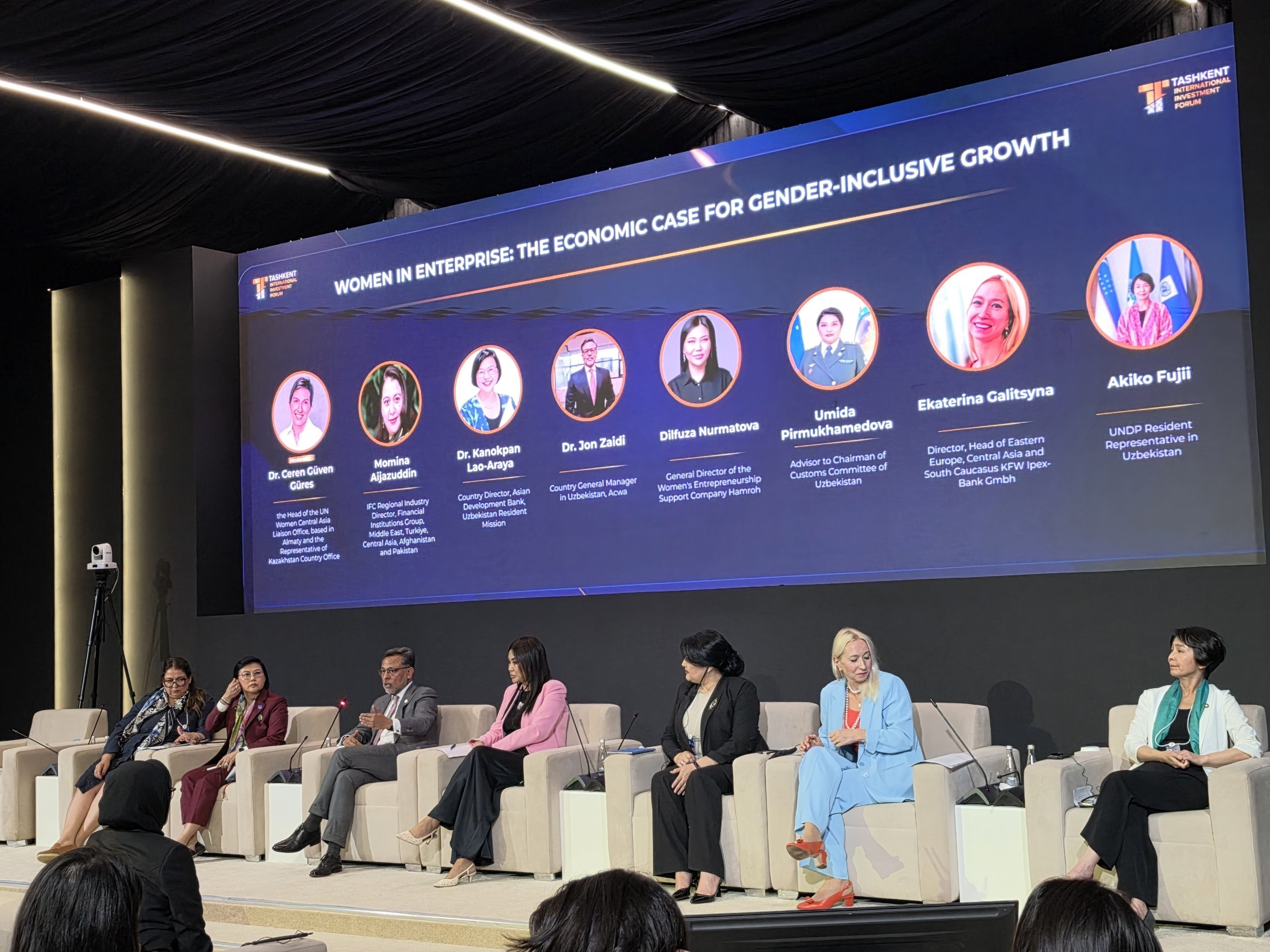
Akiko Fujii, UNDP resident representative in Uzbekistan, cited Uzbekistan’s decision to remove restrictions preventing women from driving heavy vehicles as a success in the legal realm. She argued that legislative changes expand the range of professions and business opportunities available to women.
Yet laws alone are insufficient. A major challenge remains the large number of women working in the informal economy. Although the number of women entrepreneurs has increased dramatically, many remain outside formal labor protections and financial systems. She also highlighted another issue frequently overlooked in economic discussions: unpaid care work.
According to UNDP research, women in Uzbekistan spend more than five hours each day caring for children, elderly relatives, and family members – more than twice the amount of time spent by men. One UNDP study found that establishing a single public preschool creates conditions that enable approximately 23 additional women to enter the labor force.
“The social programs in this country are not necessarily standing alone as social policy,” Fujii said. “They actually make sense when it comes to economic impact.”
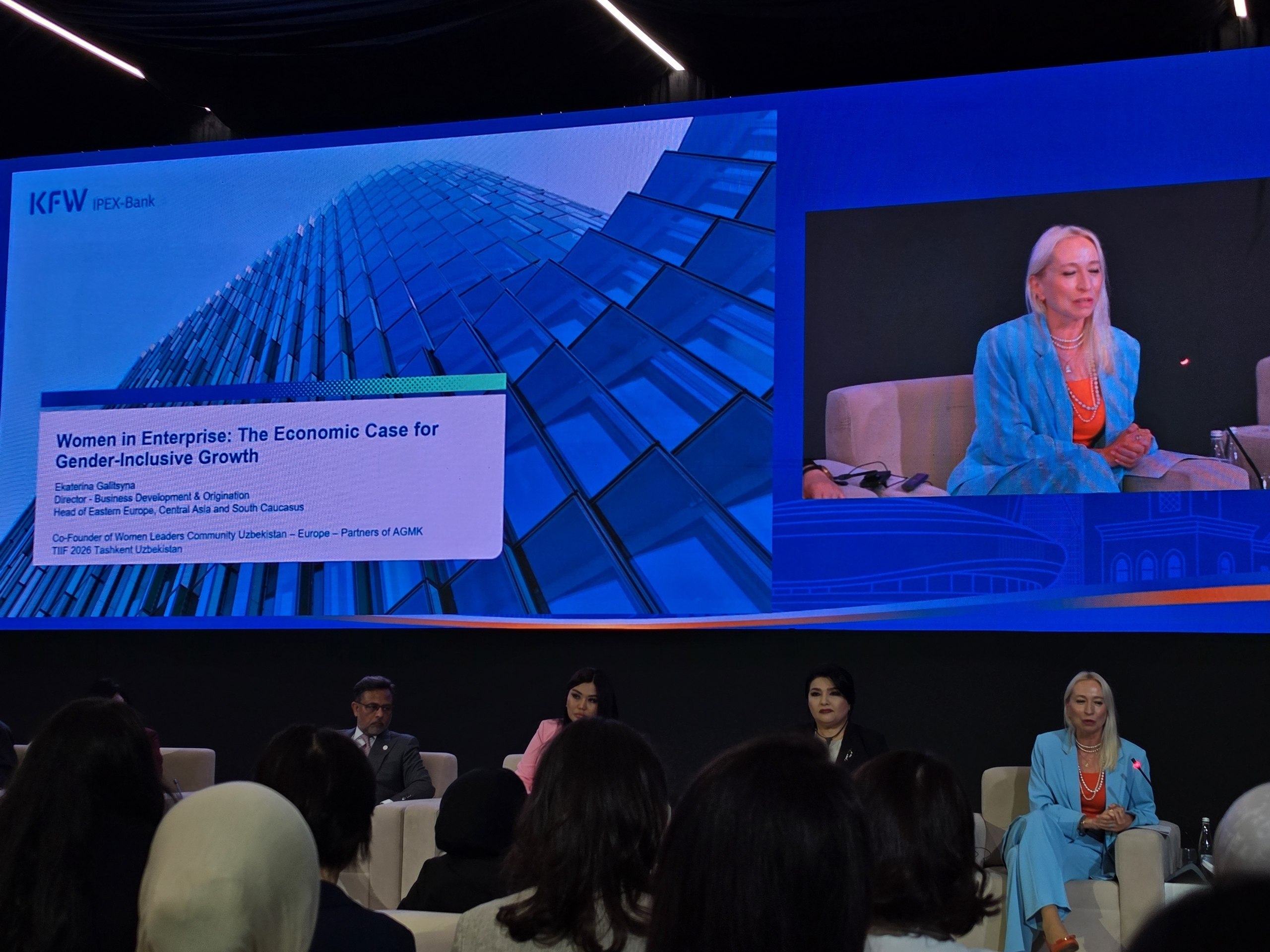
Ekaterina Galitsyna addresses the panel
Ekaterina Galitsyna, director and head of Eastern Europe, Central Asia, and the South Caucasus at KfW IPEX-Bank, noted that women remain underrepresented in mining, engineering, and field-based energy roles. At the same time, she sees opportunities emerging as Uzbekistan modernizes its economy.
However, Galitsyna identified several persistent barriers, including social expectations, mobility constraints, corporate culture, and the limited visibility of female role models.
“We need more and more such examples,” Galitsyna said.
Her own initiative, Women Leaders Uzbekistan-Europe, was established to connect female leaders from Uzbekistan and Europe, promote mentorship, and create opportunities for younger professionals.
Perhaps the most revealing perspective came from the private sector itself. Dr. Jon Zaidi, country general manager of ACWA Power in Uzbekistan, spoke candidly about the challenges facing women in the energy industry. Energy has traditionally been one of the world’s most male-dominated sectors.
But Zaidi believes the transition toward renewable energy and digital technologies could fundamentally change that reality.
“Green energy is not just about changing the fuel,” he said. “It’s about understanding how technology is changing.”
Modern energy systems increasingly rely on data analysis, automation, software, environmental management, and digital monitoring. As a result, many of the physical barriers that historically discouraged women from entering the industry are becoming less relevant.
“Now it’s digital, now it’s data, now it’s about creativity, now it’s about intelligence,” he said.
ACWA Power has launched initiatives to better understand why women remain underrepresented in the sector. The company is conducting research into hidden barriers and implicit biases, and has invested in training programs aimed at increasing female participation.
One example is Shirin Energy College in the Syrdarya region, where the company is already seeing female technicians and interns entering renewable-energy projects.
Zaidi acknowledged that some obstacles originate not only within companies but also within broader society. In one recruitment initiative, the company struggled to attract women because families were reluctant to allow daughters to relocate for technical training.
The challenge, he argued, is expanding the pipeline of future talent.
“Fifty percent of any transformation cannot happen if 50% of your workforce is not available,” he said.
Beyond the panel discussion, Lao-Araya spoke with The Times of Central Asia about where she sees the greatest opportunities for women entrepreneurs in Uzbekistan and across Central Asia.
“In Uzbekistan in particular, we have a large population, scale, and reforms that the government has engaged in,” she said. “You can see from this forum that so many investors show up because they know this is a country that is dynamic.”
However, Lao-Araya stressed that governments, financial institutions, and development organizations must continue providing tools and support. When asked whether international investors are becoming more interested in women-led businesses, her answer was unequivocal.
“We’re always interested in women,” she said. “They know they have to give back to the community. When women start businesses, they also hire other women.”