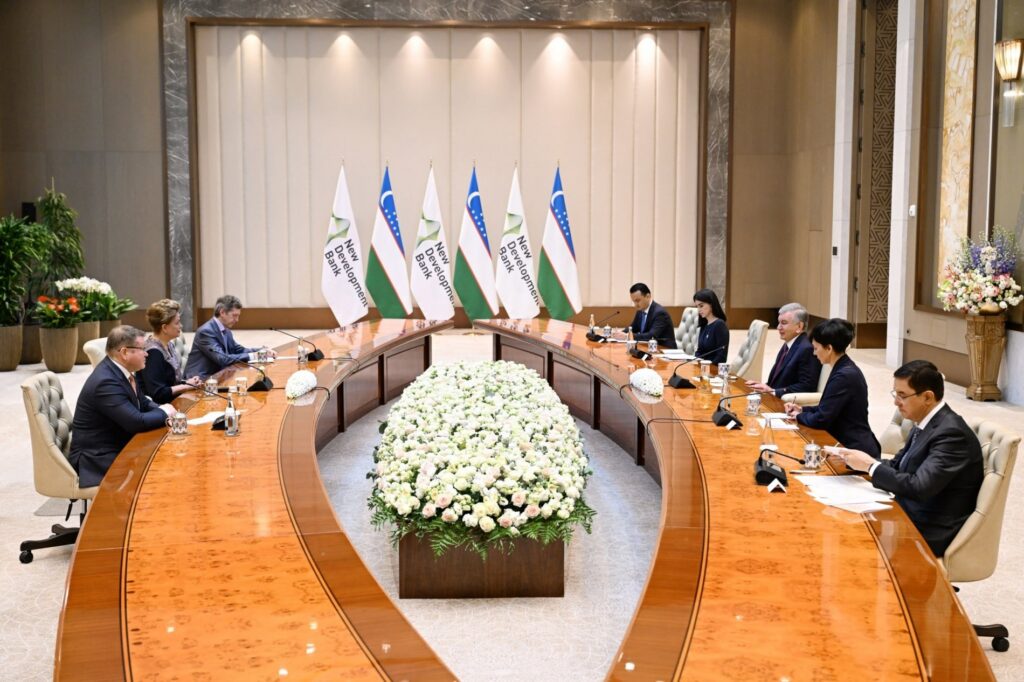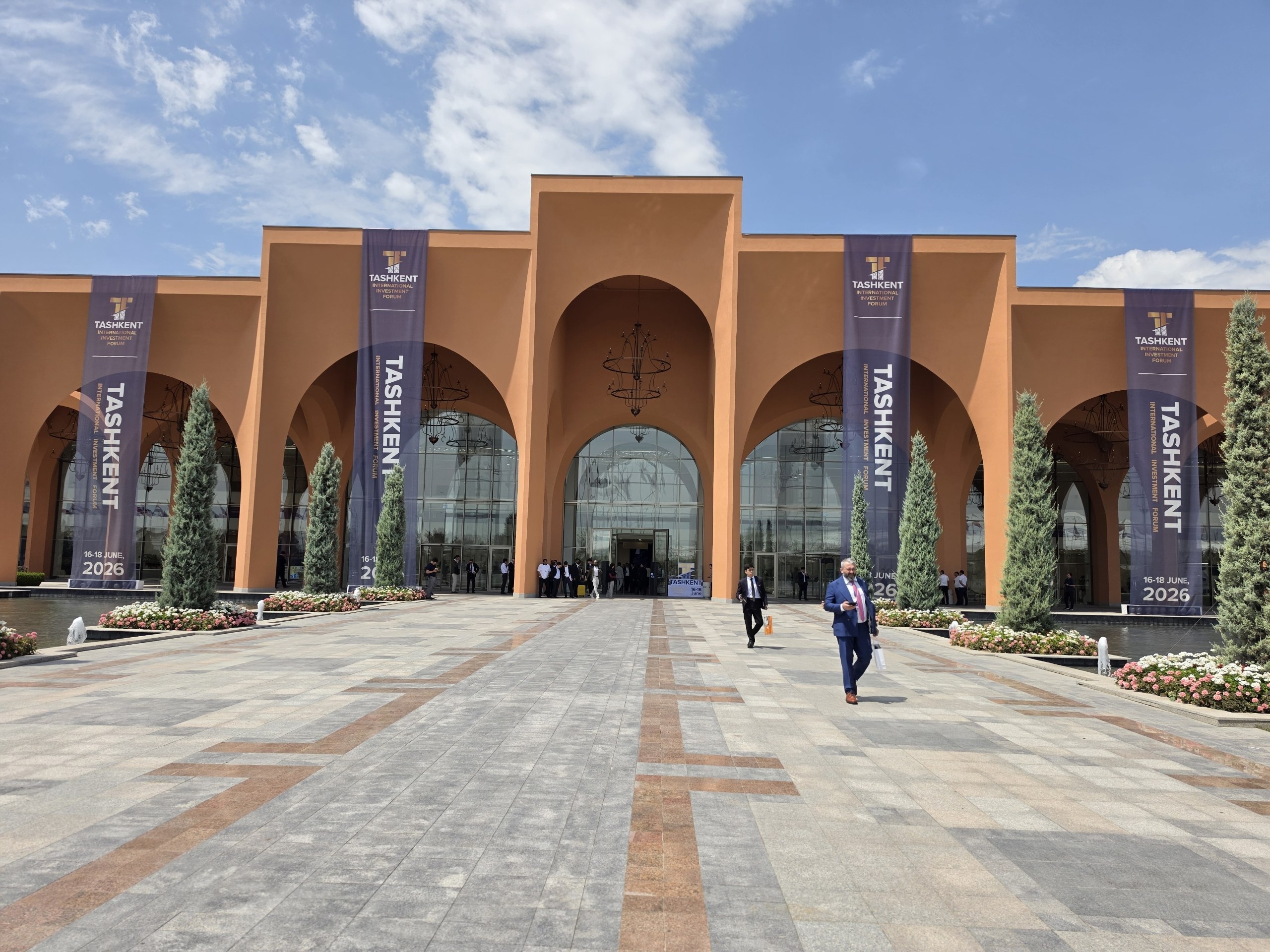
At the Tashkent International Investment Forum 2026, a panel on “Digital Diplomacy and Soft Power” examined how governments use online platforms, artificial intelligence and direct public communication to shape their international reputation and attract investment.
Vladimir Norov, Uzbekistan’s former foreign minister, former secretary-general of the Shanghai Cooperation Organization and current chairman of the Central Asian Association for Artificial Intelligence, said diplomacy had changed sharply since he entered the profession in the 1990s. Governments that once had time to verify information and prepare formal responses now face pressure to communicate within minutes.
“When I was appointed ambassador to Germany in 1998, we had no website,” Norov recalled. “We prepared one ourselves. At that time, communication was very different.”
According to Norov, diplomacy has shifted to a model of permanent connectivity. Information spreads globally within minutes, often before governments have had time to verify facts or coordinate responses.
For Norov, the today’s challenge is “balancing speed with wisdom … We must communicate promptly while ensuring accuracy and preserving dialogue.”
At the same time, he warned that governments also face serious challenges such misinformation campaigns, cyber threats, and the growing influence of large technology companies in shaping public narratives.
Norov recalled that in previous years many government institutions were reluctant to communicate publicly. When he became director of Uzbekistan’s Institute for Strategic and Regional Studies in 2018, he discovered that the institution lacked a website and social media presence.
“It was a challenge to convince people,” he said. “Many believed the information should remain internal.”
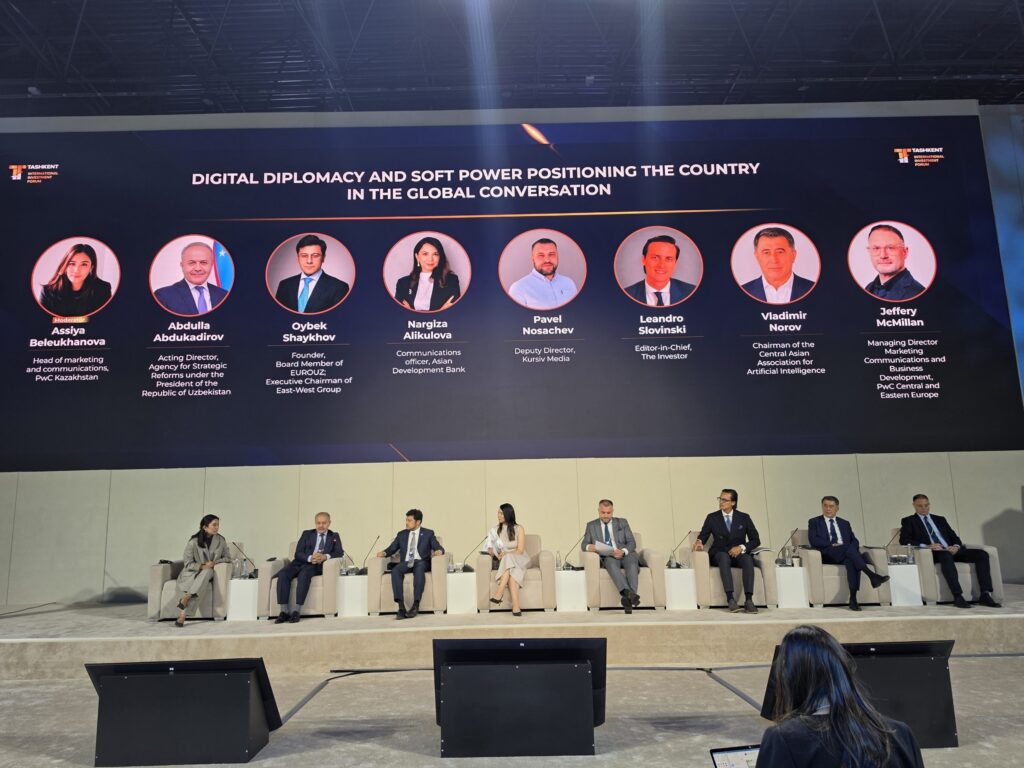
Image: TCA
The discussion at TIIF extended beyond diplomacy to the broader question of how countries communicate economic reforms and investment opportunities.
Abdulla Abdukadirov, acting director of the Agency for Strategic Development and Reforms, argued that one of the biggest challenges in attracting investment is the gap between ambitious promises and practical implementation.
“Every investor’s main motivation is to make money, but the expectations of the hosting country are more to bring value,” he said.
According to Abdukadirov, governments must avoid creating unrealistic expectations and should focus on commitments within their operational control.
He stressed a shift in how Uzbekistan presents itself internationally. “We are not considering Uzbekistan as one unique country, but as a whole region, Central Asia,” he said.
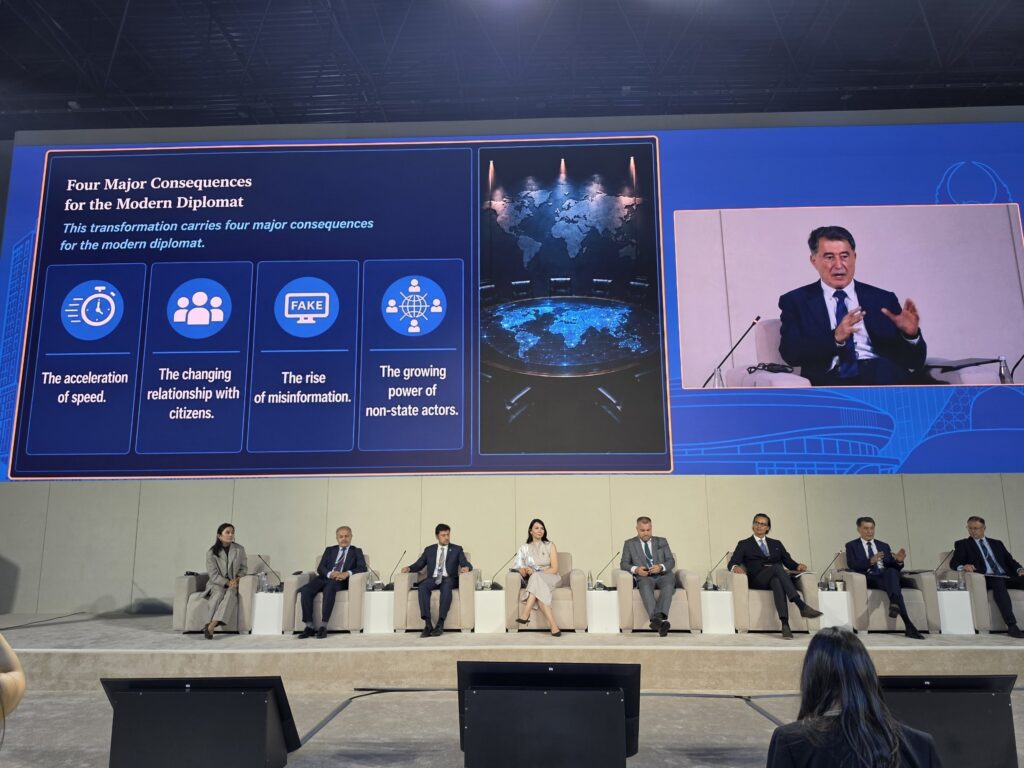
Image: TCA
The role of communication in shaping investor perceptions was also highlighted by Oybek Shaykhov, founder of EUROUZ and East-West Group. Drawing on his experience working with European businesses, Shaykhov argued that communication quality remains a critical factor in attracting long-term investment.
He suggested that governments must respond more proactively to investor inquiries.
“When a decision is taken, we have to give some reason why exactly this decision is taken,” Shaykhov said.
Leandro Slovinski, editor-in-chief of The Investor, compared national investment promotion to the customer-service strategies used by luxury brands. According to Slovinski, governments should focus on highly targeted engagement with specific investors.
“We should stop addressing foreign investors as a whole,” Slovinski said, stressing that investors often remember not only meetings with senior officials, but also the follow-up that comes afterward. “Did they call me? Have they sent me the email they promised? Did they do things on time?” he asked.
Based on his experience, Uzbekistan has developed a reputation for responsiveness and speed compared to many other markets.
Jeffery McMillan, managing director for brand, marketing, and communications at PwC Central and Eastern Europe, argued that communications campaigns alone cannot transform a country’s reputation. Instead, he said, successful national branding emerges when reforms, economic development, business experiences, and public narratives reinforce one another over time.
“Countries don’t change their international reputation through communications campaigns alone,” McMillan said. “The key to credibility is consistency.”
McMillan highlighted examples such as Estonia and Poland, where long-term narratives have helped shape international perceptions. He also praised Uzbekistan’s efforts to connect digitalization with broader governance reforms.
Particularly significant, he said, was the government’s emphasis on digital monitoring systems and the Uzbekistan 2030 strategy.
“It is not just digital in message, but digital in the substance of how reforms are managed as well,” McMillan observed.
While the panel covered a broad range of issues, artificial intelligence emerged as one of the most consequential themes.
In a separate interview with The Times of Central Asia after the session,
said AI could change how diplomats process information, prepare briefings and communicate across language barriers.
“When I worked as minister from 2006 to 2010, I had to report to the president twice a day on what was happening in neighboring countries and around the world,” he said.
Preparing those briefings, he said, often required reviewing hundreds of pages of information to identify developments relevant to Uzbekistan’s national interests.
“Now AI helps process huge amounts of information very quickly,” Norov said.
He also pointed to translation technology as one of the clearest uses of AI in diplomacy, saying improved real-time translation could make communication between officials, businesses and foreign publics faster and more accessible.
Routine administrative work, particularly in consular services, is another area where artificial intelligence could improve efficiency, he said.
But Norov cautioned against treating AI as a substitute for diplomatic judgment.
“AI cannot replace diplomats,” Norov said. “More important is the integration of traditional and digital diplomacy.”
Asked whether artificial intelligence could help Central Asian countries compete more effectively for global attention and investment, Norov linked the technology to the region’s wider push for coordination.
He pointed to the Consultative Meetings of Central Asian Leaders, launched at Uzbekistan’s initiative, and said closer industrial cooperation across the region could make Central Asia more attractive to major international investors.
For smaller and mid-sized economies, he argued, the ability to present regional projects clearly and quickly is becoming part of the investment pitch. Digital diplomacy and AI, in that context, are a way of explaining Central Asia as a more connected economic space.
Norov said recent investment figures announced during the forum showed growing interest in Uzbekistan and the wider region. But he returned to a more traditional principle at the center of diplomacy.
“Mutual trust,” he said, “is where every relationship begins.”
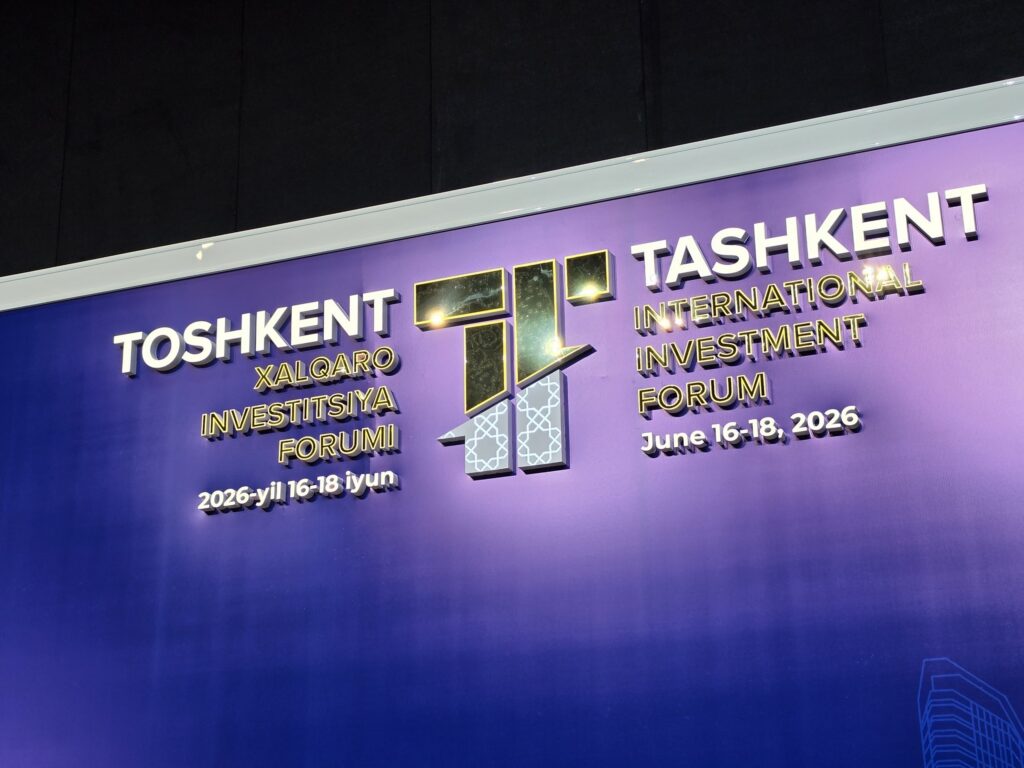
Image: TCA