
• KZT/USD = 0.00226
  • TJS/USD = 0.10830
  • UZS/USD = 0.00009
  • TMT/USD = 0.29760
  • KZT/USD = 0.00226
  • TJS/USD = 0.10830
  • UZS/USD = 0.00009
  • TMT/USD = 0.29760
  • KZT/USD = 0.00226
  • TJS/USD = 0.10830
  • UZS/USD = 0.00009
  • TMT/USD = 0.29760
  • KZT/USD = 0.00226
  • TJS/USD = 0.10830
  • UZS/USD = 0.00009
  • TMT/USD = 0.29760
  • KZT/USD = 0.00226
  • TJS/USD = 0.10830
  • UZS/USD = 0.00009
  • TMT/USD = 0.29760
  • KZT/USD = 0.00226
  • TJS/USD = 0.10830
  • UZS/USD = 0.00009
  • TMT/USD = 0.29760
  • KZT/USD = 0.00226
  • TJS/USD = 0.10830
  • UZS/USD = 0.00009
  • TMT/USD = 0.29760
  • KZT/USD = 0.00226
  • TJS/USD = 0.10830
  • UZS/USD = 0.00009
  • TMT/USD = 0.29760
25 September 2026

Our People > Yulia Smolina

Yulia Smolina's Avatar

Journalist

Yulia Smolina is a journalist and analyst from Kazakhstan. She collaborates with leading national and international media outlets.

Articles

Lithuania Closures Highlight Limits of Central Asia’s Migration Shift Away From Russia

Lithuania will close external service provider centers that accept migration documents in Kazakhstan, Kyrgyzstan, and Uzbekistan on November 1. A day before the announcement, Lithuania’s Migration Department said external service centers in Central Asia had stopped accepting new applications from residents seeking to come to the country for work after receiving a very high volume of employment applications. Lithuania had also exhausted its annual quota for foreign workers earlier in September. Interior Minister Martynas Katelynas said the November 1 closures were prompted by security risks and the threat of terrorism. The centers act as intermediaries, accepting applications for Lithuanian residence permits and initiating migration procedures Lithuania’s State Security Department has previously reported identifying individual members of the Central Asian community with radical views or links to terrorism. In its annual threat assessment, the agency also said that Islamic State Khorasan Province, or ISIS-K, has been recruiting followers within Central Asian diaspora communities in Europe. However, the agency said it considers it unlikely that Lithuania itself will become a direct target for Islamist terrorists in the near term. The security decision comes as Lithuania has also reached its annual foreign-worker quota. The country set a quota of 24,706 foreign workers for 2026, which was officially declared exhausted on September 7. Once the quota is reached, a temporary residence permit based on employment remains available if the worker meets a higher salary threshold or belongs to certain high-value professions that are in shortage and meets the separate salary requirement for those professions. As of September 1, nearly 227,000 foreign nationals held valid residence permits in Lithuania. They included around 13,000 Uzbek citizens and 7,400 Tajik citizens. Demand for Lithuania has grown alongside broader interest in the European labor market. Between 2018 and 2024, the number of valid EU work permits held by Uzbek citizens increased roughly eightfold, those held by Kyrgyz citizens more than sevenfold, and those held by Tajik citizens more than fourteenfold. Poland has become one of the main destinations, Germany is expanding organized recruitment, and the UK has become an important source of seasonal work, while labor mobility programs are also emerging elsewhere in Europe. Conditions are also changing in Russia, which for decades has absorbed most of the region’s labor migrants. Following the March 2024 Crocus City Hall terrorist attack, the authorities tightened migration rules, expanded registration requirements, and introduced greater digital monitoring of foreign workers. In the first half of 2026, citizens of Uzbekistan, Tajikistan, and Kyrgyzstan made around 1.9 million entries into Russia declaring work as the purpose of their trip, down from more than 2.3 million a year earlier. The decline does not mean that there is no longer dependence on the Russian labor market. In the first quarter of 2026, Russia accounted for 72.4% of cross-border remittances to Uzbekistan. In Kyrgyzstan, a March 2025 estimate put the number of citizens living abroad at roughly 600,000; around 380,000 were registered with Russian migration authorities at the end of 2024. For Central Asian migrants, European migration...

1 day ago

South Korea Steps Up Central Asia Critical Minerals Push

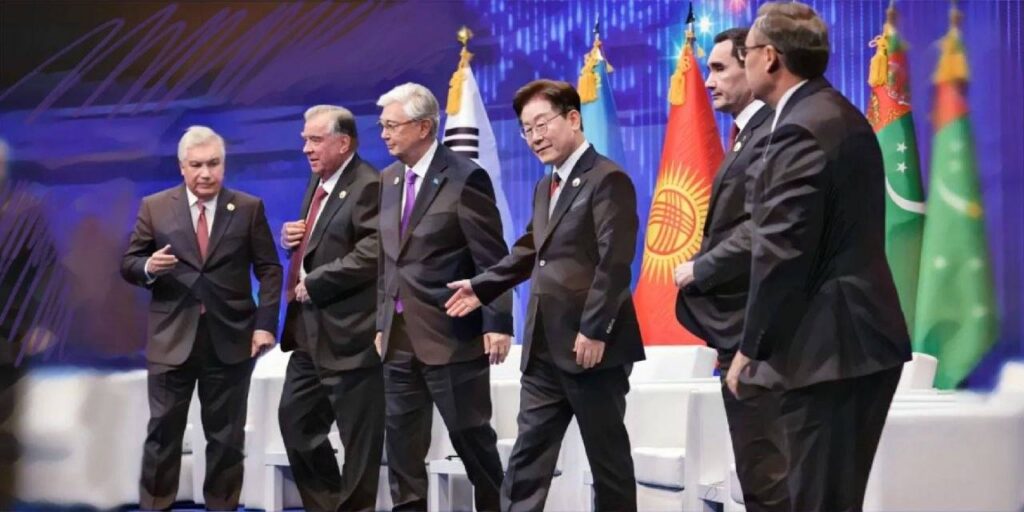
The first South Korea–Central Asia summit, held in Seoul on September 16, capped three days of bilateral meetings that produced more than 70 agreements and memorandums. The leaders agreed to meet every two years, a separate C5+1 forum for industry ministers was established, and critical minerals took a central place on the new agenda. The main question now is how many of those documents will translate into mines, processing plants, and long-term contracts. South Korea needs reliable supplies of metals for its automotive, electronics, battery, and energy industries. Central Asia wants to use that demand to develop domestic processing and reduce its reliance on raw material exports. Seoul proposed combining the region’s resources with its own exploration, mineral processing, and manufacturing technologies. President Lee Jae Myung spoke of cooperation across the production chain, from identifying deposits to manufacturing finished products. Rare metals centers being established at key locations in Central Asia are intended to support joint research and specialist training. Until now, South Korea has worked with the region’s countries largely through bilateral ties. The new C5+1 format adds a regional mechanism to those relationships. Kazakhstan will host the next summit in 2028. Kazakh financier and analyst Rasul Rysmambetov believes the value of the new format will depend on the region’s ability to secure tangible industrial results. He sees South Korea as an attractive partner because of its experience with rapid industrialization and its strengths in building industrial facilities. “The priority for Central Asia is to stop selling raw materials. We need to establish processing in the region. The heads of state’s visit to Seoul was highly productive. In fact, all summits in similar formats have been productive. The main question now is how to move away from exporting raw materials and toward joint industrialization,” Rysmambetov told The Times of Central Asia. Uzbekistan put forward a broader regional proposal. President Shavkat Mirziyoyev called for an investment alliance for critical minerals, with processing clusters bringing together exploration, mining, and the production of high-value goods. Uzbekistan and South Korea are already developing a joint rare metals center and have agreed to strengthen cooperation throughout the production chain. Kazakhstan offered Korean businesses a broader package covering rare metals, nuclear and clean energy, and artificial intelligence. Urban development was also part of the talks, including the Alatau Smart City project near Almaty. The countries upgraded their ties to a comprehensive strategic partnership and signed a memorandum on the peaceful use of nuclear energy. The energy agreements also cover conventional resources. In April, South Korea said it had secured 18 million barrels of Kazakh crude oil. In Kyrgyzstan, Korean organizations are working with their Kyrgyz counterparts to identify possible antimony and tungsten projects and strengthen exploration capacity. Tajikistan is also offering cooperation on antimony, as well as precious metals, building on the first Korea–Tajikistan Minerals Forum, which took place in August. The minerals agenda is complemented by Korean willingness to invest in transport and infrastructure. South Korea and Uzbekistan agreed to expand Korean participation in...

1 week ago

Space Days Kazakhstan Highlights Push Beyond Baikonur

Kazakhstan is home to Baikonur, the cosmodrome from which the Space Age began, but the country has spent three decades trying to turn that Soviet inheritance into a space sector of its own. At Space Days Kazakhstan, held on September 7–9 in Astana and Baikonur, Kazakhstan presented new satellite projects and plans for international cooperation. A day later, talks with China were announced on a separate five-satellite network for Central Asia. By 2030, Astana plans to assemble an international constellation of nine Earth-observation satellites, six of them Kazakh. The country is also upgrading its national satellite communications system, developing new Earth-observation spacecraft at home, and expanding cooperation with China and other partners. Kazakhstan still relies heavily on Russia at Baikonur, and many of its newer projects depend on foreign technology and cooperation. Nevertheless, Astana is seeking greater control over the infrastructure and spacecraft on its own territory while widening the number of countries it works with. Taking More Control at Baikonur One of the clearest examples of Kazakhstan’s attempt to gain more control over its space sector is Baiterek, a joint project with Russia that dates back to 2004. The original agreement called for a new launch complex at Baikonur. But the project spent much of the next two decades being redesigned as Russia changed the rocket it planned to use. Baiterek was first intended for the Angara rocket, then Zenit, and finally Soyuz-5, known in Kazakhstan as Sunkar. Each change brought further delays. After launch targets in 2023, 2024, and 2025 slipped, Soyuz-5 finally lifted off from Baikonur on April 30, 2026. The rocket carried a dummy payload on the first flight in the test program. The launch mattered less for what it carried than for what it represented. Kazakhstan now operates the launch pad and ground infrastructure used by Baiterek, giving it a larger role at a cosmodrome long dominated by Russia. But Russia still builds the rocket. That reflects the wider relationship at Baikonur. The cosmodrome remained on Kazakh territory after the collapse of the Soviet Union, but Russia leases it through 2050 for $115 million a year and continues to use it for its human spaceflight program. In July 2026, Baikonur was again used for an international mission to the ISS. Kazakhstan is therefore not replacing Russia at Baikonur. It is trying to take a larger role in a space complex where Russia remains deeply embedded. But launch infrastructure is only one part of Kazakhstan’s attempt to develop capabilities of its own. Increasingly, the focus is on satellites. Building Satellites at Home KazSat is the country’s national satellite communications and broadcasting system. KazSat-3 currently provides data transmission, television, and other communications services. Its planned operating life ends in late 2029. KazSat-3R is being developed as its replacement. The national operator, the Republican Center for Space Communication, invited more than 40 spacecraft manufacturers to participate in the selection process. Fourteen companies responded: two from Kazakhstan and twelve from abroad. The operator plans to cover more than half...

2 weeks ago

Kazakhstan Prepares QazETA Entry Authorization for Visa-Free Travelers

Kazakhstan is preparing to change entry rules for citizens of countries that enjoy visa-free travel: before their trip, they may be required to obtain an Electronic Travel Authorization (ETA). The system remains voluntary for now, but legislation already suggests that authorities are preparing for their phased mandatory introduction. The new rules will also affect Russians and citizens of other Eurasian Economic Union countries. An ETA is a form of pre-travel authorization used by a number of countries to screen visa-exempt travelers before arrival. QazETA is the digital platform through which Kazakhstan issues the authorization. It does not replace a visa or extend the permitted period of stay. Kazakhstan launched the platform in pilot mode earlier in 2026, with a new phase of implementation beginning on August 25. Citizens of visa-exempt countries are currently advised to apply through the mobile app no later than 72 hours before traveling. The authorization is valid for 180 days. For now, the absence of an ETA is not grounds for border authorities to deny entry. Kazakhstan’s Law on Migration already contains a separate article governing electronic travel authorization. It provides for a fee for obtaining an ETA, with the proceeds to be divided equally between financing the digital system and supporting tourism development. The government has not yet publicly set the amount of the fee. A detailed timetable reported from an earlier version of Serbia’s Ministry of Foreign Affairs travel advisory indicated that the ETA could become mandatory for air travelers from November 1, then be extended to road crossings with China, Uzbekistan, and Turkmenistan, followed later by the borders with Russia and Kyrgyzstan, and by mid-December to rail and maritime travel. However, the ministry’s current advisory no longer lists those dates. It says Kazakhstan will announce the dates for each stage, as well as the fee, separately. The same reports have also cited an indicative fee of around 3,900 tenge – approximately $9 – for a standard application and twice that amount for an application submitted directly at the border. In practical terms, the new system means that visa-free travel will remain in place, but travel itself will no longer be entirely free of advance formalities. Foreign nationals will still be able to enter without a visa, but they will likely have to register through QazETA and obtain an ETA before crossing the border. For Kazakhstan, the mechanism provides a way to obtain information about incoming travelers in advance and monitor migration flows more closely. Attracting Skilled Professionals At the same time, the government is seeking to make the country more attractive to skilled professionals and investors. In May, authorities presented a new migration model with separate arrangements for entrepreneurs, highly qualified workers, and other categories of foreign nationals. The new rules have attracted particular attention because of Russia. The two countries share a long land border, are members of the Eurasian Economic Union, and maintain visa-free travel. After Russia announced partial mobilization for the war in Ukraine in September 2022, Kazakhstan became one...

3 weeks ago

Water in Central Asia: Can the Five States Reach an Agreement?

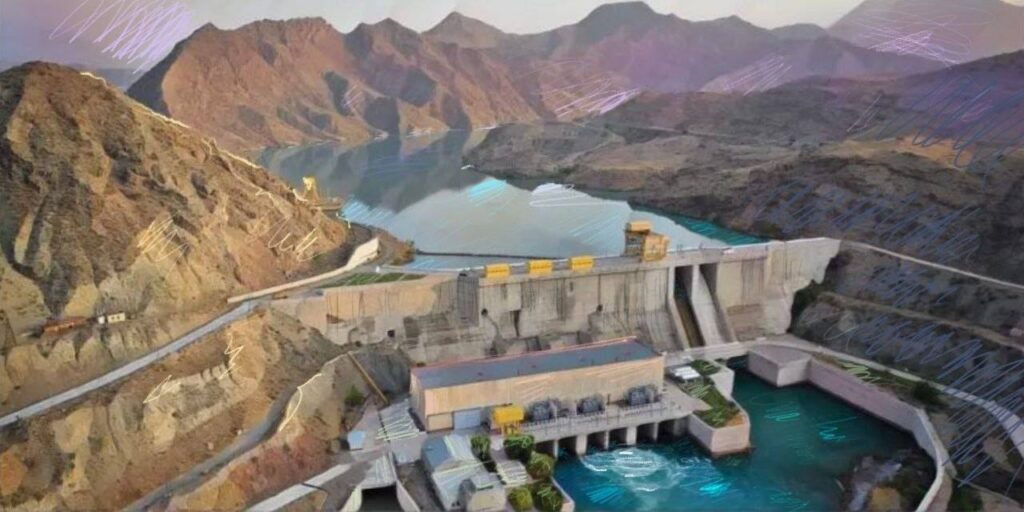
Central Asia is entering a period of growing water stress, as climate change makes supplies less predictable while demand continues to rise. Populations are growing, economies require new energy and industrial capacity, glaciers are shrinking, and agriculture continues to consume most of the available water. The region’s two main rivers – the Amu Darya and Syr Darya – cross national borders, making it impossible for any one country to solve the problem on its own. After decades of disputes, Central Asian states are increasingly trying to manage water jointly. In 2026, that cooperation has produced further practical steps, from plans for automated water accounting in the Syr Darya basin to new proposals for reforming regional mechanisms. The question now is whether the five countries can agree on rules when their water needs remain different. Water and Energy: An Old Conflict The structural conflict is rooted in the region’s geography. Kyrgyzstan and Tajikistan are upstream states and use water in part for hydropower generation, particularly in winter. Kazakhstan, Uzbekistan, and Turkmenistan are downstream and need large volumes in summer during the irrigation season. During the Soviet period, a centralized exchange system was in place: upstream republics stored water in winter and released it in summer, receiving energy resources in return. After the collapse of the Soviet Union, that unified mechanism disappeared. Interstate agreements preserved a degree of coordination but did not eliminate the tension between upstream energy needs and downstream agricultural interests. Climate change is now adding another layer to the problem. Retreating glaciers in the Pamir and Tien Shan mountains are altering the timing and reliability of river flows, while populations and consumption are increasing. Countries across the region are planning new power plants, industrial facilities, mining projects, and data centers, while agriculture remains the largest consumer of water. From Seasonal Quotas to Joint Management The main formal mechanism for coordinating river allocations remains the Interstate Commission for Water Coordination of Central Asia (ICWC), established in 1992. Through it, countries coordinate water withdrawal limits and reservoir operating regimes in the Amu Darya and Syr Darya basins. In late 2025, the countries agreed on water allocations for 2026: for the Amu Darya, the total withdrawal limit for the water-management year from October 2025 to October 2026 was around 55.4 billion cubic meters, while the Syr Darya allocation for the non-growing season was approximately 4.2 billion cubic meters. The five-state framework does not, however, cover every major user of the Amu Darya. Afghanistan is outside the regional allocation system, while its Qosh Tepa Canal, now under construction, has added another source of uncertainty over future downstream flows. Such agreements keep the shared system functioning, but many decisions are still made ahead of each new season. Climate change and rising demand require a longer-term model. In February of this year, Kazakhstan proposed developing a Central Asian Framework Convention on Water Use, while joint infrastructure projects, including Kyrgyzstan’s Kambarata-1 hydropower plant with the participation of Kazakhstan and Uzbekistan, are gradually adding shared economic interests...

3 weeks ago

Kazakhstan Investment Portfolio Hits $78.6 Billion – But How Much Is Secured?

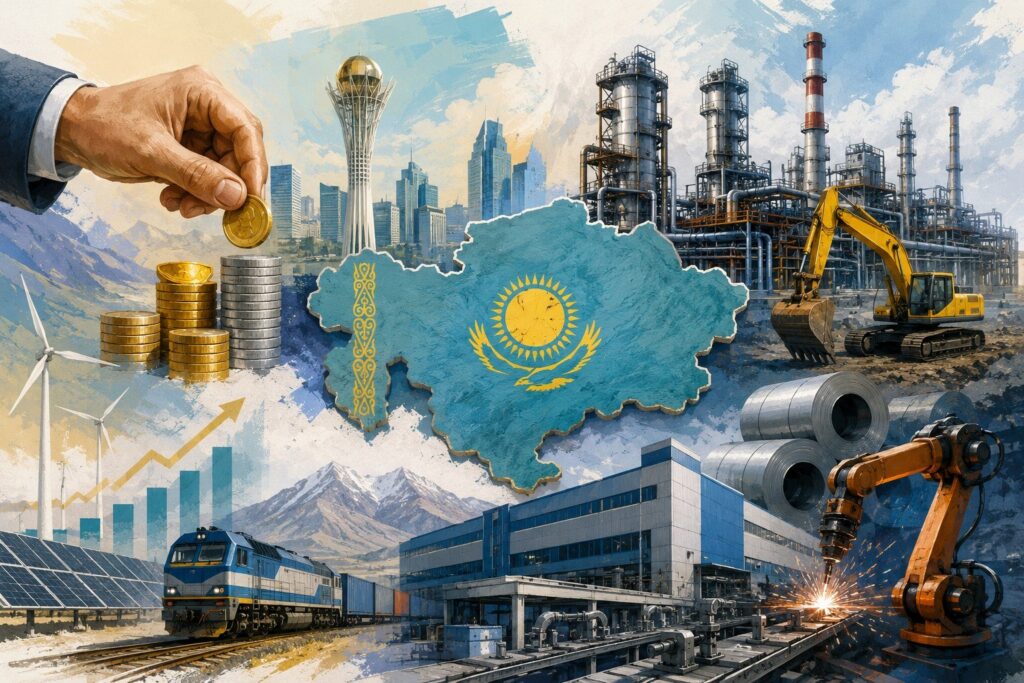
Kazakhstan is trying to change not only how much investment it attracts, but where that money goes, directing more capital toward manufacturing, deeper processing of raw materials, and high-tech projects. The main test will be whether announced projects and memorandums turn into financing, construction, and production. Kazakhstan has assembled an investment portfolio of 215 projects worth a combined $78.6 billion, seeking to attract capital into raw-material processing, new manufacturing, and digital infrastructure. However, almost 60% of the announced amount is tied to projects still under development, while about $30 billion – more than a third of the entire portfolio – is associated with the planned Data Center Valley in Ekibastuz. The government presented the new investment cycle on August 31. If all the projects are implemented, they are expected to create more than 88,000 jobs. But the full $78.6 billion is far from guaranteed. Of the 215 projects, 93 worth $32.2 billion are under implementation, while another 122 worth $46.4 billion are still under development. The government has not specified the extent to which either category has already received financing or investment. A separate investment-agreement mechanism is available for major projects worth more than 32 billion tenge (about $69 million). Since its launch in 2021, Kazakhstan has signed 66 such agreements worth more than 17.8 trillion tenge ($38.5 billion), including 25 worth approximately 4.4 trillion tenge ($9.5 billion) as of August 2026. An investment agreement and inclusion in the Kazakh Invest portfolio therefore do not mean the same thing. AI Project in Ekibastuz Tops Investment Ladder The largest component of the new portfolio is far removed from Kazakhstan’s traditional investment projects. Data Center Valley is being developed near the Ekibastuz GRES-1 power station to accommodate large-scale computing capacity, cloud services, and artificial intelligence infrastructure. The authorities estimate expected investment at about $30 billion. That represents roughly 38% of the entire $78.6 billion portfolio. The area allocated for the future zone has been expanded from an initial 200 hectares to 1,400 hectares, while available power capacity is expected to increase gradually from 300 MW to 1 GW. The $30 billion figure, however, represents expected investment rather than the cost of projects that have already secured financing. The largest specific package announced so far came in June, when the Kazakh government, U.S.-based Firebird, and NVIDIA signed agreements on artificial intelligence and digital infrastructure worth $10 billion. Firebird is the investor and NVIDIA the technology partner. The plan calls for a computing cluster of around 100,000 advanced GPUs. The first phase is scheduled to launch in 2027. The authorities expect the complex, once fully operational, to generate at least $3 billion in annual export revenue. Another potential participant emerged in late August. Singapore-based Energy Capital Global is considering a separate AI campus with an initial IT load of about 100 MW and the potential to expand to 1 GW. The project’s cost has not yet been disclosed. Petrochemicals Remain Second Center of Gravity Despite the emphasis on technology, Kazakhstan’s largest industrial projects remain closely...

3 weeks ago