Central Asia is entering a period of growing water stress, as climate change makes supplies less predictable while demand continues to rise. Populations are growing, economies require new energy and industrial capacity, glaciers are shrinking, and agriculture continues to consume most of the available water. The region’s two main rivers – the Amu Darya and Syr Darya – cross national borders, making it impossible for any one country to solve the problem on its own.
After decades of disputes, Central Asian states are increasingly trying to manage water jointly. In 2026, that cooperation has produced further practical steps, from plans for automated water accounting in the Syr Darya basin to new proposals for reforming regional mechanisms. The question now is whether the five countries can agree on rules when their water needs remain different.
Water and Energy: An Old Conflict
The structural conflict is rooted in the region’s geography. Kyrgyzstan and Tajikistan are upstream states and use water in part for hydropower generation, particularly in winter. Kazakhstan, Uzbekistan, and Turkmenistan are downstream and need large volumes in summer during the irrigation season.
During the Soviet period, a centralized exchange system was in place: upstream republics stored water in winter and released it in summer, receiving energy resources in return. After the collapse of the Soviet Union, that unified mechanism disappeared. Interstate agreements preserved a degree of coordination but did not eliminate the tension between upstream energy needs and downstream agricultural interests.
Climate change is now adding another layer to the problem. Retreating glaciers in the Pamir and Tien Shan mountains are altering the timing and reliability of river flows, while populations and consumption are increasing. Countries across the region are planning new power plants, industrial facilities, mining projects, and data centers, while agriculture remains the largest consumer of water.
From Seasonal Quotas to Joint Management
The main formal mechanism for coordinating river allocations remains the Interstate Commission for Water Coordination of Central Asia (ICWC), established in 1992. Through it, countries coordinate water withdrawal limits and reservoir operating regimes in the Amu Darya and Syr Darya basins.
In late 2025, the countries agreed on water allocations for 2026: for the Amu Darya, the total withdrawal limit for the water-management year from October 2025 to October 2026 was around 55.4 billion cubic meters, while the Syr Darya allocation for the non-growing season was approximately 4.2 billion cubic meters.
The five-state framework does not, however, cover every major user of the Amu Darya. Afghanistan is outside the regional allocation system, while its Qosh Tepa Canal, now under construction, has added another source of uncertainty over future downstream flows.
Such agreements keep the shared system functioning, but many decisions are still made ahead of each new season. Climate change and rising demand require a longer-term model. In February of this year, Kazakhstan proposed developing a Central Asian Framework Convention on Water Use, while joint infrastructure projects, including Kyrgyzstan’s Kambarata-1 hydropower plant with the participation of Kazakhstan and Uzbekistan, are gradually adding shared economic interests to the broader water-energy relationship.
Another practical step followed in August. States met in Turkestan for the 94th ICWC meeting, where Kazakhstan, Uzbekistan, Tajikistan, and Turkmenistan agreed to develop a plan for automated water accounting in the Syr Darya basin. Kyrgyzstan participated as an observer.
Automated monitoring is intended to address one of the most sensitive problems: the reliability of data on transboundary water flows. Kazakhstan and Uzbekistan are already working to automate ten transboundary monitoring stations in the Syr Darya basin, five in each country.
By August, conditions on the Syr Darya were relatively stable: since April 1, around 3 billion cubic meters of water had flowed into Kazakhstan’s Shardara Reservoir – more than a year earlier and above the long-term average.
Who Should Pay for Water?
A favorable season does not eliminate longer-term tensions. Kyrgyzstan and Tajikistan have an interest in operating hydropower plants in winter, while Kazakhstan and Uzbekistan need sufficient water to remain available for summer irrigation.
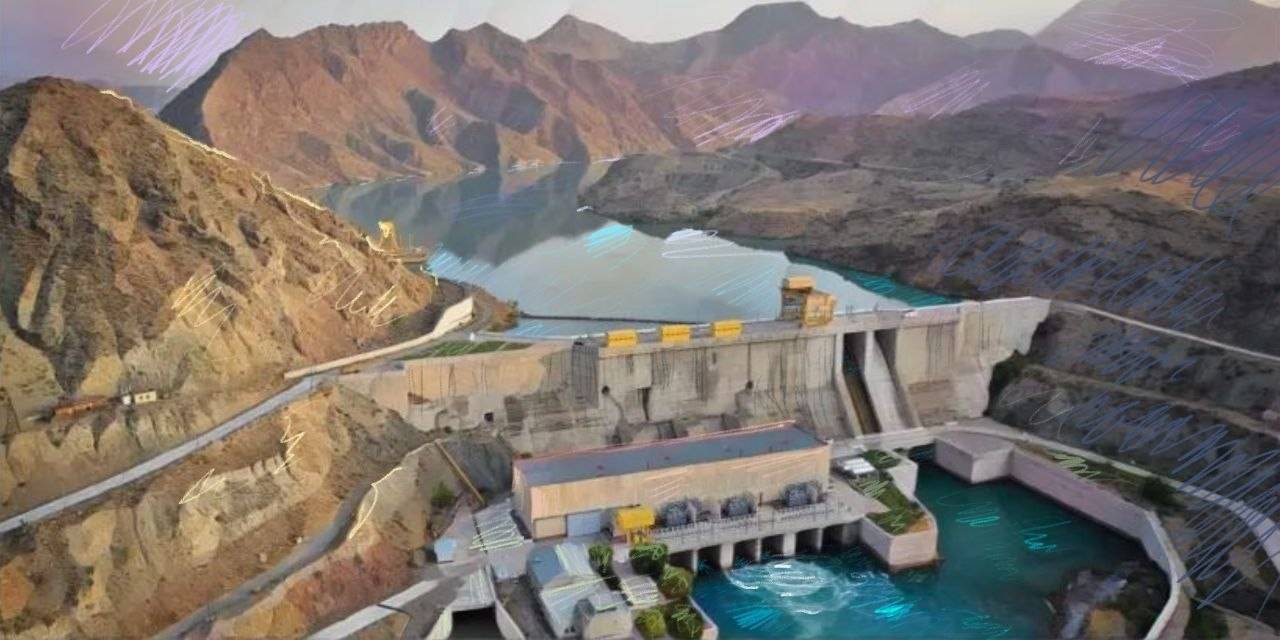
The Toktogul Reservoir in Kyrgyzstan illustrates this interdependence. The country’s largest hydropower plant is located there and generates around 40% of Kyrgyzstan’s electricity, while its operating regime also determines how much water flows downstream through the Syr Darya. In May, Kazakhstan, Kyrgyzstan, and Uzbekistan signed a trilateral protocol agreeing on a schedule for water releases from Toktogul.
Kyrgyzstan is increasingly raising the question of how costs should be shared. Bishkek points to the expense of maintaining dams, reservoirs, and other infrastructure. In February, parliamentarian Umbetaly Kydyraliyev proposed that neighboring countries compensate Kyrgyzstan for water and the costs of maintaining hydraulic infrastructure, while President Sadyr Japarov proposed a regional economic compensation mechanism for water and energy in April.
Kazakhstan and Uzbekistan do not support such a model, pointing out that existing agreements do not provide for payment for water from transboundary rivers.
The dispute also sits alongside a less contentious problem: large amounts of water are lost across aging canal and distribution networks, while cultivation of water-intensive crops keeps irrigation demand high.
The Issue Is No Longer Just How Much Water There Is
At Tashkent Water Week, Murad Uzakov, head of the Center for Regional Studies at Uzbekistan’s Institute for Strategic and Regional Studies, said the water problem had already moved beyond environmental concerns and become a matter of national and regional security.
Because of the condition of canals, dams, and distribution systems, water losses can reach 40%-50% in some areas, while around 90% of the region’s water withdrawals are used for irrigated agriculture. By 2050, he said, flows in the Amu Darya and Syr Darya could decline by 5%-13%.
At the same time, Uzakov pointed to stronger regional cooperation, including joint use of the Naryn basin’s water and energy resources, preparations for the Kambarata-1 hydropower project, and hydropower development on the Zarafshan River. In his view, the region needs a common strategy for the rational use of water.
Iskandar Abdullaev, a senior researcher at the International Water Management Institute (IWMI), stressed at the same forum that infrastructure and digitalization alone are not enough without better coordination and data sharing. Climate change is making water resources more unpredictable, meaning decisions need to be made at the level of shared river basins rather than by individual states alone.
From Central Asia to the UN
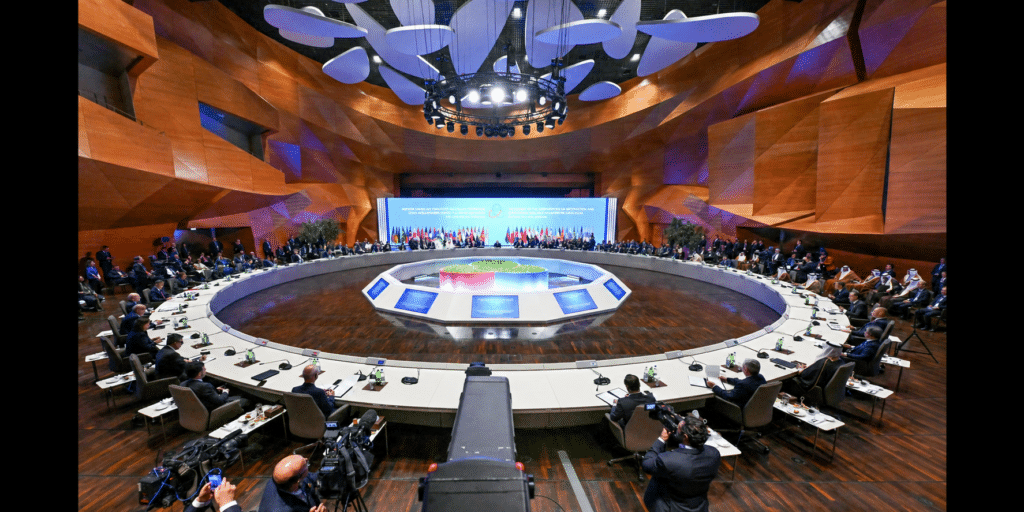
Kazakhstan is trying to elevate the water issue to the international level. At the Regional Ecological Summit in Astana in April, discussions covered the management of transboundary resources, the state of glaciers, and a proposal to establish an International Water Organization within the UN system.
On September 1, Kazakh President Kassym-Jomart Tokayev again advanced the initiative, saying that the global system of water governance remains fragmented. He also proposed establishing a Water Issues Analysis Center within the Shanghai Cooperation Organization.
For Central Asia, however, agreements among the region’s countries will remain decisive. An international organization can help with coordination and mobilizing resources, but it cannot determine how much water should remain in reservoirs in winter and how much needs to be released to fields in summer.
Central Asia is gradually moving from recognizing that it has a shared water problem to seeking joint solutions. The main test for this new phase of regional cooperation, however, will be whether the five states can reconcile their still-divergent interests and turn political will into functioning mechanisms and concrete projects. With climate change and demand for water increasing, the region has less and less time to make that transition.