• KGS/USD = 0.01144 0%
  • KZT/USD = 0.00196 -0%
  • TJS/USD = 0.10899 -0%
  • UZS/USD = 0.00008 -0%
  • TMT/USD = 0.28490 0%
  • KGS/USD = 0.01144 0%
  • KZT/USD = 0.00196 -0%
  • TJS/USD = 0.10899 -0%
  • UZS/USD = 0.00008 -0%
  • TMT/USD = 0.28490 0%
  • KGS/USD = 0.01144 0%
  • KZT/USD = 0.00196 -0%
  • TJS/USD = 0.10899 -0%
  • UZS/USD = 0.00008 -0%
  • TMT/USD = 0.28490 0%
  • KGS/USD = 0.01144 0%
  • KZT/USD = 0.00196 -0%
  • TJS/USD = 0.10899 -0%
  • UZS/USD = 0.00008 -0%
  • TMT/USD = 0.28490 0%
  • KGS/USD = 0.01144 0%
  • KZT/USD = 0.00196 -0%
  • TJS/USD = 0.10899 -0%
  • UZS/USD = 0.00008 -0%
  • TMT/USD = 0.28490 0%
  • KGS/USD = 0.01144 0%
  • KZT/USD = 0.00196 -0%
  • TJS/USD = 0.10899 -0%
  • UZS/USD = 0.00008 -0%
  • TMT/USD = 0.28490 0%
  • KGS/USD = 0.01144 0%
  • KZT/USD = 0.00196 -0%
  • TJS/USD = 0.10899 -0%
  • UZS/USD = 0.00008 -0%
  • TMT/USD = 0.28490 0%
  • KGS/USD = 0.01144 0%
  • KZT/USD = 0.00196 -0%
  • TJS/USD = 0.10899 -0%
  • UZS/USD = 0.00008 -0%
  • TMT/USD = 0.28490 0%
08 December 2025
Uncategorized

Turkmenistan Government Monitoring Former Law Enforcers and Imposing Travel Restrictions

Turkmenistan’s Ministry of Justice has launched an initiative to collect data on former Interior Ministry officials to track those who have left the country. This move is the latest in a series of efforts by the government to monitor and restrict its citizens’ ability to travel abroad.

Tracking Former Law Enforcement Officers

Since February 2025, the Ministry of Justice has been compiling information on former law enforcement officers who held ranks of major or higher and served between 1991 and 2024. The Ministry of Internal Affairs, the Ministry of National Security (MNS), the Migration Service, and the Prosecutor’s Office have been instructed to assist in the campaign, which is expected to conclude by the end of April. The main objective is to identify retired officers who have relocated abroad.

Several theories have emerged regarding the authorities’ motives. One explanation is that routine inspections revealed cases of former officers settling in other countries after retirement. Another theory links the initiative to the recent controversy surrounding Rustam Inoyatov, the former head of Uzbekistan’s National Security Service, who, along with his family, acquired Vanuatu citizenship through a “golden passport” program. Turkmen security services suspect that similar schemes may have been used by their own former colleagues.

Particular scrutiny is being placed on those who had professional ties with Inoyatov during his tenure. Law enforcement veterans are now required to submit reports detailing their current residence and occupation. In cases where an ex-officer has passed away, their relatives must provide official documentation, including death certificates and burial site information.

New Restrictions on Travel Abroad

Retired law enforcement officers have been informed that they may only leave the country for medical reasons and must obtain official authorization from the Ministry of Health.

This is not the first instance of the government tightening travel restrictions. In September 2024, reports surfaced that public sector employees were being compelled to surrender their biometric passports or provide proof that they did not possess one. 

While officials have not commented on these measures, observers believe they are linked to the increasing number of citizens emigrating in search of work or permanent residency. Additionally, recent reports indicate that some Turkmen nationals have participated in Russia’s war against Ukraine, with some receiving Russian citizenship in return for their military service.

Confiscation of Student Passports

Travel restrictions have also been extended to students. In the fall of 2024, media reports revealed that students enrolling in Turkmen universities were required to surrender their passports to prevent them from traveling abroad. 

Students who refuse to comply and sign a receipt acknowledging the surrender of their passports face the risk of being denied admission. According to sources, this policy has been in place for two years, with passports held by faculty deans for the duration of students’ studies.

Although officials have not provided explanations for these measures, university professors suggest that they aim to curb mass youth migration. Previously, students were only required to sign receipts, but authorities have now escalated their efforts by confiscating passports entirely.

Uncategorized

Uzbekistan and Turkmenistan Reach Agreement on Amu Darya Water Usage

A delegation from Uzbekistan’s Ministry of Water Resources visited Turkmenistan on March 13-14 to discuss bilateral cooperation on water management, Dunyo reports. Officials from both countries met in Turkmenabat to address key issues, including the maintenance and modernization of water infrastructure, flood prevention, riverbank reinforcement, and efficient water use. As part of the discussions, the sides reaffirmed their commitment to implementing agreements reached during the fourth Uzbek-Turkmen intergovernmental meeting on water management. They agreed to collaborate on hydrotechnical projects aimed at minimizing water losses in the Amu Darya River and optimizing resource use.

The two countries also plan to conduct joint research on shared water bodies, exchange expertise on water-saving technologies and digital management systems, and enhance training programs for water management specialists.

During the visit, the Uzbek delegation toured the Tuyamoyin hydroelectric complex, where representatives discussed potential improvements to its operations.

Previously, The Times of Central Asia reported that Kazakhstan is set to receive 11 billion cubic meters of irrigation water by April 2025 under an agreement signed in Dushanbe.

Meanwhile, on World Rivers Day of Action, environmental groups raised concerns about growing threats to Central Asia’s rivers and lakes. Organizations such as Rivers Without Boundaries and Friends of the Earth US have called on international financial institutions to reconsider funding for hydropower projects in the region.

Uncategorized

New Border Warehouse to Boost Kyrgyz Agricultural Exports to China

Kyrgyzstan and China have inaugurated a major new warehouse in the city of Ulugqat, located in China’s northwestern Xinjiang Uyghur Autonomous Region (XUAR), near the Kyrgyz border.

The facility is designed to facilitate the export of Kyrgyz agricultural products to China, serving as a key logistics hub for cargo passing through the nearby Torugart and Irkeshtam border checkpoints.

At the opening ceremony on March 18, Bakyt Torobayev, Deputy Chairman of Kyrgyzstan’s Cabinet of Ministers and Minister of Water Resources, Agriculture, and Processing Industry, stated that the warehouse will improve logistics and ensure a reliable and uninterrupted supply of agricultural goods. In its initial phase, it will focus on the smooth transit of grain and legumes.

According to the Kyrgyz government’s press service, the warehouse is divided into four zones: vegetable storage, frozen storage, laboratory facilities, and general cargo. It has an annual processing capacity of more than 1 million tons. Future expansion plans aim to accommodate a broader range of agricultural products beyond grains and legumes.

During the ceremony, a deputy chairman of XUAR’s People’s Government emphasized China’s commitment to increasing imports of high-quality Kyrgyz agricultural products, in line with President Xi Jinping’s directives.

Official statistics show that in 2024, Kyrgyzstan’s agricultural exports to China reached $124 million. Of this, 8.6% consisted of livestock products, 19.4% crop products, and 72% processed food and agricultural goods.

Plans for a New Logistics Park

During his visit to Xinjiang, Torobayev also met with major Chinese companies in the province’s capital Urumqi to discuss a project for an international customs and logistics park, Golden Road Asia-Europe, in Kyrgyzstan’s Chui region.

Torobayev announced that Kyrgyzstan will allocate a land plot for the facility, which is expected to equally serve the export-import interests of both countries. The total investment in the project is estimated at $30 million.

Chinese Agricultural Equipment for Kyrgyzstan

Torobayev also held talks with a Chinese company specializing in agricultural drones and artificial precipitation technologies. As a result, the company agreed to provide Kyrgyzstan with agricultural equipment for artificial rain and pest control, valued at more than $1.1 million, on a grant basis.

Uncategorized

EU-Uzbekistan Cooperation Focuses on Digital Connectivity and Critical Raw Materials

On March 18, European Commissioner for International Partnerships Jozef Síkela visited Uzbekistan on the final leg of his Central Asia tour. In Tashkent, he met with President Shavkat Mirziyoyev to strengthen the growing partnership between Uzbekistan and the European Union.

According to the EU Delegation to Uzbekistan, discussions centered on expanding digital connectivity, promoting sustainability, and fostering job creation through critical raw materials. Another key focus was the development of the Trans-Caspian Transport Corridor to enhance trade. The visit also highlighted how the EU’s Global Gateway strategy supports infrastructure and clean energy initiatives.

Both sides acknowledged the increasing momentum in EU-Uzbekistan relations, particularly in political, trade, economic, investment, cultural, and humanitarian cooperation. They also discussed preparations for the first-ever Central Asia-EU summit, set to take place in early April in Samarkand.

New EU-Funded Projects in Uzbekistan

As part of the Team Europe Initiative on Digital Connectivity in Central Asia, Síkela witnessed the signing of agreements for two key EU-funded projects aimed at improving digital infrastructure across the region:

  • The Connectivity for Central Asia (C4CA) Project – This initiative seeks to enhance digital infrastructure and regional integration, supporting economic growth and better access to online services. By fostering stronger digital ties among Central Asian countries, the project aims to bridge the digital divide and promote economic cooperation.
  • The Satellite Connectivity for Underserved Populations Project – This project is designed to provide high-speed internet access to remote and underserved communities in Central Asia. By improving digital access in rural areas, the initiative supports education, healthcare, and economic development, aligning with the EU’s broader goal of promoting inclusive digital connectivity.

Síkela underscored the importance of EU-Uzbekistan cooperation in improving internet access across the region. “European technology combined with Uzbek expertise can ensure more people have access to fast and secure internet, support businesses to grow, create new jobs, and improve living conditions in local communities. By investing in digital connectivity, we’re bridging gaps, creating opportunities, and ensuring that Central Asia is ready to benefit from the digital economy,” he said.

Cooperation on Critical Raw Materials

During his visit, Síkela also toured the Almalyk Mining and Metallurgical Complex, one of Uzbekistan’s key industrial facilities. The visit aimed to explore opportunities for sustainable resource development and responsible investment in critical raw materials, further strengthening economic cooperation between the EU and Uzbekistan.

Another Drone Crashes in West Kazakhstan

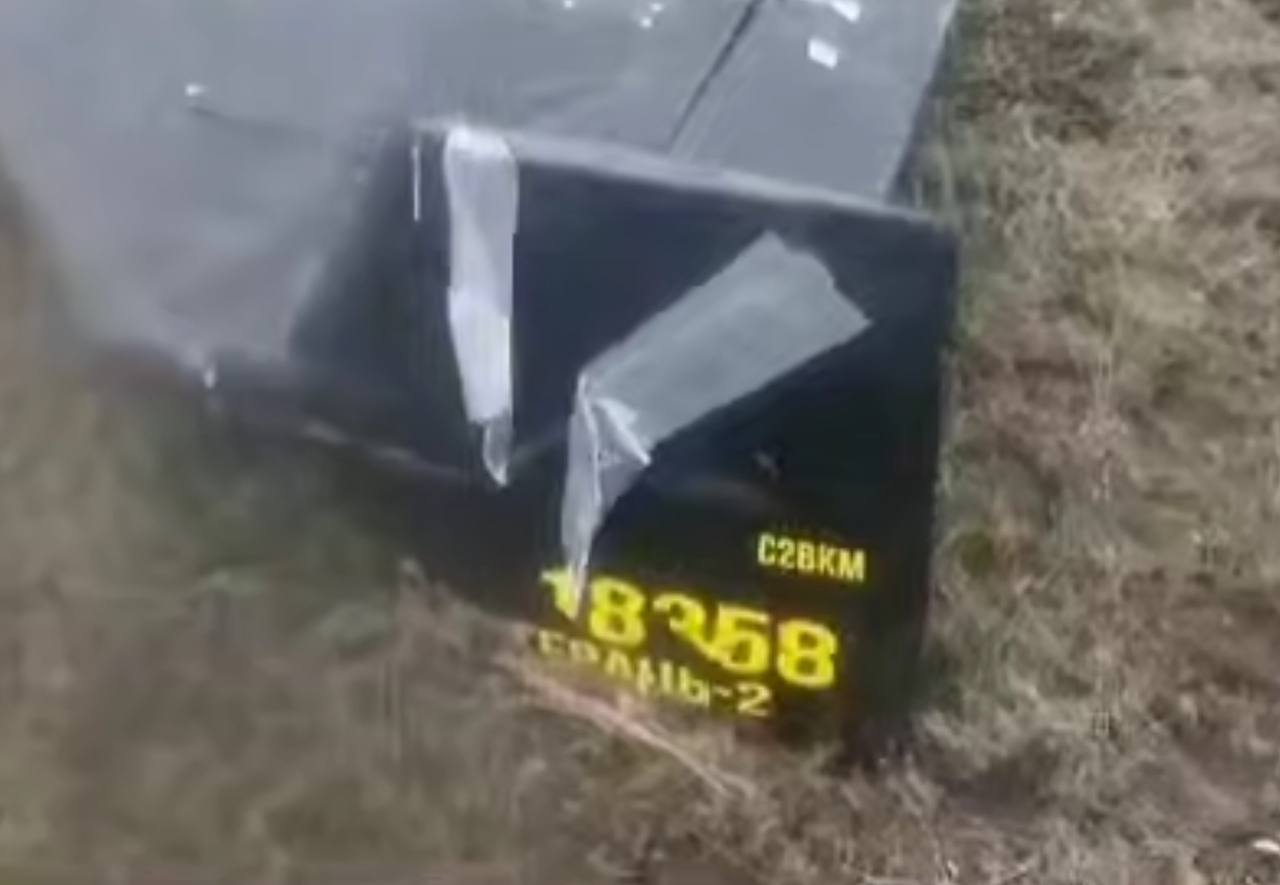
Another drone has crashed in Kazakhstan’s West Kazakhstan region. Local residents discovered the object near the village of Atameken, approximately 60 km north of the district center of Taskala. 

On March 18, the police department in Taskala District received a report about an unidentified object, believed to be a drone, found in a remote area. The device measured approximately three meters in length. Police officers, representatives of the district akimat (council), and emergency services were dispatched to the scene.

The West Kazakhstan Region Police Department confirmed the discovery of an object resembling an unmanned aerial vehicle (UAV). 

“The object fell in a remote area, away from populated settlements, and was found intact, with no visible damage. All circumstances surrounding the incident are being investigated,” the agency stated.

This marks the second case of a drone crash in the region within a month. On February 18, a similar object, measuring 120 cm in length, was discovered in the village of Uyaly in Bokeyorda District. At that time, police and emergency responders also arrived at the scene to investigate.

According to analysts, the drone that crashed on February 18 bears similarities to the Crecerelle, a reconnaissance UAV developed by the French defense company Sagem. However, authorities have not yet confirmed this information.

The incidents have raised concerns due to the region’s proximity to the Kapustin Yar military training ground, which is leased by the Russian Ministry of Defense. Located in Bokeyorda District, the facility occupies nearly half of the district’s territory.

Meanwhile, in neighboring Russia’s Saratov region, Ukrainian drones have repeatedly targeted military facilities, including airfields and fuel storage sites.

On February 17, seven drones carrying explosives and metal shrapnel attacked the Kropotkinskaya oil pumping station, a facility operated by the Caspian Pipeline Consortium (CPC). 

The recent drone crashes in West Kazakhstan region have heightened security concerns among residents and the authorities. Investigations are ongoing to determine the origin of the drones and any potential links to military activity in the region.

Image: Colonel GSh Telegram channel

Posting images of its tail number, the has reported that the drone was a  Russian Geran-2 (Shahed-136) kamikaze drone.

> >

This story has been updated to reflect breaking developments.

Uncategorized

From Uzbekistan to St. Petersburg: An International Student’s Journey Through Challenges and Change

Five years ago, Dilshot moved from Uzbekistan to St. Petersburg to pursue higher education. Like many international students, he faced challenges adapting, cultural differences, and other unexpected difficulties. The Times of Central Asia spoke with Dilshot to learn how his life in Russia has unfolded, what obstacles he encountered, and why his future in the city has taken an unexpected turn.

TCA: Why did you choose to study in St. Petersburg? What factors influenced your decision?

Dilshot: After finishing school in Uzbekistan, I decided to continue my education in Russia, specifically in St. Petersburg. First of all, I believed that Russia provided high-quality education, especially in IT, where it is ahead of other CIS countries. Additionally, at that time there was no war, and I never expected the situation to take such a turn.

The pandemic also played a role. Since entrance exams were conducted online, it became easier to apply. Moreover, Russian universities offered many state-funded places, and I was fortunate enough to receive a scholarship. While Uzbekistan has good universities, particularly in Tashkent, tuition fees were high, and I couldn’t find a suitable program in my field. Moving to a new city and country was exciting and I was full of hope, but the reality turned out to be more complicated.

TCA: How would you describe the atmosphere at the university and among students?

Dilshot: The university had a relatively open and multicultural environment, which helped with adaptation. Many students were supportive, regardless of nationality. However, stereotypes still existed. Occasionally, I heard remarks like, “What are you doing here? Go work at a construction site.” Kazakh students were often mistaken for Chinese without people even bothering to ask about their nationality.

For students from CIS countries who spoke Russian, adaptation was easier. Professors and students generally considered us as “their own”, though with some reservations. However, foreign students, particularly from China, faced a different attitude. Some professors showed impatience if a student struggled to express themselves in Russian. In dormitories, tensions arose; Chinese students were sometimes mocked over minor disputes, whereas CIS students were treated with more understanding.

TCA: Did you experience prejudice from your professors?

Dilshot: Some professors viewed me through the lens of stereotypes, making me feel isolated. While I didn’t face direct discrimination, there were moments when my knowledge was questioned, or my achievements were met with unnecessary surprise.

One instance stands out: a lecturer made a point of noting where students were from. I happened to excel in his subject, but I still don’t understand why he felt the need to keep track of our nationalities. On a few occasions, I received high grades with remarks like, “Wow, you speak Russian so well!” Of course, I wasn’t going to complain about good grades, but it made me feel uncomfortable as if my achievements were being measured against lower expectations.

TCA: Did participating in student activities help you integrate?

Dilshot: Yes, I got involved in student projects and activities early on. This helped break down preconceived notions and allowed me to interact with other students in a more natural way. It made adaptation easier and helped build friendships.

TCA: Is there an Uzbek community in St. Petersburg?

Dilshot: Yes, and it played a significant role in my life. Through the Uzbek diaspora, I never missed celebrating Nowruz and other national holidays. These events reminded me of home and provided a support system. I made many friends who helped me through difficult moments.

TCA: What challenges did you face when you first arrived in Russia?

Dilshot: One of the biggest hurdles was obtaining a propiska (residence registration), even though I was in the country legally. The process required extensive paperwork, and the medical examination, which must be taken annually, was particularly exhausting.

To complete the medical check, I had to stand in line for hours, sometimes from morning until late at night. Every year the bureaucratic requirements changed forcing me to redo documents constantly.

Visiting the MFC (Multifunctional Center for State Services) was always stressful. The long queues and rude staff made it clear that we weren’t seen as people, just as paperwork to process.

Additionally, I often faced suspicion from older Russians. In the metro, security frequently singled me out for searches. People over the age of 40 often gave me strange looks. It puzzled me; after all, we were once part of the same country. I don’t understand where this chauvinism comes from.

TCA: How difficult was it to find housing in St. Petersburg?

Dilshot: Finding accommodation was one of the biggest challenges. Many landlords refused to rent to foreigners due to stereotypes or fear of potential issues. I frequently came across ads specifying, “Only for people of Slavic appearance.”

In the end, I had to rely on personal connections or seek help from the Uzbek community. This often meant living in overcrowded apartments with other compatriots or paying inflated rent. Initially, I lived in a hostel, but after two years, I managed to move into a private apartment. Fortunately, I haven’t had problems with housing since.

TCA: You arrived in St. Petersburg before the war. How did the war in Ukraine affect your experience in Russia?

Dilshot: When the war started, I was terrified. Even the pandemic didn’t feel as shocking as this. I remember sitting in my dorm, reading the news, unable to believe that such a thing could happen in the 21st century. My first instinct was to leave. However, since I’d already completed a year of study, I decided to stay and finish my degree.

Inside Russia, daily life continued as usual despite the sanctions. But what deeply affected me were the stories from my Russian friends: one had a brother sent to the front, and another’s father was drafted. These were no longer abstract news stories; they were real people I knew.

As time passed, I began to feel uncomfortable, even ashamed when speaking with people outside Russia. No one blamed me directly, but the internal discomfort grew. Over the past few years, there have been events that changed my perception: terrorist attacks, protests, arrests of activists, and the recent death of Alexei Navalny. My family in Uzbekistan also worried about my safety here.

I hope the war ends soon. It’s horrifying to watch the news and see so many lives destroyed. I have always loved St. Petersburg for its beauty, culture, and history. But in recent years, the atmosphere has changed, there is more fear, more tension.

Given my liberal views, I avoid discussing politics openly as the risks are too high. These experiences have led me to a decision: I plan to leave. I want to live in a place where I feel free and don’t have to fear for my future.

TCA: How do you stay connected with family and friends in Uzbekistan?

Dilshot: Staying in touch with my family and friends has been crucial. Social media and messaging apps allow me to keep up with their lives, share my experiences, and stay connected. I also attend Uzbek cultural events, which help me maintain ties to home.

TCA: What has helped you overcome challenges and move forward?

Dilshot: Despite everything, I’ve grown to love St. Petersburg. Its cultural life and educational opportunities are incredible. University gave me valuable knowledge and friendships that I cherish. These connections have been my greatest support.

TCA: What advice would you give to other international students facing similar difficulties?

Dilshot: My journey in St. Petersburg has been filled with both hardships and achievements. Overcoming bureaucratic barriers, social stereotypes, and personal struggles, I found my place in this city, at least for a time.

I hope my story encourages other international students, showing them that despite the obstacles, success is possible.