• KZT/USD = 0.00213
  • TJS/USD = 0.10810
  • UZS/USD = 0.00008
  • TMT/USD = 0.29850
  • KZT/USD = 0.00213
  • TJS/USD = 0.10810
  • UZS/USD = 0.00008
  • TMT/USD = 0.29850
  • KZT/USD = 0.00213
  • TJS/USD = 0.10810
  • UZS/USD = 0.00008
  • TMT/USD = 0.29850
  • KZT/USD = 0.00213
  • TJS/USD = 0.10810
  • UZS/USD = 0.00008
  • TMT/USD = 0.29850
  • KZT/USD = 0.00213
  • TJS/USD = 0.10810
  • UZS/USD = 0.00008
  • TMT/USD = 0.29850
  • KZT/USD = 0.00213
  • TJS/USD = 0.10810
  • UZS/USD = 0.00008
  • TMT/USD = 0.29850
  • KZT/USD = 0.00213
  • TJS/USD = 0.10810
  • UZS/USD = 0.00008
  • TMT/USD = 0.29850
  • KZT/USD = 0.00213
  • TJS/USD = 0.10810
  • UZS/USD = 0.00008
  • TMT/USD = 0.29850

Viewing results 1 - 6 of 111

OTS Faces Security Test from Turkey to Central Asia

Iran's widening war has now reached the institutional space linking Turkey, the South Caucasus, and Central Asia. Turkey said on March 4 that NATO air defenses destroyed an Iranian ballistic missile entering Turkish airspace, while Azerbaijan said the next day that four Iranian drones crossed into Nakhchivan, injuring four people, and damaging civilian infrastructure at the exclave’s airport. Iran denied targeting Nakhchivan; in the Turkish case, the missile’s intended target has not been fully clear in public reporting. Even so, the combined effect was unmistakable. By March 7, the Organization of Turkic States (OTS) had become more than a bystander to a Middle Eastern war that had earlier seemed outside its main agenda. This is what gave the OTS foreign ministers’ meeting in Istanbul its significance. The Turkish Foreign Ministry announced on March 6 that the informal meeting of the OTS Council of Foreign Ministers would be held in Istanbul on March 7, with Foreign Minister Hakan Fidan hosting. After the meeting, the ministers adopted a joint statement declaring that threats to the security of any OTS member are a matter of concern for the whole organization. That language does not make the OTS a military alliance. It does, however, show the organization moving more openly into collective political-security signaling when member states come under attack. Why Nakhchivan Matters Nakhchivan is central to the logic of this story. The exclave is an integral part of Azerbaijan, but is separated from the rest of the country. It borders Armenia, Iran, and Turkey, making it significant out of proportion to its size. A military strike there is not a routine border incident. It reaches one of the most sensitive nodes in the wider Turkic political space: it is a meeting point for Azerbaijani sovereignty, Turkish strategic concern, and Iranian proximity. Until recently, Nakhchivan’s special status and borders were anchored in the 1921 Moscow and Kars treaties, which gave Turkey and Soviet Russia a formal say over the exclave’s autonomy and, it could be argued, its external security. But last year, Baku folded Nakhchivan more tightly into Azerbaijan’s domestic legal order by removing those references (along with other changes) from the constitution of the exclave, which has suddenly become a target in a much wider regional confrontation. Baku’s response to the Iranian attack showed that it saw the incident in political as well as tactical terms. President Ilham Aliyev said Azerbaijan would prepare retaliatory measures. Reuters later reported that Azerbaijan had ordered the evacuation of its diplomats from Iran, citing safety concerns. This is understandable, particularly in light of the January 27, 2023, incident when an armed attacker entered Azerbaijan’s embassy in Tehran and opened fire, killing the head of the embassy’s security and wounding two other staff. Baku called this a terrorist attack, evacuated most of its diplomatic personnel, and suspended embassy operations. Azerbaijani officials also said the March 5 attack on Nakhchivan violated international law, rejecting any implication that it could have been a technical mishap. The stakes widened further after...

Iran War Highlights Central Asia’s Vulnerable Southern Trade Corridors

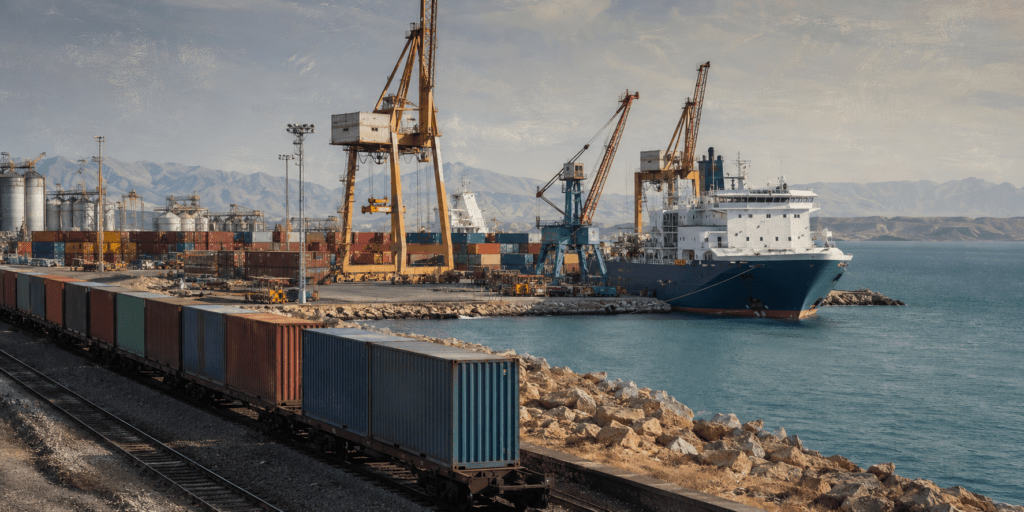
The widening war centered on Iran is reverberating far beyond the Middle East, exposing a structural vulnerability in Central Asia’s economic geography: the region’s reliance on transport corridors that pass through or near Iran and the Persian Gulf. As fighting escalates and shipping risks spread across the region, insurers, shipping companies, and logistics firms are reassessing operations across the Gulf. War-risk insurance premiums have surged while some commercial carriers have scaled back bookings to parts of the region amid growing security concerns. Tensions around the Strait of Hormuz have already pushed shipping costs higher as governments and logistics firms weigh the risks of operating in one of the world’s most important maritime chokepoints. For Central Asia’s landlocked economies, the crisis highlights how much regional connectivity strategies still depend on southern access routes linking the region to global markets. The conflict has also edged closer to the transport routes linking Central Asia with Europe after what were alleged to be Iranian drone strikes on Azerbaijan’s Nakhchivan region, damaging facilities at the exclave’s airport and prompting diplomatic protests from Baku. While the strike did not directly disrupt trade corridors, it underscored how quickly the conflict could spill over into the South Caucasus, a key segment of the Middle Corridor. Nakhchivan is a landlocked Azerbaijani exclave bordering Iran and Turkey, separated from mainland Azerbaijan by Armenia, and lies at the frontier where Iranian territory meets the transport networks of the South Caucasus. The South Caucasus also hosts energy infrastructure with wider geopolitical significance. The Baku–Tbilisi–Ceyhan (BTC) pipeline transports mostly Azerbaijani crude through Georgia to the Turkish Mediterranean port of Ceyhan, from where it is shipped to global markets. In 2025, Azerbaijani oil accounted for 46.4% of Israel’s crude imports, most of it moving through this supply chain before being shipped onward by tanker. The pipeline also carries limited volumes of Kazakh crude - 2-3% of Kazakhstan’s overall exports - making it far more significant for Israel’s energy supply than for Kazakhstan’s export system. Iran’s armed forces have denied responsibility for the drone incident, instead accusing Israel of attempting to provoke tensions and disrupt relations between Muslim countries. The Geography of Connectivity Since independence, Central Asian governments have sought to overcome the constraints of geography. Landlocked and long dependent on Soviet-era transport networks running north through Russia, the region has spent three decades developing alternative corridors in multiple directions. Routes leading south have held particular appeal, offering the shortest overland access to ports on the Persian Gulf and the Indian Ocean. Iran sits at the heart of several connectivity initiatives designed to connect Central Asian rail networks to ports on the Persian Gulf and the Indian Ocean. The Ashgabat Agreement — a multimodal transport framework linking Iran, Oman, Turkmenistan, and Uzbekistan and designed to connect Central Asia with ports on the Persian Gulf and the Gulf of Oman — was created specifically to facilitate international trade and transit between Central Asia and global shipping routes. For countries such as Turkmenistan and Uzbekistan, rail routes...

Iran War Tests Emerging C5–Azerbaijan Solidarity

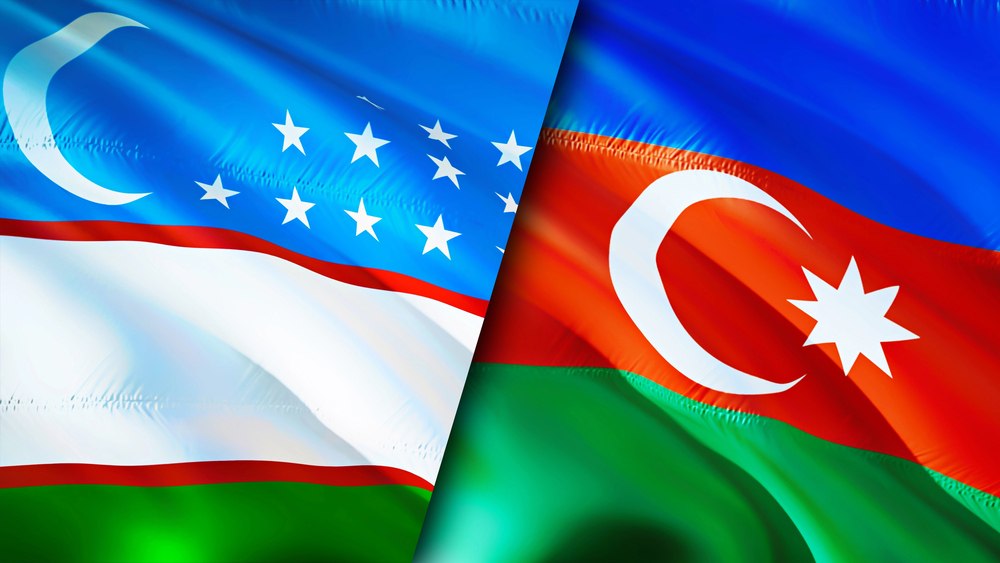
In an effort to coordinate responses to the Mideast conflict, the foreign ministers of the five Central Asian countries, as well as Azerbaijan, have spoken together by telephone about the widening crisis. The call marked one of the clearest signs yet that the Central Asian “C5” format is evolving beyond economic coordination into an operational diplomatic mechanism during external crises. While the group has met frequently in recent years with major partners, direct coordination over a fast-moving conflict on its periphery reflects a shift toward more structured regional crisis management. The consultation also builds on the expansion last year of the Central Asian consultative format to include Azerbaijan, sometimes referred to as the “C6,” a shift that has increasingly aligned Caspian corridor strategy with regional diplomatic coordination. “During the conversation, the ministers exchanged detailed views on the evolving military and political situation in the Middle East, noting the importance of maintaining close coordination and prompt interaction amid the crisis,” Kazakhstan’s Ministry of Foreign Affairs said on Monday. Foreign Minister Yermek Kosherbayev of Kazakhstan thanked his counterparts from Azerbaijan and Turkmenistan, which border Iran, for their help in the evacuations of people fleeing Iranian territory. U.S. and Israeli air strikes have hit targets across Iran, whose military has fired retaliatory waves of missiles and drones at Israel as well as U.S. military facilities and civilian areas in Gulf countries. Azerbaijan’s participation underscores its growing integration into Central Asia’s diplomatic orbit. As a Caspian state bordering Iran and a critical link in the Trans-Caspian International Transport Route, Baku has become an indispensable partner in both evacuation logistics and broader corridor security. The call reflects growing cohesion among Kazakhstan, Kyrgyzstan, Tajikistan, Turkmenistan, Uzbekistan, and Azerbaijan. The region is seeking more robust trade routes linking Asia and Europe, while maintaining solidarity and balancing relationships with larger powers, including China, Russia, and the United States. In addition to Kosherbayev, the foreign ministers on the call were Jeyhun Bayramov of Azerbaijan, Jeenbek Kulubaev of Kyrgyzstan, Sirojiddin Muhriddin of Tajikistan, Rashid Meredov of Turkmenistan, and Bakhtiyor Saidov of Uzbekistan. The ministers said they were committed to political and diplomatic means as a way to solve conflicts. “At the conclusion of the call, the parties expressed their readiness to continue providing the necessary support in organizing the possible evacuation of citizens, as well as to maintain close working contacts through the foreign ministries,” the statement from Kazakhstan stated. Notably, the ministers’ language avoided assigning blame or aligning with any side in the conflict, instead emphasizing diplomacy and stability. That careful wording reflects the region’s longstanding strategy of balancing relations with Washington, Moscow, Beijing, and regional powers without being drawn into geopolitical confrontation.

2024 Kazakhstan Plane Crash Still Stirs Tension between Russia and Azerbaijan

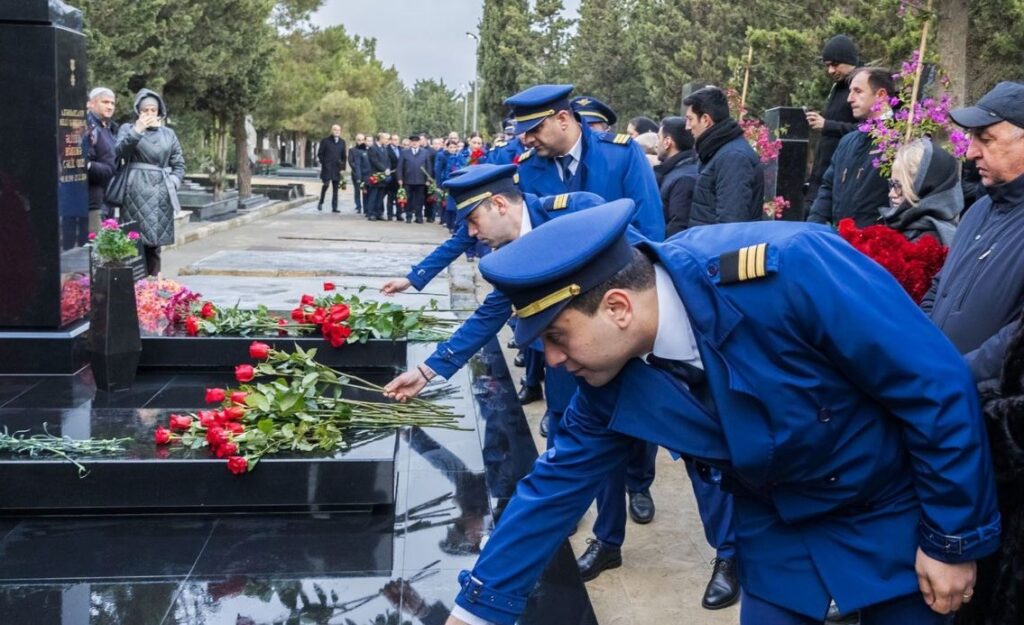
Conflicting statements from Russia about the December 25, 2024 crash of an Azerbaijan Airlines plane that was hit by Russian missile fire have drawn fresh criticism from Azerbaijan, which marked the first anniversary of the disaster with flowers and other tributes.  Amid growing Azerbaijani accusations that Russia was trying to avoid responsibility, Russian President Vladimir Putin acknowledged in October – nearly a year after the crash - that Russian fire had damaged an Azerbaijani airliner that diverted from its destination in Russia-controlled Chechnya and went down near the city of Aktau in Kazakhstan. Putin indicated that the shooting was accidental, saying Russian forces were trying to fend off a Ukrainian drone attack at the time. The crash killed 38 of 67 people on board.  However, Alexander Bastrykin, chairman of Russia’s Investigative Committee, sent a letter to Azerbaijan’s prosecutor general last month in which he said Russia’s “criminal case has been terminated” but also refers to the “resumed criminal case” – without making any reference to Russian missile fire. Instead, Bastrykin said the plane was unable to land at the Grozny, Chechnya airport because of cloudy weather and later crashed during the approach to the Aktau airport.  The Azeri Times, which along with other media outlets published the text of Bastrykin’s letter, described the Russian statement as “a clear cover-up!”  Farhad Mammadov, director of the South Caucasus Studies Center in Baku, noted what he said were inconsistencies in the Russian letter, including whether Russia’s criminal case had been terminated or resumed. On Telegram, he described Russia’s cloudy weather claim as: “Complete nonsense!!!”  Mammadov said the latest Russian statement appeared to be an attempt to delay a final resolution with Azerbaijan, which demanded compensation and punishment of those responsible. Putin had said in October that compensation would be paid.   “All these clumsy, contradictory and unprofessional gestures do not change the position of Azerbaijan,” Mammadov wrote. “Baku is waiting, as the impulse from the recognition of President Putin has not lost its significance... However, after Bastrykin's letter, Baku may begin to doubt that Russia will take adequate actions...”  “Azerbaijan has its own criminal case and the opportunity to appeal to international courts in its arsenal,” he said.  Kazakhstan is also conducting its own politically sensitive investigation into the crash, with the participation of representatives from Russia, Azerbaijan and Brazil, where the Embraer 190 aircraft was made. Interim findings released in December did not assign responsibility for the crash.  Putin’s acknowledgement in October that Russian missile fire hit the Azerbaijani airliner came during a meeting in Dushanbe with President Ilham Aliyev, appearing to signal a thaw in ties after months of tension over the crash. However, Aliyev did not attend a December meeting in St. Petersburg, Russia of the Commonwealth of Independent States, a group of former Soviet republics that includes Azerbaijan as a member. Azerbaijan “is still signaling that Baku is unsatisfied with the ramifications and statements from Moscow,” despite Putin’s efforts to ease tensions with Azerbaijan over the plane crash, analyst Fuad Shabazov...

Central Asia Can Depend on Azerbaijan for Path to West, Aliyev Says

Azerbaijan is the only “reliable country” that can geographically link Central Asia to the West because alternative routes face geopolitical turbulence, according to Azerbaijani President Ilham Aliyev. Aliyev spoke about Azerbaijan’s prospects as a key conduit for commerce across borders as well as its deepening relationship with Central Asia during a wide-ranging interview with local television channels in Baku on Monday. He acknowledged that there is still work to be done before Azerbaijan can approach its full potential as what he called a “living bridge” for international trade. The remarks followed a summit in Uzbekistan in November in which Central Asian leaders supported Azerbaijan’s accession to the region’s Consultative Meeting format as a full participant, even though Azerbaijan is in the South Caucasus. The Consultative Meeting format is a vehicle for high-level collaboration on trade, security, and other issues among Central Asian countries, which have taken steps to resolve border disputes and other sources of tension over the years. “So many projects have been implemented in recent years that these countries have unanimously elected us as a full member. We can also consider this a great political and diplomatic success,” Aliyev said during the interview. His remarks were published by the state Azerbaijani Press Agency, or APA. Referring to international connectivity, transport, and logistics, the president said, “Azerbaijan is the only reliable country that can geographically connect Central Asia with the West today,” and, without going into specifics, he alluded to the difficulties that some other trade channels face. Paths through Russia and Iran to the West, for example, are affected by sanctions and long-running political tensions. “Of course, from a geographical point of view, other routes can also be used. However, taking into account the current geopolitical situation, we can say with complete certainty that alternative routes for the West cannot be considered acceptable,” Aliyev said. He mentioned developing projects such as a November 2024 agreement involving Azerbaijan, Kazakhstan, and Uzbekistan to lay a fiber-optic cable along the Caspian seabed, as well as China’s large-scale funding for the construction of another railway to the Caspian Sea via Kyrgyzstan and Uzbekistan. “Freight traffic to the Caspian Sea, and therefore to Azerbaijan, will increase,” the Azerbaijani president said. “Along with Central Asian countries, additional freight from China will naturally increase the demand for the East–West route, the Middle Corridor.” A September analysis by the Washington-based Jamestown research group suggested that prospects are bright for Azerbaijan, which has actively positioned itself as a trade hub since Russia’s full-scale invasion of Ukraine in February 2022. “Amid disruptions in both the northern and southern corridors, Azerbaijan has emerged as a critical logistics hub, offering a sanction-free, resilient, and stable environment to facilitate overland trade between the PRC (China) and Europe through the Middle Corridor,” analyst Yunis Sharifli wrote. In addition, Azerbaijan expects cargo from China and Central Asia to travel along a proposed route that would link the main part of Azerbaijan to the separate Azerbaijani area of Nakhchivan, passing through Armenia and then...

Opinion: Central Asia Is Consolidating Its Role as a Full-Fledged Actor in Global Processes

The seventh Consultative Meeting of the Heads of State of Central Asia, held in Tashkent, was far more than a routine regional gathering. It marked a pivotal moment with the potential to shape the political and economic architecture of the region for the next decade or two. President Shavkat Mirziyoyev’s keynote address stood out for articulating a forward-looking and comprehensive strategic vision. Notably, he proposed redefining the format itself from a loose “consultative mechanism” into a more cohesive and institutionalized “Central Asian Community.” At the summit, leaders endorsed several landmark documents: the Concept for Regional Security and Stability in Central Asia, the Catalogue of Threats to Central Asia’s Security and measures for their prevention for 2026-2028 and its implementation plan, a joint appeal supporting the Kyrgyz Republic’s candidacy for the UN Security Council, and the decision to admit Azerbaijan as a full-fledged participant. Taken together, these steps signal that Central Asia increasingly sees itself not as a passive bystander amid global geopolitical turbulence, but as an emerging regional actor capable of shaping its own trajectory. Two broader trends deserve special emphasis. First, the region is moving beyond reactive engagement with external initiatives and power blocs. Rather than relying solely on structures created by outside actors, Central Asia is beginning to develop its own institutions. This shift mirrors a global pattern: as the international order becomes more fragmented and unpredictable, regional communities are strengthening their internal mechanisms as a means of resilience. Second, the format envisioned in Tashkent diverges from “Brussels-style integration.” It does not require the transfer or dilution of sovereignty. Instead, it relies on soft integration, consultation, consensus-building, and phased convergence. As President Mirziyoyev noted, having a shared and realistic sense of “what we want our region to look like in 10-20 years” is essential. Without such a vision, Central Asia risks remaining the object of great-power competition rather than an autonomous participant in it. One of the summit’s most consequential developments was the decision to welcome Azerbaijan as a full-fledged member of the format. The emerging political and economic bridge between Central Asia and the South Caucasus is quickly becoming not only a transit nexus but also a cornerstone of a broader geopolitical space. The strengthening of Trans-Caspian corridors, the advancement of the “China – Kyrgyzstan – Uzbekistan” railway, the Trans-Afghan corridor, and the alignment of Caspian Sea transport routes will significantly expand the region’s strategic and economic potential. A further nuance is worth highlighting: Azerbaijan’s long-standing ties with the Western political and security architecture, through NATO partnership mechanisms and energy corridors, as well as its membership in the Organization of Turkic States, introduce new layers of connectivity. Its inclusion repositions the “Central Asian Community” from a post-Soviet platform into a wider geopolitical constellation spanning Eurasia, the South Caucasus, and the Middle East. For Central Asian states, this new configuration opens additional room for multi-vector diplomacy and reduces the risks of unilateral dependence.   The views expressed in this article are those of the author and do not...