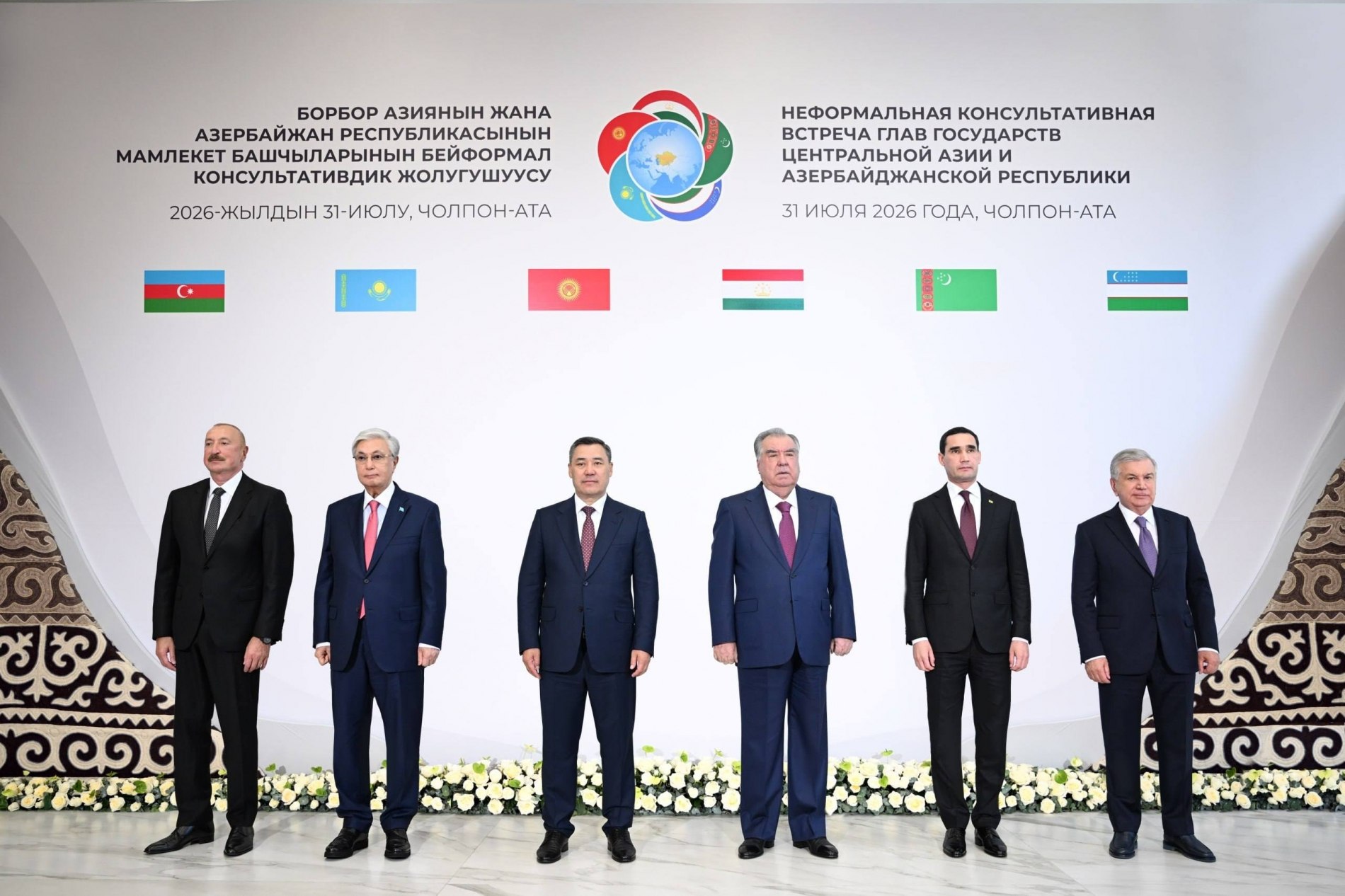
The Kyrgyz resort town of Cholpon-Ata, on the shores of Lake Issyk-Kul, briefly became Central Asia’s political capital as it hosted a series of high-level meetings, including bilateral talks between the presidents of Kyrgyzstan and Uzbekistan, the state visit of Azerbaijani President Ilham Aliyev, and the informal Consultative Meeting of the Heads of State of Central Asia and Azerbaijan.
Only a few years ago, such a format would have seemed unlikely. Today, however, regional leaders are discussing joint railway projects, energy security, transport corridors, investment, and foreign-policy coordination rather than managing old disputes. The agreements reached in Cholpon-Ata suggest that the consultative format is gradually evolving from a platform for political dialogue into a mechanism for practical regional cooperation.
From Conflict to Alliance
Ahead of the informal multilateral meeting, Kyrgyz President Sadyr Japarov and Uzbek President Shavkat Mirziyoyev held bilateral talks that set the tone for the broader regional meeting.
Relations between the two countries now stand in sharp contrast to the situation sixteen years ago. Following the ethnic violence in southern Kyrgyzstan in June 2010, relations between Bishkek and Tashkent entered one of their most difficult periods since independence.
The agenda between the two neighbors has since changed dramatically.
Speaking in Cholpon-Ata, Mirziyoyev said relations between Uzbekistan and Kyrgyzstan had reached “a historic peak.” Bilateral trade has increased almost tenfold in recent years, reaching $1.2 billion last year. The two countries now have around 450 joint ventures, operate a joint Development Fund to support cooperative projects, and have established 15 air routes and five bus services linking their cities.
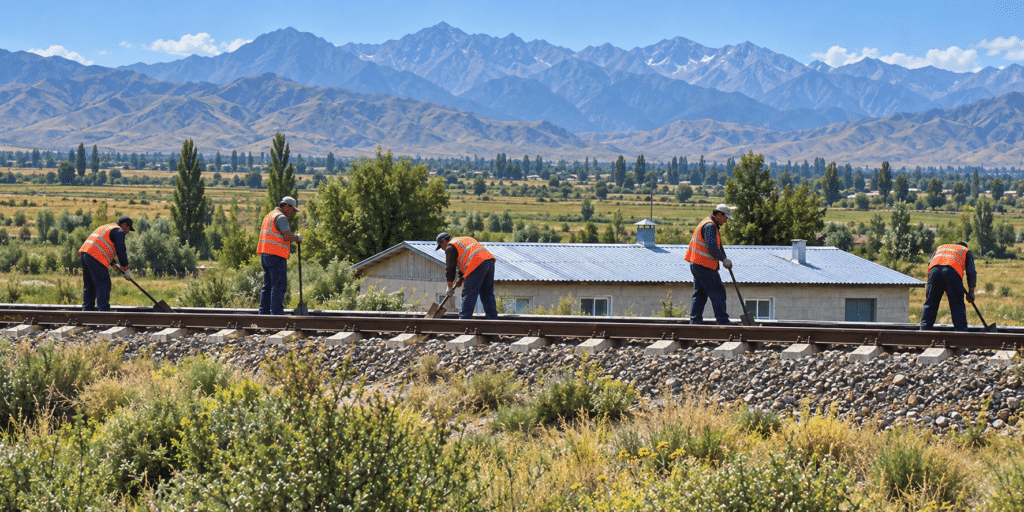
Mirziyoyev described the China-Kyrgyzstan-Uzbekistan railway as one of the most important joint initiatives between the two countries, arguing that the project would reshape transport links across Eurasia.
“This railway will fundamentally change the geopolitical landscape. Those who understand what it took to make this happen know what a major achievement it is,” Mirziyoyev said.
The talks concluded with the signing of a Treaty on Allied Relations between Kyrgyzstan and Uzbekistan. The two sides also exchanged several bilateral documents, including agreements covering sections of their common border and the joint use of the Chashma spring.
A Broader Regional Agenda
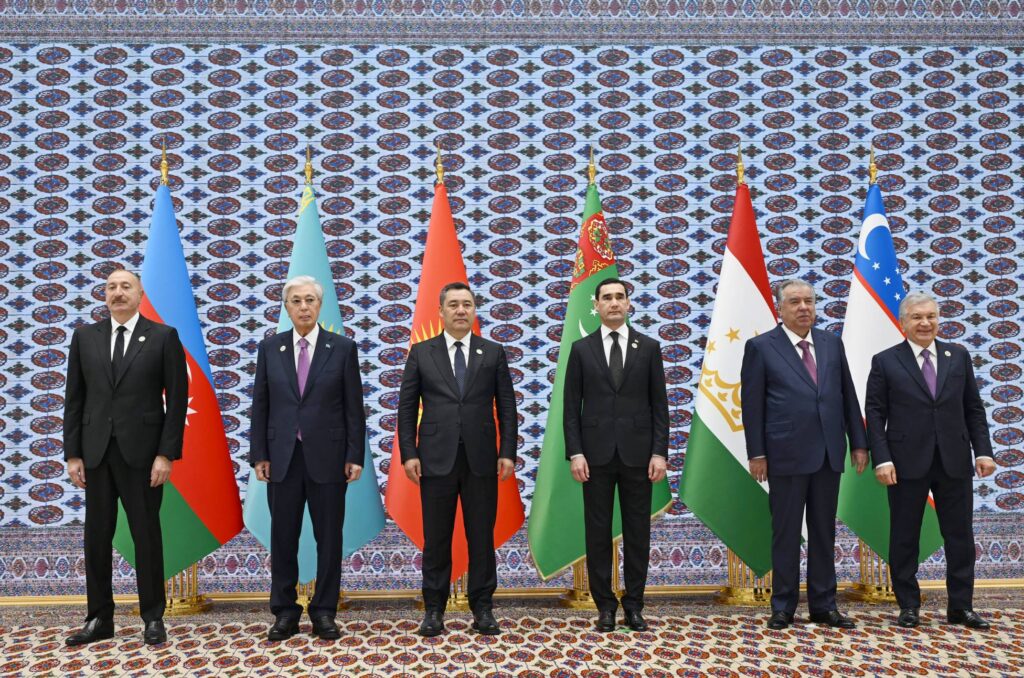
While the Japarov-Mirziyoyev talks focused primarily on bilateral relations, the informal Consultative Meeting of the Heads of State of Central Asia and Azerbaijan broadened the discussion to regional integration, transport connectivity, energy security, and foreign-policy coordination.
Opening the meeting, Kyrgyz President Sadyr Japarov said one of the clearest results of closer regional cooperation had been the Central Asian countries’ growing support for one another on the international stage. As an example, he cited the region’s joint support for Kyrgyzstan’s successful bid for a non-permanent seat on the United Nations Security Council for the 2027-2028 term.
Japarov also revived the idea of introducing a single tourist visa for foreign visitors traveling across Central Asia, proposing that the region’s foreign ministries intensify consultations on the initiative.
Azerbaijan’s participation as a full member gave the meeting additional significance. Baku joined the consultative format as a full participant in November 2025, reflecting the growing importance of trans-Caspian connectivity and the increasingly close economic ties linking the South Caucasus with Central Asia.
During his state visit to Kyrgyzstan, Azerbaijani President Ilham Aliyev announced that the two countries had signed a package of bilateral agreements, including a Treaty on Allied Relations, elevating cooperation to a new level. The sides also agreed to increase the capital of the Kyrgyz-Azerbaijani Development Fund from $100 million to $200 million. According to Aliyev, the fund has already financed several projects, some of which are now operational, while considerable scope remains for further investment cooperation.
Mirziyoyev argued that Central Asia should now be viewed within a broader geopolitical framework. In his view, a region that was once fragmented is gradually consolidating around a shared development agenda, while Azerbaijan’s participation extends that process beyond Central Asia itself.
“A historic opportunity is opening before us to create a common space for development linking Central Asia, the South Caucasus, and Afghanistan. We must seize this moment to build lasting ties and good-neighborly relations in the heart of Eurasia,” Mirziyoyev said.
Kazakh President Kassym-Jomart Tokayev also emphasized the institutional dimension of regional cooperation. He described the current period as the most successful in Central Asia’s modern history and proposed developing an implementation roadmap for the Treaty on Friendship, Good-Neighborliness and Cooperation for the Development of Central Asia in the 21st Century, which had previously been signed by the region’s leaders.
Transport and Energy Take Center Stage
Beyond political coordination, the leaders devoted considerable attention to practical projects aimed at strengthening regional connectivity and reducing Central Asia’s vulnerability to external economic pressures.
Tajik President Emomali Rahmon proposed exploring the construction of a large regional oil refinery equipped with modern technologies. He argued that continued volatility in global and regional energy markets had highlighted the importance of energy security as one of the key conditions for sustainable economic development.
“Given today’s realities, we should jointly consider this extremely important issue,” Rahmon said.
The proposal comes amid continued turbulence in regional fuel markets. In summer 2026, Kyrgyzstan and Tajikistan experienced fuel shortages and price increases as Russian exports fell, exposing the region’s dependence on external suppliers and lending additional weight to calls for expanding domestic refining capacity.
Transport connectivity was another dominant theme. The China-Kyrgyzstan-Uzbekistan railway, highlighted by Japarov and Mirziyoyev during their bilateral talks, was repeatedly presented as a project capable of reshaping trade flows across Eurasia. Together with the continued development of the Trans-Caspian International Transport Route, or Middle Corridor, it is expected to strengthen Central Asia’s role as a major transit region linking Asia and Europe.
As the principal gateway across the Caspian Sea, Azerbaijan has become an essential link between Central Asia and European markets. Transport infrastructure is increasingly emerging as one of the strongest drivers of cooperation between Central Asia and the South Caucasus.
The Next Meeting
Turkmen President Serdar Berdimuhamedov announced that the eighth Consultative Meeting of the Heads of State of Central Asia and Azerbaijan is scheduled for October 8, 2026, in the Avaza National Tourist Zone on Turkmenistan’s Caspian coast.
According to Berdimuhamedov, Turkmenistan has already circulated a draft agenda covering five priority areas: regional security; deeper cooperation between Central Asia and Azerbaijan; energy and transport connectivity; joint efforts to address environmental challenges, climate adaptation, water resource management, and the restoration of the Aral Sea; and expanded cooperation in education, science, culture, and youth exchanges.
From Political Dialogue to Regional Integration
The informal meeting concluded with the adoption of the Cholpon-Ata Declaration, reaffirming the participating countries’ commitment to expanding cooperation in economic development, transport, energy, security, and humanitarian exchanges. According to Kyrgyz President Sadyr Japarov, the document reflects the level of trust that has developed among the region’s states and their shared determination to deepen cooperation further.
Yet the meeting’s significance extends beyond the documents signed.
Sixteen years ago, relations between some Central Asian neighbors were overshadowed by border disputes, political tensions, and mutual distrust. At Cholpon-Ata, by contrast, discussions centered on railway construction, transport corridors, energy security, investment mechanisms, and the coordination of regional policies.
The meeting also highlighted the changing geography of regional cooperation. Azerbaijan, once viewed primarily as an external partner, is becoming an integral participant in Central Asia’s broader economic agenda. Together with the continued development of the Middle Corridor, this is gradually linking Central Asia and the South Caucasus into a wider economic space built around shared transport, trade, and infrastructure interests.
The consultative format has evolved as well. What began as a forum for rebuilding political dialogue is increasingly becoming a mechanism for coordinating practical regional initiatives. Judging by the agreements reached at Issyk-Kul, the emphasis is shifting from declarations of intent toward projects capable of reshaping Central Asia’s economic geography over the coming years.