• KGS/USD = 0.01143 0%
  • KZT/USD = 0.00201 0%
  • TJS/USD = 0.10510 -0.28%
  • UZS/USD = 0.00008 0%
  • TMT/USD = 0.28575 0%
  • KGS/USD = 0.01143 0%
  • KZT/USD = 0.00201 0%
  • TJS/USD = 0.10510 -0.28%
  • UZS/USD = 0.00008 0%
  • TMT/USD = 0.28575 0%
  • KGS/USD = 0.01143 0%
  • KZT/USD = 0.00201 0%
  • TJS/USD = 0.10510 -0.28%
  • UZS/USD = 0.00008 0%
  • TMT/USD = 0.28575 0%
  • KGS/USD = 0.01143 0%
  • KZT/USD = 0.00201 0%
  • TJS/USD = 0.10510 -0.28%
  • UZS/USD = 0.00008 0%
  • TMT/USD = 0.28575 0%
  • KGS/USD = 0.01143 0%
  • KZT/USD = 0.00201 0%
  • TJS/USD = 0.10510 -0.28%
  • UZS/USD = 0.00008 0%
  • TMT/USD = 0.28575 0%
  • KGS/USD = 0.01143 0%
  • KZT/USD = 0.00201 0%
  • TJS/USD = 0.10510 -0.28%
  • UZS/USD = 0.00008 0%
  • TMT/USD = 0.28575 0%
  • KGS/USD = 0.01143 0%
  • KZT/USD = 0.00201 0%
  • TJS/USD = 0.10510 -0.28%
  • UZS/USD = 0.00008 0%
  • TMT/USD = 0.28575 0%
  • KGS/USD = 0.01143 0%
  • KZT/USD = 0.00201 0%
  • TJS/USD = 0.10510 -0.28%
  • UZS/USD = 0.00008 0%
  • TMT/USD = 0.28575 0%
28 February 2026

Viewing results 1 - 6 of 11

Herat Tribal Peace Paves Way for Central Asian Connectivity Projects

In Herat province, a long-standing conflict between the Timuri and Achakzai tribal communities has officially ended. With the mediation of local authorities, religious scholars (ulemas), and community elders, peace was sealed by a public handshake. While the event may seem local in scope, it carries wider significance for Afghanistan and the broader Central Asian region. The Timuri-Achakzai feud is emblematic of a broader pattern across Afghanistan’s periphery: limited resources and the absence of effective distribution mechanisms. Disputes over land and water, exacerbated by droughts, shifting river courses, and inadequate irrigation infrastructure, had long fueled tensions over pastures and access to irrigation ditches. Compounding the problem, the disputed areas serve as a critical logistical junction, with both groups vying for control over transit routes. By the early 2020s, the conflict had calcified into a cycle of blood feuds. Traditional mediation efforts had collapsed, and the return of refugees from Iran, along with internal migration, further inflamed tensions as undocumented land claims surged. Weak central governance and legal ambiguity deepened the divide. A turning point came in 2023-2024, when Herat’s provincial leadership, working with ulemas and tribal elders, revived dialogue. The key to de-escalation was the realization of mutual dependence. Both groups faced declining agricultural yields, shrinking incomes, and reduced access to state and international aid. Their shared losses laid the groundwork for a symbolic public reconciliation, restoring a platform of trust. This reconciliation has practical implications for Central Asia. The proposed Turgundi, Herat-Kandahar-Spin Boldak railway, a critical trans-Afghan infrastructure project, passes through Timuri and Achakzai territories. Until recently, their rivalry posed a major risk from land disputes to construction security. Now, with both communities demonstrating their readiness to cooperate, political and transactional risks are receding. Herat’s peace agreement offers lessons for regional stakeholders invested in trans-Afghan corridors. First, infrastructure projects in Afghanistan require social engagement. Tribal structures must be included at every stage. Second, economic interdependence can be a catalyst for peace. When communities understand the tangible benefits of cooperation, they are more inclined to compromise. Third, local reconciliation creates what might be called a “social corridor.” The Achakzai and their related kin are present not only in Herat but also in Kandahar and Spin Boldak, spanning the planned railway’s route. Their buy-in transforms the line from a logistical corridor into a corridor of trust. This development is a strategic signal for the region. Localized Afghan conflicts can either block or enable integration efforts. Every grassroots peacebuilding success strengthens the region’s broader architecture of stability. Uzbekistan is eyeing the Trans-Afghan Highway. Turkmenistan is seeking to develop its connection through Turgundi. Kazakhstan is exploring how to link its rail networks with South Asia. All of these initiatives depend on the stability and cooperation of Afghan communities along the routes. The reconciliation between the Timuri and Achakzai should not be dismissed as a minor episode. It sets a precedent. Transitioning from high-level political declarations to the technical implementation of cross-border transit projects becomes more plausible when social dynamics are respected. If Central Asian...

Gabala 2025: What the Turkic World Will Discuss Amid Global Turbulence

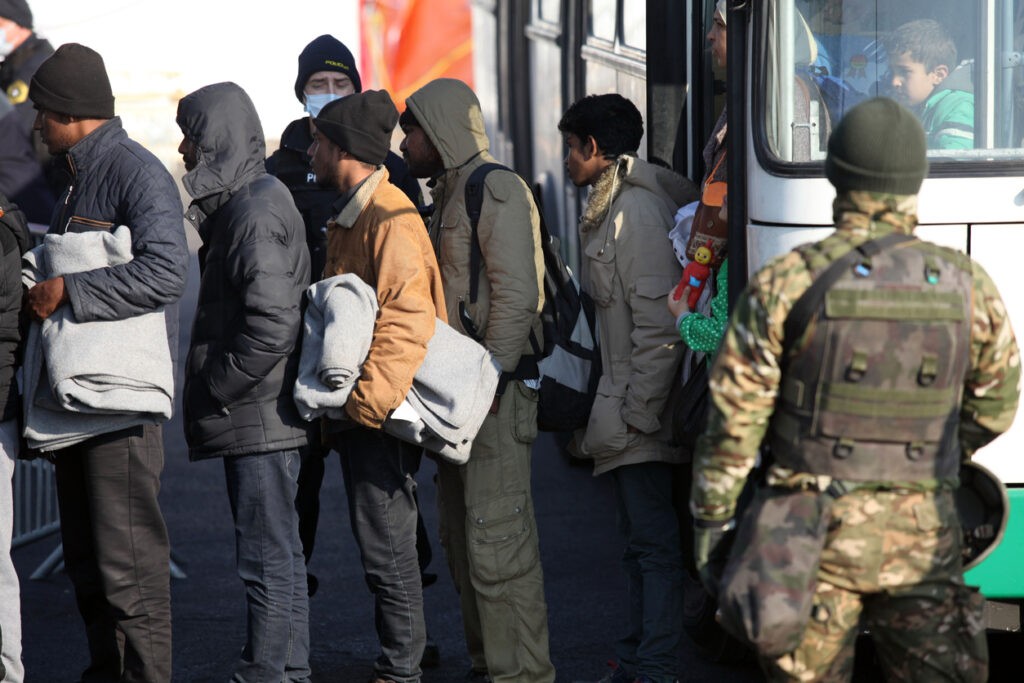
On October 7, leaders of the Organization of Turkic States (OTS) will gather in Gabala, Azerbaijan, for the 12th summit under the theme “Regional Peace and Security.” At first glance, it may look like another routine engagement. Yet against the backdrop of overlapping global crises, the forum is increasingly a test of the OTS’s maturity and relevance. The summit unfolds amid a turbulent international landscape. Afghanistan continues to cast a shadow over Central Asia: economic volatility, migration risks, and the activity of extremist groups remain sources of concern for OTS members. The ongoing war in Ukraine, meanwhile, is reshaping Eurasian transit routes, placing the bloc’s states in delicate positions between East and West. At the same time, violence in the Middle East is adding to the pressures on Turkey’s already complex foreign policy environment. The Middle Corridor at the Center A key theme in Gabala will be the advancement of the Middle Corridor, formally known as the Trans-Caspian International Transport Route. This east–west route connects China with Europe via Kazakhstan, the Caspian ports of Aktau and Kuryk, Azerbaijan, Georgia, and Turkey. Investments are moving forward across the chain: Kazakhstan is expanding port and rail capacity, Azerbaijan is modernizing the Port of Baku in Alat, Georgia is upgrading its railway hubs, and Turkey is reinforcing the Baku–Kars line. Once a logistical project, the corridor is evolving into a strategic framework that ties together economic, environmental, and security considerations. Customs harmonization, digital tracking systems, and sustainability standards are now discussed as much as cargo volumes. Security, Coordination, and Soft Power Security will also be on the table, though framed in practical rather than military terms. Issues such as counter-terrorism cooperation, cyber resilience, disaster response, and the safety of emerging transit corridors are likely to feature. In this sense, security is increasingly seen as the foundation for trade and investment rather than a standalone agenda. Beyond infrastructure, OTS continues to develop soft power tools. Educational exchanges, cultural cooperation, green energy initiatives, and water management projects are part of efforts to build intra-regional trust. The recently inaugurated UN Regional Center for the SDGs in Almaty provides another anchor, aligning the Turkic bloc with global sustainability frameworks. A Turning Point for the Turkic Council? Founded in 2009 primarily as a cultural and humanitarian forum, the OTS is now edging toward a broader role. By coordinating infrastructure projects, harmonizing regulations, and cautiously addressing security concerns, it is positioning itself as a relevant player in Eurasian affairs. Much will depend on whether Gabala produces more than communiqués. Concrete steps on the Middle Corridor, digital customs corridors, joint water initiatives, or disaster coordination could demonstrate that the OTS is maturing into a platform for practical solutions. While major breakthroughs are unlikely, even incremental progress would signal that the Turkic Council is becoming a pillar of regional stability and integration.

Uzbekistan Shares Rehabilitation Model for Returnees at UN Event

On November 11, 2024, a high-level event titled “Effective Rehabilitation and Reintegration of Returnees from North-Eastern Syria – Uzbekistan’s Experience: From Global to Local” took place at the UN Headquarters in Geneva. The event highlighted Uzbekistan’s successful approach to rehabilitating and reintegrating individuals returning from conflict zones, particularly through the work of the Regional Expert Council, established in 2024 at the initiative of President Shavkat Mirziyoyev. Vladimir Voronkov, head of the UN Counter-Terrorism Office, commended Uzbekistan’s efforts. “UN member states urgently need to develop strategies for rehabilitation and reintegration based on the experience of Uzbekistan. The Tashkent model aims to ensure the rights and dignity of the individual, which is important in these processes,” Voronkov stated. Khalid Koser, Director of the Global Community Engagement and Resilience Fund, described Uzbekistan’s model as a roadmap for other nations. He emphasized that the approach has proven to be effective, humane, and respectful of human rights in returning citizens from conflict zones. A focal point of the conference was the Regional Expert Council on Rehabilitation and Reintegration, established under the UN Office of Counter-Terrorism. The Council, based in Tashkent, aims to bring together Central Asian experts to share their knowledge and develop programs to assist reintegrated individuals in rebuilding their lives. “I am convinced that the Council, established in Tashkent at the initiative of the President of Uzbekistan, will contribute to strengthening the exchange of best practices and lessons learned in this area,” said Natalia Gherman, Head of the UN Security Council Counter-Terrorism Committee Executive Directorate. The Times of Central Asia has previously reported that Kazakhstan, Kyrgyzstan, Tajikistan, and Uzbekistan are collectively improving support systems for women and children returning from conflict zones, such as Iraq and Syria.

The Ferghana Valley: Navigating Complex Challenges in Central Asia’s Most Volatile Region

The Ferghana Valley is one of Central Asia’s most fertile and densely populated areas, but it is also among the most volatile. Spanning Uzbekistan, Kyrgyzstan, and Tajikistan, this landlocked region has long been a hotbed of ethnic tension, water disputes, and political instability. These challenges are deeply rooted in the geography, history, and sociopolitical landscape, making the valley a key focal point for understanding broader regional dynamics in Central Asia.   Geographical Importance and Ethnic Diversity Nestled between the towering Tien Shan and Pamir Mountain ranges, the Ferghana Valley covers over 22,000 square kilometers. It is fertile land nourished by the Syr Darya River, making it a critical area for cultivating cotton, fruits, and vegetables. These natural resources have historically drawn diverse populations, creating a vibrant ethnic mosaic. The valley is home to Uzbeks, Kyrgyz, and Tajiks, as well as smaller ethnic groups. While ethnic Uzbeks form the majority, significant Kyrgyz and Tajik minorities inhabit border regions. The ethnic diversity of the Ferghana Valley is both a strength and a source of tension. Soviet-era border policies exacerbated these divisions by creating artificial boundaries that crisscrossed the valley, leaving behind ethnic enclaves — pockets of one nationality surrounded by the territory of another. These enclaves have complicated governance and territorial integrity, making border management a persistent challenge.   The Soviet Legacy and Border Disputes During Soviet rule, the Central Asian republics were organized under Stalin’s divide-and-rule strategy, which deliberately created complex borders to weaken local identities and prevent regional unity. The Ferghana Valley, divided among three Soviet republics, is a prime example of this approach. After the Soviet Union's collapse in 1991, the administrative boundaries became international borders overnight between Uzbekistan, Kyrgyzstan, and Tajikistan. The lack of clearly defined borders has sparked numerous conflicts over territory, water, and land. A notable clash between Kyrgyzstan and Tajikistan in 2021 resulted in over 40 deaths and the destruction of homes and infrastructure. Many disputes revolve around access to scarce resources like water and arable land. These issues have escalated into violent confrontations, leading to casualties and the displacement of local populations.   Water: A Scarce and Contested Resource Water is the lifeblood of the Ferghana Valley, but disputes over its allocation are a major source of tension. The valley depends heavily on irrigation for its agricultural productivity, and the Syr Darya River, along with its tributaries, plays a crucial role in supplying water to the region. However, the division of the valley among the three countries complicates water management. Uzbekistan, the most populous of the three, relies on the valley’s water resources for its cotton industry, a cornerstone of its economy. Meanwhile, Kyrgyzstan and Tajikistan, which control the headwaters of the Syr Darya, often use their upstream position to leverage water access. This dynamic has led to frequent disagreements over water usage. For instance, Kyrgyzstan has at times threatened to withhold water unless it receives compensation, either through payments or electricity.   Ethnic Tensions and Political Instability Ethnic tensions further complicate the Ferghana Valley’s already volatile...

Kazakhstan to Host Armenia-Azerbaijan Talks on May 10

The foreign ministers of Armenia and Azerbaijan will hold talks in Almaty on May 10 as they seek to end their long-running conflict, Kazakhstan said on Monday. The negotiations will happen in line with “previously reached agreements,” said Aibek Smadiyarov, spokesman for Kazakhstan’s Ministry of Foreign Affairs. Jeyhun Bayramov, Azerbaijan’s top diplomat, and his Armenian counterpart, Ararat Mirzoyan, will attend, according to the Kazakh official. Armenia and Azerbaijan have been locked in tension and conflict over territory since the 1990s, though the two sides have been working to delineate their borders following Azerbaijan’s retaking of control of the disputed Nagorno-Karabakh region last year. As reported by TCA last week, in a statement President Tokayev “welcome[d] the agreement between the Republic of Azerbaijan and the Republic of Armenia to hold talks at the Foreign Ministers’ level on the preparation of a peace treaty between the two states, at the suggestion of the Kazakh side.” Tokayev went on to express his hope the upcoming meeting would help with the “practical implementation” of agreements between the two sides.

Kazakhstan Says It’s Ready to Host Azerbaijan-Armenia Talks; No Date Announced

Kazakhstan’s president said on Wednesday that he hopes planned talks in Almaty between Azerbaijan and Armenia will lead to a lasting peace in the South Caucasus, though he did not provide a date for the negotiations. “I welcome the agreement between the Republic of Azerbaijan and the Republic of Armenia to hold talks at the Foreign Ministers’ level on the preparation of a peace treaty between the two states, at the suggestion of the Kazakh side,” President Kassym-Jomart Tokayev said in a statement. He said he hoped the upcoming meeting would help with the “practical implementation” of agreements between the two sides. Armenia and Azerbaijan have been locked in tension and conflict over territory since the 1990s, though the two sides have been working to delineate their borders following Azerbaijan’s retaking of control of the disputed Nagorno-Karabakh region last year. Kazakh Foreign Ministry spokesman Aibek Smadiyarov said this week that Kazakhstan is supporting the talks but will not act as mediator, according to reports in Azerbaijan and Armenia. “The upcoming negotiations will be held exclusively between the parties,” Armenian radio quoted Smadiyarov as saying. “We are not talking about Astana’s mediation, we are only providing goodwill services, the so-called good offices.” Kazakhstan benefits economically from stability in the Caucasus because it exports oil through Azerbaijan. In March, Azerbaijan’s energy minister met his counterpart in Kazakhstan to discuss boosting Kazakh oil flows via the Baku-Tbilisi-Ceyhan pipeline.