• KGS/USD = 0.01144 0%
  • KZT/USD = 0.00201 0%
  • TJS/USD = 0.10607 0.28%
  • UZS/USD = 0.00008 0%
  • TMT/USD = 0.28571 0%
  • KGS/USD = 0.01144 0%
  • KZT/USD = 0.00201 0%
  • TJS/USD = 0.10607 0.28%
  • UZS/USD = 0.00008 0%
  • TMT/USD = 0.28571 0%
  • KGS/USD = 0.01144 0%
  • KZT/USD = 0.00201 0%
  • TJS/USD = 0.10607 0.28%
  • UZS/USD = 0.00008 0%
  • TMT/USD = 0.28571 0%
  • KGS/USD = 0.01144 0%
  • KZT/USD = 0.00201 0%
  • TJS/USD = 0.10607 0.28%
  • UZS/USD = 0.00008 0%
  • TMT/USD = 0.28571 0%
  • KGS/USD = 0.01144 0%
  • KZT/USD = 0.00201 0%
  • TJS/USD = 0.10607 0.28%
  • UZS/USD = 0.00008 0%
  • TMT/USD = 0.28571 0%
  • KGS/USD = 0.01144 0%
  • KZT/USD = 0.00201 0%
  • TJS/USD = 0.10607 0.28%
  • UZS/USD = 0.00008 0%
  • TMT/USD = 0.28571 0%
  • KGS/USD = 0.01144 0%
  • KZT/USD = 0.00201 0%
  • TJS/USD = 0.10607 0.28%
  • UZS/USD = 0.00008 0%
  • TMT/USD = 0.28571 0%
  • KGS/USD = 0.01144 0%
  • KZT/USD = 0.00201 0%
  • TJS/USD = 0.10607 0.28%
  • UZS/USD = 0.00008 0%
  • TMT/USD = 0.28571 0%
23 February 2026

Viewing results 1 - 6 of 92

American Firm to Build Theme Park in Kyrgyzstan

U.S.-based IdeAttack, Inc. is set to build a theme park in Tokmok, a city located approximately 60 kilometers east of Kyrgyzstan’s capital, Bishkek. The Tourism Development Support Fund of the Kyrgyz Republic and the Chui District Administration have signed a memorandum with IdeAttack, allocating a 50-hectare land plot for the park’s development. IdeAttack specializes in the planning and design of large-scale mixed-use developments, theme parks, cultural attractions, and destination resorts. The company has previously delivered projects in the United States, United Arab Emirates, China, and South Korea. The Tokmok park will feature: Architecture inspired by Central Asian fantasy Attractions based on the Kyrgyz Epic of Manas Theme zones centered on the Great Silk Road Live shows with music, dance, and theatrical performances Master classes on yurt-making, felt production, horse riding, and traditional cuisine This marks IdeAttack’s first project in both Kyrgyzstan and Central Asia. The initiative is expected to boost international tourism to the region.

Kyrgyzstan Tops EAEU in Construction Growth Despite Labor Woes

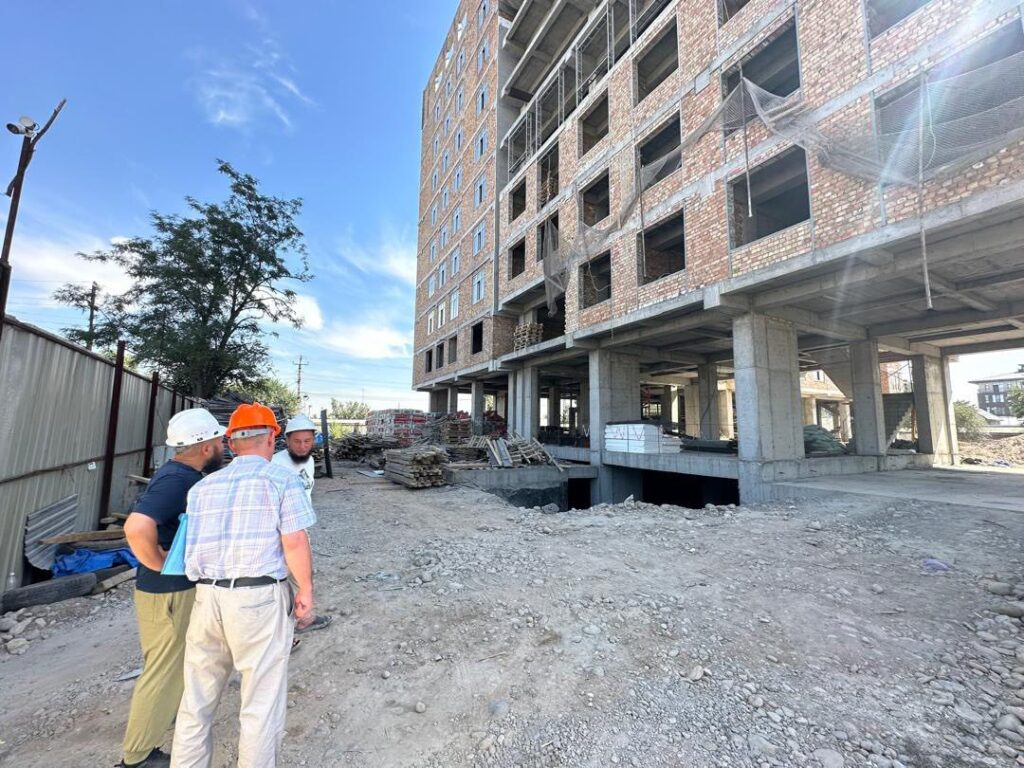
Kyrgyzstan recorded the highest growth in construction activity among member states of the Eurasian Economic Union (EAEU) during the first half of 2025, according to data published by the Eurasian Economic Commission (EEC). Infrastructure Boom Drives Expansion Between January and May 2025, construction volumes in Kyrgyzstan nearly doubled compared to the same period in 2024. Last year, the sector had already grown by 38% year-on-year. Armenia followed with a growth rate of 29%, while Kazakhstan, Belarus, and Russia posted more modest increases of 15.4%, 12.3%, and 5.5% respectively. Across the EAEU, construction grew by an average of 6.8%. The primary drivers of Kyrgyzstan’s construction boom include extensive state and private investment in housing, infrastructure, and industrial development. The government has focused on building hydroelectric power plants, residential complexes, and administrative buildings. Notably, the state mortgage program offers housing loans at 4-8% interest rates, well below market levels. From January to April 2025, the Cabinet of Ministers allocated nearly $500 million toward housing projects, supplemented by $77 million in equity financing. To help stabilize construction costs, the government also classified cement as a socially significant good, subject to price controls. According to The Times of Central Asia, investment in housing, infrastructure, and social facilities rose by 62% year-on-year during the first four months of 2025, reaching approximately $800 million, the highest figure in recent years. The construction sector contributed an estimated 3% to Kyrgyzstan’s GDP growth in the first half of the year. Quality and Labor Concerns Persist Despite these achievements, concerns are growing over construction quality and labor shortages. Residents in major cities report poorly planned developments that lack supporting infrastructure, including roads and essential utilities such as water and electricity. Speaking to The Times of Central Asia, construction auditor Bakhtiar Kasymaliyev highlighted critical challenges in project execution. “We have serious problems with quality and professionalism,” he said. “There is a shortage of skilled concrete workers and bricklayers. They are in high demand. As a temporary solution, companies are bringing in labor from Pakistan, India, and Egypt, but most of them are unskilled. To improve quality, we need to attract qualified specialists from abroad.” According to Kasymaliyev, the labor shortage is already impacting project timelines and structural integrity, raising red flags amid the sector’s rapid expansion.

Kazakhstan Begins Construction of Major International Logistics Hub in Kostanay

Kazakhstan has officially begun construction of a major transport and logistics complex in the northern city of Kostanay, aiming to establish a critical transit hub linking China, Central Asia, and Europe. The new “Tobyl” Logistics Hub is set to enhance the country's role in regional and global supply chains. Designed to integrate into international transport corridors, including routes to China, Central Asia, Turkey, Iran, Afghanistan, and Europe, the facility is scheduled to be operational by 2027. It is expected to significantly boost transit capacity along the “Northern Kazakhstan, Southern Urals” corridor and facilitate freight movement toward the People's Republic of China. In the first half of 2025, Kazakhstan’s transit freight volume reached 16.8 million tons, marking a 4% year-on-year increase. Strategic Investment for Economic Growth “The complex will reduce logistics costs for businesses, support export-oriented manufacturing, attract investment into processing industries, and stimulate the creation of new industrial enterprises,” said Aydyn Alimov, Director of the new logistics center. “We believe Tobyl will become a business magnet and a driver of regional industrial growth.” The hub will feature advanced infrastructure, including terminals, warehouses, customs clearance facilities, IT zones, and service areas operating under a “one-stop-shop” model. A digital cargo tracking system will provide real-time logistics monitoring. The project is being developed with the participation of JSC Kedentransservice, Kazakhstan’s largest logistics operator, and is backed by the state-owned Industrial Development Fund. Covering an area of 133.6 hectares, the Tobyl complex represents an investment of 64 billion KZT (approximately $122 million). It is designed to process up to 400,000 twenty-foot equivalent units (TEUs), or more than 11 million tons of cargo annually, and will create 500 new jobs in logistics, IT, and service sectors. A Catalyst for Regional and National Development “We are not just building a logistics hub, we are laying the foundation for a new economic geography,” said Deputy Prime Minister Yermek Kosherbayev at the groundbreaking ceremony. “Tobyl will become an intellectual platform where logistics, digitalization, education, and industry converge. This is not just a regional but a national project, a catalyst for growth across the country.” According to the government, the Tobyl hub will also promote sustainable exports from the Kostanay region and foster deeper industrial cooperation within the Eurasian space. Kostanay is already Kazakhstan’s leading automotive manufacturing hub. In 2024, local automaker Allur produced 90,515 vehicles, comprising passenger cars, trucks, and buses, out of a national total of 134,000. In 2025, a new KIA plant with an annual capacity of 70,000 vehicles is expected to launch, along with facilities for producing automotive components and spare parts. Earlier this month, Kazakhstan and China signed an updated strategic agreement to strengthen railway links and increase cargo throughput along the Trans-Caspian International Transport Route (TITR), also known as the Middle Corridor.

Japan-Backed Tunnel Project Begins on Kyrgyzstan’s Bishkek–Osh Highway

Construction has begun on a 750-meter tunnel along Kyrgyzstan’s vital Bishkek–Osh highway, the country’s only overland route connecting the northern and southern regions. The project marks a major step in modernizing national transport infrastructure and improving safety in an area prone to rockfalls, landslides, and harsh weather conditions. The tunnel is being built at the 400-kilometer mark of the highway by Japan’s Takenaka Civil Engineering & Construction Co., using advanced Japanese technologies designed to meet the region’s complex geological challenges. A formal groundbreaking ceremony took place on June 19, attended by Kyrgyz Transport and Communications Minister Absattar Syrgabayev and Japanese Ambassador to Kyrgyzstan Hideki Goda. Minister Syrgabayev described the tunnel as a key solution to the dangers posed by the mountainous terrain. “In this area, the risks are high. A tunnel is the safest and most reliable solution,” he said. Stretching 655 kilometers, the Bishkek–Osh highway runs through the regions of Chui, Talas, Jalal-Abad, and Osh, linking the capital with the country’s second-largest city. It plays a crucial role in both domestic mobility and regional trade, forming part of international corridors that connect Kyrgyzstan with Kazakhstan, Uzbekistan, Tajikistan, and China. The tunnel reflects the government’s continued efforts to strengthen the safety and reliability of one of its most important infrastructure assets.

Kazakhstan Launches Construction of Strategic Center-West Highway Corridor

Kazakhstan has officially commenced construction of the long-anticipated Center-West highway corridor, a strategic infrastructure project designed to enhance national connectivity and boost the country’s transit capacity. The groundbreaking ceremony took place in the Kostanay region on June 14, marking a major milestone in the implementation of Kazakhstan’s national transport development strategy. According to the Ministry of Transport, the new highway will stretch 865 kilometers along the route Astana-Zhanteke-Egindikol-Arkalyk-Torgai-Irgiz. Once completed, the corridor will directly link the central and western regions of Kazakhstan and integrate into the Trans-Caspian International Transport Route (TITR), a critical freight corridor connecting China and Europe via Kazakh territory. One of the most significant logistical benefits of the project is a 573-kilometer reduction in travel distance between Astana and Irgiz, which is expected to substantially cut transit times and enhance freight movement efficiency. Construction began simultaneously in two directions: one from the town of Arkalyk toward Astana, and the other from the village of Torgai toward Irgiz. This dual-front approach is intended to accelerate the project timeline and streamline construction efforts across Kazakhstan’s expansive steppe terrain. Speaking at the launch event, Deputy Minister of Transport Satzhan Ablaliyev emphasized the strategic importance of the initiative. He noted that the corridor would not only improve national transport infrastructure and transit capabilities but also enhance regional interconnectivity and accessibility. Beyond its national scope, the project is expected to deliver substantial local benefits by boosting economic activity in adjacent areas. Increased mobility, expanded trade routes, and job creation, both during construction and in the long term, are among the anticipated outcomes. The Center-West highway corridor forms a key component of Kazakhstan’s broader strategy to modernize its transport network and solidify its role as a pivotal transit hub between East and West.

Construction Begins on New British School Campus in Astana

A capsule-laying ceremony on June 7 marked the official start of construction on the new Ardingly College campus in Astana, a major milestone in Kazakhstan-UK educational cooperation. Ardingly Astana is a branch of Ardingly College, a prestigious British coeducational day and boarding school founded in 1858 in West Sussex, England. The Astana branch will follow the Cambridge curriculum, offering instruction in English and preparing students for A-Level examinations. The school’s faculty will include educators with international and UK-based teaching experience. The first phase of the new campus is expected to open in 2026, with the capacity to accommodate up to 1,000 students. The campus will include state-of-the-art facilities such as a swimming pool, sports complexes, music and art studios, and science laboratories. Designed as an educational hub for students from Kazakhstan and across Central Asia, Ardingly Astana aims to merge the British academic model with innovative teaching methods, equipping students for admission to leading universities worldwide. The project also seeks to attract international educators and promote cross-border knowledge exchange and educational integration. The development is supported by Kazakh Invest, Kazakhstan’s national investment promotion agency. The capsule-laying ceremony was attended by representatives of the British Embassy in Kazakhstan, Ardingly College, Ardingly Astana, and Kazakh Invest. Azamat Kozhanov, Deputy Chairman of Kazakh Invest, underscored the project’s significance: “The opening of a campus of one of the UK’s top educational institutions in the heart of Eurasia symbolizes trust, partnership, and a strategic vision for the future. It will be more than just a school, it will be an ecosystem for nurturing ideas and developing future leaders. Education remains a priority for investment, and we are ready to provide full support for such projects. We are confident that Ardingly Astana will attract talented students and educators from around the world.” The project marks a significant step in advancing both educational and investment ties between Kazakhstan and the United Kingdom.