Kazakhstan became the first Central Asian country to join the U.S.-led Pax Silica initiative. It also signed the agreement establishing China’s World Artificial Intelligence Cooperation Organization, or WAICO. That dual participation could now become consequential.
Reuters reported on August 14 that the State Department had prepared an undated draft letter warning the 35 signatories of the U.S. AI Opportunity Statement that participation in Pax Silica could be incompatible with membership in competing initiatives. Kazakhstan is the only country presently known to have joined both frameworks. The draft could still change, and the State Department has not publicly adopted the position it contains.
Kazakhstan’s decision to join both initiatives also reflects its long-standing multi-vector foreign policy. Astana has sought practical relations with competing powers rather than exclusive alignment with any one bloc, an approach its official foreign-policy concept describes as maintaining mutually beneficial relations with states and organizations of practical interest to Kazakhstan. Joining a U.S.-led supply-chain initiative and a China-led AI organization fits that pattern, although it also makes the question of compatibility more consequential.
Washington’s concern is understandable. Pax Silica is intended to create trusted supply chains, strengthen investment security and protect sensitive technology and infrastructure from undue access or control. Membership is meant to represent more than attendance at another diplomatic forum.
The question is what Kazakhstan has agreed to do through WAICO, how those commitments will be implemented, and whether they create competing expectations or affect specific Pax Silica projects.
Kazakhstan’s Role in the Supply Chain
Pax Silica spans the AI supply chain from energy and mineral processing to semiconductors, data centers and models. Kazakhstan also has ambitions in digital infrastructure and AI services, but its strongest existing capabilities relevant to Pax Silica are concentrated in energy, mineral production, selected processing and Eurasian connectivity. The framework is designed to combine the different industrial strengths of its participants rather than reproduce the entire technology chain in every country.
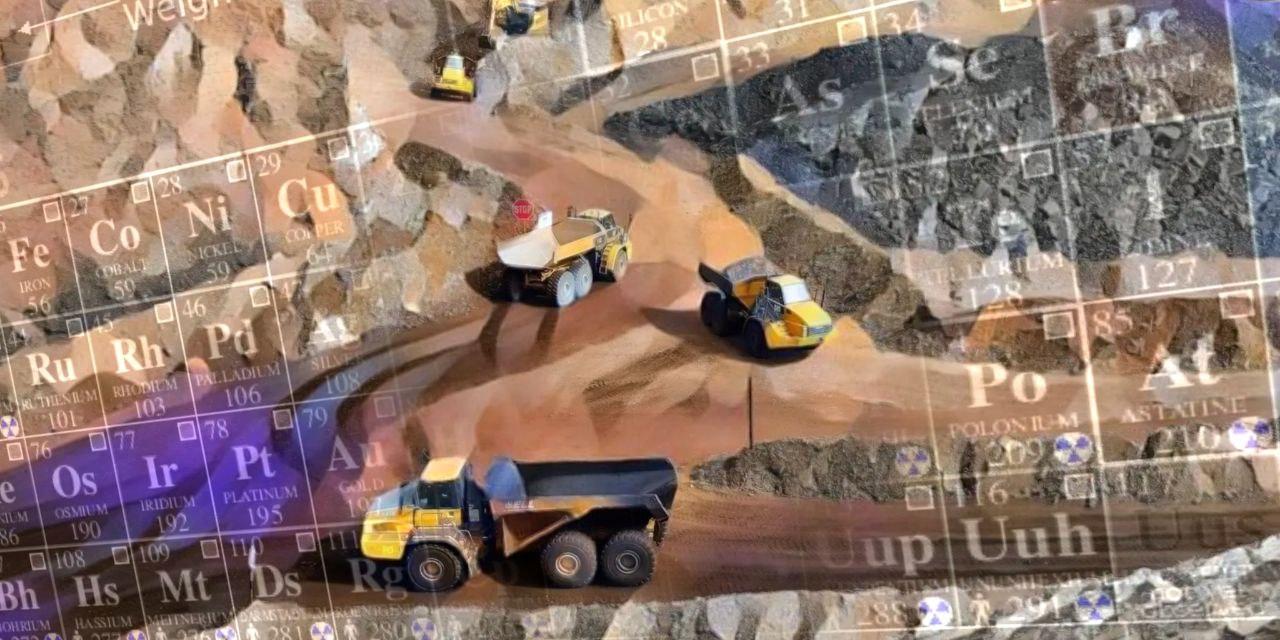
Kazakhstan produced about 40% of the world’s mined uranium in 2025. Kazakh-origin material accounted for 28% of uranium delivered to U.S. civilian reactor operators that year, second only to Canada. Kazakhstan’s most immediate relevance is not semiconductor production, but its role as an energy, minerals and processing partner. Uranium is the clearest example, providing large-scale fuel supplies for the power systems on which expanding AI infrastructure depends.
As TCA recently noted, Kazakhstan sits at the nexus of resources, processing capacity and connectivity, and its role extends beyond raw-material extraction. Ulba Metallurgical Plant produces uranium dioxide powders and nuclear-fuel pellets, along with beryllium, tantalum and niobium products. Kazakhstan also produces copper, titanium, silver, aluminum and zinc used across power, communications, aerospace and advanced manufacturing. Its position on the Middle Corridor also gives it a logistics role connecting Central Asian production with Caspian and European markets.
Other contributions remain prospective. Eurasian Resources Group (ERG) plans a 15-tonne-a-year gallium facility backed by a long-term supply agreement with Mitsubishi, while a U.S.-supported tungsten project is moving forward with plans to mine and refine the metal in Kazakhstan. Neither should be counted as current supply, but both illustrate the opportunity to develop additional critical-mineral capacity outside China.
What WAICO Changes
Pax Silica and WAICO reflect different strategic approaches to the widening U.S.-China technology competition. They differ in purpose and structure, but their mandates touch some of the same areas, including standards, digital infrastructure and technology governance.
The Pax Silica Declaration is non-binding, but sets shared expectations for trusted supply chains, secure infrastructure, investment screening and protection of sensitive technology. The founding agreement establishes WAICO as a formal intergovernmental organization headquartered in Shanghai. Kazakhstan’s legal summary describes its purpose as civilian AI cooperation, narrowing technological gaps and developing common approaches to governance, standards and safety.
WAICO’s publicly described commitments remain broadly framed. Its emphasis on narrowing technological gaps, inclusive development, governance, standards and safe AI resembles language used in other major multilateral digital initiatives. Kazakhstan’s published summary of the WAICO agreement does not mention commitments involving data sharing, computing access, procurement or controlled technology. Even so, implementation could raise compatibility questions if it conflicted with Pax Silica safeguards.
The Remaining Question
The operational risks are unlikely to be the same across every part of Pax Silica. WAICO participation would carry greater implications for projects involving advanced technology, data or digital infrastructure than for conventional mineral production and processing.
Kazakhstan has strengthened controls on dual-use trade in recent years, including through legislation governing controlled goods and an electronic system for tracking their movement. That record is relevant to whether Astana can enforce restrictions around sensitive projects.
At the Hudson Institute in January, before WAICO was established, Under Secretary of State Jacob Helberg was asked about countries including Kazakhstan that maintain close relations with China. He distinguished between minerals and semiconductor manufacturing, noting that “different issues raise different levels of sensitivity.” He also emphasized strict standards and a “trust but verify” approach. Although those remarks preceded WAICO, the distinction is relevant because Kazakhstan’s established capabilities lie mainly in minerals, energy and processing rather than semiconductor manufacturing or advanced AI models.
Kazakhstan’s significance in minerals, energy and processing also raises the stakes of any decision about its participation.
On the evidence now available, the compatibility question remains unresolved. WAICO participation creates legitimate grounds for scrutiny. For Kazakhstan, the issue is another test of its long-standing multi-vector foreign policy. As its importance to global energy, mineral and technology supply chains grows, so too does the challenge of navigating competing strategic expectations.