• KGS/USD = 0.01143 0%
  • KZT/USD = 0.00208 0%
  • TJS/USD = 0.10438 -0.1%
  • UZS/USD = 0.00008 0%
  • TMT/USD = 0.28579 0%
  • KGS/USD = 0.01143 0%
  • KZT/USD = 0.00208 0%
  • TJS/USD = 0.10438 -0.1%
  • UZS/USD = 0.00008 0%
  • TMT/USD = 0.28579 0%
  • KGS/USD = 0.01143 0%
  • KZT/USD = 0.00208 0%
  • TJS/USD = 0.10438 -0.1%
  • UZS/USD = 0.00008 0%
  • TMT/USD = 0.28579 0%
  • KGS/USD = 0.01143 0%
  • KZT/USD = 0.00208 0%
  • TJS/USD = 0.10438 -0.1%
  • UZS/USD = 0.00008 0%
  • TMT/USD = 0.28579 0%
  • KGS/USD = 0.01143 0%
  • KZT/USD = 0.00208 0%
  • TJS/USD = 0.10438 -0.1%
  • UZS/USD = 0.00008 0%
  • TMT/USD = 0.28579 0%
  • KGS/USD = 0.01143 0%
  • KZT/USD = 0.00208 0%
  • TJS/USD = 0.10438 -0.1%
  • UZS/USD = 0.00008 0%
  • TMT/USD = 0.28579 0%
  • KGS/USD = 0.01143 0%
  • KZT/USD = 0.00208 0%
  • TJS/USD = 0.10438 -0.1%
  • UZS/USD = 0.00008 0%
  • TMT/USD = 0.28579 0%
  • KGS/USD = 0.01143 0%
  • KZT/USD = 0.00208 0%
  • TJS/USD = 0.10438 -0.1%
  • UZS/USD = 0.00008 0%
  • TMT/USD = 0.28579 0%

Viewing results 1 - 6 of 48

Italy’s Eni Expands Energy Projects in Kazakhstan with Hybrid Power Plant

The Italian energy company Eni is accelerating the expansion of its projects in Kazakhstan. By the end of the year, the company plans to complete construction of a hybrid power plant in Zhanaozen, one of the country’s key oil and gas centers. The 247-MW project combines three energy sources: solar, wind, and gas generation. The approach is expected to reduce the carbon footprint while providing a more stable energy supply in a region where strategically important production assets are concentrated Construction is proceeding in stages. The first component is already operational. In September 2025, a solar power plant with 80,000 panels was commissioned. Full completion of the complex is scheduled for the end of 2026, following the launch of gas and wind generation facilities. According to the Ministry of Energy, the project is intended to strengthen energy security for major enterprises in the Mangistau region, including Ozenmunaygaz and the Kazakh Gas Processing Plant. In a region that regularly experiences power shortages, this is a significant development. The project was discussed during a meeting between Kazakhstan’s Minister of Energy Yerlan Akkenzhenov and Italy’s Ambassador to Kazakhstan Antonello De Riu. Italian companies are gradually expanding their presence in Kazakhstan’s energy sector, from upstream production to processing and power generation. Cooperation extends beyond electricity generation. In January 2026, QazaqGaz and Eni moved to the practical phase of exploration at the Kamenkovsky block in the Caspian Basin. Work is also continuing at the Yuzhny Shu-Sarysu and Bereke blocks. Another major initiative is the gas-chemical complex under construction in the Atyrau region. The polyethylene project, with a planned capacity of 1.25 million tons per year and an estimated cost of $7.5 billion, has already entered the construction phase. The project is being implemented by KMG PetroChem, with Italy’s MAIRE group (through its subsidiary Tecnimont) serving as a key contractor. At the same time, conventional power generation projects are advancing. Cooperation with Italian power engineering company Ansaldo Energia has enabled the installation of new gas turbines at Almaty CHPP-3, with equipment deliveries completed in January 2026. However, this expanding cooperation is taking place amid legal uncertainty. Earlier, Eni and Shell, partners in the development of the Karachaganak field, lost a key stage of arbitration proceedings in London and may be required to pay Kazakhstan between $2 billion and $4 billion. While this could affect future investment decisions, it has not so far slowed the growth of Italian companies’ activities in the country.

Italian Firm Explores Waste Recycling Projects in Kyrgyzstan

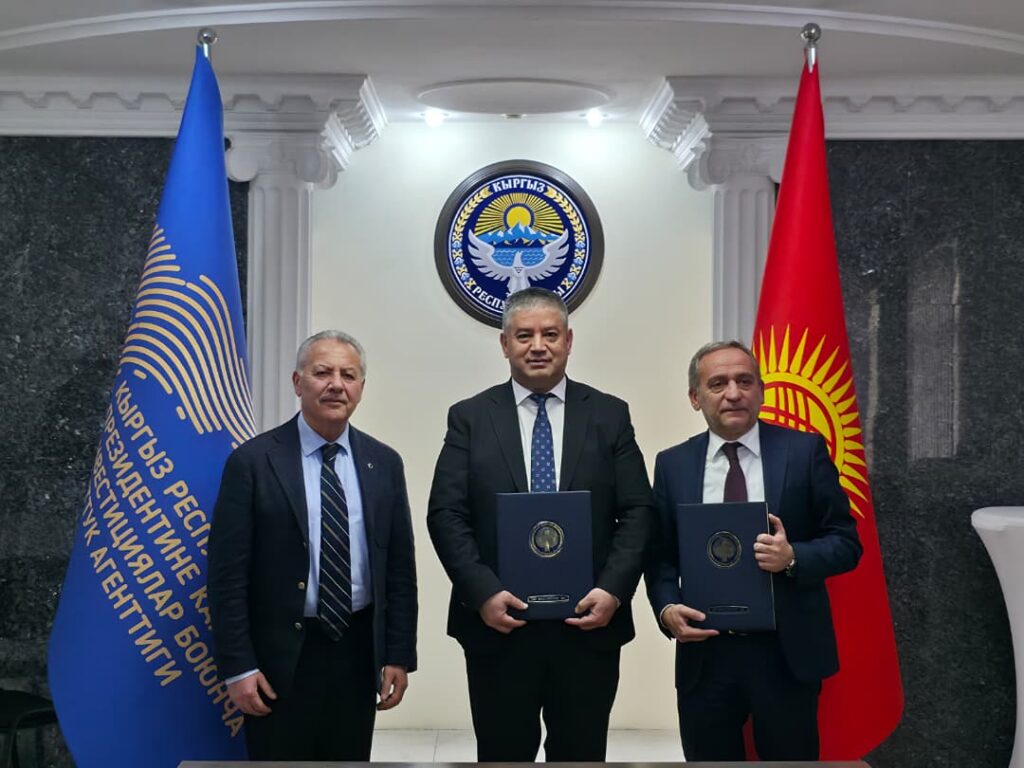
On February 2, the National Investment Agency under the President of the Kyrgyz Republic hosted representatives from Italian company TRITOR S.R.L., a firm known for its environmentally friendly waste recycling technologies, to discuss potential pilot projects in Kyrgyzstan. The meeting brought together officials from Kyrgyz municipal governments and the Ministry of Health to explore investment opportunities focused on processing municipal solid waste and medical waste. Participants also discussed candidate locations for future recycling facilities. Following the talks, the parties signed a memorandum of cooperation outlining several pilot initiatives. These include the processing of up to 200 tons of unsorted household waste per day, the supply of alternative environmentally friendly fuels to local cement plants, the introduction of modern technologies for landfill reclamation and cleanup, and the development of medical waste recycling systems in public healthcare institutions. Ravshanbek Sabirov, head of the National Investment Agency, underscored the importance of such initiatives for the country. “The problem of waste recycling is particularly acute today, and Kyrgyzstan is interested in implementing modern, environmentally friendly technologies. We value not just ideas but working solutions that can be adapted to local conditions. We are open to cooperation and ready to support such projects at all stages of implementation,” he said. The initiative reflects Kyrgyzstan’s broader push to tackle growing volumes of household and industrial waste through the adoption of advanced, sustainable recycling technologies.

Kazakhstan Plans to Send 35 Athletes to 2026 Winter Olympics in Italy

Kazakhstan plans to send a team of 35 athletes to compete at the XXV Winter Olympic Games, which will take place in Italy in 2026 in Milan and Cortina d’Ampezzo. The 2026 Winter Olympics will be held from February 6 to 22, bringing together approximately 3,000 athletes from 93 countries. A total of 116 sets of medals will be contested. Kazakhstan’s athletes will compete in 10 disciplines across 58 medal events. These include biathlon, speed skating, figure skating, short track, alpine skiing, Nordic combined, cross-country skiing, ski jumping, freestyle moguls, and freestyle aerials. Among the strongest medal contenders are figure skaters Mikhail Shaydorov and Sofya Samodelkina; freestyle skiers Anastasia Gorodko and Yulia Galysheva; speed skater Evgeny Koshkin; and a group of short track skaters, including several world championship medalists. Shaydorov is the current world silver medalist in men’s singles figure skating. Galysheva won bronze in moguls at the 2018 Winter Olympics and was crowned world champion in 2019 in the same discipline. Gorodko has twice earned bronze in parallel moguls at the World Championships, in 2021 and 2025. Kazakhstan has participated in every Winter Olympics since 1994, when skier Vladimir Smirnov won the country’s first and so far only, Winter Olympic gold medal in Lillehammer, Norway. To date, Kazakhstan has won eight medals at the Winter Games: one gold, three silver, and four bronze. The Lillehammer Games remain the country’s most successful, with three medals and a 12th-place finish in the overall medal standings. At the most recent Winter Olympics in Beijing in 2022, Kazakh athletes did not reach the podium. However, the national team delivered a strong performance at the 2025 Winter Asian Games, finishing fourth in the overall standings with 20 medals.

Uzbekistan Expands Nuclear Energy Cooperation with Italy’s Ansaldo Energia

Uzbekistan and Italy are deepening their cooperation in the field of nuclear energy, according to a statement from the press service of the Uzatom Agency. A delegation led by Uzatom Director Azim Akhmedkhadjaev has just returned from a working visit to Genoa, Italy, where talks focused on advancing Uzbekistan’s first nuclear power plant project. The visit included meetings with representatives of the regional government, the Genoa Chamber of Commerce, leading universities, and major Italian energy firms. A key session was held with Ansaldo Energia and its nuclear subsidiary, Ansaldo Nucleare, one of Europe’s leading providers of power generation technologies. Discussions focused on integrating Italian technical solutions into Uzbekistan’s planned nuclear facility, with particular emphasis on adapting auxiliary systems to local climatic and geological conditions. The Italian side shared its experience in safety system design, nuclear software development, and fuel management, expertise gained through projects in China, Belgium, Slovenia, Hungary, and Ukraine. Both sides explored the potential role of Italian companies as technical consultants during construction, ensuring the project aligns with international safety standards. Cooperation in radioactive waste management and deployment of advanced Italian fuel-handling technologies was also discussed. Italy also expressed readiness to support Uzbekistan in developing a national regulatory framework for nuclear energy and licensing procedures. Further, the two parties considered launching joint research and engineering initiatives to train Uzbek nuclear specialists, part of a broader effort to build local capacity and ensure the safe, long-term operation of the country’s future nuclear infrastructure. The talks come as Uzbekistan diversifies its energy portfolio. Energy Minister Jurabek Mirzamahmudov recently announced that Saudi-based Pemco will begin constructing a 200-megawatt gas-piston power plant in Samarkand. Meanwhile, Uzbekistan continues to expand its solar and wind capacity through ongoing projects with ACWA Power.

Kazakhstani Opera Talent Aigerim Altynbek Wins Contest in Italy

Kazakhstani soprano Aigerim Altynbek believes “greater heights” await after she came first in an international opera singing competition in Italy. Altynbek was among singers from 50 countries competing in the Concorso Lirico Internazionale di Portofino (CLIP) in the scenic harbor village of Portofino. The competition, which began in 2015, aims to support young talents and many of its winners and finalists have embarked on successful careers. “I want to share some incredibly joyful news with you!” Altynbek posted on Instagram after she was awarded first prize on Sunday. “This was a truly special experience for me – and I believe even greater heights lie ahead.” President Kassym-Jomart Tokayev congratulated Altynbek. “This achievement, which has made our country's culture known to the world and has been recognized by international experts, is of great significance,” Tokayev said. “You have made our state proud and brought our native art to the forefront of the world.” Altynbek performed a duet last month with Italian tenor Andrea Bocelli at Pompeii, days after an appearance with Spanish tenor José Carreras in Astana. She has already received a number of accolades, including first prize in the Città di Arcore - Giacomo Puccini opera singing competition in Italy last year. She has been studying in Italy after graduating from the Kazakh National University of Arts.  

Kazakhstan, Italy, and the Battle for Europe’s Energy Future

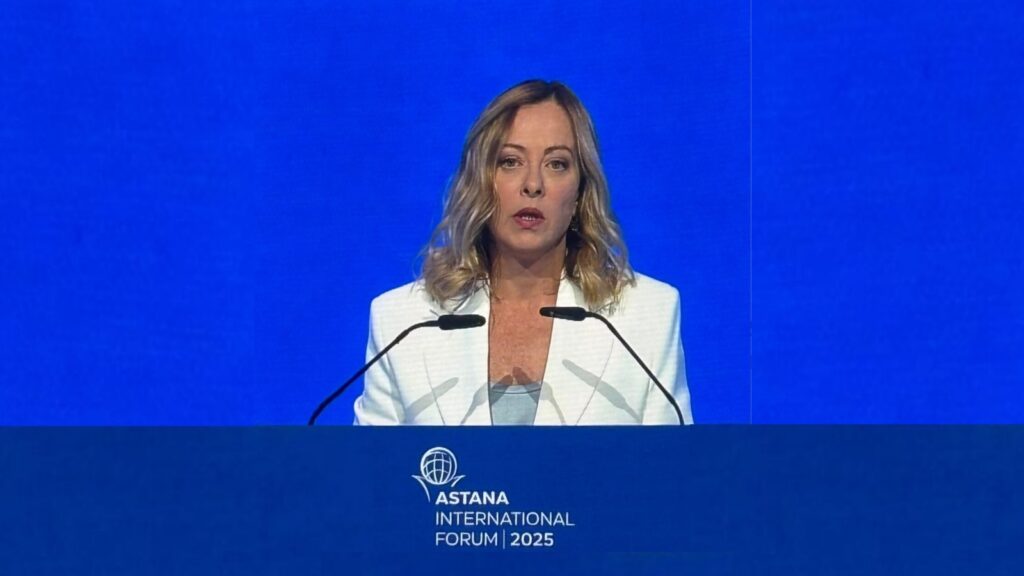
ASTANA - Central Asia is no longer on the periphery of global events, but a place where major countries come together with their ideas, money, and projects. In a turbulent and highly uncertain geopolitical environment, global powers are seeking to establish their presence in this strategic, energy-rich region. Italy is no exception. Italian Prime Minister Giorgia Meloni was initially scheduled to visit Kazakhstan in late April, but in light of Pope Francis' passing her trip to Astana was canceled. Coincidently or not, she came to the Kazakh capital on May 30 to attend the Astana International Forum (AIF) – a two-day event that saw the attendance of political, business, and thought leaders who gathered under an expanded agenda that included climate change, energy security, and sustainability. Meloni’s visit to Kazakhstan is part of her Central Asian tour; she previously visited Uzbekistan, where she met with the country’s President Shavkat Mirziyoyev. In Astana, she not only spoke at the AIF, emphasizing that the “Astana International Forum has become increasingly important in dialogue worldwide,” but also took part in the first-ever Central Asia–Italy summit. “Italy was the first Nation in the EU to decide to invest in relations with Central Asia and its individual member Nations, launching a permanent format in order to share ideas,” Meloni said at the AIF, emphasizing that the EU–Central Asia Summit, held in April in Samarkand, “elevated the relations between the region and the European Union to a strategic partnership.” In this relationship, Kazakhstan seems to play a crucial role. Italy is the largest Central Asian economy’s number one trading partner in Europe. According to Kazakhstan’s Ministry of Trade and Integration, trade turnover between Kazakhstan and Italy in 2024 amounted to $19.9 billion, which is 24% higher compared to the previous year ($16.1 billion). Oil is undoubtedly Kazakhstan’s main export to Italy, although critics argue that the third-most populous EU member is merely a transit country, as large amounts of Kazakh oil ultimately reach other European countries. “If we really want to shape the future, we must have the courage to look beyond our geographical boundaries and pave new paths. I am thinking of the energy sector, where our cooperation can help make a difference, and I am also referring to critical raw materials, where our collaboration aims to generate shared benefits and mutual opportunities,” Meloni stressed. Kazakhstan is one of the richest countries in the world in terms of natural resources. This makes it a nation of significant interest to Italy – with whom Astana signed a Strategic Partnership Agreement back in 2009 – as well as to other European states. But from the Kazakh perspective, it is important that this cooperation be mutually beneficial. Astana is seeking to avoid being seen merely as a source of raw materials and expects its partners to offer tangible benefits in return. That is why Kazakhstan’s President Tokayev has pushed forcefully for the renegotiation of oil agreements with foreign energy companies operating in the country. For Astana, it is...