Viewing results 1 - 6 of 304
On August 13, Uzbekistan amended its Code of Criminal Procedure to compel Uzbekistan's citizens who have been imprisoned for crimes in certain foreign countries to serve the rest of their sentences in Uzbekistan. Uzbekistan has so far signed agreements with only 10 countries for imprisoned persons to be transferred to prisons in Uzbekistan to continue serving their sentences. According to Sherzod Tokhtashev, a politician from the government-aligned Miliy Tiklanish (National Revival) party, this law does not concern Uzbeks currently imprisoned in Russia. He did however mention that there are separate appeals in parliament to return Uzbek nationals convicted of crimes in Russia to domestic jails. At the same time, there are also calls for these prisoners' families to be brought home. “We receive requests to return children and relatives of Uzbeks from Russian prisons to Uzbekistan. Due to the lack of an agreement with Russia on the exchange of prisoners, everyone is helpless,” said Tokhtashev. According to Uzbek government, 20 citizens of Uzbekistan are currently serving terms in Italy, 250 in Turkey, and more than 450 in Kazakhstan.
Kyrgyzstan has created the Information Environment Research Center (IERC), which will be part of the Ministry of Culture, Information, Sports, and Youth Policy; its main task is to monitor and analyze the country's information space in order to protect citizens' rights and freedoms and prevent the spread of misinformation and inaccurate information. The Center will identify and block illegal content on the internet and in the media and cooperate with the administrations of major social networks such as Facebook, Google, and TikTok. It will monitor compliance with legislation in the information sphere and provide recommendations on improving the information environment in Kyrgyzstan. The establishment of the Center is part of the state strategy to strengthen information security and control the observance of citizens' rights in the media space. Earlier, we reported that a unified TV channel and a regional media platform could appear in Central Asia, which would become important elements in strengthening information security and cultural exchange in the region. This year, Central Asia, and Kazakhstan in particular, has been the subject of swathes on disinformation on the internet. However, independent media in Kyrgyzstan has been the target of repression by the authorities, which UN Special Rapporteurs have denounced.
The President of the Kyrgyz Republic, Sadyr Japarov has signed a law aimed at strengthening the protection of its citizens from family, sexual, and gender violence. The law provides for amendments to several legislative acts and aims to provide comprehensive assistance to victims of various forms of violence. A key objective is to ensure victims' access to justice and protect their rights and interests. The law is being adopted due to the alarming situation with the level of family and gender violence in Kyrgyzstan. In 2021, more than 10,000 cases were registered, but only 2.5% of them proceeded to court. In 2023, the number of cases increased to 11,000, and 95% of the victims were women. The increasing number of such incidents and the lack of protection for victims necessitated a review of the relevant legislation. The new law is designed to address gaps in legal protection for victims and create stricter measures to punish perpetrators.
As reported by Asia-Plus, on July 26, the governor of the Sughd region in Tajikistan, Rajabboy Ahmadzade, announced that the state border between Tajikistan and Kyrgyzstan, which has been closed for three years, is expected to open soon. The commission for delineating the border between Tajikistan and Kyrgyzstan has been in progress since 2022 but as stated by Ahmadzade, “To date, 94% of the border line has been fully delineated. We believe that everything will be resolved positively shortly." The minister advised that on July 21-24, representatives of the Ministry of Transport of Kyrgyzstan and Tajikistan visited the disputed areas and Tajik towns of Chorkukh and Vorukh. He did not disclose the location of the remaining 6% of disputed territories, but added that the commission would meet again from August 11 - 17 in Botken, Kyrgyzstan. The armed border between Tajikistan and Kyrgyzstan was closed after clashes on 14-17 September 2021. A year later, officials and representatives of both countries' border commission met in Sughd to discuss means of resolving the issue. The conflict was caused by uncertainties regarding the exact demarcation of the border between the two republics which spans some 980 kilometers. With its scant natural resources and dwindling water supplies, the border between Kyrgyzstan and Tajikistan has been the scene of numerous skirmishes for many years. In 2014, all borders between Kyrgyzstan and Tajikistan were closed indefinitely to Kyrgyz and Tajik citizens following clashes over a bypass road in disputed territory; mortars were fired and both armies suffered casualties. Trouble spilled over again throughout 2021 and 2022, reportedly starting over a water dispute in the Vorukh enclave, and leaving an unknown number in the hundreds killed, and up to 136,000 people evacuated. In September 2022, another shooting took place on the border between the two countries.
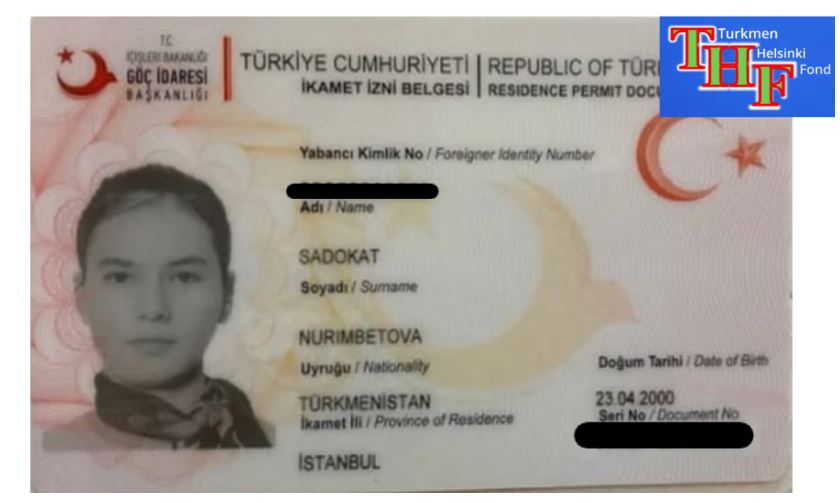
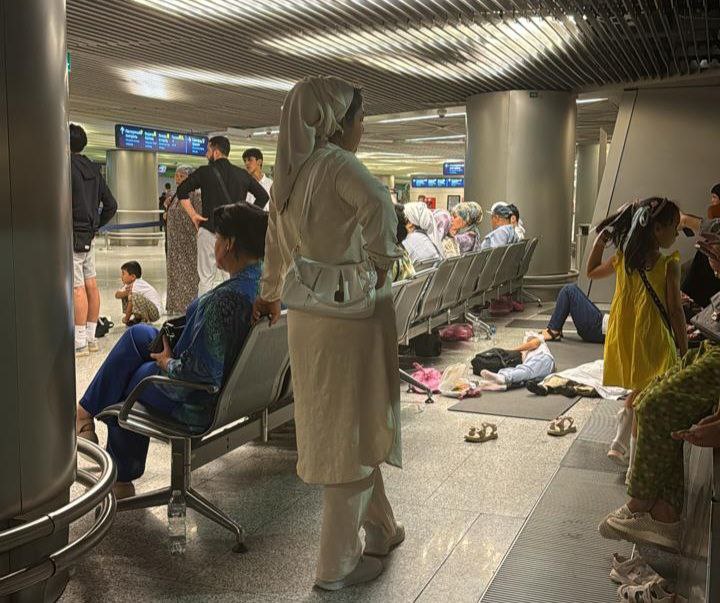
Sadokat Nurimbetova, the daughter of prominent civil activist Hamida Babajanova, was removed from a Turkmenistan Airlines flight to Istanbul at Ashgabat International Airport, it has been reported. Nurimbetova, an ethnic Uzbek, is a second-year student at Istanbul Medical University, and accordingly she has a valid Turkish residence permit, a “kimlik.” On June 5, Nurimbetova went to her home country to apply for a new passport, which she duly received on July 10, and bought a plane ticket to Istanbul. At passport control, two immigration officials intercepted Nurimbetova and took her to a separate room. There, she was fingerprinted and interrogated, after which the Migration Service officers told the student that she was banned from leaving Turkmenistan. “This is a directive from above," Nurimbetova was told, and was advised not to go anywhere and not to complain to anyone. It was also emphasized to her that her mother should not entertain thoughts of going anywhere. Nurimbetova is the daughter of well-known Turkmen civil activist Hamida Babajanova, who last year defended the right of her elderly mother, Yakujan, to make a pilgrimage to Mecca. Recently, cases of Turkmen citizens being removed from flights abroad without explanation have become more frequent. The same thing is happening when attempting to cross the border by land.
During a press conference, director of the Civil Aviation Agency, Habibullo Nazarzoda, announced that over the past six months, Russia expelled or deported some 3,400 Tajikistan citizens. Nazarzoda emphasized that the action was spurred by errors in the Tajik citizens' documents as opposed to being politically motivated and stated, “The reason for denied entry into Russian territory was sometimes a lack of necessary documents. 95% of people who travel to the country know where they are going and why they are going, but cannot answer questions when asked. Many become confused. That’s why it’s not political.” Conditions for migrants heading for Russia and for those already in the country, have become stricter following the recent terrorist attack at Moscow's Crocus City Hall and the suspected involvement of Tajik citizens. Complaints about difficulties in entering the country are increasing and dozens of migrants report being detained at Russian airports and land border crossings under various pretexts. Since neither the Tajik nor Russian sides have commented on the situation, the official reasons for the above remain unclear.