• KGS/USD = 0.01144 0%
  • KZT/USD = 0.00202 0%
  • TJS/USD = 0.10672 -0.09%
  • UZS/USD = 0.00008 0%
  • TMT/USD = 0.28530 0%
  • KGS/USD = 0.01144 0%
  • KZT/USD = 0.00202 0%
  • TJS/USD = 0.10672 -0.09%
  • UZS/USD = 0.00008 0%
  • TMT/USD = 0.28530 0%
  • KGS/USD = 0.01144 0%
  • KZT/USD = 0.00202 0%
  • TJS/USD = 0.10672 -0.09%
  • UZS/USD = 0.00008 0%
  • TMT/USD = 0.28530 0%
  • KGS/USD = 0.01144 0%
  • KZT/USD = 0.00202 0%
  • TJS/USD = 0.10672 -0.09%
  • UZS/USD = 0.00008 0%
  • TMT/USD = 0.28530 0%
  • KGS/USD = 0.01144 0%
  • KZT/USD = 0.00202 0%
  • TJS/USD = 0.10672 -0.09%
  • UZS/USD = 0.00008 0%
  • TMT/USD = 0.28530 0%
  • KGS/USD = 0.01144 0%
  • KZT/USD = 0.00202 0%
  • TJS/USD = 0.10672 -0.09%
  • UZS/USD = 0.00008 0%
  • TMT/USD = 0.28530 0%
  • KGS/USD = 0.01144 0%
  • KZT/USD = 0.00202 0%
  • TJS/USD = 0.10672 -0.09%
  • UZS/USD = 0.00008 0%
  • TMT/USD = 0.28530 0%
  • KGS/USD = 0.01144 0%
  • KZT/USD = 0.00202 0%
  • TJS/USD = 0.10672 -0.09%
  • UZS/USD = 0.00008 0%
  • TMT/USD = 0.28530 0%
07 February 2026

Viewing results 1 - 6 of 26

American Scholar Mark Reese Fights Intellectual Property Theft of Uzbek Classic ‘Bygone Days’

When American scholar Mark Reese set out to share Uzbekistan’s most celebrated novel with the world, he never imagined that his work would be pirated by the very institutions he had hoped to support. Reese, who first came to the country as a Peace Corps volunteer in the 1990s, spent more than a decade translating O‘tkan Kunlar (Bygone Days), the seminal 1920s novel by Abdulla Qodiriy. His English edition was a scholarly milestone – the first time the novel, considered Uzbekistan’s literary classic, had been made accessible to English-speaking readers. The book was warmly received. In 2019, Reese was awarded the Uzbek state’s Order of Do‘stlik, or Friendship, for his contribution to cultural understanding. During a follow-up visit the next year, he gave signed copies of the book to universities and ministries across the country. “All parties asked how they could support my work,” he tells The Times of Central Asia. “I presented a copy and explained that they could purchase more at a steep discount.” Each donation came with a clear stipulation: the book was not to be copied, resold, or distributed further. For a time, the project seemed to blossom. Uzbek students used the book in academic papers. One university even adapted it into an English-language stage play. Reese granted permission for such use, as long as it remained non-commercial and he was credited. By 2021, he had entered a publishing partnership in Tashkent and was preparing to distribute 5,000 official copies in 2026. Agreements to publish in Turkey and Qatar were also underway. Then, quietly, the book escaped his hands. Reese learned from students in the Ferghana Valley that a full PDF of the translation had been uploaded to the Telegram channel of a university library. When he opened the file, he recognized something chilling – his own handwriting on the inside cover. The scan had been made from a gifted copy. It was high-resolution and clearly done using professional equipment. The source of the leak soon became clear. The rector of Uzbekistan’s State World Languages University, known locally as Jahon Tilli, confirmed in an interview that his vice rector had scanned the book as part of a digitisation initiative. “They did so without my permission,” Reese said. “And the file was then shared with 1.3 million university students and 6.3 million school students.” The book was everywhere – on servers, in group chats, on flash drives. In at least one case, students tried to send the file to a printer and sell it. Reese took the case to court. The verdict was in his favour: the court ruled that copyright theft had occurred. But instead of holding the university responsible, the judge placed the blame squarely on the vice rector. Reese believes this was a calculated move. “It’s a common ploy to reduce damages,” he said. “I’m now expected to sue the individual for up to $30,000, but courts usually award just 20 to 40 percent of that.” This, for Reese, is the deeper problem. There...
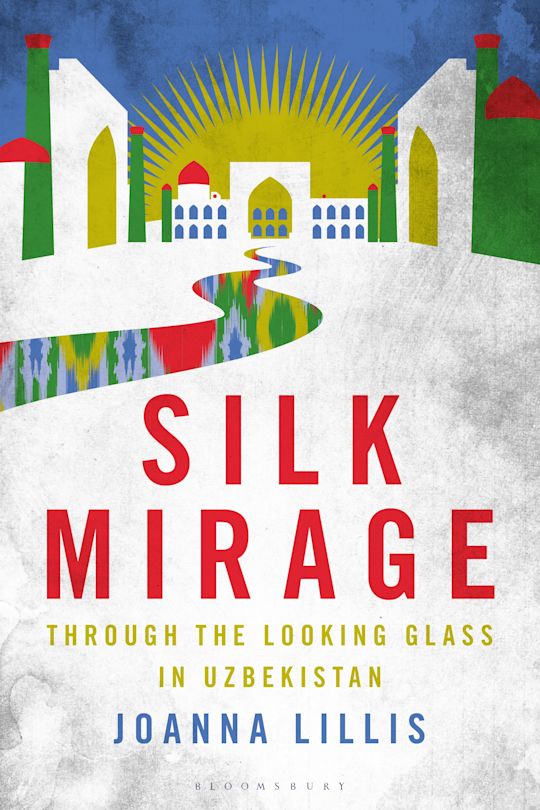
New Book Review: ‘Silk Mirage: Through the Looking Glass in Uzbekistan’ by Joanna Lillis

“Vibrant” and “brutal” are words that British journalist Joanna Lillis uses to describe Uzbekistan in her new book Silk Mirage: Through the Looking Glass in Uzbekistan, released this week through Bloomsbury. But they could just as easily be used to describe the book itself. In her own words, Lillis, a Central Asia correspondent for The Economist and other media, set out to create "a portrait of Uzbekistan from independence to the modern-day, dipping into history to demonstrate where the country came from and how it got where it is today, and offer clues about where it is going." She achieves this with a book that is clear-eyed and meticulously researched, detailing how Uzbekistan’s two 21st-century leaders, presidents Islam Karimov and Shavkat Mirziyoyev, have shaped the lives of Uzbekistan’s remarkable people. The book opens with a summary of the paranoia and violence of the Karimov era (1989-2016), told through Lillis’ experience of having recently arrived in Tashkent in 2001. She lived in the country until 2005, and has spent a lot of time in Uzbekistan thereafter. While the western media that reported on Karimov’s death in 2016 speculated on a battle behind the scenes to succeed him, Silk Mirage is clear that power was always going to pass to Miziyoyev, who had been Karimov's prime minister for the previous 14 years. Lillis does, though, memorably mention that "there may have been a fierce under-the-rug catfight." A recurring topic in Silk Mirage is the repression of the media in Uzbekistan, and local journalists’ need to self-censor and avoid uncomfortable issues. There is none of that in this absolutely fearless book. Lillis gives stark details of Karimov’s human rights abuses, particularly in accounts of the horrific Jaslyk prison. She also confronts his successor’s failure to eradicate some of the injustices in the present day.  When comparisons are made between life under Karimov, referred to as "Old Uzbekistan", and the New Uzbekistan of Mirziyoyev, the progress towards democracy is described as a qualified success. The country now has a parliament with younger, more accountable deputies; however, “opposition” is still a dirty word, and the proliferation of new political parties is misleading.  Economic reforms have led to the previous official corruption and black market profiteering being replaced with a state that is friendlier to local businesses and foreign investors alike. That being said, there are still restrictions on citizens’ rights. So, have Mirziyoyev’s plans for democracy and reforms been slowed down by systemic issues – the need for his government to first dismantle the dictatorship he inherited? Or is Karimov’s old ally too much of a product of Old Uzbekistan to fully stop the past from repeating? Lillis leaves the reader to decide for themself.  Silk Mirage dedicates chapters to events in Uzbekistan that have occasionally caught international attention. The last two decades have seen the authorities’ 2005 massacre of hundreds of people in the eastern city of Andijan, which was blamed on an ambiguous Islamist cult; outcries over forced labour and child labour in...

TCA Interview: Author Judith Lindbergh on Her Novel “Akmaral”, Set on the Kazakh Steppe

In recent years, many international writers have written books about Kazakhstan. One of these is the American author Judith Lindbergh, whose latest historical novel, Akmaral, is set on the Kazakh steppe. TCA: The story of Akmaral is related to Central Asia, and particularly, Kazakhstan... JL: Absolutely correct. Akmaral is about a nomadic woman warrior on the Central Asian steppes in the 5th century BCE. It’s based on archaeology that many of your readers are likely familiar with: the Siberian Ice Maiden discovered in Tuva and the Issyk Golden Warrior of Kazakhstan. These two burials were just the beginning of my research, which also included the writings of the Greek historian Herodotus about the Amazon warrior women who fought in the Trojan War. I delved deeply into the history, landscape, and cultures of Central Asia, both ancient and modern. In writing my novel, I worked hard to understand how people lived, and still live, on the steppes: their traditional nomadic ways of herding and hunting, and especially how this ancient, often-forgotten culture fits into the broader story of human civilization. [caption id="attachment_38735" align="aligncenter" width="349"] Judith Lindbergh[/caption] TCA: How did the idea to write such a novel come about? JL: It all started with a documentary about the Siberian Ice Maiden. I love ancient history and archaeology, especially when they reveal truths about women’s lives. The Ice Maiden burial was fascinating. Her body was so well preserved that I could almost imagine her standing before me. I wanted to understand how she might have lived, and to uncover the mystery of why she was buried in such an isolated place. As I continued my research, I realized that she was not the only important female burial from that era in Central Asia. There were, in fact, countless others. Many women who had died of war wounds were buried with weapons. I began combining these burials in my imagination to create my main character, Akmaral, which I learned means “White Deer.” The name felt connected to the Siberian Ice Maiden’s famous tattoo, which became an important spiritual symbol in my novel. I used extensive research to try to accurately represent what life might have been like for these ancient women. In historical fiction, as in history itself, women rarely play significant roles in public life. Yet these artifacts and burials show us that many nomadic women once held important military and spiritual positions.   There are almost no works written in English about nomadic peoples, including the real life and history of the Kazakhs. In fact, nomads were people who lived freely and truly in their time. And now we are not able to glorify their values, their way of life. What do you think about this? You’re right that there’s very little written in the West about the Sarmatians, or really much about Central Asia at all. I wanted to bring my fascination with this vital, “forgotten” part of history to new readers. In many ways, it can be hard for modern...

Kazakhstan Highlights Its Literary Heritage at the 2025 Frankfurt Book Fair

From October 15 to 19, Kazakhstan took part in the 2025 Frankfurter Buchmesse in Germany – one of the world’s most prominent and influential international book fairs. At its national stand, the country presented a diverse selection of new publications from leading Kazakh publishers to a global readership.  Celebrating its 77th edition, this year’s Frankfurt Book Fair featured more than 30 delegates from Kazakhstan, from major publishing houses such as Mektep, Almatykitap, Atamura, ARMAN-PV, Steppe & World Publishing, Evero, Kazformoms, and AmalBooks. [caption id="attachment_38141" align="aligncenter" width="351"] @TCA[/caption] The national pavilion became an important hub for expanding international publishing partnerships. Approximately 350 Kazakh titles were showcased, spanning a wide range of genres from literary fiction and scholarly works to educational and children’s books.  Book Presentations and Highlights Several notable book launches took place during the fair. Of particular interest was the multilingual edition Abai’s “Words of Wisdom: Legacy for Generations”, translated into seven languages and presented with the participation of German writer Anja Tuckermann. Another major highlight was a creative presentation of Mirzhakyp Dulatov’s timeless novel “Unfortunate Jamal”, regarded as one of the classics of Kazakh literature. [caption id="attachment_38142" align="aligncenter" width="224"] @TCA[/caption] The Consul General of Kazakhstan in Frankfurt am Main, Tauboldy Umbetbayev, visited the national pavilion to show support for the Kazakh delegation and to emphasize literature’s vital role in promoting cultural diplomacy. Throughout the fair, publishers from Canada, China, Turkey, Azerbaijan, Denmark, Germany, Singapore, and several other countries met with Kazakh representatives to discuss potential collaborations.

From Kyrgyzstan to Scotland: Shahsanem Murray’s Naked Nimbus Explores Love, Loss, and Belonging

In the wake of Finding the Holy Path, published in 2014, and Cold Shadows in 2016, Naked Nimbus is Shahsanem Murray’s long-awaited third novel. Once again, Murray’s multifaceted plot is woven with intrigue and mysticism, referencing the stark cultural contrasts between life in Central Asia under the Soviet regime and that in the West. The story focuses on Arthur, a young, ambitious artist struggling to find his way in the world and recognition for his craft. Haunted by his role in a fatal accident, he searches for atonement whilst battling to maintain his moral, personal, and professional integrity. Faced by numerous challenges, Arthur experiences a storm of emotions from despair to euphoria, and, highly sensitive to his surroundings and everyone he meets, the thin line between reality and fantasy blurs as he continues to hold out hope for true love. Friendships are put to a test, and he must muster the strength to forgive both himself and those closest to him for acts of disloyalty. Arthur’s journey takes him across the globe, from his Soviet homeland to Scotland, France, and finally, the wilds of Siberia. Often feeling dislocated, he finds himself questioning his identity and self-worth both as a man and an artist; a situation compounded by supernatural encounters. Murray further explores the human condition and the problems faced by society at large by introducing parallel stories of other characters’ lives, including Arthur’s acquaintances and his friend Alik’s father, Turdubek, as he searches for a soulmate under the Soviet regime. Like the Surrealist paintings which inspired it, this novel is filled with poignant visual imagery and symbolism, which, open to interpretation, lead the reader to ponder the outcome of events. Editor Laura Hamilton caught up with Shahsanem Murray to discuss the author’s new novel: LH: What is the meaning or inspiration behind the book’s title? SM: I wanted the title to be both poetic and to act as a key for the reader’s attention. After writing the first two chapters, I realized that the original title wouldn’t work. Then, one Sunday morning, my business partner Gordon Murray mentioned the word ‘nimbus.’ Unfamiliar with the term, I began searching for images and decided that ‘Naked Nimbus’ would be a perfect description of Arthur’s plight. As a man without wings, he is unable to fly, and so, if he is to soar in his life’s journey, he must explore, harness, and embrace the moral and cultural tenets of the society in which he lives and works. LH: The video trailer recreates the opening violent murder scene, but unlike typical crime fiction, the book focuses on its prolonged mental impact on the protagonist. Was it your intention that readers view crime from a different perspective? SM: The video trailer was carefully created as a marketing tool to entice readers. It sets the scene for the impact the accidental murder has on the protagonist’s life. I hope it doesn’t disappoint! [video width="1080" height="1920" mp4="https://timesca.com/wp-content/uploads/2025/10/WhatsApp-Video-2025-10-06-at-18.28.58.mp4"][/video] LH:  In common with your previous novels, the new book...

Tajik Book on Cultural Ties Gains International Recognition, but Remains Overlooked at Home

Orientalist and art historian Munira Shahidi, daughter of the renowned Tajik composer Ziedullo Shahidi, has brought international attention to her book “Cultural Ties Between East and West in the 21st Century.”  The work explores cultural parallels and literary connections between civilizations, highlighting the Tajik people’s role as guardians of the intellectual legacy of great thinkers. While presented at events in Cambridge and Berlin, the book has yet to be showcased in Tajikistan. From Oslo to Amazon “I showed that in Tajikistan people speak the language of great classics such as Khayyam, Hafiz, Ferdowsi, and Mawlavi, who are also recognized in the Western world. This demonstrates a new dignity of the Tajik people to the world,” Shahidi explained. Publishing the book, however, was not straightforward. With no funding available, unexpected assistance came from two Iranian visitors to the Ziedullo Shahidi Museum of Music Culture, who offered to publish it free of charge. The book was released in Oslo at the end of 2024 in both Tajik and English. The publication soon entered Amazon’s global network and spread through major universities worldwide. Yet, this platform does not cover Tajikistan. Only ten copies of the book reached the country, purchased by the Tajik Embassy in Uzbekistan. European Presentations The book’s first public presentation was held in Baku at a conference supported by the Tajik Ministry of Culture. Shahidi was subsequently invited to the Azerbaijan Center for Cultural Studies. Later, during a four-month stay in Cambridge, England, she presented her work three times at university colleges. “Students realized that British Orientalists were among the first translators of Khayyam, Hafiz, Ferdowsi, and Mawlavi into English,” she noted. The book was also introduced in Berlin, Prague, London, and Samarkand. No official presentation has yet been organized in Tajikistan. An Undervalued Heritage Shahidi laments that classical Tajik and Persian literature is insufficiently studied in her homeland. “If their works were included in school and university programs, conversations would become more pleasant, and people’s behavior would improve. The philosophy of Mawlavi, for example, is a whole world of treasures,” she said. She also expressed concern over declining interest in reading, suggesting that television and radio could play a larger role in promoting literature and the arts through live programs and discussions on poets, philosophers, and composers. Another source of disappointment for Shahidi is the neglect of her father’s creative legacy. “The songs of my father, Ziedullo Shahidi, are no longer heard on radio or television. Yet songs like ‘Vatan, Vatan,’ ‘My Star,’ ‘Our Home,’ and ‘Your Village’ were once very popular,” she said. To address these challenges, the Ziedullo Shahidi International Foundation was established and now operates under the Public Council of the President of Tajikistan. According to Munira, the foundation regularly raises issues of art and international cooperation. “The art of the Tajik people is great, but the world does not know it. We need to establish more ties with Iran and Afghanistan and present our potential to the world,” she concluded.