• KZT/USD = 0.00213
  • TJS/USD = 0.10800
  • UZS/USD = 0.00008
  • TMT/USD = 0.29850
  • KZT/USD = 0.00213
  • TJS/USD = 0.10800
  • UZS/USD = 0.00008
  • TMT/USD = 0.29850
  • KZT/USD = 0.00213
  • TJS/USD = 0.10800
  • UZS/USD = 0.00008
  • TMT/USD = 0.29850
  • KZT/USD = 0.00213
  • TJS/USD = 0.10800
  • UZS/USD = 0.00008
  • TMT/USD = 0.29850
  • KZT/USD = 0.00213
  • TJS/USD = 0.10800
  • UZS/USD = 0.00008
  • TMT/USD = 0.29850
  • KZT/USD = 0.00213
  • TJS/USD = 0.10800
  • UZS/USD = 0.00008
  • TMT/USD = 0.29850
  • KZT/USD = 0.00213
  • TJS/USD = 0.10800
  • UZS/USD = 0.00008
  • TMT/USD = 0.29850
  • KZT/USD = 0.00213
  • TJS/USD = 0.10800
  • UZS/USD = 0.00008
  • TMT/USD = 0.29850

Viewing results 1 - 6 of 158

The Northern Silk Road and the Middle Corridor

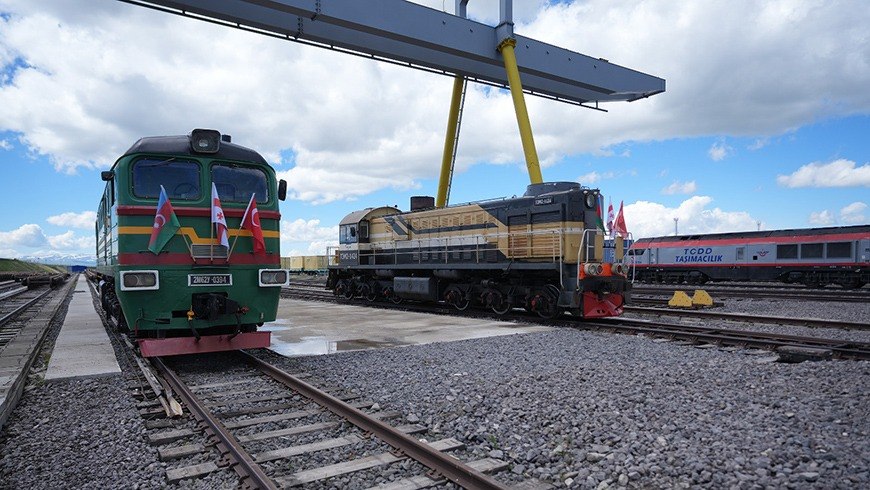
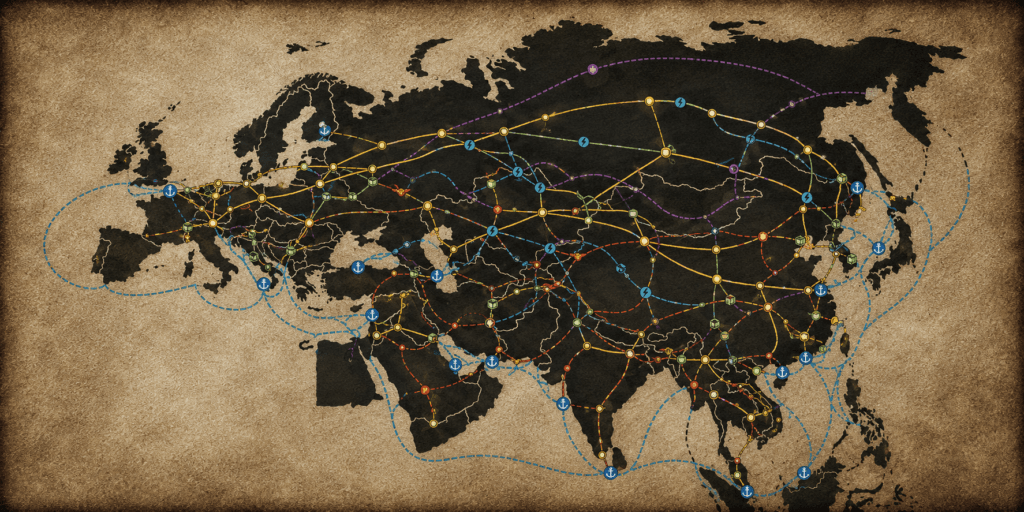
The recent hostilities in the Persian Gulf and the ensuing naval blockades of Iran have brought into sharp relief the growing importance of the Middle Corridor – or Trans-Caspian International Transport Route (TITR) – the rapidly expanding trade link between Western China and Europe. This vast network of road, rail and maritime transport links had already increased in importance as a result of Russia’s invasion of Ukraine and the ensuing sanctions, which have crippled large parts of Russia’s economy. With hundreds of container ships and oil tankers bottled up in the Gulf and the prospect of serious economic consequences, particularly in the developing world and for China and India, the idea of an overland – mostly – trade route to Europe is increasingly seen as a solution that provides a viable alternative in uncertain times. And not for the first time, as we shall discover. The TITR is around 3,000 km shorter than the so-called Northern Corridor through the Russian Federation, and transit times from China to Europe now average 10-15 days, compared to double that time for the Northern Corridor and anything up to 60 days for sea transport. According to World Bank estimates, the Middle Corridor could soon account for 20% of overland trade between China and the EU, with a tripling of current traffic levels by 2030, mainly due to economic growth in the Greater Caspian region. When planning began on the Middle Corridor almost 15 years ago, few people appreciated how rapidly it would develop. But as uncertainties over trade policies have increased, a route that avoids both the Russian Federation and the increasingly dispute-prone waterways in the Gulf and the Red Sea makes sense. Goods produced in Chinese factories in Chongqing, Xi’an and Urumqi can now be transported westward across Kazakhstan by rail to its Caspian Sea ports at Aktau and Kuryk. There are now major rail termini at the Kazakhstan-China border and more than 4,250 kms of rail lines in the network, together with 500 kms of sea transport. In Aktau on the Caspian, containers are loaded onto ships bound for Baku in Azerbaijan, where they are transferred onto the rolling stock of the Baku-Tbilisi-Kars (BTK) Railway for shipment into Turkey. The original plan was designed to handle 6.5 million tons of freight annually, but this figure is expected to top 17 million tons by 2034. New port facilities to handle the increasing number of containers arriving at Aktau and Kuryk have been financed by Kazakhstan’s Nurly Zhol Programme. Aktau, for example, is being dredged to enhance maritime safety and expand capacity. Its port currently handles up to 15 million tons of cargo a year. According to the TITR itself, around 57,000 containers travelled along the route in 2024, up from 20,500 in 2023. The route has continued to gather momentum in 2026: from January to March, 125 container trains were dispatched from China via the corridor, a 34.4% increase over the same period last year. Rail traffic volume increased by 5.7% in Azerbaijan...

Kazakhstan Boosts Container Train Traffic Along Middle Corridor

In the first quarter of 2026 Kazakhstan recorded a significant increase in container train traffic along the Trans-Caspian International Transport Route (TITR), also known as the Middle Corridor, underscoring the country’s growing role in Eurasian logistics. One hundred and twenty-five container trains transited through Kazakhstan via the TITR, marking a 34.4% increase compared to the same period in 2025. The growth was largely driven by a new logistics approach introduced by national railway operator Kazakhstan Temir Zholy (KTZ) aimed at accelerating container transportation. Since January 2026, KTZ has implemented a synchronized model for forming container trains that aligns rail and maritime transport schedules. This system enables container trains to be assembled directly for shiploads, eliminating the need for additional cargo accumulation and significantly reducing handling times. The new model has already been applied to 28 container trains bound for key logistics hubs, including: Absheron, Azerbaijan; Poti and Tbilisi, Georgia; and Mersin and Izmit, Turkey. The TITR is a multimodal corridor linking China and Europe through Central Asia and the South Caucasus, providing an alternative to routes that pass through Russia. The geography of cargo origins has also broadened. While the Chinese city of Xi’an accounted for roughly 50% of all shipments in 2025, additional industrial centers have now joined the route, including Zhengzhou, Yiwu, Hefei, Wuhan, Tianjin, Shenzhen, and Guangzhou. This diversification is expected to further strengthen the corridor’s resilience and capacity. KTZ plans to scale up the synchronized transportation model throughout 2026, enhancing the efficiency and competitiveness of the TITR. As previously reported by The Times of Central Asia, freight volumes transported along the Middle Corridor through Kazakhstan have grown more than fivefold over the past seven years, increasing from 0.8 million tons to 4.5 million tons annually. Container transportation has emerged as one of the fastest-growing segments of the route. In 2025, approximately 77,000 TEUs were transported along the TITR, and Kazakhstan aims to increase this figure to 300,000 TEUs by 2029, reflecting its ambition to position the corridor as a key artery for Eurasian trade.

Kazakhstan and Azerbaijan Are Reinforcing the Middle Corridor’s South Caucasus Link

On April 7 Kazakhstan’s Foreign Minister Yermek Kosherbayev visited Tbilisi to hold talks with Georgian Foreign Minister Maka Bochorishvili and sign a 2026–2027 foreign-ministry cooperation program. He called Georgia “a key link” in the Europe–Asia transport architecture and said the common task was to raise corridor capacity, improve service predictability, and ensure tariff transparency. The materialization of the bilateral cooperation is already evident from last June’s opening of the Poti multimodal terminal by a joint Kazakhstani-Georgian company. The real meaning of Kosherbayev's discussions in Tbilisi lies in their context. On April 2 in Baku, Prime Minister Olzhas Bektenov said Kazakhstan plans an intergovernmental agreement with Azerbaijan this year to strengthen the status of the Middle Corridor (also known as the Trans-Caspian International Transport Corridor, TITR), and he proposed moving quickly on the Digital Monitoring Center under the Organization of Turkic States (OTS). On April 6 in Tbilisi, Azerbaijani President Ilham Aliyev called the Azerbaijan–Georgia segment the corridor’s “main transport artery.” Then on April 8 in Baku, Aliyev received Kosherbayev together with Kazakhstan’s transport minister. The official readout ranged from the Middle Corridor to joint investment, green-energy, and fiber-optic projects. Kosherbayev’s April 7 stop in Tbilisi thus belongs to a short Kazakhstan-led diplomatic run across the corridor’s western nodes. Kazakhstan and Azerbaijan Tighten the Corridor Kazakhstan’s early-April engagement in the South Caucasus rests on its eastward-looking framework with China. Two China–Kazakhstan documents were already in evidence in October 2023: a Memorandum of Understanding (MoU) on deepening the development of the China-Europe Railway Trans-Caspian route, and an intergovernmental agreement on developing that route. China’s National Development and Reform Commission (NDRC) subsequently clarified that the agreement focused on stronger transit organization, fewer administrative barriers, and improved logistics and transport operations. In July 2024, Kazakhstan’s President Kassym-Jomart Tokayev and his Chinese counterpart Xi Jinping jointly attended the opening of the Trans-Caspian direct fast transport service; NDRC then recorded a work mechanism with Kazakhstan’s transport ministry to carry that cooperation forward. On January 1, the first Trans-Caspian train of 2026 departed Xi’an for Baku carrying 45 containers of photovoltaic equipment. Chinese reports assert that the route had accumulated 466 runs by the end of November 2025, moved onto a weekly six-outbound and three-inbound timetable, and cut travel times from the roughly 20-day average recorded in 2025 to a standard 15 days, with the fastest runs taking 11 days. On April 3, it was also reported that there were 85 Xi’an Trans-Caspian trains in the first quarter of 2026, up 150% year-on-year, while the Kazakhstan–Xi’an terminal in Almaty handled more than 6,000 containers in that quarter alone, a 60% increase from a year earlier. A separate quasi-official Chinese trade-services portal reported that Trans-Caspian trains had reached daily service and that 371 such trains had run in January–October 2025, up 33%. China’s NDRC also said in late 2025 that Aktau and Baku should be strengthened as hub nodes in this corridor system. Azerbaijan is the indispensable partner without which the route’s western logic does not function. Bektenov’s...

Kazakhstan Gains Weight in China’s Energy System

The newly extended U.S. waiver for Russian oil transit through Kazakhstan and the reported giant onshore hydrocarbon discovery in western Kazakhstan point in different directions, yet they belong in the same analytical frame. One concerns an existing flow that already reaches China through working infrastructure, while the other concerns a possible future source that has not yet reached the stage of commercially proven reserves. Together, they mark a change in Kazakhstan’s position. The country is increasingly important to China both as a corridor and as a possible larger upstream partner. The U.S. waiver now runs until March 19, 2027. Kazakhstan is not a giant direct oil supplier to China in the way that Russia or Saudi Arabia is; China’s import structure is broader. But Kazakh-origin oil shipments, Russian transit oil, and adjacent energy links now constitute a single, more complex relationship. According to official Chinese sources, oil imported from Kazakhstan enters mainly through the China-Kazakhstan crude pipeline. More Than Kazakhstan’s Own Barrels Kazakhstan-China Pipeline LLP reported that in 2024, the Atasu-Alashankou route carried 1.2 million tons of oil and 9.989 million tons of transit oil, against a design capacity of 20 million tons a year. Official Chinese figures sharpen the point. By the end of 2024, total cumulative throughput on the pipeline had reached 280 million tons, including 19.139 million tons in 2024, while cumulative crude imported from Kazakhstan was lower. Kazakhstan’s significance to China is therefore larger than Kazakhstan’s own volumes would suggest, because the route carries more than Kazakhstan’s own oil. A glance at Europe keeps that proportion straight. Eurostat reports that Kazakhstan supplied 12.7% of the European Union’s petroleum oil imports in 2025. The European External Action Service said that Kazakhstan accounted for 10.9% of EU oil imports in the first quarter of 2024. This made it the bloc’s third-largest supplier in that period, and a more important direct oil supplier to Europe than to China. The significance of Kazakhstan’s geographic proximity to China becomes clearer when one looks beyond crude oil. Kazakhstan is not only a direct oil supplier, but also a transit corridor for multiple China-bound energy flows. The Kazakhstan-China oil pipeline is one of China’s major import routes. At the same time, while Kazakhstan’s own gas exports to China remain limited due to rising domestic demand, gas from Turkmenistan and Russia both pass through its territory. Oil and gas do not form a single operational system, but together they show that China’s energy connection with Kazakhstan extends beyond one commodity and beyond Kazakhstan’s own barrels. The Source Side May Be Growing In this context, the reported discovery on the Zhylyoi carbonate platform makes a difference because it widens the source side of the relationship without changing present flows. According to public statements by KazMunayGas officials, the Karaton, Kazhygali, and Zhylyoi formation has resource potential of 4.7 billion metric tons of hydrocarbons, and the broader Zhylyoi carbonate reservoir may hold as much as 20 billion metric tons of oil equivalent. The field is onshore in...

Opinion: Supply Chains of Power: How Critical Minerals Are Shaping China–U.S. Competition in Central Asia

Central Asia is no longer a distant frontier for global geopolitics. It is developing into a central arena of competition for critical minerals, supply chains, and industrial power, where minerals are no longer simple commodities but have instead become key components of contemporary statecraft. In essence, this transformation highlights a recognition in Washington and other capitals that critical mineral supply chains are fundamental to next-generation energy systems, the development of artificial intelligence (AI), and strategic defense capabilities. Even as the global economy is multipolar, critical mineral supply chains remain highly concentrated and dominated by China. Control of rare earths is increasingly geopolitical, with clear economic, political, and security consequences. The significance of that imbalance is now shaping U.S. foreign policy, Central Asia’s development strategies, and the future of global economics. China’s Strategy: Control the Chain, Not Just the Mine Though many years in the making, China’s critical minerals strategy is still often misunderstood as focused primarily on resource access. However, Beijing’s efforts are far broader and more effective. Not only securing raw materials, the Chinese leadership has also worked to control the entire supply chain—from extraction to processing, refining, and manufacturing. China’s long-term focus and investments began in the 1980s with efforts that culminated in the Made in China 2025 plan for national and overseas manufacturing. In 2023 alone, Chinese firms invested more than $120 billion in overseas mining and processing, targeting key elements used in energy supply chains. Beijing also fed its industrial base by providing over $220 billion for the production of electric vehicles, batteries, and renewable infrastructure. As a result, China now controls approximately 60% of lithium processing, more than 70% of cobalt refining, and over 90% of battery material manufacturing. Strategically, China controls roughly 90% of global rare earth refining and associated technologies. Early investments in supplies enabled Beijing to subsequently concentrate funds into refining capacity to feed its industrial sector. This integrated approach has shifted the power dynamic for global supply chains tied to the critical minerals economy. As evidenced by Beijing’s near monopoly on processing, market control is not just associated with geological supplies but with processing capacity. China’s willingness to weaponize access not only to rare earths but also to processing technology demonstrates Beijing’s market muscle. This distinction is critical. Rare earth elements are not inherently scarce, but they are rarely found in concentrated deposits, making them difficult to extract and refine. Over decades, Beijing developed unique refining capabilities and subsidized an industrial base that disincentivized competition and encouraged processing to shift to China. The Vicious Circle Prohibitive investment costs, long development timelines, and market volatility have discouraged Western investment in alternative supply chains. Each stage (mining, processing, refining, manufacturing) is interdependent: miners won’t invest without buyers and offtake agreements, processors and refiners need secure financing and stable mineral supply, and manufacturers need steady inputs. Such interdependence creates an investment standoff and heightens perceptions of risk. By integrating all stages, Beijing exerts influence across global markets, from pricing to production. This has conditioned global markets...

Kazakhstan Pushes to Unlock Private Investment as IFC Backs Reform Drive

Kazakhstan is positioning itself as a more attractive destination for private investment, as authorities push to expand infrastructure, improve access to capital, and strengthen its role along key Eurasian trade routes. In an interview with The Times of Central Asia, Lisa Kaestner, the new Regional Director for Türkiye, Kazakhstan, and Uzbekistan at the International Finance Corporation (IFC), outlines how the World Bank Group’s private sector arm plans to support that shift, from backing transport corridors to mobilizing capital for businesses and infrastructure projects. TCA: Since taking up your new role, how has your career path and leadership experience shaped your approach to this position? Kaestner: I joined IFC as Resident Representative in Georgia in 1999, and that early experience shaped how I approach working directly with local partners and stakeholders. Since then, I've held several leadership roles across IFC and the World Bank, primarily in Eastern Europe and Central Asia, while also expanding into Africa, where I led advisory services to governments across Eastern and Southern Africa — working across sectors like agribusiness, tourism, housing, technologies and financial services to support private sector-led growth. More recently, I served as Country Manager for Ukraine and earlier also Moldova, where I led IFC's strategic work on expanding support for businesses and financial institutions and helping lay the groundwork for private sector participation in Ukraine’s reconstruction. In March 2026, I stepped into my current role as Director overseeing IFC's activities in Türkiye, Kazakhstan, and Uzbekistan, focused on mobilizing private investment and advancing reforms in close partnership with governments and the private sector. TCA: How do you assess the investment attractiveness of Kazakhstan at present? Kaestner: Kazakhstan presents a compelling investment story. The country benefits from a strategic geographic position at the heart of Eurasia, significant natural resources, and a government that has demonstrated a genuine commitment to reform and private sector development. From our point of view, several factors stand out as particularly encouraging. Kazakhstan has made meaningful progress in strengthening financial sector regulation and advancing infrastructure development. At the same time, we recognize that challenges remain. One key factor is the dominant role of the state in the economy, which represents roughly 40% of GDP, especially in major sectors like natural resources, electricity, telecommunications, and infrastructure. In this regard, we support the government’s efforts to increase private sector participation through privatization, IPOs, and public-private partnerships (PPPs). Additionally, maintaining steady progress on governance, transparency, and the rule of law remains crucial for sustaining investor confidence in the long term. Diversifying the economy away from commodity dependence — while significant strides have been made — remains a priority, as does deepening domestic capital markets to reduce reliance on external financing. Broader reforms are needed to achieve stable economic growth and improve the business climate, which will allow Kazakhstan to reach the level of developed countries. Significant efforts to develop the Trans-Caspian Transport Corridor (TCTC)—also known as the Middle Corridor, which is becoming increasingly important as an alternative trade route between Asia and Europe are...