• KZT/USD = 0.00219
  • TJS/USD = 0.10810
  • UZS/USD = 0.00009
  • TMT/USD = 0.29760
  • KZT/USD = 0.00219
  • TJS/USD = 0.10810
  • UZS/USD = 0.00009
  • TMT/USD = 0.29760
  • KZT/USD = 0.00219
  • TJS/USD = 0.10810
  • UZS/USD = 0.00009
  • TMT/USD = 0.29760
  • KZT/USD = 0.00219
  • TJS/USD = 0.10810
  • UZS/USD = 0.00009
  • TMT/USD = 0.29760
  • KZT/USD = 0.00219
  • TJS/USD = 0.10810
  • UZS/USD = 0.00009
  • TMT/USD = 0.29760
  • KZT/USD = 0.00219
  • TJS/USD = 0.10810
  • UZS/USD = 0.00009
  • TMT/USD = 0.29760
  • KZT/USD = 0.00219
  • TJS/USD = 0.10810
  • UZS/USD = 0.00009
  • TMT/USD = 0.29760
  • KZT/USD = 0.00219
  • TJS/USD = 0.10810
  • UZS/USD = 0.00009
  • TMT/USD = 0.29760
02 September 2026

Viewing results 1 - 6 of 180

Putin’s Astana Visit Shows What Russia Still Wants From Kazakhstan

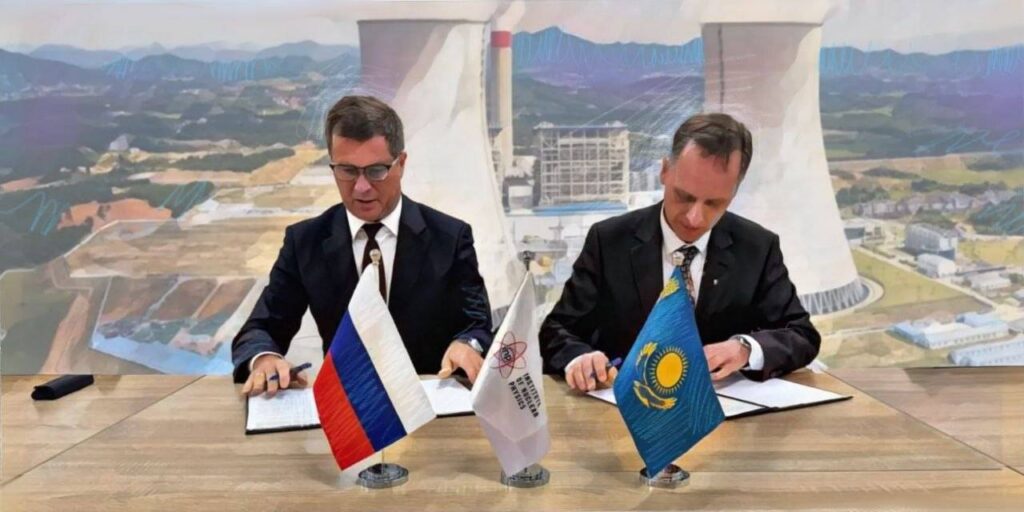
The Eurasian Economic Union summit in Astana gave Vladimir Putin's state visit a wider stage. The summit produced technical documents and familiar language about integration. The bilateral Russia-Kazakhstan package around it was more concrete. It showed what Moscow still wants from Kazakhstan, and what Astana expects in return. The detail lies in infrastructure, where contracts can last for decades. The setting echoed history. Belarus, Kazakhstan, and Russia signed the treaty creating the Eurasian Economic Union in Astana on May 29, 2014, with Armenia joining in January 2015, and Kyrgyzstan in August of the same year. In 2026, the bloc returned to Astana for the Supreme Eurasian Economic Council and the V Eurasian Economic Forum. The theme of the forum was artificial intelligence, digital regulation, and the EAEU's place in the global technology race. Its website said 14 integration documents were signed on the sidelines, including memoranda, agreements, protocols, and joint action plans. Those documents gave the visit a regional frame. The larger result came on May 28, when Kassym-Jomart Tokayev and Putin oversaw a broad set of bilateral agreements. Akorda listed nuclear power, Russian export credit, expanded oil-sector cooperation, a tenge-ruble currency swap, education projects, financial monitoring, transport digitalization, and nuclear safety regulation. That package points to the real agenda: energy, transit, payments, industrial production, and public-facing alliance language. For Moscow, Kazakhstan’s primary value is geographic: it sits between Russia and China, and across routes that connect Central Asia to Europe, the Caspian, and South Asia. Russian crude already crosses Kazakhstan on the Priirtyshsk-Atasu-Alashankou route to China. A KazTransOil contract keeps transit at 10 million tons a year until the end of 2033. The tariff is $15 per ton, excluding VAT. The Atasu-Alashankou pipeline has a design capacity of 20 million tons a year and belongs to Kazakhstan-China Pipeline LLP, a 50-50 venture between KazTransOil and China National Oil and Gas Exploration and Development Company. Reuters has reported that Russia and Kazakhstan agreed last year to raise that flow by 2.5 million tons, although the extra volume had not started flowing before Putin’s visit. The new agreement on oil-sector cooperation gives the issue a political push. For Moscow, the route strengthens access to China as Western sanctions keep pressure on Russian exports and payments. For Kazakhstan, it brings fees and gives Astana a useful position in Russia-China energy flows. The nuclear agreement, meanwhile, gives Russia a long-term role in Kazakhstan’s shift to nuclear power. Kazakhstan and Russia signed a $16.5 billion agreement for the Balkhash nuclear power plant at Ulken, near Lake Balkhash. The project covers two VVER-1200 III+ reactors. Kazakhstan held a groundbreaking ceremony for the plant in August 2025, with the active construction phase expected to begin in 2027, and the first reactor expected in early 2034. Russia will provide export credit for the first plant, with Rosatom leading the Balkhash project after competition with China National Nuclear Corporation (CNNC), France’s EDF, and Korea Hydro and Nuclear Power. But Kazakhstan has not handed the wider program to Moscow....

Can Caspian Cargo Fleets Meet Middle Corridor Demands?

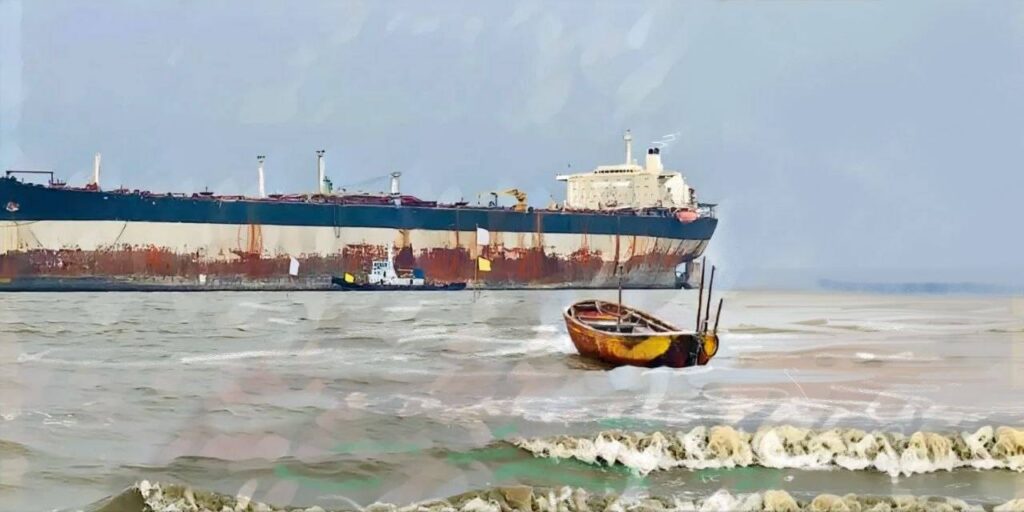
Construction of infrastructure along the Middle Corridor, also called the Trans-Caspian International Trade Route, to ship goods between China and Europe is progressing at a frantic pace. When Russia launched its full-scale invasion of Ukraine in late February 2022, it inadvertently gave a new impetus to the development of a trade network through Central Asia and the South Caucasus that had been slowly taking shape since the end of the 1990s. One of the most formidable challenges along the Middle Corridor is boosting maritime cargo across the Caspian Sea. Steps are being made, including some significant recent moves, but the capacity of shipping east-to-west over the Caspian Sea faces challenges in meeting the ever-growing demand for commercial vessels. By Leaps and Bounds In 2022, the volume of cargo through the Middle Corridor was some 1.5 million tons, more than twice the amount transported in 2021. In 2023, it topped 2.7 million tons, in 2024 was about 4.5 million tons, and in 2025 it was expected to be approximately 5.2 million tons. Turkish President Recep Tayyip Erdogan visited Kazakhstan on May 13-14, where his host, President Kassym-Jomart Tokayev, said the figure could reach 10 million tons “in the near future,” and are predictions it could happen as soon as 2027. The roads, railways, and port facilities along the Middle Corridor are expanding rapidly. However, according to a report from Azerbaijan’s Trend news agency in mid-May, the Azerbaijani Caspian Shipping Company (ASCO) says that since 2013, only “a total of 35 new vessels have been commissioned.” The Merchant Fleets of Kazakhstan and Turkmenistan On the eastern side of the Caspian Sea, Kazakhstan and Turkmenistan have been working to increase their maritime shipping. Both countries invested heavily in upgrading their Caspian ports, in Kazakhstan’s case at Aktau and Kuryk, and for Turkmenistan at Turkmenbashi City. Since the end of April, both countries have moved to boost their potential to ship cargo across the Caspian. Kazakhstan’s state railway company, Kazakhstan Temir Zholy (KTZ), announced on April 30 that it would build its own maritime fleet starting with six new vessels, each with a deadweight of up to 9,900 tons and able to carry up to 537 twenty-foot equivalent units (TEU). Once completed, those six cargo ships will join the two dry cargo and three container vessels in the Caspian Sea operated by Kazakhstan’s state maritime shipping company Kazmortransflot. The three container ships – Berkut, Sunkar, and Barys – all started operation in 2019, have a deadweight of 5,200 tons, and can each carry up to 350 TEU. The two dry cargo ships, the Beket Ata and Turkestan, have a deadweight of 5,467 tons and can carry 4,182 tons. On May 12, the dry cargo ship Gadamly arrived at the Baku International Sea Port. The Gadamly is Turkmenistan’s first dry cargo vessel and is able to carry up to 240 TEU. A second cargo vessel, Manzil, should be launched before the end of this year. Arif Aghayev, the deputy chairman of Azerbaijan Railways, said at...

Interview: Kazakhstan Pushes Middle Corridor as Global Trade Routes Shift

As war, sanctions, and disruption reshape trade between Europe and Asia, Kazakhstan is trying to turn the Middle Corridor from an alternative route into a more predictable logistics system. The route, formally known as the Trans-Caspian International Transport Route, links China and Central Asia with the Caspian Sea, the South Caucasus, Turkey, and Europe, bypassing Russia. For Kazakhstan, the project is both economic and geopolitical. It promises faster access to foreign markets, new transit revenue, and a stronger role for the country as a logistics hub between China and Europe. However, the corridor still faces practical constraints, including port capacity on the Caspian Sea, uneven digital systems, border procedures, tariffs, and coordination between several states and operators. The Times of Central Asia spoke with Alua Korpebayeva, Head of the Project Office for Transport and Logistics under the Presidential Administration of Kazakhstan, about what still needs to change and how Kazakhstan views the corridor’s long-term role. TCA: Why has the Middle Corridor become more urgent for Kazakhstan and Central Asia, and how much have the war in Ukraine and tensions around Iran and the Persian Gulf changed the calculation? Alua Korpebayeva: The government of Kazakhstan has assigned the national railway company, Kazakhstan Temir Zholy, a strategic objective of increasing total transit volumes to 55 million tons by 2026, representing a 65% increase compared to last year. This target reflects the scale of the country’s ongoing transport transformation. Achieving this goal is closely tied to the development of the Middle Corridor. The route is especially important because it is becoming a foundation for stable and predictable supply chains in global trade. The Middle Corridor provides Central Asian countries with an opportunity to strengthen connectivity with both Europe and China while increasing the region’s role as an independent transport and logistics hub. Geopolitical factors have undoubtedly increased business interest in alternative routes. For Kazakhstan, however, development of the Middle Corridor is primarily part of a broader effort to expand transport capacity and improve logistical resilience. That is precisely why deeper regional cooperation is so important. Unlocking the corridor’s full potential requires close coordination among all participants, from infrastructure modernization and tariff harmonization to end-to-end digitalization and simplified customs procedures. The World Bank has noted that a fully functioning Middle Corridor could strengthen supply-chain resilience and, if accompanied by investment and efficiency measures, could triple freight volumes and cut transportation times in half by 2030. TCA: Are Kazakhstan and its partners moving toward unified transit rules and tariffs along the corridor? What has already been agreed, and where do gaps remain? Alua Korpebayeva: Work on creating unified transit rules and coordinated tariff policies is ongoing. The current focus is shifting from fragmented national tariffs toward a unified through-route pricing system across the corridor. Within the framework of the Action Plan for Eliminating Bottlenecks along the Trans-Caspian International Transport Route, signed by the railway administrations of Kazakhstan, Azerbaijan and Georgia, the parties agreed to establish a single long-term tariff for the route. In practical terms,...

Opinion: Middle Powers and the “Voice of the Region” – Is Central Asia Becoming a Coordinated Actor?

Against the backdrop of growing global fragmentation and the weakening of universal international institutions, the role of so-called middle powers is increasing. These are states able to influence regional agendas without possessing great-power status. In this changing system, Central Asia is gradually moving beyond its long-standing image as a geopolitical periphery and is beginning to act more like a region with shared interests. For decades, the region was viewed mainly as a space where the interests of external powers, including Russia, China, the U.S., and others, intersected. Today, that paradigm is beginning to shift. Central Asia is showing greater signs of agency through what may be described as a cluster effect: individually, the countries have limited influence, but collectively they form an important transit hub between Europe and Asia, a growing market, a significant resource base, and a strategic security zone. This creates the conditions for a more coordinated regional position, even if a single regional voice is still emerging rather than fully formed. C5+Azerbaijan as a Foundation for Regional Architecture The institutional foundation of this process is the Central Asian leaders' consultative format, which is now expanding through Azerbaijan's participation. That is turning what was once a C5 dialogue into a looser C5+Azerbaijan, or C6, framework focused on transport, energy, and practical cooperation. Within this framework, the countries of the region are learning to act in a more coordinated manner without supranational pressure. In practice, this process is developing through three main areas. The first is transport and logistics. Azerbaijan's participation has strengthened efforts to make the Middle Corridor more coherent, though the route still faces bottlenecks in capacity, customs coordination, and Caspian crossings. Through tariff coordination, simplified border procedures, and investment in port and rail infrastructure, Central Asia and the Caucasus are increasingly functioning as parts of a single transport artery. That gives the region a faster option for cargo between China and Europe, even if it remains far smaller than traditional maritime routes. Shipping goods via the Suez Canal or the northern route can take between 35 and 45 days, whereas the Middle Corridor can reduce transit times to around 13-21 days under favorable conditions. According to forecasts cited by BCG, shipping volumes along the route could increase three- to fourfold during the current decade. Beyond logistics, the project is creating a new economic framework for the region. Its status as a crossroads is attracting investment in transport hubs and manufacturing facilities along the route, with the potential to turn transit corridors into zones of economic growth. This gives participating countries not only transit revenue but a stronger basis for long-term strategic resilience. The second major area is energy integration, where historical disputes over water and fuel resources are increasingly being supplemented by models of joint development. The Kambarata HPP-1 hydropower project in Kyrgyzstan, being developed with Kazakhstan and Uzbekistan, has created an important precedent for shared management of water and energy interests. The project is expected to support cleaner electricity generation while helping stabilize irrigation flows...

Turkic States Focus on AI and Trade at Kazakhstan Summit

Leaders of the Organization of Turkic States (OTS) are holding an informal summit in the city of Turkistan, focused on artificial intelligence, digitalization, and economic integration, as Central Asia gains importance as an alternative trade corridor between Europe and China. The meeting brings together the leaders of Kazakhstan, Turkey, Azerbaijan, Uzbekistan, and Kyrgyzstan, along with representatives of observer states. Discussions are centered on digital platforms, joint AI projects, transport corridors, and industrial cooperation. The summit comes amid rapid growth of the Trans-Caspian International Transport Route, also known as the Middle Corridor, which links China and Europe through Central Asia and the Caucasus while bypassing Russia. According to analysts in Kazakhstan, cargo volumes along the route reached 3.3 million tons in 2024, almost six times the 2021 level. Turkish President Recep Tayyip Erdoğan arrived in Astana on a state visit ahead of the summit and held talks with Kazakh President Kassym-Jomart Tokayev. “Kazakhstan and Turkey are connected by enduring friendship, brotherhood, and eternal partnership,” Tokayev said following the meeting. Erdoğan thanked Kazakhstan for the reception and highlighted the escort provided by Kazakh military fighter jets after his aircraft entered the country’s airspace. According to participants at the OTS business forum, the combined GDP of member states exceeds $2.1 trillion, while their total population stands at 178 million people. Despite increasing political coordination, trade between OTS countries still accounts for only around 7% of their total foreign trade turnover, leaving considerable room for deeper economic integration, analysts say. OTS member states are increasingly seeking to expand cooperation beyond cultural and political ties by focusing on logistics, the digital economy, and joint investment projects. Kazakhstan views the organization as one of the instruments for diversifying its foreign economic relations and expanding its role as a transit hub between Asia and Europe.

Erdoğan Visit Highlights Kazakhstan’s Middle Corridor Strategy

Turkish President Recep Tayyip Erdoğan’s visit to Kazakhstan highlighted the growing importance of the Middle Corridor in Ankara-Astana relations, while also showing how Kazakhstan is trying to deepen ties with Turkey without abandoning its multi-vector foreign policy. According to experts, the central issue discussed during negotiations was the development of the Middle Corridor, officially known as the Trans-Caspian International Transport Route (TITR). The importance of the route was underscored directly by Erdoğan during a joint media briefing following the talks. The Turkish president highlighted the strategic significance of the East-West-Mediterranean transit corridor crossing the Caspian Sea, describing it as a “modern version of the Silk Road,” the relevance of which is becoming increasingly apparent. The Kazakh side sought to frame the visit within a broader political and cultural context. The declaration signed by the two presidents, along with other documents exchanged by the official delegations, pointed less to a breakthrough than to the continued expansion of existing political, economic, transport, and cultural cooperation. Kazakhstan and Turkey agreed to deepen cultural, humanitarian, and economic cooperation, while continuing joint investment projects, including the further infrastructure development of Almaty International Airport, which is managed by Turkey’s TAV Holding. Political analyst Daniyar Ashimbayev noted that the tone of the visit was largely shaped by an unusually emotional and ceremonial welcome. “Tokayev called Erdoğan a ‘dear brother’ and described his visit as a ‘historic event.’ Erdoğan, in turn, thanked the Kazakh leader for the invitation to visit the ‘land of ancestors.’ Tokayev twice emphasized that there are ‘no disagreements or contradictions’ between Kazakhstan and Turkey. He described Erdoğan’s policies as ‘balanced and far-sighted,’ while noting Turkey’s steadily growing influence on the global stage,” Ashimbayev wrote. According to Ashimbayev, Tokayev also praised Turkey as a “golden bridge” connecting Europe and Asia, as well as the broader Turkic world. At the same time, the analyst pointed out that Erdoğan, in an article written for the Kazinform agency, also sharply condemned what he described as Israel’s “crimes” against shared human values, despite Kazakhstan maintaining strong and mutually beneficial ties with Israel. “Contrary to some interpretations, Erdoğan’s visit did not resemble an inspection by a ‘senior brother.’ The Turkish leader was welcomed with maximum ceremony and genuine warmth, but the format of cooperation itself clearly points to equal relations in the economic and humanitarian spheres,” Ashimbayev argued. “Kazakhstan has its own clearly defined position on a broad range of international and domestic issues, and those positions are neither subject to outside discussion nor imply following anyone else’s political line,” he added. Alena Dmitriyeva, head of analysis and communications at the Youth Research Center, said the negotiations reflected the emergence of a new architecture of cooperation across Eurasia. “Ankara gains access to Central Asia, while Astana gains access to alternative transport routes,” Dmitriyeva said, pointing to intensified cooperation on the Trans-Caspian corridor, development of the Aktau and Kuryk ports, and increased oil shipments through the Baku-Tbilisi-Ceyhan pipeline. Cooperation with Turkey has already helped reduce cargo transit times along the Middle...