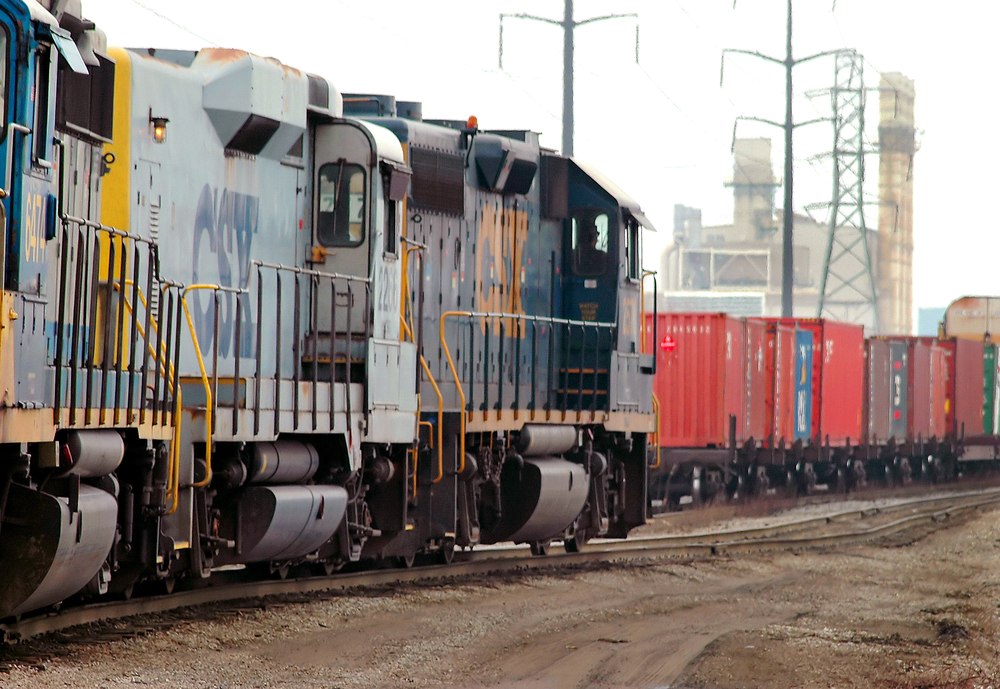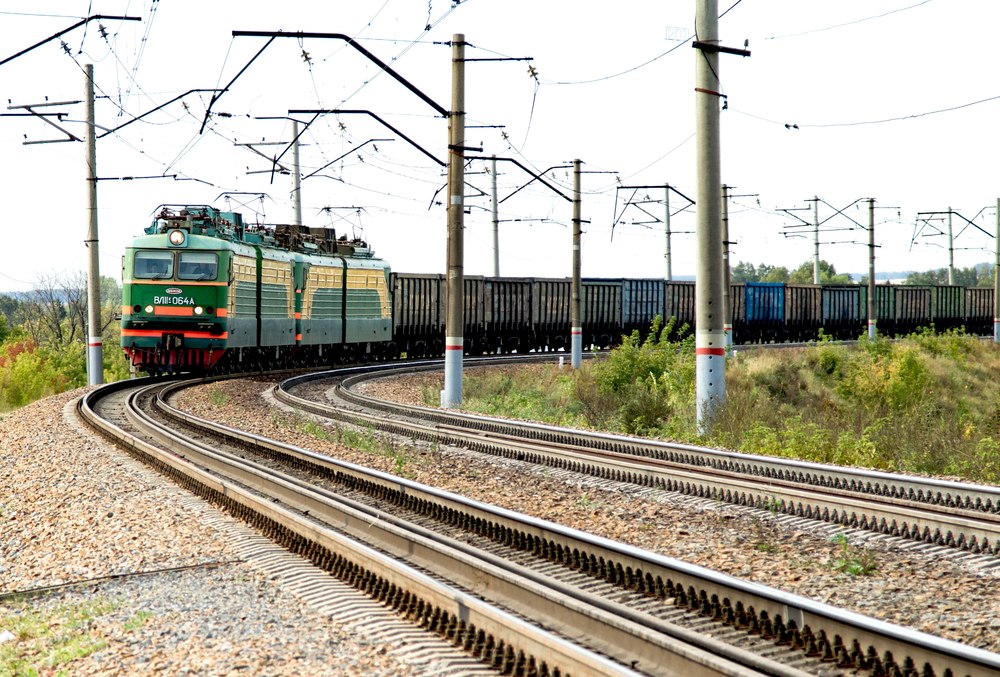
Construction of infrastructure along the Middle Corridor, also called the Trans-Caspian International Trade Route, to ship goods between China and Europe is progressing at a frantic pace. When Russia launched its full-scale invasion of Ukraine in late February 2022, it inadvertently gave a new impetus to the development of a trade network through Central Asia and the South Caucasus that had been slowly taking shape since the end of the 1990s.
One of the most formidable challenges along the Middle Corridor is boosting maritime cargo across the Caspian Sea. Steps are being made, including some significant recent moves, but the capacity of shipping east-to-west over the Caspian Sea faces challenges in meeting the ever-growing demand for commercial vessels.
By Leaps and Bounds
In 2022, the volume of cargo through the Middle Corridor was some 1.5 million tons, more than twice the amount transported in 2021. In 2023, it topped 2.7 million tons, in 2024 was about 4.5 million tons, and in 2025 it was expected to be approximately 5.2 million tons.
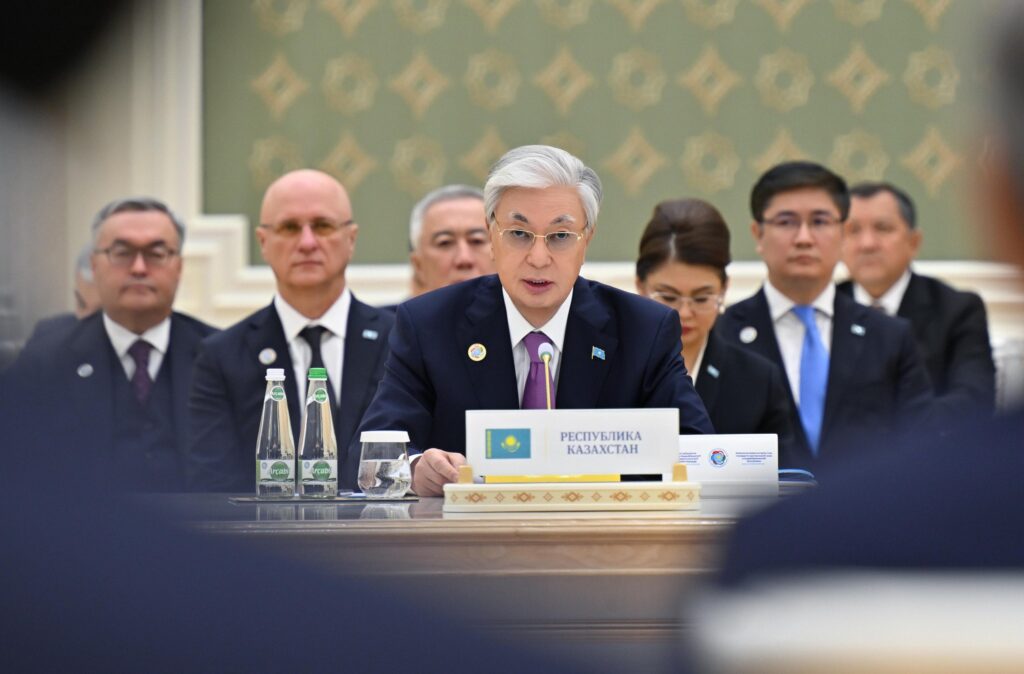
Turkish President Recep Tayyip Erdogan visited Kazakhstan on May 13-14, where his host, President Kassym-Jomart Tokayev, said the figure could reach 10 million tons “in the near future,” and are predictions it could happen as soon as 2027.
The roads, railways, and port facilities along the Middle Corridor are expanding rapidly. However, according to a report from Azerbaijan’s Trend news agency in mid-May, the Azerbaijani Caspian Shipping Company (ASCO) says that since 2013, only “a total of 35 new vessels have been commissioned.”
The Merchant Fleets of Kazakhstan and Turkmenistan
On the eastern side of the Caspian Sea, Kazakhstan and Turkmenistan have been working to increase their maritime shipping. Both countries invested heavily in upgrading their Caspian ports, in Kazakhstan’s case at Aktau and Kuryk, and for Turkmenistan at Turkmenbashi City.
Since the end of April, both countries have moved to boost their potential to ship cargo across the Caspian. Kazakhstan’s state railway company, Kazakhstan Temir Zholy (KTZ), announced on April 30 that it would build its own maritime fleet starting with six new vessels, each with a deadweight of up to 9,900 tons and able to carry up to 537 twenty-foot equivalent units (TEU). Once completed, those six cargo ships will join the two dry cargo and three container vessels in the Caspian Sea operated by Kazakhstan’s state maritime shipping company Kazmortransflot.
The three container ships – Berkut, Sunkar, and Barys – all started operation in 2019, have a deadweight of 5,200 tons, and can each carry up to 350 TEU. The two dry cargo ships, the Beket Ata and Turkestan, have a deadweight of 5,467 tons and can carry 4,182 tons.
On May 12, the dry cargo ship Gadamly arrived at the Baku International Sea Port. The Gadamly is Turkmenistan’s first dry cargo vessel and is able to carry up to 240 TEU. A second cargo vessel, Manzil, should be launched before the end of this year.
Arif Aghayev, the deputy chairman of Azerbaijan Railways, said at a ceremony marking the arrival of the Gadamly that currently the Baku port can handle 150,000 TEU annually, but that is expected to increase to 260,000 TEU.
According to Kazmortransflot, the “total cargo volume” delivered by its three container ships since 2019 is 102,300 TEU.
After the six Kazakh vessels and two Turkmen ships start operations, a combined 3,702 TEU could be added to trips across the Caspian.
Landlocked Uzbekistan has also been in talks with Kazakhstan and Turkmenistan about basing a future cargo fleet at those two countries’ Caspian ports.
The Biggest Fleet in the Caspian
Azerbaijan has the largest commercial fleet in the Caspian Sea. The Azerbaijani Caspian Shipping Company (ASCO) reports its “merchant fleet consists of 56 vessels: 23 tankers, 13 ferries, 16 dry cargo, 2 Ro-Ro ships, and 2 Ro-Pax ships.”
The company’s website lists information on 14 dry cargo vessels, two of which were built in the USSR in 1977, both with a cargo capacity of 3,850 tons, and two built in Portugal in 1988, each with a capacity of 3,150 tons.
Of the other ten, all were built in Russia, and the newest was completed in 2010. The eight ships built at Petrozavodsk all have a cargo capacity of 5,200 tons. The last two, the Maestro Niyazi, built in 2002, and Mahmud Rahimov, built in 1994, both from the Krasnoe Sormovo shipyard, have capacities of, respectively, 5,500 tons and 4,150 tons.
Azerbaijan’s two Ro-Ro ships were built in Germany in the mid-1980s and have a deadweight of 4,673 tons.
Plans call for adding ten more Ro-Ro vessels by the end of 2026, which would increase Azerbaijan’s capacity for carrying trucks or railway cars across the Caspian by as much as 70%. Azerbaijan also has 15 ferries that can carry from 24 to 56 loaded railway freight wagons.
Made in the Caspian
One of the most noticeable changes in additions to the maritime fleets of Azerbaijan, Kazakhstan, and Turkmenistan is that the vessels are being made in shipyards in those countries.
Many of the cargo vessels currently plying the Caspian Sea were built in Russia, most more than 15 years ago, and in some cases even longer ago.
Turkmenistan’s Balkan Shipbuilding and Ship Repair Plant built the Gadamly and is building the Manzil with help from the South Korean company Koryo Shipbuilding Industry Technology.
Of the six new vessels KTZ plans to build, two will be constructed at the Baku Shipyard, the other four by the Jiangsu Haizhongzhou Shipping Industry Co.
However, Kazakhstan’s state oil and gas company KazMunayGas signed a deal with Abu Dhabi Ports Group at the end of 2023 to construct a shipbuilding and ship repair yard on Kazakhstan’s Caspian coast, and there are already plans to build seven new vessels there, two of which will be ferries and two others will be container ships.
The Baku shipbuilding yard is the largest in the Caspian region, and is already building the ten new Ro-Ro vessels and two of KTZ’s ships.
For years, Kazakhstan, Turkmenistan, and Azerbaijan focused on acquiring tankers to transport petroleum products. With plans to boost cargo transport through the Middle Corridor to ten million tons in the coming years, there is now pressure on Caspian cargo shipping to meet the increasing volumes of goods.
– Follow our interactive timeline of the Gulf crisis and its impact on Central Asia for the latest developments and the full sequence of events.