The Eurasian Economic Union summit in Astana gave Vladimir Putin’s state visit a wider stage. The summit produced technical documents and familiar language about integration. The bilateral Russia-Kazakhstan package around it was more concrete. It showed what Moscow still wants from Kazakhstan, and what Astana expects in return. The detail lies in infrastructure, where contracts can last for decades.
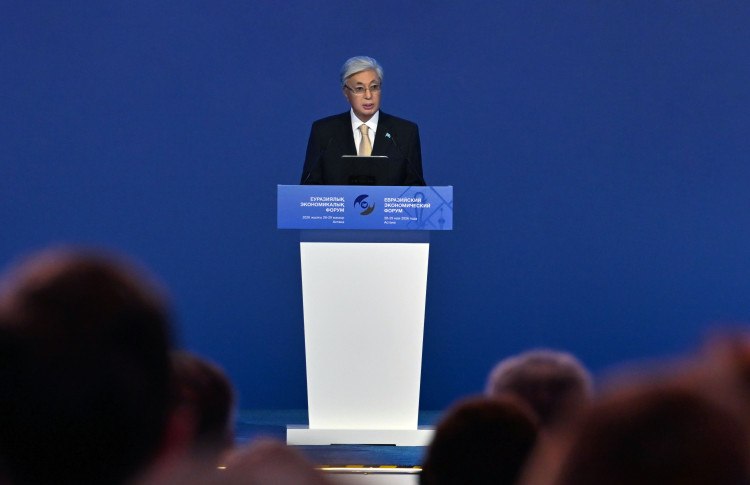
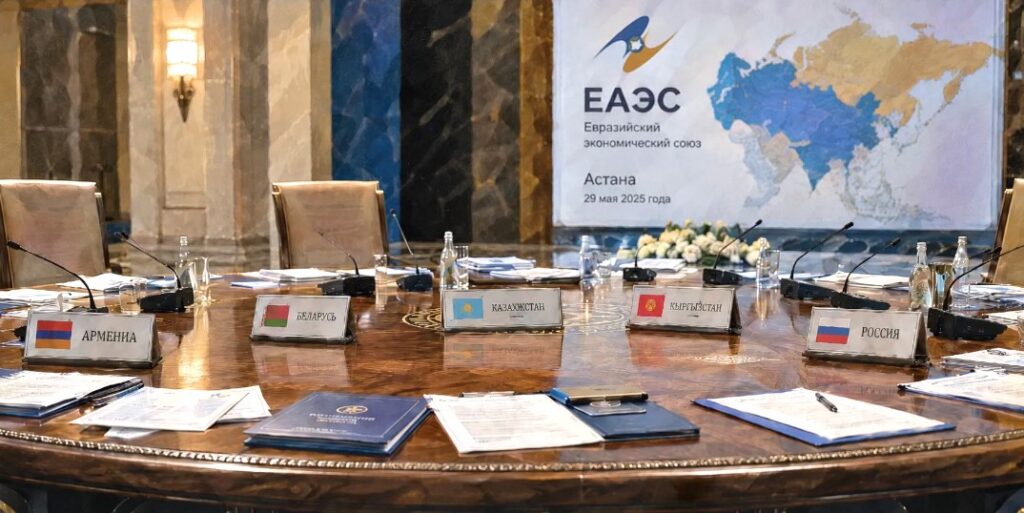
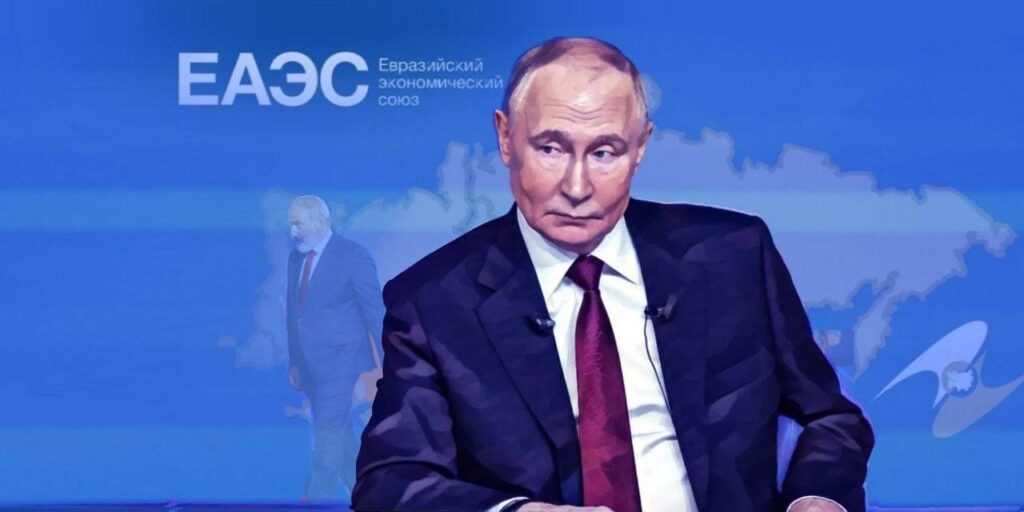
The setting echoed history. Belarus, Kazakhstan, and Russia signed the treaty creating the Eurasian Economic Union in Astana on May 29, 2014, with Armenia joining in January 2015, and Kyrgyzstan in August of the same year. In 2026, the bloc returned to Astana for the Supreme Eurasian Economic Council and the V Eurasian Economic Forum. The theme of the forum was artificial intelligence, digital regulation, and the EAEU’s place in the global technology race. Its website said 14 integration documents were signed on the sidelines, including memoranda, agreements, protocols, and joint action plans.
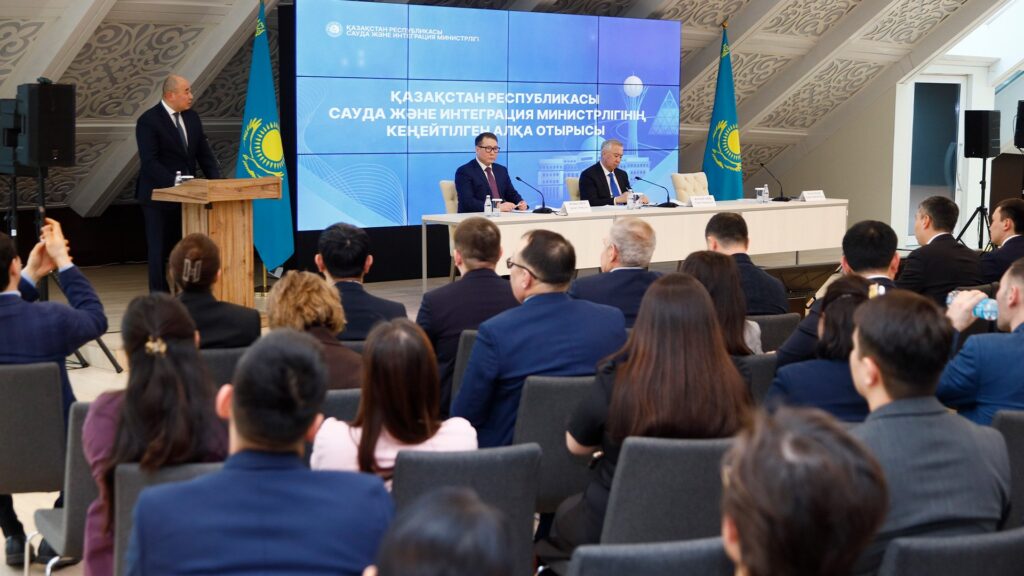
Those documents gave the visit a regional frame. The larger result came on May 28, when Kassym-Jomart Tokayev and Putin oversaw a broad set of bilateral agreements. Akorda listed nuclear power, Russian export credit, expanded oil-sector cooperation, a tenge-ruble currency swap, education projects, financial monitoring, transport digitalization, and nuclear safety regulation. That package points to the real agenda: energy, transit, payments, industrial production, and public-facing alliance language.
For Moscow, Kazakhstan’s primary value is geographic: it sits between Russia and China, and across routes that connect Central Asia to Europe, the Caspian, and South Asia. Russian crude already crosses Kazakhstan on the Priirtyshsk-Atasu-Alashankou route to China. A KazTransOil contract keeps transit at 10 million tons a year until the end of 2033. The tariff is $15 per ton, excluding VAT.
The Atasu-Alashankou pipeline has a design capacity of 20 million tons a year and belongs to Kazakhstan-China Pipeline LLP, a 50-50 venture between KazTransOil and China National Oil and Gas Exploration and Development Company. Reuters has reported that Russia and Kazakhstan agreed last year to raise that flow by 2.5 million tons, although the extra volume had not started flowing before Putin’s visit.
The new agreement on oil-sector cooperation gives the issue a political push. For Moscow, the route strengthens access to China as Western sanctions keep pressure on Russian exports and payments. For Kazakhstan, it brings fees and gives Astana a useful position in Russia-China energy flows.
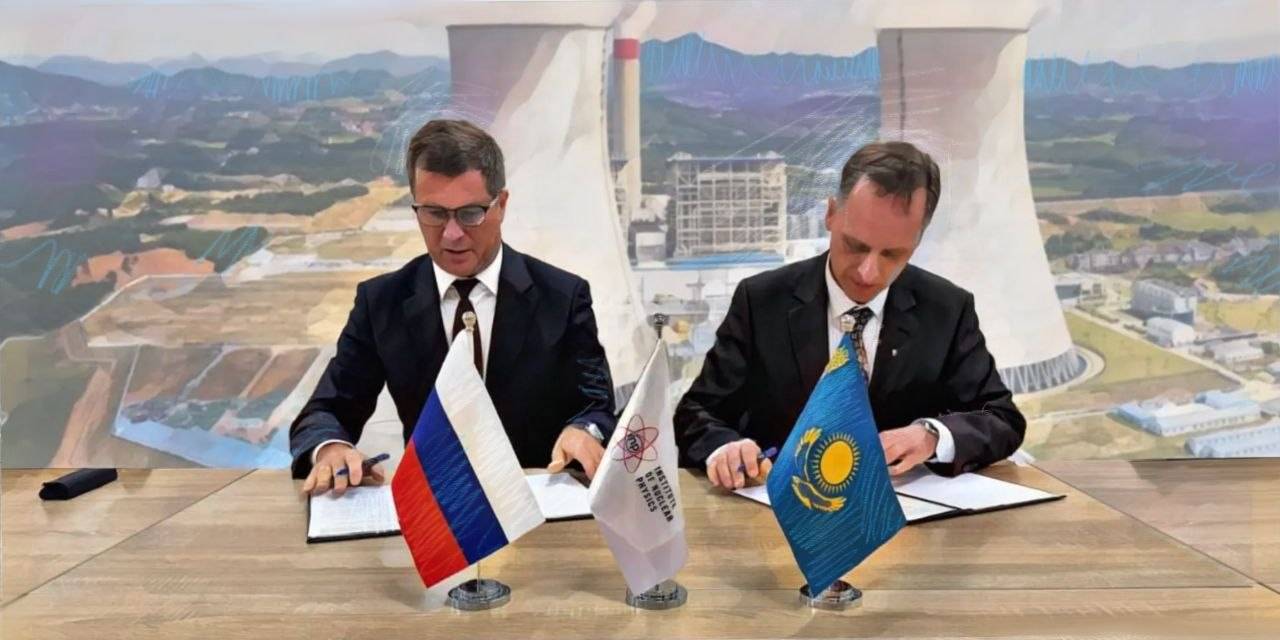
The nuclear agreement, meanwhile, gives Russia a long-term role in Kazakhstan’s shift to nuclear power. Kazakhstan and Russia signed a $16.5 billion agreement for the Balkhash nuclear power plant at Ulken, near Lake Balkhash. The project covers two VVER-1200 III+ reactors. Kazakhstan held a groundbreaking ceremony for the plant in August 2025, with the active construction phase expected to begin in 2027, and the first reactor expected in early 2034.
Russia will provide export credit for the first plant, with Rosatom leading the Balkhash project after competition with China National Nuclear Corporation (CNNC), France’s EDF, and Korea Hydro and Nuclear Power. But Kazakhstan has not handed the wider program to Moscow. CNNC is set to build the second and third nuclear plants, preserving China’s central role in Kazakhstan’s nuclear expansion. Rosatom has already signaled interest in taking part in that project as well.
Kazakhstan has been without an operating nuclear power plant since the BN-350 reactor shut down in 1999. A 2024 referendum approved the return of nuclear energy, giving the government a mandate to move ahead with new reactors as coal-fired plants age and electricity demand rises. The plant, therefore, fulfills a critical need, but it also gives Russia a decades-long stake in fuel supply, engineering, maintenance, training, and safety cooperation.
Russia wants to remain inside Kazakhstan’s next generation of energy infrastructure. Kazakhstan wants more power, but it wants more than one outside partner.
That approach fits Kazakhstan’s own foreign policy doctrine. The official foreign policy concept for 2020-2030 describes a multi-vector, pragmatic, and proactive policy with all states and organizations of practical interest. In energy, that means accepting Russian technology where it helps, while also using Chinese, Western, Turkish, Gulf, and other channels. The first nuclear plant went to Rosatom, the second and third to China, while the pipeline carrying Russian oil to China runs through Kazakh territory and is a Kazakh-Chinese asset.
At a time when Russia’s influence in Central Asia is under pressure from China, the EU, Turkey, the U.S., and shifting regional priorities, public alliance language at the summit gave Moscow a political win. The Times of Central Asia previously reported that Russia’s Deputy Foreign Minister Mikhail Galuzin had accused Western countries of trying to weaken Moscow’s position in the region.
A joint statement adopted in Astana referred to a comprehensive strategic partnership and alliance. It named the North-South corridor, the Russia-Kazakhstan-China rail route, and the Caspian Pipeline Consortium.
The statement also referred to national-currency settlements and stable payment mechanisms, followed by a pledge to coordinate efforts to reduce the negative effects of unilateral economic sanctions. Kazakhstan has repeatedly said it will not violate Western sanctions. In that context, the wording is best treated as diplomatic language on managing disruption to bilateral trade and payments; a friendly political vocabulary, even as Astana deepens ties beyond Moscow.
Kazakhstan’s side of the bargain is more practical. Russia remains a large investor, trade partner, and industrial producer in the Kazakh market. Akorda said the country has 3,500 joint ventures and more than 17,000 companies with Russian capital. The industrial cooperation portfolio includes 177 joint projects worth $52.7 billion, with more than 60,000 jobs attached. Sectors include metallurgy, petrochemicals, machine building, rail equipment, truck components, tires, chemicals, building materials, and raw-material processing.
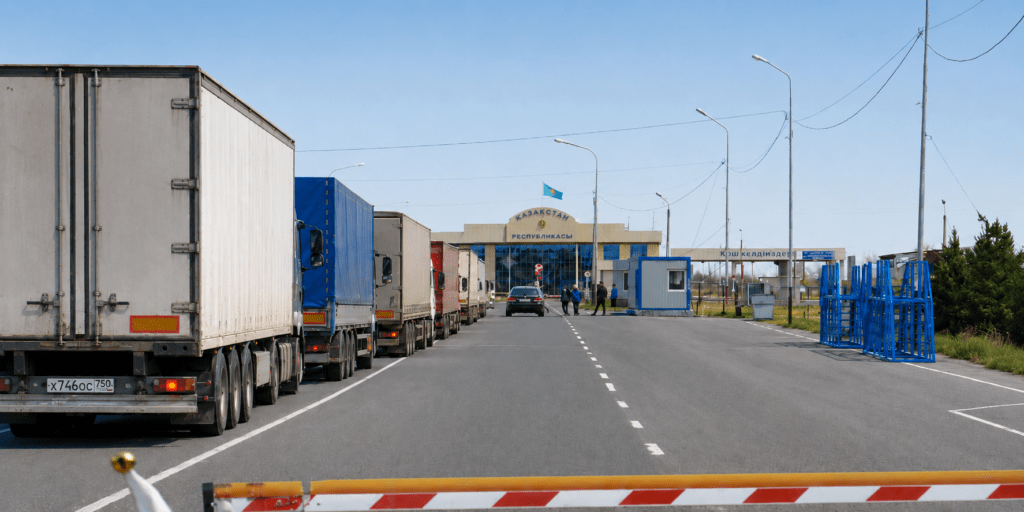
Transport adds another layer. On May 28, during the Astana meetings, Kazakhstan and Russia announced the first cross-border autonomous freight pilot between Astana and Moscow. Heavy trucks traveled simultaneously on the route, covering about 3,000 kilometers in two days and crossing the border at Zhana Zhol. Sections of the journey were completed in fully autonomous mode in both countries. The project showed how freight routes could become part of a wider package covering logistics, vehicle technology, customs procedures, and digital transport systems.
The pilot also speaks to Russian concerns about the Middle Corridor, the trans-Caspian route that carries cargo from China and Central Asia toward the South Caucasus, Turkey, and Europe while bypassing Russian territory. Kazakhstan is trying to turn the route into a more predictable logistics system as war, sanctions, and disruption reshape trade between Europe and Asia. For Moscow, its growth weakens one of Russia’s long-standing advantages: control over the main east-west overland corridors linking Central Asia to European markets.
Set against the backdrop of Armenia’s strained position inside the bloc, the Astana summit produced no publicly visible major new integration step for the EAEU, but it gave Putin’s visit a regional stage. Its published outcomes were mostly technical, but the Russia-Kazakhstan agenda was sharper. Moscow sought more oil transit to China, a long nuclear role, payment and transport channels less exposed to disruption, and public confirmation of alliance ties. Kazakhstan looked to energy capacity, financing, transit income, industrial investment, logistics upgrades, and stable working channels with its largest neighbor.
The bargain is useful to both sides, but its limits are also visible. Russia wants to turn geography and old alliance language into a lasting influence in Kazakhstan’s strategic sectors. Kazakhstan wants the benefits without closing the door to China, Europe, the United States, Turkey, and the Gulf. Astana accepted Russian involvement where it brings capacity and financing. It also kept enough room for other partners to stay in Kazakhstan’s strategic sectors.