• KGS/USD = 0.01144 0%
  • KZT/USD = 0.00208 0%
  • TJS/USD = 0.10442 0.19%
  • UZS/USD = 0.00008 0%
  • TMT/USD = 0.28530 0%
  • KGS/USD = 0.01144 0%
  • KZT/USD = 0.00208 0%
  • TJS/USD = 0.10442 0.19%
  • UZS/USD = 0.00008 0%
  • TMT/USD = 0.28530 0%
  • KGS/USD = 0.01144 0%
  • KZT/USD = 0.00208 0%
  • TJS/USD = 0.10442 0.19%
  • UZS/USD = 0.00008 0%
  • TMT/USD = 0.28530 0%
  • KGS/USD = 0.01144 0%
  • KZT/USD = 0.00208 0%
  • TJS/USD = 0.10442 0.19%
  • UZS/USD = 0.00008 0%
  • TMT/USD = 0.28530 0%
  • KGS/USD = 0.01144 0%
  • KZT/USD = 0.00208 0%
  • TJS/USD = 0.10442 0.19%
  • UZS/USD = 0.00008 0%
  • TMT/USD = 0.28530 0%
  • KGS/USD = 0.01144 0%
  • KZT/USD = 0.00208 0%
  • TJS/USD = 0.10442 0.19%
  • UZS/USD = 0.00008 0%
  • TMT/USD = 0.28530 0%
  • KGS/USD = 0.01144 0%
  • KZT/USD = 0.00208 0%
  • TJS/USD = 0.10442 0.19%
  • UZS/USD = 0.00008 0%
  • TMT/USD = 0.28530 0%
  • KGS/USD = 0.01144 0%
  • KZT/USD = 0.00208 0%
  • TJS/USD = 0.10442 0.19%
  • UZS/USD = 0.00008 0%
  • TMT/USD = 0.28530 0%

Viewing results 1 - 6 of 202

British Publisher Promotes Kyrgyz Artists

The second issue of 'The Great Steppe Treasury', released in July by British publisher Hertfordshire Press, includes the addition of work by three artists from Kyrgyzstan: Seid Atambaev, Larisa Pak, and Gulmira Ayipova. The art catalogue which promotes the diversity of Eurasia's contemporary art, culture, and creativity, represents 24 artists from the UK, Kyrgyzstan, Lithuania, Belarus, Kazakhstan, Russia, Germany, and Crimea. Regarding the second edition, publisher Marat Akhmedjanov commented,  “We are glad to be able to give artists from Kyrgyzstan the opportunity to share their creativity with an international audience through our unique project. And we especially admire how Seid Atambaev, as a deputy, combines his political activities with promoting his country through creativity, demonstrating the variety of ways to support the growth and representation of Kyrgyzstan." Copies of the catalogue will be sent to significant galleries in the UK and plans are in place for participants to present their work in Glasgow, London, Almaty, Minsk, St. Petersburg, and Batumi.

Kazakhstan to Increase Municipal Waste Processing

On July 24, Kazakhstan launched its first project to build a technological eco-park for processing solid municipal waste and producing electricity from biogas. According to the Ministry of Ecology and Natural Resources of Kazakhstan, the new facility will be equipped to sort 120 thousand tons of solid municipal waste and 120 thousand tons of large-sized waste, and process 80 thousand tons of organic waste per year. In response to an instruction by the head of state in February to secure investment for the construction of waste processing plants in Kazakhstan, the government has secured a pool of 94 investment projects to  increase municipal waste processing from 1 million to 2.2 million tons annually. In March, the government announced plans to build 37 new municipal solid waste processing plants and modernize eight existing plants. To support the initiative aimed to improve the country's environment, the government has given approval for an Industrial Development Fund, with an interest rate of 3 percent and loan terms from 3 to 15 years,  for projects related to waste management, including the purchase of rubbish trucks and the launch of sorting lines and processing facilities. Prime Minister Olzhas Bektenov reported that recycling solid waste is profitable worldwide and Kazakhstan too, must exploit its potential in this field.

Kazakhstan Welcomes Prospect of French Cuisine in Almaty

The Almaty City Tourism Department has reported that the famous French culinary school, Ecole Lenôtre, is considering establishing joint programs with the city's universities and restaurants. During his visit to Almaty, Jean Pierre Alba, Development Director of Ecole Lenôtre, familiarized himself with educational institutions and restaurants with a view to setting up partnerships and introducing training in French cuisine to Kazakhstan's educational curriculum. “Almaty is a unique city in its geographical location and the diversity of its cuisine. I have noticed that local pastry chefs are inspired by culinary experience and international cooking while honouring and preserving national gastronomic traditions. This combination can help launch joint educational programs and business collaborations. We are eager to share our knowledge with the city's restaurant professionals and learn the secrets of national cooking,” announced Jean Pierre Alba. Established in Paris in 1971, Ecole Lenôtre is a professional training school for chefs and pastry chefs. Its founder, chef, and pastry chef, Gaston Lenôtre, is renowned worldwide as an outstanding innovator in the culinary field. Every year, over 3,000 pastry chefs are trained at the French culinary school, and many of its graduates are Michelin-starred. Looking to the future, the Almaty Tourism Department commented, “Gastronomic tourism in Almaty is rapidly gaining popularity due to its rich cultural heritage and variety of culinary delights. The visit to Ecole Lenôtre is a significant event for our city."

EFSD to Build Nine Schools in Kyrgyzstan

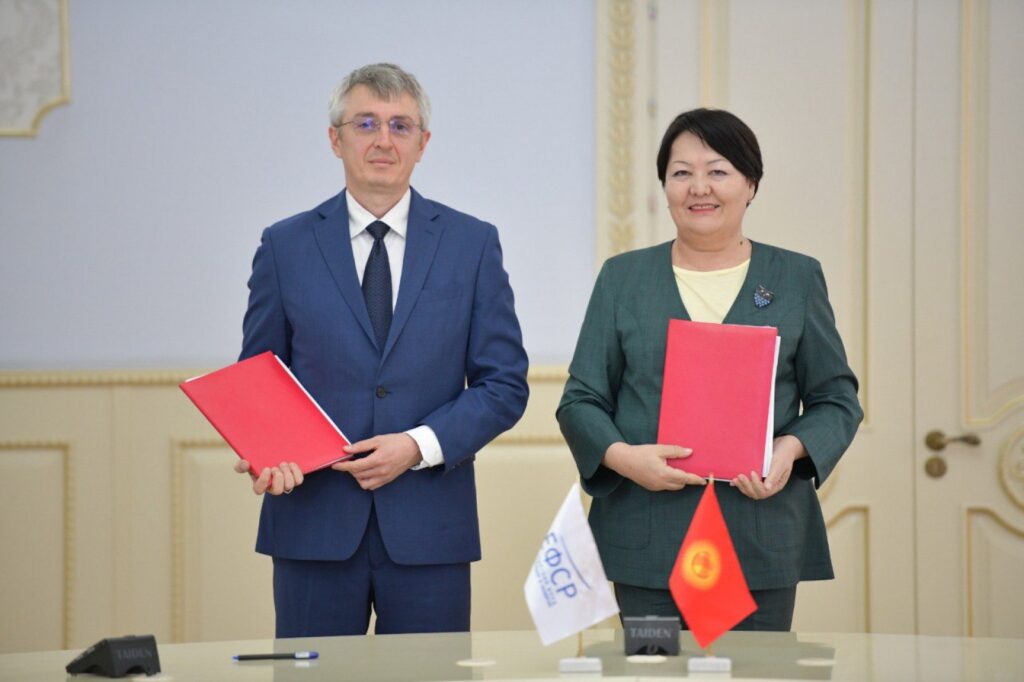
On July 23, Dogdurkul Kendirbaeva, Minister of Education and Science of Kyrgyzstan, and Andrey Shirokov, Executive Director of the Project Unit at the Eurasian Fund for Stabilization and Development (EFSD), signed an agreement to construct and fully equip nine secondary schools in Kyrgyzstan on a grant basis. The EFSD is a financial institution established in 2009 by Armenia, Belarus, Kazakhstan, Kyrgyzstan, Russia, and Tajikistan to promote economic and financial stability in its member states. The document was signed following a meeting between Andrey Shirokov and Akylbek Japarov, Chairman of the Kyrgyz Republic's Cabinet of Ministers, during which the latter reiterated the parties' commitment to cooperate on the implementation of projects prioritized by his country. In addition to the schools,  a $60 million project will be launched to provide drinking water to 32 villages in the southern Osh region. Other proposed initiatives include improving the country’s irrigation system and purchasing ambulances. EFSD is also invested in cooperating on improvements to Kyrgyzstan's roads and as stated by Japarov, “the planned Aral–Suusamyr highway project is expected to reconstruct approximately 80 km of the road connecting the Bishkek–Osh and North-South transport corridors, vital to the Kyrgyz Republic. The successful implementation of this project will promote the socio-economic development of the Naryn and Talas regions and the remote areas of the Chui region, reduce travel times, and significantly improve road safety in the country."

Kyrgyzstan to Introduce Tourist Tax for Foreign Visitors

Kyrgyzstan's capital Bishkek plans to introduce a tourist tax for foreign visitors staying in the city. The Kabar news agency reported that according to the draft resolution submitted by the mayor's office for public discussion, visitors will be charged 50 KGS (approximately 0.59 dollars) for every day spent in the Bishkek's hotels, hostels, campsites, guest houses, and holiday lets. The fee is not included in the cost of accommodation. Instead, operators will be obliged to advise their guests of the charges and collect the fee when they register their stay. Following the requirements of the Kyrgyz Republic's tax legislation, cash register machines are mandatory in all types of accommodation and the fee, paid in Kyrgyzstan's national currency, will be accepted either in cash or by bank card.

Rise in Kyrgyzstan Foster Families

At the beginning of July, records showed that 218 children without parental care were being raised by 110 foster families in Kyrgyzstan; an increase of 29% compared to the previous year. Active in promoting fostering as a far better alternative to orphanages , the Kyrgyz Ministry of Labor reports, "A foster or adoptive family is a trained family that provides upbringing for children in difficult life situations for a certain period of time, based on a contract with the state. Citizens between the ages of 30 to 65 are eligible to apply to become foster parents and to ensure the safety and wellbeing of their charges, receive specialist training as well as monthly checks by social service employees.  Contracted by the state, they also receive an allowance of $80 a month until the orphans come of age. According to the Ministry of Social Services, "If applicants have one or two children, they can only foster three. If foster parents have no children of their own, they can raise up to five toddlers or teenagers from three to 16 years of age." Beneficial on many levels, fostering provides children with both a secure base and opportunities to master a trade, work in agriculture or follow a profession, to enable them to lead independent lives as adults.