• KGS/USD = 0.01144 0%
  • KZT/USD = 0.00213 0%
  • TJS/USD = 0.10848 0.09%
  • UZS/USD = 0.00008 0%
  • TMT/USD = 0.28571 0%
  • KGS/USD = 0.01144 0%
  • KZT/USD = 0.00213 0%
  • TJS/USD = 0.10848 0.09%
  • UZS/USD = 0.00008 0%
  • TMT/USD = 0.28571 0%
  • KGS/USD = 0.01144 0%
  • KZT/USD = 0.00213 0%
  • TJS/USD = 0.10848 0.09%
  • UZS/USD = 0.00008 0%
  • TMT/USD = 0.28571 0%
  • KGS/USD = 0.01144 0%
  • KZT/USD = 0.00213 0%
  • TJS/USD = 0.10848 0.09%
  • UZS/USD = 0.00008 0%
  • TMT/USD = 0.28571 0%
  • KGS/USD = 0.01144 0%
  • KZT/USD = 0.00213 0%
  • TJS/USD = 0.10848 0.09%
  • UZS/USD = 0.00008 0%
  • TMT/USD = 0.28571 0%
  • KGS/USD = 0.01144 0%
  • KZT/USD = 0.00213 0%
  • TJS/USD = 0.10848 0.09%
  • UZS/USD = 0.00008 0%
  • TMT/USD = 0.28571 0%
  • KGS/USD = 0.01144 0%
  • KZT/USD = 0.00213 0%
  • TJS/USD = 0.10848 0.09%
  • UZS/USD = 0.00008 0%
  • TMT/USD = 0.28571 0%
  • KGS/USD = 0.01144 0%
  • KZT/USD = 0.00213 0%
  • TJS/USD = 0.10848 0.09%
  • UZS/USD = 0.00008 0%
  • TMT/USD = 0.28571 0%

Viewing results 19 - 24 of 2413

Kazakhstan’s Persian Gulf Port Plan Faces New Iran Risk

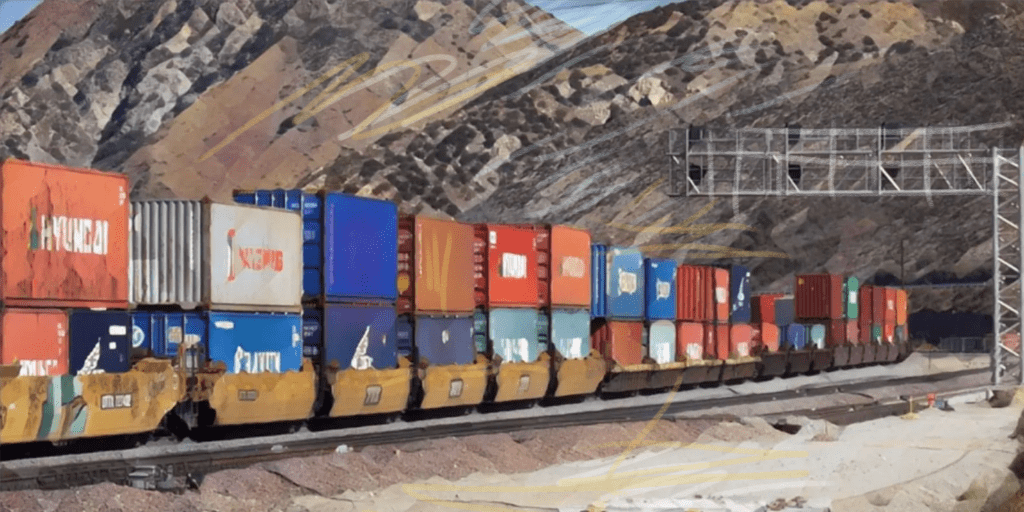
Kazakhstan has moved a long-planned southern trade project from talks to contract. The move gives Astana a possible foothold on the Persian Gulf, but it comes as a second night of U.S. strikes on Iran and Iranian retaliation around the Gulf states have raised the cost of using that route. On June 28, Kazakhstan and Iran signed a 27-year BOT agreement to build a Kazakh transport and logistics terminal at Iran’s Shahid Rajaee Port in Bandar Abbas. The contract gives the project two years for construction and 25 years for operation, with commercial activity expected in the third year. Aman Malgazhdarov of QazExportPromotion signed for Kazakhstan, and Hossein Abbas Nejad of Hormozgan’s Ports and Maritime Organization signed for Iran. The project is designed to plug Kazakhstan into the International North-South Transport Corridor and widen export access to the Persian Gulf, South Asia, Southeast Asia, and East Africa. The $25 million investment covers a 15-hectare logistics center that could handle 1.5 million tons of goods a year. Mohammad Shakibi-Nasab, the head of Iran’s Ports and Maritime Organization, said it would “create jobs… increase the operational capacity” of Shahid Rajaee and “boost ports along the North-South corridor.” Malgazhdarov called it the “core of a future Kazakh port” within Shahid Rajaee. That ambition now sits beside a worsening security picture. On July 8, U.S. President Donald Trump declared the interim agreement to end the Iran war “over” after attacks on three cargo ships in the Strait of Hormuz. Asked about the deal, Trump said: “It’s over. I don’t want to deal with them.” The U.S. then launched a new round of strikes, and Iran fired on U.S. sites in Bahrain and Kuwait. U.S. Central Command said the attacks were meant to “further degrade” Iran’s ability to threaten navigation in the strait, with Trump warning, “If it happens again, it will get much worse!” By July 9, the U.S. military said it had struck 170 Iranian targets in 48 hours. Iran had fired at U.S. bases in Bahrain, Kuwait and Qatar, and Iran’s health ministry said U.S. strikes on July 7 and 8 killed 14 people and wounded 78. The attacks hit Bandar Abbas, where Shahid Rajaee is located, and other southern coastal areas. Crude oil prices rose by 5% as the risk widened. For Kazakhstan, the timing is uncomfortable. Shahid Rajaee sits near the Strait of Hormuz, the waterway that connects the Persian Gulf to the open sea. The port offers one of Central Asia’s shortest southern outlets, but the approach depends on a zone where security, insurance premiums, and naval risk can change quickly. A terminal can lower handling costs and improve control over cargo, but it cannot remove war risk at the maritime end of the corridor. The risk may not be limited to the Gulf. The Financial Times reported that a railway bridge near Aqqala in Golestan Province was hit with cruise missiles, citing Iran’s Revolutionary Guards. The bridge lies on the Gorgan-Incheh Borun line, which carries passengers and cargo...

Turkmenistan’s Wage Puzzle: Official Salaries Rise, but Transparency Remains Elusive

In most Central Asian countries, checking the average salary is as simple as visiting the national statistics agency’s website. In Turkmenistan, however, wage data remain largely inaccessible. The State Statistics Committee does not publish salary figures online, and its annual statistical yearbooks are available only in printed form inside the country. Nevertheless, occasional official figures emerge, offering a glimpse into a labor market that differs markedly from those of its regional neighbors. As of January 1, 2025, Turkmenistan’s monthly minimum wage stands at 1,410 manats, equivalent to approximately $403 at the official exchange rate. An increase was introduced by presidential decree in July 2024 as part of a nationwide 10% rise in wages, pensions, and social benefits. The minimum wage was about $366 in 2024, and roughly $331 in 2023 at the official exchange rate. Unlike neighboring economies, where wages are increasingly shaped by labor-market conditions, inflation, and private-sector demand, Turkmenistan’s minimum wage is established exclusively by presidential decree and applies uniformly across all sectors, occupations, and age groups. The centralized system leaves little room for market-based wage formation. Although comprehensive official wage statistics remain unavailable, one rare set of figures attributed to the State Statistics Committee was published in 2017. According to those figures, the country’s highest-paid employees worked in the Merchant Marine Fleet, earning 2,387.6 manats per month, or about $682 at the official exchange rate then in use. They were followed by the National Space Agency under the President of Turkmenistan, at 1,909.9 manats, or about $546, and the state-owned Turkmenneft oil company, at 1,861.4 manats, or about $532. The lowest salaries were reportedly paid to employees of the Ministry of Trade and Foreign Economic Relations. The ranking, although dated, is revealing. Rather than finance or technology, which dominate wage tables in many countries, Turkmenistan’s highest-paid sectors in that snapshot were closely tied to state prestige projects and strategic natural-resource industries. A key factor complicating any assessment of income is the country’s dual exchange-rate system. The official rate has long been fixed at about 3.5 manats per U.S. dollar, which is used to calculate salaries in dollar terms for international reporting. However, the parallel market rate is substantially weaker, reducing the real international purchasing power of household incomes. Consequently, official salary figures converted into dollars should be interpreted with caution because they do not necessarily reflect the exchange rate available to ordinary citizens. The gap between official wages and actual living costs also appears significant. While the government continues to subsidize basic food staples such as bread and flour, shortages have often forced households to buy goods in private markets at much higher prices. Free natural gas and water supplies ended in 2019, and utility costs have gradually increased since then, despite continuing subsidies. Public cost-of-living data should be treated carefully, but they point in the same direction. The user-submitted database Numbeo estimates monthly costs for a single person in Ashgabat at about 6,475 manats before rent, more than four times the official minimum wage. Regional comparisons...

As Azerbaijan Pushes Back Against Moscow, Central Asia Watches

The recent diplomatic escalation between Azerbaijan and Russia appeared to have run its course in April, after Moscow agreed to pay compensation over the Azerbaijan Airlines crash in Kazakhstan. Instead, the dispute has entered a new phase, and its implications now reach beyond the South Caucasus. On July 6, Azerbaijan’s Ministry of Foreign Affairs summoned Russian Ambassador Mikhail Yevdokimov and handed him a formal note of protest over what Baku described as a Russian drone strike on a fuel station owned by Azerbaijan’s state energy company SOCAR in Ukraine’s Mykolaiv region on the evening of July 5. The Azerbaijani Foreign Ministry said the attack on SOCAR facilities in Ukraine was not an isolated incident. It cited previous strikes on the company’s gas distribution compressor station and oil depot in Odesa, which caused material damage and injured employees. Baku also pointed to earlier damage to the Azerbaijani embassy building in Kyiv and the honorary consulate in Kharkiv, calling on Moscow to investigate and comply with its obligations to protect civilian infrastructure and diplomatic missions. At the same time, Shusha — known to Armenians as Shushi, retaken by Azerbaijan during the 2020 Karabakh war, and still regarded by many Armenians as occupied — hosted an international conference devoted to what participants described as Russia’s “colonial policy,” the “Circassian genocide,” and the situation of non-Russian peoples within the Russian Federation. The conference declaration called on Moscow to “recognize its historical crimes, abandon its chauvinistic policies, and end the forced recruitment of ethnic minorities into the war against Ukraine.” Experts from Azerbaijan, the United States, France, Lithuania, Poland, the Czech Republic, Germany, Israel, Türkiye, and Georgia attended the conference. None of the Central Asian republics was represented. That absence was telling. Central Asian governments may be distancing themselves from Moscow in certain areas, but they remain reluctant to participate in openly anti-Russian political initiatives. For Astana, Tashkent, Bishkek, Dushanbe, and Ashgabat, the question is not whether Russia’s position has weakened, but how far they can move without provoking pressure from Moscow. For Central Asia, the dispute is not a distant quarrel in the South Caucasus. Azerbaijan is now a central link in the westward routes that Kazakhstan, Uzbekistan, Turkmenistan, and Kyrgyzstan are trying to strengthen as alternatives to Russian territory. The Middle Corridor runs from China through Central Asia, across the Caspian Sea, and onward through Azerbaijan, Georgia, and Türkiye to Europe. Any deterioration in Azerbaijan-Russia relations therefore has practical implications for Central Asian transit, energy, and diplomatic room for maneuver. The first major rupture in relations between Baku and Moscow came after Azerbaijan Airlines Flight J2-8243, traveling from Baku to Grozny, was damaged by Russian air-defense fire over Russian territory on December 25, 2024. The aircraft later crashed while attempting an emergency landing near Aktau, Kazakhstan, killing 38 people. Azerbaijan blamed Russia and demanded an apology, accountability, and compensation. Relations deteriorated further in June 2025 following the detention of ethnic Azerbaijanis in Yekaterinburg and reports of torture. The most prominent victims were the...

Central Asia’s Fuel Squeeze Becomes a Winter Energy Security Problem

Central Asia’s fuel squeeze is moving from filling stations into winter planning. Governments are now tracking gasoline and diesel, gas pipelines, coal deliveries, power imports, jet fuel, and emergency repair crews. Seasonal fuel and power stress is familiar across the region, but the current pressure - tied to Russia, the main supplier for several regional fuel flows - has arrived early. Russia’s own fuel crisis has sharpened the risk. Ukrainian drone attacks and repair work have cut refinery output, while export limits have pushed more Russian supplies back into the domestic market. Reuters reported queues, regional restrictions, and gasoline above 100 roubles a liter at some independent stations. President Vladimir Putin acknowledged the strain on June 28. “You are well aware that problems for drivers and for businesses persist,” he said, adding that “the harvest depends on” keeping seasonal fuel schedules for farms. For Central Asia, Russian shortages travel through contracts, rail slots, import prices, and public nerves. Kyrgyzstan is among the most exposed. The country consumes about two million tons of fuels and lubricants each year, and almost 95% comes from Russia, according to Deputy Energy Minister Nasipbek Kerimov. “Due to the lack of adequate oil and gas production, we remain a country dependent on imports,” Kerimov said. Bishkek has asked Russia, Kazakhstan, Belarus, Azerbaijan, Uzbekistan, and Turkmenistan for help securing supplies. That dependence is now impacting households, farmers, and small transport firms. The cabinet has capped pump prices and set a subsidy mechanism through September 30. Kerimov said importers were seeing offers at several prices, but promised that “there should be no shortage on the domestic market.” Oil traders put AI-92 stocks at 30 to 45 days, while diesel remained available for harvest work. Kyrgyzstan is trying to buy time through domestic refining. The modernized Junda refinery in the Chuy Region has been pressed to raise gasoline output to 24,000 tons a month soon, then 50,000 tons a month by the end of 2026, with finished products directed to the domestic market. Those gains would help, but Russian supply still sets the pace. Uzbekistan has the Bukhara and Fergana oil refineries, the Altyaryk unit of the Fergana refinery, and the Uzbekistan GTL complex, but demand has still moved faster than domestic supply. In January-April 2026, gasoline imports reached 568,700 tons, worth $327.1 million, more than double the same period in 2025. Local refineries produced 417,500 tons over those four months. A shift away from AI-80 gasoline has also pushed drivers toward AI-92 and AI-95. The pressure reached the exchange in late June. AI-92 gasoline climbed to a record 13.919 million soums per ton on June 29, about $1,160, after an 11.8% rise since the start of the month. Jet fuel has become an issue, too. Uzbekistan Airways reduced some Russia flight frequencies in June, citing aviation fuel shortages and higher costs. Tashkent is now preparing for winter in concrete volumes. On July 6, President Shavkat Mirziyoyev reviewed measures for the 2026-2027 autumn-winter season. The plan includes replacing 53.7...

Bukhara Biennial Sets 2027 Dates and Names New Artistic Director

Organizers of the Bukhara Biennial have announced key details of its second edition: the event will run from September 3 to November 21, 2027, with architect and designer Kulapat Yantrasast appointed artistic director. The announcement was made at the Fondation Beyeler during Art Basel in Basel, Switzerland, placing the Uzbek cultural project before an international art and museum audience. What Is Known About the 2027 Concept Yantrasast will succeed Diana Campbell, who curated the first edition in 2025. The biennial’s organizer remains Gayane Umerova, chairwoman of the Art and Culture Development Foundation of Uzbekistan (ACDF). In 2025, artists were paired with Uzbek master craftsmen. The 2027 format will expand that model by involving local ecologists, scientists, and economists. The central theme will be the connection between art, urban space, and sustainable development. Bukhara as Venue Biennial projects will be housed in restored caravanserais, madrasas, hammams, city squares, and other historic sites, some of which are expected to open to the public for the first time. The aim is to place contemporary art within Bukhara’s historic urban fabric. The city holds UNESCO Creative City status in crafts and folk art, giving the biennial a venue with international cultural recognition. [caption id="attachment_51635" align="aligncenter" width="1280"] Image: bukharabiennial.uz[/caption] Who the New Artistic Director Is Kulapat Yantrasast studied architecture under Tadao Ando and founded the studio WHY Architecture in 2004. His recent projects include the reconstruction of the Michael C. Rockefeller Wing at New York’s Metropolitan Museum of Art, the ILMI Science and Innovation Center in Riyadh, and the Dib art museum in Bangkok. His studio is also working on the Department of Byzantine and Eastern Christian Art at the Louvre in Paris and the National Museum of India, which is expected to become the largest museum in the world. Yantrasast has previously worked with ACDF on When Apricots Blossom, shown at Milan Design Week in 2026. The First Edition The first Bukhara Biennial ran from September 5 to November 23, 2025, under the theme Recipes for Broken Hearts, curated by Diana Campbell. It drew 1.8 million visitors, more than half of them from Bukhara and other regions of Uzbekistan. Participating artists included Antony Gormley, Marina Perez Simão, Erika Verzutti, Subodh Gupta, Delcy Morelos, and Dana Awartani. [caption id="attachment_51636" align="aligncenter" width="1280"] Image: bukharabiennial.uz[/caption] Part of a Wider Cultural Strategy The Bukhara Biennial forms part of a wider ACDF program to expand Uzbekistan’s cultural infrastructure. The foundation is overseeing the Center for Contemporary Art in Tashkent, due to open on September 6, 2026, and the National Museum of Uzbekistan, designed by Tadao Ando. ACDF has also formed an international advisory board for the biennial, with members including Chris Dercon and Michael Govan. [caption id="attachment_51637" align="aligncenter" width="1024"] Image: bukharabiennial.uz[/caption] The Art Basel announcement suggests that Uzbekistan is positioning the biennial as a recurring international platform, while keeping Bukhara’s historic sites and local audiences at its center. In 2025, nearly two million people attended the event in the city’s restored historic spaces. For the 2027 edition, the challenge...

Uzbekistan Signs Contract for New Tashkent Airport, Construction to Run Through 2030

On June 17, 2026, on the sidelines of the 5th Tashkent International Investment Forum, Uzbekistan Airports and a consortium of investors led by Saudi Arabia’s Vision Invest signed a public-private partnership agreement to build and operate a new international airport in the Tashkent region. The project began with a ceremonial groundbreaking in October 2025, attended by President Shavkat Mirziyoyev. The June agreement is a practical next step: the project now has a signed contract, defined investor shares, and an approved construction schedule. The international consortium will handle construction and operation of the airport. Vision Invest holds 45%. Japan’s Sojitz Corporation holds 30%, and South Korea’s Incheon International Airport Corporation holds 15%. The remaining 10% belongs to state-owned Uzbekistan Airports. Under the agreement, the private partner will manage the airport for 35 years, until around 2065. The private investors are responsible for the passenger terminal and forecourt area. The state remains responsible for building and operating the airfield infrastructure, including runways and taxiways. Construction was formally authorized by Presidential Resolution No. 353, dated November 25, 2025. The new airport will be located in the Urtachirchik and Kuyichirchik districts of the Tashkent region, on a 1,310-hectare site. The first phase includes two 4-kilometer runways and a 208,000-square-meter passenger terminal. It also includes 98 aircraft parking stands, a fuel complex, and a modern air traffic control tower. Construction is scheduled from 2026 to 2030, with commissioning planned for late 2030. At full capacity, the airport will be able to handle up to 20 million passengers and process 129,000 tons of cargo per year. It will support up to 30 takeoffs and landings per hour and accommodate 62 aircraft at once. In the longer term, the terminal will be four times larger than Tashkent’s current airport and able to serve up to 46 million passengers a year. It will be supported by more than 40 jet bridges and 160 aircraft stands. The project is driven by passenger growth that the current airport can no longer accommodate. Over the past eight years, passenger traffic in Tashkent has tripled to 9 million a year and is expected to reach 24 million by 2040. The existing airport is designed for just 11 million passengers and sits within city limits, making expansion impossible. The current airport is projected to reach full capacity by 2029, after which it is expected to close once the new facility opens. The new airport will form part of a larger transport hub. The complex will connect directly to the Tashkent-Samarkand toll highway and to routes serving Andijan and Bostanliq. A dedicated high-speed rail station will be built on site, and shuttle services will link Tashkent with the new location. The first phase is estimated at $2.5 billion and is expected to attract about $3 billion in foreign direct investment. The airport has also been presented as the first in Central Asia built according to “green” construction principles. Preparatory work before the signing included environmental and social impact assessments in line with the requirements...