• KGS/USD = 0.01144 0%
  • KZT/USD = 0.00197 -0%
  • TJS/USD = 0.10904 0%
  • UZS/USD = 0.00008 0%
  • TMT/USD = 0.28490 0%
  • KGS/USD = 0.01144 0%
  • KZT/USD = 0.00197 -0%
  • TJS/USD = 0.10904 0%
  • UZS/USD = 0.00008 0%
  • TMT/USD = 0.28490 0%
  • KGS/USD = 0.01144 0%
  • KZT/USD = 0.00197 -0%
  • TJS/USD = 0.10904 0%
  • UZS/USD = 0.00008 0%
  • TMT/USD = 0.28490 0%
  • KGS/USD = 0.01144 0%
  • KZT/USD = 0.00197 -0%
  • TJS/USD = 0.10904 0%
  • UZS/USD = 0.00008 0%
  • TMT/USD = 0.28490 0%
  • KGS/USD = 0.01144 0%
  • KZT/USD = 0.00197 -0%
  • TJS/USD = 0.10904 0%
  • UZS/USD = 0.00008 0%
  • TMT/USD = 0.28490 0%
  • KGS/USD = 0.01144 0%
  • KZT/USD = 0.00197 -0%
  • TJS/USD = 0.10904 0%
  • UZS/USD = 0.00008 0%
  • TMT/USD = 0.28490 0%
  • KGS/USD = 0.01144 0%
  • KZT/USD = 0.00197 -0%
  • TJS/USD = 0.10904 0%
  • UZS/USD = 0.00008 0%
  • TMT/USD = 0.28490 0%
  • KGS/USD = 0.01144 0%
  • KZT/USD = 0.00197 -0%
  • TJS/USD = 0.10904 0%
  • UZS/USD = 0.00008 0%
  • TMT/USD = 0.28490 0%
08 December 2025

Viewing results 157 - 162 of 287

Russia Deports Thousands of Tajik Citizens

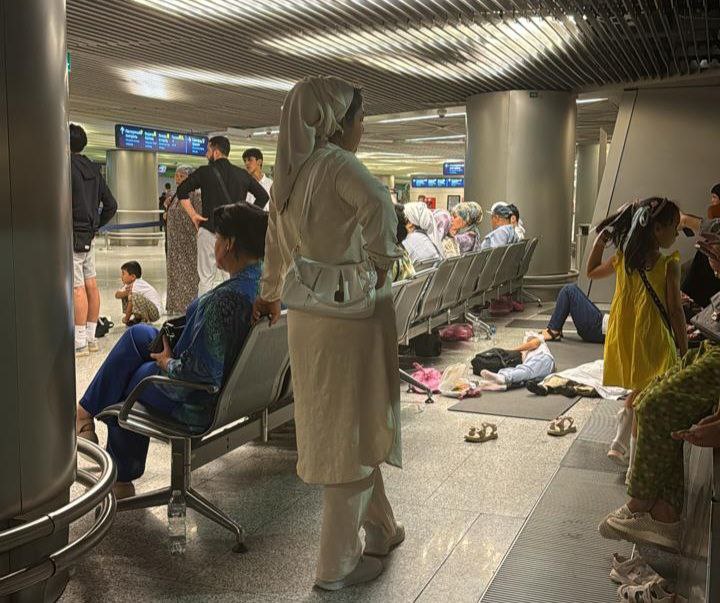
During a press conference, director of the Civil Aviation Agency, Habibullo Nazarzoda, announced that over the past six months, Russia expelled or deported some 3,400 Tajikistan citizens. Nazarzoda emphasized that the action was spurred by errors in the Tajik citizens' documents as opposed to being politically motivated and stated, “The reason for denied entry into Russian territory was sometimes a lack of necessary documents. 95% of people who travel to the country know where they are going and why they are going, but cannot answer questions when asked. Many become confused. That’s why it’s not political.” Conditions for migrants heading for Russia and for those already in the country, have become stricter following the recent terrorist attack at Moscow's Crocus City Hall and the suspected involvement of Tajik citizens. Complaints about difficulties in entering the country are increasing and dozens of migrants report being detained at Russian airports and land border crossings under various pretexts. Since neither the Tajik nor Russian sides have commented on the situation, the official reasons for the above remain unclear.

ADB to Support Climate-Friendly Business Environment in Tajikistan

The Asian Development Bank (ADB) says it has approved a $50 million policy-based grant for a program that will help the government of Tajikistan foster a climate-responsive business environment and support small and medium-sized enterprises (SMEs) in the country. The program aims to transform Tajikistan's business environment through digitization, reforms to increase exports, improvement of infrastructure governance, fiscal transparency, and support for climate-friendly SMEs. Underscoring ADB's commitment to supporting Tajikistan in its transition to a green economy, ADB Director General for Central and West Asia Yevgeniy Zhukov commented, “By promoting climate-responsive investments and improving the overall business environment, we aim to stimulate economic growth, create green jobs, and enhance the country's resilience to climate change." The program will support reforms subsidizing climate-friendly SMEs, and prioritizing funding for female entrepreneurs. It advances digitization and e-commerce through the Agency for Innovation and Digitization and the approval of the E-Commerce program. The program will also support enhanced public investment management through assessments to recommend improvements and prioritize climate-focused projects. Fiscal transparency will improve the Ministry of Finance’s capacity to publish government finance statistics. The program will also promote international trade and investment by streamlining trade documentation processes and updating regulatory frameworks for issuing local and green bonds.

Tajikistan Launches Export of Mineral Fertilizers to Afghanistan

Tajikistan has begun to export mineral fertilizers to Afghanistan. It has recently delivered 626 tons of fertilizer produced at the Azot plant in the Khatlon region, valued at $169,000. According to information issued by the regional customs department, 13,700 tons of agricultural products were exported through the Khatlon checkpoint at the beginning of July, including 8.7 tons of onions, 438 tons of melons, 2.7 tons of fruit and grapes, and 120 tons of other products. In addition, 13,200 tons of onions were exported through customs checkpoints in the Sughd region, bringing the total volume of agricultural products exported by the Khatlon region to 27,100 tons. The value of imported goods to the Khatlon region amounted to $107.6 million. Such a significant growth in trade relations with Afghanistan points to closening relations between Tajikistan and its neighbor.

Saudi Islamic Development Bank Increasing Its Presence in Central Asia

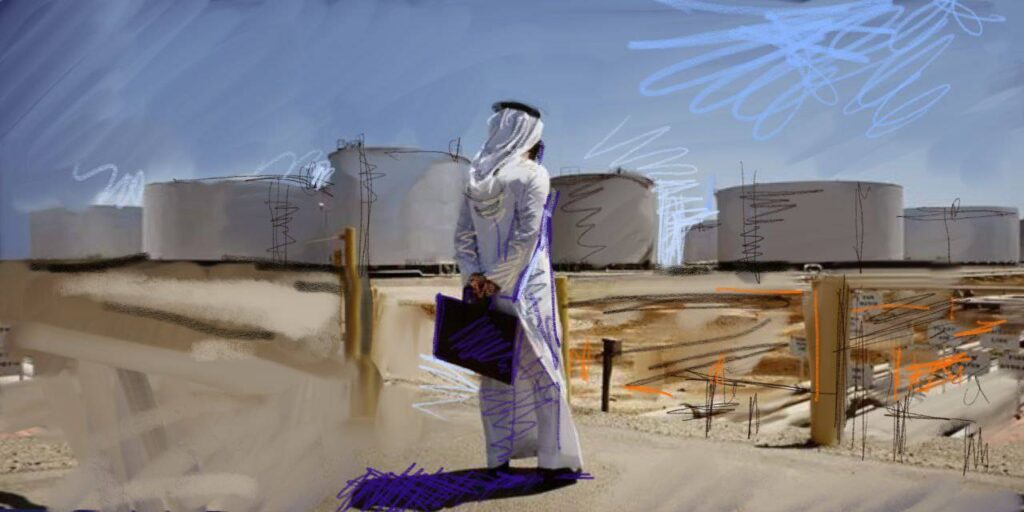
The Saudi-based Islamic Development Bank (IDB) has been particularly active in Central Asia so far in 2024. The growing IDB role is part of Central Asian region’s foreign policy shift toward the Arab world as financial backers to replace Russia, which is devoting huge attention and resources to its war in Ukraine, and China, which is increasingly reluctant to spend large sums of money in Central Asia after pouring in tens of billions of dollars there during the last 25 years. Some of the Central Asian governments owe China substantial amounts of money that they are unlikely to be able to pay for possibly decades. The Central Asian states have been members of the IDB for many years. Kyrgyzstan was first, joining in 1993, followed by Turkmenistan in 1994, Kazakhstan in 1995, Tajikistan in 1996, and Uzbekistan in 2003. One of the IDB’s three regional offices is in Almaty, Kazakhstan (the other two are in Kuala Lumpur, Malaysia and Rabat, Morocco).  The IDB has been dealing individually with the five Central Asian countries on a wide range of projects and programs in recent months. Energy Resources In February, Tajik Minister of Economic Development and Trade Zavqi Zavqizoda announced a deal was reached for the IDB to provide $250 million to Tajikistan. Zavqizoda said $150 million of that would go toward construction of the Rogun hydropower plant (HPP).  The Rogun HPP was a Soviet-era project. Construction started in 1976 but was discontinued shortly after the Soviet Union collapsed. Tajikistan restarted work on the HPP in 2008. Tajik President Emomali Rahmon has repeatedly said that building the HPP with a planned 3600 MW capacity will make the country energy independent and even allow Tajikistan to bring in extra revenue exporting electricity to neighboring countries.  In its 28 years as an IDB member, Tajikistan had received some $620 million from the IDB, so the $250 million announced in February 2024 represents a significant jump in IDB financial help. Not surprisingly, when IDB President Muhammad Al-Jasser visited Kyrgyzstan in June, Kyrgyz President Sadyr Japarov sought IDB investment in the Kambar-Ata-1 HPP, another decades-old project with a multi-billion-dollar price tag that has barely made any progress in being realized during the 33 years Kyrgyzstan has been independent. Al-Jasser did not commit to IDB financing for the Kyrgyz HPP. However, less than a week after Al-Jasser was in Kyrgyzstan, the IDB was one of several international financial organizations that signed on at a conference in Vienna to be a members of a coordination donors’ committee for the Kambar-Ata-1 projects. At a meeting in Istanbul in February, the IDB reaffirmed its support for the Central Asia-South Asia-1000 (CASA-1000) project that aims to export electricity from HPPs in Kyrgyzstan and Tajikistan to Afghanistan and Pakistan. Kyrgyz Energy Minister Taalaybek Ibrayev met with Al-Jasser in June during the latter’s visit to Kyrgyzstan to discuss funding for Kyrgyzstan’s section of CASA-1000. Not Only Energy In June, the IDB pledged up to $2 billion in funding for improvements to water management...

World Bank Projects Tajikistan’s Economic Growth

On July 16 the World Bank released its latest Tajikistan Economic Update. Tajikistan's economy has shown remarkable growth in recent years, with an impressive expansion of 8.3% in 2023 and 8.2% in early 2024. The report attributes the growth to increased revenues from gold exports, substantial public infrastructure spending, robust migrant worker remittances, and public wage increases. The report highlights that Tajikistan has managed to control inflation through declining global food and fuel prices and a tighter monetary policy. However, the report says that Tajikistan’s economic outlook faces several challenges. Subdued economic growth is projected at 6.5% in 2024 and 4.5% in the medium term, reflecting sluggish growth in the country’s key trading partners: China, Kazakhstan, Russia, and Turkey. The report says that potential risks to Tajikistan’s economic outlook include escalation of global and regional tensions, and stricter migration policies in Russia. It cautions that for Tajikistan to ensure sustainable development, it needs to implement structural reforms focused on enhancing economic openness and competitive neutrality and improving public sector governance, transparency, and accountability for better public service delivery. Ozan Sevimli, World Bank Group Country Manager for Tajikistan, commented: “Tajikistan's recent economic performance is commendable, but sustaining this momentum will require concerted efforts to address structural challenges to ensure competition among all economic players. Embracing fair competition and competitive neutrality between state-owned enterprises and the private sector is vital for fostering innovation, driving efficiency, and ensuring that all players can thrive on a level playing field, ultimately benefiting the economy and society."

Chinese Company Plans to Produce Solar Panels in Tajikistan

A Chinese company plans to set up an enterprise to produce solar panels in the south of Tajikistan. This was announced during a meeting between the head of the country's Khatlon region, Davlatali Said, and Wang Hao, the general director of China's Datang Corporation in Central Asia. Wang Hao commented: "We intend to establish an industrial enterprise in the Khatlon region to produce solar panels. Our corporation has been on the Fortune Global 500 list for 14 consecutive years, which shows the result of our good work." Mr Said supported the proposal, noting that all issues would be resolved after visiting free economic zones and other regions in the country.