Uzbekistan and Belarus have established a strategic partnership following President Shavkat Mirziyoyev’s official visit to Minsk, where the two governments signed a broad package of economic, labor, scientific, and cultural agreements.
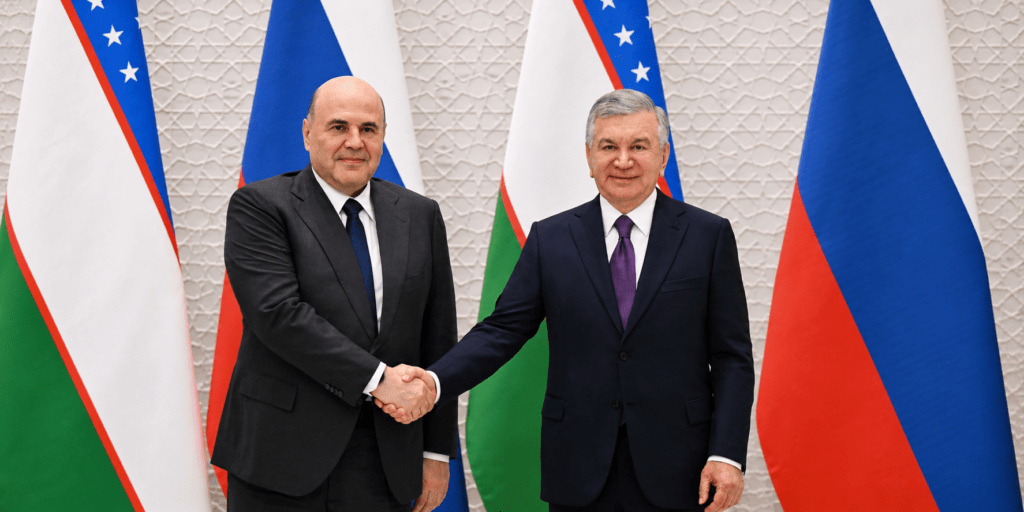
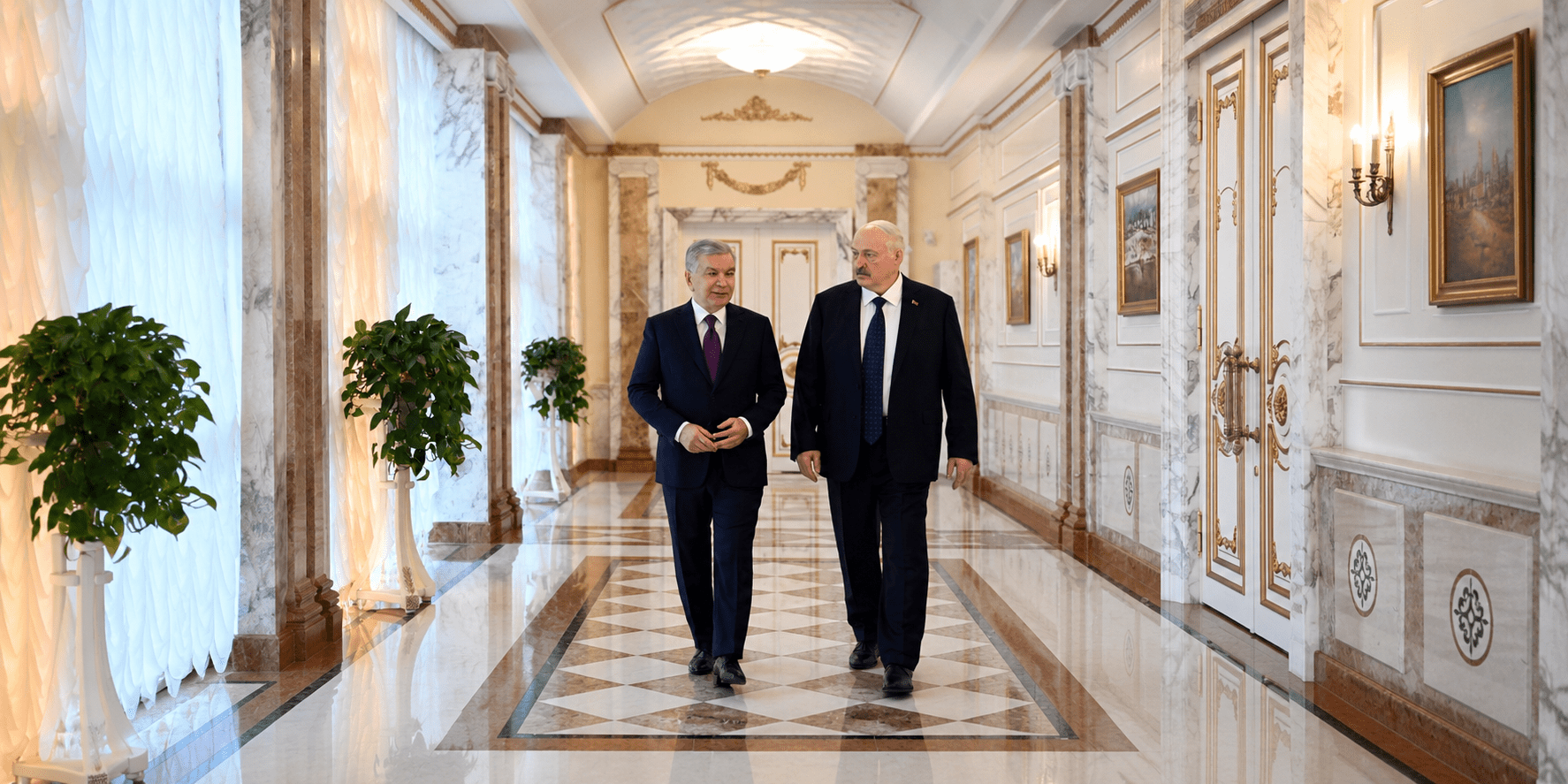
According to the Uzbek presidential press service, Mirziyoyev visited Minsk on July 8-9 at the invitation of Belarusian President Alexander Lukashenko. He was welcomed with an official ceremony at the Palace of Independence before the two leaders held both one-on-one and expanded talks with their delegations.
The visit marked a notable milestone in a relationship that has expanded steadily in recent years. Diplomatic relations between Uzbekistan and Belarus were established on January 21, 1993, but Uzbekistan opened its first embassy in Minsk only in March 2018. Before that, the Uzbek Embassy in Russia also covered Belarus.
The relationship is developing while Belarus remains under extensive European Union sanctions over human rights abuses and its support for Russia’s war against Ukraine.
Speaking after the talks, Mirziyoyev said the visit had become “a historic event in the development of Uzbek-Belarusian relations.” He said the newly signed declaration “marks the beginning of a new chapter in strengthening interstate cooperation” and demonstrates both countries’ commitment to long-term partnership.
The leaders highlighted the rapid growth in economic ties. According to the Uzbek side, bilateral trade has nearly tripled over the past five years and approached $1 billion by the end of 2025, while trade during the first months of 2026 rose by another 30%.
Official figures differ according to methodology. The Uzbek side said bilateral trade approached $1 billion in 2025, while Belarusian trade figures put goods trade at almost $855 million and services at $207.9 million. Belarusian state news agency BelTA also said around 230 enterprises with Belarusian capital are registered in Uzbekistan and that Belarus had a positive trade balance of more than $517 million.
Both presidents said the target of $2 billion in annual trade is achievable by 2030.
To support that goal, the two governments adopted a 2026-2030 action plan covering trade, economic, social, and humanitarian cooperation. The plan includes measures to expand collaboration in agriculture, mechanical engineering, pharmaceuticals, electrical engineering, microelectronics, textiles, furniture production, and other manufacturing sectors.
One of the most significant areas discussed was nuclear energy. The Uzbek presidential press service said the parties agreed to draw on Belarusian experience in the construction of Uzbekistan’s first nuclear power plant and related infrastructure. Belarus operates the Russian-financed Ostrovets plant, whose two VVER-1200 units were built by Atomstroyexport. Uzbekistan’s own project is being developed with Russia’s Rosatom and is planned to combine two VVER-1000 reactors with two smaller RITM-200N units.
Political analyst Mukhtor Nazirov said the declaration represented a qualitative change and could create opportunities for investment, technology transfer, and industrial cooperation. He described nuclear cooperation as “one of the most important components of the strategic partnership,” arguing that it required a particularly high level of trust.
Labor migration also emerged as a major theme. During the talks, Lukashenko invited Uzbek citizens, especially families, to move to Belarus to live and work, citing the country’s labor shortage. He said agricultural employers could provide housing and that incoming families would have access to education and healthcare on the same terms as Belarusians.
The two governments signed an agreement on the organized recruitment and employment of Uzbek citizens for temporary work in Belarus. The formal mechanism provides for Uzbekistan’s Migration Agency to select candidates, coordinate draft employment contracts, and provide pre-departure orientation. Belarusian employers will approve candidates, obtain permits where needed, and sign employment contracts.
Beyond economics and labor, the visit produced a large package of additional agreements. These included programs for cooperation between the foreign ministries, culture ministries, emergency services, and tourism authorities; a roadmap for cooperation in the agro-industrial sector; agreements on forestry and light industry; and memorandums covering social protection, finance, scientific research, and strategic studies.
The parties also agreed to organize joint tourism, medical, and education forums later this year and to continue expanding exchanges in culture, healthcare, and education. Mirziyoyev thanked Lukashenko for the initiative to create an Alley of Uzbek-Belarusian Friendship in Minsk.
Regional cooperation was another focus. The leaders praised the results of the third Forum of Regions of Uzbekistan and Belarus, held in Minsk on the eve of the summit, which brought together around 230 Uzbek entrepreneurs and produced a substantial package of trade contracts and investment agreements.
On the international stage, both countries reaffirmed their intention to support one another within organizations including the United Nations, the Commonwealth of Independent States, the Shanghai Cooperation Organization, and the Non-Aligned Movement.
At the conclusion of the talks, Mirziyoyev invited Lukashenko to pay an official visit to Uzbekistan. Both sides expressed their confidence that the agreements signed during the summit would deepen the strategic partnership and support the long-term development of both countries.