• KZT/USD = 0.00213
  • TJS/USD = 0.10800
  • UZS/USD = 0.00008
  • TMT/USD = 0.29850
  • KZT/USD = 0.00213
  • TJS/USD = 0.10800
  • UZS/USD = 0.00008
  • TMT/USD = 0.29850
  • KZT/USD = 0.00213
  • TJS/USD = 0.10800
  • UZS/USD = 0.00008
  • TMT/USD = 0.29850
  • KZT/USD = 0.00213
  • TJS/USD = 0.10800
  • UZS/USD = 0.00008
  • TMT/USD = 0.29850
  • KZT/USD = 0.00213
  • TJS/USD = 0.10800
  • UZS/USD = 0.00008
  • TMT/USD = 0.29850
  • KZT/USD = 0.00213
  • TJS/USD = 0.10800
  • UZS/USD = 0.00008
  • TMT/USD = 0.29850
  • KZT/USD = 0.00213
  • TJS/USD = 0.10800
  • UZS/USD = 0.00008
  • TMT/USD = 0.29850
  • KZT/USD = 0.00213
  • TJS/USD = 0.10800
  • UZS/USD = 0.00008
  • TMT/USD = 0.29850

Viewing results 43 - 48 of 834

Opinion: Hormuz Crisis Pushes Afghanistan Aid Routes Toward Central Asia

The crisis surrounding the Strait of Hormuz is usually viewed through the lens of energy security or military escalation. But it also has another, less visible, humanitarian dimension. A recent article in The Guardian, “Calls for humanitarian corridor through Strait of Hormuz as Iran war hits vital aid,” points to a critical shift: because of the conflict involving the United States, Israel, and Iran, along with instability around Hormuz, traditional humanitarian supply routes are beginning to break down. For Afghanistan, this is no longer a theoretical concern but an operational reality. According to the World Food Programme (WFP), cited by The Guardian, the cost of delivering food to Afghanistan has tripled. Cargo that previously moved by sea through Hormuz and onward to Pakistani ports must now travel overland across multiple countries, adding weeks to delivery times. The consequences are felt most acutely by vulnerable populations, particularly children. Predictability is one of the core requirements of any humanitarian system, and that predictability is now disappearing. Some shipments are stranded in regional hubs. Routes are constantly changing. Fuel costs continue to rise. Even modest increases in oil prices significantly raise operational expenses for humanitarian agencies. For Afghanistan, the implications are severe. The country has been in a prolonged food crisis for several years, with millions dependent on external aid. Delays of even one or two weeks can directly affect malnutrition and mortality rates. According to United Nations estimates, around 3.7 million Afghan children are currently suffering from wasting, nearly one million of them from severe wasting, a condition associated with sharply elevated mortality risks. UNICEF estimates that in 2026 alone, 1.304 million children aged 6-59 months will require treatment for acute malnutrition, including severe cases and other high-risk groups. Another 1.2 million pregnant and breastfeeding women are also suffering from acute malnutrition. Under these conditions, even temporary disruptions in aid deliveries become a direct threat to human life. The situation is being compounded by several overlapping factors. First, instability around the Strait of Hormuz has made maritime routes both more expensive and riskier. Second, the Pakistani corridor, previously the main overland route, has become unreliable, as repeated border closures and restrictions have tied humanitarian deliveries to the fluctuating political and security relationship between Kabul and Islamabad. Third, Iran has imposed restrictions on food exports and has itself become part of the conflict zone, undermining its role as both a supplier and transit route for Afghanistan. Together, these developments are creating what can be described as a “triple crisis” for humanitarian logistics into Afghanistan. The previous aid delivery system is effectively ceasing to function. In response, the WFP is restructuring its logistics network. One solution has been increased use of the Lapis Lazuli Corridor: Turkey-Georgia-Azerbaijan via the Caspian Sea-Turkmenistan and Afghanistan. Although this route is longer and more expensive, it offers predictability and an alternative to disrupted maritime pathways. The key issue is no longer which route is cheapest, but which is reliable. This shift places Central Asia increasingly at the center of...

European Summit in Yerevan Sends a Signal to Central Asia

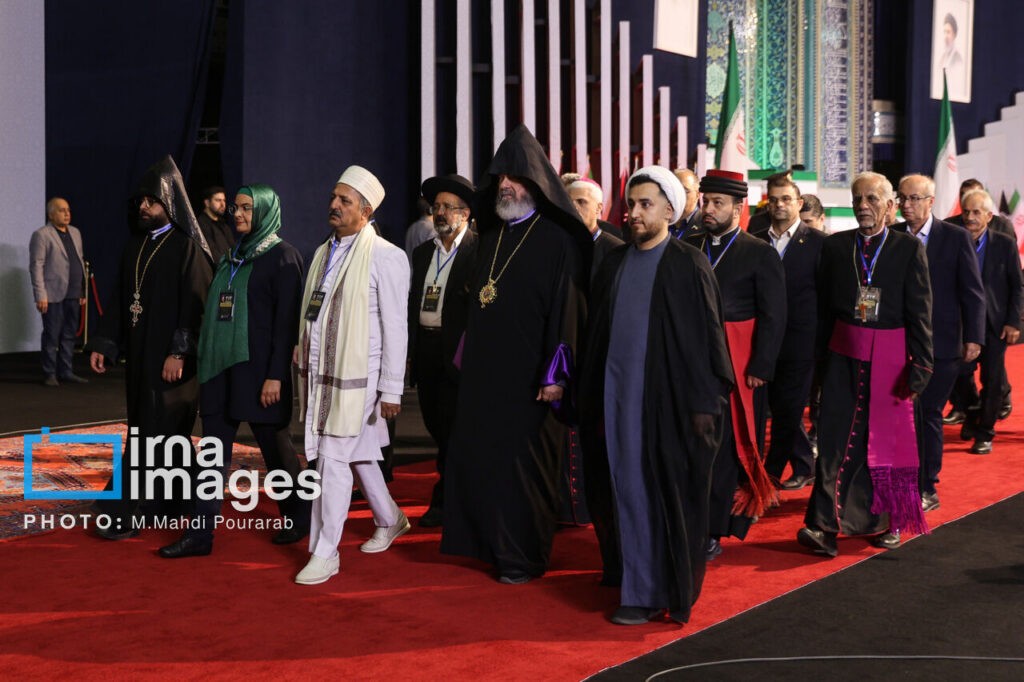
The 8th European Political Community summit in Yerevan highlighted deepening geopolitical fault lines while signaling that some post-Soviet countries, notably Azerbaijan and Armenia, are gradually shifting their geopolitical orientation away from Moscow. It is a realignment that Central Asian states are watching with increasing interest. On May 4, attention across post-Soviet space, from Russia and Belarus to Central Asia and the South Caucasus, turned toward Yerevan. Armenia, still a member of the Commonwealth of Independent States and the Eurasian Economic Union and formally tied to the Collective Security Treaty Organization despite freezing its participation, hosted Europe’s political leadership. Among those attending were French President Emmanuel Macron, NATO Secretary General Mark Rutte, European Commission President Ursula von der Leyen, European Council President António Costa, and prime ministers including Donald Tusk, Keir Starmer, and Petteri Orpo. Azerbaijani President Ilham Aliyev participated via video link. No Central Asian leaders attended the summit. Even so, the gathering carried a message for the region. Armenia hosted Europe’s political leadership while remaining tied to Moscow-led structures, including the CIS and the Eurasian Economic Union. For Central Asian governments pursuing their own multi-vector policies, the summit showed how a post-Soviet state can widen its diplomatic options without a clean break from Russia. The parallel is not exact, but it is visible. Kazakhstan and Kyrgyzstan remain in the Eurasian Economic Union, while Kazakhstan, Kyrgyzstan, and Tajikistan remain in the CSTO. All five Central Asian states maintain working ties with Moscow, while expanding contacts with the EU, Turkey, China, and the Gulf, part of a wider effort to diversify foreign policy options through closer engagement with Europe and other outside powers. Turkey was represented by Vice President Cevdet Yılmaz, the highest-level Turkish official to visit Armenia since then-President Abdullah Gül in 2008. Turkey and Azerbaijan largely positioned themselves as counterweights to the dominant European framing, marking one of the summit’s key geopolitical divides. Aliyev adopted a confrontational tone, announcing a suspension of relations with the Parliamentary Assembly of the Council of Europe and the European Parliament. “Instead of addressing fundamental problems of some member states, such as xenophobia, Islamophobia, antisemitism, migration, competitiveness, and homelessness, the European Parliament targets Azerbaijan, spreading slander and lies,” Aliyev said. “And the reason is that Azerbaijan restored its territorial integrity and sovereignty, put an end to separatism, and brought war criminals to justice.” In response, António Costa sought to soften tensions, emphasizing the summit’s historical significance as the first of its kind held in the South Caucasus and highlighting Aliyev’s participation as a symbol of peace efforts in the region. Cevdet Yilmaz focused on bilateral diplomacy, meeting Romanian President Nicușor Dan to discuss trade, regional issues, and global challenges. He also held talks with Armenian Prime Minister Nikol Pashinyan, the summit’s host. The two sides signed a memorandum of understanding on the joint restoration of the historic Ani Bridge, located on the border between the two countries and dating back to the 11th century. Yilmaz suggested that Armenia would benefit from closer alignment with Turkey...

Austria to Use Uzbekistan as Transit Route for Afghan Deportations Under New Agreement

Austria’s Foreign Minister Beate Meinl-Reisinger and Interior Minister Gerhard Karner are expected to visit Uzbekistan on May 7 to sign a mobility agreement aimed at strengthening cooperation on migration, according to Die Presse. The agreement is intended to improve coordination between the two countries, particularly on deportations and the return of migrants. Austrian officials say it will create a more structured framework for handling individuals required to leave the country. A key provision involves the use of Uzbekistan as a transit route for deportations to Afghanistan. Afghan nationals facing removal from Austria could be escorted through Uzbekistan to Kabul. Until now, deportations to Afghanistan have largely taken place via Istanbul, meaning the new arrangement would open what officials describe as a “second route.” Karner said the deal would establish “the conditions for the consistent implementation of deportations as part of a firm and fair asylum policy.” The agreement also covers the readmission of nationals, third-country citizens, and stateless individuals who entered the European Union through Uzbekistan. In return, the document includes provisions to support legal migration from Uzbekistan to Austria. Despite its growing economy, Uzbekistan is heavily reliant on remittances from abroad, with Uzbek migrants sending home $4.8 billion in Q2 of 2025. Over the past few years, Tashkent has been seeking out alternative destinations than traditional routes dominated by Russia. To that effect, both Uzbekistan and Austria have committed to promoting “safe, orderly, and regular mobility of qualified workers” in line with national legislation. Austrian authorities note that Uzbek professionals already have multiple pathways to access the country’s labor market. The agreement does not provide for the establishment of return centers for rejected asylum seekers, an idea Austria has been pursuing with several EU partners, including Germany, Greece, the Netherlands, and Denmark. The visit to Uzbekistan is part of a broader regional trip that will also include Kazakhstan, which Austrian officials consider an important partner, particularly in the energy sector. The planned agreement comes amid continued migration pressures linked to Afghanistan’s humanitarian situation. According to the United Nations Development Programme, in 2024 around 85% of Afghanistan’s population was living on less than $1 a day. In June 2025, the World Food Programme reported that approximately 15 million people in the country were facing severe hunger. At the same time, large-scale deportations from neighboring countries have added to the strain. In July last year, Tajikistan launched a campaign to detain and deport Afghan refugees, giving them 15 days to leave the country.

Uzbekistan and Afghanistan Plan Joint Hospital Project in Mazar-i-Sharif

Uzbekistan and Afghanistan have agreed to build a hospital in the Afghan city of Mazar-i-Sharif under a public-private partnership, Uzbekistan’s Ministry of Health said. The agreement was reached during a visit by an Uzbek delegation led by Health Minister Asilbek Khudayarov to Afghanistan, where talks were held with Afghan Health Minister Mawlawi Noor Jalal, Balkh regional governor Mohammad Yusuf Wafa, and other officials. According to the ministry, the Afghan side highlighted the need to expand cooperation in healthcare, noting that many districts in the country still lack hospitals. Officials also pointed to a rise in cancer cases in recent years and requested Uzbekistan’s support in building a medical facility in Mazar-i-Sharif, training specialists, and simplifying procedures for Afghan patients seeking treatment in Uzbekistan. Wafa expressed appreciation for Uzbekistan’s continued support, particularly during difficult periods such as natural disasters, and emphasized the importance of strengthening humanitarian ties between the two countries. During the visit, the Uzbek delegation also toured healthcare facilities in Balkh province, including a district clinic in Dehdadi and the Abu Ali Ibn Sina Central Hospital in Mazar-i-Sharif, where they met with medical staff and reviewed current conditions. As a result of the talks, the parties agreed to establish a joint working group to develop proposals for supporting Afghanistan’s public healthcare system. Plans were also outlined to organize reciprocal visits by Afghan medical delegations to Uzbekistan. The sides discussed launching training programs that would allow up to 100 Afghan specialists each year to improve their qualifications at Uzbekistan’s specialized medical centers. In addition, the possibility of allocating annual scholarships for up to 50 Afghan students to study at Uzbek medical universities was considered. The Uzbek side also agreed to explore simplifying the issuance of medical visas for Afghan patients and easing procedures for the supply and registration of pharmaceuticals produced in Uzbekistan, which Afghan officials said are in strong demand in the local market. A key outcome of the visit was the agreement to construct a hospital in Mazar-i-Sharif in cooperation with Arman Group. Under the arrangement, the Afghan side will invest in the project, adapt an existing building for medical use, and procure modern equipment, while Uzbekistan will provide qualified medical personnel. The Times of Central Asia previously reported that in March, Uzbekistan and Afghanistan established a joint Business Council aimed at strengthening trade and economic ties, bringing together representatives from both countries’ business communities and institutions. The new healthcare agreement reflects a broader trend toward expanding cooperation between the two neighbors.

Belousov’s Bishkek Warning: Russia Uses SCO Meeting to Target Outside Influence in Central Asia

The April 28 meeting of defense ministers from the member states of the Shanghai Cooperation Organization (SCO), held in Kyrgyzstan’s capital, Bishkek, received relatively modest coverage in Central Asia and China. Russia’s Ministry of Defense, however, used the routine gathering to send a sharper message: Moscow remains opposed to any non-regional military presence in Central Asia. According to the SCO Secretariat, the meeting was attended by defense ministers from member states, the organization’s Secretary-General, and the director of the Executive Committee of the SCO’s Regional Anti-Terrorist Structure. “During the meeting, the parties held a substantive exchange of views on pressing regional and international security issues, noting persistent challenges and threats, including international terrorism, extremism, transnational crime, as well as emerging risks in information and cybersecurity,” the SCO said in a general statement. The statement also emphasized the need to strengthen trust between the armed forces of member states, expand practical cooperation, conduct joint exercises, exchange experience, and develop mechanisms for military cooperation within the SCO. China’s Defense Minister Dong Jun used similar institutional language. According to Xinhua, Dong said the SCO should uphold the international order, improve security governance, and “eliminate the sources of turmoil and conflict through shared development.” He also called for deeper defense and security cooperation among member states. Kazakhstan’s Defense Minister Dauren Kosanov presented a report on the country’s approach to strengthening regional security, developing cooperation within the SCO, and improving joint responses to contemporary challenges, according to Kazakhstan’s Ministry of Defense. The ministry said participants also discussed the expansion of practical cooperation between defense agencies and approved a cooperation plan for SCO defense ministries for 2027. Defense ministers from Uzbekistan and Kyrgyzstan also held bilateral talks on the sidelines of the meeting, discussing military-technical cooperation, joint training, experience-sharing among officers, and initiatives aimed at strengthening regional security. Uzbek media described the talks as being held in a constructive and friendly atmosphere. Russian Defense Minister Andrei Belousov adopted a markedly different tone. His remarks were not limited to general SCO language about counterterrorism or cyber threats. They directly targeted the possible presence of outside powers in Central Asia. “We are closely monitoring attempts by non-regional states to establish a military presence and address logistical tasks in Central Asia. We consider this unacceptable,” Belousov said, according to RIA Novosti. Belousov also expressed concern about Syria, Lebanon, Afghanistan, and the humanitarian crisis in Gaza, warning that militants from crisis zones could infiltrate neighboring countries, including the SCO space. Belousov further argued that U.S. activity in the Asia-Pacific region was having a destabilizing effect. “Their efforts to reshape the regional security system into a U.S.-centric model by strengthening military-political structures under Washington’s control provoke tensions, undermine regional stability, and increase the risks of armed conflict,” he said. The contrast was striking. The SCO Secretariat spoke in broad terms about common threats and institutional cooperation. China emphasized development, governance, and multilateral stability. Russia used the same setting to issue a direct warning over Central Asia. Iran added another layer to...

UN ESCAP Asia and Pacific Digital Solutions Centre for Sustainable Development Established in Kazakhstan

During the 82nd session of the United Nations Economic and Social Commission for Asia and the Pacific (ESCAP), held in Bangkok last week, all 52 member states adopted a resolution establishing the UN ESCAP Asia and Pacific Digital Solutions Centre for Sustainable Development in Almaty. This has been reported by Kazakhstan’s Ministry of Digital Development. The new center will become ESCAP’s sixth regional institution, alongside existing specialized centers in Japan, China, South Korea, India, and Iran. The Almaty-based center is expected to have a capacity of up to 130 staff, and be located in the UN Plaza building. The government of Kazakhstan will cover the institution’s operational and administrative costs for five years, with funding of up to $15 million. It will operate as a neutral international platform under the auspices of the United Nations, aimed at identifying and disseminating best digital solutions from across the Asia-Pacific region, particularly in public and social services. As noted by Margulan Baimukhan, Kazakhstan’s Permanent Representative to ESCAP, the adoption of the resolution marks the conclusion of a multilateral negotiation process that lasted more than five years. The center is expected to contribute to bridging the digital divide across the region, with a particular focus on supporting least developed countries, landlocked countries, and small island developing states. In the context of rapid digital transformation, emphasis will be placed on developing inclusive mechanisms for the exchange of technologies and expertise, enabling countries to design solutions tailored to national contexts and ensuring equitable access to the benefits of digitalization. For Kazakhstan, the establishment of the center is expected to create additional opportunities to attract advanced digital technologies, international expertise, and highly qualified professionals. Strengthening Almaty’s role as a regional hub under the auspices of the United Nations is also expected to enhance international cooperation, promote partnerships with leading technology companies and development institutions, and reinforce the country’s position as a provider of digital solutions across the Asia-Pacific region. The initiative may also support Kazakhstan’s export potential in IT services and the promotion of domestic digital solutions in international markets.