• KZT/USD = 0.00226
  • TJS/USD = 0.10830
  • UZS/USD = 0.00009
  • TMT/USD = 0.29760
  • KZT/USD = 0.00226
  • TJS/USD = 0.10830
  • UZS/USD = 0.00009
  • TMT/USD = 0.29760
  • KZT/USD = 0.00226
  • TJS/USD = 0.10830
  • UZS/USD = 0.00009
  • TMT/USD = 0.29760
  • KZT/USD = 0.00226
  • TJS/USD = 0.10830
  • UZS/USD = 0.00009
  • TMT/USD = 0.29760
  • KZT/USD = 0.00226
  • TJS/USD = 0.10830
  • UZS/USD = 0.00009
  • TMT/USD = 0.29760
  • KZT/USD = 0.00226
  • TJS/USD = 0.10830
  • UZS/USD = 0.00009
  • TMT/USD = 0.29760
  • KZT/USD = 0.00226
  • TJS/USD = 0.10830
  • UZS/USD = 0.00009
  • TMT/USD = 0.29760
  • KZT/USD = 0.00226
  • TJS/USD = 0.10830
  • UZS/USD = 0.00009
  • TMT/USD = 0.29760
25 September 2026

Our People > Aidar Borangaziyev

Aidar Borangaziyev's Avatar

Contributor

Articles

Hormuz Crisis: Transit Routes Through Afghanistan, Pakistan Would Be an Opportunity for Central Asia

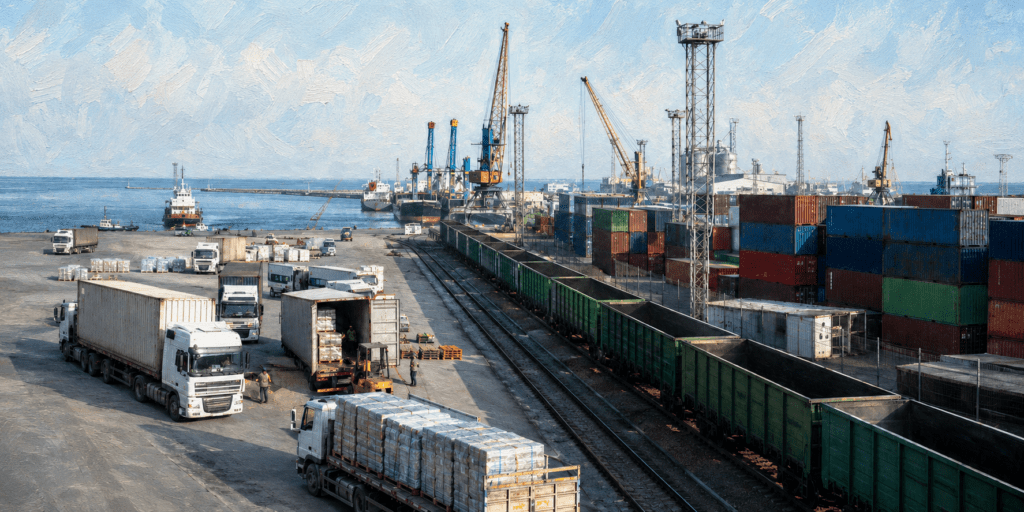
The Strait of Hormuz has long been regarded as a central artery of global energy trade. A substantial share of oil and gas exports moves through this corridor, and regional crises are often framed in terms of energy security. For Central Asia, however, current tensions carry broader implications. They may increase demand for alternative food supply chains and transit routes linking the region to the Arabian Sea and Gulf markets. Recent tensions involving Iran also point to the strait’s growing role in food logistics. For Gulf states, Hormuz remains an energy chokepoint and a vital route for essential goods. For Central Asian policymakers, this shift matters. Any prolonged disruption could raise the region’s importance as both a supplier of agricultural commodities and a transit hub. Member states of the Gulf Cooperation Council (GCC) are among the world’s most import-dependent food markets. According to Reuters, between 80% and 90% of food consumed in GCC countries is imported. This reliance creates external demand that could increasingly draw Central Asia into Gulf food security planning. At the same time, the geography of these supplies remains relatively concentrated. Analysts estimate that more than 70% of the region’s food imports transit the Strait of Hormuz. This pattern could heighten interest in Central Asia as a source of food exports and a transit route. Amid ongoing regional tensions, this dependence has attracted growing attention from experts. Reuters described recent developments as “the greatest test of the Gulf countries’ food strategy since the 2008 global food crisis.” In recent years, regional governments have sought to diversify suppliers and build strategic reserves. Analysts nevertheless warn that stockpiles and diversification measures may provide only limited protection. If disruptions persist, logistical constraints could drive up prices and extend delivery times. This would create both a market shock and new commercial opportunities in Central Asia. Under such conditions, GCC food security depends on access to global markets as well as the resilience of transport routes. This is where Gulf vulnerabilities begin to intersect more directly with Central Asia’s economic geography. The infrastructure of major regional ports plays a central role in this system. One of the key logistics hubs is Jebel Ali Port in Dubai, the largest container port in the Middle East and a major re-export center. A substantial share of food shipments destined for GCC states and neighboring markets passes through this facility. Estimates suggest that disruptions at major logistics hubs such as Jebel Ali could affect supply chains on which tens of millions of people depend. This concentration of logistics flows increases the region’s strategic exposure to maritime instability. For Central Asian economies, this raises the strategic value of diversified overland and multimodal routes. Food security concerns are also linked to agricultural inputs. Industry analyses suggest that roughly 25–30% of global nitrogen fertilizer exports transit the Strait of Hormuz, including about 31% of global urea trade. During the initial weeks of heightened tensions, urea prices in Middle Eastern markets reportedly rose by about $70–80 per ton, from roughly...

6 months ago

Threats to Regional Security: Why Escalation Around Iran Matters for Central Asia

For Central Asia, the central question is not simply whether a wider conflict involving Iran would destabilize the Middle East, but how that instability could spill north into a region that has repeatedly absorbed the consequences of crises to its south. Central Asian states have seen before how militant infiltration, narcotics trafficking, and extremist mobilization can intensify when neighboring wars weaken state control and create more permissive transit corridors. History gives Central Asia specific reasons to take that risk seriously. During the Tajik civil war and its aftermath, the Tajik-Afghan border became a frontline against crossings by Afghan militants and narcotics traffickers. In 1999 and 2000, fighters from the Islamic Movement of Uzbekistan, or IMU, carried out the Batken incursions  into southern Kyrgyzstan, took hostages, and demonstrated how quickly insecurity from the Afghan theater could penetrate Central Asia. At the same time, Afghan opiates moved north through the Northern Route, tying militancy, organized crime, and border insecurity into a single regional problem. Afghanistan remains the most important precedent, but the comparison with Iran must be made carefully. After the fall of Najibullah in 1992, Afghanistan fragmented into competing militias and warlord zones. The Taliban later emerged from that disorder, and the Afghan state collapsed again when the Taliban captured Kabul and returned to power in 2021. Iran is structurally different. It has a centralized state, a denser security apparatus, and the Islamic Revolutionary Guard Corps, or IRGC, which is deeply embedded in regime security and domestic politics. For that reason, the most plausible risk is not an immediate Afghanistan-style collapse, but a slower weakening of control in peripheral regions that could open space for armed groups, trafficking networks, and extremist recruiters. Those peripheral regions matter because Iran’s borderlands already contain armed actors with their own agendas. In the northwest, PJAK remains part of the Kurdish militant landscape. In the southeast, Jaysh al-Adl operates in Sistan-Baluchistan and adjoining border areas. Their capabilities should not be exaggerated, and they do not represent entire Kurdish or Baloch populations. But in a period of prolonged instability, such groups could exploit weaker local control, greater arms circulation, and more permissive smuggling corridors. For Central Asia, however, the greatest concern is the interaction between any Iranian crisis and the threat environment centered on Afghanistan. United Nations reporting in 2025 assessed ISIL-K as the predominant extra-regional terrorist threat, and the U.S. National Counterterrorism Center says ISIS-K has carried out attacks in Afghanistan, Iran, Pakistan, and Russia while using media to recruit new members and advance a vision of “Khorasan” that explicitly includes parts of Central Asia and Iran. In other words, Central Asia already faces a live extremist ecosystem to its south; wider instability involving Iran could amplify that pressure rather than replace it. This is why Central Asia should not be seen as a passive observer. The region sits at the junction of security corridors linking Afghanistan, Iran, the Caspian basin, and Russia. A wider conflict involving Iran could intensify trafficking through existing routes, strain border...

6 months ago

Opinion: Islamic State Khorasan Province and the Strategic Risks for Central Asia

In modern Eurasia, threats are increasingly becoming part of the strategic environment. At times, they even turn into political instruments. When discussing terrorism, analysis usually focuses on the level of danger it poses. Far less attention is given to whether such threats are assumed to be manageable. The problem lies not only in the existence of radical groups, but also in the illusion that they can be controlled or used to serve someone’s strategic interests. Iranian analyst Nozar Shafiee, writing for the Tehran-based Institute for East Strategic Studies, describes ISKP as a decentralized and transnational network that can continue operating even after losing territorial control. This perspective is rarely discussed in public analysis of the region, which is precisely why it deserves attention. Islamic State Khorasan Province (ISKP), the Afghan branch of the Islamic State group operating in Afghanistan and Pakistan, with demonstrated intent for external operations, has long ceased to depend on localized footholds. Even after losing territorial control, the organization did not disappear. Instead, it transformed. Today, it functions as a flexible network of small cells. It no longer needs to control a city or province to remain dangerous. It relies on the internet for recruitment and propaganda, operates through autonomous groups, and conducts high-profile attacks designed to attract attention and create an atmosphere of instability. However, there is another aspect that receives far less attention. In the context of regional competition, there is sometimes a temptation to view such structures as potential proxy forces, instruments of pressure that could theoretically be restrained or directed in a desired direction. The logic is simple: as long as the threat is not directed at us, it can be treated as part of a broader geopolitical game. History, however, demonstrates that this is a dangerous illusion. Radical networks do not function as controllable instruments. They operate according to their own logic and eventually move beyond the limits within which they were meant to be contained. There are numerous historical examples in which support for radical groups as a temporary strategic tool has “backfired.” Organizations created or supported for tactical purposes eventually began acting autonomously and turned their weapons against their former patrons. As Western analysts often note, supporting proxies who do not share your ideological legitimacy inevitably carries the risk that they will eventually turn against you. This represents a key risk for neighboring regions. Unlike traditional conflicts, networked extremist structures are not confined to a single territory. Their influence spreads through digital platforms, ideological narratives, and transnational connections. Even if attempts to instrumentalize such groups occur far from the region’s borders, the consequences can still affect it directly. This discussion is particularly relevant for Central Asia. First, modern terrorism no longer depends on physically crossing borders. In the mid-2010s, several thousand individuals from Central Asian countries became involved in conflicts in Syria and Iraq. Recruitment did not take place primarily through physical training camps but through online networks. Geographic distance offered little protection. Second, ISKP propaganda materials are distributed in Central...

7 months ago

Coordination Instead of Declarations: Astana Hosts Meeting of Regional Contact Group on Afghanistan

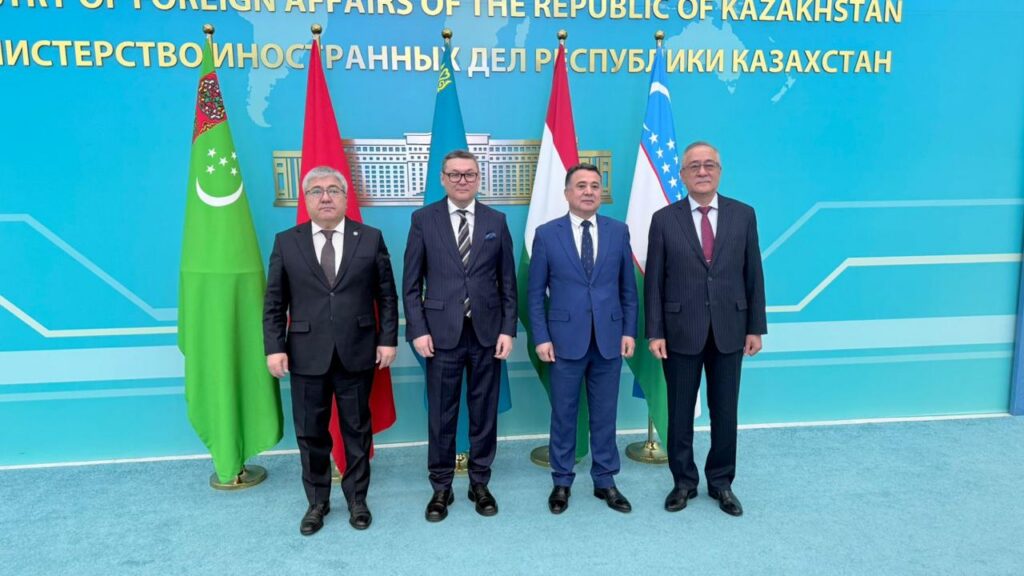
On Monday, Astana hosted an extraordinary meeting of the Regional Contact Group of Special Representatives of Central Asian Countries on Afghanistan, with delegations from Kazakhstan, Kyrgyzstan, Tajikistan, and Uzbekistan in attendance. The agenda focused on trade and economic cooperation with Afghanistan, including joint projects, investment protection, transit tariff policy, and the development of transport corridors through Afghan territory. The establishment of the group represents the practical implementation of agreements reached at the Sixth Consultative Meeting of the Heads of State of Central Asia, held in Astana in August 2024, and reflected in the Roadmap for Regional Cooperation for 2025-2027. The first meeting of the Contact Group took place on August 26 last year in Tashkent. As noted by Erkin Tukumov, Special Representative of the President of Kazakhstan for Afghanistan, Astana is interested in a constructive exchange of views and in identifying practical solutions to pressing issues of cooperation with Afghanistan. In recent years, Kazakhstan has consistently kept Afghanistan among its foreign policy priorities, avoiding rhetorical declarations in favor of a measured and systematic approach. President Kassym-Jomart Tokayev has paid particular attention to Afghanistan since the change of power in Kabul in 2021. In the first weeks after the Taliban assumed control, Astana began articulating its position on international platforms. One of the key statements was Tokayev’s address at the Shanghai Cooperation Organisation summit in Dushanbe on September 17, 2021. He advanced a thesis that has since been reiterated in various formats: Afghanistan should be viewed not only as a source of risk but also as a potential driver of regional development, provided that stability and economic recovery are achieved. This position was further elaborated days later at the United Nations General Assembly. At that time, Kazakhstan was among the first to emphasize the need for inclusiveness in Afghanistan’s future political system, not as an abstract requirement, but as a practical condition for stability. Another significant step was the creation last year of the post of Special Representative of the President for Afghanistan, to which Tukumov was appointed. This role goes beyond that of an interdepartmental coordinator: as a direct representative of the head of state, it elevates the Afghan portfolio to the level of strategic priority. The establishment of such a position signals a transition from a situational response to a more systematic policy. The Astana meeting confirmed the intention of regional countries to deepen cooperation through a regular platform capable of coordinating actions and presenting them externally in a consolidated manner. Some external observers suggest that Central Asian countries are only now beginning to develop a common position on Afghanistan. However, that position has largely taken shape in recent years. The current task is not to formulate it, but to coordinate it more precisely. The meeting in Astana demonstrated that, for Central Asian countries, the primary concern is not the nature of the regime in Kabul, but Afghanistan’s capacity to function as a predictable economic partner and responsible participant in international relations. For the region, it is essential that...

7 months ago

Opinion: Afghanistan and Central Asia – Security Without Illusions

Over the past year, Afghanistan has become neither markedly more stable nor dramatically more dangerous, despite how it is often portrayed in public discourse. There has been neither the collapse that many feared, nor the breakthrough that some had hoped for. Instead, a relatively unchanged but fragile status quo has persisted, one that Central Asian countries confront daily. For the C5 countries, Afghanistan is increasingly less a topic of speculative discussion and more a persistent factor in their immediate reality. It is no longer just an object of foreign policy, but a constant variable impacting security, trade, humanitarian issues, and regional stability. As such, many of last year’s forecasts have become outdated, based as they were on assumptions of dramatic change, whereas the reality has proven far more inertial. Illusion #1: Afghanistan Can Be Ignored The belief that Afghanistan can be temporarily “put on the back burner” is rooted in the assumption that a lack of public dialogue or political statements equates to a lack of interaction. But the actions of Central Asian states show that ignoring Afghanistan is not a viable option, even when countries intentionally avoid politicizing relations. Turkmenistan offers a clear example. Ashgabat has maintained stable trade, economic, and infrastructure ties with Afghanistan for years, all with minimal foreign policy rhetoric. Energy supplies, cross-border trade, and logistical cooperation have continued despite political and financial constraints, and regardless of international debates over the legitimacy of the Afghan authorities. This quiet pragmatism stands in contrast to both isolationist strategies and symbolic or ideological engagement. Turkmenistan may avoid making public declarations about its relationship with Afghanistan, but it nonetheless maintains robust cooperation. This calculated calmness reduces risks without signaling disengagement. Importantly, this approach does not eliminate structural asymmetries or deeper vulnerabilities. But it dispels the illusion that distancing reduces risk. On the contrary, sustained economic and logistical ties foster predictability, without which attempts to “ignore” a neighboring country become a form of strategic blindness. In this sense, Turkmenistan’s experience affirms a broader regional truth: Afghanistan cannot be removed from Central Asia’s geopolitical equation by simply looking away. It must be engaged pragmatically or dealt with later, in potentially more destabilizing forms. Illusion #2: Security Is Achieved Through Isolation Closely related to the first is the illusion that security can be ensured by building walls. Security in Afghanistan, and in the broader Afghan-Pakistani zone, is often seen as an external issue, something that can be kept out by sealing borders or minimizing engagement. Yet in practice, security is determined less by geography and more by the nature of involvement. This is reflected in the recent decision by Uzbekistan and Kazakhstan to participate in U.S. President Donald Trump's “Board of Peace” initiative. While the initiative focuses on resolving crises outside Central Asia, both countries have framed their participation as essential to their own national and regional security interests. As Abdulaziz Kamilov, advisor to the President of Uzbekistan, explained, Tashkent’s involvement stems from three factors: its own security needs, its foreign policy principles,...

8 months ago

Opinion – Qosh Tepa Canal: Transboundary Impacts Without a Transboundary Mechanism

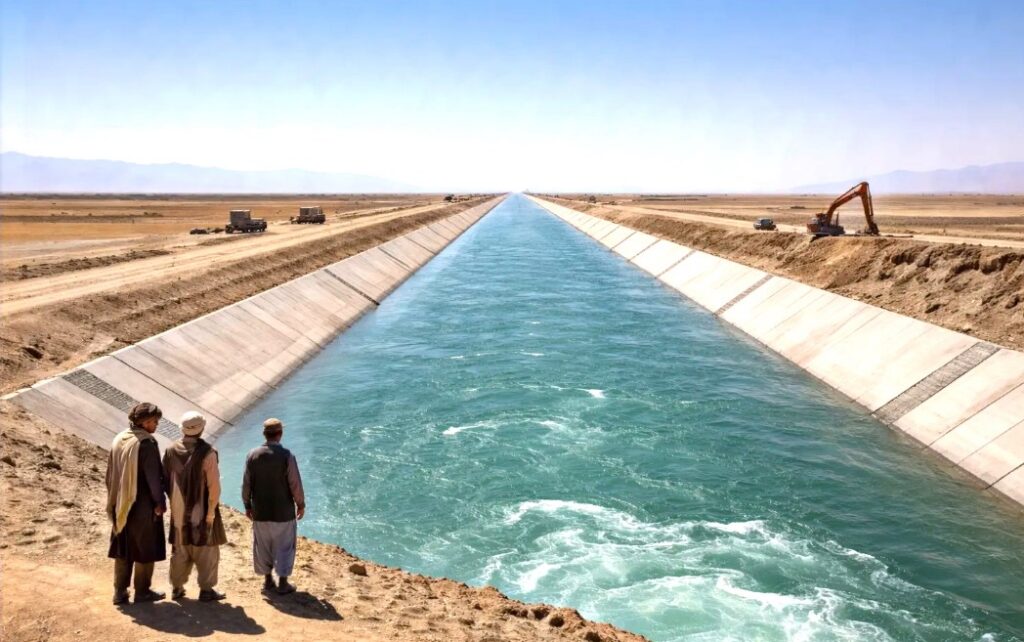
In recent months, media attention has increasingly focused on infrastructure projects underway in Afghanistan. Chief among them is the Qosh Tepa Canal, widely seen not only as an irrigation initiative but as a development with significant transboundary implications for the Amu Darya River basin. The canal draws water from one of Central Asia’s most critical transboundary rivers. For downstream countries, primarily Uzbekistan and Turkmenistan, the Amu Darya is a vital water source, directly linked to agricultural output and the sustainability of rural communities. As such, the conversation surrounding Qosh Tepa extends well beyond Afghanistan’s domestic agenda. Concerns voiced by experts and analysts stem from both the scale of the project and the absence of an inclusive, basin-wide mechanism that includes Afghanistan, which is not a party to the main post-Soviet Amu Darya allocation frameworks. As a result, discussions regarding the canal’s potential impacts are taking place largely outside formal multilateral frameworks. One positive development is the increasing presentation of Qosh Tepa within a broader context, where water flow management is recognized as a factor shaping regional political and economic relations. However, these assessments often highlight not the canal’s stated purpose, but rather the absence of a sustainable mechanism for coordinating discussion of its cross-border effects. [caption id="attachment_43173" align="aligncenter" width="1280"] Image: TCATCA[/caption] A recurring concern among experts is the lack of a structured multilateral platform that enables early-stage evaluation of such projects before they are perceived as risks. Infrastructure development in the region frequently outpaces the establishment of mechanisms for joint impact assessment and management. In this light, Kazakhstan’s initiative to establish a specialized structure within the UN system, the International Water Organization, acquires particular relevance. This proposal is not about building a theoretical global agenda but about addressing a specific institutional gap: the lack of a neutral forum for technical and expert discussion of transboundary water projects at an early stage. The Qosh Tepa Canal, currently a unilateral infrastructure undertaking rather than the result of an international agreement, could serve as a test case for such a preventive mandate. While the project is already underway and its transboundary implications are actively being discussed among experts, it has not yet escalated into a regional dispute. This creates an opportunity for professional dialogue, without entanglement in political or status-related debates. The present situation can be summarized as one of “transboundary implications without a transboundary mechanism.” The project, while entirely within Afghan territory, objectively affects the interests of downstream states, yet it remains disconnected from any multilateral framework for consultation or agreement. Is it in Afghanistan’s interest to engage in multilateral formats? Though the question is often left unanswered, the answer is a clear “yes.” Such engagement would help dispel suspicion not only among Central Asian states, but also in Iran and Pakistan, both of which have voiced concerns over shared water resources. First, it would reduce negative external rhetoric. Currently, Qosh Tepa is largely discussed via external media with alarmist scenarios and with little to no Afghan participation. This reinforces the image...

8 months ago

Opinion: Central Asia and the Venezuelan Crisis

For Central Asian countries, the central challenge in international politics is no longer choosing alliances, but coping with external shocks and global turbulence that originate far beyond the region.  The unfolding crisis in Venezuela is a case in point. At first glance, the situation concerns Latin America and the global oil market, but its implications extend well beyond, directly affecting Central Asia’s strategic interests. The core issue is not oil per se, but the reemergence of force as a legitimate instrument for altering political and economic conditions. For a region positioned at the crossroads of major power interests and reliant on external stability, this shift is profoundly consequential. The Venezuelan crisis should be understood as a precedent, one that signals how global power centers may act as established norms erode. For Central Asia, this heralds a more unpredictable international environment in which regional states must navigate competing interests without the benefit of stable rules. While Venezuela is often reduced to an oil story, the broader economic stakes involve control over the architecture of strategic resource flows. This resonates with the situation in the C5, Kazakhstan, Kyrgyzstan, Uzbekistan, Tajikistan, and Turkmenistan, where resources such as oil, gas, uranium, and rare earth metals are also of significant external interest. The logistics and transit of these resources are increasingly entangled in geopolitical bargaining. The Venezuelan example reinforces a growing trend: the nexus of economics and security is tightening, and access to resources is increasingly secured through political leverage. In this context, Iran holds particular relevance. For Central Asia, Iran is not an abstraction; it represents transit routes, energy corridors, access to southern seas, and a component of regional balance. Heightened pressure on Tehran directly affects both the opportunities and risks facing the region. When viewed through the lens of Iran, developments in Venezuela serve as a psychological and political precedent, broadening what appears acceptable within Washington’s strategic calculus. While a direct replication of the Venezuelan scenario in Iran is unlikely, given the vastly different military, political, and regional risks, the mere lowering of the threshold for force-based solutions is significant. The cost of direct confrontation with Iran would be far higher, with potential repercussions for the entire Middle East security architecture. Operation Absolute Resolve has objectively increased the confidence of those who favor the use of force against Iran. This confidence is likely to grow if United States actions in Venezuela carry minimal international consequences, avoid triggering uncontrollable regional escalation, and are perceived as domestically successful. In either case, Venezuela’s “success” has already lowered psychological barriers to coercion, strengthening arguments for hardline scenarios and re-legitimizing force as a policy tool, rather than a measure of last resort. Broadly speaking, the Venezuelan crisis highlights a global shift from rules to precedents. For the five, and increasingly for the emerging six that includes Azerbaijan, the fragmentation of international norms raises costs and leaves each country more vulnerable to external pressure. In this environment, coordination and consistency on issues such as transit, security, and sanctions are...

9 months ago

Central Asia’s Road to the Southern Seas: A Search for Stability

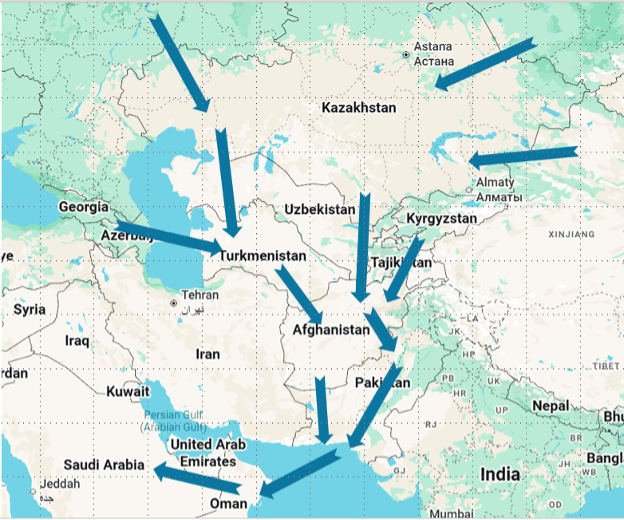
India has confirmed that it received a six-month sanctions waiver from the United States for its involvement in developing Iran’s Chabahar port. According to The Times of India, the decision followed intensive diplomacy by New Delhi, which convinced Washington that Chabahar provides India’s only practical overland access to Central Asia that avoids Pakistan. Through Chabahar, India is building a land-based counterpart to the China-Pakistan Economic Corridor, creating an alternative axis linking the Indian Ocean with Eurasia while bypassing Islamabad and Beijing. The exemption, valid until April 2026, gives India room to negotiate with Washington. For Central Asia, the episode reflects a broader challenge: choosing viable routes to the southern seas. Current debates about “Afghan transit” focus largely on the Trans-Afghan Railway and the so-called Kabul corridor connecting northern Afghanistan with Pakistan’s ports. Yet Afghanistan’s transport network is forming along multiple lines. Alongside the eastern route, a western corridor from Herat to Kandahar and Spin Boldak is also developing, offering access both to Pakistan and to Chabahar. The integration of western Afghanistan’s infrastructure with Iran’s transport network makes this corridor more reliable under today’s political and security conditions. It aligns with projects pursued by Iran, Turkmenistan, and Afghanistan and positions Herat as a major hub. It is also close to the North–South Transport Corridor, the Lapis Lazuli and Middle Corridors, and the Caspian and Persian Gulf regions. The planned Mazar-i-Sharif–Herat line fits the logic of the Five Nations Railway Corridor, potentially giving Tajikistan and Uzbekistan access to Chabahar and, if stability improves, to Pakistan’s ports as well. By contrast, the eastern route will remain constrained by the unstable Afghan–Pakistani border and the volatile relationship between Kabul and Islamabad. Afghanistan’s own priorities also differ from outside assumptions: the Herat–Kandahar–Spin Boldak line primarily serves as an internal transport spine linking the west and south. For Kabul, the route to Gwadar is more a political gesture than a practical goal. Some analysts note that developing the western corridor also helps rebalance the country’s economic geography toward its more diverse western regions. These dynamics strengthen the western route’s appeal. The Taliban leadership has even urged Afghan businesses to reduce reliance on Pakistani ports, signaling a structural shift in trade orientation. Both Chabahar and Gwadar face political risks. Pakistan’s transit routes pass through areas affected by insurgency, including Balochistan and Khyber Pakhtunkhwa, as well as the broader narcotics routes of the Golden Crescent. The greatest uncertainty remains the fluctuating relationship between Kabul and Islamabad. Gwadar, while technologically superior, is undermined by chronic instability. Chabahar’s capacity is more modest, but its integration with Iran’s road and rail network provides reliability. The United States adds another layer of complexity. The waiver suggests Washington is balancing its Iran sanctions regime with its strategic partnership with India. The United States is not directly involved in regional infrastructure but retains enough influence to shift the balance between the western and eastern routes. Under certain conditions, Gwadar may appear less problematic for Washington than Chabahar. At the same time, selective sanctions exemptions...

10 months ago

Border Violence Between Afghanistan and Pakistan: A New Risk for Central Asia

The escalating tensions between Afghanistan and Pakistan are forcing a reassessment of Afghanistan’s viability as a “partner space.” With cross-border clashes increasingly resembling a prolonged pattern rather than isolated incidents, and with both sides showing little willingness to compromise, the question grows more urgent: Can Afghanistan realistically become a partner for Central Asian countries, or is it destined to remain a persistent source of regional instability? This confrontation is deeply unsettling for the countries of Central Asia. Still in the early stages of formulating coherent policies toward Afghanistan, they have tentatively linked their development strategies to the hope of having a stable neighbor to the south – one that might serve as a bridge to South Asia. Against this backdrop, deteriorating Afghan-Pakistani relations breed more frustration and anxiety than hope. No country in the world, except Russia, has recognized the Taliban regime de jure. This broad reluctance reflects deep skepticism; few are willing to assume legal obligations or share responsibility for Kabul’s actions. Yet, Afghanistan remains far from isolated. Its geographic centrality makes it impossible to ignore. Accordingly, Central Asia has developed a distinct approach to dealing with its southern neighbor. It can be summarized as: We do not recognize, but we cooperate; we do not trust, but we verify; we do not agree, but we engage. In essence, Afghanistan’s neighbors, particularly the ones in Central Asia, have adopted a pragmatic, long-term strategy: engage without illusions or formal recognition, while maintaining the flexibility to adjust based on Kabul’s behavior. For these countries, Afghanistan does not stand as an independent priority. Its role is evaluated solely within the broader regional framework. In the most favorable scenario, Afghanistan serves as a transit corridor linking South and Central Asia. Yet even this utility is not indispensable; viable alternatives through Iran, the South Caucasus, Turkey, and China already exist and are expanding. Looking ahead, three broad scenarios can be envisioned: Optimistic: The Taliban demonstrate readiness for responsible engagement. This would enable Afghanistan’s gradual integration into trade and transport initiatives, expansion of economic ties, and a firm establishment as a bridge between Central and South Asia. Pessimistic: Afghanistan remains a chronic risk factor and flashpoint for regional crises. The ongoing Afghan-Pakistani confrontation, no longer a fleeting episode but an entrenched conflict, is a clear warning sign. If this becomes the norm, it will deter serious investment, no stakeholder will commit to a country that cannot guarantee peace with its neighbors. Inertia: Central Asian states continue their cautious balancing act under the logic that “a bad peace is better than a good war.” While cooperation continues at a minimal level, countries prioritize alternative routes and avoid deep commitments. Under this status quo, ambitious projects like the Trans-Afghanistan Railway and the TAPI pipeline are unlikely to materialize. The former risks losing the “trans” prefix; the latter may, for now, become little more than a Turkmenistan-Afghanistan venture. Nonetheless, there remains a window for diplomacy. Pressured by Turkey and Qatar, Kabul and Islamabad have agreed to resume negotiations aimed...

11 months ago

Kazakhstan Responds to Claims It Has Abandoned Ethnic Kazakhs in Afghanistan

Recent claims circulating on social media have accused the Kazakh government of abandoning ethnic Kazakhs in Afghanistan, with posts often alleging that thousands of Kazakhs have been left to fend for themselves, painting an emotionally charged but factually questionable picture. The Times of Central Asia set out to verify these claims and found a far more complex reality. Historical Background Kazakh migration to Afghanistan dates back over a century. In the late 19th and early 20th centuries, some groups of Kazakhs arrived via Xinjiang, China. Later waves followed during the 1930s, prompted by famine and Stalinist repression in the USSR. Some speculate that early migrants may have included supporters of Kenesary Khan, but this remains the subject of academic debate. While there are no official Afghan census records, estimates suggest that by the mid-20th century, the number of Kazakhs in Afghanistan may have reached 20,000-24,000. However, the repatriation programs of the 1990s drastically reduced these numbers. Since Kazakhstan’s independence, approximately 13,000 Kazakhs have returned from Afghanistan, part of a broader national effort that has repatriated over 1.15 million ethnic Kazakhs from abroad. Even after the Taliban takeover, repatriation efforts continued. In September 2021, for example, 35 ethnic Kazakhs were airlifted to Kazakhstan on a specially arranged flight. Disputed Numbers According to Kazakhstan’s Foreign Ministry and as confirmed by its embassy in Kabul, the number of ethnic Kazakhs remaining in Afghanistan is about 200 people, or roughly 15 families. In contrast, some self-proclaimed “cultural centers” and online activists claim there are “thousands” of families, with some estimates as high as 3,600 people. These figures are not substantiated by either official data or independent research. Verifying Ethnic Identity The Kazakh embassy in Kabul maintains contact with community representatives to track and verify the status of ethnic Kazakhs. Yet, confirming identities is a serious challenge in Afghanistan due to the absence of a comprehensive population registry. Since 2018, Afghan identity cards (e-Tazkira) have included a “nationality” field, but filling it is optional and based primarily on self-declaration or statements by local elders. This system is vulnerable to manipulation. The embassy reports cases where individuals from other ethnic backgrounds have falsely identified as Kazakh in the hope of qualifying for repatriation programs. Additional complications include limited access to remote provinces, weak administrative oversight, and security concerns. The embassy thus relies on field visits, trusted local contacts, and cautious verification to produce its population estimates. Mixed Marriages and Assimilation One of the biggest challenges in identification is interethnic marriage. Over the decades, many Kazakhs in Afghanistan have assimilated into surrounding Uzbek, Turkmen, or Tajik communities. Many no longer speak Kazakh, and identity is maintained through fragmentary knowledge of family genealogies (shezhire), often insufficient for verification. The embassy also raised concerns about “disputed applicants”, individuals attempting to exploit Kazakhstan’s earlier, more lenient kandastar (ethnic repatriation) policy. In the absence of rigorous documentation, ethnicity in Afghanistan has often been based on verbal claims, creating openings for abuse and corruption. Why Not Use DNA? Some social media users...

11 months ago