• KZT/USD = 0.00226
  • TJS/USD = 0.10830
  • UZS/USD = 0.00009
  • TMT/USD = 0.29760
  • KZT/USD = 0.00226
  • TJS/USD = 0.10830
  • UZS/USD = 0.00009
  • TMT/USD = 0.29760
  • KZT/USD = 0.00226
  • TJS/USD = 0.10830
  • UZS/USD = 0.00009
  • TMT/USD = 0.29760
  • KZT/USD = 0.00226
  • TJS/USD = 0.10830
  • UZS/USD = 0.00009
  • TMT/USD = 0.29760
  • KZT/USD = 0.00226
  • TJS/USD = 0.10830
  • UZS/USD = 0.00009
  • TMT/USD = 0.29760
  • KZT/USD = 0.00226
  • TJS/USD = 0.10830
  • UZS/USD = 0.00009
  • TMT/USD = 0.29760
  • KZT/USD = 0.00226
  • TJS/USD = 0.10830
  • UZS/USD = 0.00009
  • TMT/USD = 0.29760
  • KZT/USD = 0.00226
  • TJS/USD = 0.10830
  • UZS/USD = 0.00009
  • TMT/USD = 0.29760
26 September 2026

Our People > Aidar Borangaziyev

Aidar Borangaziyev's Avatar

Contributor

Articles

Navigating Challenges: The ICG Reports on Taliban Drug Ban and Its Global Implications

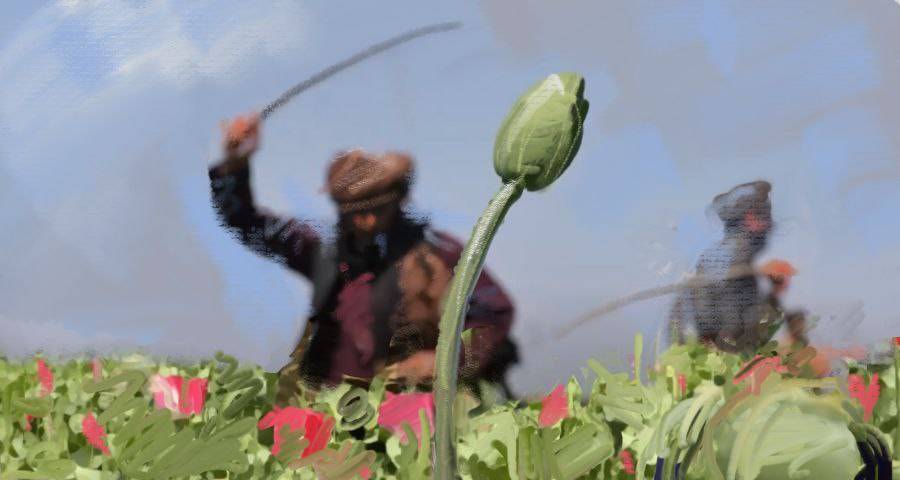
The International Crisis Group, an NGO focused on analyzing conflicts, has reported that “After the Taliban's severe restrictions on women's rights made the regime odious to much of the outside world, the narcotics ban offers a rare opportunity to work with the new authorities on a pressing issue for the benefit of all sides.” Drugs from Afghanistan are a universal problem affecting all regions of the world except for Latin America, with Central Asia remaining one of the main routes for Afghan drugs on their way to Russia and Europe. The so-called “Northern Route” passes through Tajikistan and Uzbekistan, then to Kyrgyzstan and Kazakhstan before reaching the Russian and European markets. Turkmenistan also plays an important role as a transit country for drugs, but on the “Balkan route.” The drug threat from Afghanistan to the five Central Asian republics is not simply a political narrative used by the governments of these republics for their own political purposes. There is a risk of political instability, criminality, corruption, social degradation, and damage to human health as a result of drug trafficking from Afghanistan. Additionally, the elimination of Afghan drug production and trafficking is a key issue in the fight against terrorism, primarily against the Islamic State, as drugs are one of the main sources of income for these groups. In April 2022, hopes for a resolution to this problem appeared following the ban on opium poppy cultivation imposed by the Taliban. Papaver somniferum, commonly known as the opium poppy, has been cultivated in Afghanistan since at least the early twentieth century. The history of opium production is detailed in the Global Illicit Drug Trends report by the United Nations Office on Drugs and Crime (UNODC). Besides the history of opium production, the report provides an overview of measures taken by states in their attempts to regulate and control the drug. Opium began to dominate world drug markets in the early 1980s, after the “April Revolution” and the Soviet invasion of Afghanistan, when the state began to lose control of rural areas, and agriculture itself began to decline. As the UNODC points out, by 1989, opium production was firmly established as the country's main source of income - Afghanistan had become a narco-state. The civil war continued, and the opium economy became firmly entrenched in the country during the 1990s. The first fall of the Taliban in 2001 and the formation of a republican government failed to change the situation due to the newly formed state still having no control over the regions. As a result, its counter-narcotics measures were not effective. It should be noted that only the Taliban managed to reduce drug production. According to the UN, since the Taliban's 2023 ban, opium crops in Afghanistan have declined by 95%, and opium prices have reached record levels. However, many experts wonder if Afghanistan will be able to continue with its chosen policy. Can the new Afghan authorities alone continue to confront the drug threat, and what should be the role of...

2 years ago

Redefining Diplomacy: Kazakhstan’s Strategic Shift in Relations With Afghanistan

On September 9, 2024, President Kassym-Jomart Tokayev signed a decree dismissing Alimkhan Yesengeldiyev from the position of Kazakhstan's Ambassador to Afghanistan. Yesengeldiyev has been at the post since April 2018. Local media have not yet reported on the appointment of a new ambassador. Previously, Astana has made bold diplomatic steps towards normalizing relations with Afghanistan under Taliban rule. For instance, Kazakhstan accredited Taliban diplomats in April 2023, and removed the Taliban from its list of banned organizations in December 2023. On August 21 of this year, Kazakhstan accredited the head of the Afghan diplomatic mission as charge d'affaires in the country. Astana continues to increase trade, economic, and humanitarian cooperation with the de facto authorities, and has actively engaged in various international platforms for initiatives in Afghanistan. Moreover, President Tokayev outlined Kazakhstan's position on the situation in Afghanistan just a month after the Taliban seized Kabul, when the world was still in shock. “Kazakhstan sees the future Afghanistan as a truly independent and united state living in peace with itself and its neighbors," he stated. "At this crucial historical moment, the multinational people of Afghanistan should not be left alone in the face of unprecedented difficulties.” By changing the head of its diplomatic mission in Kabul, it appears that the authorities in Kazakhstan intend to qualitatively improve the state of their relations with the Taliban. The eventual appointment of a new head of the Kazakh embassy will symbolize a new page in relations. In all likelihood, according to recognized international practice, a diplomat will be presented to the Taliban not in the rank of Ambassador Extraordinary and Plenipotentiary but as the Charge d'Affaires of Kazakhstan. This will preserve the principle of parity and be understandable given international disputes surrounding recognition of the Taliban. Overall, Kazakhstan's foreign policy steps have always been characterized by consistency and an unwavering focus on international law. It seems that the world as a whole is now acclimatizing to the idea of pragmatic dialog with the authorities in Kabul, with whom it is necessary to maintain constant bilateral and multilateral diplomatic contacts. On September 27, at the official request of the British government, the embassy of the former Islamic Republic of Afghanistan in London will officially cease operations. The embassy building will not be handed over to the Taliban or any other political representation. The embassy in Oslo representing the former government in Afghanistan has also ceased functions since September 12 at the request of the authorities there. Neither the British nor the Norwegian authorities are currently commenting on the situation. A few days ago, Deutsche Welle reported that the German Foreign Ministry has accepted the Taliban's application to recognize their consulate general in Munich as the sole center for providing consular services in Germany. In July, the Taliban Foreign Ministry declared that documents issued by 14 Afghan missions abroad are illegitimate. They were located in Britain, Berlin and Bonn in Germany, Belgium, Switzerland, Austria, France, Italy, Greece, Poland, Australia, Sweden, Canada, and Norway. Currently, the...

2 years ago

SCO and Afghanistan on the Cusp of a New Relationship

The hype surrounding the recent summit of the Shanghai Cooperation Organization Council of Heads of State in Astana has died down, and the expert community has offered differing takeaways, with some experts optimistic and others cautious. Few, however, have considered what new this summit delivered on Afghanistan. In general, what is the role of the Shanghai Cooperation Organization (SCO) in resolving the political issues around long-suffering Afghanistan and rebuilding its economy? Despite the SCO’s previous hands-off approach to Afghan affairs, the issue of Taliban-ruled Afghanistan was raised for the first time at the highest level of the SCO in Astana, which gives hope that the organization will expand its role. In their remarks, almost every SCO head of state touched on Afghanistan in essentially the same vein, stating the need for peace, stability and security, while underlining the fact that Afghanistan is an integral part of Central Asia. Indeed, Afghanistan was mentioned in the final declaration of the Astana summit, with Member States “reaffirming their commitment to asserting Afghanistan as an independent, neutral and peaceful state free from terrorism, war, and narcotic drugs [and voicing] their readiness to support the international community’s efforts to facilitate peace and development in that country.” At the same time, there was a clear message to the Taliban that “the establishment of an inclusive government involving multiple representatives of all ethnic and political groups of Afghan society is the only way toward attaining lasting peace and stability in that country.” These statements represent a rather big step, considering that previously the SCO failed to find a consensus on Afghanistan and develop its own mechanisms to interact with Kabul. The creation of the SCO-Afghanistan Contact Group back in 2005 was rather a spontaneous reaction to the US-led coalition's Operation Enduring Freedom in the wake of the 9/11 terrorist attack. The SCO itself says the contact group was created because of the "concerns of the SCO countries about the negative development of the situation in Afghanistan and the intention of the SCO to establish a specific consultative dialogue with Kabul." While the contact group included the members’ permanent representatives to the SCO, only a few events were ever held. Indeed, interest in the contact group was only really apparent from the Afghan side, which was looking for SCO assistance in rebuilding the Afghan economy and SCO participation in implementing various energy and transport infrastructure projects and creating favorable conditions for Afghan goods to access the markets of SCO countries. However, none of this was realized. The SCO states preferred, as they still do, to conduct relations with Afghanistan bilaterally, and did not support the efforts of the SCO Secretariat to intensify the work of the contact group. In 2010, Uzbekistan directly indicated its interest in building relations with Afghanistan exclusively on a bilateral basis and stated that it would no longer take part in the contact group. In June 2012, Afghanistan’s application for SCO observer status was granted. Yet this step was more symbolic and failed to...

2 years ago

Islamic State Khorasan Province as Part of the Struggle for Central Asia

Following the high-profile terrorist attack at Moscow’s Crocus City Hall in March and reports that eight Tajik immigrants were arrested in the U.S., the media spotlight has once again fallen on Islamic State Khorasan Province (ISKP), also known as "Wilayat Khorasan", and the "Khorasan Project.” Many observers link ISKP to the countries of Central Asia, even though the terrorist organization, as it has been designated for a long time, has purely Afghanistani roots. In addition, there is a lot of talk about its geopolitical ambitions for “recreating” the state of “Khorasan.” Where this region’s boundaries lie is the subject of debate. The most expansive definitions include northeastern Iran, western and northern Afghanistan, eastern Turkmenistan, and parts of Tajikistan and Uzbekistan. It is important to understand, however, that clear boundaries have never existed, and neither has a state with that name. In modern times, the term “Khorasan” has only historical and cultural connotations, with no political meaning attached to it. ISKP has suffered a clear military defeat in the borderlands of Afghanistan and Pakistan, and faces significant opposition there. Still, weakening and even destroying the Taliban remains an important goal for the organization. It continues to fight in several regions of Afghamistan, which has prompted the Taliban to intensify their counter-terrorism efforts. [caption id="attachment_19644" align="alignnone" width="1920"] Sanaullah Ghafari, Emir of ISIS-K has a U$10 million bounty on his head; image: rewardsforjustice.net[/caption] The countries of Central Asia, having emerged out of the Soviet Union, are attractive for ISKP ideologists in the sense that they share a common historical and cultural past, while there are even linguistic similarities with Afghanistan (between the Persian languages). The Russian internet portal and analytical agency, TAdviser, points out that ISKP, through its online propaganda publication, announced the start of a new campaign against the countries of the post-Soviet space in April 2022. In June of that year, the ISKP publication, written in the Uzbek language, declared that the countries of Central and South Asia would be united under the flag of the “Islamic Caliphate.” TAdviser highlights that Turkmenistan has a special place in ISKP propaganda because according to the group a large part of what is now Turkmenistan was previously part of “Greater Khorasan,” while the foreign policy of the Turkmen authorities of actively cooperating with the Taliban is wholly at odds with the core goals of ISKP. The Lapis Lazuli corridor linking Afghanistan to Turkey, along with the Turkmenistan-Afghanistan-Pakistan-India gas pipeline (TAPI) which is being developed, are identified as priority targets for ISKP. But what in fact is ISKP? As previously noted by The Times of Central Asia, the answer to this question is known by only a very narrow circle. Indeed, no one can provide objective data on the qualitative and quantitative composition of ISKP. Nevertheless, the group is taking on real dimensions in the media. The threat to Central Asia from ISKP looks more virtual than real at this point. Any small group of terrorists can declare themselves part of ISKP, and, without any...

2 years ago

Is Afghanistan Ready for Dialogue with Central Asia on Water Issues?

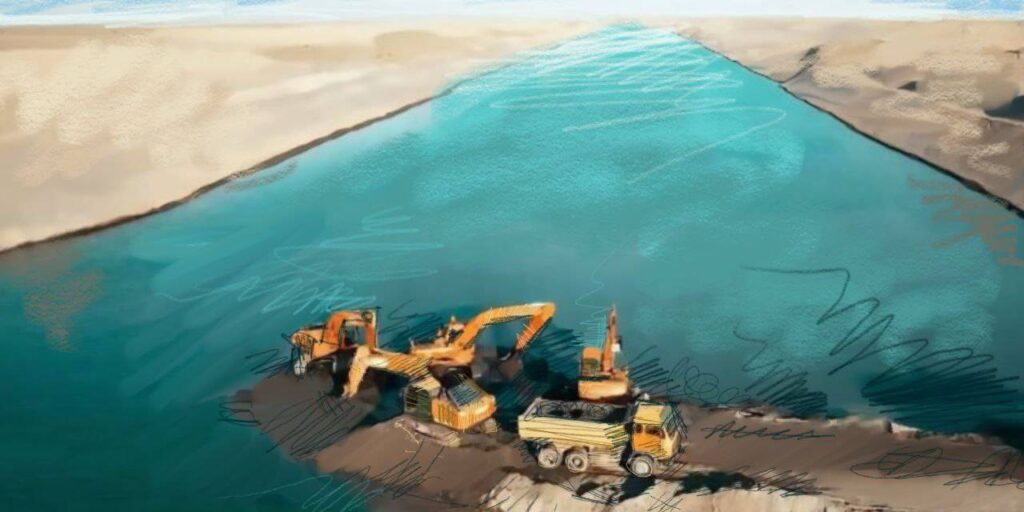
Against the backdrop of the silence of Central Asian countries, as well as their lack of a coordinated position on the construction of the Qosh Tepa Canal in northern Afghanistan, the Taliban are moving forward with the project with growing confidence and without regard to their neighbors. Last October, at the ceremony to mark the launch of the second phase of the canal’s construction, Afghan Deputy Prime Minister Abdul Salam Hanafi called Qosh Tepa, “one of the most significant development projects in Afghanistan,” while its realization should remove all doubts about the capabilities of the new Afghan authorities, he added. There is no point in discussing the economic rationale for the canal; like other practical measures taken by the Taliban in the water and energy sphere, for Afghanistan, where 90% of the population is employed in agriculture, the provision of irrigation water is undoubtedly an important task. According to the UN, over the past four decades, desertification has affected more than 75% of the total land area in the northern, western, and southern regions of the country, reducing the vegetation of pasture land, accelerating land degradation, and impacting crop production. However, this socio-environmental problem affects the interests of all the peoples of Central Asia, which geographically includes the entire north of Afghanistan. It arose as an objective need for development, and solving it requires the combined efforts of all countries in the region, which is already on the verge of a serious water crisis that threatens not only economic development, but also the lives of millions of people. In general, the Taliban have emphasized their openness in matters of trans-boundary water management, but, so far, these are only statements. They are more motivated by political issues around their international recognition. That is why it is important for them to participate in global events, such as UN climate change conferences, but they have yet to take part in any climate talks. Hopefully, Afghan representatives will be invited to the COP29 Global Impact Conference in Baku this November, especially since one of the key topics of this forum will be a “just energy transition.” It would be interesting to hear what the Taliban have to offer. Though the authorities in Kabul have had some success in water regulation with Iran, the same cannot be said about Central Asia. This clearly owes to the fact that the five Central Asian republics have not taken a unified position on trans-boundary waters with Afghanistan. And their southern neighbor has taken advantage of this – to date, Kabul has not held any full-fledged official consultations with any Central Asian country on the Qosh Tepa Canal. However, just as bilateral formats will not yield results (unlike in Iran's case), the Taliban leadership will not be able to resolve water issues easily with the Central Asian countries. Afghanistan is not a party to the Central Asian Agreement on Cooperation in the Field of Joint Management on the Utilization and Protection of Water Resources from Interstate Sources. It was...

2 years ago

Central Asia Asks: Are Afghanistan’s Taliban Government Terrorists?

On June 3, Kazakhstani President Kassym-Jomart Tokayev met with speakers of CSTO countries’ parliaments, who were in Almaty for a meeting of the Council of the CSTO Parliamentary Assembly. At this event, Tokayev separately touched upon the situation in Afghanistan. In his view, one of the strategic tasks at this point is actively linking Afghanistan with the region. Tokayev recalled that “Kazakhstan had removed the Taliban regime from its list of terrorist organizations, basing this decision on the importance of developing trade and economic cooperation with today’s Afghanistan and the understanding that this regime is a long-term factor.” The last bit, namely that “Kazakhstan had removed the Taliban regime from its list of terrorist organizations,” was presented by many foreign media, probably due to its simplicity, as something that had just happened. For example, the Russian-language service of Deutsche Welle reported that “the Kazakh authorities have decided to exclude the Taliban movement from the list of terrorist organizations.” Similar stories were carried by various other news media, like RFE/RL’s Kazakh service, 24.kg and Amu TV, among others. However, some publications objectively covered Tokayev’s statement. For example, The Diplomat reported that “Tokayev explained his government’s decision in more detail,” while Sputnik India wrote that "Tokayev explained Almaty's decision in December to drop the group from the list.” Asia-Plus ran a similar story. Given all the noise, it would be useful to clarify the situation for readers. The decision to exclude the Taliban from the list of banned foreign organizations was made by Kazakhstan’s Supreme Court on December 20, 2023, almost six months ago. The Taliban had been put on the list in March 2005. At that time, they were actively fighting the NATO-led international coalition, which had launched the so-called Operation Enduring Freedom in October 2001 in response to the 9/11 terrorist attack. The Kazakhstani Foreign Ministry cited UN decisions to back up its move to take the Taliban off the terrorist list. Foreign Ministry spokesperson Aibek Smadiyarov said that “according to UN Security Council resolutions, which are binding, the Taliban movement is not included in the lists of terrorist organizations recognized as such by the UN Security Council.” As expected, at the time the reaction was mixed. Most of the negative commentary presented it as recognition of the Taliban regime, which, in fact, is not true – it was not a unilateral act of Kazakhstan giving international legal recognition to the Taliban. Meanwhile, another trend in the coverage of Tokayev’s recent remarks was to link Kazakhstan’s decision to remove the Taliban from its terrorist list with Russian plans to do the same. On May 27, the Russian Foreign Ministry and Justice Ministry reported to President Vladimir Putin that the Taliban movement could be excluded from the list of organizations banned in the country. Foreign Minister Sergei Lavrov remarked that this proposal “reflects a realization of reality,” adding that “[the Taliban] are the real government. We [and] our allies, especially in Central Asia, are not indifferent to Afghanistan.” In his own...

2 years ago

Why Kazakhstan’s Deepening Ties With Afghanistan Are Significant

At the end of April a Kazakh delegation made an official visit to Kabul, where a meeting of the Kazakh-Afghan Business Forum and an exhibition of Kazakh products were held. This was the third bilateral event aimed at expanding trade and economic ties between Kazakhstan and Afghanistan. The visit to Kabul indicates Astana’s intention to enhance Kazakhstan’s relations with the new Afghan authorities, and not only through trade. This is evidenced by a number of details that differed from previous official contact. First, an unannounced trilateral government meeting took place between Afghanistan, Kazakhstan and Turkmenistan in Kabul. The result was the announcement that a new logistics route to Afghanistan through Turkmenistan and Kazakhstan would be developed. There is nothing earthshaking about this – Turkmenistan is set to become a transportation hub for international corridors passing through Kazakhstan, primarily the North-South and the Middle corridors, as well as the Lapis Lazuli Corridor (Turkey-Azerbaijan-Turkmenistan-Afghanistan). What is significant is that the sides are striving to create favorable conditions for logistics, especially more competitive transport tariffs so trains can pass through faster. This is particularly important given congestion in Uzbekistan, where bottlenecks occur. The announcement in Kabul also means a direct route to economically attractive western Afghanistan and further south. What else made the Kabul visit notable was the meeting between Kazakh deputy prime minister Serik Zhumangarin, who oversees trade, and Abdul Kabir, the Taliban’s deputy prime minister for political affairs. Given the reputation of the Taliban, it is not in the interests of Astana to simply stage a conversation for the cameras. Unfortunately, details about the Zhumangarin-Kabir meeting are few. According to the available information, the deputy prime ministers discussed security issues in Afghanistan, apparently in the context of how to grow the Afghan economy. Following the meeting, Kabir stated that Afghanistan does not want to be a threat to the region, and intends to improve relations with its neighbors through the progressive development of trade and economic relations. The Zhumangarin-Kabir meeting is said to have taken place on the initiative of the Afghan side. Considering Kabir’s closeness to the emir of the Taliban, it is likely that the initiative came from him. Other notable outcomes of the visit of the Kazakh delegation to Kabul included: discussion of joint projects for geological exploration, mining and processing of solid minerals in Afghanistan, as well as in the IT sector; discussion of the possibilities for supplying Kazakh-made cars and subsequent localization of service centers in Afghanistan; a rise in the quota for Afghan students at Kazakh universities from 30 to 60, as well as a 10-day trip to children’s camps in Kazakhstan for 30 Afghan children in the summer of 2024; and discussion of the possibility of establishing direct flights between the two countries. Aidar Borangaziev is a Kazakhstani diplomat. He has worked in the diplomatic service in Iran and Afghanistan. He is a founder of the Open World Center for Analysis and Forecasting Foundation (Astana). He is an expert in regional security.    

2 years ago

Without Security, There Can Be No Development in Afghanistan

Indian author Arundhati Roy once said, “Either way, change will come. It could be bloody, or it could be beautiful. It depends on us.” Almost three years after Taliban’s resurgence to power in Afghanistan, there are practically no developments to highlight in its relations with the outside world. The situation remains at a dead end as the international community and the authorities in Kabul are stuck on intransigent issues, and as Afghanistan continues to face a humanitarian crisis. In the context of current geopolitical realities after the recent fall of its “democratic” regime, Afghanistan finds itself in a gap between the experiences of the past and a yet undetermined future. It has a unique opportunity to transcend its reputation as the “graveyard of empires” and determine its own fate while simultaneously integrating into the international community. How the de facto authorities in Afghanistan handle this opportunity will not only shape the future of the Afghan people and the region, but also influence the development of the entire global security paradigm. Currently, the Taliban have every opportunity to lay the foundation for a new model of regional and international security, which would allow them to create conditions for the return of Afghanistan to the system of normal international relations. But they need to act quickly. Rising tensions in the Middle East engage almost every global and regional power, and further escalation there will negatively affect the situation around Afghanistan. In this unpredictable geopolitical environment, the Taliban can either take the lead on new security arrangements or once again experience an undesirable worsening of the security situation that goes beyond their control.   A path forward is possible with the Taliban acting responsibly at the helm It seems that since the Anglo-Afghan wars of the 19th century, the world has become accustomed to seeing Afghanistan as a place where global geopolitical steam can be let off. But the Afghan people deserve progress, and various outside actors have offered different proposals. What the Taliban need is a chance at a breakthrough where they are the key player and can take full responsibility. The international community needs to allow such an opportunity to serve as a “maturity test” with which it can gauge the Taliban. At this important juncture, the international community must support Afghanistan in determining its own future. If external actors continue to promote political blueprints, Afghanistan will once again become a site for proxy wars, an arena of rivalry and a fertile ground for old narratives about international terrorism and other threats. Slamming the Taliban for their democratic failings, on which they clearly do not share the outsiders’ perspectives, will not yield productive results. For its part, if Kabul is really seeking to be a key player in Asia and a regular participant in international affairs, and if it seeks to realize its significant geographic and economic potential, then it must start implementing practical initiatives involving regional countries and international organizations in a dialogue on security. Maintaining internal security and stability...

2 years ago

The Taliban and its Neighbors: An Outsider’s Perspective

This is part two of a piece of which part one was published here. The topic of a regional approach to solving Afghanistan's problems is increasingly being discussed in various expert and diplomatic circles. The International Crisis Group (ICG), a reputable think tank whose opinion is extremely interesting as part of an "insider vs outsider" set of viewpoints, writes about this in particular. A report from ICG entitled "Taliban's Neighbors: Regional Diplomacy with Afghanistan" is one of the first works to summarize the role and place of the region as regards the situation around Afghanistan. In the voluminous work, the authors touch upon almost all aspects - issues of diplomatic recognition, security, terrorist activity, trade and economic relations within the region, water issues and others. In their conclusions, ICG analysts point out that many steps towards regional cooperation aren't related to Western donors, but European countries should nevertheless be interested. Europeans in particular would benefit from a stable, self-sufficient region that isn't a major source of illegal drugs, migrants or terrorism. But sanctions and other Western measures designed to show disapproval of the Taliban are obstacles to a more functional relationship between Kabul and the countries of the region. Significant progress depends on Western support - or at least tacit acquiescence. While such practical steps need not lead to  recognition of the Taliban regime, they will contribute to regional peace and security. However, experts are concerned that the emerging regional consensus is directly dependent on security and stability issues in Afghanistan - if regional neighbors feel that the government cannot restore order within Afghanistan's borders and contain transnational threats, the consensus may well collapse. If that happens, regional countries may be tempted to choose sides in another intra-Afghan civil conflict, repeating the destructive pattern of past decades. At the same time, experts believe that the first step toward improving regional security cooperation would be to cool down the rhetoric on all sides and get regional players to agree on security issues, even if they have different priorities. Security information sharing within the region also suffers because the Taliban have yet to build a trusted dialog. They lack credibility because of their complete denial of certain threats. Meanwhile, countries in the region and the world are guided by inflated estimates of militant numbers. The ICG's assessments of the security threats posed by Islamic State Khorasan Province (ISKP) are broadly in line with the consensus - in some ways, the growing concern about ISKP is paradoxical due to the fact that the overall level of violence associated with the group has declined over the past two years. The question of whether ISKP could become a more potent transnational threat in the future remains open. So far, its operations outside of its original territory near the Afghanistan-Pakistan border have been limited. On the other hand, ISKP continues to attract recruits from different parts of Central and South Asia and encourages attacks outside Afghanistan - arguably making it the most dangerous armed group in...

2 years ago

Islamic State – Khorasan Province: An Element of Geopolitical Rivalry?

In the aftermath of the terrorist attack in Moscow, the media has once again been saturated with discussions about the terrorist group Islamic State – Khorasan Province (ISKP), also known as ISIS-Khorasan and “Wilayat Khorasan.” At this point, most of the coverage has focused on the Afghan wing of Islamic State, and not its other “wilayats,” such as on the Arabian Peninsula, “Wilayat Sinai” (Islamic State – Sinai Province) or “Wilayat Caucasus” (Islamic State – Caucasus Province). The international media covering the ISKP attack in Moscow, including journalists from Russia, widely speculated that the terrorist group is looking at Central Asia as its next base. Such media coverage included a variety of sentiments indicating that Central Asia should be worried. Reports have suggested that the alliance of Central Asian leaders with Moscow makes them look weak in the eyes of ISKP and that the terrorist threat emanating from Central Asia has become a point of weakness for the Putin regime. It has also been suggested that Islamic terrorism in Central Asia remains a real problem for the FSB, and even though the FSB has extensive experience in fighting extremists in the Caucasus, having committed enormous resources to the issue, Central Asia is a blind spot. Alarm bells sounded that regional jihadist groups have become more powerful. Thus, the terrorist attack in Moscow significantly increased media attention on ISKP in the context of Central Asia. Overall, the ISKP theme fits into existing narratives regarding threats to the southern border of the CIS. Sanaullah Ghafari, Emir of ISIS-K; image: rewardsforjustice.net   The more likely reality is that in Central Asia, ISKP has been more of a challenge to regional security than an existential threat. In recent years, the region has been broadly successful in dealing with threats from Afghanistan.   How real of a threat is the ISKP? A very narrow circle of experts can give a truly objective assessment of ISKP. Information about ISKP membership is contradictory and seemingly based on political considerations. As such, it is difficult to back these up with statistics. The number of fighters reported vary greatly from 2,000 to several tens of thousands. What remains indisputable are two facts: 1. Despite measures declared by the Taliban to eliminate the ISKP, terrorist acts by the group are still recorded throughout Afghanistan, and 2. The group lacks a serious infrastructure in Afghanistan. The activity of ISKP in Afghanistan consists of carrying out targeted, low-level terrorist acts, mainly against local Hazara Shiites. Based on the assessments of the UN Afghanistan monitoring team, the potential of ISKP success looks dubious. In its reports, UN experts point to a decrease in ISKP activity in Afghanistan. Recently, the UN has avoided estimating the size of the group, but previous estimates put it at 1,500-2,200 fighters. At the same time, according to a UN report in January, “ISKP adopted a more inclusive recruitment strategy, including by focusing on attracting disillusioned Taliban and foreign fighters.” Taliban officials, meanwhile, tend to play down the situation....

2 years ago