
• KGS/USD = 0.01144 0%
  • KZT/USD = 0.00213 0%
  • TJS/USD = 0.10848 0.09%
  • UZS/USD = 0.00008 0%
  • TMT/USD = 0.28571 0%
  • KGS/USD = 0.01144 0%
  • KZT/USD = 0.00213 0%
  • TJS/USD = 0.10848 0.09%
  • UZS/USD = 0.00008 0%
  • TMT/USD = 0.28571 0%
  • KGS/USD = 0.01144 0%
  • KZT/USD = 0.00213 0%
  • TJS/USD = 0.10848 0.09%
  • UZS/USD = 0.00008 0%
  • TMT/USD = 0.28571 0%
  • KGS/USD = 0.01144 0%
  • KZT/USD = 0.00213 0%
  • TJS/USD = 0.10848 0.09%
  • UZS/USD = 0.00008 0%
  • TMT/USD = 0.28571 0%
  • KGS/USD = 0.01144 0%
  • KZT/USD = 0.00213 0%
  • TJS/USD = 0.10848 0.09%
  • UZS/USD = 0.00008 0%
  • TMT/USD = 0.28571 0%
  • KGS/USD = 0.01144 0%
  • KZT/USD = 0.00213 0%
  • TJS/USD = 0.10848 0.09%
  • UZS/USD = 0.00008 0%
  • TMT/USD = 0.28571 0%
  • KGS/USD = 0.01144 0%
  • KZT/USD = 0.00213 0%
  • TJS/USD = 0.10848 0.09%
  • UZS/USD = 0.00008 0%
  • TMT/USD = 0.28571 0%
  • KGS/USD = 0.01144 0%
  • KZT/USD = 0.00213 0%
  • TJS/USD = 0.10848 0.09%
  • UZS/USD = 0.00008 0%
  • TMT/USD = 0.28571 0%

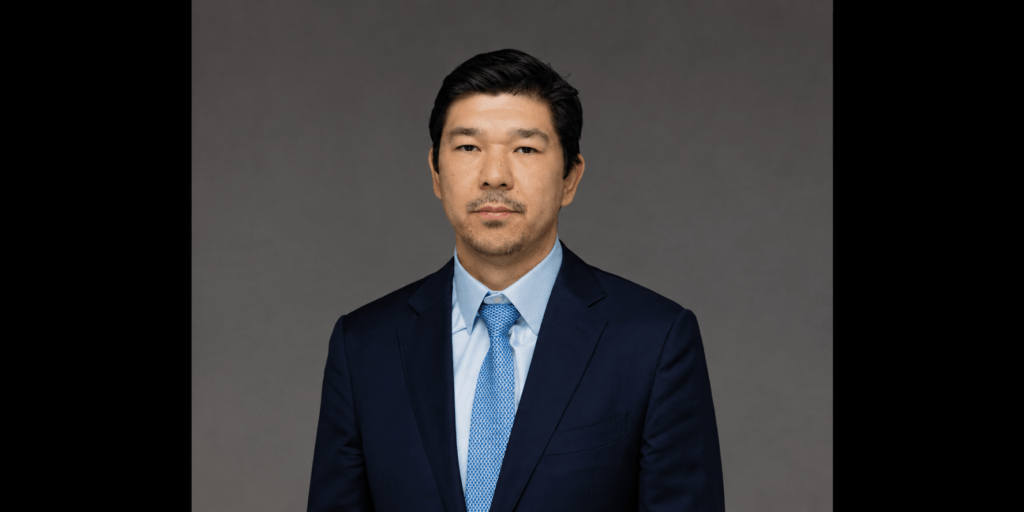
Our People > Askar Alimzhanov

Askar Alimzhanov's Avatar

Askar Alimzhanov

Senior Editor

Askar Alimzhanov graduated from the journalism department of the Kazakh State University named after S. Kirov, then worked as a correspondent for the daily republican newspaper Leninskaya Smen. He then moved to the United States to be a reporter for the daily newspaper "Cape Cod Times" in Hyannis, Massachusetts, (USA) under the journalist exchange program between the Union of Journalists of the USSR and the New England Society of News Editors. Since then, he has helped build transparency and understanding of Central Asia region in various executive level positions at media organizations including "Akbar"(Alma-Ata) international center for journalism, the Khabar News agency, the Television and Radio Corporation "Kazakhstan" JSC, and MIR- Kazakhstan.

Articles

Opinion: The Specter Is Back – A Kazakh Warning to America

I was educated and began my career under Soviet communism in Kazakhstan. For many Americans, communism may sound like a policy argument. For us, it is also family memory — famine, confiscation, repression, camps and fear, all justified in the language of equality and justice. When communism returns to the American political debate, people from Kazakhstan listen carefully. “A specter is haunting Europe, the specter of communism.” That is how The Communist Manifesto by Karl Marx and Friedrich Engels began in 1848. Nearly two centuries later, the specter has not disappeared. It has changed its vocabulary, its political costumes and its geography. But the old temptation remains. It promises justice by concentrating power. In late June, U.S. President Donald Trump warned that communism was the greatest threat to the United States, greater, he said, than World War I, World War II, Pearl Harbor, or September 11. His language was characteristically blunt. Critics were right to say that democratic socialism is not the same thing as Soviet communism, and that the word “communist” should not be used carelessly in ordinary partisan debate. Still, the historical concern behind the warning should not be dismissed. Not every welfare program is communism. Not every democratic socialist is a Bolshevik. Every modern state helps its citizens in some form. The real question is when help becomes control. When does compassion become coercion? When does the state begin claiming the right to decide prices, property, production, speech and moral legitimacy in the name of “the people”? People who lived under communism know the danger. Why a Kazakh Voice Belongs in This Debate For an outside observer, it may seem strange that socialism and communism are again being debated in the United States, the stronghold of advanced capitalism, as Soviet theorists once described it. Yet the explanation is not mysterious. Congressional elections are approaching. Recent primary victories by candidates who identify with democratic socialism have brought these questions back into mainstream American politics. Of course, this does not mean the United States is on the eve of a Bolshevik revolution. America has elections, courts, private property, constitutional limits, and a free press. The Soviet Union had none of these in any meaningful sense. That distinction should be kept clear. But the first words of any political movement should be taken seriously. The early promises are usually humane. They speak of fairness, dignity, affordability, workers, tenants, food, and peace. Only later does society discover how much power must be handed to the state to make those promises real. The Democratic Socialists of America describes itself as the largest socialist organization in the United States and says working people should run “both the economy and society democratically” to meet human needs rather than profits. To many Americans, that may sound compassionate. To those of us trained in Marxist-Leninist doctrine, it also sounds familiar. I am not a political scientist or a specialist in party-building. I am simply a person who, because of my age, studied under the communists and...

2 weeks ago

U.S. Business Push in Central Asia Moves From Dialogue to Deals

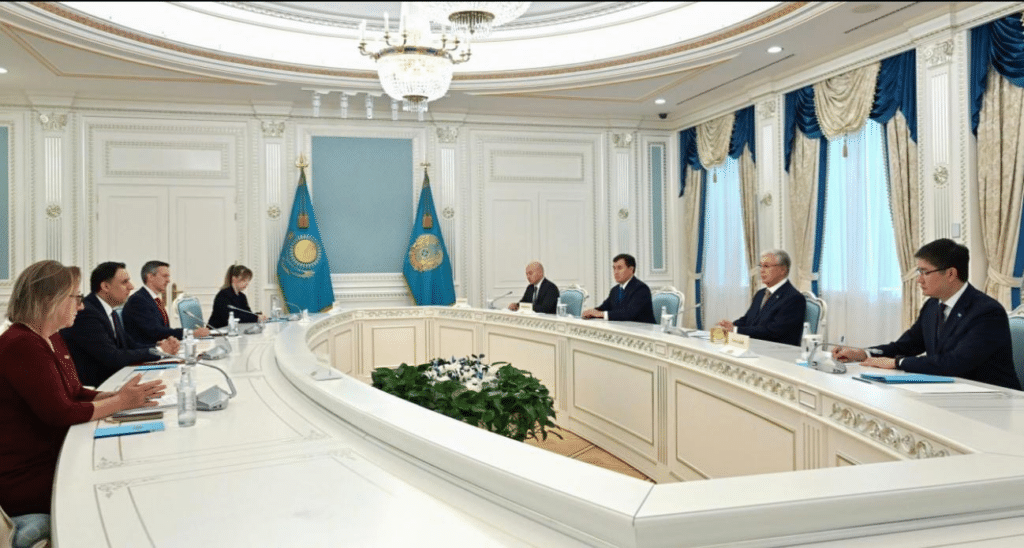
The pace of U.S. commercial engagement in Central Asia has quickened in recent weeks, with business delegations, export-finance officials, and sector-specific agreements appearing across the region. In June, a U.S. business delegation discussed investment opportunities in Turkmenistan, while Assistant Secretary of Commerce and Director General of the U.S. and Foreign Commercial Service David L. Fogel used the Astana Mining and Metallurgy Congress to press for practical cooperation in critical minerals. That same month, the Tashkent International Investment Forum drew John Jovanovic, president and chairman of the Export-Import Bank of the United States, and Ben Black, chief executive officer of the U.S. International Development Finance Corporation. Kazakhstan and U.S. companies signed artificial intelligence agreements worth $10 billion, Uzbekistan agreed to reduce tariffs on a range of U.S. goods, and Kyrgyzstan’s Civil Aviation Agency held talks with U.S. Ambassador Leslie Viguerie on aviation cooperation. Taken together, these moves suggest a change in tone. Washington’s regional agenda is increasingly being expressed through commercial missions, project finance, technology partnerships, and trade mechanisms rather than broad diplomatic declarations. The shift from diplomacy to deals is becoming visible in several capitals at once. [caption id="attachment_51210" align="aligncenter" width="1280"] Image: The Republic of Kazakhstan – the United States of America roundtable[/caption] Against that background, a roundtable titled “The Republic of Kazakhstan - the United States of America” was held in Astana on June 30. It was organized by Atameken National Chamber of Entrepreneurs, the U.S. Chamber of Commerce, and the Chamber of Commerce of Kazakhstan. The U.S. delegation was led by Khush Choksy, senior vice president for international member relations at the U.S. Chamber of Commerce, who oversees programs in the Middle East, Türkiye, and Central Asia. The Kazakh delegation was led by Ambassador Yerzhan Kazykhan, Kazakhstan’s presidential representative for negotiations with the United States. For Choksy, the visit continued a longer push by the U.S. Chamber. He visited Kazakhstan in 2023 and 2025, and has repeatedly described the country as a strong platform for American business. Yet trade remains modest compared with the political ambition attached to the relationship. According to Kazakh government data, bilateral trade between Kazakhstan and the U.S. reached $3.19 billion in 2025, while USTR estimates U.S. goods trade with Kazakhstan at $5 billion. U.S. goods trade with Uzbekistan, the region’s most populous country, was just over $1 billion in 2025. The figures underline the gap between strategic interest and commercial scale. The reasons for this are not limited to distance. Disrupted logistics, sanctions risks linked to Russia’s war in Ukraine, and instability in parts of the Middle East have complicated long-distance trade. The Jackson-Vanik amendment, adopted in 1974, also remains formally applicable to Kazakhstan despite repeated efforts in Washington to repeal it and grant the country permanent normal trade relations status. The Astana roundtable brought together government agencies, companies, international corporations, financial institutions, and policy experts. Participants discussed investment cooperation, energy, digital transformation, infrastructure, innovation, transport, and logistics. B2B meetings were also held, along with meetings between U.S. companies and Kazakh ministries and...

2 weeks ago

Kazakhstan’s Pax Silica Accession Bodes Well for Foreign Investment

Kazakhstan’s accession to Pax Silica is more than a diplomatic ribbon-cutting. It is an investment signal. By joining an initiative supported by the United States and built around trusted supply chains for the new artificial intelligence economy, Kazakhstan has placed itself inside one of the most important emerging conversations in global industry about who will supply the minerals, energy, computing infrastructure, data centers, talent and manufacturing capacity behind the AI boom. Kazakhstan’s official readout was explicit about that ambition. Pax Silica, it said, brings partner countries together around artificial intelligence, critical minerals, semiconductors, data centers, energy infrastructure, high-tech manufacturing, research and talent development. Kazakhstan became the first country from its region to join, with Deputy Prime Minister and Minister of Artificial Intelligence and Digital Development Zhaslan Madiyev signing the accession declaration and the AI Opportunity Partnership statement in Washington on June 25. “Behind every AI solution are energy, critical minerals, computing capacity, data centers, semiconductors, engineering talent, and secure supply chains,” Madiyev said. Pax Silica is a supply-chain coalition whereby each participant brings a piece of the AI industrial base such as chips, energy, minerals, capital, cloud infrastructure, advanced manufacturing, regulatory alignment or technical talent. Reuters has described the initiative as a U.S.-led effort to secure the supply chains behind artificial intelligence, from energy and critical minerals to high-end manufacturing and AI models. Kazakhstan’s inclusion demonstrates that the country is being viewed as a potentially significant node in the physical infrastructure of the AI economy. Why Kazakhstan Fits the Pax Silica Map Kazakhstan has existing relevance in the AI supply chain as well as the capability to expand that role. That helps explain why Kazakhstan, rather than another regional state, became the first Central Asian node to plug into Pax Silica’s trusted supply-chain architecture. The U.S. International Trade Administration says Kazakhstan has substantial reserves of rare earth elements, copper, lithium, tungsten, tantalum and other materials essential for modern technologies and the energy transition. It also notes that the country’s policy focus is shifting from raw-material exports toward value-added processing and downstream production. With regard to the energy feedstock needed to power AI data centers, Kazakhstan has been the world’s leading uranium producer since 2009 and produced about 40% of global output in 2025. Nuclear energy is returning to the strategic conversation as governments and companies look for firm, low-carbon electricity. Kazakhstan also has a proven record as a resource partner for the U.S. and the West. U.S. energy majors helped build Kazakhstan’s modern oil sector, with Chevron beginning production from a $48 billion expansion of the Tengiz oilfield in 2025. In aerospace, Kazakhstan’s Ust-Kamenogorsk Titanium and Magnesium Plant supplies major global manufacturers, including Boeing and Airbus, and officials say titanium from Kazakhstan accounts for roughly one-fifth of the global aerospace titanium market. A New Layer in U.S.-Kazakhstan Alignment Pax Silica also follows a warming trend in U.S.-Kazakhstan relations under the Trump administration. Tokayev has already framed Kazakhstan as an active participant in several U.S.-backed initiatives, including the Abraham Accords, the...

2 weeks ago

Central Asia Avoids Fuel Shock as Global Pressures Build

Central Asia has so far avoided the immediate fuel shocks spreading across much of the world following the U.S. and Israel’s war with Iran. There are no lines at gas stations, no visible shortages, and no signs of panic buying. But that stability sits within a rapidly tightening global market, where disruptions in Asia and policy responses in Europe are reshaping fuel flows in ways the region will struggle to avoid. Across Southeast Asia, governments are already taking precautionary steps. Some state agencies and private firms are shifting parts of their workforce to remote work to reduce fuel consumption and prepare for potential price spikes and logistics disruptions, while Thailand is preparing contingency measures, including possible fuel rationing. China, one of Asia’s largest suppliers of refined fuels, has moved to restrict exports of gasoline, diesel, and jet fuel in an effort to prevent domestic shortages linked to the war. The move is expected to tighten supplies across Asia, especially for countries that rely on Chinese fuel imports. China supplied about one-third of Australia’s jet fuel last year, highlighting the wider regional impact, and roughly half of the Philippines’ and Bangladesh’s in 2024. Vietnam has already warned airlines to prepare for flight reductions in April due to the risk of shortages caused by these export restrictions. Indonesia is also imposing limits on fuel sales.  Fuel-related pressures have begun to emerge in Europe as well. Poland has introduced tax measures aimed at reducing fuel prices, with the government saying this will lower prices for consumers. Slovenia, meanwhile, has introduced significant restrictions on fuel consumption. Under new rules, private motorists are limited to purchasing a maximum of 50 liters per day, while businesses and farmers may purchase up to 200 liters daily. The combined effect of war-driven energy shocks and renewed tariff barriers is raising global costs and adding pressure across trade, transport, and inflation. Against this backdrop, Central Asia’s apparent stability is misleading. It is highly unlikely that import-dependent states such as Kyrgyzstan and Uzbekistan will be as well protected as Kazakhstan, which may benefit in the short term from higher crude prices. Starting April 1, Russia is banning gasoline exports in an effort to stabilize its own domestic market. Russia is a key fuel supplier to Central Asia. However, according to assurances from the Ministry of Energy of the Russian Federation, the temporary export ban will not affect supplies to Uzbekistan. Deliveries under intergovernmental agreements are expected to continue, ensuring that at least part of the region’s supply remains uninterrupted. In Kyrgyzstan, despite recent developments, fuel prices and supplies remain relatively stable. The government is considering lowering taxes or temporarily waiving excise duties for fuel importers should the crisis continue. Information from Turkmenistan is difficult to verify independently. Despite reports of fuel shortages at gas stations last year, official media are now indicating a significant increase in domestic gasoline production. The production plan for January-February 2026 was reportedly fulfilled at 122.7%, according to Deputy Chairman of the Cabinet of Ministers Guvancha...

4 months ago

War Reaches the Caspian: Central Asia Faces Growing Regional Risk

The United States and Israel's war with Iran began on February 28, 2026. The intensity of the conflict has fluctuated, but daily reports of missile strikes and explosions are increasingly resonating across Central Asia. Meanwhile, Russia’s latest war against Ukraine has continued for 1,466 days since it began on February 24, 2022. Late last year, Ukrainian drones reportedly struck a Russian oil platform at the Filanovsky field in the Caspian Sea, more than 700 kilometers from Ukraine’s nearest border. Ukraine also said the operation targeted the patrol ship Okhotnik, although the extent of the damage was not independently verified. The war in Ukraine has also created serious challenges for Kazakhstan’s oil exports via the Caspian Pipeline Consortium (CPC). Repeated attacks and disruptions have threatened export flows, increased logistical risks, and added pressure on Kazakhstan’s budget revenues. The war against Iran has now brought military action to the Caspian coast of Iran, raising concern for energy producers and transit routes across the wider region. On March 5, Azerbaijan’s Ministry of Foreign Affairs stated that drones launched from Iranian territory struck the Nakhchivan Autonomous Republic. According to the ministry, one drone hit the terminal building at Nakhchivan International Airport, while another crashed near a school in the village of Shekerabad. Azerbaijan demanded a thorough investigation. Iran later stated that it had promised to investigate the incident. Azerbaijan’s Prosecutor General’s Office subsequently opened a criminal case. As of now, tensions remain high, with both sides continuing to exchange accusations, and Azerbaijan maintaining heightened alert measures. More recently, the Israeli Defense Forces confirmed carrying out airstrikes in northern Iran, targeting naval vessels in the port city of Bandar-Anzali on the Caspian coast. The straight-line distance from Bandar-Anzali to Azerbaijan’s capital, Baku, is just over 300 kilometers, and approximately 420 kilometers to Turkmenbashi, a major international seaport and the center of Turkmenistan’s oil-refining industry. The resort zone of Avaza is also located there. By comparison, the distance from Israel to Bandar-Anzali exceeds 1,300 kilometers. These developments are contributing to rising economic uncertainty across Central Asia. The consequences extend beyond transportation and logistics disruptions, with broader implications for regional economies. The U.S. and Israel have not always appeared aligned on what would constitute victory, meaning the measure of success remains difficult to gauge. While the United States and Israel have repeatedly stated that significant damage has been inflicted on Iran’s military infrastructure (including destroying a substantial part of the Iranian navy), there is no publicly available, independently verified evidence confirming the extent of the damage to Iran’s leadership structure following the death of Ali Khamenei, Ali Larijani and other senior Iranian figures, or on Iran’s ability to mount an effective defence. Analysts have described Iran’s military resilience as decentralized, sometimes using the term "mosaic defense," meaning units can continue operating under standing orders even when senior leadership is hit. It is understood that, as part of this strategy, the Iranian military has spent decades refining its ability to operate as independent nodes, each equipped to conduct strikes under...

4 months ago

Uzbekistan’s Ambassador to Kazakhstan on Regional Integration and a Shifting Global Order

Amid shifting regional dynamics and an evolving global order, Uzbekistan has emerged as one of Central Asia’s most proactive diplomatic and economic actors. Since 2016, Tashkent has pursued an ambitious reform agenda at home while expanding cooperation with its neighbors and major global powers. In a wide-ranging interview with TCA, His Excellency Bakhtiyor Ibragimov, Ambassador Extraordinary and Plenipotentiary of the Republic of Uzbekistan to Kazakhstan, discusses regional integration, strategic partnerships, Afghanistan, China, and the future of economic diplomacy in Central Asia. TCA: Mr. Ambassador, Uzbekistan has demonstrated significant economic progress in recent years. What do you see as the key drivers behind this success? Ambassador Ibragimov: First of all, welcome to the Embassy of the Republic of Uzbekistan in Astana. We are familiar with your publication. We read it often, follow it, and analyze it. I would start with President Shavkat Mirziyoyev taking office at the end of 2016. It is no secret that until 2016, the Republic of Uzbekistan, despite its potential, was a fairly closed country. Our president always asks us, his representatives abroad, to speak openly about this. You cannot rewrite history or hide it. Relations with our neighbors were, frankly, at a very low level, and with some, there were no relations at all. The end of 2016 was a turning point, when reforms were not only declared but implemented and are now yielding results. One of President Mirziyoyev’s first foreign-policy priorities was normalization, and I want to emphasize this: normalization and then improving relations with neighbors. There is a saying in Uzbekistan: "If your neighbor is doing well, then you will also do well." Today, nearly a decade later, we can see that this policy is yielding results. Please note: this is not my personal assessment, but the assessment of international experts who recognize that the President has managed to achieve what once seemed impossible. I am speaking about regional integration with our neighbors. For example, a key issue for Central Asia is water. Many analysts warn that competition for water resources could, in the future, become a potential source of conflict. Two main rivers feed the region. Unfortunately, due to climate change, water volumes are not increasing year by year, while consumption is rising. We have managed to resolve almost all issues to date. In particular, based on the level of accumulation in the autumn-winter period in the upper reaches of the Amu Darya and Syr Darya rivers, and taking into account irrigation needs during the growing season, our water specialists jointly agree on and ensure the necessary water discharge within an agreed time frame. Uzbekistan, as you know, is located in the very center of Central Asia, bordering all Central Asian states, as well as Afghanistan. Today, border issues have largely been resolved. The final chord was struck on March 31, 2025, when the leaders of Uzbekistan, Tajikistan, and Kyrgyzstan signed an agreement on the border junction point, confirming the point of convergence of the three countries’ state borders. It should also be...

5 months ago

Ukrainian Ambassador to Kazakhstan: “The War Will End This Year. I Truly Believe In That.”

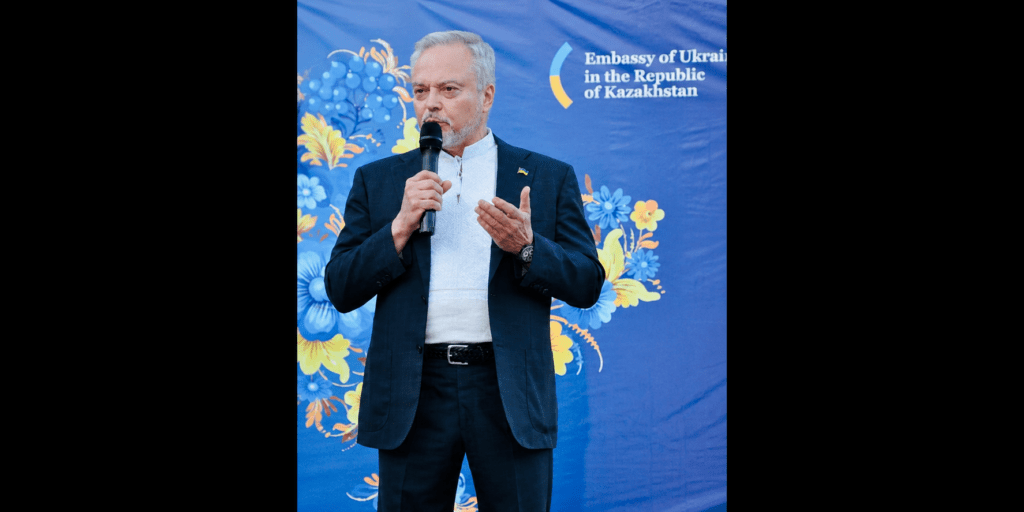
As the war between Russia and Ukraine approaches its fifth year, diplomatic efforts to reshape trade routes, energy flows, and regional partnerships are intensifying far beyond the battlefield. For Ukraine, Central Asia has emerged as an increasingly important economic and logistical partner, particularly as Kyiv seeks alternatives to disrupted transport corridors and supply chains. The Times of Central Asia spoke with Viсtor Mayko, Ukraine’s Ambassador to Kazakhstan, about the prospects for deeper economic cooperation with Central Asia, the role of the Middle Corridor, energy transit challenges in the Caspian region, Kyiv’s expectations for international support, and a possible path toward ending the war. Trade and Economic Prospects in Central Asia TCA: Mr. Ambassador, what are the prospects for deepening trade and economic partnerships between Ukraine, Kazakhstan, and wider Central Asia? Which sectors offer the greatest potential for cooperation? Ambassador Mayko: Deepening trade and economic ties between Ukraine, Kazakhstan, and other Central Asian countries is not merely a prospect; it is a necessity dictated by global economic trends. Kazakhstan leads the region economically, with a GDP exceeding $300 billion. It is on a trajectory to join the G20 within 5 to 10 years. The United States, recognizing this potential, has invited Kazakhstan to the upcoming G20 meeting in the U.S., demonstrating Kazakhstan’s rising global significance. Ukraine and Kazakhstan’s economies are complementary. Ukraine brings experience in agricultural technology, mechanical engineering, IT, and processing, while Kazakhstan contributes resource strength, industrial capacity, and logistics. Promising areas for cooperation include agro-industrial development, from crop production to digitalized processing; industrial cooperation through equipment supply and joint production; logistics and infrastructure aimed at strengthening transport corridors; and energy and IT projects focused on efficiency and network modernization. We are already transitioning from theory to action. A major business delegation from Ukraine will visit Kazakhstan this year. We also anticipate another meeting of the Joint Ukrainian-Kazakh Intergovernmental Commission on Economic Cooperation, which is crucial for removing barriers and initiating new projects. Ukraine’s presence in Kazakhstan’s economy has historically been significant. If not for the war and resulting transport disruptions, I believe our mutual trade could have reached $10 billion. Ukrainian machinery still accounts for a substantial portion of Kazakhstan’s industrial base, especially in regions such as Karaganda, Aktau, and Pavlodar, though much of this equipment now requires modernization. Another promising area is mineral resource development. Ukraine has the scientific and practical base to contribute meaningfully to this sector. Turkmenistan’s earlier collaboration with Ukrainian firms in revitalizing depleted wells illustrates our potential. Wells deemed exhausted by older technologies yielded hundreds of thousands of tons of oil under Ukrainian management. This successful model can be applied in Kazakhstan, one of the EU’s top three oil suppliers. Transport Infrastructure and the Middle Corridor TCA: How is cooperation in the transport sector developing, especially regarding the Middle Corridor? Are there any potential plans for joint infrastructure projects? Ambassador Mayko: Russia’s full-scale aggression disrupted Ukraine’s previous logistics routes. Today, we prioritize alternatives like the Trans-Caspian International Transport Route, the “Middle Corridor”, as a...

5 months ago

After Leaders’ Calls with Trump, Kazakhstan and Uzbekistan’s G20 Invitations Are a Signal to Central Asia

Reports of telephone conversations between the presidents of Kazakhstan and Uzbekistan with U.S. President Donald Trump came the day before a notable event on the international agenda. Trump has publicly announced his intention to invite the leaders of the two most influential Central Asian countries to the G20 summit, which the U.S. plans to hold in Miami in 2026. Despite the brevity of the official releases, they indicate not only the steady development of bilateral relations, but also a broader geopolitical signal. This statement has attracted increased interest from the international media, from the Los Angeles Times and Chicago Tribune to Agenzianova and Economic Times, which in itself highlights the increased attention to the Central Asia region. The report by Akorda, Tokayev’s press service, on the conversation between him and the U.S. president emphasizes that the conversation was “lengthy”. Tokayev noted the complexity of resolving the war in Ukraine, expressing his view that the territorial issue remains key and requires compromises, taking into account the real situation “on the ground.”  In this regard, Kazakhstan called on all parties to show patience and flexibility, stressing that it does not seek to act as a mediator but is ready to provide a platform for negotiations if necessary. It is noteworthy that the topic of peace talks is reflected in the Kazakh release but is absent from Trump's own statement. At the same time, the Akorda statement makes no mention of a possible invitation to Kazakhstan to attend the G20 summit. The situation is similar with the official statement from the administration of Shavkat Mirziyoyev. It focuses on the growth in political contacts, the launch of joint projects worth tens of billions of dollars, the creation of an American-Uzbek business and investment council, as well as the development of regional cooperation and the C5+1 format. However, possible participation in the G20 summit is also not mentioned. Meanwhile, Trump himself wrote directly on his social network Truth Social that the U.S. will host the G20 summit next year and intends to invite the presidents of Kazakhstan and Uzbekistan as guests. At this point, it appears to be only an intention, not a formal invitation. Nevertheless, even this signal indicates a noticeable shift in the priorities of U.S. foreign policy towards Central Asia. If Kazakhstan and Uzbekistan receive an official invitation (even as guests), this will be a de facto recognition of their role as “middle powers” in contemporary world politics. The context of what is happening also deserves attention. The telephone conversations with Trump took place immediately after an informal meeting of CIS leaders in St. Petersburg, an event that was more of a ritual in nature.  The last summit was notable for the conspicuous absence of the president of Azerbaijan, Ilham Aliyev, despite previously announced meetings in the Kremlin. Officially, Baku explained that this was due to Aliyev’s busy schedule. Although there is still considerable time before the G20 summit, preparations for it have already begun. In mid-December, the first meeting of G20 “sherpas” was held in Washington, featuring representatives of the...

7 months ago

Trump Signals G20 Invitation in Outreach to Kazakhstan and Uzbekistan

Recent telephone conversations between the presidents of Kazakhstan and Uzbekistan and United States President Donald Trump have generated significant international attention. Beyond routine diplomatic communication, the exchanges carry broader geopolitical implications for Central Asia. Trump has publicly stated his intention to invite the leaders of both countries to the G20 summit, which the United States will host in Miami in 2026. The announcement drew widespread international media coverage, highlighting growing global interest in the region. Official statements from Kazakhstan’s presidential office said that President Kassym-Jomart Tokayev held a lengthy conversation with Trump that covered a range of issues, including the conflict in Ukraine. Tokayev described the situation as complex, noting that territorial concerns remain central and require realistic compromises. He reiterated Kazakhstan’s readiness to offer a platform for negotiations, while clarifying that the country does not seek to act as a mediator. Notably, Kazakhstan’s official summary did not mention a potential G20 invitation, nor did the U.S. readout refer to peace talks. Uzbekistan’s statement likewise focused on strengthened political engagement, the launch of joint projects worth billions of dollars, the establishment of an American-Uzbek Business and Investment Council, and expanded regional cooperation, including within the C5+1 format, without explicitly mentioning the G20 summit Despite these omissions, Trump confirmed on his social network Truth Social that the U.S. plans to host the G20 next year and intends to invite the presidents of Kazakhstan and Uzbekistan as guests. At this stage, the announcement appears to be an expression of intent rather than a formal invitation. Nevertheless, the signal marks a notable shift in U.S. foreign policy priorities toward Central Asia. Even guest invitations for Kazakhstan and Uzbekistan would amount to recognition of their growing roles as “middle powers” in global affairs, giving them a rare platform to engage directly with the world’s leading economies. Regional Context and Broader Dynamics The timing of the calls is significant. They followed an informal meeting of Commonwealth of Independent States (CIS) leaders in St. Petersburg, an event observers characterized as largely ceremonial. The summit was marked by the conspicuous absence of Azerbaijan’s president, who cited scheduling conflicts for his nonattendance. Preparations for the 2026 G20 summit are already underway. In mid-December, the first meeting of G20 Sherpas was held in Washington, bringing together representatives from the world’s leading economies and international organizations. Poland was invited as the only full guest of the U.S. presidency for this meeting. The State Department outlined key priorities for the upcoming summit: stimulating economic growth, ensuring access to reliable and affordable energy, and advancing innovative technologies. While the G20 is a forum rather than a formal international organization, and its decisions are advisory and shaped by differing member interests, participation would still provide Kazakhstan and Uzbekistan with an influential platform. Direct engagement at this level would allow both countries to present their priorities on economic development and sustainable growth to a global audience.

7 months ago

Gor and Landau Tour Central Asia Amid Rising Stakes

On October 25, U.S. Special Representative for South and Central Asia Sergio Gor and Deputy Secretary of State Christopher Landau arrived in Tashkent on an official visit. The visit to Central Asia was not publicly scheduled in advance, with news of the trip only emerging a few days beforehand. In Uzbekistan, the high-ranking visitors were received with full state honors. A motorcycle escort and blocked roads in the capital are typically reserved for visits by heads of state. Although the American delegation’s visit to Uzbekistan ended by Monday evening, local media coverage remained scant. Apart from posts on the U.S. Embassy in Uzbekistan’s Telegram channel, almost no media outlets covered the event. On the evening of October 25, Gor and Landau held productive talks with representatives of U.S. companies about numerous opportunities to strengthen mutual prosperity. Afterwards, they traveled to Samarkand, where they toured the city often referred to as the pearl of Central Asia. On October 26, the visitors held fruitful talks with Foreign Minister Saidov, thanking him for his leadership and hospitality throughout the visit. His efforts, they noted, are elevating the strategic partnership between the U.S. and Uzbekistan to a new level. The delegation also held “productive” talks with Ministers Bobir Islamov and Laziz Kudratov on expanding trade and investment ties. By Monday evening, Gor and Landau had arrived in Almaty, Kazakhstan. As the largest city in the country, Almaty is also one of Central Asia’s key business hubs. According to sources, the agenda in Kazakhstan includes meetings with business leaders and a cultural program. As in Uzbekistan, there was no official information about the visit released on Monday. This may, however, be because Monday was a national holiday - Republic Day – an event which President Donald Trump extended his congratulations to mark, stating that ““The United States values ​​our close economic and security ties with Kazakhstan and looks forward to further strengthening our expanded strategic partnership in the coming year.” Secretary of State Marco Rubio also sent his “congratulations to the people of Kazakhstan.” By all indications, the lightning-fast visit by the senior U.S. delegation is linked to the recently announced C5+1 summit in Washington on November 6. Beyond cultural sightseeing, the talks reportedly covered cooperation in rare earth mineral processing and other sensitive areas. Recently, U.S. interest in the countries of the region has expanded significantly. While China and, traditionally, Russia are considered the main players in the region, Europe and the U.S. are increasingly seeking a firmer foothold in Central Asia’s strategic landscape. Recent global conflicts have exposed major powers’ dependence on raw materials and logistics routes. The search for new corridors and suppliers now seems both logical and urgent. Sanctions on Russia have also had a direct impact on regional economies, requiring swift responses. The C5+1 format presents an ideal framework for launching coordinated political and business cooperation. Yet, it’s essential to recognize the significant disparities among Central Asian countries. Kazakhstan is the region’s financial heavyweight. According to the IMF, Kazakhstan’s GDP per capita...

9 months ago