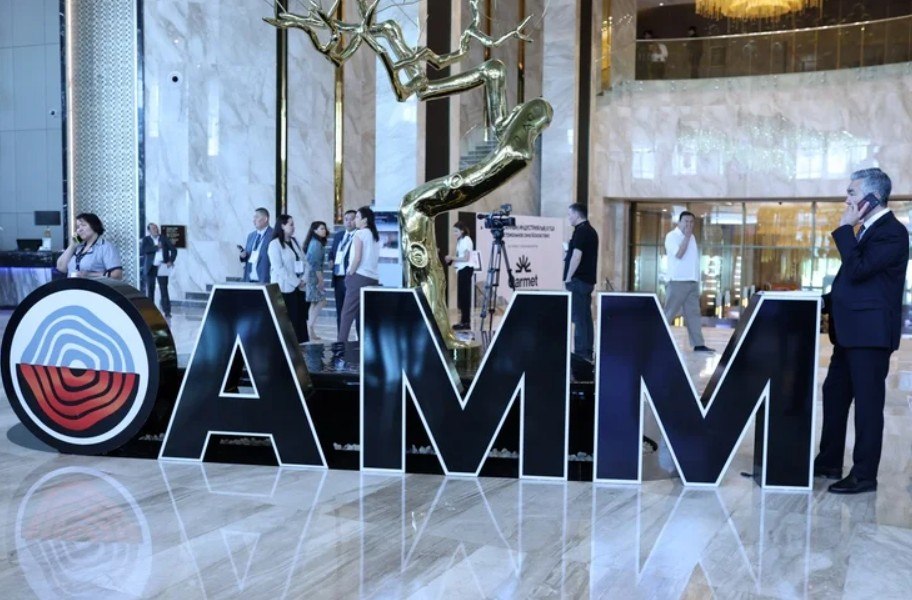
The pace of U.S. commercial engagement in Central Asia has quickened in recent weeks, with business delegations, export-finance officials, and sector-specific agreements appearing across the region. In June, a U.S. business delegation discussed investment opportunities in Turkmenistan, while Assistant Secretary of Commerce and Director General of the U.S. and Foreign Commercial Service David L. Fogel used the Astana Mining and Metallurgy Congress to press for practical cooperation in critical minerals.
That same month, the Tashkent International Investment Forum drew John Jovanovic, president and chairman of the Export-Import Bank of the United States, and Ben Black, chief executive officer of the U.S. International Development Finance Corporation. Kazakhstan and U.S. companies signed artificial intelligence agreements worth $10 billion, Uzbekistan agreed to reduce tariffs on a range of U.S. goods, and Kyrgyzstan’s Civil Aviation Agency held talks with U.S. Ambassador Leslie Viguerie on aviation cooperation.
Taken together, these moves suggest a change in tone. Washington’s regional agenda is increasingly being expressed through commercial missions, project finance, technology partnerships, and trade mechanisms rather than broad diplomatic declarations. The shift from diplomacy to deals is becoming visible in several capitals at once.
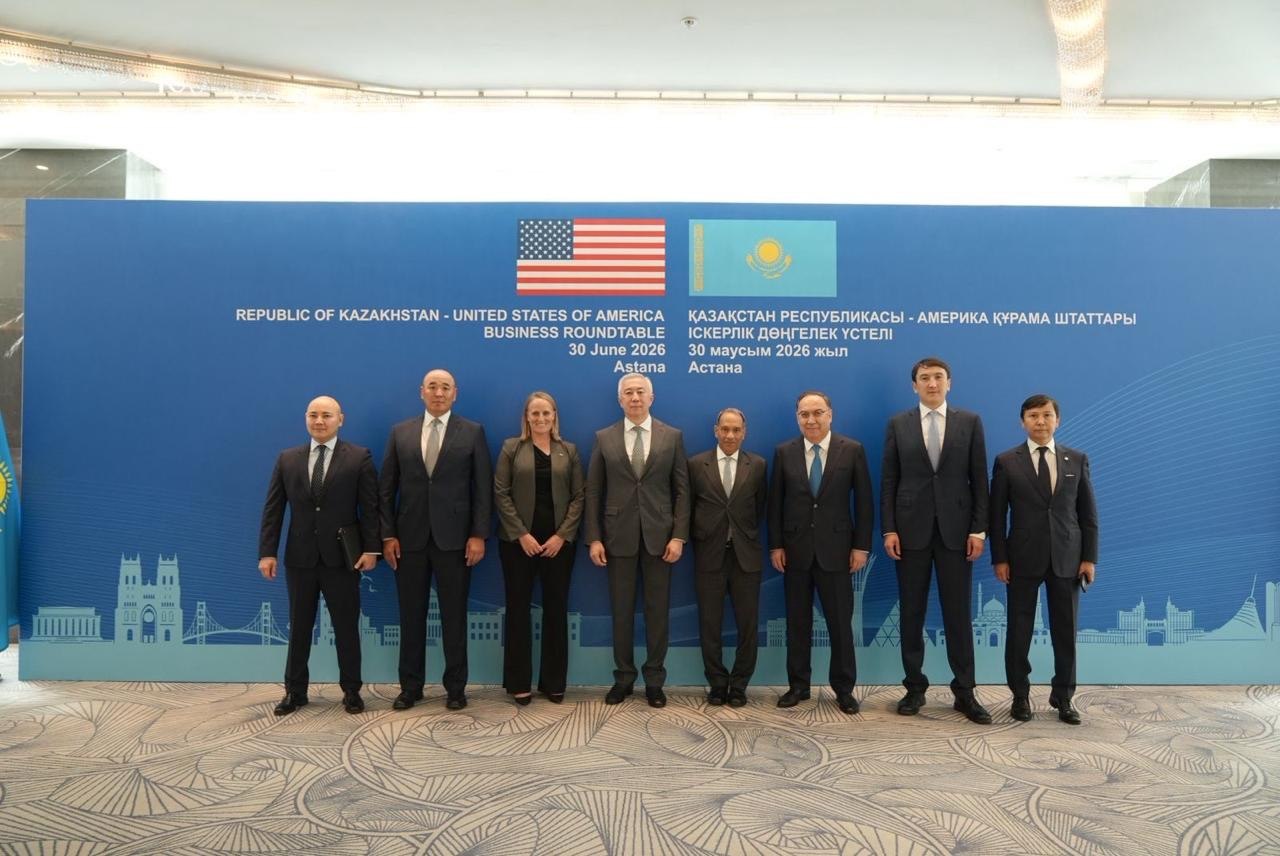
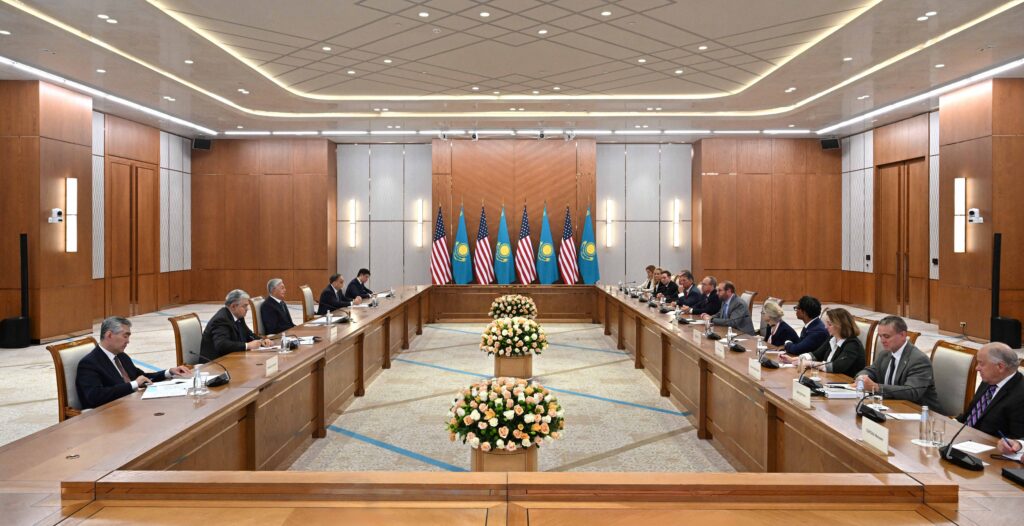
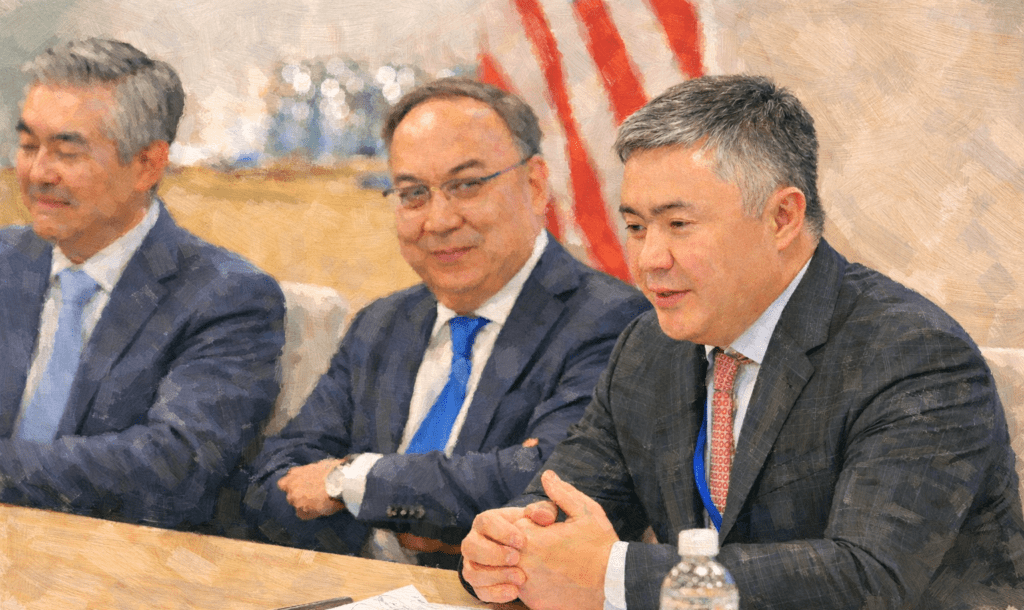
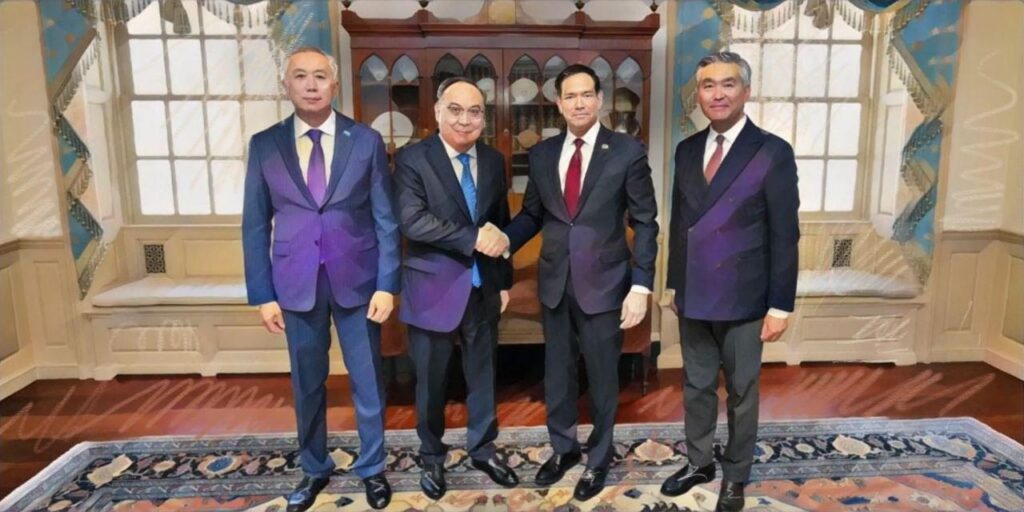
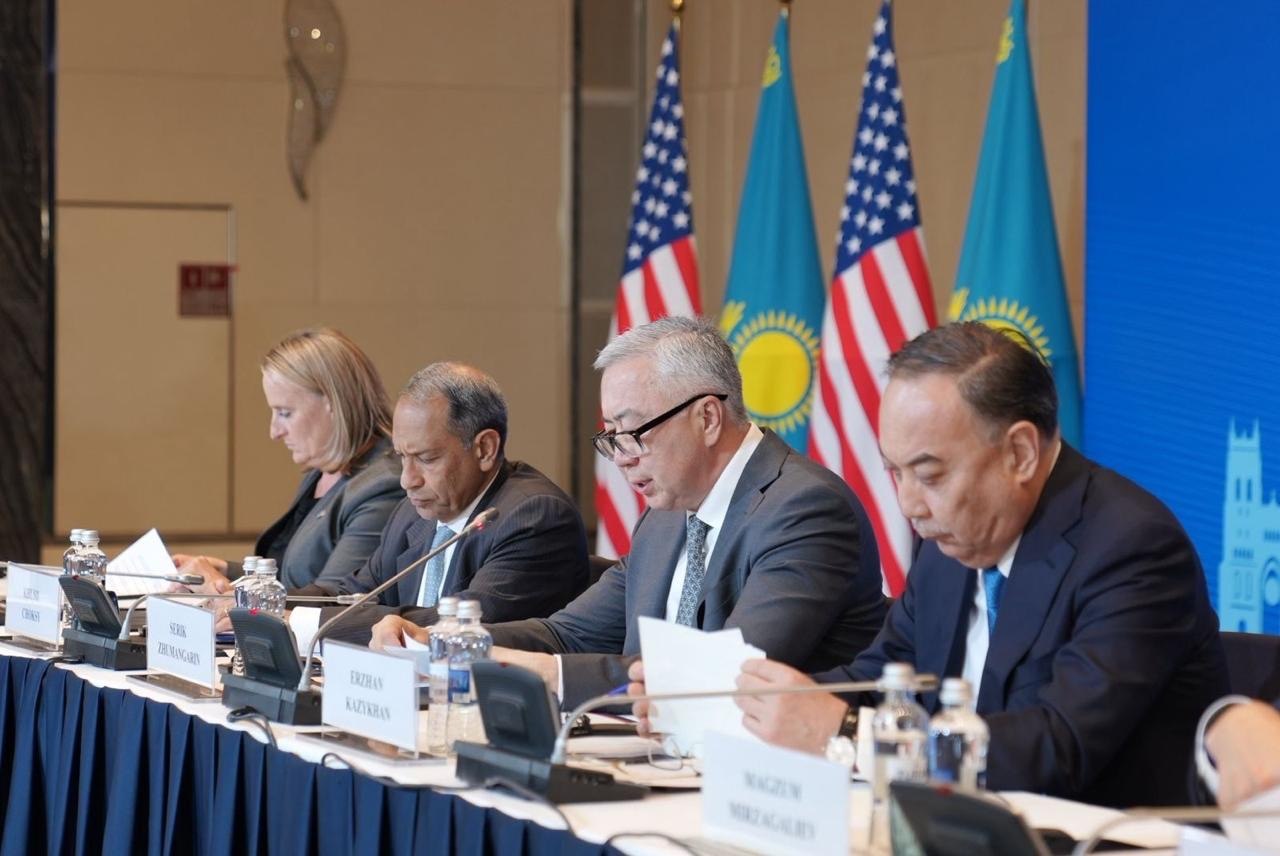
Image: The Republic of Kazakhstan – the United States of America roundtable
Against that background, a roundtable titled “The Republic of Kazakhstan – the United States of America” was held in Astana on June 30. It was organized by Atameken National Chamber of Entrepreneurs, the U.S. Chamber of Commerce, and the Chamber of Commerce of Kazakhstan.
The U.S. delegation was led by Khush Choksy, senior vice president for international member relations at the U.S. Chamber of Commerce, who oversees programs in the Middle East, Türkiye, and Central Asia. The Kazakh delegation was led by Ambassador Yerzhan Kazykhan, Kazakhstan’s presidential representative for negotiations with the United States.
For Choksy, the visit continued a longer push by the U.S. Chamber. He visited Kazakhstan in 2023 and 2025, and has repeatedly described the country as a strong platform for American business. Yet trade remains modest compared with the political ambition attached to the relationship.
According to Kazakh government data, bilateral trade between Kazakhstan and the U.S. reached $3.19 billion in 2025, while USTR estimates U.S. goods trade with Kazakhstan at $5 billion. U.S. goods trade with Uzbekistan, the region’s most populous country, was just over $1 billion in 2025. The figures underline the gap between strategic interest and commercial scale.
The reasons for this are not limited to distance. Disrupted logistics, sanctions risks linked to Russia’s war in Ukraine, and instability in parts of the Middle East have complicated long-distance trade. The Jackson-Vanik amendment, adopted in 1974, also remains formally applicable to Kazakhstan despite repeated efforts in Washington to repeal it and grant the country permanent normal trade relations status.
The Astana roundtable brought together government agencies, companies, international corporations, financial institutions, and policy experts. Participants discussed investment cooperation, energy, digital transformation, infrastructure, innovation, transport, and logistics. B2B meetings were also held, along with meetings between U.S. companies and Kazakh ministries and agencies.
Deputy Prime Minister Serik Zhumangarin opened the event. He outlined the conditions available to investors in the Astana Special Economic Zone and pointed to large project pipelines in mining, infrastructure, and utilities.
According to Zhumangarin, Kazakhstan’s mineral extraction and processing potential is estimated at about $95 billion. He said the national investment plan includes more than 200 projects worth around $80 billion, while modernization of utility networks could add another $25 billion.
Kazykhan framed Kazakhstan as the region’s main entry point for U.S. companies. “Today, Kazakhstan accounts for around 60% of Central Asia’s GDP,” he said. “More than 600 American companies operate in our country, and cumulative U.S. investment exceeds $100 billion.”
He pointed to Chevron and ExxonMobil in energy, Wabtec and Boeing in transport infrastructure, John Deere, Caterpillar, and Honeywell in industry, and Microsoft, Amazon, and Google in digital transformation. The examples were designed to show that U.S.-Kazakh cooperation is no longer confined to oil and gas.
Kazykhan also emphasized transport. He said 85% of Eurasian transit container traffic passes through Kazakhstan, and that the country has invested $35 billion in transport infrastructure to keep routes reliable and diversified.
AI formed another part of the push. Astana plans to host a C5+1 AI Conference on the margins of the Digital Bridge Forum in October, giving Kazakhstan a platform to promote cooperation with the United States on trusted technologies, AI infrastructure, and the digital economy.
Choksy said the U.S. Chamber would advocate for American companies in support of a bipartisan congressional initiative to repeal Jackson-Vanik fully for Kazakhstan and grant the country permanent normal trade relations status.
Recent U.S. activity in Central Asia clearly indicates a rethinking of the region’s role in international cooperation. Leaders are moving from cautious talk about the need for economic development and mutually beneficial trade to concrete, pragmatic projects. The parties are striving to increase mutual investment, exchange and develop technology, and grow mutually beneficial trade. It is precisely this mutual interest that should guarantee stable economic development and security in this part of Eurasia.