
• KZT/USD = 0.00223
  • TJS/USD = 0.10810
  • UZS/USD = 0.00009
  • TMT/USD = 0.29850
  • KZT/USD = 0.00223
  • TJS/USD = 0.10810
  • UZS/USD = 0.00009
  • TMT/USD = 0.29850
  • KZT/USD = 0.00223
  • TJS/USD = 0.10810
  • UZS/USD = 0.00009
  • TMT/USD = 0.29850
  • KZT/USD = 0.00223
  • TJS/USD = 0.10810
  • UZS/USD = 0.00009
  • TMT/USD = 0.29850
  • KZT/USD = 0.00223
  • TJS/USD = 0.10810
  • UZS/USD = 0.00009
  • TMT/USD = 0.29850
  • KZT/USD = 0.00223
  • TJS/USD = 0.10810
  • UZS/USD = 0.00009
  • TMT/USD = 0.29850
  • KZT/USD = 0.00223
  • TJS/USD = 0.10810
  • UZS/USD = 0.00009
  • TMT/USD = 0.29850
  • KZT/USD = 0.00223
  • TJS/USD = 0.10810
  • UZS/USD = 0.00009
  • TMT/USD = 0.29850
22 September 2026

Our People > Bruce Pannier

Bruce Pannier's Avatar

Bruce Pannier

Bruce Pannier is a Central Asia Fellow in the Eurasia Program at the Foreign Policy Research Institute, the advisory board at the Caspian Policy Center, and a longtime journalist and correspondent covering Central Asia. For a decade, he appeared regularly on the Majlis podcast for RFE/RL, and now broadcasts his Spotlight on Central Asia podcast in partnership with The Times of Central Asia.

Articles

Tajikistan’s Islamic Opposition Changes Leader After 20 Years

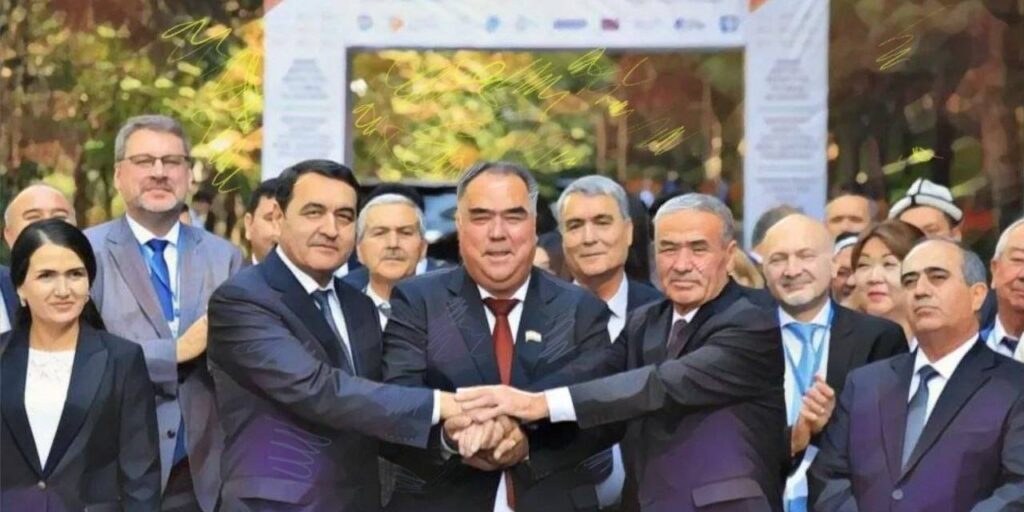
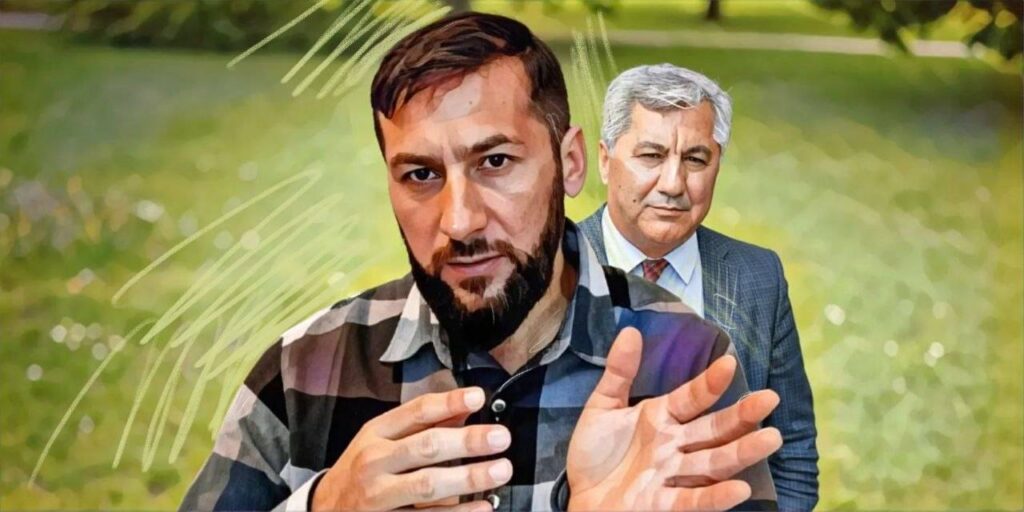
The Islamic Renaissance of Tajikistan (formerly the Islamic Renaissance Party of Tajikistan) has elected a new chairman after longtime leader Muhiddin Kabiri decided to step down. The IRP has been one of the most influential groups in Tajikistan since the country became independent in late 1991. The organization subsequently became the principal target of a sustained government crackdown, which culminated in its activities being banned in Tajikistan and pressure being applied to members who fled the country. The New Leader Members of the IRP’s Supreme Presidium met in Vilnius, Lithuania, on September 19 to choose from three candidates: Abubakr Nuri, Abdukodir Shehov, and Islomiddin Saidov. Sixty-four percent of members voted for Saidov, the group's first deputy chairman. In late August 2026, the IRPT changed its name to simply the Islamic Renaissance of Tajikistan. Saidov, who made that announcement, explained to the Tajik opposition’s Azda TV that the removal of the word “Party” and the change of the organization’s symbols were part of internal reforms. The leadership change appears to be another part of those reforms, although Kabiri said he had wanted to step down as the group’s leader for some time. Edward Lemon, president of the Washington-based Oxus Society for Central Asian Affairs, has followed events in Tajikistan for some two decades. He has lived in the country and speaks Tajik. He met Saidov and describes him as a moderate, much like Kabiri. Saidov is from Nurobod in the Rasht Valley, and, according to Lemon, is a cleric “who takes a firm stance on issues of authoritarianism and Islamic rights.” Saidov takes over Tajikistan’s largest opposition group, but one that has been embattled for years and forced to conduct its work far from the borders of Tajikistan. There Since the Start The Islamic Renaissance Party of Tajikistan (IRPT) was formed in the final years when Tajikistan was a Soviet republic, after Mihail Gorbachev’s perestroika policy was implemented. Following independence in 1991, the IRPT spearheaded the opposition to the government that eventually took over and was led by Rahmon Nabiyev, a former leader of the Tajik Soviet Socialist Republic who was ousted in Gorbachev’s anti-corruption campaign in the mid-1980s. When civil war broke out in the spring of 1992, the IRPT joined forces with the Democratic Party of Tajikistan and the Pamiri organization La’li Badakhshan to fight government forces. The IRPT was the backbone of this unlikely alliance. When the Tajik Peace Accord ended the war in June 1997, then-IRPT leader Said Abdullo Nuri signed on behalf of the opposition. The peace deal legalized all three opposition groups, making the IRPT the first, and to date only, Islamic party to be registered in any Central Asian country since the collapse of the Soviet Union. The agreement also stipulated that the opposition would receive 30% of positions in the government, from local to ministerial posts. Marginalized and Ousted The arrangement lasted only a few years before Emomali Rahmon, who had come to power during the civil war, gradually began removing former opposition...

4 minutes ago

Kyrgyz Court Upholds Ex-Security Chief Tashiyev’s Conviction but Changes Charge

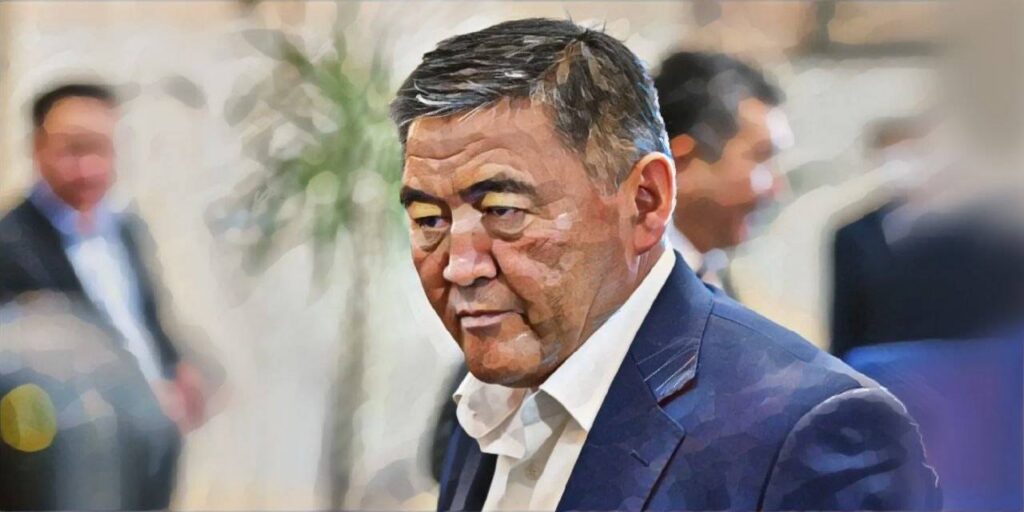
On September 10, the Bishkek City Court upheld convictions against former security chief Kamchybek Tashiyev and seven others, but changed the offense from plotting to overthrow the government to interfering with electoral rights. All eight had been convicted in July of plotting the violent overthrow of the government. They received four-year prison sentences, replaced by three years of probation. The change has added to the confusion surrounding the alleged plot. On September 14, Tashiyev’s lawyer asked the Prosecutor General’s Office to investigate the appeal judges’ actions, saying the defense had received no warning of the new charge. The Letter of 75 The saga started in February, when a group of 75 prominent figures in Kyrgyzstan released an open letter calling on President Japarov to call for an early presidential election. The group argued that Japarov was elected in January 2021 under the terms of the previous constitution, which allowed a president one six-year term in office. Several months after Japarov was elected, the country approved a new constitution that gave an individual the right to be elected to two five-year terms as president. Within hours of the letter’s publication, the authorities started rounding up some of the authors of the letter, and President Japarov dismissed his long-time friend Tashiyev as security chief. Japarov said he dismissed Tashiyev to “prevent a split in society,” and for weeks after that, the Kyrgyz president was evasive about the exact reason for sacking a man Japarov continued to call his close friend. In an interview in late April, parliamentary deputy Elvira Surabaldiyeva was the first Kyrgyz official to clarify that Tashiyev was being charged with planning a coup. The trial opened on June 15. Tashiyev’s co-defendants were former Prosecutor General Kurmankul Zulushev, former Parliamentary Speaker Nurlanbek Turgunbek uulu, former Deputy Interior Minister Kursan Asanov, former Deputy Prime Minister Aaly Karashev, and politicians Emilbek Uzakbayev, Bekbolot Talgarbekov, and Kurmanbek Dyykanbayev. On July 2, all eight were found guilty of plotting the violent overthrow of the government. The court imposed four-year prison sentences and ordered confiscation of their property, but replaced imprisonment with three years of probation. Most of the defendants and the prosecution appealed the court decision, setting the stage for the court ruling on September 10. Still Guilty, but of Something Different The prosecution sought to have the sentences increased to nine years in prison for all the defendants. The defendants, of course, wanted to be exonerated. On September 10, the Bishkek City Court rendered its verdict. All eight defendants were declared guilty, but not of attempting to overthrow the government. They were guilty of “interfering with exercising voting rights.” The court retained the four-year prison terms but again allowed all eight defendants to serve probation instead. It reduced probation from three years to two and lifted the property confiscation order. Zulushev’s lawyer has said he will appeal to the Supreme Court. Tashiyev’s lawyer has separately asked prosecutors to investigate the appeal judges’ actions, arguing that his client was convicted on a charge the...

1 week ago

For the CSTO, Afghanistan Might Be the Last Credible Threat

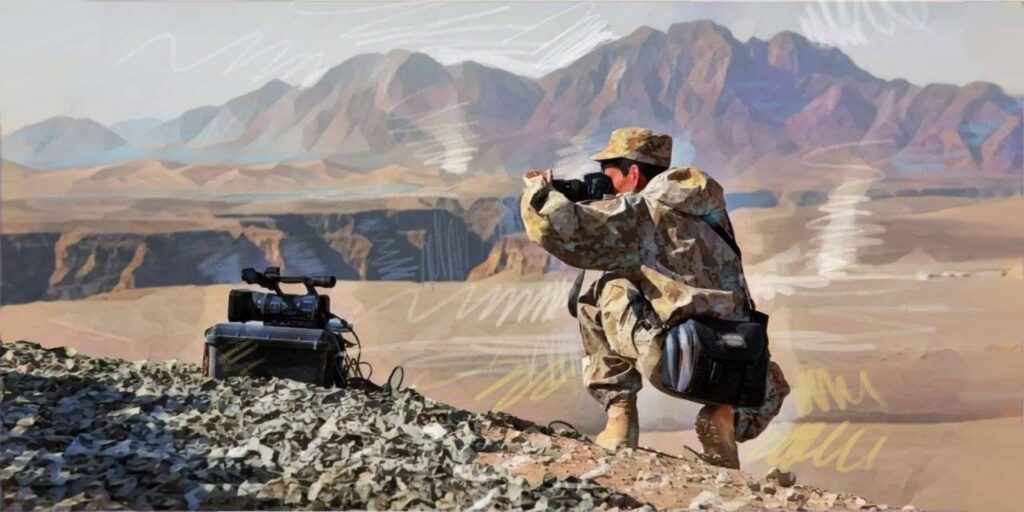
The Russian-led Collective Security Treaty Organization is conducting its “Rubezh (Frontier) 2026” military exercises from September 12-19. Those exercises are designed with Afghanistan in mind, a country that the CSTO has been talking about frequently in 2026, and also one where militant groups pose a shared threat to its members. And even the Taliban are no longer viewed as the threat they once were. Frontier 2026 The Frontier 2026 exercises are taking place at the Koktal training ground in southeastern Kazakhstan’s Zhetysu Province. The CSTO’s Rapid Deployment Force is practicing to repel cross-border incursions in mountain and desert terrain. The exercises come this time as concerns about infiltration by militants in Afghanistan into CIS territory are increasing. Russian Defense Minister Andrei Belousov said on September 8 that Russia is paying special attention to strengthening Tajikistan’s border with Afghanistan. The Tajik authorities have been calling for additional aid for the country’s border forces since a series of attacks from Afghanistan in November 2025 left five Chinese workers in southern Tajikistan dead, followed by an attack in December that killed two Tajik border guards. Tajikistan has regularly asked for international help in guarding its frontier with Afghanistan since independence in 1991. But after the violence at the end of 2025, the Tajik government appealed especially to its fellow members in the CSTO for increased assistance. CSTO Secretary General Taalatbek Masadykov said at the end of August that the first shipment of weapons and equipment would be sent to Tajikistan this autumn. Raison D’être The Collective Security Treaty was signed in Tashkent, Uzbekistan, in 1992 by representatives from Armenia, Kazakhstan, Kyrgyzstan, Russia, Tajikistan, and Uzbekistan. In 1993, Azerbaijan, Belarus, and Georgia joined. The purpose was simple. If any of the member states was attacked by an external enemy, that state could request aid, including military assistance, from the other members. In the early 1990s, there were potential enemies for the Treaty members in practically every direction. The Soviet Union had collapsed in late 1991. There were questions about how the former Communist Bloc countries and their new Western allies might act. The theocratic regime in Iran was a possible threat to the South Caucasus and Central Asia, and the latter region had unstable Afghanistan to worry about also. China was a concern for Central Asia and Russia. Back then, banding together made sense for the nine newly independent states that signed the treaty. When Azerbaijan, Georgia, and Uzbekistan dropped out in 1999, it appeared the Collective Security Treaty was on the brink of becoming irrelevant. After Vladimir Putin became Russia’s president, he put a new emphasis on a security bloc within the CIS, and in 2002, the remaining six treaty members signed a new charter. However, now, in 2026, the list of the CSTO’s potential external threats is greatly reduced. Far from being a security concern, China is now a leading trade partner for Russia, Kazakhstan, Kyrgyzstan, and Tajikistan, and provides military assistance to all four countries. Iran’s relations with the West remain...

1 week ago

Uzbekistan Cotton: Mirziyoyev Decries ‘Slaves to Cotton’ Past

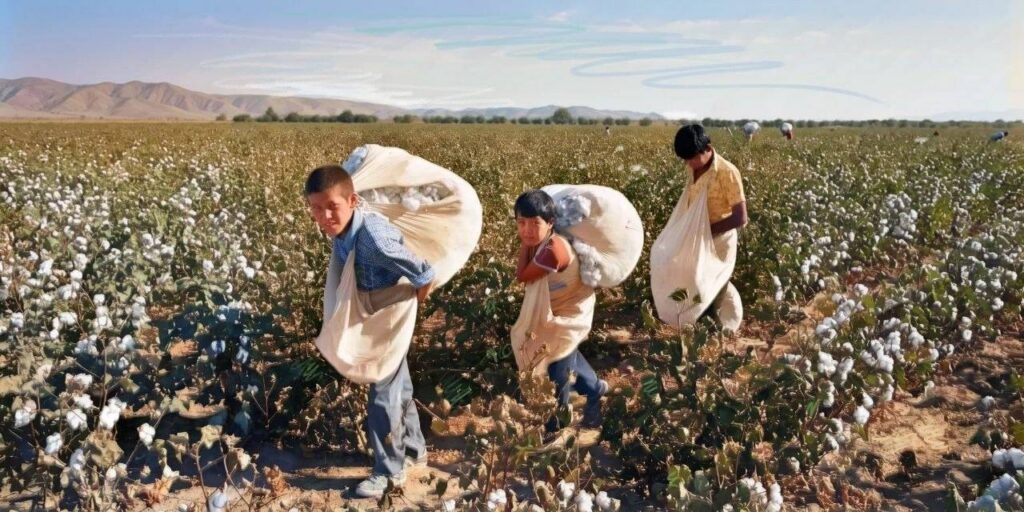
For decades now, anyone driving through Uzbekistan, especially through agricultural areas, would likely at some point along the road have encountered a hill with rocks arranged near the top to spell out “Paxta – Bizning Oq Oltinimiz.” It translates from Uzbek as “Cotton is our white gold” and it was a mantra in Uzbekistan going back to the days of the Soviet Union. However, Uzbekistan’s current president, Shavkat Mirziyoyev, does not share this view of cotton’s value to his people and was recently cited as saying the crop turned many people in Uzbekistan into “slaves of cotton.” A Black History of White Gold Going back to the early years after the Russian Tsarist Empire seized what is now Uzbekistan in the 1860s, Moscow viewed the area as an ideal source of cotton and promoted giving over agricultural land for cotton growing. Uzbekistan remained a major cotton producer as part of the Soviet Union and the emphasis on growing the crop increased. Soviet propaganda stressed production of cotton as a patriotic duty and every year, hundreds of thousands of people, including children, were forced into the cotton fields to work as “volunteers” at harvest time. The practice and the propaganda carried over when Uzbekistan became independent in late 1991. If anything, cotton gained a new importance in independent Uzbekistan. Uzbekistan did not have much to sell on international markets and cotton sales were an important means of earning hard currency. This was true for years. In 1995, Uzbekistan’s cotton sales totaled some $1.6 billion and two years later totaled $1.4 billion. While the price of cotton fell on world markets, Uzbekistan’s cotton sales were still bringing in nearly $1 billion in 2008 and in 2013 cotton and textile sales amounted to just over $1 billion. The continued use of forced labor, mainly women and children, drew international criticism and sparked calls to boycott Uzbek cotton. The Cotton Campaign launched efforts to persuade international brands to stop using cotton from Uzbekistan in 2009, with more than 330 brands eventually joining the boycott. But countries such as China, Bangladesh, Vietnam, and Iran still bought Uzbek cotton and forced labor in Uzbekistan’s cotton fields continued. In 2014, a Human Rights Watch report said, “The Uzbek government forcibly mobilized nearly 2 million adults and children during the autumn cotton harvest to pick cotton in abusive conditions for little to no pay.” Local officials, the heads of factories and other businesses had to meet quotas for the labor force in the fields. Imams used sermons to exhort worshippers to go pick cotton, saying it was a religious duty. The Luster Wears Off Even before he was president, Mirziyoyev indicated he took a different view of the use of forced labor in the cotton fields. In late July 2016, as international pressure was mounting, then-Prime Minister of Uzbekistan Mirziyoyev told all the provincial governors, “Each of you will be held personally accountable for the use of child labor” and added, “If I see even a single child...

3 weeks ago

Russian Fuel Shortages Revive Tajikistan’s Search for Oil and Gas

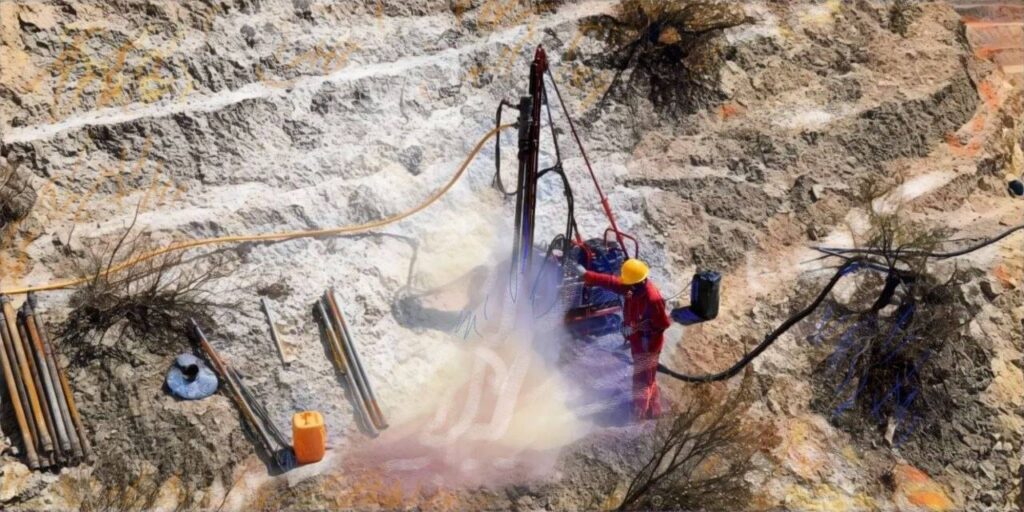
On July 10, Tajikistan’s Energy Minister Daler Juma said the country had enough fuel to last two more months. This situation is due to Tajikistan’s dependence on Russian petroleum products, which are in short supply in Russia itself because of Ukrainian drone strikes on Russian oil refineries. Located in the southeast corner of Central Asia and ringed by mountains on three sides, Tajikistan has few options to replace those Russian supplies, so the Tajik authorities are preparing to try again to find domestic hydrocarbon supplies. Looking to Strike Oil at Home Estimates of the share of Tajikistan’s petroleum imports supplied by Russia range from 70% to 80%. Tajikistan’s head of civil aviation, Habibullo Nazarzoda, said on July 9 that his country is facing shortages of airplane fuel and is in talks with Turkmenistan. Russia has a prohibition on exporting aviation kerosene that runs from June 1 to November 30. Tajikistan does have hydropower and coal, but neither one of those helps with shortages at petrol stations, and much of the internal transport of people and goods in mountainous Tajikistan is done via the road network. So, Tajikistan is again looking at the potential to develop domestic hydrocarbon fields, this time with the help solely of the China National Petroleum Corporation (CNPC). On July 7, the head of the Tajik government’s Geological Department, Ilhom Oymuhammadzoda, said CNPC was already carrying out exploration at several potential hydrocarbon deposits in Tajikistan. “I think [CNPC] will present a progress report on the seismic survey operations by the end of the year,” Oymuhammadzoda told a press conference in Dushanbe. He named the Tajik Depression, in southwestern Tajikistan, and the Ferghana Basin, in northwestern Tajikistan, as two of the more promising sites. However, Oymuhammadzoda indicated that work in northern Tajikistan could require drilling down to a depth of 7,000 meters. Tajikistan’s Search for Oil and Gas Past studies of Tajikistan’s potential oil and gas fields point especially to the southwest of the country as a logical place to seek these hydrocarbons. Southwest Tajikistan is adjacent to gas and oil fields in southern Uzbekistan that have been producing for decades, to fields in northern Afghanistan, where exploration has confirmed commercial flows, and not too far east from the giant gas fields in Turkmenistan. Looking at a map, it seems logical that southwest Tajikistan is part of this same hydrocarbon structure. In 2008, Canadian company Tethys started exploring the Bokhtar area about 100 kilometers south of Dushanbe. Tethys found both oil and gas in the area. In 2012, the Canadian company estimated the area’s gross prospective resources at 8.5 billion barrels of oil and condensate and 3.22 trillion cubic metres of gas. For a small country like Tajikistan, it was potentially enormous, although these resources remained unconfirmed and commercially unproven. However, getting to that oil and gas required drilling wells that were 3,500 meters or deeper, which greatly added to production costs. In 2013, Gazprom International drilled a well at the Sarykamysh field in southwest Tajikistan that was...

2 months ago

Kyrgyz Court Convicts Former Security Chief Tashiyev, Parliamentary Speaker, and Six Others

The trial of high-ranking Kyrgyz officials accused of plotting to overthrow the government concluded on July 2. All eight defendants, including the former chief of Kyrgyzstan’s security service and the former speaker of parliament, were found guilty and sentenced to four years in prison. However, none will actually serve any prison time as the court ordered them all placed on probation for the next three years. The Letter of 75 It all started on February 9, 2026, when a group of 75 people, including former state officials, released an open letter calling on President Sadyr Japarov and Speaker of Parliament Nurlanbek Turgunbek uulu to call an early presidential election. Japarov became acting president in the wake of the October 2020 protests that ousted President Sooronbai Jeenbekov. One of his first moves as acting president was to appoint his long-time friend Kamchybek Tashiyev to be the head of the State National Security Service (GKNB). The presidential election of January 2021 resulted in victory for Japarov, with a concurrent vote approving a change from a parliamentary to a presidential form of government. A new constitution was drafted and approved in a referendum in April 2021. Japarov was elected president under the constitution that was scrapped in that referendum. The previous constitution stipulated a president could serve one six-year term in office. The new constitution allowed a president to serve two five-year terms. The open letter the 75 people published said a snap presidential election could clarify Japarov’s term. But Japarov and others saw the letter as an attempt to oust him from power. On February 10, Japarov sacked Kamchybek Tashiyev and several of the authors of the open letter were detained, with Japarov saying this was necessary to “prevent a split in society.” Japarov was evasive about the reason, repeating that he and Tashiyev remained friends. In the days that followed, a series of top GKNB officials were dismissed, as were the governors of Kyrgyzstan’s second and third largest cities, Osh and Manas (formerly Jalal-Abad), respectively. Several ministers and officials in other state bodies were also changed. The government was restructured so that the GKNB was under the control of the president. Tashiyev was in Germany for a medical exam, and Turgunbek uulu was in Turkey when the open letter was released. Turgunbek uulu stepped down from his position and handed in his resignation as a parliamentary deputy directly after his returned to Kyrgyzstan. Tashiyev returned briefly on February 13, but only stayed in Kyrgyzstan for a few days before again leaving the country. He finally came back on March 19 for questioning by the Interior Ministry and has been in Kyrgyzstan since then, though he kept a low profile. It was clear early on that the state prosecutor was building an attempted coup case against some of the 75 authors of the letter. But Japarov and other officials declined to specify which charges Tashiyev might face, or whether he would face any charges at all. The announcement that Tashiyev was dismissed...

3 months ago

New Study Finds Sharp Decline in Amu Darya Flows

Central Asia’s water woes continue to grow worse. The water flow in the Amu Darya, one of Central Asia’s two great rivers, is slowly but significantly diminishing in Tajikistan, where the river originates. A recently released report shows the Amu Darya’s water flow in the middle and lower reaches in Tajikistan has fallen over the course of recent decades by 54-77%. And the report lays the blame firmly on human activity, not climate change. Up In the Mountains of Tajikistan The study published on ScienceDirect looked at data collected over 90 years and concludes that “streamflow decreased by 54–77% in the middle and lower reaches” of the Amu Darya in Tajikistan. Interestingly, the report mentions that precipitation in the mountains of Tajikistan has actually increased between 6 and 13%, but the Amu Darya’s water level is falling because people are using more water. The expansion of agriculture is the reason, accounting for 92% of the water reduction in Tajikistan, but the recent construction of water reservoirs is also playing a role. Lower flows of water were noted on many of the tributaries in Tajikistan that feed into the Amu Darya, including the “Vakhsh, Kunduz, Kofirnihon, Surkhandarya, Zeravshan, and Kashkadarya (rivers),” which showed streamflow reductions of 4–34%. The report said that areas in the upper reaches of the Amu Darya should see increased water levels, but this is mainly due to climate change hastening the melting of snow and glaciers. Once the glaciers are gone, the water will rapidly decrease. Bad News Downstream Water problems upstream in Tajikistan translate to bigger problems downstream in Uzbekistan and Turkmenistan. Both have already noticed a reduction in the amount of water in the Amu Darya, most visibly that the river has not reached the Aral Sea for about two decades now, contributing to the sea shrinking by some 90% since the 1960s. Every year the river recedes further south, forcing downstream communities suddenly without water to relocate. Climate change is now hastening this process in the arid, desert lands along the Uzbek-Turkmen border, but both countries are preparing for a bigger, impending shock. The Taliban started construction of the Qosh Tepa Canal in 2022, with the project scheduled to be completed in 2028. While Central Asia was liberally taking water from the Amu Darya for agricultural use, Afghanistan was in no position to claim its share until now. The canal will draw water from the Amu Darya at an area across from Uzbekistan and open up new agricultural land in northern Afghanistan, where food has long been in short supply. The 280-kilometer canal is expected to take some 16-20% of the water left in the Amu Darya after it leaves Tajikistan. Upstream Tajikistan’s falling water levels, of course, mean the Qosh Tepa Canal will also be receiving less and less water. The Combination For most of the 2020s, large areas of Central Asia have been experiencing droughts, prompting the governments there to implement water conservation measures. But as they find more ways to save...

3 months ago

Turkmenistan’s Chief Mufti Replacement Recalls Earlier Dismissals

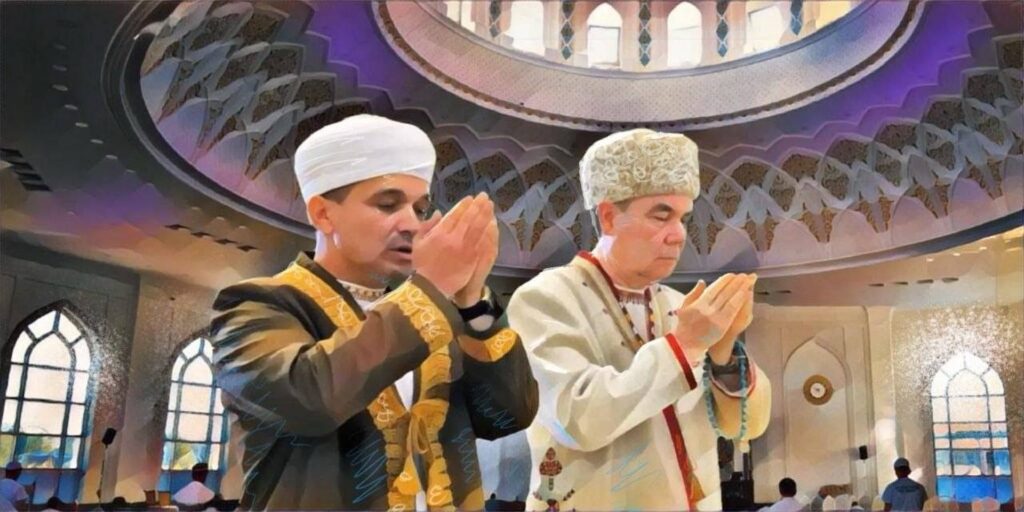
Only two people in Turkmenistan, the chairman of the Halk Maslahaty (People’s Council) and the president, have what could be considered job security. Everyone else is expendable, at a moment’s notice, and that extends to the country’s top clergy. Turkmenistan has replaced the country’s top mufti, and while the reasons for the sudden move are not clear, the removal process is very familiar for Turkmenistan. Frantic Friday On June 19, the mufti of all Turkmenistan, Yalkap Hojagulyyev, led Friday prayers at the Turkmenbashi Ruhy Mosque in Gypjak, some 11 kilometers from the capital, Ashgabat. Saparmurat “Turkmenbashi” Niyazov was Turkmenistan’s first president. The country’s compliant parliament and Halk Maslahaty bestowed the title of “Turkmenbashi,” meaning head of the Turkmen, on Niyazov. Gypjak was Niyazov’s home village, and when he was alive, he spent $100 million building a mosque that could accommodate 10,000 worshipers. After he died in late 2006, he was laid to rest at the nearby mausoleum built specially for him and his family. The June 19 Friday prayers were attended by a special visitor, Malaysian Prime Minister Anwar Ibrahim, who also paid his respects at Niyazov’s mausoleum. After prayers ended, the top figures from the muftiate, the spiritual board overseeing Islamic affairs in Turkmenistan, and select elders from around Turkmenistan met at the mosque for a discussion. That discussion included the announcement that the muftiate had appointed a new chief mufti. That person was Rahman Gurbanmyradov. Gurbanmyradov, who had been the head mufti for Ahal Region, was not at the meeting in Gypjak. He was saying prayers at the Seyit Jemaleddin Mosque in Ak Bugday District, Ahal Region, for a sadaqah (voluntary giving of charity) organized by Halk Maslahaty Chairman Gurbanguly Berdimuhamedov. Berdimuhamedov was marking the first Friday of the Islamic year 1448, which started on June 16. Back in Gypjak, senior clerics and elders were also considering what to name the new mosque being built in the newly built city of Arkadag, some 30 kilometers outside Ashgabat. Berdimuhamedov succeeded Turkmenbashi as president and held the office for roughly 15 years. During that period, government officials and state media gave him the title “Arkadag,” or “Protector.” Not surprisingly, when one of the elders at the Gypjak meeting proposed naming the new mosque in Arkadag city the Arkadag Spiritual Mosque, there was unanimous support. Why Hojagulyyev was fired is unclear, though there is speculation that Berdimuhamedov had been angry with the mufti since 2023, when Hojagulyyev brought his wife to make the Hajj at state expense. Hojagulyyev had been the head mufti since 2019. Turkmenbashi Tames the Clergy First President Niyazov is credited with bringing the entire state apparatus under his full control in the first years after Turkmenistan’s 1991 independence. However, it took him longer to achieve the total submission of Islamic clergy. Toward the end of 1999, leading Islamic cleric and scholar Khoja Ahmed Orazgylych criticized Niyazov’s public support for the traditional New Year celebration that included dancing around a Christmas tree." The practice dated back to the...

3 months ago

Kazakhstan and U.S. AI Companies Sign Agreements Worth $10 Billion

Kazakhstan took a major step toward its goal of becoming an AI leader in the heart of the Eurasian continent when new investment deals were signed with U.S. companies NVIDIA and Firebird. Kazakh Prime Minister Olzhas Bektenov hosted NVIDIA Vice President Rev Lebaredian and Firebird co-founders Razmig Hovaghimian and Alexander Yesayan on June 15. They signed agreements on artificial intelligence and digital infrastructure cooperation worth up to $10 billion, for Kazakhstan’s Data Center Valley project. Top Ten in Global AI Infrastructure Representatives of the U.S. companies and Kazakh officials at the signing ceremony paid tribute to Kazakh President Kassym-Jomart Tokayev for declaring 2026 the Year of AI in Kazakhstan, saying the move emphasized Kazakhstan’s commitment to AI development. Firebird’s Hovaghimian said realization of the agreements signed on June 15 would contribute to putting Kazakhstan in the top 10 leading AI countries worldwide before the end of 2027. Lebaredian described AI development as a “five-layer cake.” “The first layer is energy. The second layer is chips, including those from NVIDIA. The third layer is infrastructure. The next layer is AI models, such as ChatGPT,” and applications, he explained. The NVIDIA vice president said, “Kazakhstan can participate at every level of this five-layer cake.” An Old Power Source for Developing New Technology In the first phase of the project, some $5 billion will go to developing the energy sector. The Data Center Valley is located in Kazakhstan’s northern city of Ekibastuz in the Pavlodar Province. The area has long been known for its vast coal deposits and huge Soviet-era thermal power plant that provides electricity to the area. Kazakh officials have promised an initial 300 megawatts (MW) of power for the AI center, with output gradually rising to some 1000 MW. Kaztelekom chief Bagdat Musin was at the signing and said, “Essentially, Kazakhstan is transforming Ekibastuz coal into digital export revenue.” Minister of Artificial Intelligence and Digital Development Zhaslan Madiyev said Kazakhstan expects to “generate at least $3 billion in annual export revenue, create new high-skilled jobs, (and) attract leading global technology companies.” Discussions are still underway about exactly how the remaining $5 billion would be spent in developing the second phase of the project. Madiyev mentioned that when finished, Ekibastuz would host a “large-scale computing cluster powered by 100,000 state-of-the-art GPU (graphics processing units) chips, including NVIDIA GB300 and Vera Rubin.” A press release posted by Firebird noted the “three-phase expansion strategy” would enable the project “to scale beyond 100,000 NVIDIA Blackwell and Vera Rubin GPUs by the end of 2027, creating one of the world’s largest AI computing platforms.” Firebird Labs Kazakhstan will also be established, based on Kazakhstan’s International Center for Artificial Intelligence in the capital, Astana. Era of Expanding Kazakh-U.S. Ties The agreements with NVIDIA and Firebird are the latest in a series of deals with U.S. companies since late 2025. President Tokayev announced the plan for the Data Center Valley project in January 2026. In May, a U.S.-linked international consortium signed a deal worth some $1 billion...

3 months ago

Can Caspian Cargo Fleets Meet Middle Corridor Demands?

Construction of infrastructure along the Middle Corridor, also called the Trans-Caspian International Trade Route, to ship goods between China and Europe is progressing at a frantic pace. When Russia launched its full-scale invasion of Ukraine in late February 2022, it inadvertently gave a new impetus to the development of a trade network through Central Asia and the South Caucasus that had been slowly taking shape since the end of the 1990s. One of the most formidable challenges along the Middle Corridor is boosting maritime cargo across the Caspian Sea. Steps are being made, including some significant recent moves, but the capacity of shipping east-to-west over the Caspian Sea faces challenges in meeting the ever-growing demand for commercial vessels. By Leaps and Bounds In 2022, the volume of cargo through the Middle Corridor was some 1.5 million tons, more than twice the amount transported in 2021. In 2023, it topped 2.7 million tons, in 2024 was about 4.5 million tons, and in 2025 it was expected to be approximately 5.2 million tons. Turkish President Recep Tayyip Erdogan visited Kazakhstan on May 13-14, where his host, President Kassym-Jomart Tokayev, said the figure could reach 10 million tons “in the near future,” and are predictions it could happen as soon as 2027. The roads, railways, and port facilities along the Middle Corridor are expanding rapidly. However, according to a report from Azerbaijan’s Trend news agency in mid-May, the Azerbaijani Caspian Shipping Company (ASCO) says that since 2013, only “a total of 35 new vessels have been commissioned.” The Merchant Fleets of Kazakhstan and Turkmenistan On the eastern side of the Caspian Sea, Kazakhstan and Turkmenistan have been working to increase their maritime shipping. Both countries invested heavily in upgrading their Caspian ports, in Kazakhstan’s case at Aktau and Kuryk, and for Turkmenistan at Turkmenbashi City. Since the end of April, both countries have moved to boost their potential to ship cargo across the Caspian. Kazakhstan’s state railway company, Kazakhstan Temir Zholy (KTZ), announced on April 30 that it would build its own maritime fleet starting with six new vessels, each with a deadweight of up to 9,900 tons and able to carry up to 537 twenty-foot equivalent units (TEU). Once completed, those six cargo ships will join the two dry cargo and three container vessels in the Caspian Sea operated by Kazakhstan’s state maritime shipping company Kazmortransflot. The three container ships – Berkut, Sunkar, and Barys – all started operation in 2019, have a deadweight of 5,200 tons, and can each carry up to 350 TEU. The two dry cargo ships, the Beket Ata and Turkestan, have a deadweight of 5,467 tons and can carry 4,182 tons. On May 12, the dry cargo ship Gadamly arrived at the Baku International Sea Port. The Gadamly is Turkmenistan’s first dry cargo vessel and is able to carry up to 240 TEU. A second cargo vessel, Manzil, should be launched before the end of this year. Arif Aghayev, the deputy chairman of Azerbaijan Railways, said at...

4 months ago