
• KZT/USD = 0.00224
  • TJS/USD = 0.10810
  • UZS/USD = 0.00009
  • TMT/USD = 0.29850
  • KZT/USD = 0.00224
  • TJS/USD = 0.10810
  • UZS/USD = 0.00009
  • TMT/USD = 0.29850
  • KZT/USD = 0.00224
  • TJS/USD = 0.10810
  • UZS/USD = 0.00009
  • TMT/USD = 0.29850
  • KZT/USD = 0.00224
  • TJS/USD = 0.10810
  • UZS/USD = 0.00009
  • TMT/USD = 0.29850
  • KZT/USD = 0.00224
  • TJS/USD = 0.10810
  • UZS/USD = 0.00009
  • TMT/USD = 0.29850
  • KZT/USD = 0.00224
  • TJS/USD = 0.10810
  • UZS/USD = 0.00009
  • TMT/USD = 0.29850
  • KZT/USD = 0.00224
  • TJS/USD = 0.10810
  • UZS/USD = 0.00009
  • TMT/USD = 0.29850
  • KZT/USD = 0.00224
  • TJS/USD = 0.10810
  • UZS/USD = 0.00009
  • TMT/USD = 0.29850
23 September 2026

Our People > Yevgeny Rakhimzhanov

Yevgeny Rakhimzhanov's Avatar

Yevgeny Rakhimzhanov

Journalist

Yevgeny Rakhimzhanov is a journalist from Kazakhstan who lives in Almaty. He has worked in leading national media and headed several national media projects. His articles have appeared in a plethora of publications both at home and abroad.

Articles

Kazakhstan’s Oil Logistics Trap: Higher Prices, Limited Gains

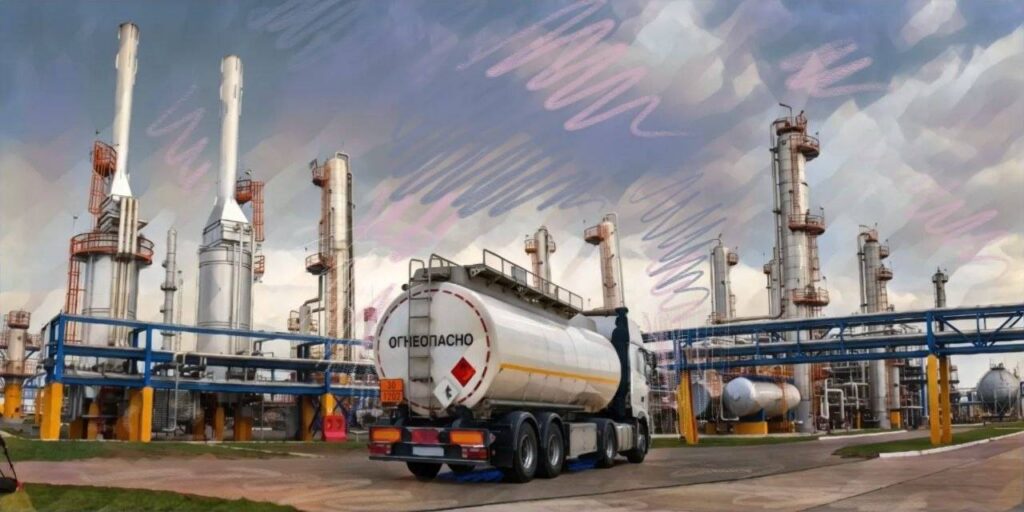
Escalation in the Middle East has pushed oil back above $100 a barrel. For Kazakhstan, whose budget remains heavily dependent on commodity exports, that should have been good news. But a high price matters only if the oil can reach buyers. For the world’s largest landlocked country, that is where the problem begins. European refiners are looking for alternatives to disrupted Saudi supplies, while problems along established routes through the Strait of Hormuz and the Red Sea are increasing demand for crude from other regions. More than 80% of Kazakhstan’s oil exports, however, move through the Caspian Pipeline Consortium system across Russian territory to a terminal near Novorossiysk. The Middle East crisis is pushing prices and global freight costs higher, while attacks around Russian infrastructure are increasing the risks to Kazakhstan’s main export route. Over the past decade, Kazakhstan has significantly increased its oil exports. According to the Bureau of National Statistics, volumes rose from 63.6 million metric tons in 2015 to a record 76.3 million tons in 2025, an increase of about 20%. Exports grew from 65.2 million tons in 2022 to 71 million in 2024 and 76.3 million tons in 2025. Expansion at the Tengiz field contributed to that growth. Kazakhstan’s oil and gas condensate production reached 99.6 million tons in 2025. The government had planned for about 98 million tons in 2026, but export disruptions have already forced temporary output cuts. Revenue has not risen as steadily as volumes. “In monetary terms, growth over the past decade was considerably stronger, although the trend, as noted above, was also much more volatile. The value of exports increased from $26.8 billion in 2015 to $40 billion in 2025, or by 49.3%. The highest figure during this period was recorded in 2022, at $46.9 billion,” Ranking.kz said in its analysis. Physical volumes and export revenue have often moved in different directions. “This was particularly evident in 2025: Kazakhstan exported 7.4% more oil than a year earlier, but its value fell by 6.8%. The average estimated value of one exported metric ton declined from $604 in 2024 to $524 in 2025,” the analysts calculated. In the first half of 2026, Kazakhstan exported $40.3 billion worth of goods. Crude oil and petroleum products accounted for 46.5% of the total. Export statistics and transportation data measure different things. The Bureau of National Statistics records goods cleared for export, while the Energy Ministry and pipeline companies report volumes pumped, transshipped, and transported. The same cargo can pass through several sections of the system, so those figures cannot simply be added together. In March, Talgat Makuov, acting director of the Energy Ministry’s oil refining and transportation department, said 64.8 million tons of Kazakh oil had moved through CPC in 2025. Another 9.2 million tons went through the Atyrau-Samara pipeline, while 1.1 million tons were shipped through the Atasu-Alashankou pipeline toward China. Against those volumes, the Trans-Caspian route remains small. In 2025, 1.26 million tons were shipped across the Caspian toward the Baku-Tbilisi-Ceyhan pipeline. The plan...

2 days ago
Central Asia’s First Korea Summit Produces Different Deals for Each Country

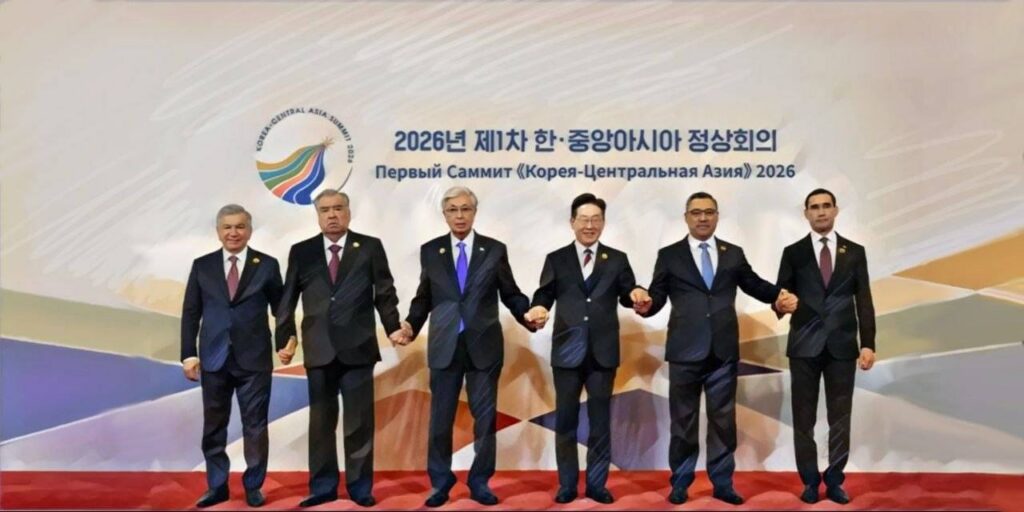
The first Central Asia-Republic of Korea Summit brought five countries to Seoul with very different records of working with Korean capital. Kazakhstan arrived with commercial agreements worth about $19 billion, while Uzbekistan is discussing multibillion-dollar financing through the state-owned Export-Import Bank of Korea. In Turkmenistan, Korean companies are expanding beyond their traditional role in the gas-chemical industry; Tajikistan is offering mineral resources; and Kyrgyzstan is establishing a dedicated government contact point to help attract Korean businesses. On September 16, the presidents of all five Central Asian states met South Korean President Lee Jae Myung together for the first time. Until now, the Korea-Central Asia Cooperation Forum, established in 2007, had operated mainly at a ministerial level. A permanent secretariat was established in 2017, and in 2020 the meetings were elevated to the level of foreign ministers. The leaders adopted the Seoul Declaration, agreeing to hold summits every two years, with Kazakhstan set to host the next in 2028. Ministerial meetings in the intervening years will review implementation and prepare the next summit’s agenda. The declaration also envisages Korea Desks across the five Central Asian countries to help businesses address administrative obstacles. The leaders expressed interest in combining Central Asian minerals with Korean technology to build joint production networks, and agreed to pursue measures to reduce non-tariff barriers. Seoul also sees Central Asia as part of its own industrial strategy. South Korea, one of the world’s leading producers of automobiles, electronics, batteries, and ships, needs stable supplies of energy and raw materials. Opening the summit, Lee spoke of combining the region’s resources with Korean exploration and processing technologies. Critical minerals, energy, and supply-chain resilience were among the main issues at the meeting. In 2025, South Korea’s trade with the five countries reached $10 billion for the first time: Korean exports totaled $8.67 billion, while imports from Central Asia amounted to $1.39 billion. Cumulative Korean investment in the region reached $6.48 billion. Kazakhstan and Uzbekistan continue to account for most of this trade and investment. The talks in Seoul showed how different the next step could look in each of the five countries. [caption id="attachment_56323" align="aligncenter" width="1774"] Image: Akorda[/caption] Kazakhstan: $19 Billion in Agreements and Large-Scale Industry Kazakhstan arrived at the summit with the largest announced commercial package. On September 15, a day before the regional summit, Kazakhstan and South Korea signed around 80 agreements worth approximately $19 billion through the Kazakhstan-Korea Business Council in Seoul. About $11 billion is associated with projects involving Samruk-Kazyna, Kazakhstan’s sovereign wealth fund, which controls major state assets in oil and gas, energy, transport, telecommunications, and uranium mining. The $19 billion figure represents the value of signed agreements and announced projects at different stages of development. Behind the headline figure are several major industrial projects. QazaqGaz and Hyundai Engineering agreed to implement a gas processing plant at Karachaganak with an annual capacity of 5 billion cubic meters. KazMunayGas and Samsung E&A signed an agreement on expanding the Pavlodar refinery’s capacity to 9 million metric tons a...

1 week ago

Uzbekistan Privatization: Unsold State Assets Relisted With $85 Opening Bids

Uzbekistan has begun putting previously unsold state assets back on the market, with opening bids starting at 1 million Uzbek soums, or about $85. The first lots include stakes in small companies, a district laboratory, vacant buildings, and a former mineral fertilizer warehouse. That figure is the opening bid in an electronic auction, not a valuation of the property. The final price will be determined by bidding. The new rules took effect on September 8 and cover 84 previously unsold assets. They are part of a new privatization package approved by President Shavkat Mirziyoyev on August 28. The government also plans to offer stakes in another 84 companies, 1,242 real estate properties, and about 8,000 hectares of land. The package also calls for 85 enterprises to be liquidated or reorganized. Among the first offerings is a 100% stake in Bukhsu Scientific Biotechnology, a limited liability company registered in Bukhara. Despite its name, the state registry lists its activity as auxiliary services in the field of education. Another lot is a 100% stake in Yangiyo‘l tuman laboratoriya, a district laboratory in Yangiyul District, Tashkent Region. The state had already tried to sell it, offering the stake for about $820 in May 2026, but no buyer emerged. Also for sale are a 100% stake in Iqtisod-Moliya and a 30% stake in Ferula Shifobaxsh. The latter is associated with agriculture and is currently listed in the state registry as inactive. The real estate lots include retail premises, vacant buildings, and a former warehouse used to store and distribute mineral fertilizers. In Samarkand Region, authorities separately announced the renewed sale of five properties in the Narpay, Kattakurgan, Pakhtachi, and Urgut districts. All of the assets have been offered for sale before without success. Uzbekistan has been selling state-owned companies, banks, real estate, and land for years. Large transactions attract international capital. Alongside them, however, is a less visible part of the state economy: small businesses and properties with no obvious buyer. The problem predates the latest decree. As of April 1, 2025, more than 3,600 state assets remained on sale with a combined starting value of about $1.4 billion. Prices had been reduced for 440 assets after they remained unsold for more than three months. In 153 cases, prices had been cut by 70–90%. In 2024, Mirziyoyev criticized slow sales and inflated valuations of some state property. A new privatization program at the time included stakes in hundreds of enterprises and more than 1,000 real estate properties. The latest decree accelerates the process. After three months without a buyer, the price of an asset can be reduced in stages. Some properties can also be sold through a hybrid auction, in which the price falls until a bidder emerges and then rises as participants compete. Payment terms are also changing. Buyers need to make an initial payment of only 15%, with the remainder payable in interest-free installments. If 35% is paid within the first three months, the balance can be spread over up to five...

1 week ago

Kazakhstan Hijab Debate Exposes Divide Over Secularism

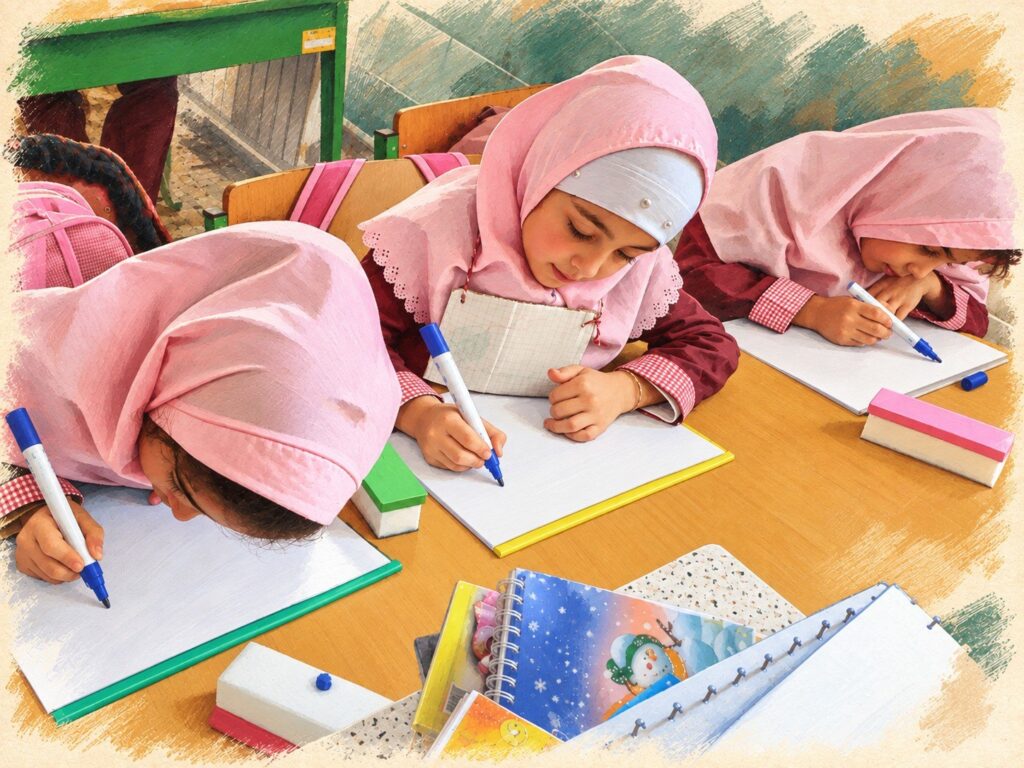
Kazakhstan’s long-running controversy over hijabs in schools has collided with a wider public argument about religion, exposing sharp differences among prominent public figures and institutions over the boundaries of the country’s secular model. The latest religious controversy in Kazakhstan’s social media space was triggered by two statements made within the span of a week. On September 3, well-known Kazakhstani film and entertainment producer and former television host Bayan Alaguzova wrote on Threads that she was “tired of religion and its propaganda.” “I’ll say this right away,” she added. “There’s no need to frighten me with hell – it doesn’t exist for me. Not a single person in the world can claim to have seen hell, or heaven for that matter. Now that is reliable information! The same goes for the 72 virgins thrown into the bargain.” She went on to sarcastically ask how a disembodied spirit was supposed to deprive the heavenly maidens of their virginity. The deliberately provocative tone used by the prominent film and entertainment figure stirred debate among social media users. Soon afterward, another Threads user posted a screenshot of an official complaint submitted through Kazakhstan’s eOtinish system against the producer, calling for Alaguzova’s posts to be examined for possible incitement of religious discord. There have so far been no official reports of further action on the complaint. Even so, Kazakhstanis on social media began joking about how the complainant intended to prove the existence of heaven and hell. Journalists and other users also spoke out in support of Alaguzova. On September 8, in response to the backlash, Alaguzova acknowledged on Instagram that her “words had hurt believers” and offered her “sincere apologies,” explaining that she respected “every person and every faith, as long as it does not harm others.” She then said her remarks had been misunderstood. “All those accusing me of ‘offending the feelings of believers,’ read carefully: I said that I am against the imposition of dogmas alien to our people, against radical and fanatical propaganda, not religion itself... Do you want girls to be married off at the age of nine? To be denied education or medical care? To be beaten supposedly ‘as a preventive measure against the influence of shaitan’? To be taken as wives without anyone assuming responsibility for them? To be easily abandoned simply by loudly saying ‘talaq’ three times? Do you want your daughter or sister not to be an individual in her own right, but simply an appendage to someone else? To be unable to appear in public or speak without permission? To be unable even to protect herself and her children? I am categorically against this!” the producer said. That same day, journalists at a government briefing asked Kazakhstan’s Education Minister Zhuldyz Suleimenova about reports that some private schools had allowed pupils to wear hijabs. Each new school year in Kazakhstan has brought renewed disputes over hijabs in schools. Some Muslim parents, particularly in western Kazakhstan, require their teenage daughters to wear hijabs to school. This conflicts...

1 week ago

Renewed U.S.-Iran Escalation: What It Means for Central Asia

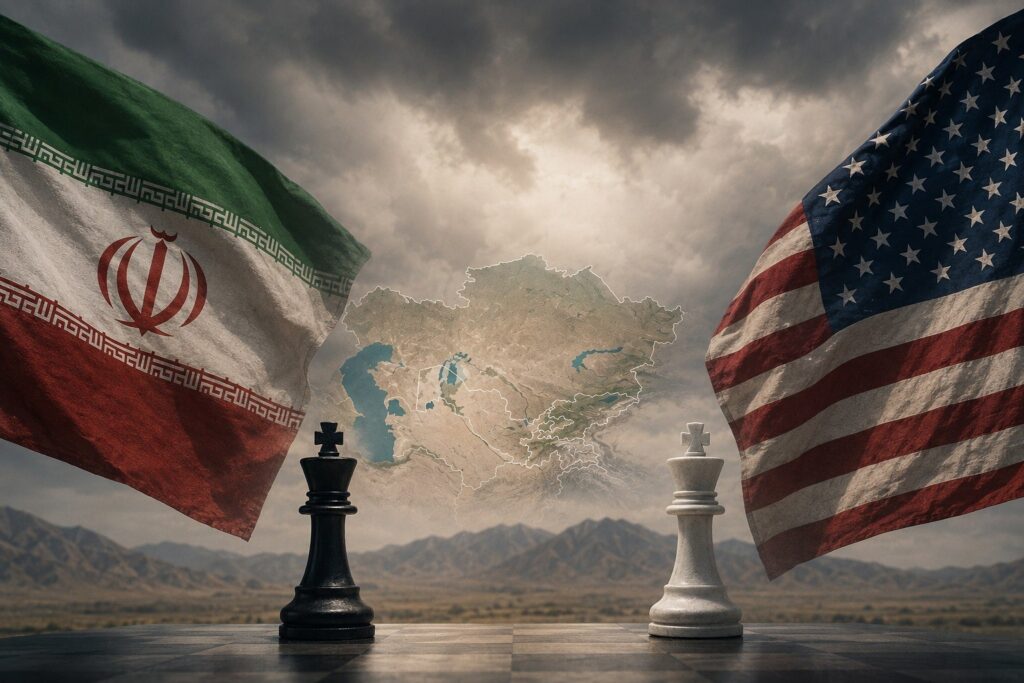
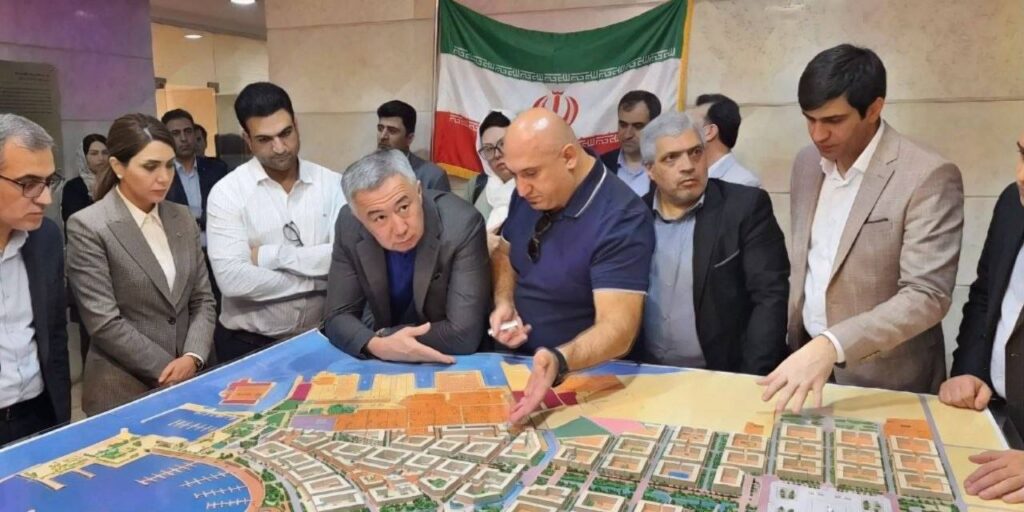
The United States and Iran have exchanged their heaviest barrage since July, ending several weeks in which both sides had largely held their fire. Washington struck military targets along Iran’s southern coast, while Tehran responded with missile and drone attacks on U.S. assets in Kuwait, Jordan, Bahrain, and Iraq. For Central Asia, the renewed escalation creates risks on several fronts, from oil prices to transport corridors through the Persian Gulf. All five countries in the region are likely to feel the economic effects in one way or another, although for some, those effects may initially come wrapped in gift paper. Kazakhstan: Expensive Oil That Is Hard to Sell Brent crude was trading at about $97 a barrel on September 3. The oil market remains highly volatile, with further price movements likely to depend heavily on developments surrounding Iran and shipping through the Strait of Hormuz. In theory, Kazakhstan could benefit from higher oil prices. In practice, existing logistical constraints substantially limit that opportunity. Ukrainian attacks affecting the Caspian Pipeline Consortium (CPC) have contributed to production cuts, while Kazakhstan’s shipments through the Baku-Tbilisi-Ceyhan pipeline remain far too small to compensate for a major disruption to the CPC. In other words, Kazakhstan risks missing out on another oil price surge. At the same time, Iran is important to Kazakhstan’s transport strategy. On June 16, while a ceasefire between Washington and Tehran was still in effect, Kazakhstan moved to advance its transport and trade plans through Iran. Deputy Prime Minister and Minister of National Economy Serik Zhumangarin met an Iranian delegation headed by Minister of Roads and Urban Development Farzaneh Sadegh. Kazakhstan-Iran trade increased by 26.4% in 2025 to $430.2 million, with the two countries aiming eventually to raise bilateral trade to $3 billion. A central topic in the talks was the International North-South Transport Corridor (INSTC), where freight volumes increased by 12% in 2025 to 3.5 million tons. Rail freight between the two countries rose by 69%. The two sides agreed to modernize transport infrastructure with the goal of increasing the corridor’s capacity to 20 million tons annually. Iran also completed arrangements to allocate Kazakhstan a land plot at Shahid Rajaee Port in Bandar Abbas and confirmed its readiness to provide access to Chabahar Port, offering connections to markets in South and Southeast Asia. On June 28, Iran’s Ports and Maritime Organization hosted a ceremony to sign a Build-Operate-Transfer (BOT) agreement allocating land at Shahid Rajaee Port in Bandar Abbas for the construction of a Kazakh transport and logistics terminal. Kazakhstan, in other words, tried to use the lull in the U.S.-Iran conflict to advance a route of its own that does not depend on Russia, China, or Turkey. Much of that effort, however, depends on an end to hostilities in the region. Tajikistan: Fuel That Is Hard to Buy On August 15, Tajikistan turned to Iran for assistance. At talks in Tehran with Farzaneh Sadegh, Iran’s minister of roads and urban development, Tajik Transport Minister Azim Ibrohim said more than 80%...

3 weeks ago

Kazakhstan’s Kurultai Has Begun Work, but the Intrigue Remains

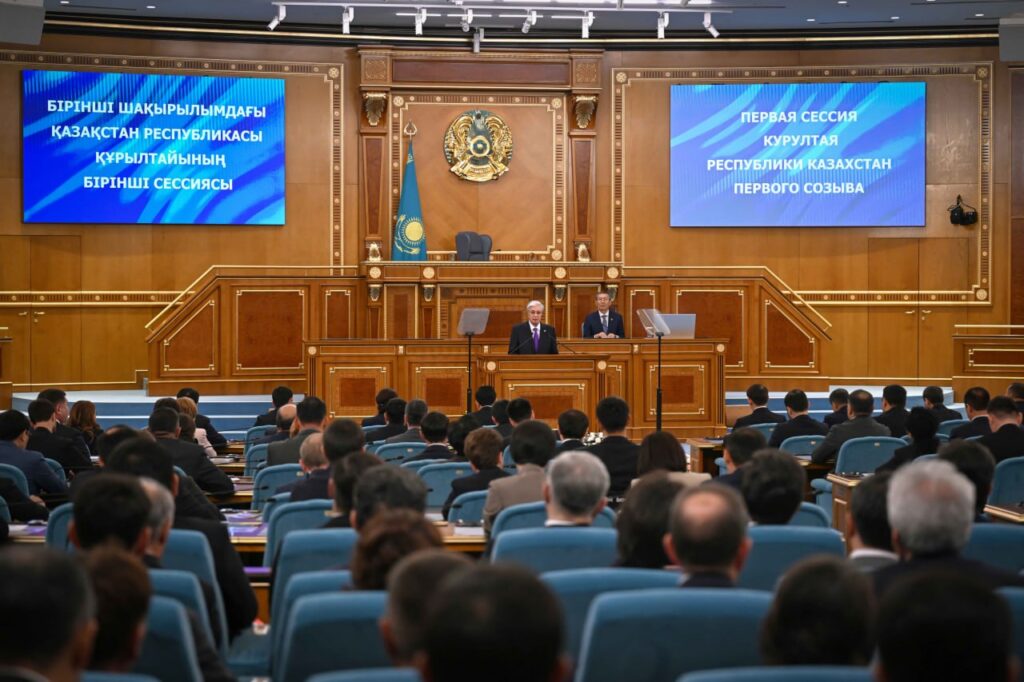
Kazakhstan’s new unicameral parliament, the Kurultai, has held its first session and elected President Kassym-Jomart Tokayev’s nominee, Aibek Dadebay, as speaker. The choice of Dadebay, chairman of the recently created Adilet party, had been widely expected. Nevertheless, the arrangement differs markedly from the way political authority was organized under Kazakhstan’s first president, Nursultan Nazarbayev. Under Nazarbayev, the ruling party – first Otan and later Nur Otan – was headed by the president himself, while its day-to-day work was managed by a first deputy chairman. The party’s parliamentary leadership was separate, while the Senate speaker was formally elected from a candidate nominated by the president. Under Tokayev, the model changed. Tokayev left the ruling party in 2022, shortly after Nur Otan was renamed Amanat, and the Constitution was amended to bar the president from party membership. Amanat later merged into the newly created Adilet party in June 2026. That Tokayev-era model has now carried over into the Kurultai: the chairman of the ruling party entered the new parliament and was elected speaker. The arrangement places responsibility for the party and its parliamentary majority more clearly in the same hands. Tokayev also spoke about the legislative responsibilities of deputies at the opening of the first session. “Laws must be fair, understandable to people, and progressive – that is, aligned with modern requirements. Since laws affect the fate and lives of citizens, every norm and every clause must be carefully considered and comprehensively discussed,” he said. Tokayev added that artificial intelligence could be used “to improve the quality of legislative activity and minimize corruption risks,” while stressing that “advanced technologies cannot replace professional legal expertise.” Yerlan Karin, first deputy head of the Presidential Administration, noted that 24 deputies have previous parliamentary experience, arguing that this would help preserve “institutional memory” in the new legislature. Karin himself is among the senior officials whose next role remains uncertain. Tokayev must still submit nominees for vice president and prime minister to the Kurultai. The current government relinquished its powers before the new parliament, in accordance with the Constitution, and the president will appoint members of the government after consultations with deputies. He will also make an appointment to the new position of deputy chairman of the Security Council. According to political analyst Talgat Kaliyev, political observers are discussing several possible candidates for vice president. One scenario cited by Kaliyev would see current Prime Minister Olzhas Bektenov take the role, with Astana akim Zhenis Kassymbek replacing him as prime minister. “Others say that the current prime minister will retain his position, while Yerlan Karin will take the post of vice president,” Kaliyev said, arguing that Karin’s close involvement in Kazakhstan’s political reforms strengthens his case. Kaliyev said other possible candidates could include former Senate speaker Maulen Ashimbayev or former Mazhilis head Yerlan Koshanov, who is “also being tipped for the post of chairman of Kazakhstan Halyk Kenesi.” The appointments are expected to follow before Tokayev delivers his traditional annual Address, which he said would take place after...

4 weeks ago

Kazakh Refinery Plans Fuel Exports to Russia Amid Petrol Shortages

A small refinery in western Kazakhstan is preparing to process Russian crude and send most of the resulting petrol and diesel back to Russia as Moscow struggles with fuel shortages. The arrangement was confirmed on August 25, the same day that separate incidents occurred at two of Kazakhstan’s three major refineries. On August 19, Russian Deputy Prime Minister Alexander Novak said that, given the situation on the fuel market, the government was “keeping its finger on the pulse” and monitoring supplies daily with companies and regional authorities. According to Novak, Russia had already imposed export restrictions and begun importing petroleum products. Several refineries were also expected to return from repairs, increasing domestic supplies. Russia’s Fuel Shortage The pressure on Russia’s fuel market is illustrated by data published by the industry portal InfoTEK. According to its August 24 snapshot, AI-95 petrol, the widely used 95-octane grade, was available at only 5,620 of Russia’s 26,098 operating filling stations, or 22%. Even in Moscow, it could be found at 161 of 786 operating stations, about 20%. Russia has also temporarily relaxed restrictions on lower environmental grades of fuel, including Euro 4, Euro 3 and Euro 2, known in the Russian classification as K4, K3 and K2. Since 2016, only fuel meeting at least the Euro 5 standard had generally been permitted. Russian economist Boris Grozovsky estimates that, given the refining capacity knocked out by Ukrainian strikes and the number of plants undergoing repairs, Russia is currently short of roughly one-third of the petrol needed at peak demand. August is traditionally a high-demand month because of summer travel and agricultural work. “If it were November now, the situation would be a little easier for the Russian government. Russia is trying to bring in petrol from India, Morocco, Turkey, Kazakhstan and Azerbaijan, but imports also have limitations. The petrol brought in from India turned out to be too expensive,” Grozovsky said. Kazakh Refinery Steps In Speaking at a government briefing on August 25, Kazakhstan’s Energy Minister Yerlan Akkenzhenov said that the small Condensat refinery in Aksai, West Kazakhstan Region, would process Russian crude, with around 70% of the petrol and diesel it produces sent to Russia. Up to 30% will remain on the Kazakh market, while the refinery also retains the right to export products outside the Eurasian Economic Union. “Under the agreement we currently have, up to 30% of the petroleum products in demand, petrol and diesel, will remain in Kazakhstan, while the rest will be shipped to the Russian Federation,” the minister told reporters. Akkenzhenov said the arrangement reflected Condensat’s location close to the Russian border. The refinery is not connected by pipeline to either country’s main oil network, meaning both crude deliveries and fuel exports depend on rail capacity. Akkenzhenov also stressed that the refinery’s owner is not under sanctions and said the Energy Ministry did not see sanctions risks for the project. He said the arrangement would also bring investment and preserve jobs at a refinery that has struggled financially. Condensat’s Financial Troubles Condensat was established in...

4 weeks ago

Reform and Moderate Conservatism: Reading Kazakhstan’s Kurultai Vote

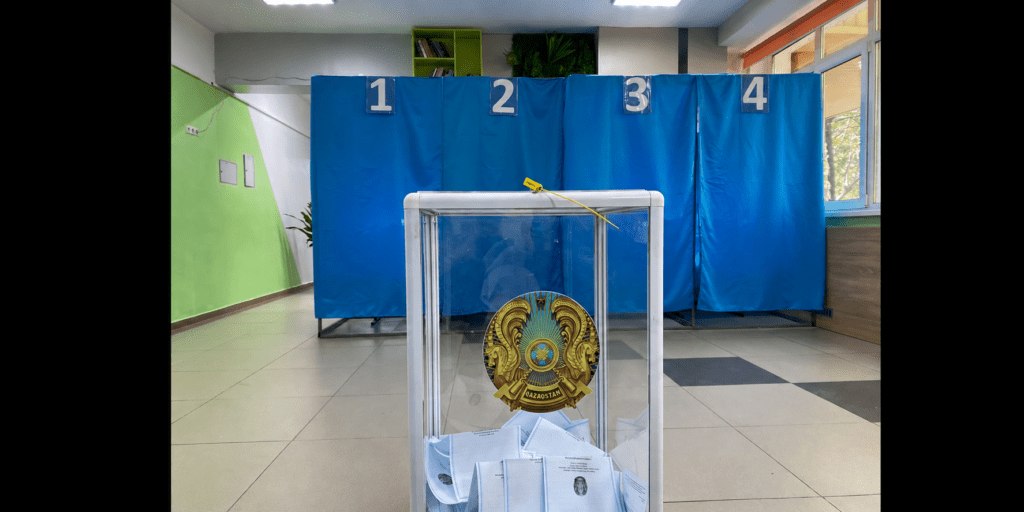
Preliminary results have been announced in Kazakhstan’s election to its new unicameral parliament, the Kurultai. Notably, they differ little from the first exit poll released the previous day. The outcome itself was largely predictable: the newly created ruling Adilet party won by a wide margin, while two parties failed to clear the threshold for representation in the Kurultai. In recent years, Kazakhstan has gone through a series of major electoral campaigns that have, quite literally, revived voters’ interest in exercising their basic civic rights. Along the way, the campaigns have developed a tradition of sorts, combining Soviet-era methods of drawing people to polling stations with elements of the political spectacle more characteristic of Western countries, particularly the United States. [caption id="attachment_54573" align="aligncenter" width="1600"] Image: TCA[/caption] In Soviet times, voters were enticed to polling stations with scarce goods, from candy to sausage. On election day, food fairs appeared near polling stations in Almaty: people could cast their ballots and then eat traditional Kazakh dishes, drink hot tea with milk, and listen to music. Since elections in Kazakhstan are increasingly promoted as family occasions, where parents can pass an important civic experience on to the younger generation, activities were also organized for children near polling stations. Among other things, they could play asyq, a traditional game familiar to generations of Kazakhstanis. [caption id="attachment_54574" align="aligncenter" width="1600"] Image: TCA[/caption] As for the show-like elements, some voters arrived dressed as various characters, from Kazakh batyrs, or traditional warriors, to the American superhero Spider-Man. [caption id="attachment_54568" align="alignnone" width="300"] @Regional Communications Service[/caption] [caption id="attachment_54569" align="alignnone" width="300"] @Regional Communications Service[/caption] [caption id="attachment_54570" align="alignnone" width="300"] @Regional Communications Service[/caption] Public transportation was free for city residents that day, and during the first half of the day it was easy to tell which passengers had already voted and which had not: the latter persistently tried to pay their fares, while the former stopped them from doing so. All of this coincided with an unusually high turnout in Almaty – more than 43%. According to preliminary regional figures announced after polling stations closed, turnout in the city reached 43.23%, the lowest among Kazakhstan’s regions and cities of national significance but unusually high by Almaty standards. Political analyst Andrey Chebotarev noted that turnout at this level had not been recorded in Almaty since 2012, when Kazakhstan was still reeling from the bloody events in Zhanaozen. Chebotarev said the factors behind the current level of voter participation in Almaty would require further study. “Most likely, Almaty residents who are loyal to the authorities were primarily encouraged to vote by the political changes that began with the adoption of Kazakhstan’s new Constitution. Protest-minded residents apparently did not stay away either, expressing their dissatisfaction by voting ‘against all.’ But both groups were united by strong interest in the election campaign that has just ended,” the political analyst suggested. The author of this article exercised his civic right at 11 a.m., when the ballot box at his polling station was already almost one-third full. Election commission members...

1 month ago

Trump’s New Threat Against Iran Collides With Central Asia’s Economic Interests

U.S. President Donald Trump has threatened economic consequences for any country that continues to provide support to Iran, promising Tehran “Economic Warfare and Isolation on an unprecedented scale.” Washington has not yet announced specific new measures. For Central Asia, the warning comes as economic and transport links with Iran are developing. Kazakhstan is building its own terminal at Iran’s largest port, Tajikistan is discussing fuel purchases and new transport routes, Uzbekistan is trying to protect trade that passes through Iran, and Turkmenistan is expanding transport and energy cooperation with Tehran. Each country has its own reasons for developing these ties, but they share one concern: for landlocked Central Asia, Iran provides one of the few overland routes to the Persian Gulf and the Indian Ocean. Washington’s attempt to tighten Iran’s economic isolation therefore affects not only the region’s relations with Tehran, but also its own plans to diversify trade and transit. None of this means that Central Asian governments are prepared to disregard U.S. sanctions or enter into a political confrontation with Washington on Tehran’s behalf. The threat of secondary restrictions could cause banks, carriers, and private companies to withdraw from individual transactions even without formal decisions by their governments. Trump has not yet explained exactly what instruments he intends to use to enforce the isolation he announced. Kazakhstan Looks to the Persian Gulf Iran intensified its work with Central Asia well before Trump’s latest threat. In mid-June, the Iranian Minister of Roads and Urban Development Farzaneh Sadegh visited Astana. In talks with Kazakhstan’s Deputy Prime Minister Serik Zhumangarin, the two sides noted that bilateral trade had increased by 26.4% in 2025 to $430.2 million. Astana and Tehran now want to raise it to $3 billion, using, among other things, the free trade agreement between Iran and the Eurasian Economic Union, of which Kazakhstan is a member. The plans go beyond trade. Freight traffic along the International North-South Transport Corridor, which links Russia and Central Asia with Iran and Persian Gulf ports, rose by 12% in 2025 to 3.5 million metric tons. Rail freight between Kazakhstan and Iran also increased by 69%. Astana’s main interest lies even farther south. Iran has allowed Kazakhstan to establish its own transport and logistics terminal at Shahid Rajaee in Bandar Abbas, the country’s largest commercial port. On June 28, the two sides signed a Build-Operate-Transfer agreement. It runs for 27 years, with two years allocated for construction and another 25 for operation. Commercial operations are scheduled to begin in the project’s third year. For Kazakhstan, this is more than simply an overseas terminal. Its Foreign Ministry explicitly links the project to opening access for Kazakh cargo to markets in the Persian Gulf, South and Southeast Asia, and East Africa. In July, Foreign Minister Yermek Kosherbayev again reaffirmed Astana’s interest in the project during a visit to Iran. The ministry also cited a 26.4% increase in bilateral trade in 2025 to $430.2 million. Astana is also considering another Iranian port, Chabahar, on the Indian Ocean....

1 month ago

Laughter Amidst Ruins: Rediscovering Tajikistan’s Resilience Through Comedy and Cultural Exchange

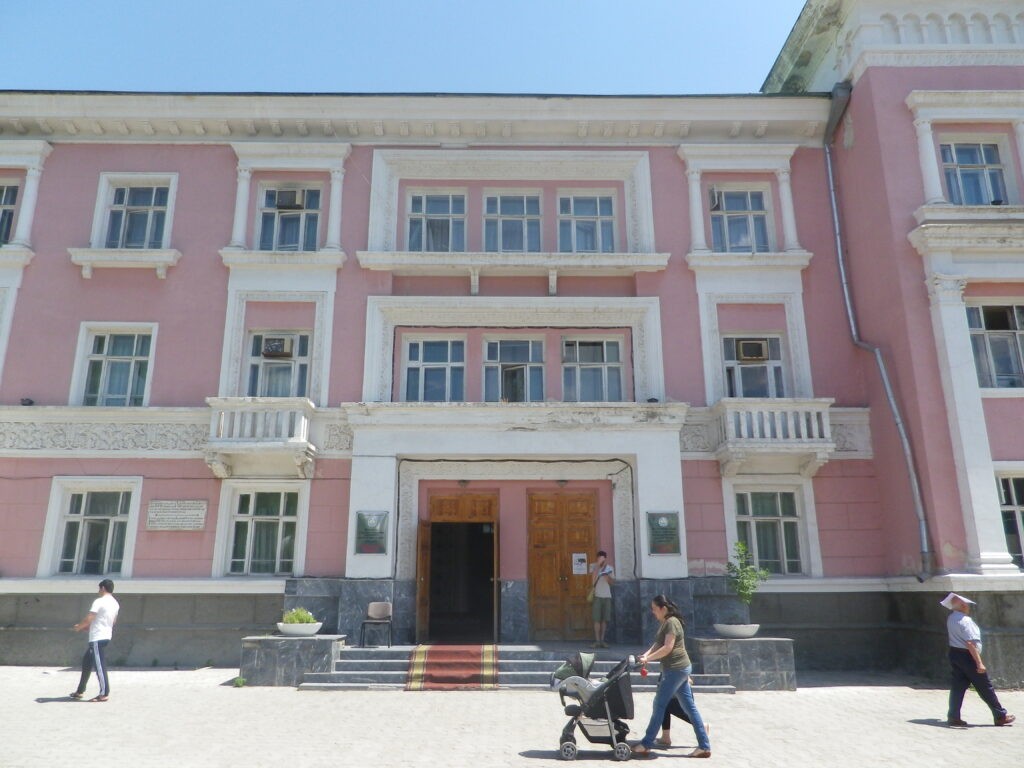
The UN General Assembly's Human Rights Council recently condemned the government of Tajikistan for its failure to implement the recommendations of a 2019 study by UN representatives. The study focused on the unreconciled atrocities and societal wounds caused by the civil war that swept through the republic after the collapse of the Soviet Union. More than 60,000 people died in this war, and more than 250,000 fled the republic. Reading this news, I was reminded of and reflected on post-war Tajikistan, which I visited in the late summer of 2000. At that time, the country had been in a state of fragile peace for two years, and you could still feel the tension in the air. Since my visit to the country in 2000, the Tajik Civil War has been reflected on by many people in the arts. In the same year that UN researchers were raking up the old tragedy, the film Kazbat was released in Kazakhstan. This movie is a military drama about the real deaths of 17 soldiers of the Internal Troops of the Ministry of Internal Affairs of the Republic of Kazakhstan (now the National Guard), who fell into an ambush in Tajikistan on April 7, 1995. A little earlier, in 2017, Russian writer Vladimir Medvedev released the novel Zakhok, which talks about the horrors of that six-year war through the struggles of a single family, where the mother is Russian, and the children are half Tajik. My visit to this war-torn country was for a reason most wouldn’t have expected - a comedy festival. The group that I traveled with consisted of my teammates, Almaty residents, as well as people from other Kazakh, Uzbek, and Kyrgyz cities. Despite coming from all over Central Asia, we ended up in Tajikistan for the first international СVN festival (СVN - Club of the Funny and Inventive) in Central Asia. СVN is an improv and sketch comedy competition involving students that originated in Soviet times, the point of which is to satirize the surrounding reality through theatrical skits and question-based improv. Due to its satirical nature, СVN was banned for two decades during the Soviet-era. It was later revived during Perestroika, and, in the shortest possible time, became a phenomenon in all universities in Russia and across almost all of post-Soviet space. In Kazakhstan, СVN was developed immediately after the collapse of the USSR. Alma-Ata, which was the capital city back then, organized its own league, which included teams from the leading national universities of that time - Kazakh State University, Narkhoz, Almaty Institute of Transport Engineers, and Almaty State Medical Institute. I belong to the second generation of СVN players. Our task was to popularize this game throughout the republic and attract not only universities but also colleges and schools. Later, the new СVN league went beyond Kazakhstan, starting with friendly meetings with universities from Bishkek, Tashkent, and other Central Asian cities. Then, the International League of СVN, which was created and headed by Alexander Maslyakov, who passed...

2 years ago