U.S. President Donald Trump has threatened economic consequences for any country that continues to provide support to Iran, promising Tehran “Economic Warfare and Isolation on an unprecedented scale.” Washington has not yet announced specific new measures.
For Central Asia, the warning comes as economic and transport links with Iran are developing. Kazakhstan is building its own terminal at Iran’s largest port, Tajikistan is discussing fuel purchases and new transport routes, Uzbekistan is trying to protect trade that passes through Iran, and Turkmenistan is expanding transport and energy cooperation with Tehran.
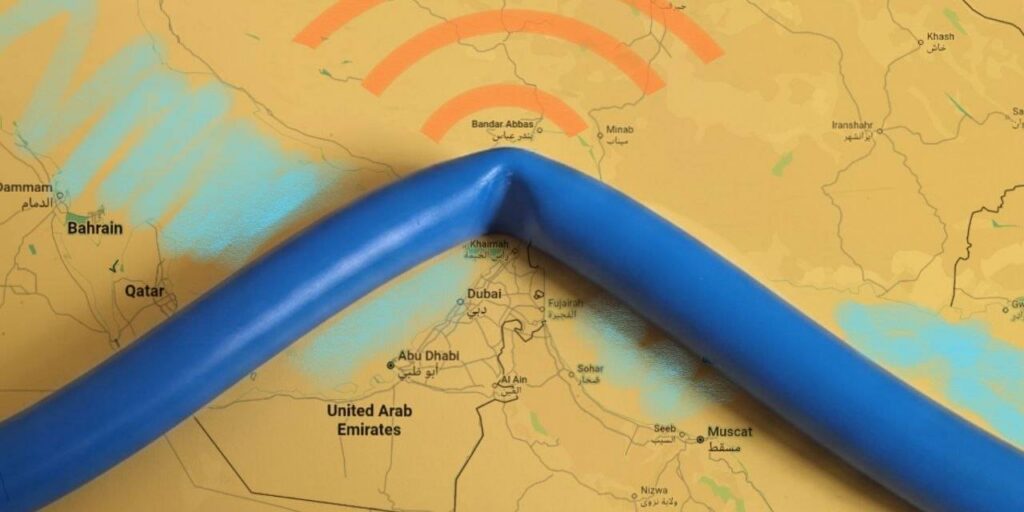
Each country has its own reasons for developing these ties, but they share one concern: for landlocked Central Asia, Iran provides one of the few overland routes to the Persian Gulf and the Indian Ocean. Washington’s attempt to tighten Iran’s economic isolation therefore affects not only the region’s relations with Tehran, but also its own plans to diversify trade and transit.
None of this means that Central Asian governments are prepared to disregard U.S. sanctions or enter into a political confrontation with Washington on Tehran’s behalf. The threat of secondary restrictions could cause banks, carriers, and private companies to withdraw from individual transactions even without formal decisions by their governments. Trump has not yet explained exactly what instruments he intends to use to enforce the isolation he announced.
Kazakhstan Looks to the Persian Gulf
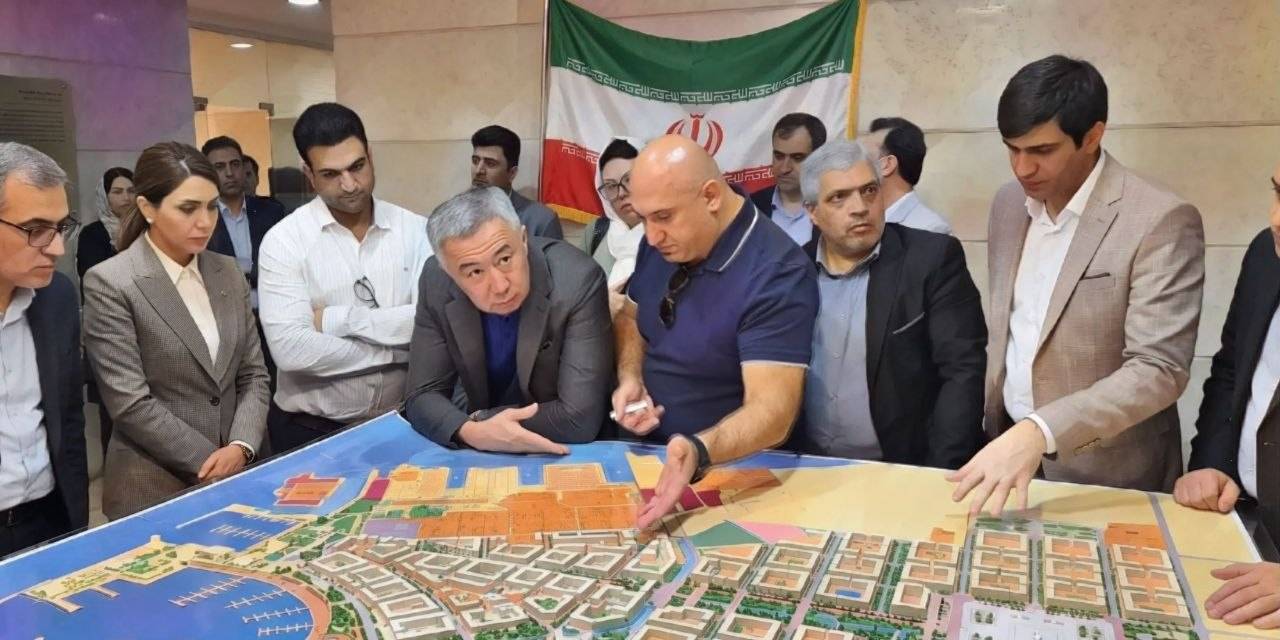
Iran intensified its work with Central Asia well before Trump’s latest threat. In mid-June, the Iranian Minister of Roads and Urban Development Farzaneh Sadegh visited Astana. In talks with Kazakhstan’s Deputy Prime Minister Serik Zhumangarin, the two sides noted that bilateral trade had increased by 26.4% in 2025 to $430.2 million. Astana and Tehran now want to raise it to $3 billion, using, among other things, the free trade agreement between Iran and the Eurasian Economic Union, of which Kazakhstan is a member.
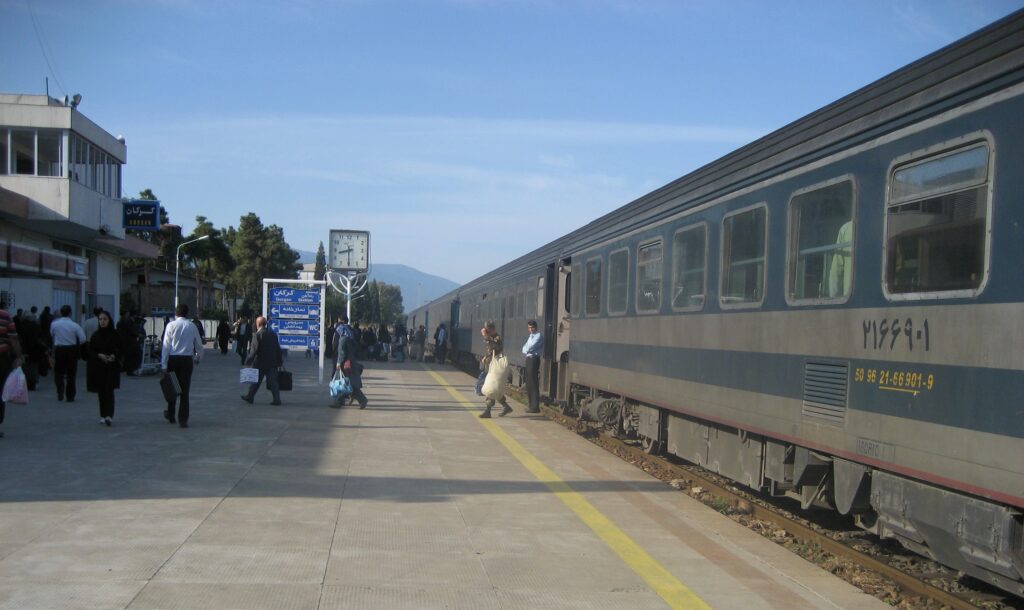
The plans go beyond trade. Freight traffic along the International North-South Transport Corridor, which links Russia and Central Asia with Iran and Persian Gulf ports, rose by 12% in 2025 to 3.5 million metric tons. Rail freight between Kazakhstan and Iran also increased by 69%.
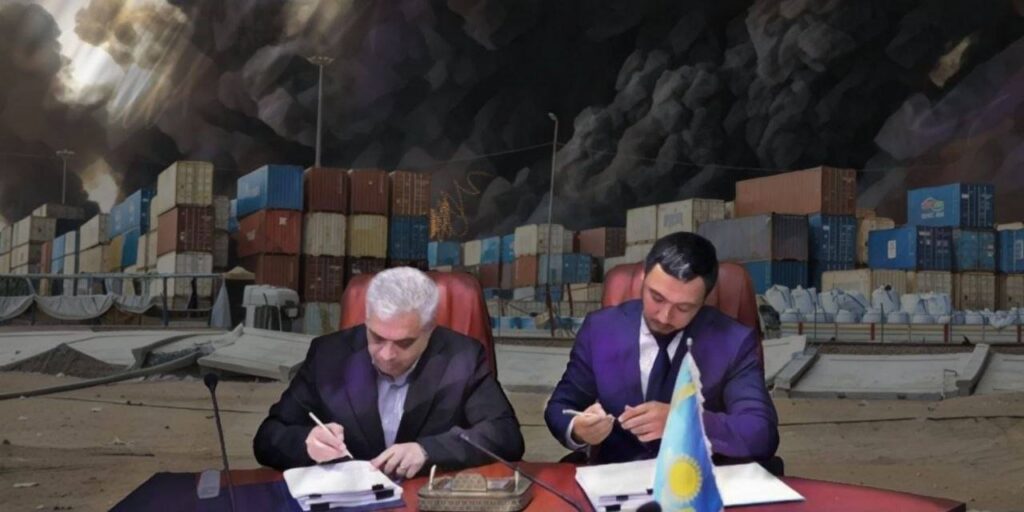
Astana’s main interest lies even farther south. Iran has allowed Kazakhstan to establish its own transport and logistics terminal at Shahid Rajaee in Bandar Abbas, the country’s largest commercial port. On June 28, the two sides signed a Build-Operate-Transfer agreement. It runs for 27 years, with two years allocated for construction and another 25 for operation. Commercial operations are scheduled to begin in the project’s third year.
For Kazakhstan, this is more than simply an overseas terminal. Its Foreign Ministry explicitly links the project to opening access for Kazakh cargo to markets in the Persian Gulf, South and Southeast Asia, and East Africa. In July, Foreign Minister Yermek Kosherbayev again reaffirmed Astana’s interest in the project during a visit to Iran. The ministry also cited a 26.4% increase in bilateral trade in 2025 to $430.2 million.
Astana is also considering another Iranian port, Chabahar, on the Indian Ocean. Iran, for its part, is interested in access to Kazakhstan’s Aktau and Kuryk ports on the Caspian Sea.
Turkmenistan Has Already Hit the Sanctions Barrier
In late July, Sadegh traveled to Turkmenistan, where she met President Serdar Berdimuhamedov and Foreign Minister Rashid Meredov. The talks covered transport, energy, communications, construction, and other economic projects.
That relationship has already collided with U.S. sanctions. In 2024, Turkmenistan agreed to supply Iraq with up to 10 billion cubic meters of gas annually through a swap arrangement: Turkmen gas would go to Iran, with Iran sending an equivalent volume to Iraq. U.S. sanctions on Iran eventually scuttled the plan. The precedent shows how restrictions aimed at Tehran can block a Central Asian export even when the underlying commercial deal was between Turkmenistan and a third country.
Tajikistan Needs Routes and Fuel
Tajikistan was another focus of Iranian outreach. On August 15, a Tajik delegation in Tehran that included Transport Minister Azim Ibrohim and Energy and Water Resources Minister Daler Juma held talks with Iranian officials. Sadegh discussed transport and logistics cooperation with the delegation, while Tehran also encouraged Tajikistan to consider greater use of Chabahar and logistics infrastructure in Iran.
A broader transport project had already emerged by then. Tajikistan, Iran, and Afghanistan agreed in July to launch a joint road corridor and created a permanent trilateral working group. The agreement was publicly reported in early August. The route could later be extended to other Central Asian countries and China.
For Dushanbe, however, the most immediate issue is fuel. On August 15, Juma met Iranian Oil Minister Mohsen Paknejad in Tehran. They discussed supplies of diesel and aviation fuel, Iranian crude for processing at Tajik refineries, and the possibility of preferential pricing.
During the first six months of 2026, 432,800 metric tons of freight moved between the two countries, up 17.5% from a year earlier. Nearly 334,000 tons moved by rail and about 99,000 tons by road. Tajikistan has now asked Iran for a total of 2.55 million tons of crude and petroleum products, including 2 million tons of crude oil, 300,000 tons of diesel, 150,000 tons of gasoline, and 100,000 tons of aviation fuel.
There is a political dimension as well. During talks with the Tajik delegation, Iranian First Vice President Mohammad Reza Aref proposed discussing the creation of an association of Persian-speaking countries and regions. For Tehran, linguistic and cultural ties with Tajikistan remain an additional channel for strengthening relations, although Dushanbe’s current negotiations have a largely practical focus: transport, energy, and fuel.
Uzbekistan Calculates the Cost of Disruption
An Uzbek delegation arrived in Tehran at almost the same time. For Tashkent, relations with Iran are particularly closely tied to transit.
Uzbekistan’s Ministry of Economy and Finance has estimated potential losses from disruptions to foreign trade and logistics caused by instability in the Middle East at $1 billion to $1.5 billion, equivalent to about 0.7% to 1% of GDP. In 2025, roughly 9% of Uzbekistan’s imports and 10% of its non-gold exports passed through Iran.
On August 17, Uzbekistan’s First Deputy Foreign Minister Bakhromjon Aloyev met in Tehran with Iranian Deputy Foreign Minister for Economic Diplomacy Hamid Ghanbari. Among the main subjects were transport and transit links, improving existing routes, and increasing freight volumes between the two countries.
Aloyev also met Sadegh on August 18. Those talks again focused on transport and transit, including international corridors, logistics efficiency, and conditions for increasing freight traffic. Iran’s geography gives landlocked Uzbekistan another route toward southern seaports.
The Limits of Isolation
Iran’s economic ties with Central Asia have not been shrinking in recent months: Kazakhstan has signed a 27-year agreement for a terminal at Iran’s largest commercial port; Tajikistan is seeking Iranian fuel and new transport routes; Uzbekistan is calculating the potential cost of disruptions to trade that passes through Iran; and Turkmenistan is continuing negotiations with Tehran on transport, energy, and wider economic cooperation.
For Tehran, Central Asia offers a way to maintain and expand economic links under external pressure. For the region itself, relations with Iran rest on more pragmatic interests: ports, transit, fuel, and access to markets south of Central Asia.
Trump’s latest threat therefore poses a question for Central Asian governments that is less about political support for Iran than about the economic cost of joining its isolation. For the region, pulling back from cooperation with Tehran could also mean giving up one of the few direct overland routes to the Persian Gulf and the Indian Ocean.