• KGS/USD = 0.01144 0%
  • KZT/USD = 0.00192 -0%
  • TJS/USD = 0.10849 0.37%
  • UZS/USD = 0.00008 0%
  • TMT/USD = 0.28490 0%
  • KGS/USD = 0.01144 0%
  • KZT/USD = 0.00192 -0%
  • TJS/USD = 0.10849 0.37%
  • UZS/USD = 0.00008 0%
  • TMT/USD = 0.28490 0%
  • KGS/USD = 0.01144 0%
  • KZT/USD = 0.00192 -0%
  • TJS/USD = 0.10849 0.37%
  • UZS/USD = 0.00008 0%
  • TMT/USD = 0.28490 0%
  • KGS/USD = 0.01144 0%
  • KZT/USD = 0.00192 -0%
  • TJS/USD = 0.10849 0.37%
  • UZS/USD = 0.00008 0%
  • TMT/USD = 0.28490 0%
  • KGS/USD = 0.01144 0%
  • KZT/USD = 0.00192 -0%
  • TJS/USD = 0.10849 0.37%
  • UZS/USD = 0.00008 0%
  • TMT/USD = 0.28490 0%
  • KGS/USD = 0.01144 0%
  • KZT/USD = 0.00192 -0%
  • TJS/USD = 0.10849 0.37%
  • UZS/USD = 0.00008 0%
  • TMT/USD = 0.28490 0%
  • KGS/USD = 0.01144 0%
  • KZT/USD = 0.00192 -0%
  • TJS/USD = 0.10849 0.37%
  • UZS/USD = 0.00008 0%
  • TMT/USD = 0.28490 0%
  • KGS/USD = 0.01144 0%
  • KZT/USD = 0.00192 -0%
  • TJS/USD = 0.10849 0.37%
  • UZS/USD = 0.00008 0%
  • TMT/USD = 0.28490 0%
11 December 2025
Uncategorized

Mystery and Intrigue Behind the Death of Inessa Papernaya

Further details have come to light which shroud the death of Inessa Papernaya in yet more mystery. As reported by TCA yesterday, Papernaya and her companion were found dead in a Tashkent hotel on October 20, along with an Uzbek man in a neighboring room whom media sources initially referred to simply as U.Kh. It has since come to light that this person was Khushnud Udekov, a well-known 48-year-old businessman from the Khorezm region whose private gas company was liquidated.

Initially, reports stated that Papernaya was a Russian journalist known for her work with lenta.ru and profile.ru. It was also reported that Papernaya was in Uzbekistan on vacation, and was staying at the Karaman Palace Hotel with her fiancé, Maxim Radchenko, whom she had traveled with in order to meet his relatives. However, Papernaya’s last post for either of these publications came in 2019, since when she had become an employee of the Russian mining company, Norilsk Nickel.

According to accounts surrounding the death of Papernaya and Radchenko, hotel staff knocked on the door of their room after the couple, who were supposed to have returned to Moscow, stopped answering the phone. Receiving no response, staff entered the room, where they discovered the bodies of the pair in the bathroom.

“When she didn’t answer her phone at 11 PM, I felt something was wrong,” Papernaya’s mother told the media. “I knew something had happened.”

The body of Udekov was subsequently found in the room directly below, with some local publications speculating that the businessman may have been the target of a contract killing.

Preliminary reports attributed the cause of the deaths to poisoning of “unknown origin,” with early suggestions being made that gas seeped into the room through the ventilation system after the hotel’s pool was cleaned on October 19-20, leading to the incident. The hotel where the incident occurred was also still under construction, and the first floor was stuffed with building materials and furniture.

Following the gruesome discovery, authorities sealed off the Karaman Palace Hotel. The Prosecutor General’s Office of Uzbekistan launched an investigation under Article 186 of the Uzbek Criminal Code, which covers the provision of unsafe services, and a forensic examination was ordered to determine the precise causes of death.

According to Hayat Shamsutdinov, the press secretary of Uzbekistan’s Prosecutor General ‘s Office, the exact cause of death will be determined after a thorough examination, the results of which are expected in about a month.

Forensic expert Alexey Reshetun, however, has stated that it is “extremely difficult to imagine that two adults would die in a single room as a result of gas entering through the ventilation.” Relatives of Radchenko, meanwhile, have disputed what they describe as several different versions of the deaths which have been put forward. Radchenko’s sister stated that the family were initially told “he had an epileptic seizure; she ran up to him, slipped, fell, hit her head and died. This is some kind of TV series: how do you fall? What nonsense… Then there was a version about drugs; since their bodies were in the bathroom, that meant they were drug addicts.”

In a further challenge to the official narrative regarding gas seepage related to the pool being cleaned, Radchenko’s sister categorically stated that “there is no pool there.” No websites advertising rooms at the Karaman Palace make any mention of a pool, with some stating outright that this amenity is not available. A builder at the site also confirmed there is no swimming pool at the hotel.

In the latest twist, it now transpires that the day before the incident in Tashkent, Mikhail Rogachev, executive director at the Onexim Group and deputy general director of Norilsk Nickel also died, after plunging from the window of his tenth-floor apartment in Moscow. Rogachev’s body was reportedly discovered by a member of Russia’s foreign intelligence agency, the SVR. The death of the former vice-president of the disbanded energy giant Yukos was quickly labeled a suicide by the state news agency, TASS, due to his suffering from cancer. However, his condition was far from critical, and on the day of his death he “had breakfast with his loved ones and was in a normal mood”. Rogachev’s passing is the latest in a spate of suspicious deaths among oligarchs, which often involve falls from windows.

Giving the timing of these events, rumors are circulating that Papernaya’s death was related to Norilsk Nickel, which had recently stepped up its activities in Central Asia. In September, the company held talks with JSC NC Kazakh Invest in Almaty regarding possible cooperation in the extraction and development of copper and gold in the Almaty region, as well as the prospects for investment in mining projects in Kazakhstan.

Officials from Norilsk Nickel had also shown interest during repeated trips to Uzbekistan in participating in the development of roughly 70 gold deposits with reserves of approximately 6,000 tons. Russian state corporation Rosatom was in discussions with the company earlier this year over the construction of small-scale nuclear plants, including in Uzbekistan.

Norilsk Nickel is majority-owned by Russian billionaire Vladimir Potanin, who holds most of his shares through the private investment company, Interros. According to Bloomberg, Potanin’s wealth stands at $32.3 billion, making him the richest man in Russia and the 57th richest person in the world. Potanin is subject to sanctions, and whilst Norilsk Nickel is not, due to Russia’s war in Ukraine the company has increasingly been snubbed by European buyers, and has seen its revenues decrease by 15% year-on-year.

Norilsk Nickel’s profits were already in steady decline, since in May 2020 the company was responsible for the second largest oil spill in modern Russian history, which led Vladimir Putin to declare a state of emergency and publicly lambast its executives. Whilst the company suffered losses in the form of a massive fine, reduced revenues and shareholder value, however, Norilsk Nickel’s board avoided any penalties. Potanin, meanwhile, blamed the environmental disaster on the “melting of permafrost.”

The Prosecutor General’s Office of Uzbekistan has confirmed that the bodies of Papernaya and Radchenko were transported back to Moscow on October 23. Papernaya’s mother, Lyubov, announced that her daughter’s funeral will take place on October 25.

Inessa Papernaya was born in Irkutsk into a family of scientists, one of three sisters. Her father, Viktor Paperniy, is a professor and head of the Department of General and Space Physics at Irkutsk State University, and her mother is a Doctor of Chemical Sciences. Inessa leaves behind a 12-year-old son, who is now being cared for by his grandparents.

Uncategorized

Top Five Central Asian Horror Films in the Run-up to Halloween

In the run-up to Halloween, TCA has compiled a short list of the best Central Asian horror films. Although the region is not widely known for its movies in the genre, here are five horror films from Central Asia that are a must-watch.


Dästür – Kazakhstan (2023)

Dästür theatrical release poster

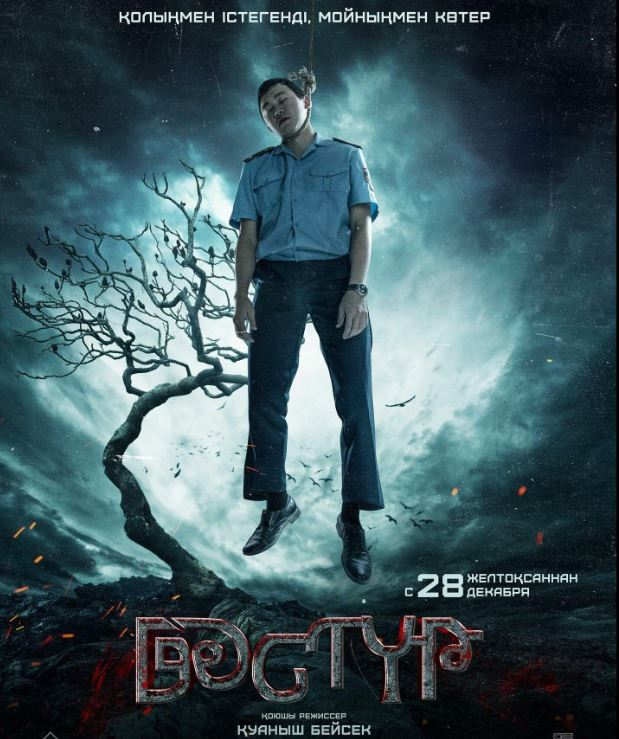
In Dästür, the plot revolves around a girl from a remote aul (village) who is raped by the spoiled son of an influential businessman. The attacker’s father does everything in his power to cover up the crime, including arranging a forced marriage in accordance with local traditions. However, after the girl moves into her husband’s home, a series of strange and mysterious deaths begin to occur among those responsible for her plight.


Invisible – Uzbekistan (2011)

Invisible theatrical release poster

At the heart of Invisible is a hospital where a mysterious man arrives in critical condition. After a complicated surgery, the doctor begins to sense that something terrifying and inexplicable is affecting the patient. As events unfold, his suspicions are confirmed: some patients appear to be possessed, and he is plagued by hallucinations and unsettling nightmares.


Claustro – Kazakhstan (2023)

Claustro theatrical release poster

Kazakh horror Claustro takes viewers into the mysterious world of confined space. During a holiday party, two casual acquaintances, Kem and Max, retreat to an apartment, only to find themselves trapped as the place refuses to let them leave. Windows and doors lead to new, endless mazes of rooms, creating a feeling of complete isolation.


Albarsty – Kyrgyzstan (2017)

Albarsty theatrical release poster

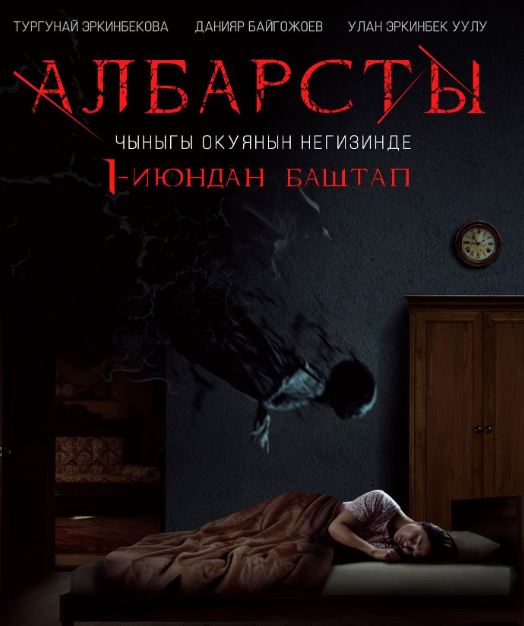
Albarsty is a psychological horror that immerses viewers in the world of fear, loss, and the supernatural. The main characters, Zamir and Ainura, struggle with a deep emotional crisis following the tragic loss of their child and their inability to conceive again. Seeking comfort and renewed hope, they decide to adopt a boy, Ulan, whom they suspect has brought an unwelcome entity — a demon (albarsty) into their home.


Qash – Kazakhstan (2022)

Qash theatrical release poster

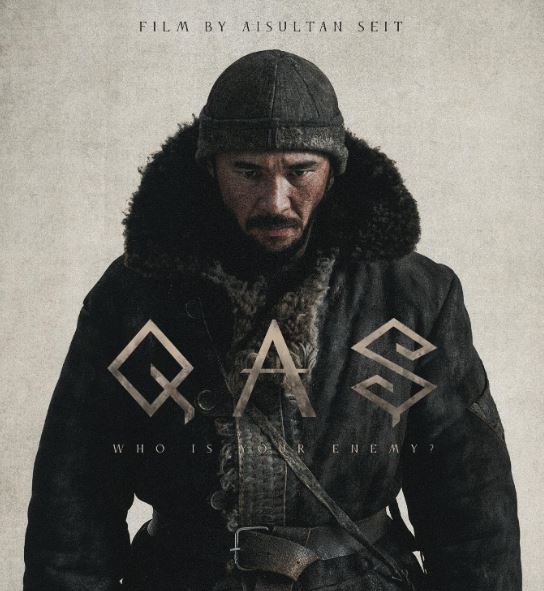
Set amidst the famine of the 1930s, Qash tells the story of a gravedigger, Isatay, who embarks on a risky journey to the nearest town to save his aul. On his way, he meets a mysterious wanderer who shows him a path that leads to nowhere. Qash delves into the theme of survival, immersing the audience in an atmosphere of despair and hopelessness while challenging the moral choices individuals make under extreme conditions.

Uncategorized

Two Lost Silk Road Cities Unearthed in Uzbekistan

Aided by laser-based technology, archaeologists in south-east Uzbekistan, have discovered two lost cities that once thrived along the Silk Road from the 6th to 11th centuries AD.

As reported  by Reuters, one was a center for the metal industry, and the other, indicates early Islamic influence. Located some five kilometers apart, these early fortified outposts are among the largest found on the mountainous sections of the Silk Road.

“These cities were completely unknown. We are now working through historical sources to find possible undiscovered places that match our findings,” said archaeologist and lead author of the report, Michael Frachetti of Washington University in Saint Louis.

The researchers state that the most expansive of the two, Tugunbulak, covered about 300 acres (120 hectares) and in existence from around 550 to 1000 AD, boasted a population of tens of thousands. As such, it was one of the largest cities of its time in Central Asia, rivaling even the famed trade hub Samarkand, situated about 110 km away, and according to Frachetti,  many times larger and more enigmatic than other highland castles or settlements that have been documented in high-elevation Central Asia.”

The other city, Tashbulak, inhabited from around 730-750 to 1030-1050 AD, was only a tenth the size of its neighbor, with a population perhaps in the thousands.

After discovering the first signs of the cities’ existence, archaeologists employed drone-based lidar –  a technology that floods the landscape with lasers to measure the topography – to map and establish the size and layout of the sites. Findings revealed highly defined structures, plazas, fortifications, roads, homes, and other urban features.

An initial dig at one of Tugunbulak’s buildings, fortified with thick earthen walls, uncovered kilns and furnaces, suggesting it was a factory wherein, metalsmiths turned local iron ore into steel. During the 9th and 10th centuries, the region was known for its steel production and researchers are now analyzing slag found on-site to confirm their hypothesis that in addition to trade in livestock and related products such as wool, the metal industry may have been a central feature of Tugunbulak’s economy.

According to Franchetti, “Tugunbulak, in particular, complicates much of the historical understanding of the early medieval political economy of the Silk Routes, placing both political power and industrial production far outside the regional ‘breadbaskets’ such as Samarkand.”

As stated in the report, Tashbulak lacked the industrial scale of Tugunbulak but boasted an interesting cultural feature: a large cemetery that reflects the early spread of Islam in the region. Its 400 graves—for men, women, and children—include some of the oldest Muslim burials documented in the area.“The cemetery is mismatched to the small size of the town,” said Frachetti. “There’s definitely something ideologically oriented around Tashbulak that has people being buried there.”

Tugunbulak and Tashbulak are especially remarkable given their altitude, which is roughly comparable to that of the later Inca citadel of Machu Picchu in Peru, and as noted by Frachetti, “The key finding of this study is the existence of large, fortified, and planned cities at high elevation, which is still rare but much more exceptional in ancient times.”

Uncategorized

Turkmen-Iranian Tourism Festival Held in Ashgabat

The Second Turkmen-Iranian Tourism Festival united representatives from the two states’ tourism industry, cultural figures, and craftsmen.

The opening ceremony was held in the Exhibition Hall of the Academy of Arts of Turkmenistan in Ashgabat. During the ceremony, visitors familiarized themselves with Iran’s rich tourism potential, saw the works of Iranian craftsmen, and evaluated the proposals of Turkmen tourist companies.

The festival’s business program included a professional conference. Experts discussed the prospects of bilateral cooperation and new opportunities for increasing tourist flow between the countries.

The organizers paid special attention to the cultural component of the event. The festival is designed to strengthen cultural ties between Turkmenistan and Iran and create a platform for the development of joint tourism projects.

Earlier, the Academy of Arts of Turkmenistan exhibition hall hosted the opening of the Turkmen-Iranian Specialized Exhibition of Fashion and Clothing.

The visitors could experience the latest achievements in Turkmenistan and Iran’s fashion and textile industries.

The first Turkmen-Iranian Tourism Festival was held in October last year. Visitors familiarized themselves with unique items of traditional folk crafts, handmade art products, national heritage, and modern trends of Turkmen and Iranian art masters.

Kazakhstan May Manufacture Turkish Bayraktar Drones

A delegation headed by Kazakhstan’s Minister of Defense , Colonel General Ruslan Zhaksylykov, attended the IV International Exhibition of Defense and Aerospace Equipment SAHA EXPO-2024 opening ceremony in Istanbul.

The event brought together leading representatives of the military-industrial complex of Europe, Asia, and the Middle East. It demonstrated the latest developments, including automatic troop and battle management systems, robotic systems, communications, air defense, radio reconnaissance, electronic warfare, radio countermeasures, unmanned aerial vehicles, and laser technologies.

During the exhibition, Zhaksylykov held talks with Turkish Minister of National Defense Yaşar Güler and Chairman of the Defense Industry Agency Haluk Görgün. He also met with Mohammed bin Mubarak Fadel Al Mazroui, UAE Minister of State for Defense Affairs.

Special attention was paid to the talks with Baykar Defense CEO Haluk Bayraktar. The parties agreed on developing a roadmap for the localization of the production of tactical unmanned aircraft systems and barrage munitions at the operational level in Kazakhstan.

Kazakhstan is actively developing the production of unmanned aerial vehicles (UAVs) with the involvement of foreign partners. One of the significant projects is the joint production of Anka drones with Turkey, which will start in 2024. The agreement between Turkish Aerospace Industries (TAI) and Kazakhstan Engineering provides for technology transfer and the creation of an assembly line, allowing Kazakhstan to produce drones independently in the future.

In addition to Turkey, Kazakhstan cooperates with South Korea and China on drones. In 2023, Petropavlovsk established local drone production using components from China. Such steps contribute to the development of Kazakhstan’s defense industry and reduce dependence on imports.

Uncategorized

Woman in Kazakhstan Sentenced for Inciting Ethnic Hatred

In Almaty, a Kazakh woman, Maral Zhalelova, was sentenced to two years in prison for inciting ethnic hatred.

The court found that in her video messages in TikTok, she called on Russians to leave Kazakhstan and insulted the ancestors of Kazakh nationality who fought against Nazi Germany during the Second World War. In doing so, she used obscene language and expressed sympathy for Adolf Hitler.

Even though Zhalelova did not admit guilt, she apologized for her words. The prosecutor insisted on a five-year sentence, but the court took her apology into account and handed down the minimum sentence, considering that she deserved a “more humane punishment.” The sentence has not been enforced yet.

The case began in July 2024 after complaints about Zhalelova’s provocative online statements. The investigation recognized that her words offended the feelings and dignity of citizens with Russian nationality, and hurt the memory of ancestors who fought against fascism.

During the trial, Zhalelova explained that her reaction was triggered by the events following Russia’s invasion of Ukraine. According to her, she sought to support the Kazakh language, but during the broadcasts, insults were directed at her, and she reacted to provocation.

In April 2024, another resident of Almaty, Elina Liu, also received two years in prison for making disparaging remarks about the Kazakh people and language, which the court considered as incitement to discord.