• KGS/USD = 0.01144 0%
  • KZT/USD = 0.00194 0%
  • TJS/USD = 0.10841 0%
  • UZS/USD = 0.00008 0%
  • TMT/USD = 0.28571 0%
  • KGS/USD = 0.01144 0%
  • KZT/USD = 0.00194 0%
  • TJS/USD = 0.10841 0%
  • UZS/USD = 0.00008 0%
  • TMT/USD = 0.28571 0%
  • KGS/USD = 0.01144 0%
  • KZT/USD = 0.00194 0%
  • TJS/USD = 0.10841 0%
  • UZS/USD = 0.00008 0%
  • TMT/USD = 0.28571 0%
  • KGS/USD = 0.01144 0%
  • KZT/USD = 0.00194 0%
  • TJS/USD = 0.10841 0%
  • UZS/USD = 0.00008 0%
  • TMT/USD = 0.28571 0%
  • KGS/USD = 0.01144 0%
  • KZT/USD = 0.00194 0%
  • TJS/USD = 0.10841 0%
  • UZS/USD = 0.00008 0%
  • TMT/USD = 0.28571 0%
  • KGS/USD = 0.01144 0%
  • KZT/USD = 0.00194 0%
  • TJS/USD = 0.10841 0%
  • UZS/USD = 0.00008 0%
  • TMT/USD = 0.28571 0%
  • KGS/USD = 0.01144 0%
  • KZT/USD = 0.00194 0%
  • TJS/USD = 0.10841 0%
  • UZS/USD = 0.00008 0%
  • TMT/USD = 0.28571 0%
  • KGS/USD = 0.01144 0%
  • KZT/USD = 0.00194 0%
  • TJS/USD = 0.10841 0%
  • UZS/USD = 0.00008 0%
  • TMT/USD = 0.28571 0%
18 December 2025

Over One Million Kazakhs Work Under the Radar

According to data, of the 9 million Kazakh citizens employed in the country in 2023, 1.1 million were ‘working under the radar’.

Most of those employed without any formal contracts – 617,200 men and 544,200 women – held low-level jobs including 496,900 in factories, shops and ateliers; 365,900 on private farms; 172,600 on land plots and 34,300 on construction sites. A further 29,300 worked in private homes, 24,800 used their own transport as taxis etc. and 15,000 earned a living in open markets and street vendor stalls.

The overwhelming majority of the unofficially employed – some 343,800 people- had graduated from vocational courses at colleges and trade schools, whilst 260,100 were educated to secondary level. Workers in the sector with technical and professional education numbered 238,000.

The fact that the talents and skills of such a vast proportion of Kazakh citizens is not officially recognized has a significant impact on their potential contribution to both the country’s economy and society. Furthermore, by having to resort to working in this way, these individuals are deprived of stability in the workplace as well as opportunities for advancement and learning new skills.

Kazakhstan is now actively seeking to recruit foreign specialists in science, healthcare, industry and IT to compensate for the domestic shortage of skilled labour but whilst this demonstrates the country’s desire for development, it also raises questions concerning the provision of stable and decent positions for its own citizens.

Kazakh-Owned Rompetrol, On Brink Of Collapse, Appeals To Tokayev

According to Romanian news portal gandul.ro, Rompetrol, which operates in oil refining, petrochemicals, and distribution in parts of Eastern Europe, is close to collapse. The stated reason is that Rompetrol top management — which includes representatives of Kazakhstan’s state energy company KazMunayGas (KMG), the majority owner of Rompetrol — prioritize personal interests over the economic good of the company. The allegations are serious.

KMG International, a group owned by Kazakhstan’s national oil and gas company KazMunayGas, acquired the Rompetrol brand in 2007, strengthening its position as a key player in the Black Sea and Mediterranean region. It currently owns 55% of Rompetrol, with Romania’s Ministry of Energy controlling just under 45%.

The Kazakhstani company is accused of assisting Russia, which itself is trying to avoid sanctions imposed by the European Union (EU). Gandul.ro claims that it’s possible to bring oil from Russia to be refined in Romania despite the embargo on Russian crude. Rompetrol CEO Ilyas Kuldzhanov has Russian citizenship, although he also registered Kazakh citizenship in Romania’s National Trade Register to avoid possible EU sanctions.

Gandul.ro published an open letter penned by some of the company’s employees, which they sent to the Kazakh Government.

The letter contains the following passages: “Dear Sirs, we are writing to you regarding current issues related to Rompetrol. At the beginning of this message, we apologize for using Google Translate to translate from Romanian to Russian and for remaining anonymous. We decided to remain anonymous because we fear reprisals from KMG management. We want to draw attention to the growing problems inside Rompetrol, because no one is interested in the future of the company. The company needs a radical change of management and new people with different perspectives at all levels, from the board of directors to the top management, with a vision in line with the goals.

In terms of management, first of all we should mention Ilyas Kuldzhanov, an extremely incompetent person with no experience in managing large companies, Baurzhan Nurgaliyev (Operations Director), who until recently ran a company selling elevators in Astana, Saken Shoshanov, Baurzhan Nugumanov and other members of management. Appointments to management positions are made on the basis of the ethnic origin of the clan. Most of the new managers in Romania and Kazakhstan have been hired without any competition or selection, and have no experience or knowledge of how the corporation should operate.

Note the price of oil and how diesel fuel was purchased in 2023 due to an emergency equipment shutdown at the Petromidia refinery. Why is this equipment not repairable? Why do accidents and explosions continue to occur? Because Rompetrol management is looking for contractors willing to pay commissions. We would like to inform you that similar messages will be sent to the Romanian authorities because the situation is critical.”

Rompetrol employees also create a disastrous picture of the company’s behavior. In the letter they ask Tokayev to check how components and electricity are purchased for the plant — questions that refer to expenditures of tens of millions of dollars. They also ask: “why at the last meeting of shareholders there was a conflict between representatives of the Romanian state and KMG?”

“We appeal to the President of Kazakhstan, the Prime Minister of Kazakhstan, the Minister of Energy, the heads of Samruk-Kazyna and the management of KMG with a request to take urgent measures to prevent the destruction of the company. It is critical that you accept that there are serious problems and understand that we are asking for help. We no longer have the possibility to work and see what happens. We want to inform you that similar messages will also be sent to the Romanian authorities, because the situation is extremely critical and the company needs change,” concluded the anonymous Rompetrol employees .

The website of KMG’s parent company has a section on values, which includes references to “Fairness. We act with integrity. We keep our word and do not accept double standards,” and also “Loyalty. We accept that the company’s interests come before our own.” Currently, KMG employs about 6,000 people and operates in 11 major markets. The company produces 25% of Kazakhstan’s crude oil, transports 56%, and refines 82%.

Tajik Islamic State Member Ilhomi Sayrahmanzoda Captured in Italy

Italian police have arrested a Tajik member of the Islamic State (IS) terrorist group, according to a report by the ANSA news agency.

According to police in Rome, 32-year-old Ilhomi Sayrahmanzoda was arrested at the city’s Leonardo da Vinci–Fiumicino Airport after arriving on a flight from the Dutch city of Eindhoven. He had been wanted internationally since 2014 for fighting for IS in the war in Syria.

Italian police established that Sayrahmanzoda was still an active member of IS, and had been using various aliases, connected with passports of Uzbekistan, Kyrgyzstan and Ukraine, to hide from law enforcement agencies.

2,000 in cash was confiscated from him, as well as a mobile phone, with which investigators are planning to identify whether Sayrahmanzoda had any connections in Italy.

“His arrival in Rome raises troubling questions: did he have anything planned here? Has he hired anyone before? Were they waiting for him? His citizenship was a key factor in his arrest on March 22 amid heightened tensions surrounding the Crocus City Hall bombing. However, so far, there are no elements that indicate his involvement in this movement,” the ANSA report said.

Italy is currently considering Tajikistan’s request to extradite Sayrahmanzoda. Italian interior minister Matteo Piantedosi said the arrest was “a very important result, the result of an effective preventive action against the threat of terrorism.”

Tokayev Signs Off on New Business Rules for Kazakhstan

Kazakhstan’s president Kassym-Jomart Tokayev has signed a law on the creation of new rules for the country’s business sectors.

The move is designed not only to streamline forms of state control and supervision over business, but also to improve the general conditions for entrepreneurship in the country. “Our goal is to create more favorable conditions for the development of business in the country,” the Akorda press service said, outlining some key points of the new law. At the sectoral level, the amendments lay out mechanisms that will facilitate rapid response, investigations and preventive control procedures without any physical presence at inspection sites.

The changes apply to various business areas:

– Fisheries: it will now be possible to open aquaculture facilities on promising land plots intended for agriculture;

– Plant quarantine: the administrative burden on the movement of regulated products is significantly reduced with the cancellation of quarantine certificates;

– Industry: manufacturing enterprises will receive support in the form of supply of domestic raw materials;

– Oil & gas industry: requirements have been clarified regarding documents confirming the origin of refined oil products;

– Financial markets: procedures for business interaction with banks will become more simplified; and,

– Registration of legal entities: the processes of registration and re-registration of legal entities and their branches are being converted to electronic format, which will make the receipt of state services more accessible and transparent.

The purpose of these changes is not only to facilitate the process of doing business, but also to balance the interests of consumers, entrepreneurs and the state. This direction is part of a strategy to promote entrepreneurship in Kazakhstan — which confirms the desire to improve the business environment and stimulate economic growth outside of the extractive industries.

Russia Reportedly Asks Kazakhstan for Extra Gasoline Amid Shortage From Drone Strikes

According to Reuters, Russia has asked Kazakhstan for 100,000 tons of gasoline, as Russian gasoline wholesalers hedge against possible fuel shortages due to Ukrainian drone attacks on Russian oil refineries. Reuters cited three people familiar with the matter.

“Sources say Moscow has asked Kazakhstan to stockpile an emergency reserve of 100,000 tonnes of petrol for deliveries to Russia. Arrangements have already been made to provide Kazakh petrol to Russia. Belarus is also ready to help the neighbouring country with fuel,” it reports.

However, Kazakhstan’s Ministry of Energy, through energy minister Shyngys Ilyasov, has not confirmed this information.

Due to Ukrainian drone attacks on Russian refineries in early 2024, output of oil products in Russia fell by almost 14%. The drone strikes hit notable refineries such as Rosneft’s Ryazan and Novokuibyshevsk complexes and Tatneft’s Taneko refinery. The authorities claim that there is no fuel shortage on the Russian domestic market and that there is enough gasoline in stock. Nevertheless, Russia has introduced a temporary restriction on the export of fuel outside the country — except to countries of the Eurasian Economic Union (EAEU).

According to Reuters estimates, as of April 5, Russia’s AI-92 gasoline reserves amount to 307,700 tons, AI-95 reserves were 58,000 tons, and diesel reserves were 435,300 tons.

Meanwhile, since the beginning of this year, in Kazakhstan has stopped 171 cases of illegal export of oil products, as reported by the State Revenue Committee. Thousands of liters of Kazakhstan’s subsidized gasoline were intended to be exported outside the country. Most of the shadow-economy exports were found at the Kazakh-Russian border. Currently, Kazakhstan has a ban on the export of certain types of petroleum products.

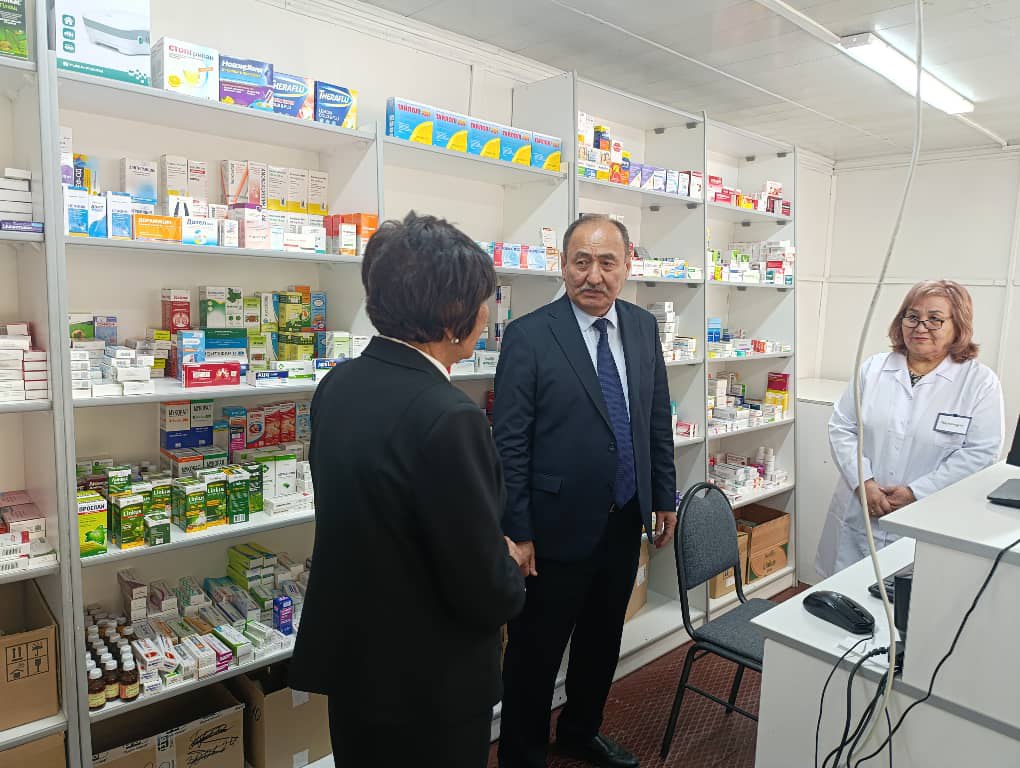
Kyrgyzstan Continues to Combat Drug Shortages

Health Minister of the Kyrgyz Republic, Alymkadyr Beishenaliyev has told local media that hospitals are 70-80% stocked with medicines, with hospitals in the Issyk-Kul region suffering the worst from short supplies.
“There is a list of vital medicines, which we provide 100%. But doctors prescribe drugs which I, a medic, have never heard of; these are scarce drugs. Doctors used to get bonuses from private pharmacies [for prescribing them] – we are fighting this and it is impossible to change it in a short time,” Beishenaliyev said.

Kyrgyzstan’s medical trade union reported that the country’s hospitals lacked basic medicines and basic drugs. As of today, 290 medical organizations have applied for the necessary drugs, but are yet to receive them. Earlier this week, the Times of Central Asia reported about the difficult situation concerning the availability of drugs.

Minister Beishenaliyev emphasized that the government is working to ensure hospitals have all the necessary drugs for the second quarter of 2024, promising that the problem would be resolved by 15 April.

However, the head of Kyrgyzstan’s medical trade union, Bermet Baryktabasova, criticized the statement made by the minister, saying that antibiotics, hormones, diuretics, anti-epileptic, psychotropic, cardiac and anti-asthma drugs are needed every day. It’s medically advisable to have a three-month supply on hand, she said, adding that intensive care units need these drugs every minute, not next quarter.

This year, to ensure timely and quality medical care, the Compulsory Medical Insurance Fund (CMIF) allocated 443.7 million sum ($5 million) for the purchase of medicines and medical devices.