• KGS/USD = 0.01144 0%
  • KZT/USD = 0.00196 -0%
  • TJS/USD = 0.10899 -0%
  • UZS/USD = 0.00008 -0%
  • TMT/USD = 0.28490 0%
  • KGS/USD = 0.01144 0%
  • KZT/USD = 0.00196 -0%
  • TJS/USD = 0.10899 -0%
  • UZS/USD = 0.00008 -0%
  • TMT/USD = 0.28490 0%
  • KGS/USD = 0.01144 0%
  • KZT/USD = 0.00196 -0%
  • TJS/USD = 0.10899 -0%
  • UZS/USD = 0.00008 -0%
  • TMT/USD = 0.28490 0%
  • KGS/USD = 0.01144 0%
  • KZT/USD = 0.00196 -0%
  • TJS/USD = 0.10899 -0%
  • UZS/USD = 0.00008 -0%
  • TMT/USD = 0.28490 0%
  • KGS/USD = 0.01144 0%
  • KZT/USD = 0.00196 -0%
  • TJS/USD = 0.10899 -0%
  • UZS/USD = 0.00008 -0%
  • TMT/USD = 0.28490 0%
  • KGS/USD = 0.01144 0%
  • KZT/USD = 0.00196 -0%
  • TJS/USD = 0.10899 -0%
  • UZS/USD = 0.00008 -0%
  • TMT/USD = 0.28490 0%
  • KGS/USD = 0.01144 0%
  • KZT/USD = 0.00196 -0%
  • TJS/USD = 0.10899 -0%
  • UZS/USD = 0.00008 -0%
  • TMT/USD = 0.28490 0%
  • KGS/USD = 0.01144 0%
  • KZT/USD = 0.00196 -0%
  • TJS/USD = 0.10899 -0%
  • UZS/USD = 0.00008 -0%
  • TMT/USD = 0.28490 0%
08 December 2025

Turkey to Step up Investment in Uzbekistan’s Production of Footwear

Turkish footwear manufacturers are ready to invest $1 million in the manufacture of leather, footwear and fur goods in Tashkent’s Ahangaran district.

Discussions between the head of Layki, a leader in the Turkish footwear and textile market, and Fakhriddin Boboevoy, chairman of the Uzcharmsanoat Association, focused on the company’s bid for land, the schedule and format of subsequent conferences, technological issues and the exchange of best practices.

Previous plans announced by the Uzcharmsanoat Association included the establishment of a leather and footwear production complex in the small industrial zone of Ahangaran comprising 26 projects with a total value of $30 million. The Turkish company Warboots, which has already committed $50 million to an enterprise to produce military footwear, has declared an interest in production at Ahangaran. Through an initial investment of $15 million, the enterprise will create 4,000 jobs for local residents.

Other Turkish companies are likewise, keen to set up operations in the Ahangaran zone. The Gratto brand is conducting a feasibilty study for a tannery which will export products to Italy and other Commonwealth of Independent States (CIS) countries, and the Uzbek company Magna Sport is in talks with Turkey’s Bursa Eldiven Sanayi to produce industrial gloves. The Turkish brand Myfit is liaising with Uzbek enterprises for the production of its licensed goods under an outsourcing system and preliminary agreements have been reached on the creation of product samples and the supply of raw materials. Uzbek industrialists, together with the Turkish company El Taban are due to begin production of next-generation shoe soles, with the initial cost of the project set at $2.1 million.

Given the country’s wide availability of raw materials, inexpensive labour and easy access to global markets, players in South Korea, Italy, Russia, China and Germany are also actively interested in embarking on joint projects with Uzbekistan’s leather industry.

Uzbekistan’s Gold, Hard Currency Reserves Down by $2.4 Billion in 2024

As of March 1, 2024, the official reserve assets of Uzbekistan amounted to $32.19 billion, having decreased by $2.37 billion in January and February, according to data from the central bank.

The regulator indicated that foreign-currency reserves dropped by $381.5 million in February and by $1.44 billion in January, with the combined decline of $1.82 billion reducing the remaining total to $7.55 billion.

The price of gold dropped to $2,066 per ounce from $2,076 in January — and to $2,059 by the end of February. However, in March, the price has set new records and is closing in on $2,200 per ounce.

At the end of 2023, Uzbekistan’s so-called financial cushion was $34.56 billion, down $1.2 billion from the previous year. That was the first year-over-year decline in reserves since 2018. Over the course of the year, the physical volume of the country’s gold reserves dropped by nearly 25 tons.

Russia to Allocate Over $23 Million for Remediation of Uranium Tailings in Kyrgyzstan

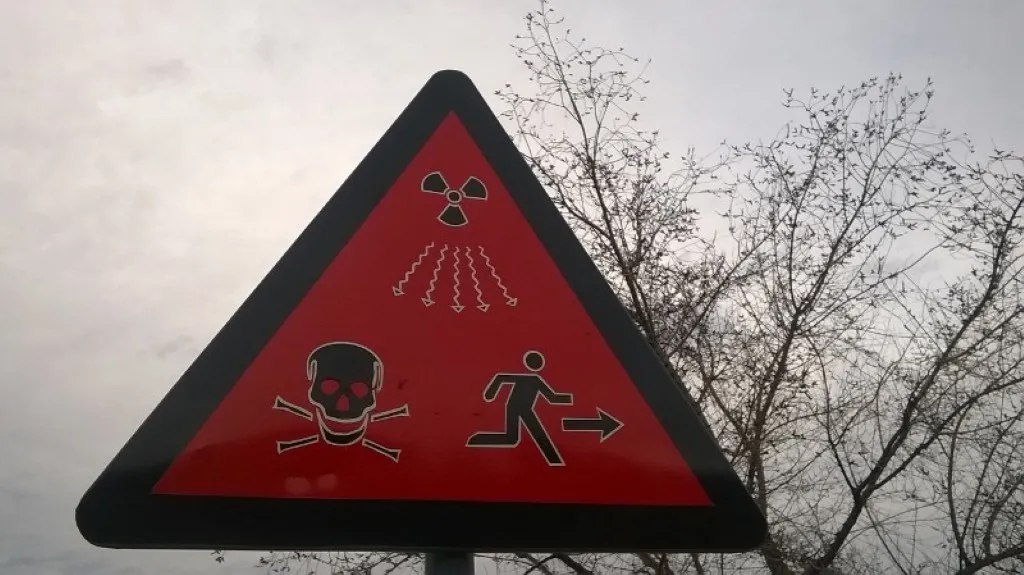
Kyrgyz members of parliament have approved an agreement between Kyrgyzstan and Russia on funds for the remediation of sites contaminated with uranium tailings. The ratification corresponds to a previous deal by the Kyrgyz government and Russian state company Rosatom under the framework of a Commonwealth of Independent States (CIS) program to rehabilitate territories affected by uranium production.
Kyrgyz Deputy Emergency Situations Minister Azamat Mambetov, speaking at the session of the Kyrgyz parliament, described the details of the agreement with Russia regarding the uranium tailings ponds.

“At our request, the Russian Federation will allocate an additional 2.141 million rubles ($23.1 million). According to the draft agreement submitted for approval, these funds will be used for work and delivery of equipment, [and] they are exempt from taxes. Five facilities in Kyrgyzstan will be rehabilitated,” Mambetov said.

According to the deputy minister, these are three tailing dumps left over from uranium mining in western Kyrgyzstan, and two tailing dumps in the south of the country. According to some sources, the first Soviet atomic bomb was filled with uranium mined in the south of Kyrgyzstan in the Batken region.

It should be noted that the tailings dumps in Chatkal district (western Kyrgyzstan) currently threaten the ecology of not only Kyrgyzstan, but also of neighboring Uzbekistan. The Chatkal River, which flows near the tailings dams, is a transboundary river that flows into one of Uzbekistan’s reservoirs — and from which Tashkent and the Tashkent region draw their drinking water.
Mr. Mambetov said that today the reclamation of uranium tailings sites in southern Issyk-Kul region and in Naryn region is almost completed. When the interstate program for reclamation of territories was drawn up in 2013, these tailings were considered the most problematic. According to Rosatom, 450,000 cubic meters of radioactive waste were concentrated in the Naryn region when work began. The work there is complicated by the fact that there is the risk of landslides in the area of the tailing dump. However, Russian specialists promise to fully complete the reclamation process by August 2024.

The volume of accumulated radioactive waste in the Issyk-Kul region is 150 thousand cubic meters. Uranium mining there was conducted from 1952 to 1966. After the mining was completed, the surface of the site was covered with a special layer of soil. But over time, the ground has been eroded by surface waters and the site began to pose a threat to the local environment once again. The works there should also be completed this year. Recall that Lake Issyk-Kul, located just a few hundred meters from the facility, is Kyrgyzstan’s main tourist attraction.

According to the Kyrgyz Ministry of Emergency Situations, there are 92 burial sites of toxic and radioactive substances in the country. Of these, 23 tailings sites contain uranium elements, while the remaining ones contain radioactive rock residues, heavy metals and cyanide. The total volume of poisonous and hazardous substances is 2.9 million cubic meters.

As reported by Rosatom, there are currently more than 40 large legacy nuclear sites dating back to the Soviet era in the states that are parties to the reclamation agreement — which include Kyrgyzstan, Kazakhstan, Tajikistan and Russia.

Artificial Intelligence to Monitor Kyrgyzstan’s Glacial Lakes to Prevent Outburst Flooding

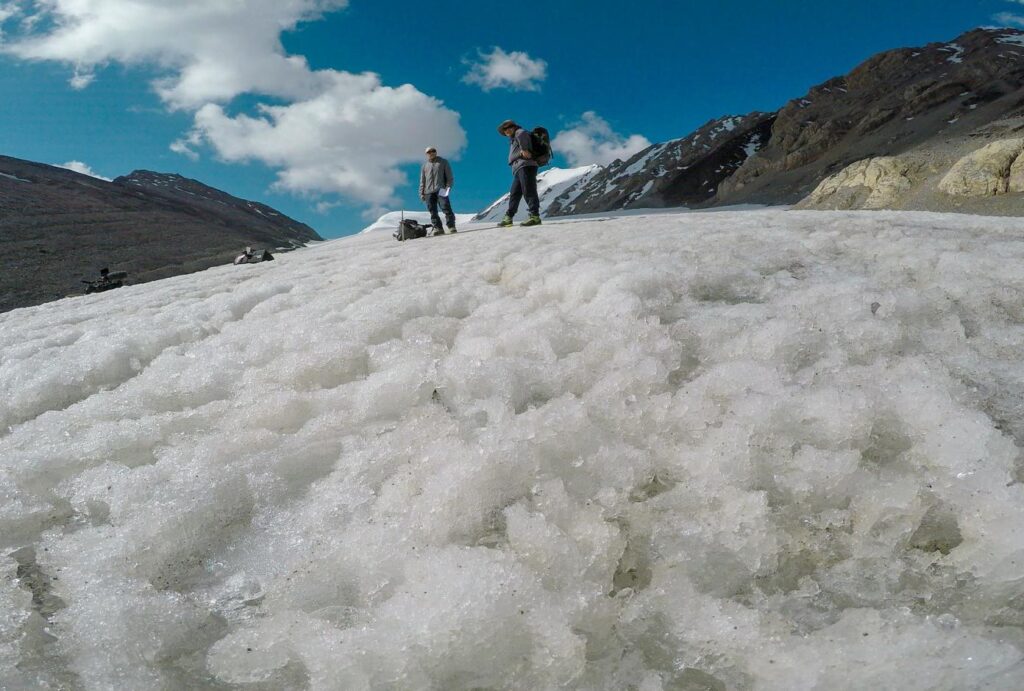
In Kyrgyzstan, an innovative IT module will monitor for glacial lake outburst floods (GLOFs) and provide early warnings about their outbursts to prevent natural disasters, according to the United Nations Development Program (UNDP).

The new IT module with artificial intelligence (AI) was shown to Kyrgyz officials as part of a program titled “Reducing Risks and Vulnerability From Glacial Lake Outburst Floods in Kyrgyzstan by Strengthening the National Disaster Monitoring System and Community Adaptive Capacity”. According to the UNDP, Kyrgyzstan faces the threat of more than 300 high-mountain lakes bursting — a threat fully attributed to climate change and permafrost degradation. International experts say the instability of natural dams and melting ice pose a risk to the population, infrastructure and the environment. The last serious flooding due to a breach of a high mountain glacial lake occurred in July 2022 in the mountains of the Issyk-Kul region.

“By harnessing the power of innovation and collaboration, we are paving the way for sustainable progress. Through proactive risk identification, assessment and vigilant monitoring, we are not only preventing crises, but also laying the foundation for economic prosperity and community resilience. The use of artificial intelligence in monitoring emergency forecasting not only marks an important milestone for Kyrgyzstan, but also sets a precedent for the entire Central Asian region,” said Alexandra Solovieva, the UNDP Resident Representative in Kyrgyzstan.

This innovative module, as the specialists emphasized, combines AI technology with the use of machine-learning processes to improve the accuracy of forecasts, and provides timely information to effectively reduce the risks of lake outbursts. The IT module calculates the surface area of the lake, assesses the state of the ice cover, makes an analysis, and assesses the risks of lake breakthrough — and in case of potential threats, warns the relevant government agencies.

“The unified system of integrated monitoring and forecasting of emergency situations is an invaluable tool to protect the life of the population and the environment. Expansion and addition of functionality on glacial lake monitoring with integration with satellite and meteorological data will ensure timely, accurate data collection, data analysis and disaster forecasting,” said Deputy Minister of Emergency Situations Edelbek Kulmatov.
At the presentation of the IT module in Bishkek, specialists also introduced the mobile application developed for it . With its help, Kyrgyz EMERCOM specialists will be able to monitor glacial lakes in real time and receive all the necessary data.

The IT module was purchased with the financial support of the Government of Japan through the UNDP.

Trans-Caspian Corridor High on Agenda of Kazakh President’s Visit to Azerbaijan

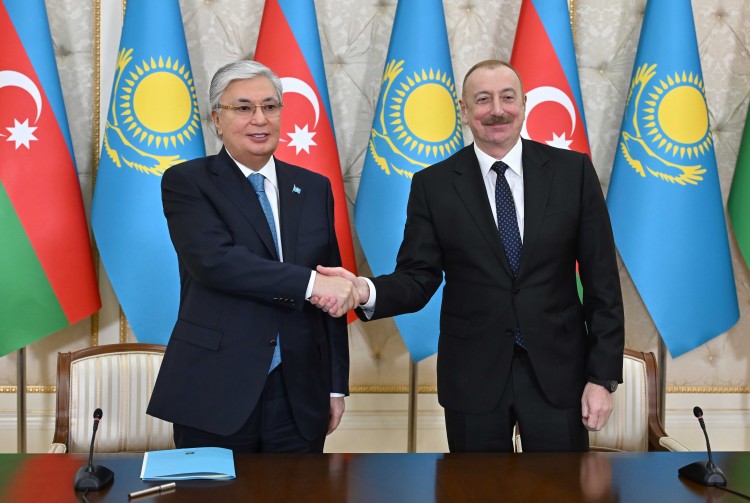
On March 11th, Kazakhstan’s president Kassym-Jomart Tokayev and Azerbaijan’s president Ilham Aliyev attended the first meeting of the Interstate Council of Kazakhstan and Azerbaijan in Baku where freight and oil shipment across the Caspian Sea was high on the agenda.

The leaders also participated, by teleconference, in a ceremony marking the arrival of the first container train in Azerbaijan’s Absheron station following its departure on February 28th from the Kazakh transport and logistics centre in China’s Xi’an, via the new section of the Trans-Caspian International Transport Route (TITR).

At the ceremony, Tokayev emphasized that against current global geopolitical turbulence, the creation of a new transport and logistics framework for Eurasia has a key role to play in nurturing close and fruitful cooperation between Kazakhstan and Azerbaijan.

Following talks with the Azerbaijani president, Tokayev spoke of the intensifying degree to which other countries struggle to access transport and logistics opportunities. “This is a strategic area. As testified by today’s ceremony, the close interaction between Kazakhstan and Azerbaijan, as natural partners, is therefore both gratifying and highly significant.”

Outlining other issues raised at the meeting, the Kazakh president told the press, “We discussed joint efforts in the fields of digitalization, the creation of artificial intelligence, and the construction of fibre-optic communications along the bed of the Caspian Sea. Each is a unique project.”

Azerbaijani President Ilham Aliyev reiterated that the Trans-Caspian transport corridor will determine the level of regional cooperation. “It is impossible to become a transit country without good relations with neighbours. Both Kazakhstan and Azerbaijan have demonstrated their commitment to regional cooperation and strengthening their relations with their neighbours. We are separated the Caspian Sea but this is no longer an obstacle. On the contrary, with the Trans-Caspian transport route set to reach its full potential, the Caspian Sea is a bridge not only between our countries, but also between many others too.”

In his report to the Kazakh-Azerbaijani Business Council on cargo transported via the TITR between Kazakhstan and Azerbaijan, Satzhan Ablaliev, Kazakhstan’s Deputy Minister of Transport, stated: “The volume increased by 65% in 2023, and in the current year, is planned to increase by a further 43%, of up to 4.2 million tons. In January alone, the volume of transportation increased 2.5-fold compared to January last year. The transit of Chinese containers has increased almost 3-fold.”

During Tokayev’s visit, Kazakhstan’s national oil and gas company KazMunayGas and Azerbaijan’s state oil company SOCAR signed an agreement to increase the transit of Kazakh oil across the Caspian Sea through Azerbaijan along the Aktau-Baku-Tbilisi-Ceyhan route to 2.2 million tons per year. This represents significant progress on an agreement drawn up in 2022 to transport up to 1.5 million tons of oil along the same route.

The two companies also signed a Memorandum of Strategic Cooperation on the purchase and sale of Kazakh oil for further processing at SOCAR’s refineries and subsequent trading in the regional and global markets.

U.S. Ambassador Calls on Tajik Government to Protect Journalists’ Rights

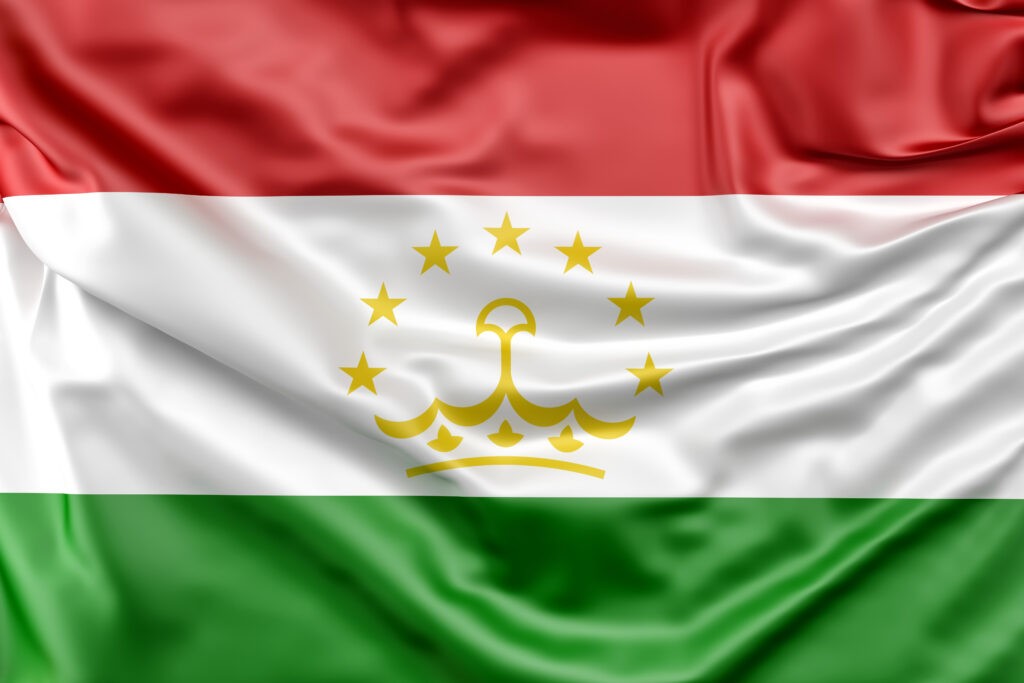
The government in Tajikistan must support journalists’ rights to free speech, according to a statement by U.S. Ambassador, Manuel P. Micaller Jr. in honor of Tajikistan’s Press Day, which is observed on March 11th. He said in a Facebook post commemorating the holiday that he was speaking on behalf of the U.S. Embassy in Tajikistan. The statement was first reported by the ASIA-Plus news portal.

“Mass media that is free and independent enables society to hear various viewpoints, make just and reasonable decisions, and stay informed about events,” he wrote in the post. He called independent mass media the
foundation of democracy in Tajikistan and around the world.

The United States supports Tajikistan’s efforts to train journalists, the post reminded readers, stating that “this is accomplished through study tours, English language classes, exchange programs, and technical assistance for the media.”

Additionally, Micaller asked the U.S. Government to uphold journalists’ freedom of speech and defend their rights.