• KGS/USD = 0.01144 0%
  • KZT/USD = 0.00192 -0%
  • TJS/USD = 0.10849 0.37%
  • UZS/USD = 0.00008 0%
  • TMT/USD = 0.28571 0.28%
  • KGS/USD = 0.01144 0%
  • KZT/USD = 0.00192 -0%
  • TJS/USD = 0.10849 0.37%
  • UZS/USD = 0.00008 0%
  • TMT/USD = 0.28571 0.28%
  • KGS/USD = 0.01144 0%
  • KZT/USD = 0.00192 -0%
  • TJS/USD = 0.10849 0.37%
  • UZS/USD = 0.00008 0%
  • TMT/USD = 0.28571 0.28%
  • KGS/USD = 0.01144 0%
  • KZT/USD = 0.00192 -0%
  • TJS/USD = 0.10849 0.37%
  • UZS/USD = 0.00008 0%
  • TMT/USD = 0.28571 0.28%
  • KGS/USD = 0.01144 0%
  • KZT/USD = 0.00192 -0%
  • TJS/USD = 0.10849 0.37%
  • UZS/USD = 0.00008 0%
  • TMT/USD = 0.28571 0.28%
  • KGS/USD = 0.01144 0%
  • KZT/USD = 0.00192 -0%
  • TJS/USD = 0.10849 0.37%
  • UZS/USD = 0.00008 0%
  • TMT/USD = 0.28571 0.28%
  • KGS/USD = 0.01144 0%
  • KZT/USD = 0.00192 -0%
  • TJS/USD = 0.10849 0.37%
  • UZS/USD = 0.00008 0%
  • TMT/USD = 0.28571 0.28%
  • KGS/USD = 0.01144 0%
  • KZT/USD = 0.00192 -0%
  • TJS/USD = 0.10849 0.37%
  • UZS/USD = 0.00008 0%
  • TMT/USD = 0.28571 0.28%
11 December 2025

Uzbek Film “Dreamers” Wins Award at Cannes World Film Festival

A documentary film entitled “Dreamers”, released by BWG Production in Uzbekistan, has won the award for “Best Historical Film of December” at the World Film Festival in Cannes, France. This win opens the door for the movie to compete for the festival’s prized “Film of the Year” title.

Ruslan Saliev, the film’s director, hailed the success as extraordinary for Uzbek film. He was confident that Dreamers, which explores the nation’s historical suffering, would strike a chord with viewers around the world. Saliev emphasized the value of these festivals in showcasing the nation’s cultural legacy abroad. He also hoped for the chance to represent Uzbekistan at more international film festivals.

“The use of reconstructions and art installations as a modern artistic interpretation in the documentary film Dreamers [should] be considered a positive experience,” explained Uzbek film critic Mohinur Ahmetjonova. “Of course, this approach doesn’t always fully reveal the [true] reality, but it gives an effective result in creating a general representation. But when it comes to covering the historical truth, it is noticeable that there is an attempt to avoid the bloody past and to present the atrocities that happened in a [softer light]. It’s no coincidence that the approach of trying to describe the achievements of the period has caused several objections by historians and film experts.”

“The fact that the filmmakers tried to combine large-scale events in one film gives the impression that they were a little distracted from the original goal… in general, in this period when new views on history are being formed, it’s natural that there are different opposing opinions about the film,” Ahmetjonova added.

Dreamers won the prize over the English film The Shamrock Spitfire, which tells the story of an Irish military pilot during WWII.
Chinese Partners To Help Modernize Uzbekistan’s Electric Power Industry

The development of renewable energy is a priority for Uzbekistan, with the country aiming for a quarter of its energy to come from renewable sources by 2030. 

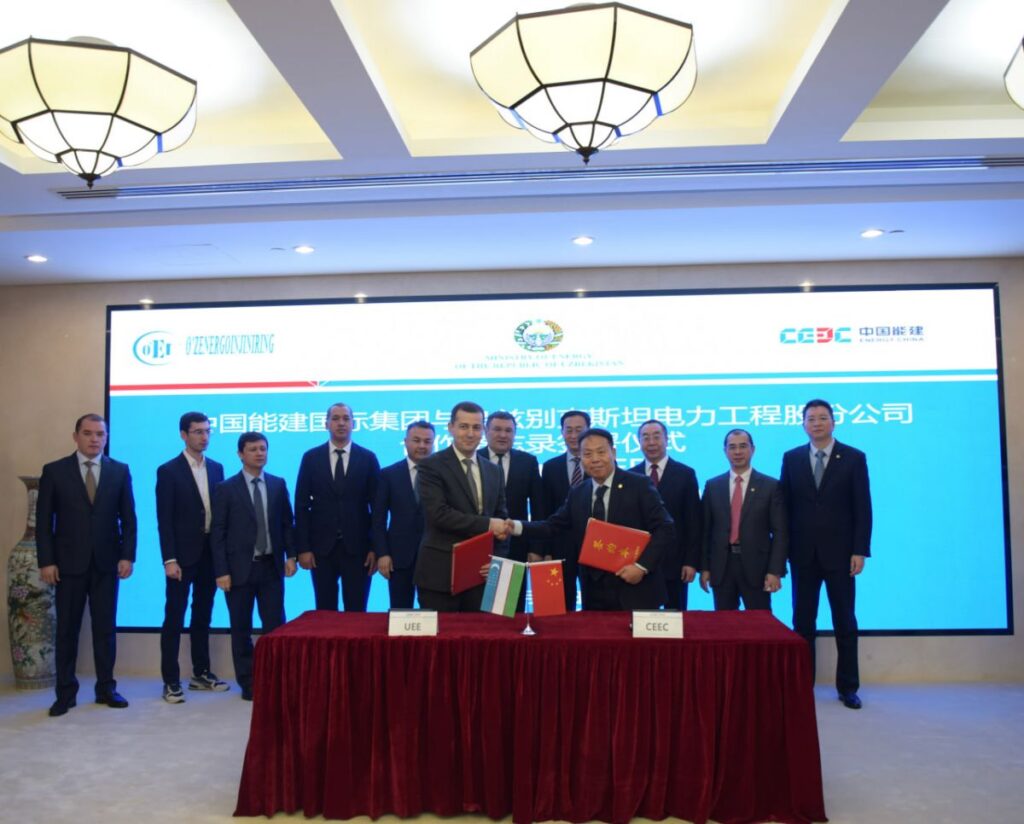
To meet this target the Ministry of Energy has spoken of the need to attract more international companies to work in the sector, and to train better qualified professionals. With this in mind, JSC Uzenergoengineering — the country’s largest electric power design institute — has recently signed two agreements with Chinese partners. 

The first agreement is with the China Electric Power Planning and Engineering Institute (EPPEI) on the creation of a joint venture in Uzbekistan. The new venture will develop short- and long-term plans for the Uzbek power industry, conduct technical and economic studies, provide consultation services to local enterprises, and train personnel.

The second agreement was signed with Energy China International, a subsidiary of China Energy Engineering Group Corporation Limited, one of the world’s largest energy companies. The parties agreed to set up a new institute in Uzbekistan with a preliminary investment of $30m. This institute will train high-level professionals, and introduce new technologies into the country’s electric power industry.

Almaty Hosts First SCO Digital Forum

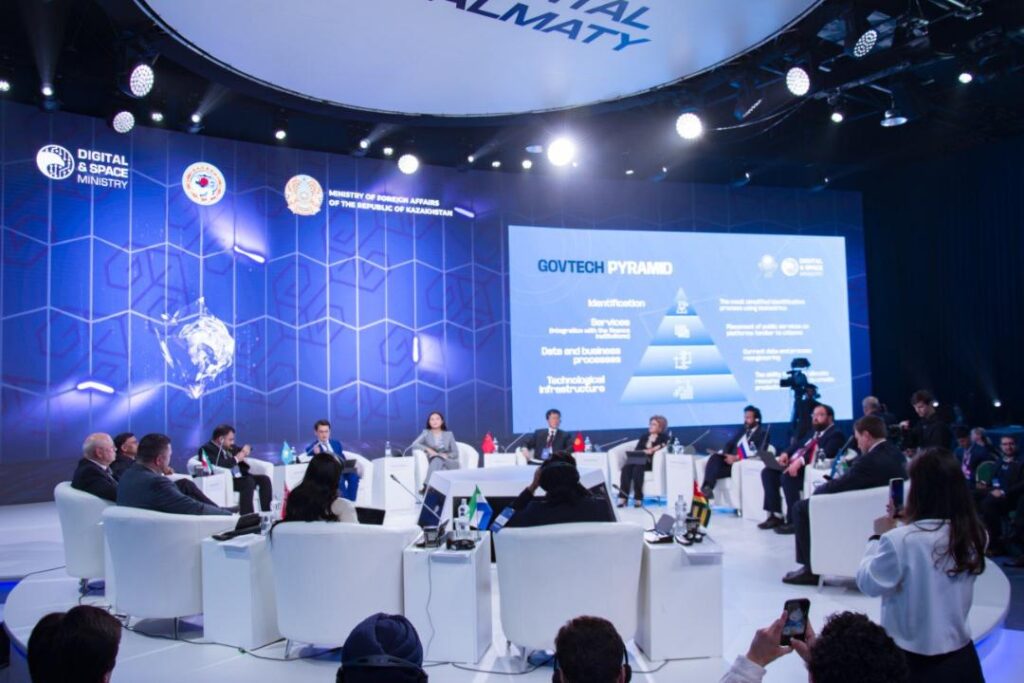
The first SCO Digital Forum, bringing together IT and communication agencies from countries within the Shanghai Cooperation Organization (SCO), was held in Almaty on February 1st. The forum is part of the three-day Digital Almaty 2024 event that began today. 

The SCO comprises China, India, Kazakhstan, Kyrgyzstan, Russia, Pakistan, Tajikistan, and Uzbekistan. 

The forum was chaired by Kazakhstan’s minister of digital development, innovations and aerospace industry, Bagdat Musin. In his welcoming remarks Mr Musin said that “Kazakhstan has achieved significant success in the field of digitalization, GovTech, and IT development, confidently leading among the Central Asian countries.”

Mr Musin highlighted the successful Kazakhstani IT startups at the international techno-park Astana Hub. “The advantage and attractiveness of Astana Hub to international companies lie in visa and tax preferences, extraterritoriality, the possibility of online registration, and the launch of acceleration programs. Among the Central Asian [countries], Astana Hub [has become] the first partner of Google for Startups, within which a joint acceleration program ‘Silkway Accelerator’ was developed. Over the course of two years of collaboration, the result is a twofold increase in the number of graduate companies; these companies have already entered the markets of the Middle East, the USA, and Europe.”. 

Mr Musin proposed the creation of an alliance of IT parks in SCO countries to further grow innovative ecosystems, and to support startup projects and IT companies. 

Another area for cooperation could be the construction of fiber-optic communication lines. Utilizing Kazakhstan’s transit potential will provide significant advantages for SCO countries in connecting to the internet and improving connectivity across the Eurasian continent, Mr Musin said. He proposed building fiber-optic cables along the Russia-Kazakhstan-Iran route, with access to the Indian Ocean.

Bishkek Plans A Cable Car Line

Following Tashkent in neighboring Uzbekistan, Kyrgyzstan’s capital Bishkek is planning to build a cable car line to help solve the city’s transport problems. 

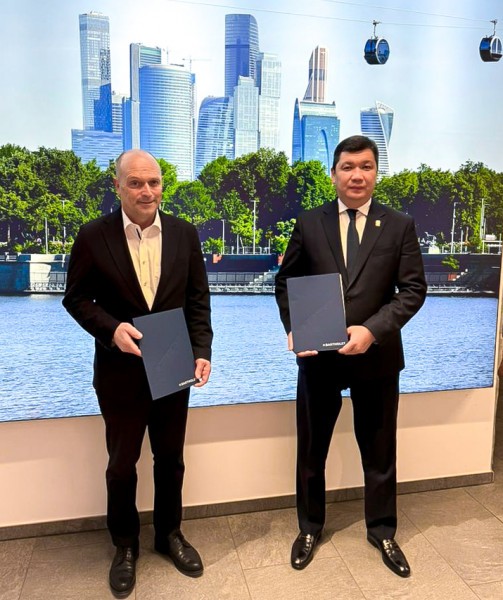
On January 30th in Flums, Switzerland, Bishkek’s mayor Aibek Junushaliev met with Roland Bartholet, the CEO of the engineering company Bartholet Maschinenbau AG. The parties signed an agreement and approved a plan to build a cable car line in Bishkek.

The city of Bishkek’s press service called the agreement an important step in the modernization of its urban infrastructure, aimed at providing comfortable transport options for people in the city.

Last month the city of Tashkent and the Chinese company Beijing North Bartholet Ropeway Technology agreed on a project to introduce a cable car service in the Uzbek capital. Beijing North Bartholet Ropeway Technology is a joint venture with Bartholet Maschinenbau AG. 

World Bank Provides Additional Support For Rural Water Services In Kyrgyzstan

On January 31st the World Bank’s executive board approved $7.64m in additional financing for its ‘Sustainable Rural Water Supply and Sanitation Development’ project in Kyrgyzstan. This funding tops up the World Bank’s earlier commitment of $59.5m for the project, aimed at improving water supply and sanitation services in rural communities.

Naveed Hassan Naqvi, the World Bank’s country manager for Kyrgyzstan, said that the project will improve the quality of life of rural citizens, especially women, children and the most vulnerable, and will bring a major decrease in water-borne diseases.

The total combined investments under the project are expected to reach 94 villages in the Osh, Chui and Issyk-Kul regions, and directly benefit some 200,000 people, the World Bank said.

The project funds the construction and rehabilitation of 57 climate-resilient water supply subprojects, aiming to enhance both climate adaptation and mitigation by diversifying water supply sources, increasing storage capacity, replacing key assets and installing water meters. It will also retrofit sanitary facilities in 99 social institutions and provide small grants to 1,350 households to upgrade their sanitation facilities. 

The project will also enhance national and local institutional capacity for sustainable service delivery and climate-informed sector reforms, including the revision of water supply and sanitation laws.

Odete Muximpua, the World Bank’s senior water supply and sanitation specialist, commented: “The second additional financing will address the financing gap caused by increased construction material prices as a result of the economic crisis. It will also allow for an increase in the size of grants to poor households in all project villages to finance the upgrades of their sanitation facilities.”

70% Of Kazakhstanis Happy With Their Life, World Bank Survey Finds

According to the World Bank’s latest ‘Listening to Kazakhstan’ survey, around 70% of people in the country are happy with their life – a figure that has remained constant since its first survey in 2021. 

The survey for 2023, conducted in partnership with the United Kingdom’s department for international development, monitors the economic and social wellbeing of Kazakhstan’s population, and provides insights into the impact of policy changes on households.

The survey reaches 1,400 households in urban and rural areas. It revealed that public perceptions of economic conditions significantly improved last year. It found that a higher percentage of respondents in 2023 believed it was a good time to start a business compared to 2021 and 2022. However, this opinion dipped in the final quarter of 2023.  

Around three-quarters of respondents expressed optimism about the country’s long-term economic outlook. This optimism was especially strong in respondents aged 18-24 and in high-income families. The survey showed that support for the government’s reforms increased to 67% last year and was particularly high among young people, the elderly, and people in rural areas. 

Metin Nebiler, head of the World Bank in Kazakhstan’s poverty and equity team, commented: “We found it very encouraging to see that the overall wellbeing of Kazakhstanis has been improving. The views on the [economic] outlook and the government’s performance are stable or trending positive.” 

However, citizens also registered several concerns. Inflation remains a significant issue for 94% of respondents, although the annual inflation rate declined in 2023.

The survey also found that challenges such as income inequality (92%) and worries about job losses (over 50%) still need to be addressed. Additionally, perceptions of government openness and anti-corruption efforts only showed only slight improvement.