• KGS/USD = 0.01144 0%
  • KZT/USD = 0.00196 -0%
  • TJS/USD = 0.10899 -0%
  • UZS/USD = 0.00008 -0%
  • TMT/USD = 0.28490 0%
  • KGS/USD = 0.01144 0%
  • KZT/USD = 0.00196 -0%
  • TJS/USD = 0.10899 -0%
  • UZS/USD = 0.00008 -0%
  • TMT/USD = 0.28490 0%
  • KGS/USD = 0.01144 0%
  • KZT/USD = 0.00196 -0%
  • TJS/USD = 0.10899 -0%
  • UZS/USD = 0.00008 -0%
  • TMT/USD = 0.28490 0%
  • KGS/USD = 0.01144 0%
  • KZT/USD = 0.00196 -0%
  • TJS/USD = 0.10899 -0%
  • UZS/USD = 0.00008 -0%
  • TMT/USD = 0.28490 0%
  • KGS/USD = 0.01144 0%
  • KZT/USD = 0.00196 -0%
  • TJS/USD = 0.10899 -0%
  • UZS/USD = 0.00008 -0%
  • TMT/USD = 0.28490 0%
  • KGS/USD = 0.01144 0%
  • KZT/USD = 0.00196 -0%
  • TJS/USD = 0.10899 -0%
  • UZS/USD = 0.00008 -0%
  • TMT/USD = 0.28490 0%
  • KGS/USD = 0.01144 0%
  • KZT/USD = 0.00196 -0%
  • TJS/USD = 0.10899 -0%
  • UZS/USD = 0.00008 -0%
  • TMT/USD = 0.28490 0%
  • KGS/USD = 0.01144 0%
  • KZT/USD = 0.00196 -0%
  • TJS/USD = 0.10899 -0%
  • UZS/USD = 0.00008 -0%
  • TMT/USD = 0.28490 0%
08 December 2025

USAID and Aga Khan Foundation Improve Access to Water and Sanitation in Bartang Valley

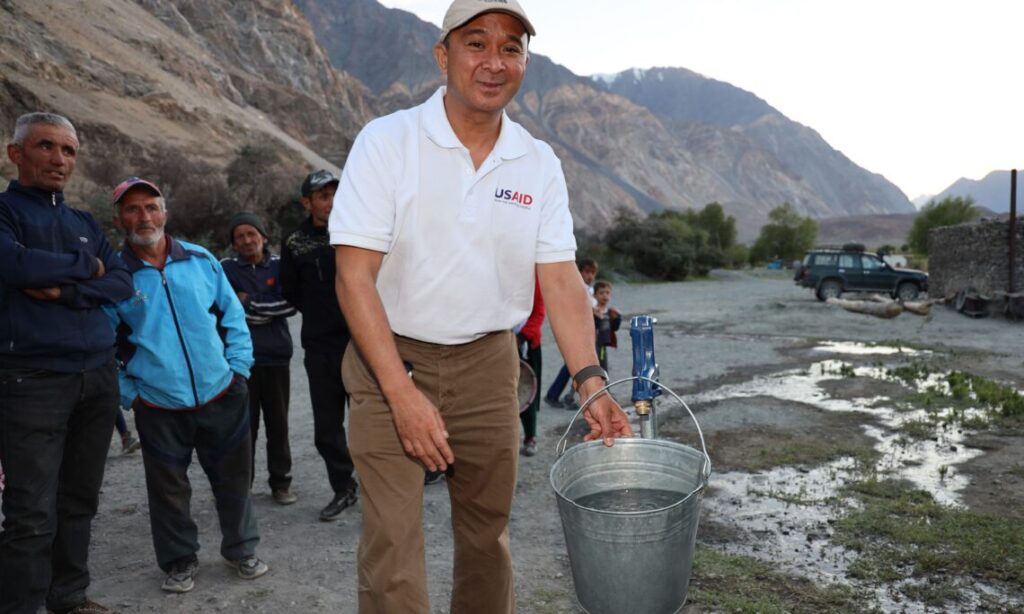
As outlined in a press release on its website, the United States Agency for International Development (USAID) and the Aga Khan Foundation (AKF) in partnership with the Government of Tajikistan completed and inaugurated a new drinking water supply system and a school latrine in two villages of Rushan’s Bartang valley. The drinking water supply systems will provide uninterrupted access to clean water for 72 households (397 people) in Pasor and Bopasor villages. Additionally, 40 schoolchildren and teachers will have access to sanitary toilets in school #40 of Bopasor village, the U.S. Embassy in Tajikistan said.

In the remote mountainous villages of Pasor and Bopasor, lack of access to potable water was a significant problem. Although the villages are blessed with an abundance of water, the absence of infrastructure forced the residents to fetch water from a distance of 500-800 meters at an elevation of 3,000 meters above sea level during harsh winters that last for five months. The USAID and AKF joint partnership, Thrive Tajikistan, works hand-in-hand with the Government of Tajikistan and people of the Bartang Valley to tackle this monumental challenge.

To date, Thrive Tajikistan has provided 14 potable water supply systems and 14 school latrines in Farkhor, Hamadoni, Nosiri Khusrav, Panj, Qubodiyon, Roshtqala, Shahritus, and Rushan districts. These systems provide 43,558 people with access to clean drinking water and improved sanitation and hygiene services to 8,344 people.

The five-year (2018-2023) “Thrive Tajikistan: Partnership for Socio-Economic Development” program expands the partnership between USAID, AKF and the Government of Tajikistan to improve the quality of life for people in all 16 districts of Tajikistan along the country’s border with Afghanistan in Khatlon province and Gorno-Badakhshan Autonomous Oblast.

President Tokayev’s Republic Day Speech Marks Thirty-Three Years of Independent Kazakhstan

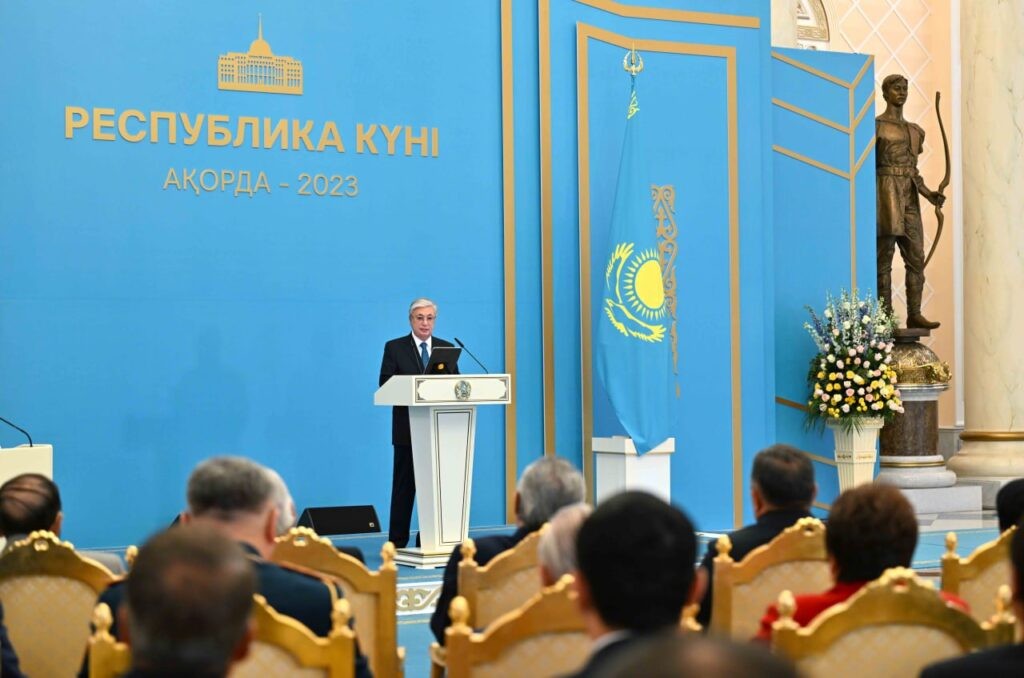
In late October, Kazakhstan’s President Kassym-Jomart Tokayev delivered a speech on the eve of the country’s Republic Day holiday. While casting a view back to the declaration of independence in 1990, it was a multi-pronged evaluation of the events in the country’s current context. This approach allowed Tokayev to wear two hats – one as the head of state, which he has worn since 2019, and one as a professionally-trained political scientist and diplomat.

Five main themes stood out in the President’s speech: The independence as the highest national value; the focus on a balanced, peaceful and co-operative foreign policy; the irreversibility of the recent progressive reforms which have strengthened rule of law and shifted the governance culture; the crucial role of the youth in shaping Kazakhstan’s future, and finally, the nation’s commitment to honoring the honest and dedicated work of its citizens.

The President’s evaluation of his first theme, underlining the importance of the country’s independence, included a roll-call of more than a dozen unsung heroes of the early 1990s, who gave birth to the new state. “This declaration of independence,” he affirmed, “met the aspirations and expectations of the people and was adopted thanks to the wisdom and prudence of the country’s patriots,” whose “courage and determination, shown at a critical hour can be regarded as true heroism.”

While Tokayev did not include himself in that list, likely out of modesty, everyone listening to the speech knew that after the dissolution of the Soviet Union, he became the deputy foreign minister of a newly independent Kazakhstan in 1992. He stayed in that post for the better part of a decade before becoming deputy prime minister and then prime minister in 1999. From 2002 to 2007, he represented the country’s foreign ministry and served as state secretary. Thereafter, he variously spent two years as Director-General of the United Nations Geneva Office, and served as chairman of Kazakhstan’s Senate, until 2019 when he became President.

Secondly, President Tokayev underlined that Kazakhstan’s balanced, peaceful and co-operative foreign policy was central to the nation’s strategy to consolidate and preserve its independence by safeguarding peace and harmony beyond its borders. The President’s message underscored the significance of Kazakhstan’s “precious legacy” of independence.

This represents, he pointed out, the latest in a historical series of Kazakh states stretching back to Turkic Khaganates, the Golden Horde and the Kazakh Khanate. However, as Tokayev stressed, the present state of Kazakhstan represents not only a historical achievement but also an ongoing commitment to the future that shapes the country’s diplomatic strategy and its approach to global interactions.

President Tokayev’s Republic Day speech also articulated the imperative of “zero tolerance” towards any manifestations of radicalism, extremism, legal nihilism, and everyday vandalism. These phenomena cannot be allowed because the maintenance of social stability and unity is the foundational domestic requirement for upholding sovereignty and statehood. His strict position on combatting these destructive forces is part and parcel of the government’s commitment ensure that the rule of law is respected and upheld.

Since it is the President’s reforms over the past several years that have significantly strengthened the rule of law in Kazakhstan and transformed the political landscape and the mindset of the populace, it is natural that the third main theme of his Republic Day speech centered on the irreversibility of these reforms.

As a result of Tokayev’s ambitious and progressive reforms, there has been a significant shift in the culture of governance. This shift has, in turn, created a new operational dynamic of the state that has become, in a relatively short time, so firmly rooted that any reversion to the country’s previous methods has become almost unthinkable.

This new forward-thinking approach to national development and governance accents his fourth main point, which is the young people’s crucial role in shaping the country’s future. Tokayev recognized the younger generation, their energy and innovative potential, their creativity and adaptability, as essential drivers of the nation’s continuing advance. “Today’s youth,” he said, “personifies the image of Kazakhstan,” and what Kazakhstan “will become in the future depends on the younger generation.”

This focus on the youth reflects a strategic vision seeking to empower the next generation as custodians of the nation’s legacy, which Tokayev set out in his first point, and as architects of its destiny. Especially for the young generation, he stressed, “It is necessary for Republic Day to become a special holiday that strengthens people’s faith in the future.”

Finally, as his fifth main point, the President underscored the need to honor honest and responsible work and to celebrate it as a cornerstone of the nation’s progress. To promote this, he has in the past presented state awards to hundreds of teachers, doctors, rural workers, labor veterans and industrial workers, emphasising the nation’s work ethic and the need to reward the hard work and dedication of its citizens.

It would not be an exaggeration to say that President Tokayev’s 2023 Republic Day speech is a historical document marking the first 33 years (or a third of a century) of Kazakhstan’s independent existence. His five main areas of emphasis represented a balanced focus on domestic and foreign affairs while acknowledging the state as the people’s autonomous national agent, at the domestic-foreign interface, that safeguards and directs the country’s path through turbulent times.

President Tokayev Puts Kazakhstan at the Centre of International Diplomacy

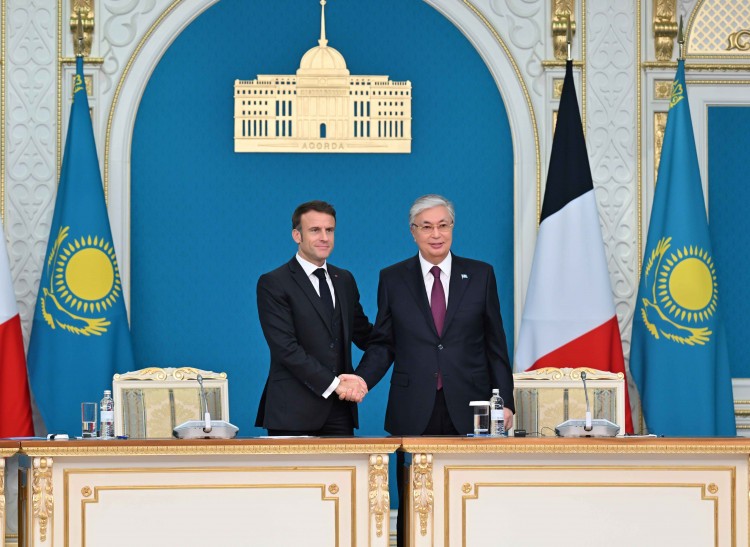
In the first half of November, Kazakhstan’s President Kassym-Jomart Tokayev received a series of global leaders who came to Kazakhstan for high-level meetings. French President Emmanuel Macron arrived at the beginning of the month for two days of intensive talks prior to signing significant agreements. Immediately after, the heads of state of the members of the Organisation of Turkic States attended the organisation’s tenth anniversary summit meeting in Astana, hosted by President Kassym-Jomart Tokayev. A few days later, Russia’s President Vladimir Putin, accompanied by his foreign minister Sergey Lavrov, came to Kazakhstan for wide-ranging bilateral consultations.

This busy itinerary reinforces Kazakhstan’s role a pivotal player in global geopolitics. The country’s diplomatic activity in recent years has become key to maintaining a delicate balance within Central Asia. Kazakhstan has also played a lodestar role in guiding the region on how to balance the increasingly fractured international system, reflecting both the country’s geopolitical realities and its greater ambitions on the international stage. In this environment, Kazakhstan’s President Tokayev has skilfully navigated relationships with regional players and global powerhouses.

Macron’s first stop in Central Asia

French President Macron’s visit to Kazakhstan in early November was the first stop in his strategic tour of Central Asia. During his meeting with President Tokayev, Macron signed several important agreements concerning crucial sectors for future development and bilateral co-operation, including critical minerals, energy, pharmaceuticals and aerospace. These agreements signify France’s realisation that, amidst Russia and China’s increasing influence in this region, France must strengthen its own relations with Central Asian countries.

The agreements signed are not only economically substantial but also strategically astute. France is the fifth-biggest foreign investor in Kazakhstan, with existing ties in the energy and uranium mining sectors. France’s energy giant TotalEnergies has been long involved in the offshore Kashagan oilfield, while French company Orano, whose leader was included in Macron’s delegation, runs a uranium mine in Kazakhstan. French energy company EDF is in contention for a contract to build Kazakhstan’s first nuclear power station. All these projects underscore France’s strategic interest in its long-standing partnership with the country.

As such, President Macron’s visit is not merely a diplomatic courtesy but a demonstration of France’s recognition of Kazakhstan’s growing importance in international affairs. It also signifies a global shift of geopolitical focus towards Central Asia, where Kazakhstan stands as the leading country. Bilateral relations between the two countries are poised to develop robustly, exerting a significant influence on the region’s economic and political dynamics.

President Tokayev hosted a successful OTS summit

The tenth anniversary summit of the Organisation of Turkic States (OTS) in Astana was an important moment in the history of Turkic co-operation. President Tokayev as the host (and representing Kazakhstan as a key OTS member) played a central role in shaping the summit’s agenda and objectives. Two principal concerns of the gathering were to boost economic co-operation and diversify transport corridors. This emphasis aligns with the OTS members’ economic development strategies to increase exports. Special attention was given to ways to support small and medium-sized businesses.

As the commitment to this focus demonstrates, member countries recognize their shared heritage and the potential of their combined economic power. The summit provides an invaluable opportunity for them to explore new avenues of co-operation, align their strategic interests and address common challenges. The cultural and linguistic commonalities among the OTS members facilitate a deeper understanding and a more cohesive approach to regional and global issues, making this platform uniquely effective.

Kazakhstan’s role and objectives within the OTS are noteworthy, including its drive to enhance partnerships for economic and diplomatic dialogue with its fellow Turkic countries. This strategic focus aligns with the country’s broader foreign policy goals. Kazakhstan, as host of the summit, has emerged as a leader in Central Asia’s regional integration efforts.

In addition to Kazakhstan, OTS members Azerbaijan and Turkey have also emphasised the diversification of transport corridors. This recognizes not only the need to improve transit infrastructures, but also the fact that the corridors themselves will have knock-on effects to boost economic development.

Vladimir Putin visits Astana

The subsequent visit by Russian President Putin, accompanied by Foreign Minister Lavrov, focused on strategic issues in the agricultural and logistical sectors, underscoring Kazakhstan’s increasing role in Russian foreign trade. In addition, Tokayev and Putin discussed energy co-operation and future projects, including the possible construction of new pipelines and power plants in Kazakhstan.

The discussions also focussed on fertiliser sale and transport. While openly stressing its commitment to international rules and norms with regard to restrictions on certain countries and commodities, Kazakhstan is also creating conditions to become a logistics hub for Russian commodities destined for China, India, Iran and other countries in Asia. The country already operates a key railroad link between Russia and China, and it maintains a railroad connection with Iran along the Caspian Sea.

There is no question that, under President Tokayev’s leadership, Eurasian trade dynamics will make Kazakhstan a key logistical player facilitating transit of essential commodities like wheat and fertilisers to large markets in Asia. Here again, Kazakhstan’s central position in Central Asia sets the stage for it to benefit from the extension of transit corridors and the reconfiguration of regional and global supply chains.

President Tokayev’s diplomatic balancing act in the stand-off between Russia and the West has emerged as a key aspect of his foreign policy. Kazakhstan’s international norms-based nonalignment, together with its strategic location, enables it to engage with major powers on different fronts. As a key player in the region, the country has been purchasing large quantities of Russian natural gas (which Europe has largely stopped buying) for domestic consumption, allowing it to increase its own gas exports to China.

Conclusion

President Tokayev’s ability to host leaders from countries with contrasting global agendas, from Russian President Vladimir Putin to French President Emmanuel Macron, illustrates his unique approach. His diplomatic strategy has redefined Kazakhstan’s role in Central Asia and beyond. Under his leadership, the country has skillfully positioned itself as a key diplomatic player, able to navigate the complex webs of regional and global geopolitics.

These substantive meetings also catalyse economic, cultural and strategic partnerships that bolster Kazakhstan’s position as a central hub in Eurasian affairs. Other nations of similar stature have much to learn from Kazakhstan’s example. President Tokayev has demonstrated how to leverage – ethically, pragmatically and with foresight – a geopolitical situation to maximise a country’s global impact and regional significance.

Kazakhstan Holds National Day of Mourning for Miners Killed in Fire

Kazakhstan held a National Day of Mourning on October 29th for more than 40 people killed in a coal mine fire in the central Qaraghandy region, the deadliest such accident in the country’s post-Soviet history. The death toll has now risen to 45, with the recovery of two additional bodies, rescue official Gennady Silinsky said.

Some 252 people were underground at the Kostenko mine when the fire struck in the early hours of October 28th, said operating company, ArcelorMittal, the world’s second-largest steel producer. Authorities said an evacuation had been ordered after the fire broke out, but that an explosion occurred before many workers could reach safety. The blast could be felt more than two kilometers away, Silinsky told a news briefing.

On October 28th, the Government of Kazakhstan confirmed the nationalization of the local branch of the steel giant, ArcelorMittal Temirtau, which operates the country’s largest steel plants and several coal and ore mines. In a statement, Prime Minister Alikhan Smailov said that the government had reached a preliminary agreement with the company’s shareholders, and was now in the process of “formalizing” the nationalization.

ArcelorMittal confirmed it had signed a “preliminary agreement for a transaction that will transfer ownership to the Republic of Kazakhstan”. The company said it “will commit to finalizing this transaction as soon as possible”.

The Office of Kazakhstan’s Prosecutor-General announced a probe into potential safety violations at the Kostenko mine. It was the second deadly incident at an ArcelorMittal site in Kazakhstan this year, after five miners were killed in an accident at a mine in the same region in August. ArcelorMittal’s operations in the resource-rich Central Asian country have regularly been accused by authorities of failing to respect safety and environmental regulations.

Scores Dead After Fire at Mine Operated by ArcelorMittal

At least 21 people were killed when a fire broke out at a mine in Kazakhstan operated by the global steel giant ArcelorMittal on October 28th, prompting President Kassym-Jomart Tokayev to order an “end to investment cooperation” with the company, RFE/RL’s Kazakh Service reports.

A local unit of the company, ArcelorMittal Temirtau, said in a statement that 252 people were underground at the Kostenko mine in the central Qaraghandy region when the fire struck. It said 208 miners had been evacuated, with 18 seeking medical help, while 23 people had not been accounted for. There was no immediate comment about the cause of the incident.

This was the second deadly event at an ArcelorMittal site in Kazakhstan this year, after five miners were killed at a mine in the same region in August. Tokayev, who expressed condolences to the victims’ families, said “the government has ordered an end to investment cooperation with ArcelorMittal”. The president said an investigative commission will be set up to determine the cause of the blaze.

ArcelorMittal operates around a dozen mines in Kazakhstan. The company’s operations in the resource-rich Central Asian country have regularly been accused by authorities of failing to respect safety and environmental regulations. Following the incident in August at an ArcelorMittal coal mine, Tokayev denounced the “systemic character” of accidents involving the company that he said has left more than a hundred people dead in Kazakhstan since 2006.

In December 2022, Astana threatened to ban ArcelorMittal from operating in the country after a worker died in what the company labeled an accident at its factory in Temirtau.

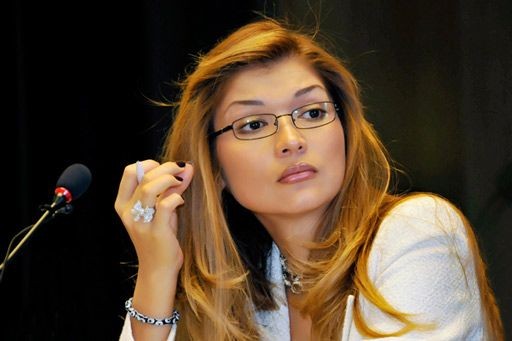
Swiss Accuse Gulnara Karimova of Running Criminal Organization

Switzerland’s federal prosecutor has filed an indictment against the imprisoned daughter of Uzbekistan’s former president, accusing her of taking bribes and running an elaborate criminal organization known as “The Office.”

Gulnara Karimova, the eldest daughter of Islam Karimov, who ruled Uzbekistan from 1991 until his death in 2016, is accused of leading the operation, which allegedly channeled hundreds of millions of dollars’ worth of bribes from telecoms companies.

Switzerland’s Office of the Attorney General (OAG) said on September 28 that money was funneled through bank accounts in several countries before being transferred to banks in Switzerland.

According to the statement, Karimova’s network began its operations in Switzerland in 2005 “in order to conceal the capital originating from its criminal dealings in Swiss bank accounts and safes and by purchasing real estate.”

“‘The Office conducted its criminal activities as a professional business, complying with mandatory regulations and observing a strict allocation of tasks, while also resorting to violence and intimidation,” the prosecutors’ statement said.

In 2012, Switzerland said it froze around 800 million Swiss francs ($871.3 million) in connection with criminal proceedings against Karimova, a pop diva and businesswoman who had a public falling out with her late father and is currently in an Uzbek prison on embezzlement and criminal conspiracy charges.

In December 2017, a Tashkent court sentenced Karimova to a 10-year prison term, but the sentence was later commuted to house arrest for five years. She was detained in March 2019 for allegedly violating the terms of her house arrest.

In February 2020, Karimova sent a letter to Mirziyoyev offering to return $686 million to the country’s treasury in exchange for the dismissal of the court case against her at home.

But a month later, she received an additional 13-year sentence after being found guilty of extortion, money laundering, and other crimes.

In August, Britain’s Serious Fraud Office confiscated three luxury properties worth more than $25.5 million in the United Kingdom that belonged to Gulnara Karimova.

The total amount of assets associated with Karimova in Switzerland, France, and the United States is estimated at almost $1.4 billion. Uzbekistan is trying to recover at least $1 billion of that.

The 51-year-old Karimova, once seen as a possible successor to her father, has also been tied to money-laundering investigations in Sweden and Switzerland.