• KGS/USD = 0.01144 0%
  • KZT/USD = 0.00203 0%
  • TJS/USD = 0.10563 -0.09%
  • UZS/USD = 0.00008 0%
  • TMT/USD = 0.28490 0%
  • KGS/USD = 0.01144 0%
  • KZT/USD = 0.00203 0%
  • TJS/USD = 0.10563 -0.09%
  • UZS/USD = 0.00008 0%
  • TMT/USD = 0.28490 0%
  • KGS/USD = 0.01144 0%
  • KZT/USD = 0.00203 0%
  • TJS/USD = 0.10563 -0.09%
  • UZS/USD = 0.00008 0%
  • TMT/USD = 0.28490 0%
  • KGS/USD = 0.01144 0%
  • KZT/USD = 0.00203 0%
  • TJS/USD = 0.10563 -0.09%
  • UZS/USD = 0.00008 0%
  • TMT/USD = 0.28490 0%
  • KGS/USD = 0.01144 0%
  • KZT/USD = 0.00203 0%
  • TJS/USD = 0.10563 -0.09%
  • UZS/USD = 0.00008 0%
  • TMT/USD = 0.28490 0%
  • KGS/USD = 0.01144 0%
  • KZT/USD = 0.00203 0%
  • TJS/USD = 0.10563 -0.09%
  • UZS/USD = 0.00008 0%
  • TMT/USD = 0.28490 0%
  • KGS/USD = 0.01144 0%
  • KZT/USD = 0.00203 0%
  • TJS/USD = 0.10563 -0.09%
  • UZS/USD = 0.00008 0%
  • TMT/USD = 0.28490 0%
  • KGS/USD = 0.01144 0%
  • KZT/USD = 0.00203 0%
  • TJS/USD = 0.10563 -0.09%
  • UZS/USD = 0.00008 0%
  • TMT/USD = 0.28490 0%
20 February 2026

Viewing results 1 - 6 of 9

Kazakhstan Engaged in Legal Disputes with 20 Foreign Companies

Kazakhstan is currently involved in 20 legal disputes with foreign companies, a decrease from 26 cases in 2023, according to Yerlan Musabayev, Acting Director of the Department for the Protection of State Property Rights under the Ministry of Justice. “As of now, the Ministry is handling 20 cases involving claims totaling more than $7.5 billion,” Musabayev stated during a briefing in Astana. Of these, 13 are under review in international arbitration, five are in foreign courts, and two are in the pre-litigation stage. The reduction in the number of disputes reflects progress made over the past year, he noted. Among the Ministry's recent successes, Musabayev highlighted a key ruling by the High Court of Justice in London in favor of Kazakhstan in a case filed by Canadian uranium company World Wide Minerals (WWM). The dispute originated from Kazakhstan’s 1997 decision to deny WWM an export license for uranium and terminate a trust management contract for the Tselinograd Mining and Chemical Plant (now the Stepnogorsk Mining and Chemical Plant). The High Court ruling, issued on February 28, 2025, overturned a 2024 decision that had awarded WWM approximately $65 million. “Under the 2025 decision, the Republic of Kazakhstan has no obligations toward World Wide Minerals. It’s worth noting that the bar for appeals in UK courts is exceptionally high, fewer than 2% succeed,” Musabayev said. Another legal victory came in a case involving the Kazakh-Italian construction joint venture Todini Impregilo Kazakhdorstroy. The company had sought $20 million in claims, but the International Chamber of Commerce Arbitration Court in Paris dismissed all demands and ordered the joint venture to reimburse $277,000 in legal costs. Enforcement of the ruling required compulsory measures. “The Ministry of Justice is actively working to further reduce the number of disputes with foreign entities. Through coordinated efforts with other state bodies and the Government’s legal advisors, we’ve saved considerable budgetary resources, preserved Kazakhstan’s investment attractiveness, and strengthened the country’s international reputation,” Musabayev concluded. As previously reported by The Times of Central Asia, Kazakhstan resolved a long-standing legal battle with Anatolie and Gabriel Stati’s Tristan Oil in 2024, following protracted litigation over the nationalization of oil assets. Meanwhile, early reviews of certain production-sharing agreements in the oil sector could lead to new legal proceedings in the near future.

Kazakhstan Ends Litigation With Moldovan Businessmen

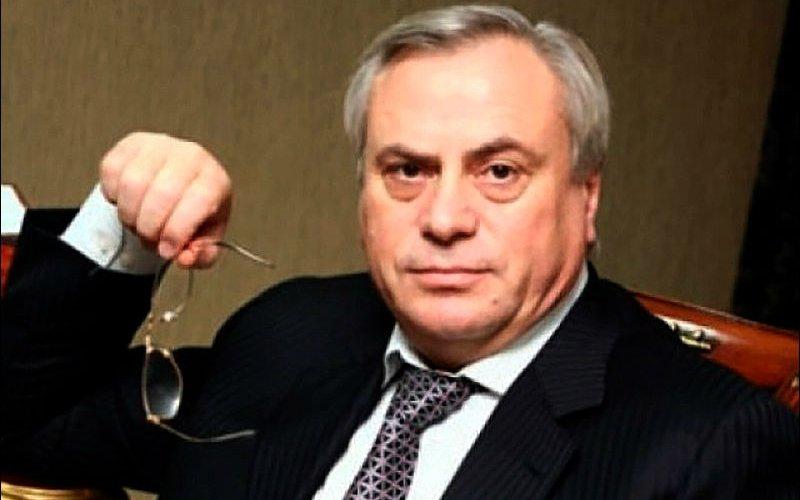
After 15 years of litigation worldwide, a long-standing dispute between Kazakhstan and Anatol and Gabriel Stati, businessmen from Moldova, has ended. The Ministry of Justice of Kazakhstan has reported that the government, the National Bank of Kazakhstan, and representatives of Stati have signed a framework agreement. The parties, with the support and consent of leading creditors of Tristan Oil, have concluded a legally binding framework agreement on a peaceful and mutually acceptable resolution of the long dispute over oil and gas assets in Kazakhstan. As reported by the Ministry of Justice, the signatories have reached an agreement on mutually favorable terms that will lead to the termination of all legal proceedings and stop ongoing lawsuits in all jurisdictions. The specific terms of the agreement remain confidential. Daniel Chapman, CEO of Argentem Creek Partners, said, "We support the framework agreement and applaud President Kassym-Jomart Tokayev's decision to build a 'Just Kazakhstan' as part of his admirable reforms. The settlement of this dispute demonstrates Kazakhstan's compliance with international treaty obligations, which opens the door to increased investment and enhances its economic growth potential. We welcome a new era for Kazakhstan.” Argentem Creek Partners is the investment manager of specific funds that became lenders to Tristan Oil Limited, the investment vehicle of the Stati parties. According to Justice Minister Azamat Yeskarayev, "This agreement is made with the public interest in mind and does not involve the expenditure of public funds. We believe that this step will positively impact the attraction of new investments to our country and the economy's growth.” The legal battle between Stati and entities in Kazakhstan started in 2010. Lawsuits have been considered in the Netherlands, Belgium, Luxembourg, Sweden, the UK, and the United States. At one point, the assets of the National Fund of Kazakhstan were even frozen. The episode began in October 2008, when then President of Moldova,Vladimir Voronin, complained to Nursultan Nazarbayev that businessman Anatol Stati was using money received in Kazakhstan to sponsor the opposition in Moldova. Shortly thereafter, Stati's relationship with the authorities in Kazakhstan sharply deteriorated. A series of inspections initiated by state began, during which the unlicensed use of trunk pipelines, tax arrears, violations of license and contractual conditions under subsoil use contracts and other issues were discovered. According to experts familiar with the case against Stati, by that time the Moldovan businessmen had already decided to leave Kazakhstan and were preparing for these inspections, which would result in the termination of contracts. Therefore, by November 2009, they had amassed a lot of materials, which, in the hands of their lawyers could be used to argue that Kazakhstan was in violation of the regime of fair and equal treatment of investors under the Energy Charter Treaty. On July 21, 2010, the Ministry of Oil and Gas of Kazakhstan terminated the subsoil use contracts of the Stati companies Tolkynneftegaz LLP and Kazpolmunai LLP due to non-fulfillment of license and contractual terms. Five days after receiving the termination notice, on July 26, 2010, Stati filed...

Russian telecom company files $750m arbitration case against Turkmenistan

ASHGABAT (TCA) — Russian telecommunications giant MTS has filed a case with a World Bank arbitration center for at least $750 million in compensation from Turkmenistan for the forced closure of its daughter company in the Central Asian country. Continue reading

Iran to file arbitration lawsuit against Turkmenistan over price and quality of gas

ASHGABAT (TCA) — Iran plans to take Turkmenistan to international arbitration over the price and quality of natural gas it has imported from the Central Asian neighbor, Iran’s PressTV reported. Iran’s Minister of Petroleum Bijan Zangeneh was quoted as saying on January 29 that Iran plans to sue Turkmenistan’s state gas company TurkmenGaz over the quality of the delivered gas. “We have another complaint to file with the International Court of Arbitration in order to have the company reconsider the price of the exported gas because we believe it is too high and has to be lowered,” he said. Iran’s complaint has three parts: Turkmenistan’s cutting off the gas supply without prior notice on 1 January 2017, low quality of the gas, and the high price, Iran’s IRNA reported. Turkmenistan stopped gas exports to Iran on 1 January 2017, demanding quick payment of what it views as arrears which are disputed by Iran. The row relates to Iran’s imports of gas for distribution in its northern provinces, especially during winters, because the country's natural gas fields are mostly located in the south. Turkmenistan claims Iran owns it about $1.8 billion, but Zangeneh reiterated that the figure is not correct. Turkmenistan’s halt to gas exports last year came just after Zangeneh said the two sides had reached a temporary agreement to continue the supplies. The dispute dates back to the exports between 2007 and 2008 when freezing winters led to severe shortages across 20 Iranian provinces, forcing the country to raise gas imports from its northeastern neighbor. At the time, Turkmenistan used the occasion to demand a nine-fold hike in the price up to $360 from $40 for every 1,000 cubic meters of gas. Iran imported about 35-40 million cubic meters of gas a day from Turkmenistan under a deal which had stood for 20 years.

Kazakhstan says freeze lifted on $22 billion in sovereign-fund assets

ASTANA (TCA) — Authorities in Kazakhstan say a Dutch court has lifted a freeze on Kazakh sovereign-fund assets worth $22 billion, RFE/RL's Kazakh Service reports. Continue reading

Moldovan businessman threatens to force sale of Kazakhstan’s Kashagan oilfield stake

ASTANA (TCA) — A spokesman for Moldovan businessman Anatolie Stati says that Stati will demand the sale of a $5.2 billion stake in Kazakhstan’s Kashagan oil field in the Caspian Sea if Astana refuses to pay an arbitration award, RFE/RL reports. Continue reading