• KZT/USD = 0.00216
  • TJS/USD = 0.10800
  • UZS/USD = 0.00009
  • TMT/USD = 0.29850
  • KZT/USD = 0.00216
  • TJS/USD = 0.10800
  • UZS/USD = 0.00009
  • TMT/USD = 0.29850
  • KZT/USD = 0.00216
  • TJS/USD = 0.10800
  • UZS/USD = 0.00009
  • TMT/USD = 0.29850
  • KZT/USD = 0.00216
  • TJS/USD = 0.10800
  • UZS/USD = 0.00009
  • TMT/USD = 0.29850
  • KZT/USD = 0.00216
  • TJS/USD = 0.10800
  • UZS/USD = 0.00009
  • TMT/USD = 0.29850
  • KZT/USD = 0.00216
  • TJS/USD = 0.10800
  • UZS/USD = 0.00009
  • TMT/USD = 0.29850
  • KZT/USD = 0.00216
  • TJS/USD = 0.10800
  • UZS/USD = 0.00009
  • TMT/USD = 0.29850
  • KZT/USD = 0.00216
  • TJS/USD = 0.10800
  • UZS/USD = 0.00009
  • TMT/USD = 0.29850
20 August 2026

Viewing results 1 - 6 of 1246

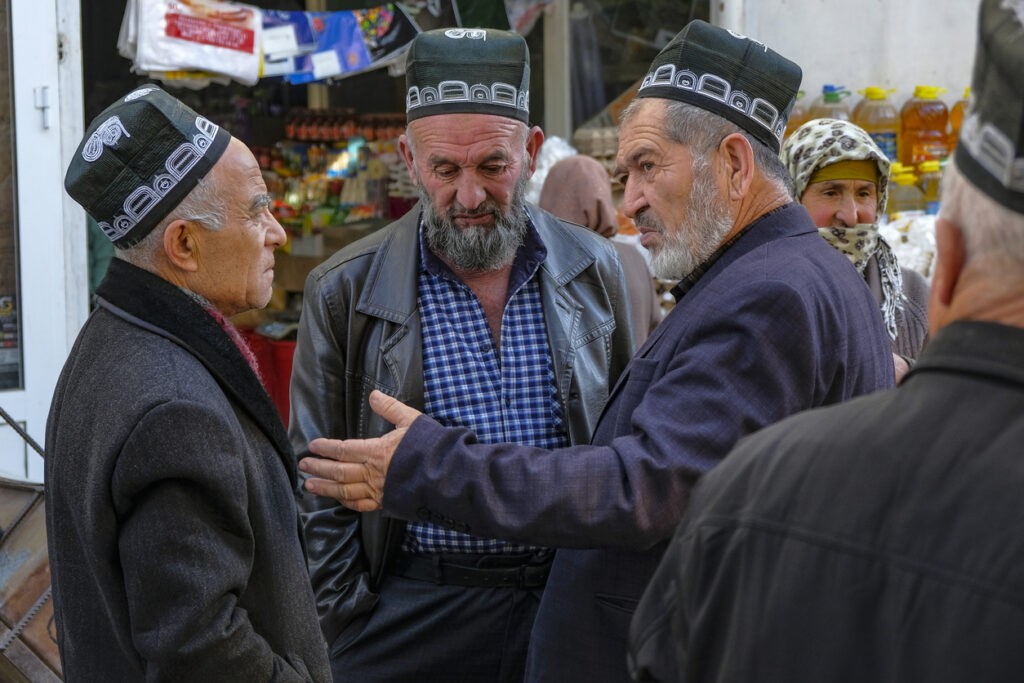
Time Spent by Tajikistan Citizens Sleeping, Eating and Working

The results of a study on time-budgeting by citizens of Tajikistan, conducted with support from the World Bank, was recently published by the Statistical Agency under the President of Tajikistan,. According to data, the first of its type to be recorded in Tajikistan, the country's residents sleep for an average of 8 hours, read for 8 minutes, and work for only an hour each day. During the study, from 15 September to 15 December 2023, officials interviewed 13,150 people over the age of 10 years old. Sixty percent were women and 40 percent, men. The results were presented by gender, age, area of residence (urban/rural), level of education, and employment status.  As such, the data provides a broad source of information for analysis in areas including general  labour productivity, women's labour and their contribution to the economy, the construction of the system of national accounts, and the organization and conduct of leisure activities as an indicator of well-being. Results showed that on any given day, Tajikistan's population aged 10 and over,  spends 12 hours and 53 minutes on personal care, or 53.7 percent of their day. Of this, 8 hours and 26 minutes are spent sleeping, 2 hours and 43 minutes eating, and 1 hour and 43 minutes on personal hygiene and grooming. The second highest daily time-consuming activity, averaging 4 hours and 4 minutes, is  housekeeping. Perhaps not surprisingly, women spend 5 hours and 16 minutes a day on housekeeping, and men, just  2 hours and 35 minutes. One hour 37 minutes or 6.8% of the day is occupied on media consumption. Every day, citizens watch TV for around 1 hour 22 minutes but only 8 minutes reading books. The third most popular daily activity involved communication and leisure, at 1 hour 20 minutes. Work took fifth place, with an average of 1 hour 17 minutes per day. Education took up 48 minutes a day, while daily engagement in sports and active leisure pursuits remains lower still at 12 minutes a day.  
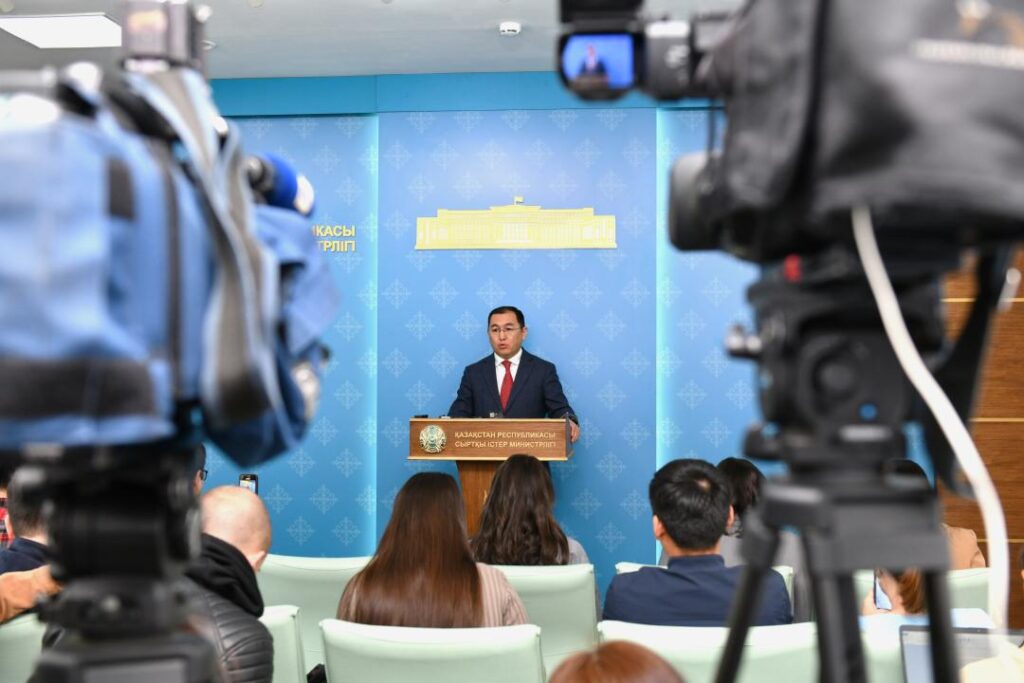
Citizens of Kazakhstan Aren’t Being Detained at Borders with Russia, Ministry Claims

The Ministry of Foreign Affairs of Kazakhstan, Aibek Smadiyarov, is reassuring its citizens that they can safely visit Russia, stating that the relationship between the two nations is based on the principles of friendship, alliance, and strategic partnership, and are a model of multifaceted interstate cooperation. "We do not observe any problems on the Kazakh-Russian border. Our diplomats in Russia are constantly in contact with local authorities, the Ministry of Foreign Affairs, and the border service. Our citizens do not observe any mass detentions or document checks. If they have been stopped or had their documents checked, it is for security purposes," said Smadiyarov at the briefing. He also advised Kazakhstani citizens to observe Russian laws while in the country. Earlier, the foreign ministries of Tajikistan and Kyrgyzstan recommended that their citizens shouldn't visit Russia without good reason. These statements were made against the backdrop of a tightening on migration controls by the Russian authorities following the March 22 terrorist attack on the Crocus City Hall near Moscow. Since then, xenophobic attacks on migrants from Central Asia have been on the rise. According to currenttime.tv, 75% of cafes and restaurants run by Central Asian migrants in Moscow alone have shut since the incident due to police harassment.

Saudi and Emirati Companies to Build Two Wind Farms in Uzbekistan

Saudi and Emirati companies are to invest $7 billion in the construction of two windfarms in the Kungrad district of Uzbekistan's autonomous Karakalpakstan republic. The announcement followed the signing of two contracts  during the third Tashkent Investment Forum. The commission of the facilities will save almost 7 billion cubic meters of natural gas and prevent the emission of more than 2 billion tons of harmful gases into the atmosphere. Welcoming the initiative, the Uzbek Energy Ministry said, "Saudi company ACWA Power is implementing a megaproject to build a wind farm with a total capacity of 5 gigawatts in the Kungrad district of Karakalpakstan. The project is estimated at $6.2 billion. The station will generate 17.5 billion kilowatt-hours of electricity per year. A wind power plant with a total capacity of 1 gigawatt and a cost of $1.1 billion will be built in the same area by Amea Power from the UAE. It will generate 3.5 billion kilowatt-hours of electricity a year," . During the third Tashkent International Investment Forum, agreements signed by several government and private-sector counterparties, totalled $26.6 billion .

Turkmenistan’s Public Sector Employees Pay Up to Care for Mulberry Silkworms, Cotton Fields

To cover the costs of silkworm care and the weeding of cotton, money is being collected from employees of state institutions in the Mary region, according to a report by Radio Azatlyk. According to a verbal order issued by the authorities, 100 manat is being collected from each government employee for the cost of silkworm care - and 30 manat for weeding. Many workers at state institutions are dissatisfied with yet another example of extortion, but say they have no choice but to comply. According to an employee of one local state organizations, if any employee refuses to hand over the money, a report will be written on him or her. Employees who don't agree with the collection of money are accused of opposing public policy, which can lead to their dismissal under various false pretexts. "It is already very difficult to find a job now. Therefore, the majority of public sector workers are forced to agree to submit to the authorities' next levies. If you write a report on one worker, the rest of them immediately agree to any demands," the anonymous government worker said. According to a presidential decree signed in February, Turkmenistan plans to produce 2,100 tons of silkworm cocoons this year. Meanwhile, cotton sowing projects also continue.

First Kazakh Kindergarten Has Opened in California’s Silicon Valley

The first Kazakh kindergarten in the U.S. has opened in the state of California, and its a project developed and operated by natives of Kazakhstan. The main purpose of the educational center is to work for the preservation of national culture abroad, reports the news site 24.KZ. The idea to create a kindergarten replete with Kazakh-language instruction education came to Zhanna Atabekova. According to her, through the new school, citizens of Kazakhstan who live and work in Silicon Valley can now instill national values in their children. "We want our child to receive the same upbringing as if he or she was raised by grandparents. This kindergarten is important to preserve our language," parents stated. Earlier, President Kassym-Jomart Tokayev spoke out on the issue of a national language policy, expressing confidence that Kazakh would become the main language of inter-ethnic communication. At the end of last year, Kazakhstan's Ministry of Labor and Social Protection reported on its efforts to open education and training centers to help prepare Kazakhs for work abroad. According to official data, more than 194,000 citizens currently work abroad: 162,700 in Russia, 13,100 in Poland, 6,000 in South Korea, and 5,000 in Britain.

Kyrgyzstan, Uzbekistan to Unite Their National Card Payment Systems

Kyrgyzstan's national payment system, Elkart, and Uzbekistan's Humo payments platform intend to launch a project on mutually acquiring, or guaranteeing payment security and authorizations according to Kyrgyzstan's Interbank Processing Center (IPC). The agreement was reached at a meeting in Tashkent. "We are going to develop payment systems and create an ecosystem in our countries. This project will open new horizons for the development of not only financial infrastructures of Kyrgyzstan and Uzbekistan, but will also give impetus to the development of many spheres of activity of the two states," said Kanykei Zhamangulova, Chair of the Board of the Kyrgyz IPC. Payment organizations of the two countries have been negotiating a mutual acquiring framework since last summer. At the last meeting in Bishkek, the parties agreed on money transfers and internet payments. "An agreement was reached to start a joint project for step-by-step realization of the set goals and mutual exchange of experience in acquiring, issuing and combating fraudulent transactions," Shukhratbek Kurbanov, director of the Humo payment system, said at the time. Citizens of Uzbekistan and Kyrgyzstan will be able to pay with their cards in the other of the two countries without additional commissions, he said. However, the exact launch date of mutual acquiring services wasn't announced. The cross-border payments plan is advancing as relations between Bishkek and Tashkent were further warmed by the demarcation of the two states' international border. This key step put an end to decades of border disputes that had persisted since the end of the Soviet period.