• KZT/USD = 0.00216
  • TJS/USD = 0.10800
  • UZS/USD = 0.00009
  • TMT/USD = 0.29850
  • KZT/USD = 0.00216
  • TJS/USD = 0.10800
  • UZS/USD = 0.00009
  • TMT/USD = 0.29850
  • KZT/USD = 0.00216
  • TJS/USD = 0.10800
  • UZS/USD = 0.00009
  • TMT/USD = 0.29850
  • KZT/USD = 0.00216
  • TJS/USD = 0.10800
  • UZS/USD = 0.00009
  • TMT/USD = 0.29850
  • KZT/USD = 0.00216
  • TJS/USD = 0.10800
  • UZS/USD = 0.00009
  • TMT/USD = 0.29850
  • KZT/USD = 0.00216
  • TJS/USD = 0.10800
  • UZS/USD = 0.00009
  • TMT/USD = 0.29850
  • KZT/USD = 0.00216
  • TJS/USD = 0.10800
  • UZS/USD = 0.00009
  • TMT/USD = 0.29850
  • KZT/USD = 0.00216
  • TJS/USD = 0.10800
  • UZS/USD = 0.00009
  • TMT/USD = 0.29850
20 August 2026

Viewing results 1 - 6 of 1246

Kazakhstan Weighs Down on Human Trafficking

In response to data issued by international experts citing the current level of  human trafficking in Kazakhstan, President Kassym-Jomart Tokayev has just signed a law to address the situation. First and foremost, the new law aims to protect and provide social support for victims, the majority of whom are migrant workers, people with disabilities, solitary pensioners, young women and children. Referencing statistics, First Deputy Minister of Internal Affairs Marat Kozhaev announced that 19 criminal cases were opened in Kazakhstan for child trafficking in 2023, with an additional six already logged this year. He explained that most of the children are sold within the country to meet the demand of people unable to have their own. Such cases involve staff from perinatal centers and orphanages, as well as people with unwanted pregnancies. Child trafficking is a lucrative business which continues apace despite the threat of a jail sentence of up to 18 years. According to the police, there were cases this year of parents asking for between KZT100,000 to KZT2 million, equivalent to 208 -4,168 US$, for their new-borns. Young mothers often look for potential buyers online, even while pregnant. Under the recent law, the Criminal Code has been amended to include “crimes related to trafficking in persons”, covering kidnapping, unlawful confinement, human trafficking (including trafficking minors), prostitution, etc. Amendments have also been made to the Administrative Code aimed at preventing the sale of children, including new-borns, through the introduction of the clause: “Failure of officials to report incidents of abandonment of new-borns, admission and delivery of orphans and children without parental care.” Incidents of human trafficking are invariably tragic. In most cases, the victims usually poor or homeless, are taken by force or deception to remote corners of the country, where forced to work on peasant farms, they are subjected to backbreaking labor, beatings, and a lack of medical care for months or years. The situation becomes more complicated if the victim is a migrant from Uzbekistan, Kyrgyzstan, or Turkmenistan. Such workers often without the documentation to work legally, are attracted by promises of decent pay and then literally put in chains. Another illegal business is begging. Not long ago, on a street in Almaty, volunteers rescued a lone, elderly person who had been forced through beatings and starvation to beg for several months. As a result of the beggar's testimony, a gang of slave traders was arrested the following day. Enforced prostitution is also common, particularly amongst low-income families and orphans. International experts have repeatedly warned Kazakh authorities of the need to increase its legal levers to tackle human trafficking. In 2020, the US placed Kazakhstan on its watch list which as Kazakhstan’s commissioner for human rights Elvira Azimova, said at the time, was a direct response to the country's number of victims. “The official numbers of identified cases of human trafficking and criminal prosecution in Kazakhstan are significantly lower than in neighbouring countries - including Kyrgyzstan and Uzbkistan -  for whose population Kazakhstan is a destination. This may...
Kazakhstan Launches Battle against Counterfeit Medicines

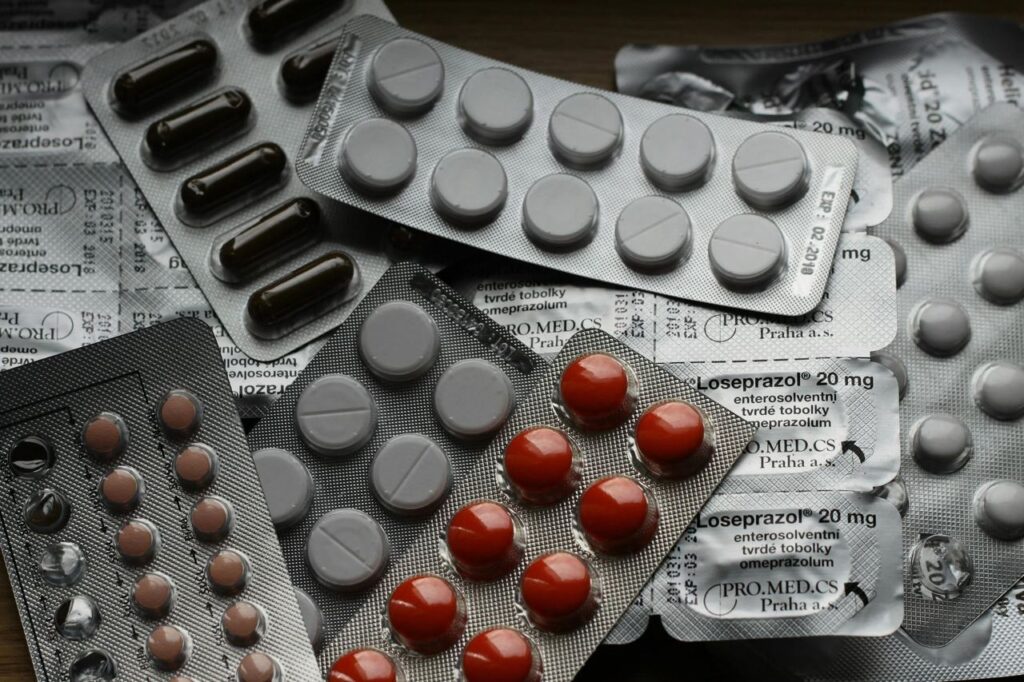
From 1 July 1, 2024, in an effort to rid the country of counterfeit drugs flooding the local market,  labeling of all medicines in Kazakhstan will become mandatory. According to the World Health Organization (WHO), every tenth package of medicines distributed in developing countries is counterfeit, and in Kazakhstan, exceeds 10% of the volume of imported medicines. This is not only an economic issue, but one that poses a direct  threat to people's lives and the health of the nation.  Under the new initiative, all drugs will be assigned an electronic passport detailing both its source and  path to the consumer. The Ministry of Health of the Republic of Kazakhstan stated that the key aim of the project is to eradicate illegal trade in medicines, including those used within the state's medical programs and mandatory social health insurance. Confident that mandatory labeling will prove effective in dealing with gray imports in the pharmaceutical market,  economist Andrei Chebotarev remarked, "When the manufacturer's goods are labeled, you can trace their  route all the way to your home medicine cabinet. Everyone will know, for example,  where the pills were produced and how they were imported into the country. At present, there is no  guarantee that  goods are genuine. Where was this medicine produced? In India, in Germany? It is almost impossible to check the source." In short, he continued, labeling is the surest way of "letting the cat out of the bag." Another positive impact of the introduction of labeling concerns  an increase in tax revenues and customs duties. Pharmacies in Kazakhstan already sell drugs labeled with the DataMatrix code. Specialists believe that the pharmaceutical industry is ready to exit the shadow turnover. During the first two months of 2024, almost 5,000 tons of various drugs worth $275.7 million, were imported by Kazakhstan.  

Saudi Al Faris International Proposes to Open Schools in Uzbekistan

According to the Dunyo news agency, Uzbekistan's ambassador to Saudi Arabia Nodirjon Turgunov  met with the chairman of the education company Al Faris International, Osama bin Salih, to discuss introducing  Al Faris schools to Uzbekistan. Al Faris schools are among the best in Saudi Arabia, and operate to the international IBO standard.   Bin Salih commented: “We are ready to establish international schools based on one hundred percent of our own capital or with Uzbek partners. In these schools, education is provided in accordance with international standards, studies are conducted on the basis of strict requirements of foreign and local languages. In addition, preschool educational institutions will  be established, where children under the age of six will be given intensive lessons in preparation for primary school."

Healing Properties of Uzbekistan’s Chashma Spring Draw Curious Tourists

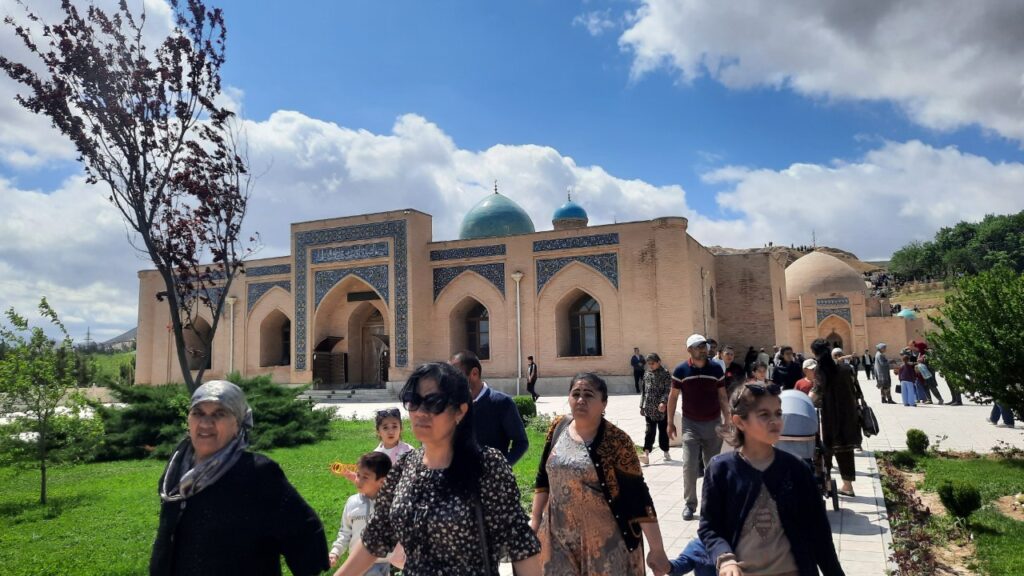
It’s Sunday morning, and a nice breeze is blowing. Due to favorable weather, many people are paying a visit to the Chashma complex in Nurota, in the Navoi region of Uzbekistan. The complex is one of the most visited holy places by Central Asian Muslims, and thousands of tourists from all over the world flock here every year. The Times of Central Asia decided to see how popular the tourist spot is. This historical complex includes the Chilustun Mosque, the Chashma Spring, the Panjab (Beshpanja) Well, the Panjvaqta Mosque, and Sheikh Abul Husan Nuri Mausoleum. The people of Nurota district mainly speak Tajik, in which the word Chashma means "holy spring."   In the 9th century, the Chilustun Mosque was built at Chashma; it was rebuilt in the 16th century during the rule of Amir Timur. The mosque, erected near the holy spring, has a dome-shaped sundial with cylindrical windows, which sits in the heart of the mosque. In addition, the art of wood carving and other examples of Central Asian national decoration were skillfully used in the construction of the mosque. Panjvaqta Mosque is located next to Chilustun. This mosque was built between 1570 and 1582 upon orders from Abdullah Khan II, the Emir of Bukhara. Today, the building consists of a large dome with two-sided porticos. All of its columns are made of mulberry and elm wood, and the base is made of marble. The main focus of visitors is the Chashma Spring. Local resident, Zilola Safarova has said that 40,000 years ago, a meteorite fell from the sky in this place and radiated light for a hundred days. As a result of the meteorite, a crater was formed and a holy spring with healing properties appeared. The people of Nurota believe this legend, and many are of the opinion that the name Nurota is related to this event. Chashma's water flows through thousands of kilometers of underground passages at a rate of 290 liters per second, and the temperature of its water remains constant in all seasons of the year at 19.5° Celsius. The spring's highest recorded flow rate was 400 liters per second. Furthermore, Chashma's water is said to have healing properties. It was found that it contains trace amounts of gold, which is said to be a cure for gastrointestinal diseases. It has long been known that iodine in water is a cure for goiters, and rare bromine is known as a cure for nervous disorders. Meanwhile, silver contained in the water ensures that its mineral composition is well preserved. Microbiologists say that this holy water contains 15 useful trace elements which have the ability to calm a person and may have a positive effect on the body. If one pays attention to the entire picture here, there are fish in the Chashma, which are called river marinka. These fish have an average lifespan of 17 years, and clean the streams from which spring water emerges out of sand. That sand ensures a moderate flow...

Son-in-Law of Former Kazakh President Nazarbayev Sells His London Mansion

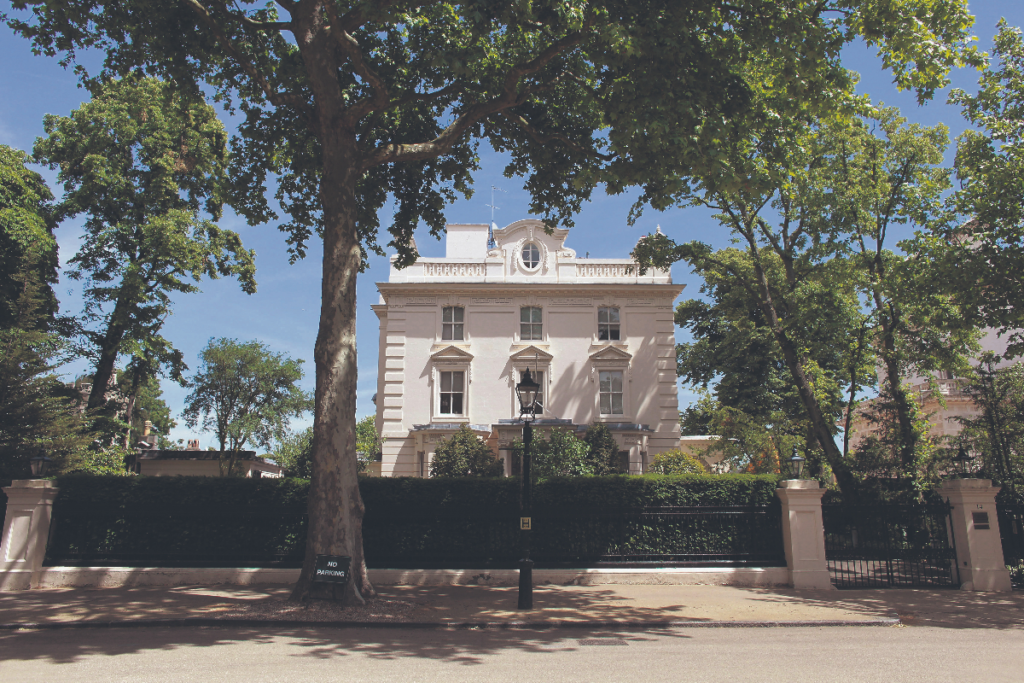
Kazakh billionaire, Timur Kulibayev has sold his mansion in the prestigious London neighborhood of Mayfair for £35 million pounds sterling. The son-in-law of Kazakhstan's former president, Nursultan Nazarbayev is also looking for a buyer for a second house nearby, according to a report in City A.M. The British publication claims that Kulibayev has struck a deal to sell the property to North Wind Capital, an investment company founded by former Deutsche Bank director, Ben Williams. The new owners are planning a large-scale reconstruction of the building. According to City A.M., Kulibayev's mansion on Upper Grosvenor Street was sold at an undervalued price due to the value of luxury real estate taking a significant drop since Brexit. Many London homeowners have already taken substantial losses on investment and residential properties. "Kulibayev has owned two mansions next door to each other for almost 20 years. They are directly opposite the Embassy of Monaco, and just a short walk from Buckingham Palace. Almost all this time, the house which he sold was empty," notes the City A.M. article. In 2024, Timur Kulibayev and his wife Dinara Kulibayeva, daughter of Nursultan Nazarbayev, still sit atop the list of the richest Kazakhs. The combined fortune of the Nazarbayev family is estimated at almost $10 billion.

Uzbek Businesswoman Diora Usmanova Recounts Own History of Marital Violence

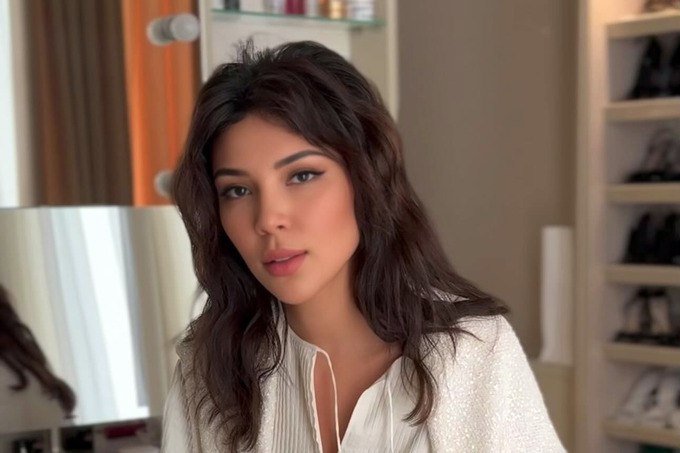
Diora Usmanova, the owner of two restaurants and some clothing brands in Uzbekistan, has spoken on her Instagram page about the beatings she suffered from her first husband, Babur Usmanov, who was the nephew of the billionaire Alisher Usmanov. Usmanova herself is related to Ziroatkhon Mirziyoyeva, the wife of Uzbek president Shavkat Mirziyoyev. Usmanova wrote that the story could cause her harm, but that she believes the benefits will "outweigh the risks a hundredfold" and will "change perceptions or somehow affect women who endure domestic violence and abuse," Gazeta.uz reported. "We loved each other and fought very hard for our marriage. Subsequently, when he started to raise his hand against me and when these beatings went on, and the beatings continued for four years, there were concussions, and a lot of blood, and bruises, and [my] whole body in bruises, and a lot of broken furniture, doors, everything," she said. Domestic violence is not only the man's fault, but also the woman's, Usmanova said. "We don't value ourselves enough, we're not brave enough, we're not strong enough, we're afraid to give a backhand, we're afraid to tell our parents, we're afraid to go back to our parents, we're afraid to start everything again. For the fact that we hope that it will change, that it will [bear] some good fruits in the future, that it will survive -- this is all our problem," Usmanova said. In her opinion, women should terminate harmful relationships and find the strength to leave -- and most importantly, learn to respect themselves. "You have to leave such relationships. [That's] because of the fact that you forgive once, forgive the second time, and then it becomes a habit, a person realizes that it is forgiven, it can end very badly, [a] whole life just poisoned. I did not find the strength then, and now after 10 years, I look back and realize how many mistakes were made on my part and how much is my fault. Just like [it was] his," she stated. On May 8, 2013, Babur Usmanov was involved in a fatal car accident in Tashkent. In 2016, Usmanova married businessman Batyr Rakhimov.