• KGS/USD = 0.01143 0%
  • KZT/USD = 0.00205 0%
  • TJS/USD = 0.10433 0.1%
  • UZS/USD = 0.00008 0%
  • TMT/USD = 0.28577 0%
  • KGS/USD = 0.01143 0%
  • KZT/USD = 0.00205 0%
  • TJS/USD = 0.10433 0.1%
  • UZS/USD = 0.00008 0%
  • TMT/USD = 0.28577 0%
  • KGS/USD = 0.01143 0%
  • KZT/USD = 0.00205 0%
  • TJS/USD = 0.10433 0.1%
  • UZS/USD = 0.00008 0%
  • TMT/USD = 0.28577 0%
  • KGS/USD = 0.01143 0%
  • KZT/USD = 0.00205 0%
  • TJS/USD = 0.10433 0.1%
  • UZS/USD = 0.00008 0%
  • TMT/USD = 0.28577 0%
  • KGS/USD = 0.01143 0%
  • KZT/USD = 0.00205 0%
  • TJS/USD = 0.10433 0.1%
  • UZS/USD = 0.00008 0%
  • TMT/USD = 0.28577 0%
  • KGS/USD = 0.01143 0%
  • KZT/USD = 0.00205 0%
  • TJS/USD = 0.10433 0.1%
  • UZS/USD = 0.00008 0%
  • TMT/USD = 0.28577 0%
  • KGS/USD = 0.01143 0%
  • KZT/USD = 0.00205 0%
  • TJS/USD = 0.10433 0.1%
  • UZS/USD = 0.00008 0%
  • TMT/USD = 0.28577 0%
  • KGS/USD = 0.01143 0%
  • KZT/USD = 0.00205 0%
  • TJS/USD = 0.10433 0.1%
  • UZS/USD = 0.00008 0%
  • TMT/USD = 0.28577 0%

Viewing results 1 - 6 of 190

Uzbekistan and Kazakhstan Aim for $10 Billion Trade Volume

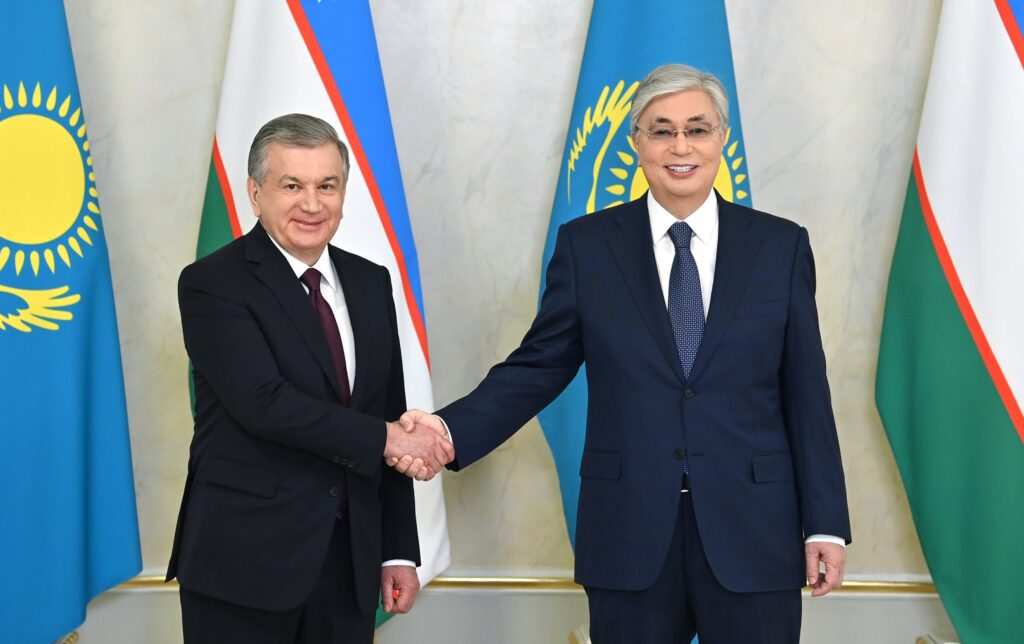
Following on from our previous report on the President of the Republic of Uzbekistan's current visit to Kazakhstan, on August 8, a meeting was held between Shavkat Mirziyoyev and the President of the Republic of Kazakhstan, Kassym-Jomart Tokayev, at the residence in Аkorda. Meetings of the Intergovernmental Commission, the business forum, and several cultural events were also held on the eve of the visit. A strategic partnership and alliance program until 2034 has been prepared, and a council chaired by the heads of foreign policy agencies is being established. In recent years, the volume of trade has doubled, the number of joint ventures has increased five-fold, the volume of cargo transportation is increasing, and large cooperation projects are being implemented. At the meeting, the presidents supported a further comprehensive cooperation program and the establishment of an inter-parliamentary forum with the participation of the chambers of the two countries' parliaments. Before the current summit, a portfolio of new deals and contracts with a total value of $7 billion was initiated to develop industrial cooperation which includes projects in energy, transport and logistics, metallurgy, textiles, agriculture, and construction, as well as inter-regional projects. The highest priority was given to implementing strategic regional projects as soon as possible, such as the Kambarata HPP-1. It was also agreed that the first meeting of the two countries' regional leaders in Samarkand will be held this fall. In unison, the first session of the Supreme Interstate Council was held under the president's chairmanship. The two countries' leaders noted the adoption of the strategic partnership and alliance program for 2024-2034, stating that the volume of trade should increase to $10 billion in the coming years, and for this purpose, a separate program will be adopted by the end of the month. Special attention was paid to the mutual formation of markets and eliminating existing restrictions. At the end of the Supreme Interstate Council's first meeting, a ceremony was held, wherein the presidents signed the decisions of the Supreme Interstate Council on approving the strategic partnership and alliance program for 2024-2034 and establishing the Council of Foreign Ministers. In addition, agreements were reached on mutual cooperation in agriculture, health, and the economy. A memorandum on establishing the Uzbekistan-Kazakhstan Council of Experts, protocols on cooperation in the regulation of natural monopolies and competition policy, and a plan for several other activities were also signed. At the end of the bilateral negotiations, branches of the Tashkent Institute of Irrigation and Agricultural Mechanization Engineers in Almaty (Kazakhstan) and the South Kazakhstan State University named after Mukhtar Avezov in Chirchik (Uzbekistan) were ceremonially opened. The leaders of Uzbekistan and Kazakhstan also took part in a ceremony dedicated to the arrival of the first freight train on the route Xi’an–Khorgos–Almaty–Saryogoch–Tashkent. Presidents Mirziyoyev and Tokayev unveiled a statue in Astana of the founder of the Uzbek literary language, poet and great thinker, Alisher Navoi. In 2020, the late Kazakh poet Nesipbek Aytuli translated and published Navoi's most important work, Khamsa, into Kazakh, and President Tokayev...

Uzbekistan and Kazakhstan Sign $5 Billion in Agreements at Business Forum

On August 7, a joint business forum was held in Astana with more than 300 representatives from business circles of Uzbekistan and Kazakhstan in attendance. At the forum, joint projects involving automotive engineering, electrical engineering, pharmaceuticals, the chemical and logistics industries were discussed, and a set of agreements with a total value of $5 billion were adopted, according to the Agency for the Development of the Pharmaceutical Network. A memorandum of understanding was signed between Kazakhstan’s JV KAZ AMT and Uzbekistan’s Estess Atraumatic Sterile Surgical Threads LLC, Kazakhstan’s Dolche LLC and Uzbekistan’s Medproject Technology LLC. The President of the Republic of Uzbekistan, Shavkat Mirziyoyev, arrived in Astana on August 7 at the invitation of the President of Kazakhstan. Within the framework of the visit, Mirziyoyev will participate in the consultative meeting of the leaders of the Central Asian countries and the dialogue in the format Central Asia + Japan. President Mirziyoyev signed the decision to establish a free economic zone of the Central Asia International Industrial Cooperation Center on August 6. The zone will be organized in the Syr Darya region. Industrial cooperation will be expanded by involving enterprises in the production process in the center's territory and establishing the production of import-substituting products. Only products manufactured in Uzbekistan and Kazakhstan are sold in the center's territory under the control of a production certificate. According to the decision, Kazakhstani and foreign citizens can enter the center's territory without a visa through a special checkpoint with an identity document, and stay in the territory for 15 days.

Tajikistan and Switzerland Strengthen Cooperation in Banking

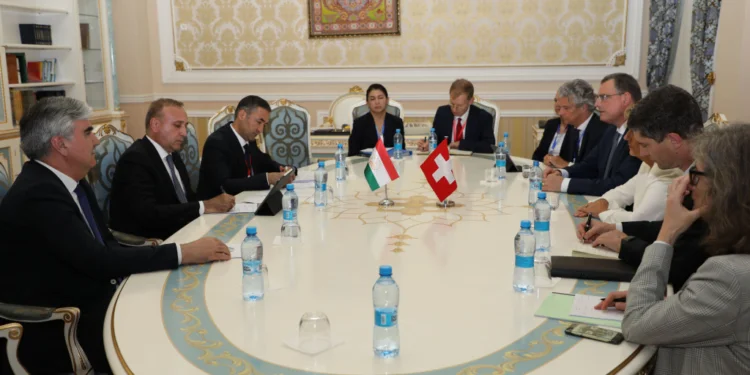
A meeting between representatives of the economic bloc of Tajikistan and Switzerland was held at the International Monetary Fund and the World Bank's Constituency Group conference. As reported by Avesta.tj. , the Tajik delegation was headed by First Deputy Prime Minister Hokim Holikzoda, and the Swiss side, by Federal Minister of Finance Karin Keller-Zutter and Chairman of the Swiss National Bank Thomas Jordaan. Both sides expressed satisfaction with their now long-term cooperation. Over the past 25 years, the Swiss National Bank has significantly contributed to Tajikistan's development of essential aspects of its banking system, including managing international resources, monetary policy, and operational risk management. Focused on further cooperation, the agenda included attracting Swiss finance and modern technologies to develop other vital sectors of Tajikistan's economy.

Uzbekistan and Turkey to Develop Military and Technical Cooperation

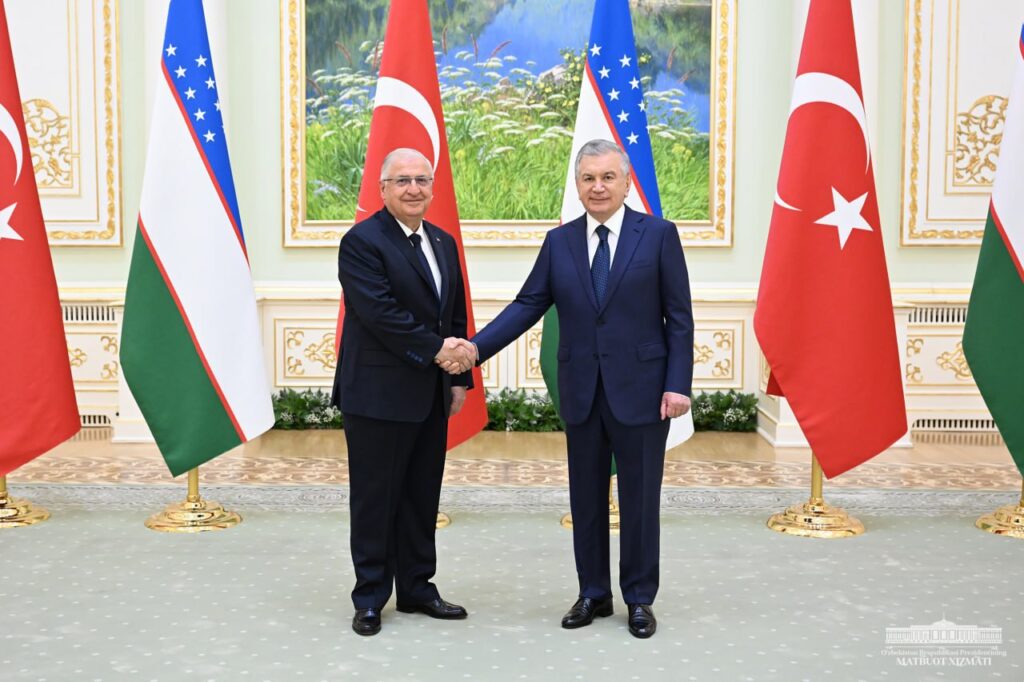
On June 26, the President of Uzbekistan, Shavkat Mirziyoyev, received a delegation headed by the Minister of National Defense of Turkey, Yashar Guler, who was in Tashkent on a business visit, the President of Uzbekistan's press service has reported. Considering the agreements reached during Mirziyoyev's high-level visit to Ankara on June 5-6, urgent issues of deepening the comprehensive strategic partnership between Uzbekistan and Turkey were discussed. Prospects for developing military and military-technical cooperation, including strengthening close interdepartmental relations, organizing joint events, training military specialists, and other issues, were discussed. Special attention was paid to strengthening and coordinating cooperation in security and fighting terrorism, extremism, and radicalism. The delegations exchanged views on ensuring peace and stability in the region, including Afghanistan.

Border Dispute No More: Are Bishkek and Dushanbe Ready to Make Peace?

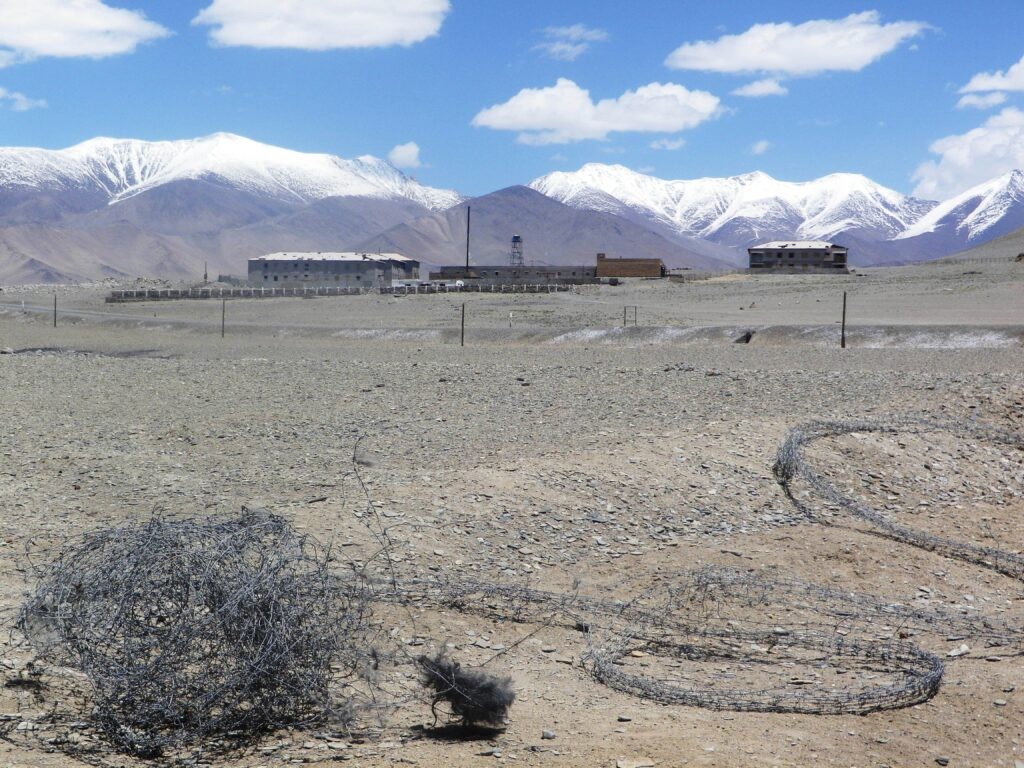
Kyrgyzstan and Tajikistan have long been restless neighbors from Tashkent and Astana's point of view. In many respects, Kazakhstan and Uzbekistan forced the current rapprochement of the Central Asian republics, as expressed on the outer perimeter in the C5+1 format, where the region strives to put forward a consolidated position. After all, investment does not come to problematic areas. The problem border The main sticking point in relations between Bishkek and Dushanbe stretches for almost a thousand kilometers - the border between the two states - the demarcation of which, following the collapse of the USSR, neither the government of Kyrgyzstan or Tajikistan was concerned about. There were enough problems to deal with: falling living standards, civil war in Tajikistan, and endless revolutions in Kyrgyzstan. To date, the border has still not been fully demarcated, causing problems for residents of both states over access to water, pastures, and roads. Disputed territories accounted for about 30% of the border between the two countries. The first alarm bells sounded back in 2014 - in January and May of that year there were armed incidents on the border between northern Tajikistan's in Sughd Province and Kyrgyzstan's Batken Province. Tajiks and Kyrgyz have lived compactly in this densely populated area for centuries. Tajik villages neighbor Kyrgyz villages, there are exclaves such as Vorukh, and the border can crisscross roads, presenting difficulties for traveling. "In Soviet times, people moved around quietly when the borders were conditional. Residents on both sides had free access to pastures and arable land. There were no problems along the watershed. If lands were given by the republics to each other for some purpose, local authorities knew where and whose land was located. With the collapse of the Union, the whole system ceased to function. And the problems of open unmarked borders became more acute," political observer Negmatullo Mirsaidov explained in a commentary for the BBC Russian Service after the January 2014 clash. Time passed, but the situation did not change, and a new aggravation occurred in the first year of the COVID-19 pandemic. Then, clashes were repeated with depressing regularity, and in 2022 came a military incursion by Tajik soldiers into a Kyrgyz border village with the seizure of administrative buildings. Armed clashes broke out all along the border and Russia intervened, forcing the parties to negotiate. Central Asia then picked up the baton, trying to melt the ice of hostility between the skirmishing neighbors. In early February, Tajik President Emomali Rahmon met with Kyrgyz Foreign Minister, Zheenbek Kulubaev, in Dushanbe. According to the press service of the head of Tajikistan, "Over the past four months, the parties have agreed on the design and working description of about 196 kilometers of the state border and to date have determined about 90% of the line of its passage." Considering that the Tajik-Kyrgyz border is about 980 kilometers long, about 100 kilometers remain to be agreed upon. Before the clash in 2022, more than 300 kilometers of the border were considered disputed....

Kazakhstan and South Korea: “A Golden Bridge of Friendship”

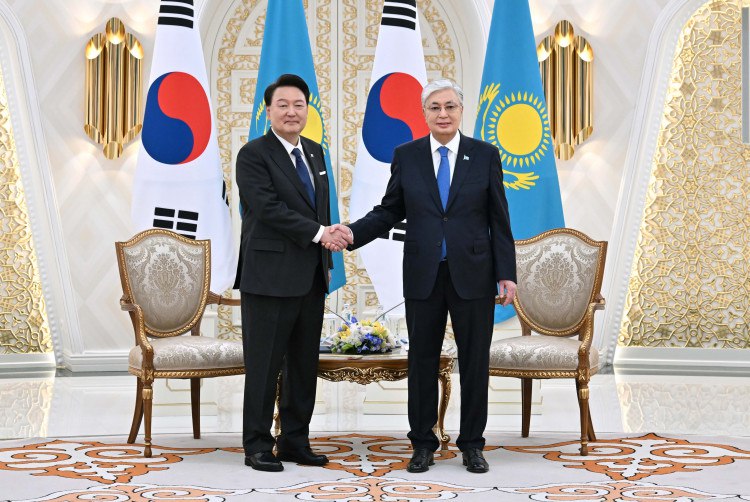
The President of Kazakhstan, Kassym-Jomart Tokayev, held talks with the President of South Korea, Yoon Suk Yeol. According to Tokayev, Seoul is one of Astana’s most important strategic partners in the Asia-Pacific region. Korea ranks fourth in foreign trade turnover, and is among Kazakhstan’s top ten largest foreign investors. South Korea has become a true economic and technological locomotive on a global scale, Tokayev stated. World-renowned Korean corporations seriously support promoting the country’s position in the international arena as a “key global state.” Kazakhstan and Korea have achieved a high level of political dialog, establishing fruitful economic cooperation and strong humanitarian ties. The two countries interact in various spheres, including inter-parliamentary, inter-governmental, and inter-departmental contacts. According to Tokayev, regular contact between businessmen of the two countries plays a very important role in building close ties. More than 700 companies with South Korean capital successfully operate in Kazakhstan. “The 120,000 ethnic Koreans in Kazakhstan fulfill an important role and make an invaluable contribution to strengthening our relations. In turn, more than a thousand Kazakh students studying in Korea are a ‘golden bridge of friendship’ between our countries,” Tokayev stated. During the talks, the presidents discussed prospects for bilateral cooperation in energy, infrastructure and industry, engineering, trade, transport and logistics, digitization and the aerospace industry, the financial sector, education, healthcare and pharmaceuticals, tourism and culture, ecology, and other fields.