• KGS/USD = 0.01143 0%
  • KZT/USD = 0.00200 0%
  • TJS/USD = 0.10593 -0.19%
  • UZS/USD = 0.00008 0%
  • TMT/USD = 0.28575 0%
  • KGS/USD = 0.01143 0%
  • KZT/USD = 0.00200 0%
  • TJS/USD = 0.10593 -0.19%
  • UZS/USD = 0.00008 0%
  • TMT/USD = 0.28575 0%
  • KGS/USD = 0.01143 0%
  • KZT/USD = 0.00200 0%
  • TJS/USD = 0.10593 -0.19%
  • UZS/USD = 0.00008 0%
  • TMT/USD = 0.28575 0%
  • KGS/USD = 0.01143 0%
  • KZT/USD = 0.00200 0%
  • TJS/USD = 0.10593 -0.19%
  • UZS/USD = 0.00008 0%
  • TMT/USD = 0.28575 0%
  • KGS/USD = 0.01143 0%
  • KZT/USD = 0.00200 0%
  • TJS/USD = 0.10593 -0.19%
  • UZS/USD = 0.00008 0%
  • TMT/USD = 0.28575 0%
  • KGS/USD = 0.01143 0%
  • KZT/USD = 0.00200 0%
  • TJS/USD = 0.10593 -0.19%
  • UZS/USD = 0.00008 0%
  • TMT/USD = 0.28575 0%
  • KGS/USD = 0.01143 0%
  • KZT/USD = 0.00200 0%
  • TJS/USD = 0.10593 -0.19%
  • UZS/USD = 0.00008 0%
  • TMT/USD = 0.28575 0%
  • KGS/USD = 0.01143 0%
  • KZT/USD = 0.00200 0%
  • TJS/USD = 0.10593 -0.19%
  • UZS/USD = 0.00008 0%
  • TMT/USD = 0.28575 0%
22 February 2026

Viewing results 1 - 6 of 40

Kazakhstan Increases Export Revenues from Processed Agricultural Products by One-Third

Kazakhstan significantly increased exports of high value-added agro-industrial products in 2025. Revenue from exports of processed agricultural goods rose by nearly one-third compared to the previous year, according to Minister of Agriculture Aidarbek Saparov. By the end of 2025, food production reached $8.1 billion, an 8.1% increase year-on-year. Exports of processed agricultural products totaled $3.2 billion for the first 11 months of 2025, marking a 33.8% increase compared to the same period in 2024. By contrast, total exports of high value-added products in 2024 stood at $2.7 billion, with annual growth not exceeding 15%. The share of processed goods in total agro-industrial exports reached 52% in 2025. According to the Ministry of Agriculture, this reflects a systematic policy aimed at diversifying agricultural exports and shifting toward products with greater added value. The expansion of processing capacity has also increased the sector’s investment appeal. Investments in fixed capital in agriculture doubled, reaching $791.5 million. The structure of exports is also evolving. Previously, Kazakhstan exported raw lentils and imported processed groats at higher prices. Today, domestic processing and packaging facilities enable the country to fully supply the domestic market and export finished products. Kazakhstan ranks sixth globally in lentil exports and retains further growth potential. The oilseed segment has become one of the key drivers of profitability in crop production. In 2025, the oilseed harvest reached 4.9 million tons, up 48% year-on-year. Sunflower oil exports increased to 600,000 tons, placing Kazakhstan eighth globally in export volumes. To support this trend, four major projects were launched in 2024-2025 to expand and modernize oil processing plants. The projects have a combined capacity of approximately 1 million tons and a total investment value of $117 million. A lecithin production line, supplying the food and cosmetics industries, has been launched in the East Kazakhstan region. A similar facility is planned in the North Kazakhstan region. Deep grain processing is also developing. Three enterprises with a combined capacity exceeding 500,000 tons are already operating, producing gluten, bioethanol and starch products. Six additional investment projects worth $3.8 billion are scheduled for implementation over the next three years. These projects involve the production of amino acids, including glutamate, threonine, leucine and lysine, and will be located in the Turkestan, Zhambyl, Akmola and Kostanay regions, as well as in Astana. As previously reported by The Times of Central Asia, Kazakhstan has set a strategic objective for the agricultural sector to become one of the world’s three largest exporters of sunflower oil and to increase total exports of oil and fat products to $1 billion by 2028.
Kazakhstan to Increase Grain Processing Nearly Tenfold by 2028

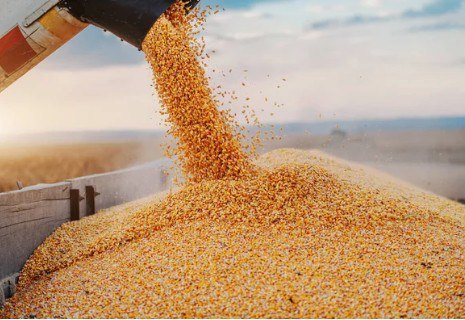
Kazakhstan plans to increase its deep grain processing capacity nearly tenfold by 2028, as part of a broader strategy to shift from raw material exports to the production of high value-added agricultural products. The initiative includes five major investment projects for wheat and corn processing, with a combined annual capacity of 4.8 million tons of grain. According to the Ministry of Agriculture, the projects will be located across the northern, southern, and central regions of the country and are expected to become a cornerstone of Kazakhstan’s agro-industrial transformation. These priorities were outlined during the fourth meeting of the National Kurultai in March 2024, where President Kassym-Jomart Tokayev emphasized the need for industrial diversification and greater economic resilience. Currently, Kazakhstan processes just over 510,000 tons of grain annually in the deep processing segment. The country has three specialized enterprises that produce starch, gluten, molasses, bioethanol, and other high value-added products. The five new projects are expected to attract $2.6 billion in investment and create approximately 3,300 jobs. Key developments include a wheat processing plant with a capacity of 415,000 tons per year in the Kostanay region; corn processing enterprises in the Turkestan and Zhambyl regions; and new production facilities in Astana and Akmola region focusing on starch, gluten, bioethanol, and amino acids. A significant share of these products will be exported to the U.S., Europe, China, India, the Eurasian Economic Union member states, the Middle East, and Africa. As previously reported by The Times of Central Asia, Kazakhstan harvested a record crop of grains and oilseeds in 2024, providing the raw material base for this upcoming industrial expansion.

Kazakhstan-China Agricultural Research Center to Open in Key Grain-Producing Region

A Kazakhstan-China Agricultural Research Center will be established in the North Kazakhstan region, one of the country's top three grain-producing areas. The initiative was announced by region's governor Gauez Nurmukhambetov following a business delegation’s visit to China. “Last week, a business delegation from our region visited the People’s Republic of China and held meetings with leading Chinese investors. As a result, seven strategic memoranda were signed, opening new economic opportunities for our region. These agreements include the construction of new factories and the creation of a Kazakh-Chinese agricultural research center,” Nurmukhambetov said at a press conference. The region continues to post record harvests. In 2025 it harvested 6.5 million tons of grain, nearly a quarter of Kazakhstan’s total gross harvest of 27.1 million tons. Nevertheless, the region is actively diversifying its agricultural profile. Sugar beet cultivation is expanding, with experimental plots from Asyl Farms showing strong crop adaptation. Based on this success, plans are underway to build a processing facility capable of handling 1 million tons of raw material annually, producing up to 200,000 tons of sugar. In the Kyzylzhar district, Salar Farm is building a plant for processing granulated alfalfa with an annual capacity of 60,000 tons. The main export markets include China and other Central Asian countries. The facility is scheduled to open in 2026. The region is also home to Maslo-Del, an oil extraction plant with an annual processing capacity of 370,000 tons of oilseeds and a production output of 120,000 tons, much of which is exported. Alongside its growth in crop production, the region is making notable progress in livestock farming. “SK Agro will construct the largest cattle farm in Central Asia, with a herd of 10,000 and a state-of-the-art Carousel milking system,” said Nurmukhambetov. “The farm is expected to increase milk production by 68 million tons annually. This will raise the share of milk produced by agricultural enterprises in Kazakhstan to 70%.” He noted that in Belarus, modern farms account for 77% of milk production, in China around 70%, and in European countries more than 93%. North Kazakhstan region aims to boost its share of the country’s total milk output to 20%. Meanwhile, 17 projects valued at $555.6 million are underway in the Qyzyljar special economic zone. Agricultural cooperation with China continues to grow. Kazakhstan views China as a key export destination for its processed agricultural products. In November, QazTrade signed a partnership agreement with Optimize Integration Group, one of China’s largest food importers, responsible for 18% of the country's frozen meat imports. In a related development, a joint Kazakh-Chinese veterinary laboratory was opened in East Kazakhstan region in October 2025. The facility is designed to streamline and accelerate export procedures for agricultural goods.

Kazakhstan Harvests Record Grain and Oilseed Crop

Kazakhstan has reported a record harvest for 2025, collecting over 27 million tons of grain and 4.5 million tons of oilseeds for the first time, according to Deputy Minister of Agriculture Azat Sultanov. The Ministry of Agriculture said the grain harvest reached 27.1 million tons in initial weight, including 20.3 million tons of wheat, an increase of 0.5 million tons compared to last year, despite a reduction in wheat acreage by nearly 900,000 hectares. Of the soft wheat delivered to elevators, 53% was graded 1-3, slightly lower than the 56% recorded in 2024. Class 4 wheat accounted for 35%, up from 28% a year earlier. “More than half of this volume has a gluten content above 20%, which allows this wheat to be used for food purposes,” Sultanov noted. Around 12% of the harvest consisted of unclassified wheat, which will be used for animal feed and fodder production, sectors where demand is growing, particularly in neighboring countries. For the first time, the volume of legumes reached one million tons, while a new record was set for oilseeds at 4.5 million tons, with harvesting still underway in several regions. The country also produced 2.9 million tons of potatoes, 3.8 million tons of vegetables, and 2.6 million tons of melons and gourds. Harvesting of oilseeds, grain corn, and sugar beets is nearing completion. “The agricultural season that has just ended showed steady growth in production. For the second year in a row, Kazakhstan has demonstrated positive dynamics thanks to the use of modern technologies and crop diversification. The harvest took place at the optimal time, and no serious problems arose,” Sultanov emphasized. Between September and October, Kazakhstan exported 2.2 million tons of grain from the new harvest, 21% more than in the same period last year. During the previous marketing season (September 2024 to August 2025), exports totalled 13.4 million tons, a 47% year-on-year increase. Sultanov confirmed the government’s intention to maintain the current export potential. “In 2024, some experts doubted that it would be possible to reach 12 million tons, but in fact, the plan was exceeded. This year, Kazakhstan is developing new export destinations, deliveries have begun to Belgium, Portugal, Poland, Norway, Vietnam, the UAE, Morocco, Algeria, and Egypt, while exports to Iran, Azerbaijan, Armenia, and Georgia have resumed. Demand for Kazakh grain remains stable, with export potential estimated at 13 million tons,” Sultanov said. The Times of Central Asia previously reported that President Kassym-Jomart Tokayev has set a target of increasing Kazakhstan’s grain exports to China to 2 million tons annually.

Kazakhstan to Maintain Grain Exports in 2025 to 2026 Season

Kazakhstan plans to maintain grain exports above 12 million tons in the 2025–2026 marketing season, Deputy Minister of Agriculture Azat Sultanov said at a recent briefing. Grain exports for the current 2024–2025 season reached a record 13.4 million tons, according to Sultanov. “Taking into account this year’s harvest, we forecast that next year’s exports will not fall below last year’s level, that is, more than 12 million tons,” he said. To date, 15.6 million hectares, 88.6% of the total planted area, have been harvested, yielding an average of 16.9 centners per hectare and producing 26.6 million tons of grain. This output will fully meet domestic needs for food, fodder, and seeds, while reinforcing Kazakhstan’s position in its traditional export markets. Wheat has been harvested from 12 million hectares, 99% of the cultivated area, at a yield of 16.5 centners per hectare, resulting in approximately 20 million tons. Barley and oats produced 2.4 million tons, and corn yielded 852,000 tons. Sultanov also noted that Kazakhstan has re-entered several previously lost markets, including Kyrgyzstan, Azerbaijan, and Armenia, where demand for Kazakh wheat is on the rise. As previously reported by The Times of Central Asia, Kyrgyzstan has increased its imports of Kazakh wheat eightfold. Licensed grain receiving enterprises have already received 6.7 million tons from the new harvest, twice the volume recorded at the same time last year. As part of efforts to diversify crop production, special attention has been given to legumes and oilseeds. This year’s legume harvest reached 1 million tons, and the country expects a record oilseed yield of about 4 million tons, of which 3.3 million tons have already been collected. Potatoes have been harvested from 99 percent of the planted area, totaling 130,000 hectares and producing 2.9 million tons. Sultanov said this volume should prevent the shortages and price surges experienced earlier this year. The vegetable harvest totaled 3.9 million tons, while melon crops reached 2.6 million tons.

Kazakhstan Grain Exports Surge to Iran, Azerbaijan, and Central Asia

Kazakhstan exported 12.4 million tons of grain and flour between September 2024 and July 2025, marking a 34% increase from the same period in 2023-2024, when exports totaled 9.3 million tons, according to the Ministry of Agriculture. Kazakhstan recorded substantial export growth to key regional markets. Shipments to Uzbekistan rose by 28.2%, from 3.384 million to 4.338 million tons, while exports to Tajikistan grew by 39.2%, reaching 1.446 million tons. Deliveries to Kyrgyzstan more than doubled, increasing 2.5 times from 156,000 to 398,000 tons. Exports to Iran surged nearly 17-fold, jumping from 56,000 to 974,000 tons, and shipments to Azerbaijan skyrocketed 120-fold, from just 6,000 to 723,000 tons. A major milestone of the 2024-2025 export season was the diversification of export destinations. For the first time, Kazakh grain reached Belgium, Poland, Portugal, Norway, and the United Kingdom. Additionally, Kazakhstan exported approximately 60,000 tons of wheat to Morocco and 15,000 tons to Vietnam. Grain exports to Azerbaijan, Georgia, and Turkey resumed after a five-year hiatus, and shipments of durum wheat to Italy saw significant growth. The increased volumes highlight the growing competitiveness of Kazakh grain on the international market and reinforce Kazakhstan’s standing as one of the world’s leading grain exporters.