• KGS/USD = 0.01143 0%
  • KZT/USD = 0.00205 0%
  • TJS/USD = 0.10433 0.1%
  • UZS/USD = 0.00008 0%
  • TMT/USD = 0.28577 0%
  • KGS/USD = 0.01143 0%
  • KZT/USD = 0.00205 0%
  • TJS/USD = 0.10433 0.1%
  • UZS/USD = 0.00008 0%
  • TMT/USD = 0.28577 0%
  • KGS/USD = 0.01143 0%
  • KZT/USD = 0.00205 0%
  • TJS/USD = 0.10433 0.1%
  • UZS/USD = 0.00008 0%
  • TMT/USD = 0.28577 0%
  • KGS/USD = 0.01143 0%
  • KZT/USD = 0.00205 0%
  • TJS/USD = 0.10433 0.1%
  • UZS/USD = 0.00008 0%
  • TMT/USD = 0.28577 0%
  • KGS/USD = 0.01143 0%
  • KZT/USD = 0.00205 0%
  • TJS/USD = 0.10433 0.1%
  • UZS/USD = 0.00008 0%
  • TMT/USD = 0.28577 0%
  • KGS/USD = 0.01143 0%
  • KZT/USD = 0.00205 0%
  • TJS/USD = 0.10433 0.1%
  • UZS/USD = 0.00008 0%
  • TMT/USD = 0.28577 0%
  • KGS/USD = 0.01143 0%
  • KZT/USD = 0.00205 0%
  • TJS/USD = 0.10433 0.1%
  • UZS/USD = 0.00008 0%
  • TMT/USD = 0.28577 0%
  • KGS/USD = 0.01143 0%
  • KZT/USD = 0.00205 0%
  • TJS/USD = 0.10433 0.1%
  • UZS/USD = 0.00008 0%
  • TMT/USD = 0.28577 0%

Viewing results 1 - 6 of 130

Kazakhstan-EU Transport and Logistics Cooperation

Expansion and strengthening of trade, economic and investment cooperation, and joint projects in transport and logistics with a focus on the development of the Trans-Caspian International Transport Route (TITR), were the key issues of the 15th meeting of ‘Kazakhstan-EU’.  Participants in discussions held in Astana on 10 July included Kazakhstan Prime Minister Olzhas Bektenov, head of the Delegation of the European Union to Kazakhstan, Ambassador Kestutis Jankauskas, and heads of diplomatic missions of EU countries in Kazakhstan. During the meeting it was stated that about 85% of goods exported by China to EU countries are transported through Kazakhstan, and TITR provides the most competitive cargo delivery time of 12-15 days. Regarding their interest in unlocking the full potential of TITR, also known as the Middle Corridor, participants noted the establishment of the joint venture, Middle Corridor Multimodal, at the Astana International Financial Centre, and the significant role of the European initiative ‘Global Gateway’, which opens new prospects for investment in the transport industry. To raise their strategic partnership to a new level, all confirmed their commitment to developing and strengthening Kazakhstan-EU trade and economic relations. According to the Kazakh government, the European Union accounts for over 40% of Kazakhstan’s foreign investments and about 30% of foreign trade. In 2019-2023, trade turnover between Kazakhstan and EU countries increased by 36.2%, amounting to $41.4 billion. Last year, EU countries invested $10.4 billion in Kazakhstan’s economy, and in the first quarter of 2024 alone, $2.8 billion.  

Almaty’s Aspan Gallery Champions Central Asian Art at Home and Abroad

“It’s difficult to be a point, but it’s easy to be a line, as everything in our world is moving.” The quote by Soviet avant-garde artist Sergey Kalmykov became the title of a 2020 show by Kazakh artists Almagul Menlibayeva and Yerbossyn Meldibekov, the first exhibition by Almaty-based gallery Aspan to be staged in the UK. This concept of continuous movement aptly describes the nine-year trajectory of the Aspan Gallery, founded and directed by Meruyert Kaliyeva. Maintaining its focus on contemporary Central Asian art, the gallery is constantly expanding and adapting to the dynamic of the international art world. [caption id="attachment_20211" align="aligncenter" width="776"] Dilyara Kaipova @Aspan[/caption]   The story of how the gallery came into being is unconventional. Meruyert Kaliyeva studied art in the UK, with the intention of practicing as an artist. She soon discovered, however, that the life of an artist was not for her and explained to TCA: “To be an artist, you must sacrifice your social and family life. You must disconnect from it all, and I was not willing to do that.” At the same time, she noticed that unlike her, many individuals at art school seemed destined to become artists. "Some people don’t have the luxury of choice,” she recalls. “I felt that these people needed to focus solely on creating art, and I realised I could help unburden them from some practical preoccupations.” After four years and a half working in auction houses in the UK, Kaliyeva finally decided to return to Kazakhstan. Having quickly realised the importance of supporting artists in a region where institutional support for contemporary art is extremely limited, she opened what is now the Aspan Gallery. Kaliyeva’s mission was  twofold. In tandem with developing the Central Asian art scene locally, through staging important historical exhibitions, publishing books and catalogues, and commissioning artists, she also concentrated on disseminating knowledge of Central Asian art abroad. A case in point is Aspan’s recent, significant donation to the Stedelijk Museum in Amsterdam. The donation was curated by Robbie Schweiger, based on research conducted in Kazakhstan, Kyrgyzstan, and Uzbekistan, and with input from Kaliyeva, connections were drawn between Central Asian artists and the Stedelijk’s permanent collection. The Times of Central Asia spoke to Kaliyeva about both the donation and the growth of the Kazakh art scene over the past few years. TCA: Why did you choose the Stedelijk Museum in Amsterdam for such a significant donation? MK: We were keen to have some of our artists represented in major institutions and identified three museums as contenders. The first on the list was the Stedelijk, which already held a collection of Central Asian art. The donation comprised 22 works by 13 artists from Kazakhstan, Kyrgyzstan, and Uzbekistan, spanning almost fifty years, from 1974 to 2020. Works from the 1970s and 1980s, created by artists associated with the underground art scene of the former Soviet republics, were complemented by work made after these republics gained independence in the early 1990s., in which  artists explored national...

Central Asia’s Water Crisis

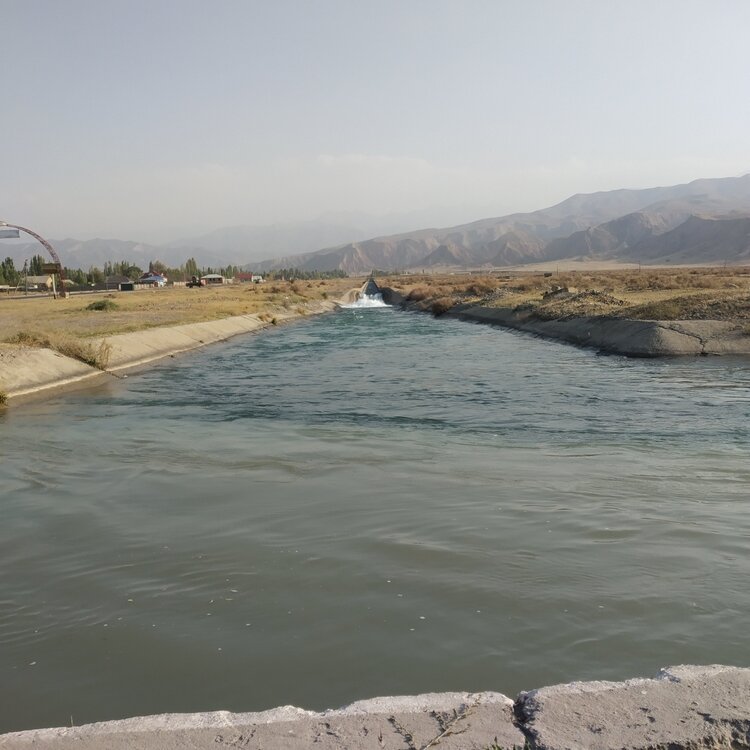
Over 80% of Central Asia’s available water is spent on irrigation, 40% of which is lost during delivery and directly in the fields. Over the coming years, the problem of water shortage will inevitably worsen and with the commission of the Qosh Tepa Canal in Afghanistan, will become chronic from 2028. The stark warning was issued by Evgeny Vinokurov, Eurasian Development Bank’s (EDB) Deputy Chairman of the Board and Chief Economist during the  “Water, Energy and Food in Central Asia: Partnerships and Projects for Sustainable Development” session at the EDB 2024 Annual Meeting and Business Forum on 27–28 June in Almaty. The challenges of the Central Asian water and energy complex are too great to be tackled independently by the region’s countries. Historically, Central Asia’s five states have been closely linked by the region’s two largest transboundary rivers, the Amu Darya and the Syr Darya which flow into the Aral Sea basin, home to 80% of the population. Hence, the need for close a intersectoral relationship (nexus) concerning water, energy and food and deep regional cooperation for the effective use of shared water and energy resources to overcome the crisis. At the session, Askhat Orazbai, Chairman of the Executive Committee of the International Fund for Saving the Aral Sea, stressed the central role played by IFAS in building essential regional dialogue. The Fund is the only regional organization with membership of all five Central Asian states and according to its mandate, was designed to address the region’s complex water-energy nexus. For over 30 years, the Fund has been the key platform for decisions on water resources management at the highest level. Currently being reformed, the Fund’s full potential will soon be fully unlocked. The session emphasized the urgent need for increased funding to deal with challenges posed by water scarcity. Modernization of the existing irrigation infrastructure is extremely capital-intensive but budgetary funds are inadequate and private investors have shown no interest in the sector. The contribution of multilateral development banks is therefore critical and encouragingly, over recent years, most of the region’s  MDBs have given special priority to water projects. The EDB's Chief Economist Vinokurov pointed out that conservation is key to solving the problem of water scarcity. Highlighting the importance of digital accounting and the introduction of effective irrigation technologies, Vinokurov suggested creating a regional cluster of irrigation equipment. Considering that the region spends from $150 million to $300 million annually on the above, the EDB plans to actively support this sector's development. Michael Detlefsen, a UNIDO representative, expressed confidence in the future formation of a regional cluster of irrigation equipment in Central Asia. Over the last two years, the region has seen increased activity from manufacturers from Turkey, China, Israel, and the United States on the organization of local assembly lines. In this regard, the UNIDO representative stressed the importance of working together with the EDB to form such a cluster.  

Expansion of Japanese Investment in Uzbekistan

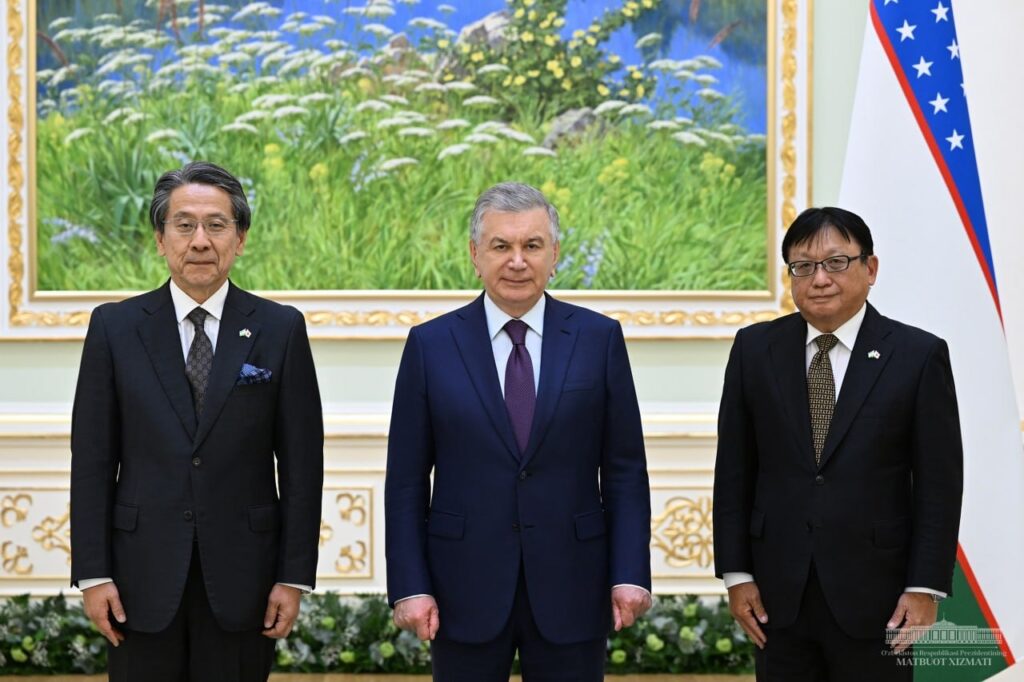
On July 9, Uzbekistan's President Shavkat Mirziyoyev held a meeting in Tashkent with a Japanese delegation, including Tadashi Maeda, Chairman of the Board of Directors of the Japan Bank for International Cooperation (JBIC), and a representative of the Sojitz Corporation. Agreements were reached on the adoption of a three-year cooperation program with JBIC, as well as a roadmap with Sojitz Corporation for the implementation of potential projects in high-tech sectors of Uzbekistan’s economy. The Uzbek leader noted JBIC’s significant role in the implementation of investment projects in the country, which today includes a portfolio of joint initiatives worth over $3.7 billion in the petrochemical and textile industries, energy, and infrastructure modernization. The president also expressed his deep appreciation of Sojitz’s implementation of projects in the country’s oil and gas sector. The Japanese company confirmed its intention to expand business activities in Uzbekistan, including, based on an agreement signed in 2022, the Syrdarya II IPP project, destined to become one of the largest power generation facilities in Uzbekistan. The Sojitz Corporation also announced its opening of a liaison office in Tashkent through which it aims to strengthen existing business as well as develop new business while striving to address regional needs across Central Asia.

Central Asian Countries and Azerbaijan Begin Military Exercises in Kazakhstan

On July 8, Kazakhstan’s Ministry of Defense announced the start of joint military exercises - 'Birlestik-2024' (Association-2024) - by Azerbaijan, Kazakhstan, Kyrgyzstan, Tajikistan, and Uzbekistan in the country’s Mangystau region. Until July 17, the states’ military contingents will be modelling and practicing a joint operation to localize an armed conflict in manoeuvres at both the Oimasha training ground and a Caspian Sea site two kilometers from Cape Tokmak. Some four thousand military personnel and up to 700 pieces of military equipment will be involved in the exercise. Tactical episodes will be played out with the participation of ground and air reconnaissance groups, naval special forces, army and front-line aviation crews, warships and boats, artillery crews, assault and tank units. In recent years, there has been talk about increasing military cooperation between Turkic-speaking countries. In November 2023, Azerbaijani President Ilham Aliyev called on leaders of Turkic states to strengthen defense cooperation and at a summit of the Organization of Turkic States (OTS) in Astana, Kazakhstan, stated: "Wars and bloody conflicts break out. In this case, the main guarantor of security, first of all, becomes the defense potential. I believe that cooperation between the member states in areas such as security, defense, and the defense industry should be further increased.” Member countries of the OTS, established in 2009, include Turkey, Azerbaijan, Kazakhstan, Kyrgyzstan, and Uzbekistan, while Hungary, Turkmenistan, and the Turkish Republic of Northern Cyprus have observer status.

Paving the Path Westward: Insights from the Astana and Shusha Summits

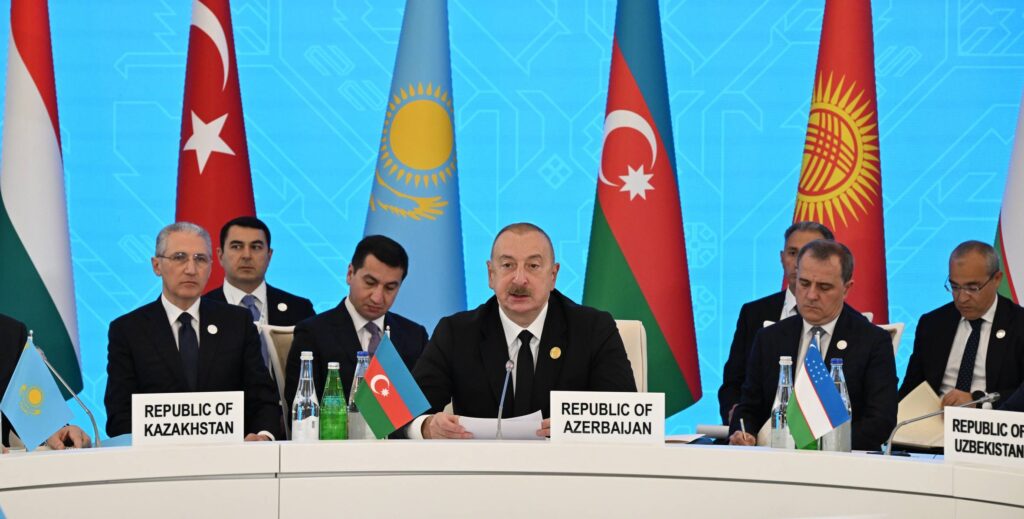
The informal OTS summit in Shusha, hosted at the invitation of Ilham Aliyev, centered on the theme of "Building a Sustainable Future through Transportation, Connectivity and Climate Action." Attendees included Presidents Kassym-Jomart Tokayev of Kazakhstan, Sadyr Japarov of Kyrgyzstan, Shavkat Mirziyoyev of Uzbekistan, Ersin Tatar of the Turkish Republic of Northern Cyprus, Prime Minister Viktor Orban of Hungary, and OTS Secretary General Kubanychbek Omuraliev. In place of Erdoğan, who was in Germany supporting the Turkish national soccer team ahead of a crucial Euro 2024 quarter-final against the Netherlands, Vice President Cevdet Yılmaz attended. Turkmen President Serdar Berdimuhamedov was also absent due to hosting UN Secretary-General António Guterres in Ashgabat. Notably, the Shusha summit occurred just two days after the meeting of SCO leaders in Astana, which drew an exceptional amount of attention from international observers due to the participation of the Russian and Chinese leaders. The intrigue surrounding the SCO summit was linked to its closed session, attended only by the Shanghai Ten. At the summit, only the speech delivered by Tokayev was made available to the press. Speeches made in the subsequent SCO+ format sessions were made public, wherein Russian President Vladimir Putin and Chinese President Xi Jinping underscored the need for a multi-polar world, suggesting that the SCO members had discussed shifting away from Western cooperation towards the Global South. At the Shusha summit Aliyev highlighted Azerbaijan's commitment to strengthening ties within the Turkic world, emphasizing the importance of the political, economic, and military consolidation of Turkic States as a global power center. Aliyev stated that Azerbaijan has consistently sought to unite the Turkic world and enhance its influence on the global stage, stressing that the OTS should seek to emerge as a significant global power. "We cover a large geographical space and positive demographic dynamics are observed in the member countries. Our greatest assets are our rich natural resources, modern infrastructure for their delivery, transportation corridors connecting Central Asia and the Caucasus with Mediterranean and Black Sea ports, and our rich and ancient history and culture. The commitment of our people to traditional values and ethnic commonality closely unites our countries. The 21st century should become the century of prosperity of the Turkic world," the Azerbaijani leader emphasized. Aliyev also addressed the primary tasks which lie ahead for the OTS, referencing the Astana Declaration of the SCO, which designates Central Asian republics as the organization's foundation. Leaders of these republics who attended the summit in Shusha, Tokayev, Shavkat Mirziyoyev, and Sadyr Japarov, endorsed Aliyev's call for the expansion of the East-West transport corridor connecting Central Asia and Eurasia to Europe. Aliyev further highlighted the Digital Silk Road project, which aims to establish a fiber-optic telecommunication route between Europe and Asia via the Caspian Sea through Azerbaijan. Furthermore, when the President of Kazakhstan delivered his speech, he stressed the significance of the Trans-Caspian International Transportation Route. "The potential of the Trans-Caspian International Transport Route should be fully utilized. Today, the volume of container transportation along this corridor has...