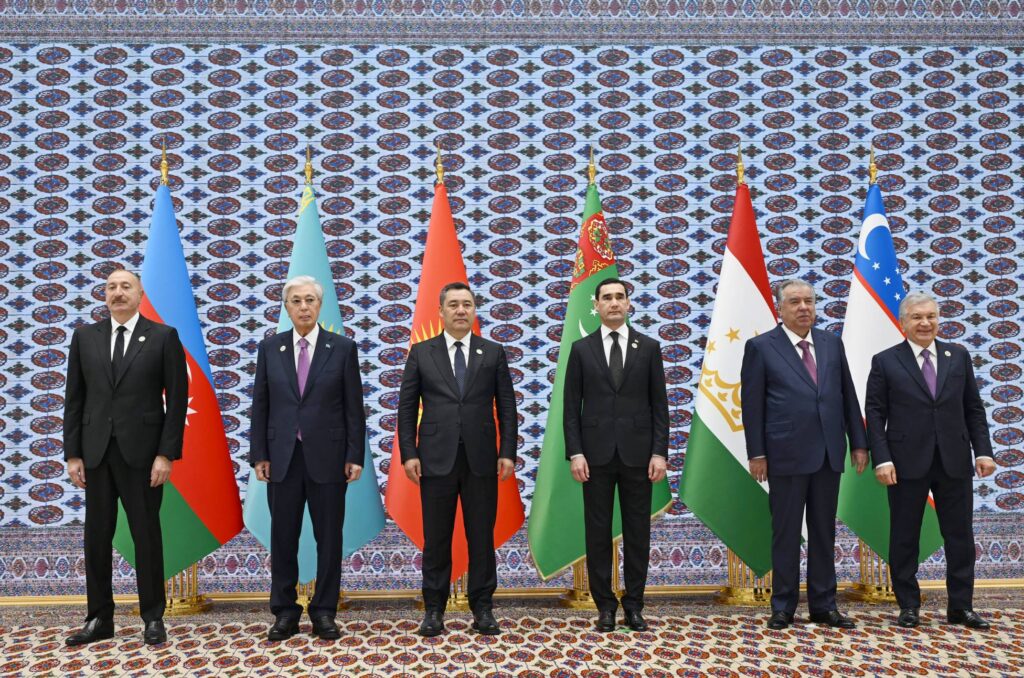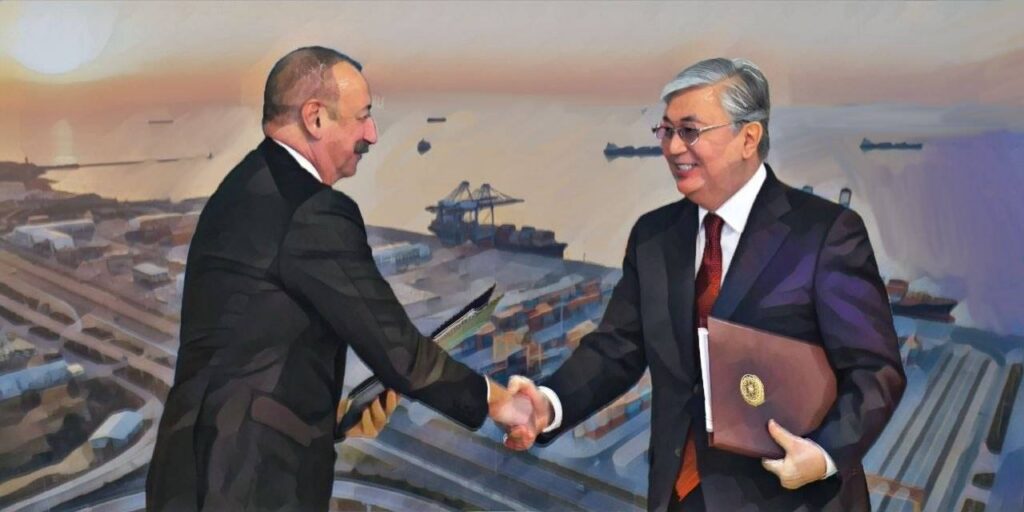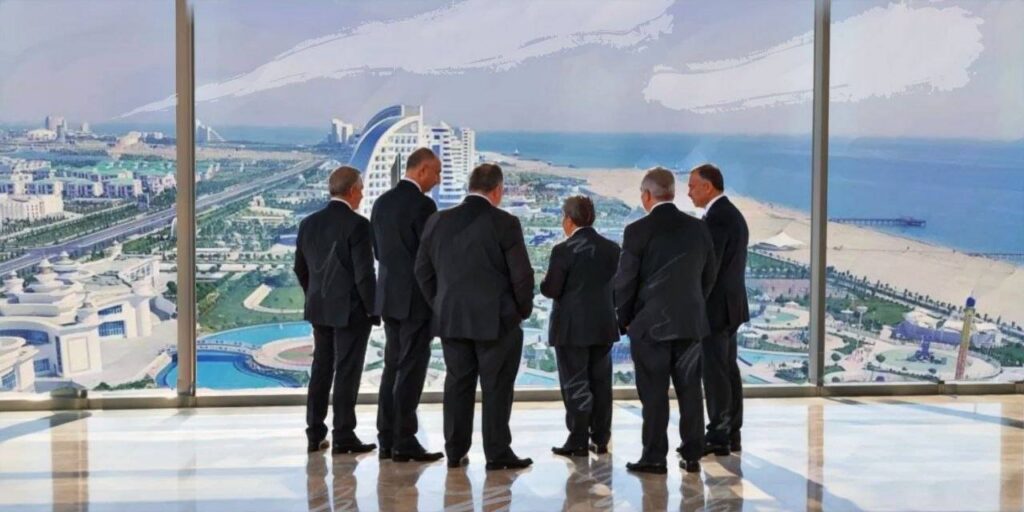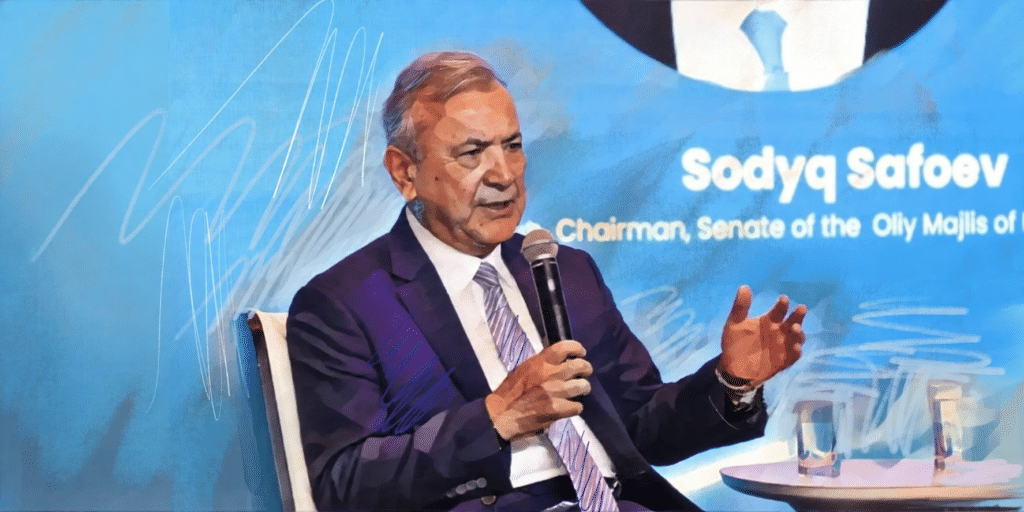
Less than two weeks after regional leaders gathered in Cholpon Ata, diplomats from the emerging C6 grouping used a discussion in Washington to shift the focus from declarations of unity to the mechanics of integration: customs, railways, digitalized trade, access to European markets, and stronger links across the Caspian.
The sharpest political message came from Kyrgyzstan’s ambassador to the United States, Edil Baisalov, who said that Central Asian states were increasingly recognizing that they were “enough for each other,” and that resolving differences within the region had become a pragmatic national interest. His comments gave unusually direct language to a trend that has accelerated since the region’s consultative meetings began in 2018.
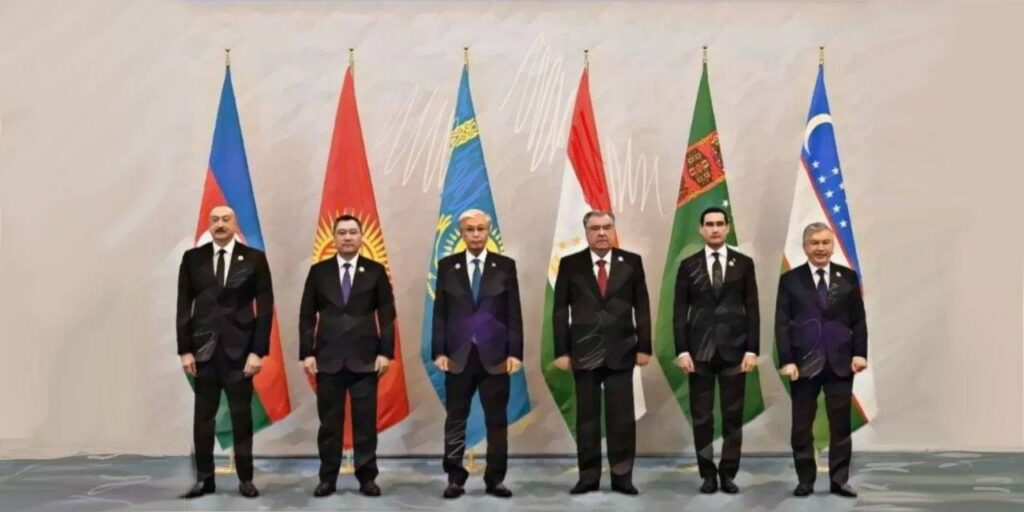
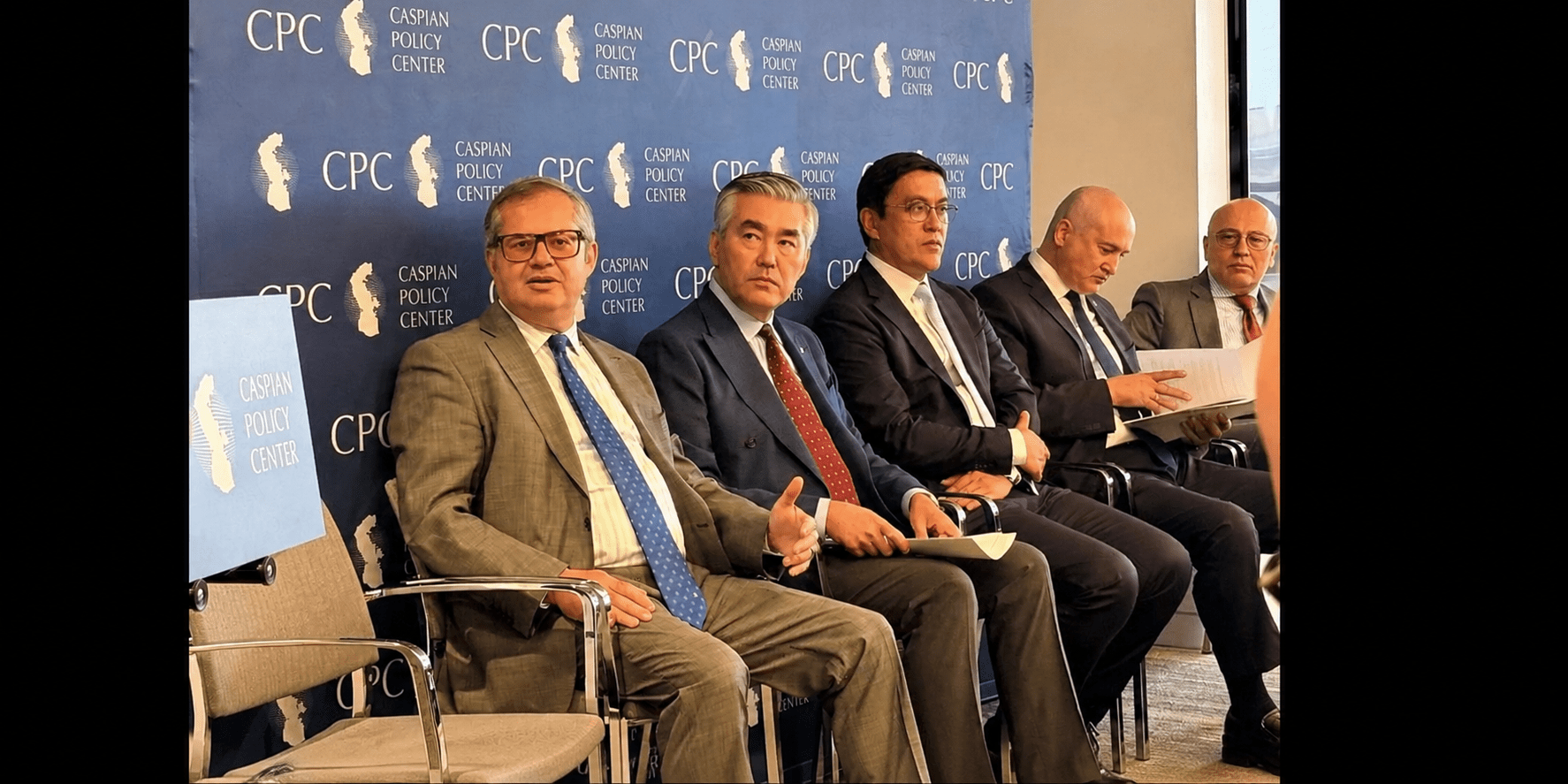
The August 12 event at the Caspian Policy Center brought together the U.S.-based ambassadors of Azerbaijan, Kazakhstan, Kyrgyzstan, Turkmenistan, and Uzbekistan. Tajikistan, the sixth country in the emerging C6 framework, was not listed among the participants. The event followed a late-July meeting in Cholpon Ata, where leaders concentrated on transport, energy security, investment, and foreign-policy coordination.
The C6 label remains shorthand rather than the name of a formal organization. Its political basis, however, has become more concrete since Azerbaijan was admitted as a full participant in the Consultative Meeting of the Heads of State of Central Asia in November 2025. The shift extended a format once focused on relations among the five Central Asian republics across the Caspian Sea.
From Regional Dialogue to Regional Agency
Azerbaijan’s ambassador, Khazar Ibrahim, presented Cholpon Ata as evidence that the six states increasingly see themselves as part of one political and economic space. “We are finally holistic. We are all together,” he said. He argued that Azerbaijan’s presence changes the geography of the grouping by turning the Caspian from a dividing line into a connecting space between Central Asia and the South Caucasus.
That idea has been developing for some time. TCA has previously examined how Azerbaijan’s entry could turn the C6 framework into a platform for common rules on transport, tariffs, customs systems, and digital data, rather than another layer of summit diplomacy.
Kazakhstan’s ambassador, Magzhan Ilyassov, put the emphasis on building an “economically active neighborhood.” He pointed to the frequency of regional meetings and said the value of the current process lies partly in maintaining an inclusive conversation among the Central Asian states. Kazakhstan has also pushed for stronger coordination on transport planning as the consultative format develops.
For Uzbekistan, the discussion was more explicitly about market access. Ambassador Furqat Sidiqov said cooperation with Azerbaijan could give Uzbekistan wider access to European and other export markets. He also called for further digitalization of the Middle Corridor. Sidiqov said Uzbekistan had close to 300 joint ventures with Central Asian countries in 2017, and now has about 1,500 with neighboring states.
Corridors Become the Practical Core
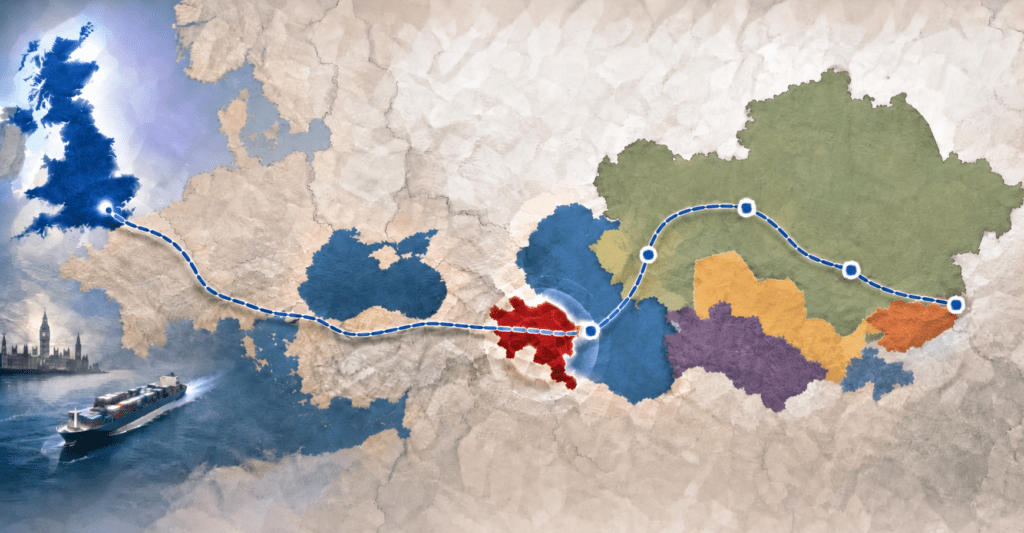
Digitalizing the Trans-Caspian route is not a new proposal. The countries of the UN Special Programme for the Economies of Central Asia, which already brings together the five Central Asian states and Azerbaijan, endorsed a digitalization roadmap in 2023. It is intended to improve real-time exchange of transport data and documents along the corridor.
Uzbekistan has also pushed to connect the China-Kyrgyzstan-Uzbekistan railway now under construction with the Middle Corridor. At an Organization of Turkic States meeting in May, President Shavkat Mirziyoyev called for the two routes to be integrated and for customs data exchange to be fully digitalized. In Cholpon Ata, he said the CKU railway would “fundamentally change the geopolitical landscape.”
Turkmenistan’s ambassador, Esen Aydogdyyev, gave the same argument a Caspian emphasis. “The Caspian is neither a limit nor a barrier,” he said. He identified simplified customs procedures as a priority and stressed that regional cooperation had to produce tangible results. Aydogdyyev also argued that Turkmenistan’s permanent neutrality should not be confused with isolation, presenting it instead as compatible with deeper economic cooperation.
The focus on customs and digital systems reflects a persistent weakness in the corridor. The World Bank has identified better coordination, logistics, and digitalization as essential if the Middle Corridor is to handle significantly larger freight volumes and reduce journey times. New railways and terminals can shorten journey times, but those gains can be lost if freight is held up at borders, ports, and transfer points.
A Washington Dimension, but Not Yet a C6+1
Washington gave the discussion a U.S. policy dimension. The United States has traditionally dealt with the five Central Asian republics through the C5+1 framework, while Azerbaijan has had separate bilateral and regional channels.
Though the Caspian Policy Center gathering was a think-tank event and created no new U.S. diplomatic format, proposals to bring Azerbaijan into a wider U.S.-Central Asian framework are now circulating in Washington policy circles. TCA recently carried an argument for a C6+1 summit, while Ilyassov has proposed that Kazakhstan host a first C6-U.S. meeting. For now, neither has developed into an announced replacement for the established C5+1.
The next question is whether the six governments can translate that political momentum into practical cooperation. On October 8, the leaders are due to meet in Turkmenistan’s Avaza National Tourist Zone, where their agenda is expected to include regional security, transport and energy connectivity, water and environmental issues, and deeper cooperation between Central Asia and Azerbaijan.
The Washington discussion suggested that the grouping’s ambassadors already see the practical agenda clearly. Customs and data systems need to communicate across borders and rail networks, and Caspian transfers need to connect more smoothly. For landlocked Central Asian exporters, the prize is more reliable access to markets to the west. Whether the C6 becomes a durable regional mechanism will depend on how much of that is actually delivered.