Kazakhstan has begun building an 800-kilometer highway that will give freight moving east and west a shorter road connection to the Caspian ports of Aktau and Kuryk. The government says the project could cut nearly 1,000 kilometers and up to three days from journeys between Europe and China, while improving Kazakhstan’s access to European and regional markets.
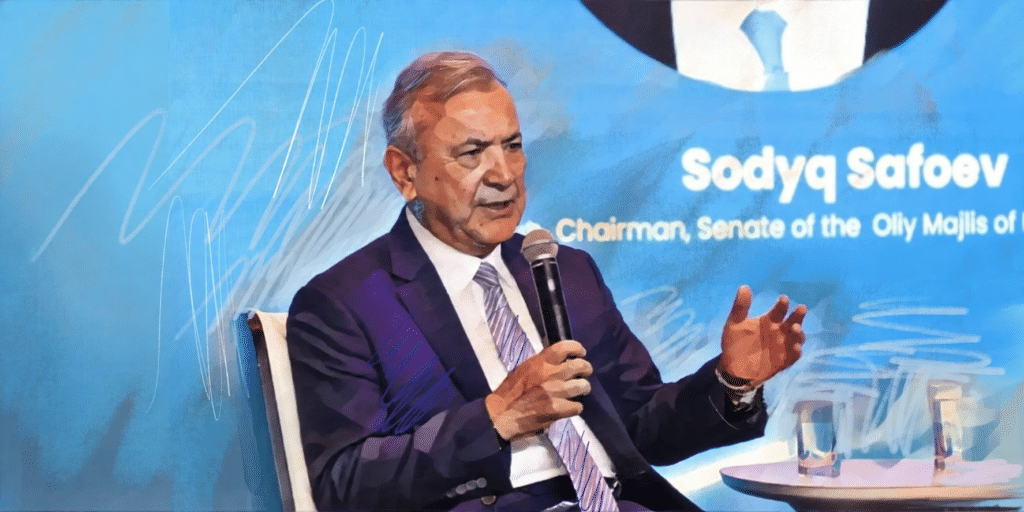
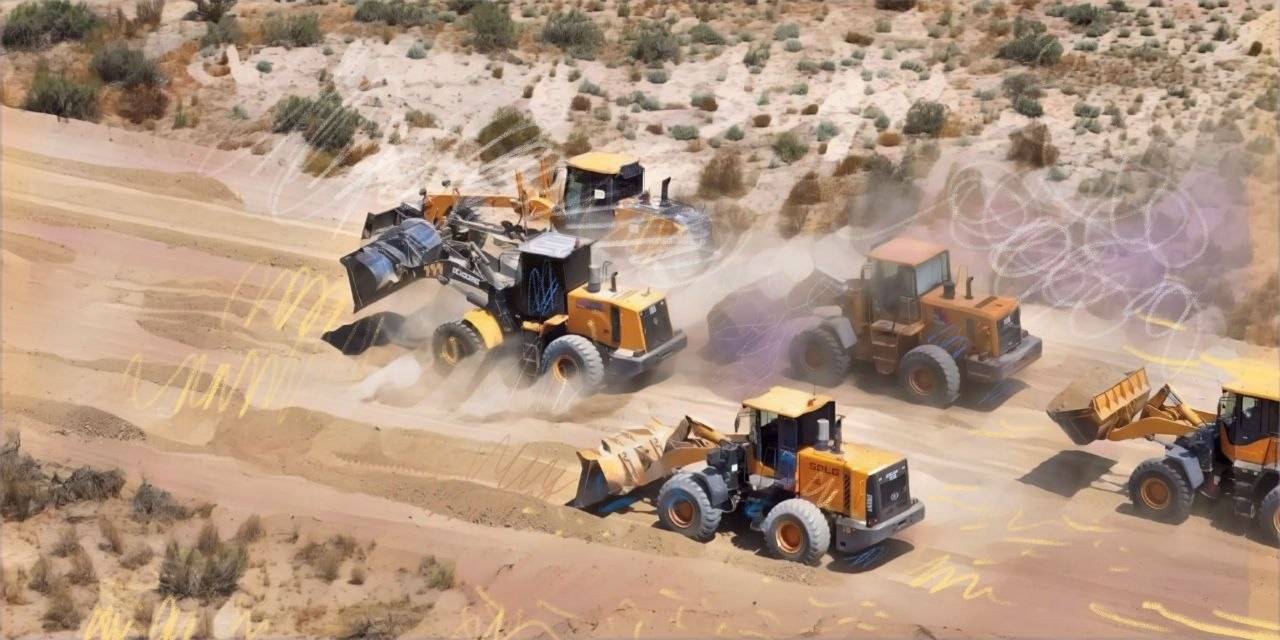
President Kassym-Jomart Tokayev launched construction of the Beineu–Saksaulsk highway on August 3, and ordered its completion by 2029. He proposed calling it the Aral–Caspian Highway because it will run from Saksaulsk, near the Aral Sea, west to Beineu and the road network serving Kazakhstan’s Caspian ports.
At Saksaulsk, three routes meet. The Kyzylorda road runs southeast to the Western Europe–Western China highway. The Ulgaysyn road continues northwest toward Aktobe. The new highway will run west to Beineu, from where roads lead to Aktau and Kuryk. The result is a more direct connection between southern Kazakhstan, the Aktobe corridor, and the Caspian coast, as outlined in the government’s wider road program.
The government is reconstructing and expanding the Kyzylorda–Saksaulsk and Ulgaysyn–Saksaulsk sections alongside the new highway. The three projects cover a combined 1,574 kilometers. The authorities expect annual freight volumes along the routes to rise 2.5-fold to 13.2 million tons and say construction will create more than 10,000 jobs.
Tokayev described the change as adding “horizontal connections” to Kazakhstan’s historically “vertical transportation networks.” His stated goal is to transform Kazakhstan into “one of the leading logistics hubs connecting Europe and Asia.”
The road will feed into the Trans-Caspian International Transport Route, or Middle Corridor. Goods can move west from Kazakhstan across the Caspian, Azerbaijan, Georgia, and Türkiye, or east along the same route into Central and East Asia. The corridor gives European companies another path into Central Asian markets and gives Kazakhstan additional options for reaching Europe.
The corridor is often presented as a China–Europe land-bridge, but the World Bank’s analysis expects most of its future traffic to be generated within the corridor region. Its modeling projects trade between Kazakhstan, Azerbaijan, and Georgia and the European Union to rise by 28% by 2030, while intercontinental freight remains below 40% of total volume. The commercial case therefore includes Kazakh exports moving west, European goods moving east, and regional cargo that never travels the full distance between Europe and China.
Europe is already supporting parts of the network. The EU’s €30 million Trans-Caspian transport program backs preparatory work for the modernization of the Beineu–Saksaulsk road and improvements at Aktau. In June, Kazakhstan and European partners announced $462 million in transport agreements, including financing for the Aktobe–Ulgaysyn road and cooperation with A.P. Moller-Maersk on container shipping along the Middle Corridor.
Kazakhstan also enters the competition with infrastructure already in use. It has a direct border with China, established railways carrying freight across the country, and operating Caspian ports. Uzbekistan is advancing the China–Kyrgyzstan–Uzbekistan railway and other routes, but The Times of Central Asia has previously reported that Kazakhstan retains the stronger position for now because several of its competitors’ largest projects are still being built or remain at the planning stage.
The decisive issue will be performance across the entire journey. A shorter highway loses value if cargo waits at a border, port, or ferry. Caspian vessel capacity, predictable schedules, coordinated tariffs, faster customs procedures, and real-time data exchange will determine how much of the time saved on land reaches the customer. Kazakhstan, Azerbaijan, and Georgia are working on those operational links, including through-route pricing and digital coordination.
The Aral–Caspian Highway fills a specific gap between Kazakhstan’s existing east-west routes and its Caspian ports. Completed on schedule and matched by smoother border and shipping operations, it would make the country’s transport network more coherent and strengthen its claim to Eurasian logistics leadership. Its success will be measured by whether freight operators moving goods east or west choose it because it is faster, more reliable, and commercially competitive.