• KGS/USD = 0.01144 0%
  • KZT/USD = 0.00209 0%
  • TJS/USD = 0.10830 0.09%
  • UZS/USD = 0.00008 0%
  • TMT/USD = 0.28490 0%
  • KGS/USD = 0.01144 0%
  • KZT/USD = 0.00209 0%
  • TJS/USD = 0.10830 0.09%
  • UZS/USD = 0.00008 0%
  • TMT/USD = 0.28490 0%
  • KGS/USD = 0.01144 0%
  • KZT/USD = 0.00209 0%
  • TJS/USD = 0.10830 0.09%
  • UZS/USD = 0.00008 0%
  • TMT/USD = 0.28490 0%
  • KGS/USD = 0.01144 0%
  • KZT/USD = 0.00209 0%
  • TJS/USD = 0.10830 0.09%
  • UZS/USD = 0.00008 0%
  • TMT/USD = 0.28490 0%
  • KGS/USD = 0.01144 0%
  • KZT/USD = 0.00209 0%
  • TJS/USD = 0.10830 0.09%
  • UZS/USD = 0.00008 0%
  • TMT/USD = 0.28490 0%
  • KGS/USD = 0.01144 0%
  • KZT/USD = 0.00209 0%
  • TJS/USD = 0.10830 0.09%
  • UZS/USD = 0.00008 0%
  • TMT/USD = 0.28490 0%
  • KGS/USD = 0.01144 0%
  • KZT/USD = 0.00209 0%
  • TJS/USD = 0.10830 0.09%
  • UZS/USD = 0.00008 0%
  • TMT/USD = 0.28490 0%
  • KGS/USD = 0.01144 0%
  • KZT/USD = 0.00209 0%
  • TJS/USD = 0.10830 0.09%
  • UZS/USD = 0.00008 0%
  • TMT/USD = 0.28490 0%

Viewing results 1 - 6 of 87

Russia to Halt Kazakh Oil Flow to Germany, Exposing Europe’s Transit Vulnerability

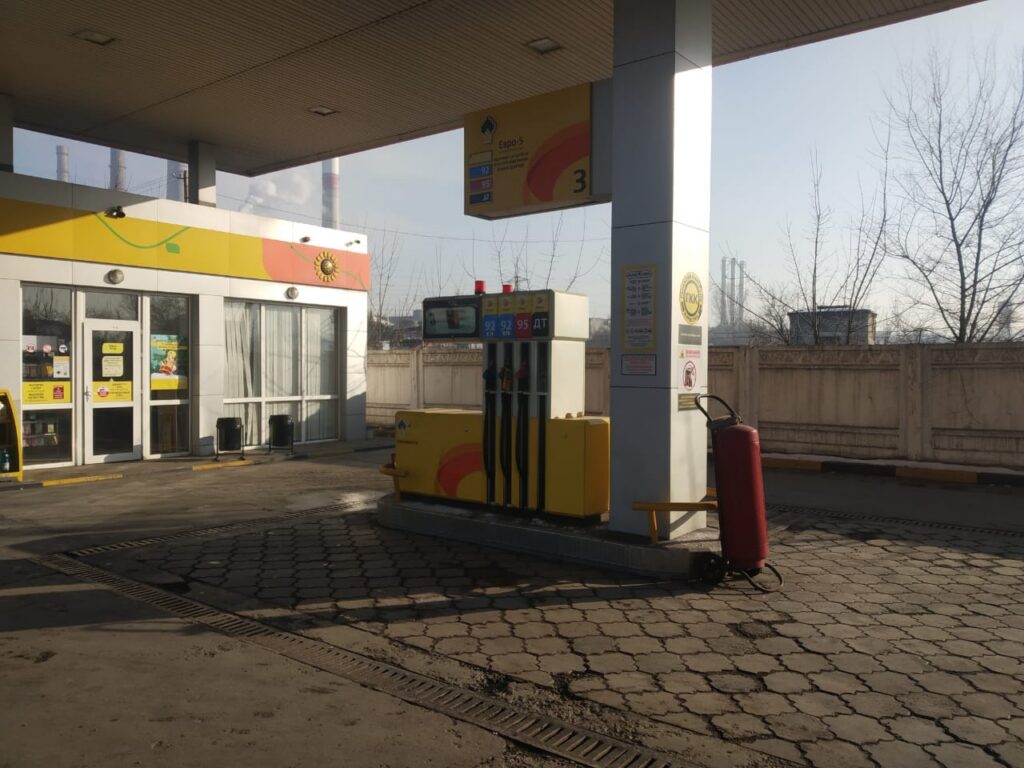
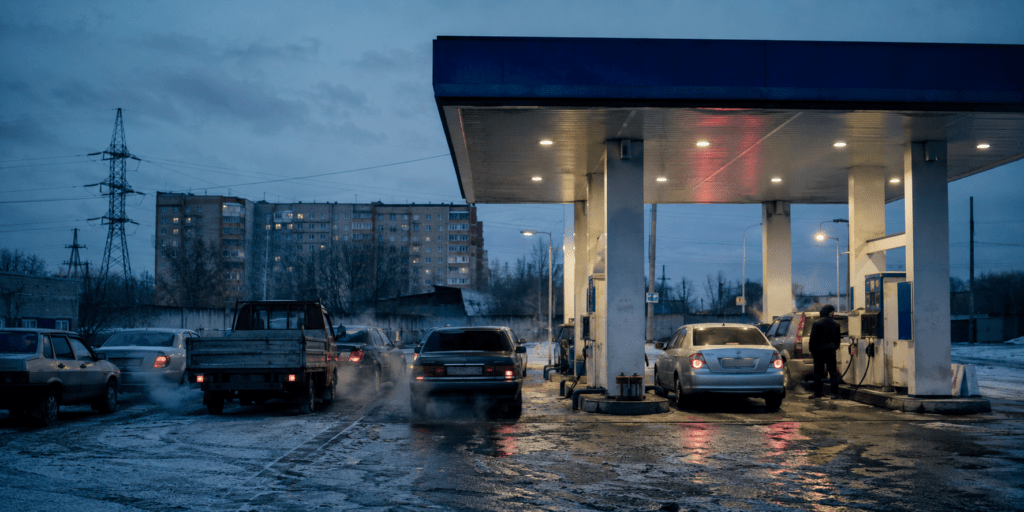
Russia will stop the transit of Kazakh oil to Germany through the Druzhba pipeline from May 1 according to Reuters, disrupting a route that Berlin had built up after ending direct Russian crude imports. The move affects supplies to the PCK refinery in Schwedt, a major fuel plant for Berlin and Brandenburg. Russia’s Deputy Prime Minister Alexander Novak said the change would begin because of “technical possibilities.” Germany’s economy ministry said Rosneft Germany, which remains under German trusteeship, had informed the Federal Network Agency that transit of Kazakh crude through Russian territory to PCK would be prohibited from that date. The ministry added that the Russian government had not directly notified Berlin. Germany’s economy ministry said the stoppage did not threaten fuel supply and that existing alternatives would be used. About 17% of PCK Schwedt’s current crude supply comes from Kazakh oil delivered through the Druzhba pipeline. Germany’s economy ministry said that “existing options will be utilized to ensure security of supply in Germany” and that the halt “did not put the security of supply of petroleum products in jeopardy.” [caption id="attachment_47676" align="aligncenter" width="1038"] Image: pck.de/[/caption] However, the halt still exposes Germany’s reliance on a route that runs through Russia. Schwedt can process up to 12 million metric tons of oil a year and is a major fuel supplier for Berlin and Brandenburg, so any disruption attracts close attention even if replacement volumes can be found elsewhere. Germany has already looked at alternative deliveries through Rostock and Gdansk. Since 2023, Kazakh crude has reached Germany through Russia and Belarus via the Druzhba pipeline, giving Berlin a non-Russian source of oil and expanding Astana’s role in the European market. But the route still relied on Russian transit approval. The halt comes after two years of growth. Regular deliveries of Kazakh crude to Germany began in 2023, and in October 2025, the supply arrangement was extended through the end of 2026. Kazakhstan had been planning to expand that trade further. During an April 7 meeting with Bavarian State Minister Eric Beißwenger, Kazakhstan’s Energy Ministry said it aimed to raise oil exports to Germany to 2.5 million tons in 2026. Reuters reported that 2.146 million metric tons were delivered in 2025 and that 730,000 tons were supplied in the first quarter of 2026. KazTransOil has separately published its first-quarter operating results. Kazakhstan’s Energy Minister Yerlan Akkenzhenov confirmed that Druzhba transit to Germany would be halted. “For May, transit through Atyrau-Samara in the direction of the Druzhba pipeline and further to the Schwedt refinery is zero,” Akkenzhenov stated. He added that the Russian side, according to unofficial information, said it lacked the technical capability to pump Kazakh oil and that this was “most likely” linked to recent strikes on Russian infrastructure. He said transit would resume once the technical issue was resolved. Kazakh crude sent to Germany through Druzhba first moves via the Uzen-Atyrau-Samara pipeline and then through Transneft’s system to the Adamova Zastava delivery point before reaching Schwedt. The oil is sold as...

Russia to Boost Energy Exports to Uzbekistan as Trade Surpasses $13 Billion

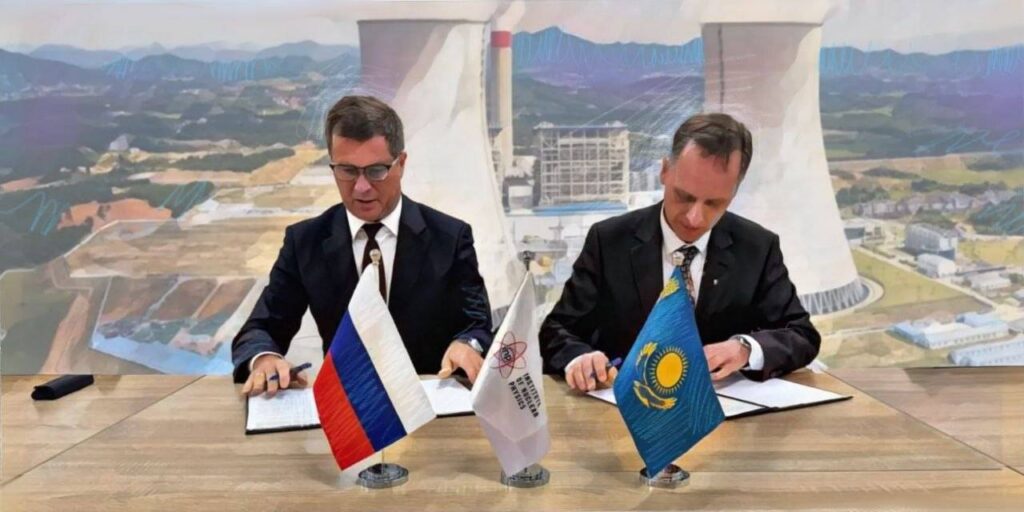
Russia plans to increase deliveries of oil and natural gas to Uzbekistan, Prime Minister Mikhail Mishustin said at the sixth session of the intergovernmental commission at the level of the two countries’ prime ministers in Moscow. “Agreements have been reached to continue supplies of Russian oil and natural gas and to increase their volumes,” Mishustin said, noting that energy remains a key area of cooperation between Moscow and Tashkent. He added that Russian specialists are also involved in drilling new wells and modernizing refining and gas transportation infrastructure in Uzbekistan. The meeting brought together Mishustin and Uzbekistan’s Prime Minister Abdulla Aripov to review progress on agreements set by Presidents Vladimir Putin and Shavkat Mirziyoyev. Both sides emphasized the continued expansion of what they described as a comprehensive strategic partnership. Mishustin said bilateral trade increased by nearly 12.5% last year, approaching one trillion rubles, and is expected to grow further by 2030. Aripov, citing Uzbek data, said trade turnover exceeded $13 billion in 2025 and rose by a further 30% in the first two months of this year. Energy cooperation featured prominently in the discussions. Construction of a Russian-designed nuclear power plant in Uzbekistan’s Jizzakh region is underway, with concrete work beginning in March. Aripov described the project as opening “a new page” in bilateral relations, adding that Uzbekistan would become “the first country where both small and large nuclear power plants will be located on one site.” Beyond energy, the two sides highlighted expanding investment and industrial cooperation. Around 150 joint projects worth more than four trillion rubles are currently being implemented, while Uzbekistan hosts over 3,200 enterprises with Russian capital. Projects span sectors including mining, chemicals, textiles, pharmaceuticals, logistics, and digital technologies. Previous reporting indicates that Russia remains one of Uzbekistan’s largest trading partners, with both governments aiming to increase bilateral trade to $30 billion by 2030. Transport links are also expanding, with 367 weekly flights now operating between the two countries, according to Aripov.

Hungary’s Political Shift Puts Central Asia Partnerships Under Scrutiny

Hungary’s political transition following the defeat of Viktor Orbán’s party and his resignation as prime minister is drawing attention not only in the EU and the United States, but also in Central Asia, where Budapest has built growing energy and investment ties. The key question is whether the policy of cooperation with Central Asia developed under Orbán will continue under the new leadership. In recent years, under Orbán, Budapest has actively developed its Central Asian foreign policy, primarily driven by the desire to find alternatives to Russian energy supplies. That push reflects Hungary’s long-standing reliance on Russian oil and gas, which has shaped its search for alternative suppliers beyond Europe. Resource-rich Kazakhstan, Uzbekistan, and Turkmenistan became natural partners for diplomatic engagement. Orbán succeeded in building trust-based relationships with the presidents of the Central Asian republics, grounded in what Hungary’s Minister of Foreign Affairs, Péter Szijjártó, described as “sincere friendship” in an interview with Uzbek media. “In Hungary, we have always viewed Central Asia as one of the fastest-growing regions in the world, with enormous potential. Our efforts to build these relations did not begin today, but decades ago,” he said. Hungary became the first Central European country to sign a strategic partnership with Kazakhstan in 2014. Currently, the Kazakhstan-Hungary Business Council is in operation, along with a joint agricultural direct investment fund. In 2024, bilateral trade approached $200 million, and from January to August 2025, it grew by another 22.1%, exceeding $164.6 million. Hungarian investments in Kazakhstan’s economy have surpassed $370 million, while the current investment portfolio includes 16 projects worth about $700 million in engineering, agriculture, and logistics. These links also intersect with wider efforts to expand east–west transport routes through the Caspian region, offering Hungary indirect access to Central Asian energy and trade flows. In May 2025, Uzbekistan’s President Shavkat Mirziyoyev held talks with Orbán in Budapest, where both sides highlighted rising trade volumes and a joint investment portfolio of about $500 million. Hungary’s OTP Bank entered into Uzbekistan’s financial market in 2023, acquiring a 73.71% stake in Ipoteka Bank, becoming its principal owner and the majority shareholder of the country’s fifth-largest bank. As early as 2019, Hungary had intensified cooperation with Turkmenistan. After talks at the Turkmen Foreign Ministry, Szijjártó told the media that Hungary views Turkmenistan as an important country from the perspective of European security. “We very much hope that Turkmenistan’s gas resources will be integrated into the overall energy flow of Central Europe,” he said. However, uncertainty remains over whether this policy direction will continue under Orbán’s successor, Péter Magyar. Oil and gas analyst Oleg Chervinsky has suggested that political changes in Hungary could affect cooperation with Kazakhstan’s national company KazMunayGas (KMG). Chervinsky notes that, having secured a constitutional majority in parliament, Magyar has a mandate to “implement reforms in both foreign and domestic policy [which could] reshape the constitutional structure of the right-wing populist authoritarian system built around Orbán.” The analyst points to Hungary’s oil and gas company MOL Group, which in recent...

Kazakhstan Gains Weight in China’s Energy System

The newly extended U.S. waiver for Russian oil transit through Kazakhstan and the reported giant onshore hydrocarbon discovery in western Kazakhstan point in different directions, yet they belong in the same analytical frame. One concerns an existing flow that already reaches China through working infrastructure, while the other concerns a possible future source that has not yet reached the stage of commercially proven reserves. Together, they mark a change in Kazakhstan’s position. The country is increasingly important to China both as a corridor and as a possible larger upstream partner. The U.S. waiver now runs until March 19, 2027. Kazakhstan is not a giant direct oil supplier to China in the way that Russia or Saudi Arabia is; China’s import structure is broader. But Kazakh-origin oil shipments, Russian transit oil, and adjacent energy links now constitute a single, more complex relationship. According to official Chinese sources, oil imported from Kazakhstan enters mainly through the China-Kazakhstan crude pipeline. More Than Kazakhstan’s Own Barrels Kazakhstan-China Pipeline LLP reported that in 2024, the Atasu-Alashankou route carried 1.2 million tons of oil and 9.989 million tons of transit oil, against a design capacity of 20 million tons a year. Official Chinese figures sharpen the point. By the end of 2024, total cumulative throughput on the pipeline had reached 280 million tons, including 19.139 million tons in 2024, while cumulative crude imported from Kazakhstan was lower. Kazakhstan’s significance to China is therefore larger than Kazakhstan’s own volumes would suggest, because the route carries more than Kazakhstan’s own oil. A glance at Europe keeps that proportion straight. Eurostat reports that Kazakhstan supplied 12.7% of the European Union’s petroleum oil imports in 2025. The European External Action Service said that Kazakhstan accounted for 10.9% of EU oil imports in the first quarter of 2024. This made it the bloc’s third-largest supplier in that period, and a more important direct oil supplier to Europe than to China. The significance of Kazakhstan’s geographic proximity to China becomes clearer when one looks beyond crude oil. Kazakhstan is not only a direct oil supplier, but also a transit corridor for multiple China-bound energy flows. The Kazakhstan-China oil pipeline is one of China’s major import routes. At the same time, while Kazakhstan’s own gas exports to China remain limited due to rising domestic demand, gas from Turkmenistan and Russia both pass through its territory. Oil and gas do not form a single operational system, but together they show that China’s energy connection with Kazakhstan extends beyond one commodity and beyond Kazakhstan’s own barrels. The Source Side May Be Growing In this context, the reported discovery on the Zhylyoi carbonate platform makes a difference because it widens the source side of the relationship without changing present flows. According to public statements by KazMunayGas officials, the Karaton, Kazhygali, and Zhylyoi formation has resource potential of 4.7 billion metric tons of hydrocarbons, and the broader Zhylyoi carbonate reservoir may hold as much as 20 billion metric tons of oil equivalent. The field is onshore in...

Central Asia Welcomes Ceasefire, Urges Talks as Energy Risks Persist

Central Asian governments have cautiously welcomed the two-week ceasefire between the United States and Iran, describing it as a necessary pause in a conflict that has already begun to affect regional stability, trade, and energy flows. Across the region, official statements struck a consistent balance: support for the truce, alongside calls to translate it quickly into negotiations rather than allow it to become a temporary pause in hostilities. Kazakhstan’s President Kassym-Jomart Tokayev described the agreement as a “ceasefire and truce” reached through international mediation, including efforts involving Pakistan’s leadership. According to the presidential press service, Tokayev said that “this agreement became possible due to the goodwill and wisdom of the President of the United States, Donald Trump, and the senior leadership of Iran, as well as all countries involved in the military conflict.” Tokayev went on to express his hope that the agreement would prove sustainable and contribute to global trade and economic stability. Uzbekistan’s Foreign Ministry described the ceasefire as an “important step toward de-escalating tensions” and stressed that it should serve as a pathway to a broader political settlement. Tashkent called for “all parties to exercise restraint, [and] refrain from actions that could further escalate the situation, warning that further escalation risks widening the conflict and undermining regional stability. The statement reaffirmed Uzbekistan's “unwavering position on the need to resolve conflicts exclusively by peaceful means in strict accordance with the principles of the Charter of the United Nations.” Tajikistan’s Foreign Ministry also welcomed the agreement, expressing hope that the ceasefire would open the way to a comprehensive and long-term peace. Dushanbe emphasized that the conflict has “no military solution and its continuation will only worsen the already difficult situation in the Middle East and cause colossal damage to all countries in the region.” The statement urged all parties to “abandon the use of force” and use political and diplomatic mechanisms in accordance with international law and the UN Charter. Kyrgyzstan’s Foreign Ministry said it “welcomes the achievement of a ceasefire agreement in the Middle East,” highlighting the role of Pakistan’s mediation efforts in reducing tensions. Bishkek reaffirmed that disputes must be resolved exclusively through political and diplomatic means on the basis of the UN Charter and international law, and expressed its “hope for achieving sustainable and long-term peace in the region.” Turkmenistan had not issued an official public statement on the ceasefire at the time of publication, in line with its longstanding policy of neutrality and cautious approach to external conflicts. Meanwhile, Azerbaijan’s Foreign Ministry also welcomed the “announced ceasefire” and praised the efforts of mediators who helped broker the agreement. Baku called on all parties to “engage in productive dialogue aimed at resolving existing problems and strengthening mutual trust” and signaled its readiness to “support initiatives aimed at strengthening lasting peace, security, and cooperation in the region.” The convergence in tone reflects more than diplomatic routine. The conflict has already spilled into Central Asia’s political and humanitarian agenda, prompting coordination on evacuations, aid deliveries, and contingency planning....

Major Hydrocarbon Field Discovered in Kazakhstan

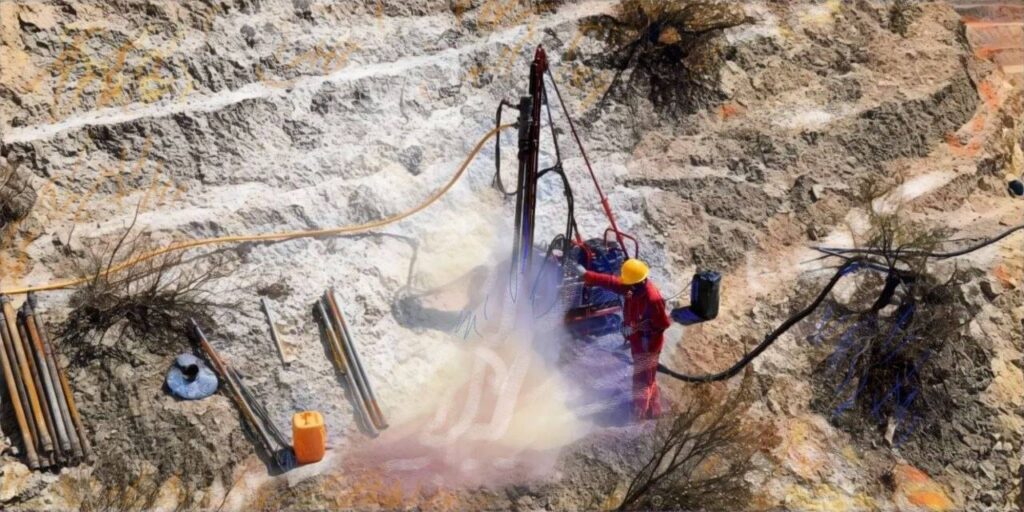
A major hydrocarbon field has been discovered in Kazakhstan’s Atyrau Region, with reserves potentially comparable to those of the Kashagan oil field, the country’s largest oil source, according to Kurmangazy Iskaziyev, First Deputy Chairman of the Management Board of KazMunayGas. The site is located on the Zhylyoi Platform near the Caspian Sea coast. Its onshore location could significantly reduce development costs, although the deposits are believed to lie at considerable depths. Kashagan has long stood as the symbol of both Kazakhstan’s oil wealth and the technical difficulty of extracting it. The offshore field cemented the country’s position as a major crude producer, but also became known for cost overruns, delays, and the engineering challenges of operating in the northern Caspian. Any onshore discovery mentioned in the same breath immediately raises expectations that it could avoid some of those constraints while delivering comparable scale. Kashagan, discovered in the northern Caspian Sea, remains one of the largest oil fields found globally in recent decades. Its recoverable reserves are estimated at 9–13 billion barrels of oil, with gas reserves exceeding 1 trillion cubic meters. Development is carried out by the North Caspian Operating Company consortium, which includes Shell, TotalEnergies, ExxonMobil, Eni, China National Petroleum Corporation, Inpex, and KazMunayGas. Speaking at the Geoscience & Exploration Central Asia forum, Iskaziyev said the resource potential of the Zhylyoi Block, including Karaton, Kazhygali, and Zhylyoi, is estimated at 4.7 billion tons, with total geological potential reaching up to 20 billion tons of oil equivalent. At this stage, such figures reflect geological potential rather than proven, recoverable reserves. In Kazakhstan, as elsewhere, moving from estimate to production depends on depth, pressure, sulfur content, and the cost of drilling and processing. Large discoveries can take years to confirm commercially, particularly in high-pressure or technically complex formations. KazMunayGas has already begun exploration work. A well 5,750 meters deep has been drilled at the Karaton site, and five promising targets have been identified as part of a joint project with Tatneft. During testing at one of these sites, a gas flow containing hydrogen sulfide was recorded. The main challenge remains the depth of the deposits, which may reach up to 9 km. According to Iskaziyev, these conditions are comparable to projects undertaken by KazMunayGas’s Chinese partners, including Sinopec and China National Petroleum Corporation, where drilling depths can reach up to 11 km. The company plans to expand geological exploration into neighboring areas, including Kazhygali, and is negotiating subsoil use contracts. The timing is significant. Kazakhstan is under growing pressure to demonstrate that its oil sector can still deliver major new projects as existing fields mature. A large onshore discovery in Atyrau would reinforce the region’s role as the core of the country’s energy system and support efforts to sustain export volumes and investor interest. At the forum, a memorandum of understanding was also signed between KazMunayGas and BP on cooperation in geological exploration and the development of the Ustyurt Block in the Mangistau Region. The Times of Central Asia previously reported...