• KZT/USD = 0.00223
  • TJS/USD = 0.10820
  • UZS/USD = 0.00009
  • TMT/USD = 0.29760
  • KZT/USD = 0.00223
  • TJS/USD = 0.10820
  • UZS/USD = 0.00009
  • TMT/USD = 0.29760
  • KZT/USD = 0.00223
  • TJS/USD = 0.10820
  • UZS/USD = 0.00009
  • TMT/USD = 0.29760
  • KZT/USD = 0.00223
  • TJS/USD = 0.10820
  • UZS/USD = 0.00009
  • TMT/USD = 0.29760
  • KZT/USD = 0.00223
  • TJS/USD = 0.10820
  • UZS/USD = 0.00009
  • TMT/USD = 0.29760
  • KZT/USD = 0.00223
  • TJS/USD = 0.10820
  • UZS/USD = 0.00009
  • TMT/USD = 0.29760
  • KZT/USD = 0.00223
  • TJS/USD = 0.10820
  • UZS/USD = 0.00009
  • TMT/USD = 0.29760
  • KZT/USD = 0.00223
  • TJS/USD = 0.10820
  • UZS/USD = 0.00009
  • TMT/USD = 0.29760
21 September 2026

Viewing results 1 - 6 of 96

Central Asia Feels Fuel Strain as Kazakhstan Prices Edge Higher

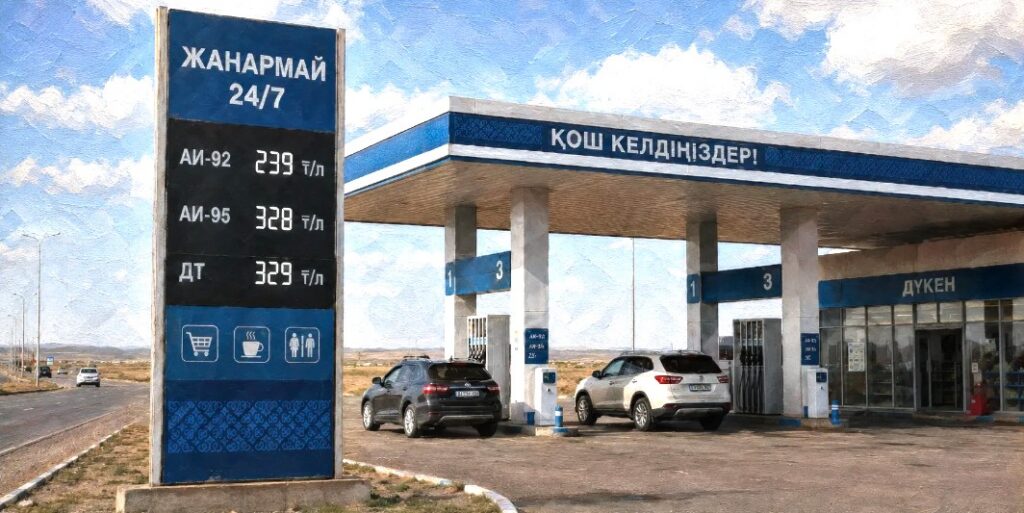
Kazakhstan's fuel market is moving into a new phase after the end of the government freeze on AI-92 gasoline and diesel. Pump prices have risen by small amounts so far. Retail prices are rising cautiously amid growing pressure from neighbors where fuel costs more. Kazakhstan still has some of the cheapest gasoline in the region, but that advantage creates a risk: cheap fuel attracts cross-border demand and makes it harder to fund the refining capacity the country says it needs. On October 16, 2025, Kazakhstan's government introduced a moratorium on further increases in AI-92 gasoline and diesel as part of a wider anti-inflation package. The decision also put the Energy Ministry, the competition agency, and regional authorities in charge of keeping supplies stable. The measure came after inflation and tariff reforms had raised concerns about household costs. The freeze ended on April 1, 2026, but by mid-April, the Energy Ministry was still trying to calm expectations. Kazinform cited Vice Minister of Energy Kaiyrkhan Tutkyshbayev on April 14 as saying most prices had risen mainly by one tenge after the moratorium was lifted, and that the state would not allow a sharp jump. The tone matched what drivers were seeing: a controlled rise rather than a sudden reset. The memory of January 2022, when an LPG price jump helped spark unrest, still hangs over fuel policy. The end of the freeze also fed into inflation expectations. National Bank Governor Timur Suleimenov warned in April that renewed growth in fuel prices and utility tariffs had to be handled cautiously, because a sharp reset could reverse the slowdown in inflation. The National Bank later said reforms in utility tariffs and fuel prices accounted for 32.9% of household inflation expectations in March. That made the fuel moratorium more than a pump-price measure: it was one of the state’s main tools for containing expectations while inflation remained in double digits. An April 9 check by Tengri Auto found that most filling stations in Almaty and the surrounding area were still selling fuel close to the previous price range. Several major networks, however, had already moved AI-92 toward 240 tenge per liter. AI-95, which was not covered by the main freeze, had risen to 328 tenge at one network. A Kazinform market check published on May 25 showed the same gradual pattern. AI-92 was listed at 238-239 tenge per liter in Astana, 238-241 tenge in Almaty, and 224-227 tenge in Shymkent. Diesel stood at 329 tenge in Astana, 330-337 tenge in Almaty, and 332-335 tenge in Shymkent. The figures point to a market that is moving, but still under close control. Fuel is also feeding into Kazakhstan's broader inflation picture. The Bureau of National Statistics put annual inflation at 10.6% in April 2026. Petrol prices were up 16.1% year-on-year and added 0.53 percentage points to annual price growth. Transport as a category added 1.1 percentage points. Fuel is one of the costs households notice most directly, and its effects spread through freight, food distribution, agriculture, taxis,...
Uzbekistan Expands Energy Cooperation With SOCAR and BP at Energy Week Forum

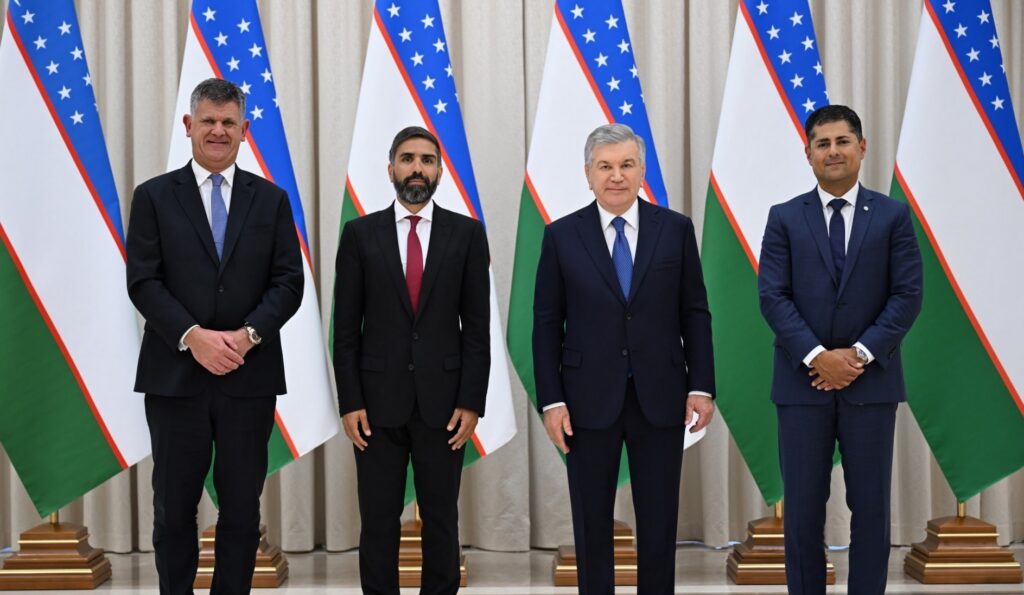
President Shavkat Mirziyoyev held talks on May 13 with executives from Azerbaijan’s state oil company SOCAR and energy giant BP during the Uzbekistan Energy Week 2026 forum in Tashkent. According to the Uzbekistan's presidency, Mirziyoyev met with SOCAR President Rovshan Najaf, as well as BP representatives Ariel Flores and Giovanni Cristofoli, to discuss expanding cooperation in the energy and oil and gas sectors. The sides noted the growing partnership between Uzbekistan and SOCAR, particularly in the development of hydrocarbon fields on the Ustyurt Plateau in western Uzbekistan. Officials also agreed to open a SOCAR representative office in Uzbekistan as cooperation between the two countries deepens. BP’s participation in the Ustyurt project was also highlighted during the meeting. Discussions focused on joint projects involving oil and gas exploration, hydrocarbon production, deep processing of raw materials, and long-term supplies of oil and petroleum products. The parties also discussed cooperation in training specialists for the energy industry. Najaf also thanked Mirziyoyev for Uzbekistan’s support in preparations for hosting the FIFA U-20 World Cup in 2027, which Uzbekistan and Azerbaijan are set to organize jointly. Najaf also serves as chairman of the Association of Football Federations of Azerbaijan. Energy cooperation between Uzbekistan and Azerbaijan has expanded significantly over the past year. In 2025, Uzbekistan’s Energy Minister Jurabek Mirzamahmudov said SOCAR and Uzbekneftegaz had established a joint operating company to oversee the Ustyurt project under a Production Sharing Agreement. Mirzamahmudov said seismic surveys covering more than 3,000 kilometers were expected to begin before the end of the year, followed by the drilling of the first exploration well. Last August, Azerbaijani President Ilham Aliyev announced that SOCAR had officially begun operations at an oil field in Uzbekistan. Aliyev said at the time that both sides hoped to make a major oil discovery within the next few years.

Kazakhstan Plans More Oil, Gas Cooperation with Uzbekistan, Minister Says

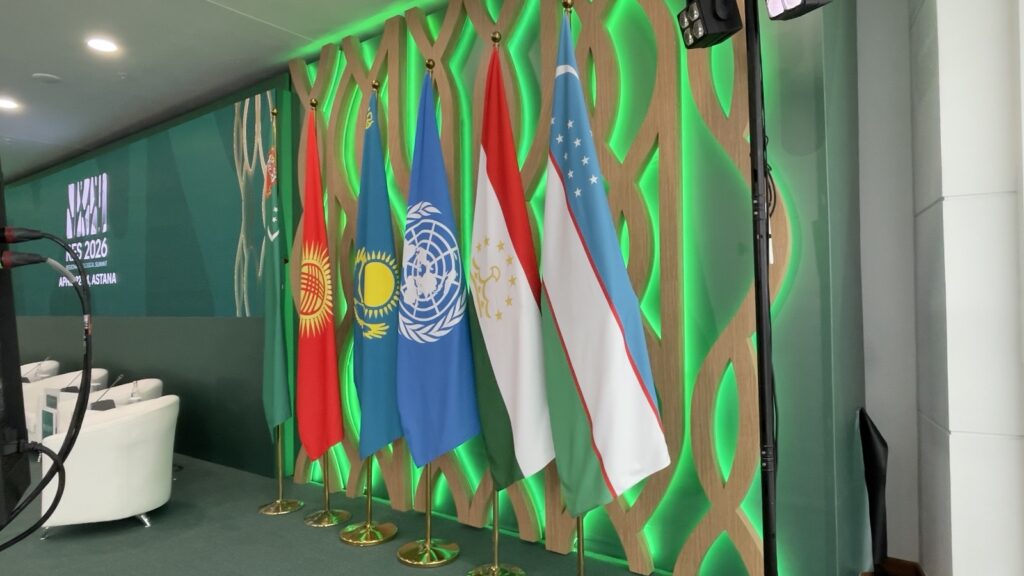
Kazakhstan is looking to deepen energy cooperation with Uzbekistan, with several joint projects already moving into the implementation stage, Energy Minister Yerlan Akkenzhenov said on the sidelines of the RES 2026 regional environmental summit in Astana, according to BAQ.KZ. “Exchange of experience and mutual assistance help us solve practical tasks,” Akkenzhenov said. “We are actively cooperating with our partners not only in the energy sector, but across all areas of the economy.” The minister noted that discussions with Uzbekistan cover a number of large-scale initiatives, particularly in petrochemicals and oil refining. “We have many joint projects with Uzbekistan. A recent presidential visit included discussions on numerous initiatives, including the development of the petrochemical industry and the expansion of oil processing,” he said. Cooperation is also expanding in energy transit and supply. Akkenzhenov said the two countries are working closely on the transit of Russian gas to Uzbekistan, as well as supplies of Russian oil. “We are also considering the possibility of exporting Kazakh products, including crude oil and petroleum products, to Uzbekistan,” he added. According to him, several of these initiatives have already reached the implementation stage. “Many projects are already in practical phases. Overall, we have built very close cooperation with our Uzbek partners,” he said. Last year, Kazakhstan’s Energy Ministry confirmed that a six-month ban on fuel exports remained in force, halting gasoline shipments to neighboring countries, including Uzbekistan. At the same time, international developments may affect regional supply routes. According to Reuters, Russia plans to halt the transit of Kazakh oil to Germany via the Druzhba pipeline starting May 1. The decision is expected to impact deliveries to the PCK refinery in Schwedt, a key supplier for Berlin and Brandenburg. Despite these changes, German officials have said alternative supply routes will be used and that fuel availability will not be affected.

Russia to Halt Kazakh Oil Flow to Germany, Exposing Europe’s Transit Vulnerability

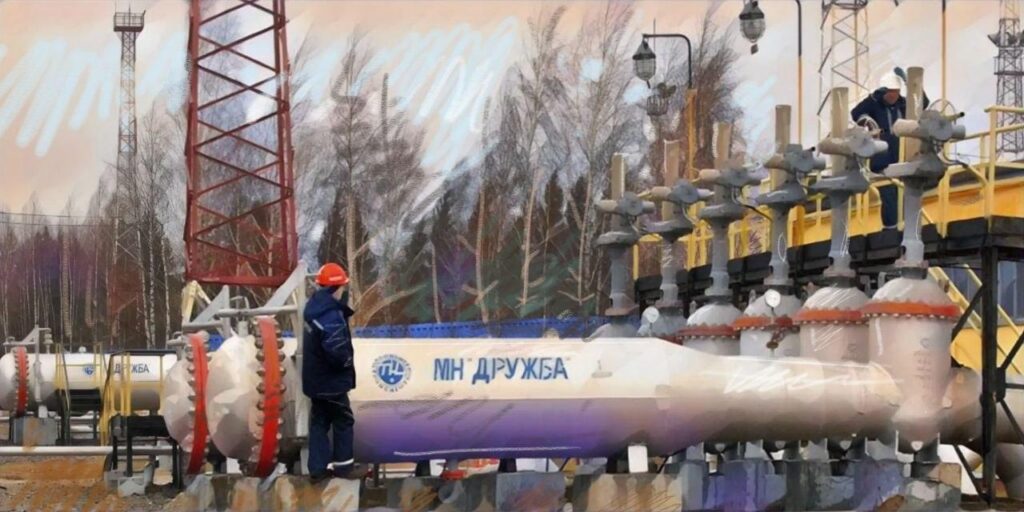
Russia will stop the transit of Kazakh oil to Germany through the Druzhba pipeline from May 1 according to Reuters, disrupting a route that Berlin had built up after ending direct Russian crude imports. The move affects supplies to the PCK refinery in Schwedt, a major fuel plant for Berlin and Brandenburg. Russia’s Deputy Prime Minister Alexander Novak said the change would begin because of “technical possibilities.” Germany’s economy ministry said Rosneft Germany, which remains under German trusteeship, had informed the Federal Network Agency that transit of Kazakh crude through Russian territory to PCK would be prohibited from that date. The ministry added that the Russian government had not directly notified Berlin. Germany’s economy ministry said the stoppage did not threaten fuel supply and that existing alternatives would be used. About 17% of PCK Schwedt’s current crude supply comes from Kazakh oil delivered through the Druzhba pipeline. Germany’s economy ministry said that “existing options will be utilized to ensure security of supply in Germany” and that the halt “did not put the security of supply of petroleum products in jeopardy.” [caption id="attachment_47676" align="aligncenter" width="1038"] Image: pck.de/[/caption] However, the halt still exposes Germany’s reliance on a route that runs through Russia. Schwedt can process up to 12 million metric tons of oil a year and is a major fuel supplier for Berlin and Brandenburg, so any disruption attracts close attention even if replacement volumes can be found elsewhere. Germany has already looked at alternative deliveries through Rostock and Gdansk. Since 2023, Kazakh crude has reached Germany through Russia and Belarus via the Druzhba pipeline, giving Berlin a non-Russian source of oil and expanding Astana’s role in the European market. But the route still relied on Russian transit approval. The halt comes after two years of growth. Regular deliveries of Kazakh crude to Germany began in 2023, and in October 2025, the supply arrangement was extended through the end of 2026. Kazakhstan had been planning to expand that trade further. During an April 7 meeting with Bavarian State Minister Eric Beißwenger, Kazakhstan’s Energy Ministry said it aimed to raise oil exports to Germany to 2.5 million tons in 2026. Reuters reported that 2.146 million metric tons were delivered in 2025 and that 730,000 tons were supplied in the first quarter of 2026. KazTransOil has separately published its first-quarter operating results. Kazakhstan’s Energy Minister Yerlan Akkenzhenov confirmed that Druzhba transit to Germany would be halted. “For May, transit through Atyrau-Samara in the direction of the Druzhba pipeline and further to the Schwedt refinery is zero,” Akkenzhenov stated. He added that the Russian side, according to unofficial information, said it lacked the technical capability to pump Kazakh oil and that this was “most likely” linked to recent strikes on Russian infrastructure. He said transit would resume once the technical issue was resolved. Kazakh crude sent to Germany through Druzhba first moves via the Uzen-Atyrau-Samara pipeline and then through Transneft’s system to the Adamova Zastava delivery point before reaching Schwedt. The oil is sold as...

Russia to Boost Energy Exports to Uzbekistan as Trade Surpasses $13 Billion

Russia plans to increase deliveries of oil and natural gas to Uzbekistan, Prime Minister Mikhail Mishustin said at the sixth session of the intergovernmental commission at the level of the two countries’ prime ministers in Moscow. “Agreements have been reached to continue supplies of Russian oil and natural gas and to increase their volumes,” Mishustin said, noting that energy remains a key area of cooperation between Moscow and Tashkent. He added that Russian specialists are also involved in drilling new wells and modernizing refining and gas transportation infrastructure in Uzbekistan. The meeting brought together Mishustin and Uzbekistan’s Prime Minister Abdulla Aripov to review progress on agreements set by Presidents Vladimir Putin and Shavkat Mirziyoyev. Both sides emphasized the continued expansion of what they described as a comprehensive strategic partnership. Mishustin said bilateral trade increased by nearly 12.5% last year, approaching one trillion rubles, and is expected to grow further by 2030. Aripov, citing Uzbek data, said trade turnover exceeded $13 billion in 2025 and rose by a further 30% in the first two months of this year. Energy cooperation featured prominently in the discussions. Construction of a Russian-designed nuclear power plant in Uzbekistan’s Jizzakh region is underway, with concrete work beginning in March. Aripov described the project as opening “a new page” in bilateral relations, adding that Uzbekistan would become “the first country where both small and large nuclear power plants will be located on one site.” Beyond energy, the two sides highlighted expanding investment and industrial cooperation. Around 150 joint projects worth more than four trillion rubles are currently being implemented, while Uzbekistan hosts over 3,200 enterprises with Russian capital. Projects span sectors including mining, chemicals, textiles, pharmaceuticals, logistics, and digital technologies. Previous reporting indicates that Russia remains one of Uzbekistan’s largest trading partners, with both governments aiming to increase bilateral trade to $30 billion by 2030. Transport links are also expanding, with 367 weekly flights now operating between the two countries, according to Aripov.

Hungary’s Political Shift Puts Central Asia Partnerships Under Scrutiny

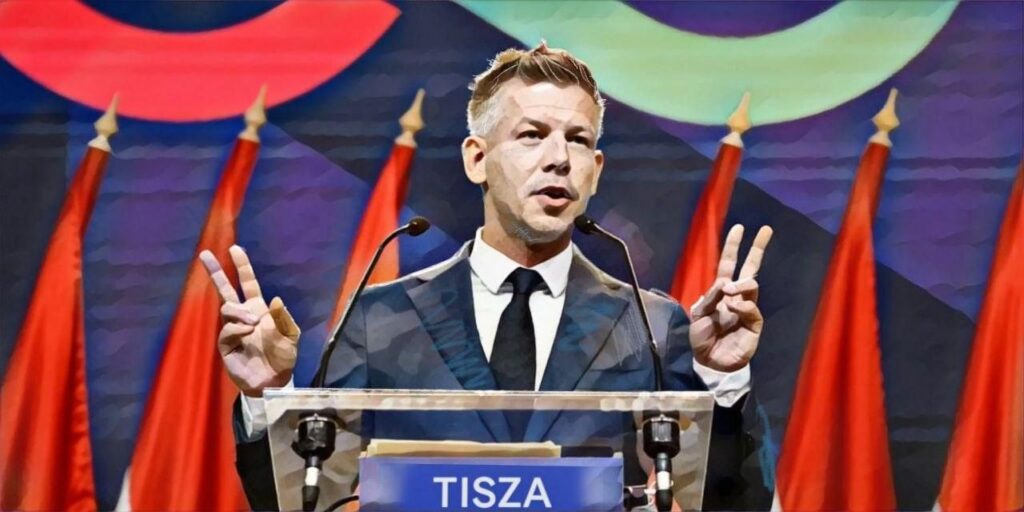
Hungary’s political transition following the defeat of Viktor Orbán’s party and his resignation as prime minister is drawing attention not only in the EU and the United States, but also in Central Asia, where Budapest has built growing energy and investment ties. The key question is whether the policy of cooperation with Central Asia developed under Orbán will continue under the new leadership. In recent years, under Orbán, Budapest has actively developed its Central Asian foreign policy, primarily driven by the desire to find alternatives to Russian energy supplies. That push reflects Hungary’s long-standing reliance on Russian oil and gas, which has shaped its search for alternative suppliers beyond Europe. Resource-rich Kazakhstan, Uzbekistan, and Turkmenistan became natural partners for diplomatic engagement. Orbán succeeded in building trust-based relationships with the presidents of the Central Asian republics, grounded in what Hungary’s Minister of Foreign Affairs, Péter Szijjártó, described as “sincere friendship” in an interview with Uzbek media. “In Hungary, we have always viewed Central Asia as one of the fastest-growing regions in the world, with enormous potential. Our efforts to build these relations did not begin today, but decades ago,” he said. Hungary became the first Central European country to sign a strategic partnership with Kazakhstan in 2014. Currently, the Kazakhstan-Hungary Business Council is in operation, along with a joint agricultural direct investment fund. In 2024, bilateral trade approached $200 million, and from January to August 2025, it grew by another 22.1%, exceeding $164.6 million. Hungarian investments in Kazakhstan’s economy have surpassed $370 million, while the current investment portfolio includes 16 projects worth about $700 million in engineering, agriculture, and logistics. These links also intersect with wider efforts to expand east–west transport routes through the Caspian region, offering Hungary indirect access to Central Asian energy and trade flows. In May 2025, Uzbekistan’s President Shavkat Mirziyoyev held talks with Orbán in Budapest, where both sides highlighted rising trade volumes and a joint investment portfolio of about $500 million. Hungary’s OTP Bank entered into Uzbekistan’s financial market in 2023, acquiring a 73.71% stake in Ipoteka Bank, becoming its principal owner and the majority shareholder of the country’s fifth-largest bank. As early as 2019, Hungary had intensified cooperation with Turkmenistan. After talks at the Turkmen Foreign Ministry, Szijjártó told the media that Hungary views Turkmenistan as an important country from the perspective of European security. “We very much hope that Turkmenistan’s gas resources will be integrated into the overall energy flow of Central Europe,” he said. However, uncertainty remains over whether this policy direction will continue under Orbán’s successor, Péter Magyar. Oil and gas analyst Oleg Chervinsky has suggested that political changes in Hungary could affect cooperation with Kazakhstan’s national company KazMunayGas (KMG). Chervinsky notes that, having secured a constitutional majority in parliament, Magyar has a mandate to “implement reforms in both foreign and domestic policy [which could] reshape the constitutional structure of the right-wing populist authoritarian system built around Orbán.” The analyst points to Hungary’s oil and gas company MOL Group, which in recent...