• KGS/USD = 0.01144 0%
  • KZT/USD = 0.00217 0%
  • TJS/USD = 0.10621 0%
  • UZS/USD = 0.00008 0%
  • TMT/USD = 0.28530 0%
  • KGS/USD = 0.01144 0%
  • KZT/USD = 0.00217 0%
  • TJS/USD = 0.10621 0%
  • UZS/USD = 0.00008 0%
  • TMT/USD = 0.28530 0%
  • KGS/USD = 0.01144 0%
  • KZT/USD = 0.00217 0%
  • TJS/USD = 0.10621 0%
  • UZS/USD = 0.00008 0%
  • TMT/USD = 0.28530 0%
  • KGS/USD = 0.01144 0%
  • KZT/USD = 0.00217 0%
  • TJS/USD = 0.10621 0%
  • UZS/USD = 0.00008 0%
  • TMT/USD = 0.28530 0%
  • KGS/USD = 0.01144 0%
  • KZT/USD = 0.00217 0%
  • TJS/USD = 0.10621 0%
  • UZS/USD = 0.00008 0%
  • TMT/USD = 0.28530 0%
  • KGS/USD = 0.01144 0%
  • KZT/USD = 0.00217 0%
  • TJS/USD = 0.10621 0%
  • UZS/USD = 0.00008 0%
  • TMT/USD = 0.28530 0%
  • KGS/USD = 0.01144 0%
  • KZT/USD = 0.00217 0%
  • TJS/USD = 0.10621 0%
  • UZS/USD = 0.00008 0%
  • TMT/USD = 0.28530 0%
  • KGS/USD = 0.01144 0%
  • KZT/USD = 0.00217 0%
  • TJS/USD = 0.10621 0%
  • UZS/USD = 0.00008 0%
  • TMT/USD = 0.28530 0%

Viewing results 1 - 6 of 162

Kyrgyzstan Strengthens Protection From Family, Sexual, and Gender Violence

The President of the Kyrgyz Republic, Sadyr Japarov has signed a law aimed at strengthening the protection of its citizens from family, sexual, and gender violence. The law provides for amendments to several legislative acts and aims to provide comprehensive assistance to victims of various forms of violence. A key objective is to ensure victims' access to justice and protect their rights and interests. The law is being adopted due to the alarming situation with the level of family and gender violence in Kyrgyzstan. In 2021, more than 10,000 cases were registered, but only 2.5% of them proceeded to court. In 2023, the number of cases increased to 11,000, and 95% of the victims were women. The increasing number of such incidents and the lack of protection for victims necessitated a review of the relevant legislation. The new law is designed to address gaps in legal protection for victims and create stricter measures to punish perpetrators.

Uranium Lawsuit Against Kyrgyz Government To Be Considered in Washington, D.C.

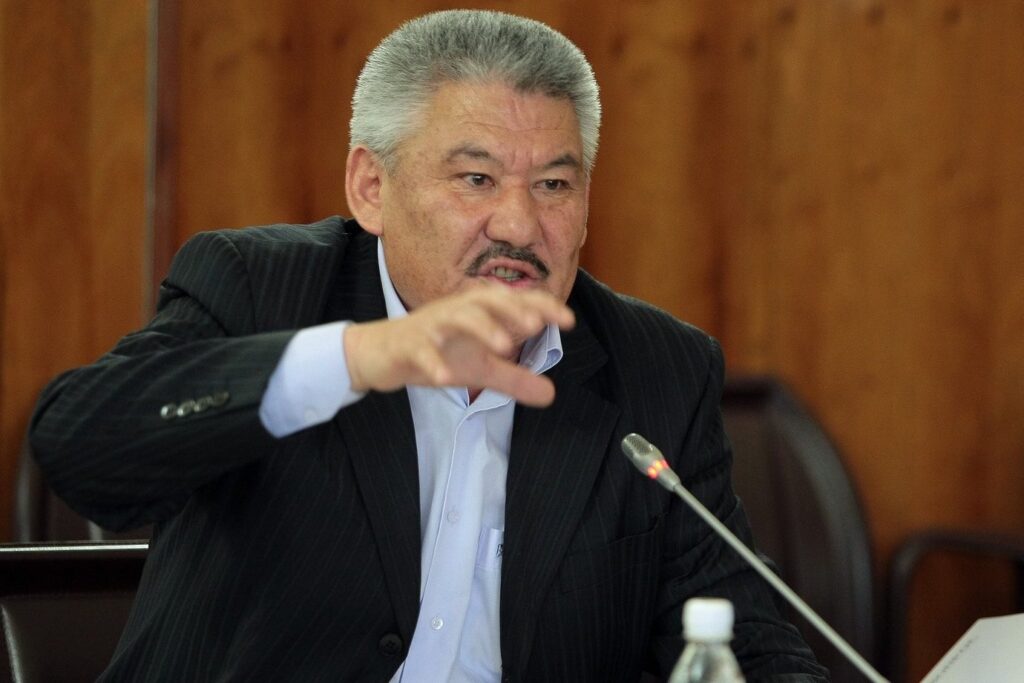
A case against the Kyrgyz authorities will be heard in Washington, D.C. in November 2024. At the end of 2022, International Mining Company Invest Inc. - which is headquartered in the U.S. - filed a lawsuit in international arbitration, accusing the Kyrgyz authorities of illegally expropriating investments. The company estimated its losses at $63 million. In 2009, International Mining Company Invest Inc. received the right to use subsoil for geological exploration. In 2013, the country's authorities issued a license to the foreign company to search for uranium and other metals at one more site. International Mining Company Invest Inc. carried out work in three regions of the republic; however, in 2019, a moratorium on exploration and development of uranium and thorium deposits was introduced. The company lost its license and initiated arbitration proceedings at the International Center for Settlement of Investment Disputes. Speaking at a press conference in Bishkek, Kyrgyz Justice Minister Ayaz Baetov said the case will be heard in international arbitration in Washington in November 2024. "The so-called uranium moratorium was the reason for this case's emergence. The case is now being considered. We have our arguments; they have theirs," the official stated. The previous authorities imposed a moratorium on the mining and exploration of uranium and thorium deposits; the new administration lifted the ban, but announced that Kyrgyz companies would develop the deposits.

Ex-Chairman of Kazakhstan’s KNB Denied Pardon

President of Kazakhstan Kassym-Jomart Tokayev has refused to pardon the ex-head of the National Security Committee (KNB) Karim Massimov, who in 2023 was convicted of treason and the attempted seizure of power. This information was reported to Informburo.kz by the Presidential Administration. On June 27, the Commission on Pardons considered the petition for Massimov's pardon under the President of the Republic of Kazakhstan. The Presidential Administration responded to Informburo.kz, stating that "following the results of the study about the possibility of applying an act of pardon to Massimov, the Commission made a corresponding proposal to the Head of State, with which he agreed." Karim Massimov was detained during the events of January 2022. The criminal case against him was assigned "top secret". In late April 2023, a court in Astana sentenced Massimov to 18 years in prison for treason, the attempted violent seizure of power, abuse of power, and abuse of authority.

Kazakhstan Ends Litigation With Moldovan Businessmen

After 15 years of litigation worldwide, a long-standing dispute between Kazakhstan and Anatol and Gabriel Stati, businessmen from Moldova, has ended. The Ministry of Justice of Kazakhstan has reported that the government, the National Bank of Kazakhstan, and representatives of Stati have signed a framework agreement. The parties, with the support and consent of leading creditors of Tristan Oil, have concluded a legally binding framework agreement on a peaceful and mutually acceptable resolution of the long dispute over oil and gas assets in Kazakhstan. As reported by the Ministry of Justice, the signatories have reached an agreement on mutually favorable terms that will lead to the termination of all legal proceedings and stop ongoing lawsuits in all jurisdictions. The specific terms of the agreement remain confidential. Daniel Chapman, CEO of Argentem Creek Partners, said, "We support the framework agreement and applaud President Kassym-Jomart Tokayev's decision to build a 'Just Kazakhstan' as part of his admirable reforms. The settlement of this dispute demonstrates Kazakhstan's compliance with international treaty obligations, which opens the door to increased investment and enhances its economic growth potential. We welcome a new era for Kazakhstan.” Argentem Creek Partners is the investment manager of specific funds that became lenders to Tristan Oil Limited, the investment vehicle of the Stati parties. According to Justice Minister Azamat Yeskarayev, "This agreement is made with the public interest in mind and does not involve the expenditure of public funds. We believe that this step will positively impact the attraction of new investments to our country and the economy's growth.” The legal battle between Stati and entities in Kazakhstan started in 2010. Lawsuits have been considered in the Netherlands, Belgium, Luxembourg, Sweden, the UK, and the United States. At one point, the assets of the National Fund of Kazakhstan were even frozen. The episode began in October 2008, when then President of Moldova,Vladimir Voronin, complained to Nursultan Nazarbayev that businessman Anatol Stati was using money received in Kazakhstan to sponsor the opposition in Moldova. Shortly thereafter, Stati's relationship with the authorities in Kazakhstan sharply deteriorated. A series of inspections initiated by state began, during which the unlicensed use of trunk pipelines, tax arrears, violations of license and contractual conditions under subsoil use contracts and other issues were discovered. According to experts familiar with the case against Stati, by that time the Moldovan businessmen had already decided to leave Kazakhstan and were preparing for these inspections, which would result in the termination of contracts. Therefore, by November 2009, they had amassed a lot of materials, which, in the hands of their lawyers could be used to argue that Kazakhstan was in violation of the regime of fair and equal treatment of investors under the Energy Charter Treaty. On July 21, 2010, the Ministry of Oil and Gas of Kazakhstan terminated the subsoil use contracts of the Stati companies Tolkynneftegaz LLP and Kazpolmunai LLP due to non-fulfillment of license and contractual terms. Five days after receiving the termination notice, on July 26, 2010, Stati filed...

Kyrgyz Security Chief’s Brother-In-Law Detained on Large-Scale Fraud Charges

The brother-in-law of the head of Kyrgyzstan's State Committee for National Security (SCNS), Kamchybek Tashiyev, has been detained on suspicion of large-scale fraud. The investigation found that the relative, having conspired with a Turkish citizen by deceit and breach of trust, took possession of a large sum of money from a local businessman, who then appealed to the SCNS with a corresponding statement. The Committee said that despite close family relations, Tashiyev was instructed to conduct an objective investigation and give a legal assessment. Based on the decision of the Pervomaisky District Court of Bishkek, the suspects were detained and taken into custody as part of the investigation. The investigation is underway, and measures are being taken to compensate the injured party.

Kazakhstan Weighs Down on Human Trafficking

In response to data issued by international experts citing the current level of  human trafficking in Kazakhstan, President Kassym-Jomart Tokayev has just signed a law to address the situation. First and foremost, the new law aims to protect and provide social support for victims, the majority of whom are migrant workers, people with disabilities, solitary pensioners, young women and children. Referencing statistics, First Deputy Minister of Internal Affairs Marat Kozhaev announced that 19 criminal cases were opened in Kazakhstan for child trafficking in 2023, with an additional six already logged this year. He explained that most of the children are sold within the country to meet the demand of people unable to have their own. Such cases involve staff from perinatal centers and orphanages, as well as people with unwanted pregnancies. Child trafficking is a lucrative business which continues apace despite the threat of a jail sentence of up to 18 years. According to the police, there were cases this year of parents asking for between KZT100,000 to KZT2 million, equivalent to 208 -4,168 US$, for their new-borns. Young mothers often look for potential buyers online, even while pregnant. Under the recent law, the Criminal Code has been amended to include “crimes related to trafficking in persons”, covering kidnapping, unlawful confinement, human trafficking (including trafficking minors), prostitution, etc. Amendments have also been made to the Administrative Code aimed at preventing the sale of children, including new-borns, through the introduction of the clause: “Failure of officials to report incidents of abandonment of new-borns, admission and delivery of orphans and children without parental care.” Incidents of human trafficking are invariably tragic. In most cases, the victims usually poor or homeless, are taken by force or deception to remote corners of the country, where forced to work on peasant farms, they are subjected to backbreaking labor, beatings, and a lack of medical care for months or years. The situation becomes more complicated if the victim is a migrant from Uzbekistan, Kyrgyzstan, or Turkmenistan. Such workers often without the documentation to work legally, are attracted by promises of decent pay and then literally put in chains. Another illegal business is begging. Not long ago, on a street in Almaty, volunteers rescued a lone, elderly person who had been forced through beatings and starvation to beg for several months. As a result of the beggar's testimony, a gang of slave traders was arrested the following day. Enforced prostitution is also common, particularly amongst low-income families and orphans. International experts have repeatedly warned Kazakh authorities of the need to increase its legal levers to tackle human trafficking. In 2020, the US placed Kazakhstan on its watch list which as Kazakhstan’s commissioner for human rights Elvira Azimova, said at the time, was a direct response to the country's number of victims. “The official numbers of identified cases of human trafficking and criminal prosecution in Kazakhstan are significantly lower than in neighbouring countries - including Kyrgyzstan and Uzbkistan -  for whose population Kazakhstan is a destination. This may...