
• KGS/USD = 0.01144 0%
  • KZT/USD = 0.00198 0%
  • TJS/USD = 0.10857 -0.18%
  • UZS/USD = 0.00008 0%
  • TMT/USD = 0.28571 0%
  • KGS/USD = 0.01144 0%
  • KZT/USD = 0.00198 0%
  • TJS/USD = 0.10857 -0.18%
  • UZS/USD = 0.00008 0%
  • TMT/USD = 0.28571 0%
  • KGS/USD = 0.01144 0%
  • KZT/USD = 0.00198 0%
  • TJS/USD = 0.10857 -0.18%
  • UZS/USD = 0.00008 0%
  • TMT/USD = 0.28571 0%
  • KGS/USD = 0.01144 0%
  • KZT/USD = 0.00198 0%
  • TJS/USD = 0.10857 -0.18%
  • UZS/USD = 0.00008 0%
  • TMT/USD = 0.28571 0%
  • KGS/USD = 0.01144 0%
  • KZT/USD = 0.00198 0%
  • TJS/USD = 0.10857 -0.18%
  • UZS/USD = 0.00008 0%
  • TMT/USD = 0.28571 0%
  • KGS/USD = 0.01144 0%
  • KZT/USD = 0.00198 0%
  • TJS/USD = 0.10857 -0.18%
  • UZS/USD = 0.00008 0%
  • TMT/USD = 0.28571 0%
  • KGS/USD = 0.01144 0%
  • KZT/USD = 0.00198 0%
  • TJS/USD = 0.10857 -0.18%
  • UZS/USD = 0.00008 0%
  • TMT/USD = 0.28571 0%
  • KGS/USD = 0.01144 0%
  • KZT/USD = 0.00198 0%
  • TJS/USD = 0.10857 -0.18%
  • UZS/USD = 0.00008 0%
  • TMT/USD = 0.28571 0%
05 December 2025

Viewing results 1 - 6 of 12

The New Geoeconomics of Uzbekistan: Insights from ISRS Director Eldor Aripov

The Times of Central Asia presents a two-part interview in Washington, D.C. with Eldor Aripov, Director of the Institute for Strategic and Regional Studies under the President of Uzbekistan. Dr. Aripov sat down with our Washington Correspondent, Javier M. Piedra, to discuss Uzbekistan’s strategic thinking regarding its diplomatic posture, regional integration, and relations with Central Asian and global partners. The conversation includes commentary on “Great Game” geopolitics, U.S.–Uzbekistan relations, trade, the meaning of “Uzbekistan First,” the historically explosive Ferghana Valley, and water management. Recognizing the link between investment, a stable geopolitical ecosystem, and the need to de-risk potentially conflictive issues, Aripov further sheds light on Tashkent’s practical approach to internal governance and business development. [caption id="attachment_40284" align="aligncenter" width="2360"] Central Asia on the Front Lines; image: Defense.info[/caption] TCA: “America First” refers to U.S. policies prioritizing national interests, often associated with non-interventionism, nationalism, and protectionist trade. Given Uzbekistan’s pragmatic foreign policy, can we speak of an “Uzbekistan First” policy? It is certainly not isolationist — but how is it manifested on a day-to-day basis? Aripov: What you describe as “Uzbekistan First” is, in our understanding, fundamentally about prioritizing national interests – stability and predictability for the people of Uzbekistan. Yet Uzbekistan’s uniqueness lies in the fact that our national interests are closely intertwined with those of the entire region – this means shared upsides at the transactional and strategic levels and thinking long-term. We border every Central Asian country as well as Afghanistan, and therefore any issue — security, trade, transport, or water management — directly depends on the quality of our relationships with neighbors. From his first days in office, President Shavkat Mirziyoyev — with his strategic vision and deep understanding of regional dynamics — declared that regional unity and mutual benefit stand at the core of Uzbekistan’s foreign policy. The essence of his doctrine is to resolve agreeably any historically or materially problematic issues with neighbors, remove barriers to understanding, and create predictable, stable conditions for mutually beneficial cooperation and the free movement of goods, ideas, and people. That is the true meaning of “Uzbekistan First”: not isolation, but openness, predictability, and regional consolidation. TCA: How are you realizing “Uzbekistan First” in practice? Aripov: Uzbekistan is strengthening its economy domestically and global track - putting in place the building blocks for internal sustainable development and accelerating accession to the World Trade Organization. The latter means expanding the geography and composition of exports and increasing the country’s investment attractiveness. This approach is rooted in the logic of sustainable development within the broader international context: long-term national interests are best served by Uzbekistan integrating into global value chains and markets. The results speak for themselves: in 2024, Uzbekistan’s GDP grew by 6.5%, foreign direct investment increased by more than 50% to reach $11.9 billion, and the target for 2025 is to attract $42 billion. This performance is also a tribute to our style of diplomacy, grounded in respect and having a constructive attitude towards others. Thus, “Uzbekistan First” represents a modern model...

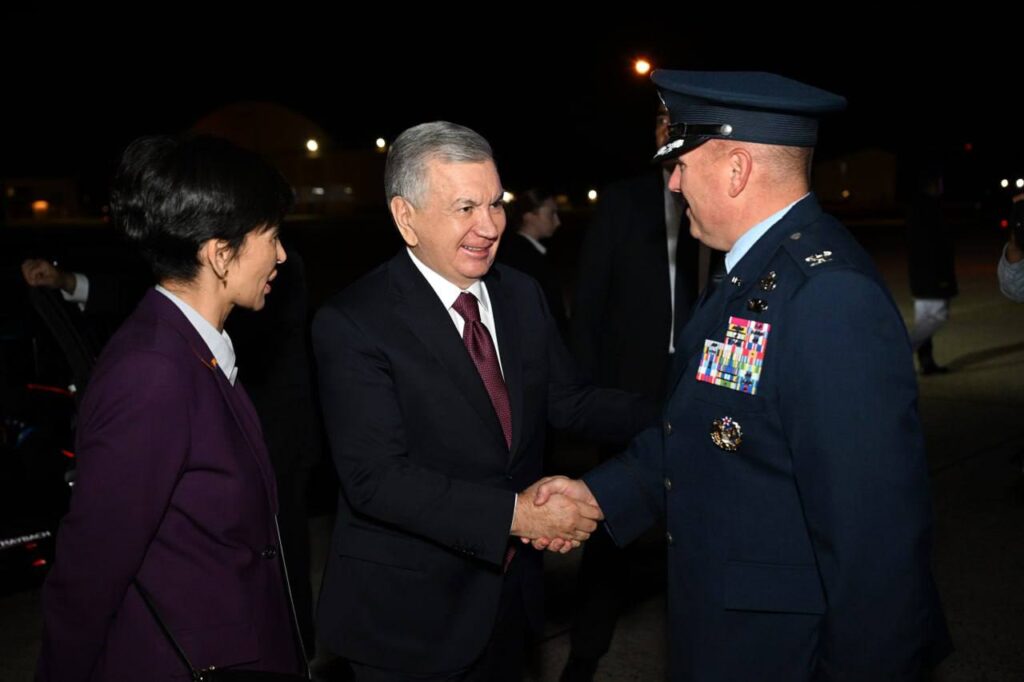
Uzbekistan Deepens U.S. Partnership Through New Investment Council and National AI Strategy

Uzbekistan is advancing a broad effort to strengthen its relationship with the United States through new economic, diplomatic, and technological initiatives. A presidential decree establishing the Uzbekistan–U.S. Business and Investment Council, alongside a major artificial intelligence partnership with NVIDIA, underscores the country’s strategy to draw investment and accelerate digital development. A New Platform for Economic Engagement The creation of the Uzbekistan–U.S. Business and Investment Council follows President Shavkat Mirziyoyev’s recent participation in the C5+1 Summit, where regional connectivity and U.S.–Central Asia cooperation were central topics. The council will be jointly led by the Head of the Presidential Administration and a representative appointed by the U.S. administration, giving both sides a formal mechanism to coordinate investment priorities and oversee major projects. Uzbekistan expects the platform to support initiatives involving institutions such as the U.S. International Development Finance Corporation, the European Bank for Reconstruction and Development, and the Asian Development Bank. Officials have framed the council as part of a longer-term effort to expand trade, encourage U.S. private-sector engagement, and diversify the country’s investment base. Expanding Diplomatic Reach The government is preparing to significantly widen its diplomatic network in the United States. A new Adviser-Envoy will be assigned to the embassy in Washington beginning in 2026 to coordinate investment initiatives linked to the council. Plans are also underway to open additional consulates in Philadelphia, Chicago, Orlando, and Seattle, reflecting both the size of the Uzbek diaspora and growing interest in regional outreach. Uzbekistan’s shift toward deeper engagement includes a visa-free regime for U.S. citizens starting January 1, 2026, which will allow 30-day stays and support increased travel for business and education. Updates on foreign policy and consular matters are regularly published by the Ministry of Foreign Affairs. Expanding the National AI Ecosystem Alongside diplomatic and economic reforms, Uzbekistan is pursuing ambitious plans to grow its artificial intelligence capacity. During a recent visit to the United States, Digital Technologies Minister Sherzod Shermatov held discussions with leaders at NVIDIA on infrastructure development, AI governance, and workforce training. The ministry has positioned the partnership as a key step toward integrating international expertise into Uzbekistan’s digital transformation strategy. The cooperation includes the development of an AI Excellence Center powered by NVIDIA technology and supported by training programs from the company’s Deep Learning Institute. The center will provide training for educators and specialists, while universities begin preparing to introduce AI-focused academic programs and certification pathways. A Nationwide Investment in Digital Infrastructure Uzbekistan plans to deploy two national AI clusters by 2026 with a combined computing capacity of up to one megawatt. One cluster will support academic and research institutions, while the second will focus on public-sector systems and industrial projects, including automation, healthcare analytics, and digital government services. Funding is in place for NVIDIA-powered supercomputers that will be installed at leading universities, with procurement scheduled for late 2025. The government is also creating an Industrial AI Excellence Center backed by a $3 million investment. The facility is expected to begin operating in 2026 and will concentrate on...

U.S. and Uzbekistan Sign Landmark Economic and Strategic Agreements

The United States and Uzbekistan are deepening their economic and technological partnership. Following President Shavkat Mirziyoyev’s meeting with U.S. President Donald Trump in Washington, the U.S. State Department announced a sweeping package of agreements, described as among the most significant in the history of bilateral relations in both investment and strategic scope. High-Level Business Engagements During his Washington visit, President Mirziyoyev held talks with representatives from major American corporations, investment funds, and financial institutions. The meeting was attended by U.S. Secretary of Commerce Howard Lutnick, Special Assistant to the President Ricky Gill, Special Assistant to the President Ricky Gill, Deputy Secretary of Agriculture Stephen Vaden, and executives from companies such as Traxys, FLSmidth, McKinsey, Meta, Google, Amazon, Boeing, Air Products, Axiom Space, Cove Capital, Freeport-McMoRan, Orion CMC, Cargill Cotton, John Deere, Honeywell, Valmont Industries, and Flowserve Corporation. Opening the event, Mirziyoyev highlighted that trade between Uzbekistan and the U.S. has quadrupled over the past eight years, and more than 300 American companies are now operating in the country. He added that this is just the beginning of a new era in economic cooperation. Key strategic goals were outlined: by 2030, Uzbekistan aims to develop a new-generation energy system with 18-20 GW of renewable capacity, more than half of it sourced from solar and wind. In this context, the two countries plan to jointly develop and process critical minerals such as uranium, copper, tungsten, molybdenum, and graphite, establishing resilient supply chains and leveraging U.S. processing technologies. Infrastructure is another major focus. Uzbekistan intends to invest over $12 billion by 2030 to modernize roads, railways, terminals, and airports. Digital cooperation is also expanding. Projects with Google, Meta, and NVIDIA include the launch of Apple Pay and Google Pay, the creation of a Digital Academy, and the development of startup hubs. These initiatives are expected to be supported by the U.S. International Development Finance Corporation (DFC) and the U.S. Exim Bank. Mirziyoyev reaffirmed his personal commitment to supporting American investment, stressing that Uzbekistan remains a stable and favorable destination for foreign businesses. Securing Access to Strategic Raw Materials Washington’s primary interest lies in critical minerals. The U.S. will gain priority access to joint mining projects and exclusive access to geological data on rare earth and other strategically significant elements. This move is part of a broader U.S. effort to diversify global sources of inputs vital to defense, green energy, and other high-tech sectors. The two countries are also preparing a $400 million investment package to develop sustainable supply chains for critical and rare earth minerals. For Uzbekistan, this represents a key step toward integration into global value chains and reduced reliance on limited partners. Energy Cooperation: A Role for Small Modular Reactors Uzbekistan plans to acquire American small modular reactors (SMRs), a technology increasingly favored by emerging economies for its scalability and relatively low upfront costs. Interest in SMRs has grown following the 2025 approval of the upgraded NuScale Power Module (77 MW), and Uzbekistan may become one of the first countries in...

Insider’s View: Cooperation Between Uzbekistan and the United States in Tourism

In recent years, relations between the Republic of Uzbekistan and the United States of America in the field of tourism have reached a qualitatively new level. The foundation of this cooperation lies in the systematic efforts of the Tourism Committee to implement the provisions of the “Road Maps” aimed at strengthening bilateral ties, expanding tourism exchanges, and attracting American investment into the sector. The period of 2018–2019 became a turning point in enhancing the tourism dialogue between the two countries. Uzbekistan welcomed experts from the International Association of Tourism Professionals, led by H. Luis Lorenzo Gutierrez, representatives of “PBS” and “ABC” television channels, as well as a delegation from the Congress of Bukharian Jews of the USA and Canada. During the same period, the Tourism Committee organized a series of visits by well-known American bloggers Mark Wiens and Sonny Side, thanks to which millions of viewers around the world were introduced to Uzbekistan’s gastronomic and cultural richness. An important step was the introduction of American online booking services — Booking.com, Expedia, Hotels.com, and Tripadvisor. By the end of 2018, 886 hotels across the country had been connected to these platforms, significantly improving Uzbekistan’s accessibility for American travelers. Since 2019, special attention has been paid to promoting Uzbekistan’s tourism potential through U.S. media and digital platforms. Within the framework of the “World Influencers Congress 2019” forum, more than 20 leading American bloggers arrived in Tashkent, including the “Devin Super Tramp” team, which filmed a short movie titled “Aladdin” in Bukhara and Khiva. These projects not only enhanced Uzbekistan’s visibility on global social media but also helped build its image as a safe and welcoming destination. Cooperation in professional training also developed in parallel. Edward Castley, Vice President of the American Hotel & Lodging Association (AHLA), conducted master classes for university and college instructors, sharing U.S. best practices in training tourism industry professionals. During the COVID-19 pandemic in 2020, an online conference was held with the assistance of the Embassy of Uzbekistan in Washington, D.C., bringing together leading American travel companies — ASTA, Intrepid Travel, G Adventures, and others. The participants discussed measures to restore tourist flows and improve traveler safety. In subsequent years, American media outlets such as The New York Times, National Geographic, and Foreign Policy became increasingly active in covering the country’s tourism potential. Joint media collaborations, including Mystery Box’s 2021 production and CNN’s 2023 documentary The Spirit of Samarkand, have been instrumental in highlighting the cultural heritage and contemporary life of Uzbekistan’s historic cities. In recent years, Uzbekistan–U.S. cooperation in tourism has acquired strategic importance. In 2024, Chairman of the Tourism Committee Umid Shadiev met with U.S. Ambassador Jonathan Henick to discuss prospects for developing green tourism and workforce training. The participation of the Uzbek delegation in prestigious exhibitions — Miami World Travel Expo 2024 and New York Travel and Adventure Show 2025 — opened new opportunities for promoting the country’s tourism brand. Notably, Uzbekistan was recognized as the “Best New Exhibitor” at the New York event. The...
