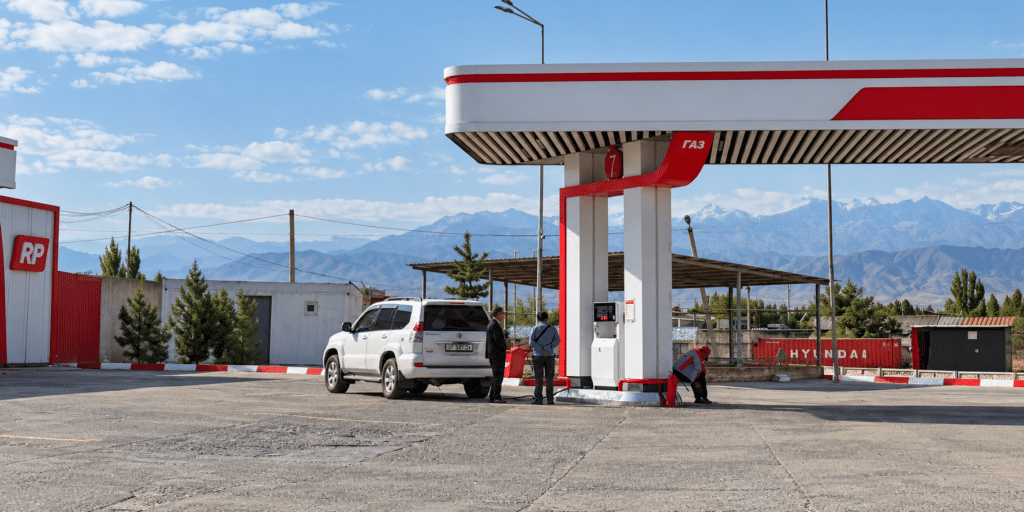
On July 10, Tajikistan’s Energy Minister Daler Juma said the country had enough fuel to last two more months. This situation is due to Tajikistan’s dependence on Russian petroleum products, which are in short supply in Russia itself because of Ukrainian drone strikes on Russian oil refineries.
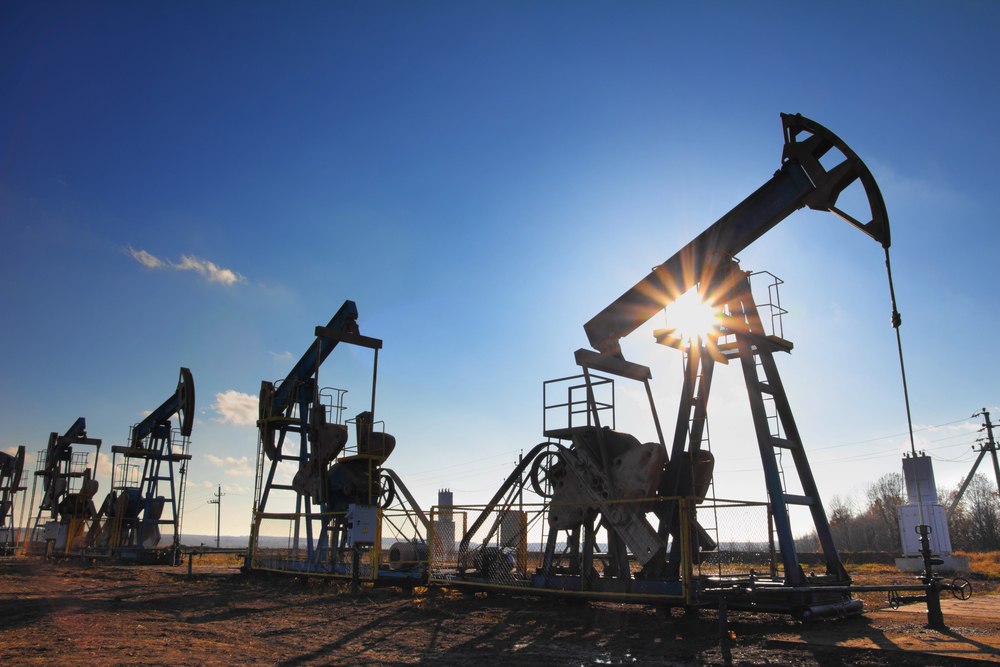
Located in the southeast corner of Central Asia and ringed by mountains on three sides, Tajikistan has few options to replace those Russian supplies, so the Tajik authorities are preparing to try again to find domestic hydrocarbon supplies.
Looking to Strike Oil at Home
Estimates of the share of Tajikistan’s petroleum imports supplied by Russia range from 70% to 80%.
Tajikistan’s head of civil aviation, Habibullo Nazarzoda, said on July 9 that his country is facing shortages of airplane fuel and is in talks with Turkmenistan. Russia has a prohibition on exporting aviation kerosene that runs from June 1 to November 30.
Tajikistan does have hydropower and coal, but neither one of those helps with shortages at petrol stations, and much of the internal transport of people and goods in mountainous Tajikistan is done via the road network. So, Tajikistan is again looking at the potential to develop domestic hydrocarbon fields, this time with the help solely of the China National Petroleum Corporation (CNPC).
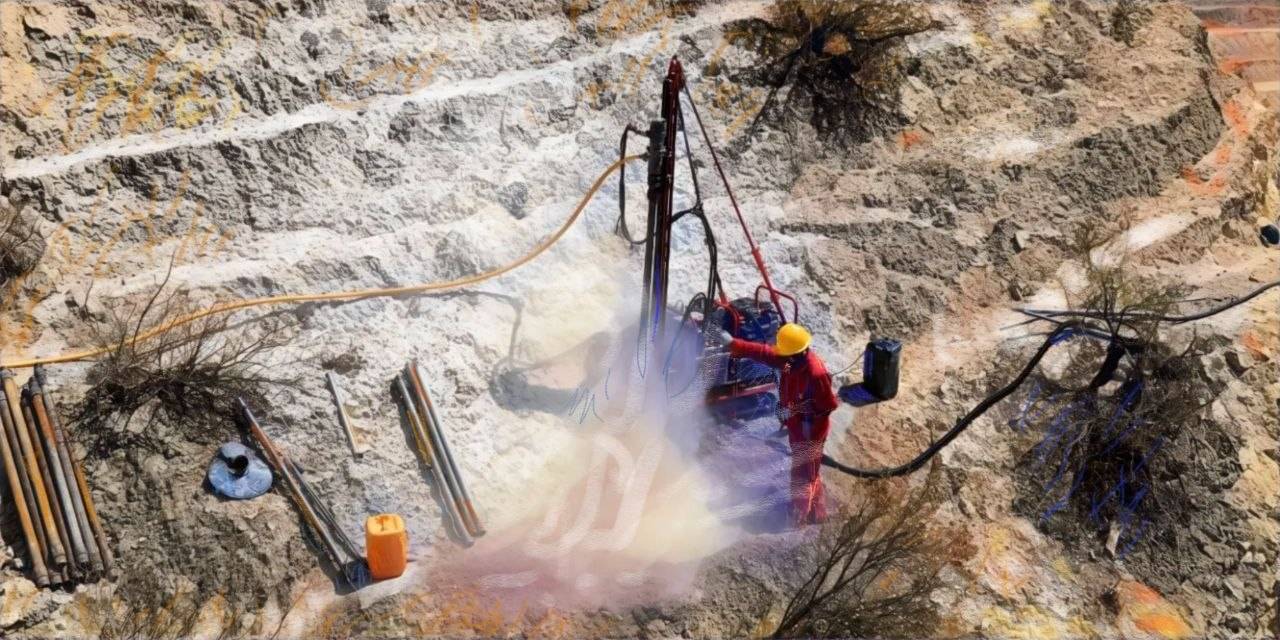
On July 7, the head of the Tajik government’s Geological Department, Ilhom Oymuhammadzoda, said CNPC was already carrying out exploration at several potential hydrocarbon deposits in Tajikistan.
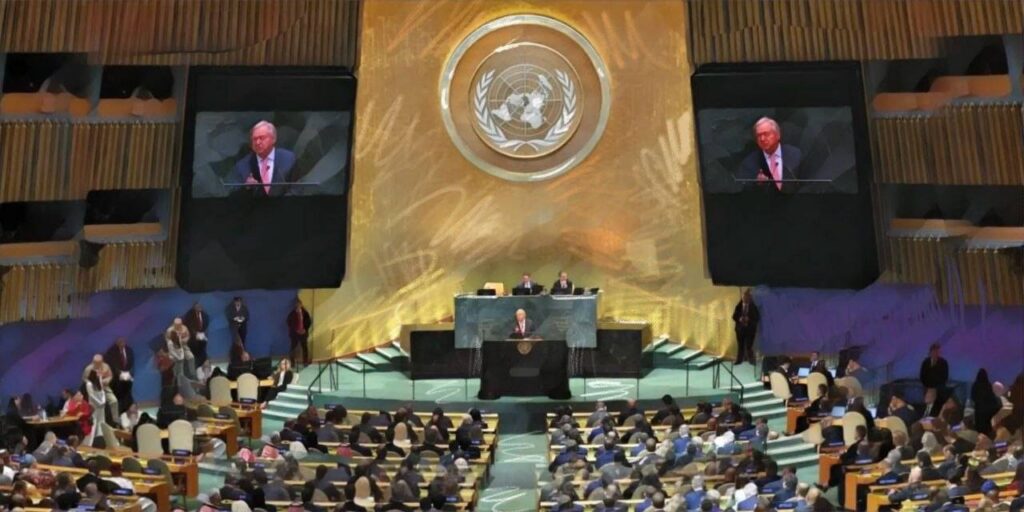
“I think [CNPC] will present a progress report on the seismic survey operations by the end of the year,” Oymuhammadzoda told a press conference in Dushanbe.
He named the Tajik Depression, in southwestern Tajikistan, and the Ferghana Basin, in northwestern Tajikistan, as two of the more promising sites.
However, Oymuhammadzoda indicated that work in northern Tajikistan could require drilling down to a depth of 7,000 meters.
Tajikistan’s Search for Oil and Gas
Past studies of Tajikistan’s potential oil and gas fields point especially to the southwest of the country as a logical place to seek these hydrocarbons.
Southwest Tajikistan is adjacent to gas and oil fields in southern Uzbekistan that have been producing for decades, to fields in northern Afghanistan, where exploration has confirmed commercial flows, and not too far east from the giant gas fields in Turkmenistan.
Looking at a map, it seems logical that southwest Tajikistan is part of this same hydrocarbon structure.
In 2008, Canadian company Tethys started exploring the Bokhtar area about 100 kilometers south of Dushanbe. Tethys found both oil and gas in the area. In 2012, the Canadian company estimated the area’s gross prospective resources at 8.5 billion barrels of oil and condensate and 3.22 trillion cubic metres of gas.
For a small country like Tajikistan, it was potentially enormous, although these resources remained unconfirmed and commercially unproven. However, getting to that oil and gas required drilling wells that were 3,500 meters or deeper, which greatly added to production costs.
In 2013, Gazprom International drilled a well at the Sarykamysh field in southwest Tajikistan that was 6,450 meters deep before abandoning the project as not commercially viable. It was estimated there could be up to 18 bcm of gas and 124 million barrels of recoverable oil at the site.
For a Gazprom subsidiary, 18 bcm was a small amount. For Tajikistan, where annual gas consumption is measured in the millions of cubic meters, 18 bcm is at least 25-30 years of supplies.
In the case of Tethys, the company brought in partners for the Bokhtar projects. France’s Total and CNPC. But by 2015, Tethys was unable to meet its financial commitments to the Tajik projects, and in 2016, CNPC and Total filed arbitration proceedings against the Canadian company.
In 2024, Total left the project, selling its shares to CNPC, after which CNPC started a new phase of surveying and drilling exploratory wells at Bokhtar.
Gazprom suspended work in Tajikistan in 2018. As recently as April of this year, Dushanbe was calling on Gazprom to return and participate in projects in Tajikistan.
Only China, For Now
The current problem in obtaining petroleum products from Russia is a reminder to the Tajik authorities that having even these relatively small gas and oil fields would go a long way toward supporting Tajikistan’s domestic fuel needs.
Among the fields relinquished by Gazprom was Rangon (Rengon), in the Tajik Depression just south of Dushanbe. Oymuhammadzoda said CNPC was now doing work there, and added that, at the moment, the “major oil and gas operations (in Tajikistan) are linked to CNPC.”
The search for oil and gas in Tajikistan goes on.
The Tajik authorities expressed disappointment in the failure of earlier efforts to find either, or both. Exploration has already shown there is some gas and oil in Tajikistan. The question is whether it is commercially prudent to develop these fields, as many seem to be at depths of 5,000 meters or more.
Dushanbe is convinced further exploration will show that there are other oil and gas fields closer to the surface. CNPC has the money to find out and develop even the deep deposits, so it becomes a question of China’s commercial interests against strengthening its political influence in Tajikistan.
The figure of 18 bcm for the Sarykamysh field represents half the amount of gas China buys from Turkmenistan annually.
Financially, there does not appear to be much chance that CNPC will make a profit from oil and gas ventures in Tajikistan. But if Beijing’s goal is to boost its influence in Tajikistan, it makes sense for CNPC to develop the most promising fields.
Tajikistan is an important country for China. It is an immediate neighbor that can play a role in the Belt and Road Initiative and shares a long border with Afghanistan. Beijing is concerned that terrorist groups connected to areas in western China could make their way through Afghanistan and Tajikistan and enter China.
However, any CNPC success in producing oil and gas in Tajikistan would come at Russia’s expense. It would wean Tajikistan, at least somewhat, off its dependence on Russian supplies.
For Tajikistan, it would no doubt be enough never to have to worry again about having only two months of fuel left.